A demonstrator releases a smoke flare in front of a mural on Cable Street in the East End of London, which commemorates the Battle of Cable Street, October 6, 2016
Anti-fascist, trade unionists and Eastenders to celebrate victory over Oswald Mosley’s Blackshirts at the Battle of Cable Street 90 years ago
ANTI-FASCISTS, trade unionists and Eastenders will come together this weekend to celebrate victory over Oswald Mosley’s Blackshirts at the Battle of Cable Street 90 years ago.
Declaring “they did not pass, they will not pass,” a march and rally this Sunday, October 4, will honour the Jewish and Irish communities of the East End, the communists and socialists who mobilised to stop the fascists marching through Cable Street 90 years ago — and to stand together against “hatred, division and racist scapegoating” on Saturday.
“This Sunday every anti-fascist can celebrate the decisive moment when British fascism was blocked, driven back, and Oswald Mosley’s attempt to build a working-class base for his reactionary and racist political project was sent into reverse,” Communist Party general secretary Alex Gordon said, calling for a huge turnout.
“Mosley’s attempt to build a political movement on antisemitism, was defeated by the class unity of Jewish and Irish workers in Cable Street and the solidarity of working-class anti-fascists from across Britain.
Speakers in Berlin traced how Germany’s rearmament, US-led violence abroad and the repression of solidarity at home are converging in a dangerous drive toward war. BEN CHACKO reports
“HEAD over heels into war” was the theme of this year’s Rosa Luxemburg Conference in Berlin, organised as ever by the Morning Star’s German sister paper Junge Welt.
And the voices of school strikers, trade unionists, human rights activists, economists and socialist campaigners throughout the day left no doubt that this is the trajectory of Germany and the whole of Europe.
The shadows of genocide in Gaza and the shredding of international law through US boat bombings, piracy at sea and the kidnap of Venezuelan President Nicolas Maduro loomed over the thousands who came to discuss how to stop a world war that looks ever closer.
The crisis in the Caribbean prevented Emilio Lozada — head of international relations for the Communist Party of Cuba — from attending as planned, but Manuel Pineda of the Communist Party of Spain struck an urgent note on solidarity with the socialist island.
“Cuba is in danger,” he warned. “Trump is a fascist. He is a danger to humanity as a whole — and he wants Cuba to collapse. Cuba is being strangled.”
Already reeling under the impact of a 64-year blockade — “the most extensive, complex and long-lasting sanctions regime in history,” which made everything from stocking shop shelves to running buses a constant struggle, the US’s increasing readiness to simply steal supplies headed for Cuba, as it did with a Venezuelan tanker shipping oil to the island last month, represents an existential threat.
“Cuba has shown us what solidarity is,” he said, speaking of the medical brigades sent to crisis points across the world — including Europe during the pandemic.
Elon Musk urges you to be a Fascist like him, says that you can ignore facts and reality then.Donald Fuhrump says that Amerikkka doesn’t bother with crimes or charges anymore, not being 100% Amerikkkan and opposing his real estate intentions is enough.Orcas discuss how Trump was re-elected and him being an obviously insane, xenophobic Fascist.
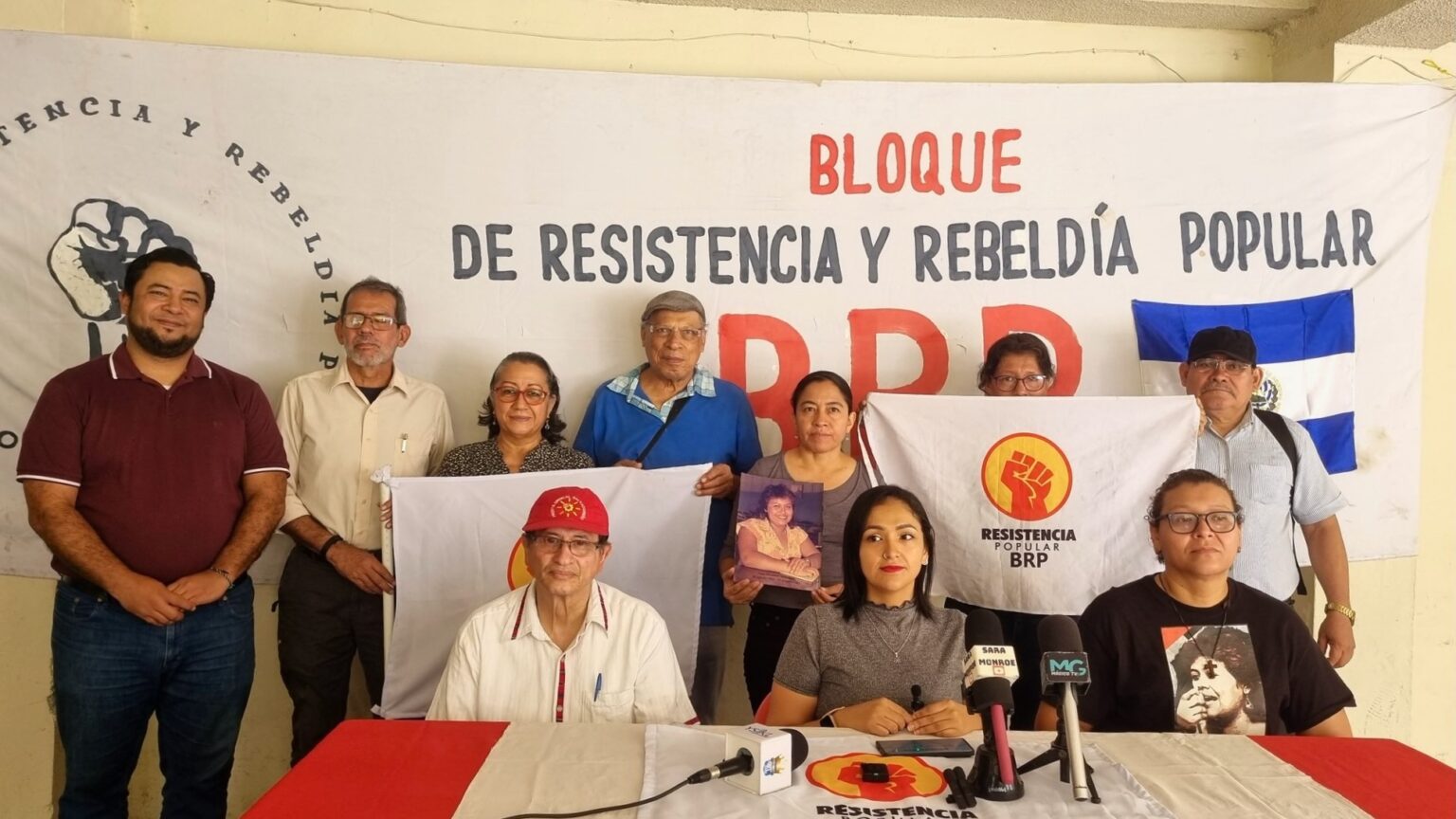
Organizers hold flags and a photo of labor martyr Febe Elizabeth Velasquéz during a press conference on the commemoration of the Day of the Salvadoran Trade Unionist. Photo: BRRP/X
The October 31 commemoration links past revolutionary struggles with today’s fight for labor rights and democracy
October 31 in El Salvador is recognized as the Day of the Salvadoran Trade Unionist.
This year’s commemoration event brought together veteran organizers and a new generation of grassroots leaders, bridging past and present struggles for workers’ rights and social change.
“This date brings us back to the origin of labor organizing in our country,” asserted Marisela Ramírez, a leader of the Popular Resistance and Rebellion Bloc, at the rally at Cuscatlán Park in San Salvador, organized by the group.
“We remember with dignity, the history of struggle, resistance, and sacrifice, of the labor movement in El Salvador.”
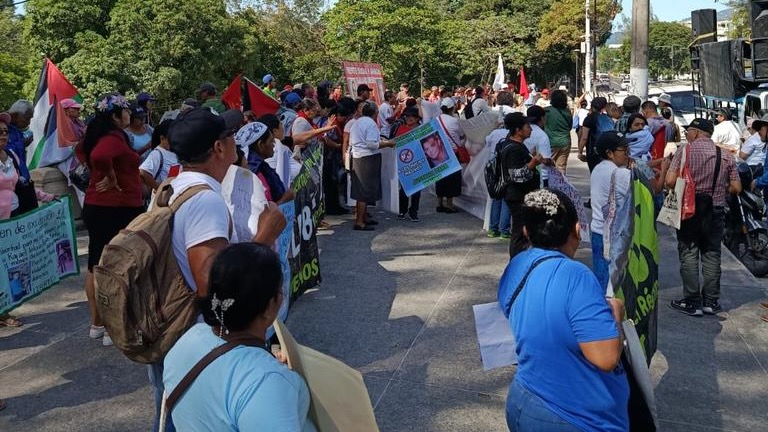
A few hundred people gathered with placards, flags, and banners representing various organizations, like the Salvadoran Social and Labor Front (FSS), the Permanent Roundtable for Labor Justice, the Movement of Victims of the Regime (MOVIR), and others.
Ramírez outlined the legacy that the day is tied to: the historic strikes of the 40s and 50s, the struggles for the 8-hour workday, for fair wages, and for the right to unionize. The event also paid tribute to “the thousands of women and men who, during the repression of the 70s and 80s, sacrificed their lives to defend justice and the dignity of the working class” against the US-backed Salvadoran government.
The Day of the Salvadoran Trade Unionist was established by Legislative Decree 589 (1990). It specifically honors the leaders of the National Union Federation of Salvadoran Workers (FENASTRAS) that were bombed by government forces on October 31, 1989.
Friday’s commemoration paid homage to prominent labor figure Febe Elizabeth Velasquéz and the nine other leaders martyred in the attack on the country’s principal organized labor front at the time.
A legacy of revolutionary struggle
The country’s trade groups have a long history of tying labor organizing to social change. These connections can be traced back to the formation of the Communist Party in 1930. Similarly, many of the 1989 FENASTRAS martyrs were affiliated with the National Unity of Salvadoran Workers (UNTS), the main federation tied to the popular movement aligned with the left guerilla force, the Farabundo Martí National Liberation Front (FMLN).
Legislative Decree 589 (1990) came two years before the 1992 Peace Accords, which officially ended the 12-year war between the FMLN (Farabundo Martí National Liberation Front) and the US-backed Salvadoran state.
By 1990, faced with continued armed opposition and a popular movement (made up of unions, student groups, and peasant associations) that had endured heavy repression, the Salvadoran government was under tremendous pressure to negotiate and recognize the legitimacy of the country’s social movements.
The deadly attack on FENASTRAS’ headquarters was a major factor in this outcome. Less than two weeks after the massacre, the FMLN would launch their historic final offensive, named in honor of the martyred union leader: “To the Limit, Period. Febe Elizabeth Lives”.
The Salvadoran military responded with intense fighting and indiscriminate aerial bombardment of residential neighborhoods, allegedly to dislodge the guerilla fighters. One US-trained Atlacatl Battalion unit stormed the Central American University (UCA) campus and murdered six Jesuit priests. The priests were known to advocate for a negotiated settlement to the conflict and spoke out against the military’s human rights abuses. The government and military claimed they were the “brain of the guerilla”.
International condemnation of the Salvadoran government grew louder than ever.
The FMLN was ultimately forced to retreat from the cities, but not before making it clear that a decisive military victory for the government was impossible. Negotiations became inevitable.
Decree 589 (1990) represented one of the first concessions by the state. It opened democratic space and acknowledged the sacrifices of trade unionists persecuted, imprisoned, or killed over the previous decade for their association with the revolutionary left. The FENASTRAS bombing and the martyrdom of Febe Elizabeth Velásquez was etched in history as the Day of the Salvadoran Trade Unionist.
Following these events, the power of the revolutionary movement and organized labor in El Salvador would completely restructure politics in the country through key democratic reforms signed into law in the 1992 Peace Accords.
Historical continuity and labor setbacks under Bukele
At the rally at Cuscatlán Park, the Bloc emphasized that this day is not only about remembrance, but also historical continuity: “the defense of labor rights today is part of the same battle for social justice that those martyrs defended with their lives,” Marisela Ramírez proclaimed.
The event’s organizers asserted that today, the Salvadoran trade unionist faces a new wave of “persecution and criminalization” by the “authoritarian regime of Nayib Bukele”.
“This regime has imposed a neoliberal and anti-union model that intends to eliminate all forms of independent organizing that defends labor rights,” says the Bloc leader.
The group has consistently denounced a systematic weakening of union structures by the Bukele regime. They claim that recently, dozens of union members have suffered arbitrary arrests, threats, and terminations without justification. Over 200 unions have been denied credentials.
Despite the increasing attacks, Ramírez tells Peoples Dispatch that the historic spirit of resistance in the Salvadoran labor movement is still alive.
“Just as before, today we see unionism as a collective and solidarity-based struggle, not only for economic improvements, but also for social transformation and justice,” she says.
Several Palestine flags were visible throughout the crowd, as well as placards that read “Respect our rights!” and “Freedom for political prisoners!” Some had photos of young men imprisoned or disappeared, asserting their innocence. Several placards displayed the image of Febe Elizabeth Velasquéz. Others, the image of Óscar Romero, the Archbishop of San Salvador, assassinated by government forces in 1980 after calling on the soldiers to disobey their orders amid escalating violence and massacres of civilians.
Commemoration event for the Day of the Salvadoran Trade Unionist. Photo: BRRP
“The impunity of yesterday is the impunity of today,” she declared.
“The only way to resist the impunity, the social injustice that we’re living under is through social struggle. We have to continue taking the streets and raising our voices.”
Rebuilding the labor movement in Bukele’s El Salvador
Ramírez says that what is lacking in the Salvadoran left is a political instrument that can “capture the discontent of the popular sectors and channel their demands towards a strategic commitment to social transformation.”
Amid Bukele’s “state of exception”, the challenge the new generation faces, she argues, is that of rebuilding and revitalizing Salvadoran trade unionism. Not just the infrastructure itself but the values and culture of historic movements. The new generation must promote “the active participation of women and young people in a process of organizational and ethical renewal that can re-articulate the labor struggles with broader social causes,” Ramírez says.
The Popular Resistance and Rebellion Bloc recently held a mass march on September 15, El Salvador’s Independence Day. It mobilized its various affiliated organizations, trade unions, civil society groups, and the general public against the human rights violations of the Bukele government.
September 15 mass march in El Salvador. Photo: BRRP
A new generation may be doing just that: revitalizing the historic struggles of the Central American country.
As resistance grows once again, organizers across generations maintain that commemorations like the Day of the Salvadoran Trade Unionist are crucial in giving shape, identity, and historical memory to the social movements of today.
The labor leaders targeted in the October 31, 1989 FRENASTRAS bombing are the following:
Febe Elizabeth Velásquez – General Secretary of FENASTRAS and member of the National Unity of Workers (UNTS); killed.
Ricardo Humberto Cestoni – Recording Secretary of the ANDA Workers’ Company Union (SETA); killed.
Rosa Hilda Saravia de Elías – Member of the Union of Workers of the Cotton, Synthetic, Textile Finishing and Related Industries (STITAS); killed.
Julia Tatiana Mendoza Aguirre – Member of the Gastronomic Union (STITGASC); killed.
Vicente Melgar – Secretary of Social Assistance of SETA; killed.
José Daniel López Meléndez – Member of SETA and Secretary of Conflicts of FENASTRAS; killed.
Luis Gerardo Vásquez – Member of the General Union of Bank Employees (SIGEBAN); killed.
María Magdalena Sánchez – FENASTRAS member; killed.
Carmen Hernández – FENASTRAS member; killed
Unidentified male worker – Died later from injuries sustained in the explosion
Original article by republished from peoples dispatch under a Creative Commons Attribution-ShareAlike 4.0 (CC BY-SA) license.
Source: Freedom Flotilla/X
Delegations from 17 European countries, including trade unionists and health workers, will join the Global Sumud Flotilla to Gaza.
Delegations from at least 17 European countries are preparing to join the Global Sumud Flotilla, which will set sail on Sunday, August 31, in a new attempt to break Israel’s blockade of Gaza. Many of the crew members taking part in this effort to deliver urgently needed supplies have already been active in Palestine solidarity campaigns in their own countries over the past years. For them, joining the flotilla is a logical step in confronting Israel’s ongoing genocide.
Belgian physician Hanne Bosselaers, active with Medics for the People (MPLP–GVHV) and the People’s Health Movement (PHM), emphasized that it is impossible to remain idle while a genocide unfolds in Palestine. Like other PHM members who will also be on board, including British emergency doctor James Smith and Moroccan health activist Aziz Rhali, Bosselaers has long worked with Palestinian health organizations and highlighted the resilience and determination of Gaza’s health workers.
For many European participants, the flotilla is also about holding their governments accountable for inaction and silence in the face of Israeli war crimes. “We have a collective responsibility to prevent atrocity crimes,” Smith said in a PHM statement. “Our governments and our courts have failed, and so we must do whatever we can to expose Israel’s crimes and break its brutal siege.”
“Workers can effectively oppose war”
Workers from different sectors will make up a significant share of the flotilla’s crew. Among them are members of the Autonomous Collective of Port Workers (Collettivo Autonomo dei Lavoratori Portuali, CALP), a group known for its consistent actions against arms shipments through the port of Genoa in Italy. CALP’s decision to participate comes alongside an intensive campaign carried out with Music for Peace, which collected more than 40 tons of supplies for Gaza in just a few days – reflecting the widespread opposition to Israel’s crimes.
“The decision by CALP members to take part in the Global Sumud Flotilla, not only by collecting humanitarian aid but also by boarding long-standing member José Nivoi, a leader of USB’s Sea and Ports Coordination, represents the outcome of a long trade union and political journey that is, importantly, oriented toward the future,” the trade union Unione Sindacale di Base (USB) wrote.
That vision of the future includes building international cooperation and solidarity, something already demonstrated by dockworkers’ coordinated refusals to handle arms shipments bound for Israel. “Dockworkers are sending out a hugely significant signal: workers can effectively oppose war, and they can do so even more powerfully if they unite internationally,” USB stated.
As dozens of send-off events are being prepared across Europe ahead of the flotilla’s launch, hope and determination remain strong among its supporters. “We do not know what will happen, and we are well aware of the Israeli government’s contempt for international law,” USB cautioned. “We are confident, but also concerned.”
Despite such concerns, the broad grassroots support for the Global Sumud Flotilla makes clear that across Europe, ordinary people, unlike their governments, reject war – and are prepared to mobilize for peace.
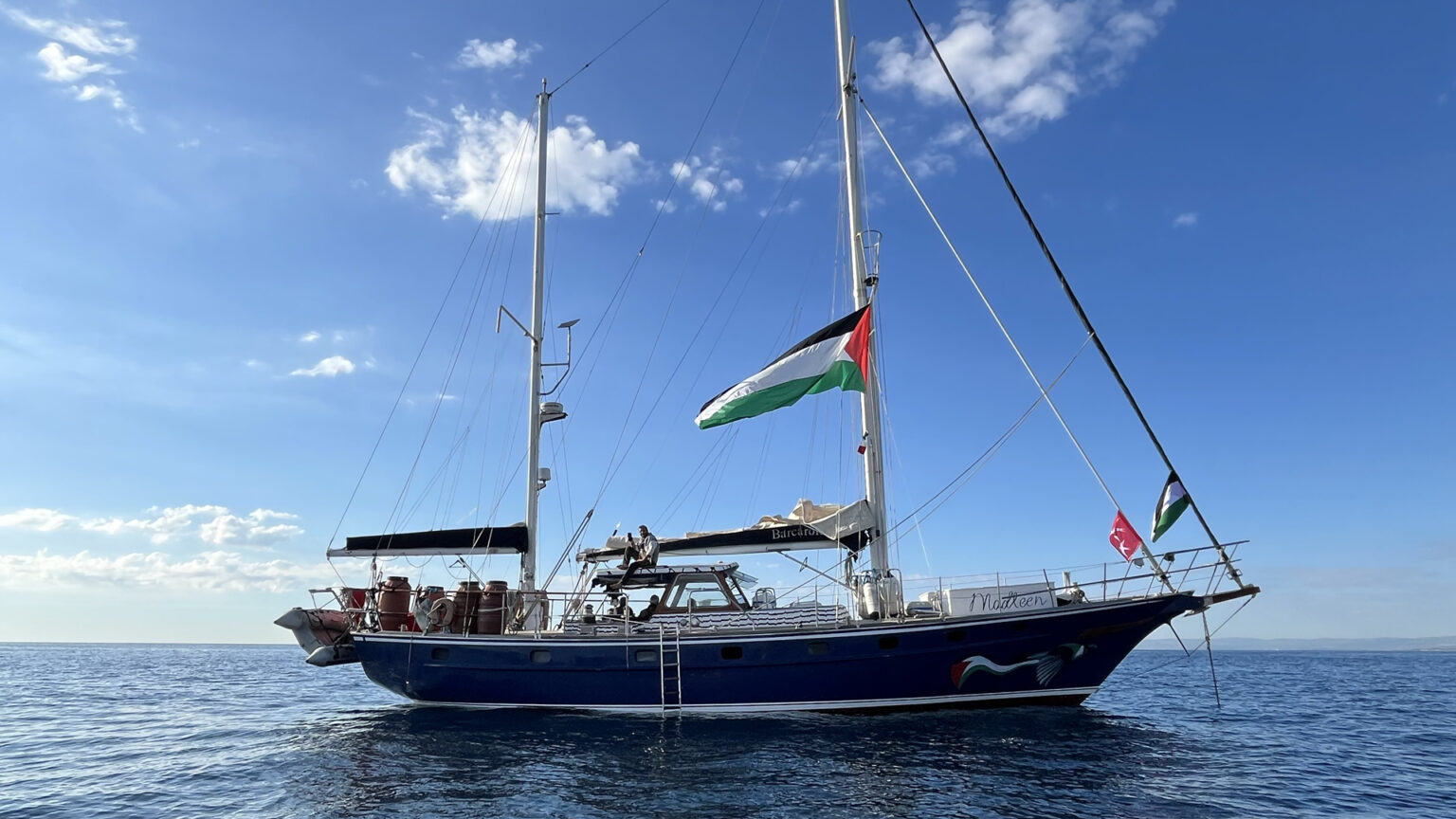
The Madleen before departure. Source: Tan Safi/Freedom Flotilla Coalition
Global Sumud Flotilla aims to break Israel’s illegal blockade on Gaza, to deliver urgent humanitarian aid, and to expose the genocidal war waged on Palestinians.
In July 2025, a new international maritime initiative was launched: the Global Sumud Flotilla. It was formed by four major coalitions: the Global Campaign to Return to Palestine, the Freedom Flotilla Coalition, the Maghreb Sumud Convoy, and the Southeast Asian Nusantara Sumud Initiative. The Global Sumud Flotilla is set to depart on August 31, 2025. Its goal is clear: to break Israel’s illegal blockade on Gaza, to deliver urgent humanitarian aid, and to expose the genocidal war waged on Palestinians.
The flotilla is composed of dozens of small civilian vessels carrying activists, parliamentarians, doctors, and trade unionists, alongside humanitarian cargo. More than 39 national delegations have pledged participation, making this the largest people-led maritime effort in solidarity with Gaza since the 2010 “Mavi Marmara”.
Behind every flotilla passenger lies a story of conviction. Greek trade unionists brought banners pledging workers’ solidarity with Palestine. Doctors from Spain and Italy carried vital medicines banned from entering Gaza. Parliamentarians from South Africa and Norway insisted that breaking the siege is a moral and political duty.
This is not the first flotilla of its kind this year. The “Handala” and “Madleen”, two of the Freedom Flotilla’s flagship vessels, also set sail in an attempt to break the blockade of Gaza. However, they were attacked by drones and stormed by Israeli forces. Passengers were beaten, kidnapped, and deported. Phones were confiscated, activists were interrogated, and many went on hunger strike to protest their detention. The attack was not just on the Freedom Flotilla; it was an attack on the principle of global solidarity itself.
The Global Sumud Flotilla insists that its mission is entirely lawful under international maritime law. Civilian vessels carrying humanitarian aid in international waters are protected under the UN Convention on the Law of the Sea. Israel’s interception of the “Handala” and “Madleen” constitutes nothing less than piracy and a war crime.
The flotilla’s organizers remind the world that Israel has maintained a land, air, and sea blockade on Gaza since 2007. As they prepared for upcoming missions, flotilla spokespeople declared:
“Our boats carry more than aid. They carry a message: the siege must end. The greater danger lies not in confronting Israel at sea, but in allowing genocide to continue with impunity.”
Criminalizing solidarity, violating international law
In recent months, Israel has escalated its campaign to silence international solidarity with Palestine by targeting civilian flotillas attempting to break the Gaza blockade. These ships, carrying activists, aid, and a message of defiance against siege, have become symbols of global resistance. Instead of engaging through diplomacy or respecting humanitarian principles, Israel has resorted to force on the high seas, treating peaceful civilian missions as military threats.
The assaults on the “Handala” and “Madleen” are more than acts of piracy, they are grave breaches of international law. The UN Convention on the Law of the Sea (UNCLOS) guarantees freedom of navigation in international waters. By seizing vessels outside its territorial jurisdiction, Israel has acted as a rogue state.
International legal experts have consistently affirmed that the blockade of Gaza since 2007 constitutes collective punishment, violating the Fourth Geneva Convention. The International Criminal Court has received multiple submissions documenting Israel’s starvation siege, now exacerbated by open genocide. Yet governments that loudly invoke “rules-based order” remain silent when Palestinians, and their supporters, are the victims.
Instead of protecting citizens, western governments have facilitated Israel’s repression. Passengers aboard the flotillas were stripped of their phones, interrogated, and some were denied re-entry into the Schengen zone. Western states’ silence amounts to complicity.
Some detainees launched hunger strikes in Israeli prisons to protest their abduction. Others returned home to smear campaigns. Western right-wing media accused activists of “provocation” or of “endangering security”. Once-beloved Swedish activist Greta Thunberg who joined the “Madleen” flotilla, received attacks from mainstream media, on social media, and from influential political figures. Such tactics aim to delegitimize solidarity and sow fear among those who dare to act.
But these campaigns have failed to extinguish the moral clarity of the movement. From dockworkers in Barcelona refusing to load arms to Israel, to students occupying universities in the US and Britain, the flotilla has become a symbol: solidarity cannot be blockaded.
The human face of global resistance
The Global Sumud Flotilla represents a convergence of struggles across continents:
The Global Campaign to Return to Palestine mobilized thousands of activists worldwide.
The Freedom Flotilla Coalition, with roots going back to 2010, brings long experience of organizing maritime resistance.
The Maghreb Sumud Convoy, launched in June 2025, gathered over 1,000 participants from across North Africa under the banner of “coordinated action for Palestine”.
The Nusantara Sumud Initiative, launched from Malaysia and eight other Southeast Asian countries, embodies South–South solidarity inspired by Palestinian steadfastness.
Together, these four networks transformed the flotilla from a handful of ships into a people-powered humanitarian corridor. The first official mission is scheduled for August 31, 2025, from Spain, followed by a second launch from Tunisia on September 4, with more than 50 ships expected to participate.
At a press conference in Tunis, organizers emphasized that the flotilla is not merely logistical, it is symbolic:
“This will not only be a fleet. It will be a reminder that the world is watching, that Gaza is not alone, and that peoples will not remain silent.”
The Freedom Flotilla is part of a long lineage of resistance at sea. The 2010 assault on the “Mavi Marmara”, in which Israeli forces killed ten activists, shocked the world. But instead of stopping solidarity, it multiplied it.
The Global Sumud Flotilla marks a new stage. By linking Mediterranean ports, North African caravans, and Southeast Asian convoys, it builds a transnational infrastructure of resistance. Its Arabic name Sumud, steadfastness, reflects both Palestinian resilience and the determination of people across the world to act where governments have failed.
Breaking the siege, building the future
The choice is now clear. Israel will continue to attack peaceful ships in international waters, abduct activists, and suppress humanitarian efforts, because the siege is a cornerstone of its genocidal project. Western governments will continue to look away.
But ordinary people, from Greek dockworkers refusing to load weapons for Israel, to Tunisian unions welcoming flotilla missions, to students and parliamentarians raising their voices, are building a counter-power.
The Global Sumud Flotilla is both a lifeline and a warning: Gaza will not be starved into silence, and solidarity will not be blockaded.
As the flotilla prepares to set sail with more than 50 ships, its message resounds across seas and continents: The siege must fall. Gaza must live. Palestine must be free.

 A demonstrator releases a smoke flare in front of a mural on Cable Street in the East End of London, which commemorates the Battle of Cable Street, October 6, 2016