He suspended MPs including John McDonnell and Zarah Sultana.
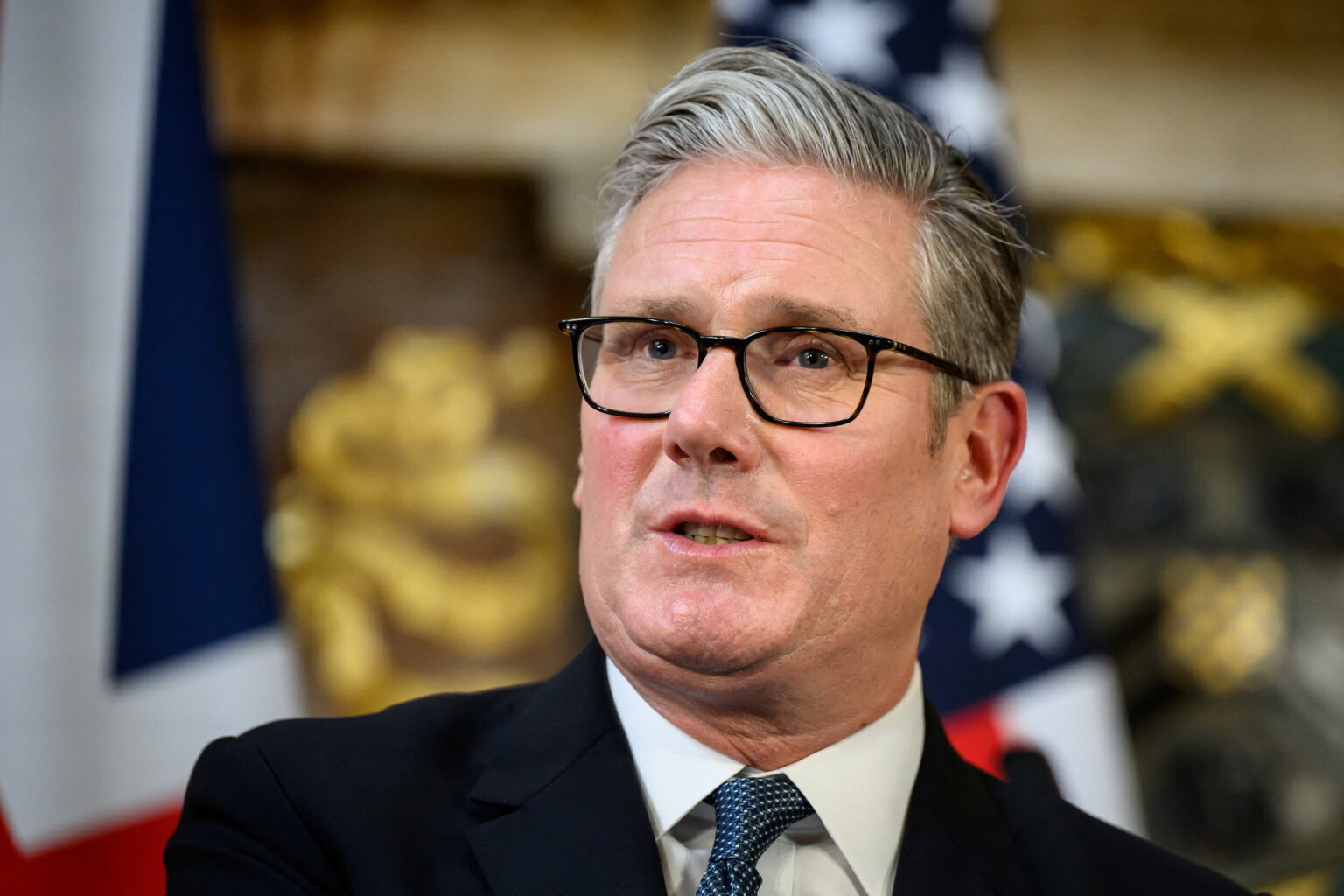
Keir Starmer has described scrapping the two-child benefit cap as his proudest moment as prime minister – despite previously suspending Labour MPs for voting for its removal.
Starmer was asked “What have you been most proud of as prime minister?” in an interview with Beth Rigby on Sky News on Wednesday.
“Lifting half a million children out of poverty by removing the two-child benefit cap,” he replied.
“That is something I’m proud of because that will be felt not just this year, next year, not just during the duration of this government, but for those children it will be felt for the rest of their lives.”
However, Starmer’s boast has drawn accusations of hypocrisy from social media users, who have pointed to his previous decision to punish his own MPs for voting for the policy.
In July 2024 Starmer withdrew the whip from seven backbench Labour MPs for backing a Scottish National Party amendment calling for the cap to be axed.
The amendment was defeated by 363 votes to 103, with rebel MPs John McDonnell, Richard Burgon, Rebecca Long-Bailey, Apsana Begum, Imran Hussain, Ian Byrne and Zarah Sultana all suspended from the Labour party. An additional 42 Labour MPs abstained.
Keir Starmer says pensioners can freeze to death and poor children can starve and be condemned to failure and misery all their lives.Keir Starmer says that the Labour Party under his leadership is intensely relaxed about assaulting those least able to defend themselves – the very poorest and most vulnerable.Keir Starmer refuses to be outcnuted by Nigel Farage’s chasing the racist bigot vote.
Children playing football on the street in Luton, August 1, 2025
MINISTERS were urged to go further to tackle child poverty as MPs voted on lifting the two-child benefit cap today.
Labour has faced calls since they came to power in summer 2024 to scrap the Tory policy that restricts child tax credit and universal credit to the first two children in most households.
Seven Labour MPs were suspended by the party after a backing an SNP motion to scrap the welfare measure in a vote in Parliament that year.
The government had at the time cited spending controls as a reason for not being able to ditch the policy immediately, indicating there would be no change without economic growth.
But following repeated calls from charities, campaigners and many of the party’s own MPs, Chancellor Rachel Reeves announced in the autumn Budget last year that the government would move to scrap the policy from April.
Addressing the Commons for the second reading of the Universal Credit (Removal of Two Child Limit) Bill today, Work and Pensions Secretary Pat McFadden said that the policy used children as pawns and was “all about the politics of dividing lines” between the “deserving and undeserving poor.”
But Labour MP for Liverpool Riverside Kim Johnson said that she feared the Bill to remove the cap would never have happened without the campaigning of the End Child Poverty Coalition (ECPC) and National Education Union (NEU).
She said: “It’s a shame that it has taken so long to reverse this draconian cap that was driving hundreds of families into poverty every single month.
Keir Starmer says pensioners can freeze to death and poor children can starve and be condemned to failure and misery all their lives.Keir Starmer says that the Labour Party under his leadership is intensely relaxed about assaulting those least able to defend themselves – the very poorest and most vulnerable.Keir Starmer explains that he feels no shame or guilt benefitting personally from gifts from the rich and powerful while insisting on policies of severe austerity causing suffering and death.
Reacting to the Autumn Budget statement delivered by the chancellor Rachel Reeves today, Green Party Treasury spokesperson, Adrian Ramsay MP, said:
“Instead of delivering a transformational Budget to tax extreme wealth fairly and tackle the cost-of-living crisis, this Labour Government has once again chosen to paper over the cracks – with half-measures that won’t do enough to fix the deep-rooted problems in our economy that are keeping ordinary people in poverty while the super-rich get richer.
“The Chancellor spoke about asking everyone to make a contribution, but it is frankly inexcusable that she has made the political choice to squeeze households already struggling with the cost of essentials, whilst letting multimillionaires and billionaires off the hook.
“It is indefensible that the Chancellor is cutting vital home insulation funding, one of the best ways to lower bills.
“And whilst scrapping the cruel two-child benefit cap will be a huge relief to families across the country, it is unforgivable that it has taken 18 months for the Chancellor to acknowledge the terrible harm and distress this cap has caused to so many families. Far more action is needed to end the scandal of child poverty.”
Chancellor of the Exchequer Rachel Reeves speaks to the media about the October inflation statistics from the Office of National Statistics, during a visit to a Tesco supermarket in Earl’s Court, west London, November 19, 2025
CHANCELLOR Rachel Reeves must scrap the two-child cap “in full” at the Budget as seven in 10 of the 4.5 million children living in poverty in Britain have at least one working parent, the TUC has warned.
The union body called on Labour to ditch Tory cruelty on Wednesday, with its analysis published today revealing that working people are just £12 a week better off in real terms than they were when the financial crisis hit in 2008.
Public service workers, meanwhile, are no better off compared to 2008, with real pay the same.
TUC general secretary Paul Nowak said the Chancellor must tackle the child poverty emergency by delivering a “living standards Budget.”
He said: “Households up and down the country are still suffering a painful Tory pay hangover — leaving this Labour government with lots of ground to make up.
“That’s why Wednesday is a crucial moment to show ministers are on the side of working people by making affordability a top priority.
“That means a clear plan to bring down energy bills for households. It means action to make work pay by showing ambition on the minimum wage.
“And it means tackling the child poverty emergency by scrapping the two-child benefit cap in full.”
Polling by the TUC also reveals 83 per cent of the public believe no child should be living in poverty in Britain.
Keir Starmer confirms that he’s proud to be a red Tory continuing austerity and targeting poor and disabled scum.Keir Starmer says pensioners can freeze to death and poor children can starve and be condemned to failure and misery all their lives.
Zack Polanski, Zarah Sultana and Jeremy Corbyn offer hope for the British left | Ben Montgomery/Stringer / Leon Neal/Staff / Kristian Buus/Contributor / Getty Images / Composition by James Battershill
In choosing big business over ordinary people, the PM has sacrificed the heart of the Labour Party. So what next?
Labour’s political position is increasingly the reverse of the ‘for the many, not the few’ policy pursued under former leader Jeremy Corbyn. The party has embraced corporate capture and the main features of neoliberalism, albeit with incredibly poor timing, as the neoliberal economic model drives runaway wealth that increases dissent across much of the world.
It is no coincidence that, at the same time, when it should be coasting along on a huge parliamentary majority won less than 18 months ago, Labour has been plunged into political disarray and seen its lead disappear in the polls.
By cosying up to big business and failing to offer anything to substantially improve the lives of ordinary people up and down the country, Keir Starmer’s New-New Labour has seen a collapse in its general support and, more significantly, its membership.
The Labour Party has lost 300,000 of the 550,000 members it had in the Corbyn era. While it has been able to recoup the financial support offered by these ordinary members from a few big donors, it has in the process lost the heart of the party.
Many issues demonstrate this, but a few stand out. The government’s repeated refusal (now rumoured to be U-turned on at next month’s Budget) to lift the two-child benefit cap. Its flagship welfare bill (already U-turned on), which would have cut Universal Credit and Personal Independence Payments for millions of vulnerable people. The decision, announced in February of this year, to cut the foreign aid programme to increase military spending.
And then came perhaps the biggest problem of all for Starmer’s Labour: Gaza, where the UK government’s continuing support for Israel as it engages in genocide still beggars belief for many. There have been 32 mass demonstrations in London in the past two years, the most recent being one of the largest protests ever held in the UK. That level of political activity will continue, given Israeli prime minister Binyamin Netanyahu seems determined to avoid a peaceful outcome, and Starmer is unlikely to stand up to him or, by extension, the US.
Widespread dismay and depression on the backbenches may ebb and flow, but at this point, it feels like even a change of leadership may not be enough for a real change in fortune.
The government’s current predicament is the main reason why Westminster politics is so uncertain. Looking at the UK-wide parties, the far-right Reform UK is leading polls with vote shares that vary but are typically over 30%, having soaked up plenty of support as a substantial protest vote. If that persists through to the next general election in 2029, it will likely put Nigel Farage into Downing Street.
Labour’s support, meanwhile, is hovering at around 20%, the Tories more like 15% and the Liberal Democrats rather less.
And until three months ago, the Greens were still weak in polling terms – despite having made some progress since last year’s election – and millions on the left were still disenfranchised, having been disillusioned with Starmer’s Labour leadership.
Two things have changed; the first being Zack Polanski winning the Green Party leadership at the start of September. He has brought a more radical and left-wing perspective to the party, which has led to a jump in the polls and an 80% increase in new members. The Greens announced this week that its membership now stands at 126,000 – more than either the Conservatives or the Lib Dems.
The second change is in the fortunes of the new Your Party group, fronted by Corbyn and former Labour MP Zarah Sultana. While the party’s initial request for expressions of interest received a massive 800,000 responses – at which point it appeared likely to provide a serious challenge to Starmer’s Labour – it ran into internal disagreements six weeks ago that knocked it right back and led to a period of utter dismay and anger among supporters.
Those feelings have eased somewhat over the past two weeks, as Your Party has published draft versions of its constitution, standing orders and an organisational strategy, all of which are to be discussed and developed before being decided at a large national conference in Liverpool at the end of November. The documents, including a draft political statement, are open to all and will no doubt be subject to intense debate and plenty of disagreement, but they do appear to be a genuine attempt at accountability that is a very long way from the opacity of the Labour Party.
A typical meeting of supporters, of which there are hundreds around the country, still sees some of the anger of a few weeks ago, but now also more determination to see things through. If the new party can recapture the mood of three months ago – and particularly if it and the Greens are willing to work with one another – then there may be some hope for the disenfranchised left.
One of the most interesting aspects of these rapid political changes is the potential for the three figureheads of these two parties to have a substantial impact.
Zarah Sultana, with an often combative style, appeals particularly to younger and frustrated audiences, while Zack Polanski’s normal and measured approach is persistently disarming for Reform’s far-right politicians. Then there is Jeremy Corbyn, who is already a national figure known for a long-term commitment to a progressive agenda and a remarkable personal following.
These are very early days in a time of rapid political change. Reform is still on the up, but compared with just three months ago, there is now a lot more reason for hope on the left.
Keir Starmer explains that he feels no shame or guilt benefitting personally from gifts from the rich and powerful while insisting on policies of severe austerity causing suffering and death.Keir Starmer says that the Labour Party under his leadership all feel a small part of Scunthorpe.Keir Starmer objects to criticism of the IDF. He asks how could anyone object to them starving people to death, forced marches like the Nazis did, bombing Gaza’s hospitals and universities, mass-murdering journalists, healthworkers and starving people queuing for food, killing and raping prisoners and murdering children. He calls for people to stop obstructing his genocide for Israel.


 Children playing football on the street in Luton, August 1, 2025

 Chancellor of the Exchequer Rachel Reeves speaks to the media about the October inflation statistics from the Office of National Statistics, during a visit to a Tesco supermarket in Earl’s Court, west London, November 19, 2025


