Article by Julia Conley republished form Common Dreams under Creative Commons (CC BY-NC-ND 3.0).
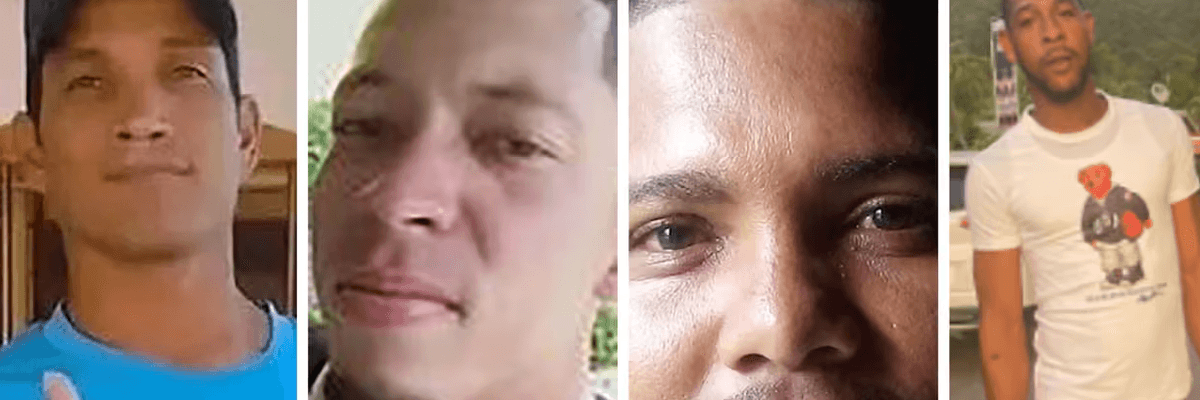
“It’s a double tragedy—not only because of the unlawful killings, but because the victims are erased, reduced to anonymity,” said one human rights advocate.
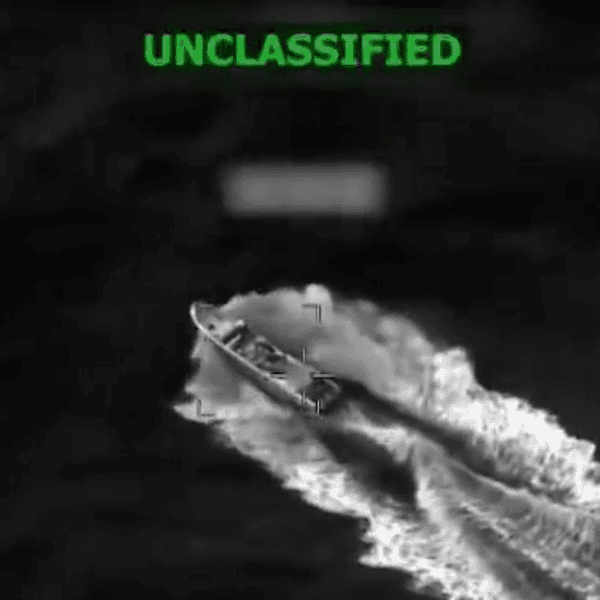
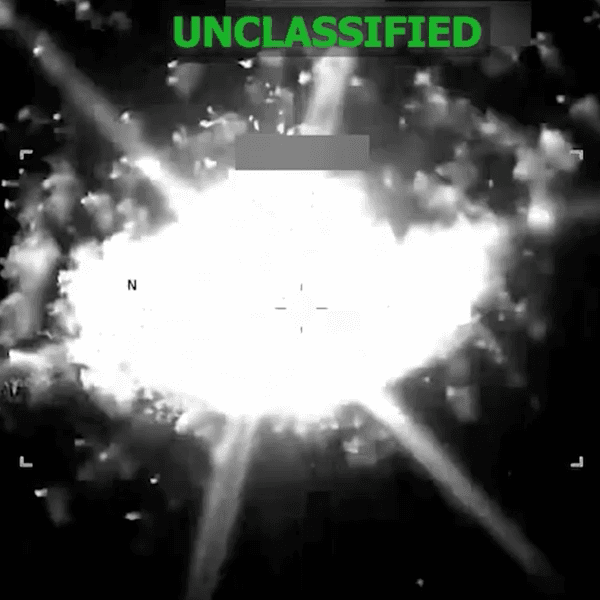
The 57 confirmed bombings of boats that the Trump administration has carried out so far since last September have shattered families and communities across Latin America, with Defense Secretary Pete Hegseth and US Southern Command never acknowledging the identities of the at least 192 people they’ve killed, beyond declaring them “narco-terrorists.”
But despite the concerted effort to keep the names and any information about the victims hidden—their identities “blown away over vast stretches of ocean,” as a new report states—20 journalists led by the Latin American Center for Investigative Journalism (CLIP) managed to identify 13 of the men whose killings have been called “murders” by legal experts and rights advocates.
RECOMMENDED…
‘These Are Murders’: Trump Killing Spree Hits At Least 185
‘3 More Murders at Sea’: Trump Boat-Bombing Spree Continues
The journalists and researchers represented CasaMacondo, Verdad Abierta, 360-grados.co, and NGO El Veinte in Colombia; Alianza Rebelde Investiga in Venezuela; the Trinidad and Tobago Guardian; and Airwars in the UK.
The investigation, titled “Bombed, Without the Right to a Defense,“ was completed despite widespread fears of speaking out about the bombings in the affected communities.
“Some relatives of victims in Venezuela and in Santa Marta, Colombia, say they have received threats, as sources confirmed to journalists in this alliance,” reads the report. “Authorities have remained largely opaque, and the officials willing to talk do so only off the record, wary of dragging their countries into conflict with [US President Donald] Trump.”
Three people named in the report had already been identified publicly in legal complaints—Trinidadians Chad Joseph and Rishi Samaroo, whose families filed a complaint in the US federal court; and Colombian Alejandro Carranza Medina, whose family filed a petition with the US-based Inter-American Commission on Human Rights.
The men identified for the first time by CLIP include:
- Juan Carlos Fuentes, a bus driver who told his family he was “going to have to do something risky to see if I can make ends meet” after his bus broke down, and who left behind three children and a grandson;
- Luis Ramón Amundarain, a motorcycle taxi driver and fisherman with a wife and five children;
- Eduard Hidalgo, a fisherman who had been deported from the US in December 2025;
- Jesús Carreño of Venezuela;
- Eduardo Jaime, a “beloved indoor soccer player” in his hometown of Güiria, Venezuela;
- Dushak Milovcic, a student at the National Guard Academy in Venezuela who became involved in drug transporting, starting as “a lookout for smugglers”;
- Ricky Joseph, a well-known fishmerman in Savannes Bay, Saint Lucia, whose family lost contact with him after a bombing on February 13 and who is believed to be one of the victims;
- Pedro Ramón Holguín Holguín, who was registered as a fish and seafood wholesaler in Ecuador;
- Carlos Manuel Rodríguez Solórzano, who was rescued by Costa Rican authorities but died following an attack on his boat;
- Luis Alí Martínez, who had a criminal record for drug trafficking and other crimes;
- Ronald Arregocés of Riohacha, Colombia;
- Adrián Lubo, of Riohacha, Colombia, who was called “a great captain” by a person who knew him; and
- Robert Sánchez, who was traveling with his cousin, Amundarain, when the boat they were on was bombed.
Another man was identified by his nickname, and two unnamed people, including an Ecuadorian man who helped survivor Jonathan Obando escape a bombing and later died, were included in the report.
“It’s a double tragedy—not only because of the unlawful killings, but because the victims are erased, reduced to anonymity,” John Walsh, of the Washington Office on Latin America (WOLA), told CLIP and the reporting alliance.
The report emphasizes that all of the victims it identified came from poor families and communities. In Uribia, Colombia, where at least two bodies washed ashore after a boat attack, 92% of residents “lack adequate education, healthcare, or basic public services.”
“In those conditions, recruiting young men to transport cocaine is easy work—and the pay can be good,” reads the report.
A boatman in Uribia told CLIP that “most people here aren’t the owners” of vessels or the drugs they carry. “The people who own the cargo are almost always outsiders—even international players.”
María Teresa Ronderos, director and co-founder of the CLIP, told The Guardian the report affirms that despite the administration’s repeated claims that the military is defending “our nation’s interest” and protecting Americans from those who are “trafficking deadly narcotics” like fentanyl and cocaine, “the US is not taking down any Pablo Escobar or Joaquín ‘El Chapo’ Guzmán.”
“Despite the US claim that the strikes are fighting narco-terrorism, what is actually happening is that young people living in extremely precarious conditions, doing whatever work they can to support their families, are being targeted,” Ronderos said.
The boat that Fuentes and Amundarain, who had both gone to Trinidad and Tobago to work, were on was traveling from the Caribbean country to Venezuela, calling into question the claim that the vessel was trafficking drugs.
“Boats carry drugs from South America northwards, not the reverse,” Ronderos told The Guardian.
Legal experts have emphasized that even in the cases of victims who were involved in the drug trade, the bombings still legally qualify as extrajudicial killings, or even murder. Trump informed Congress in October that the White House views the US as being in an armed conflict with drug cartels in Latin America, claiming a rationale for carrying out the boat strikes. But no conflict has officially been declared, and rights experts warn that the military has clearly violated international law by targeting the survivors of some of the boat attacks in “double-tap” strikes.
“The deaths of Joseph and Samaroo were clearly extrajudicial killings,” Steven Watt, an attorney with the ACLU who is working on the case brought by the two Trinidiadian families, told CLIP. He added that “the Trump administration’s argument—that a ‘war on drugs’ justifies violent strikes like these—cannot legally excuse the killings.”
Brian Finucane of the International Crisis Group told CLIP that “the law of war permits violence otherwise prohibited, but only during genuine armed conflict—a threshold the Trump administration has failed to meet, as it has not even identified who the US is supposedly fighting.”
“Beyond that foundational problem, the administration’s suggestion that vaguely defined ‘enablers’ may be targetable raises further concerns that it is violating the rules of its own bogus legal paradigm,” Finucane said.
Ronderos added that “there is no death penalty for cocaine trafficking.”
“So the fact that they were killed without even having the chance to defend themselves is deeply troubling,” she told The Guardian.
In accordance with international and domestic laws, the US has historically treated drug trafficking on the high seas as a criminal offense and has ensured those who are found trying to bring drugs to the US are brought to justice in court.
A spokesperson for US Southern Command told the reporters that the bombings have been “deliberate, lawful, and precise, directed specifically at narco-terrorists and their enablers,” and that the US has “full confidence in the operations and intelligence professionals who inform our missions.”
But the administration has not released any evidence showing the strikes have targeted major drug trafficking operations, and as Common Dreams reported last month, data from US Customs and Border Protection shows little evidence that the strikes are stopping the flow of illicit substances.
“CBP’s seizures of fentanyl at the US-Mexico border had been declining, often sharply, since mid-2023. But since early 2025, the declines stopped,” said Adam Isacson of WOLA at the time. “Halfway into fiscal 2026, seizures are almost exactly half of 2025’s full-year total: a flat trendline.”
Finucane told The Guardian that the boat strikes have never been “a serious counter-drug operation.”
“I think this was in part a military spectacle to give the illusion of the administration doing something ‘macho’ about drugs,” Finucane said.
Walsh said Hegseth and Trump “want to impress the public, to make Americans believe that they, unlike previous governments, are finally ending the terrible problem of drug trafficking.”
“The profound cruelty and indifference with which they order these systematic and intentional killings allows them to project this menacing image of faceless ‘narco-terrorists,’” he added. “In doing so, they shock many Americans while numbing their sense that the US officials responsible for these murders should be held accountable.”
Article by Julia Conley republished form Common Dreams under Creative Commons (CC BY-NC-ND 3.0).

- ‘3 More Murders at Sea’: Trump Boat-Bombing Spree Continues ›
- Trump Ends 2025 by Bombing More Boats, Bringing Death Toll to at Least 115 ›
- Death Toll Up to 128 People as Trump Pentagon Commits Two More Killings at Sea ›
- What the Pentagon’s Attack Videos Reveal About the Boat Strikes at Sea – The New York Times ›