After Offering ‘No Tangible Concessions’ in Iran Peace Talks, Trump Issues Latest Violent Threat

Spread the love

Article by Julia Conley republished form Common Dreams under Creative Commons (CC BY-NC-ND 3.0). 

US President Donald Trump speaks to reporters after arriving on the South Lawn of the White House in Washington, DC, on May 15, 2026. (Photo by Alex Wroblewski/AFP via Getty Images)

“The only realistic path to a diplomatic breakthrough would require Washington to engage more directly with the structure and substance of the Iranian proposal itself,” said a national security expert.

With the economic impact of the war on Iran linked to President Donald Trump’s plummeting approval rating, the president issued his latest threat to destroy the Middle Eastern country Sunday as he demanded negotiators “get moving, FAST” to end the conflict the US and Israel began by choice in February.

“For Iran, the Clock is Ticking,” said the president in a Truth Social post, adding that if a peace deal is not reached soon, “there won’t be anything left of them. TIME IS OF THE ESSENCE!”

RECOMMENDED…
Iranian President Masoud Pezeshkian

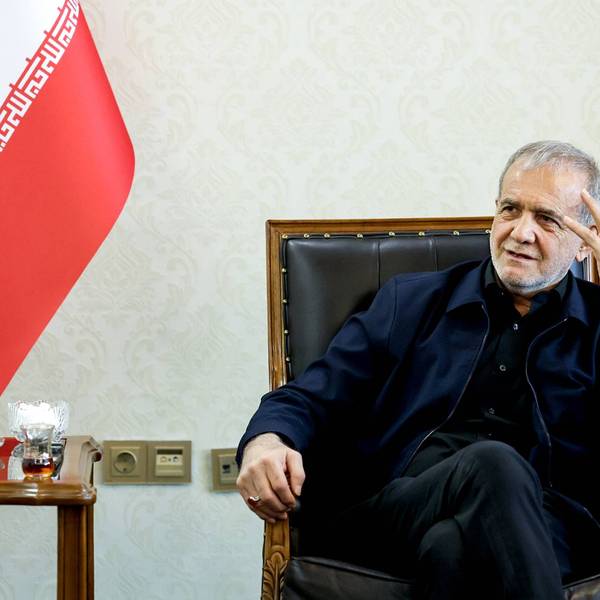
‘Iranians Do Not Submit to Force,’ Says Iran’s President as Trump Lobs More Threats

US-POLITICS-TRUMP

‘An Almost Unthinkable Threat’: Trump Warning That Iran Will ‘Glow’ Sparks Latest Fears of Nuclear Attack

Trump rejected Iran’s latest peace proposal last week; the country has reportedly offered significant concessions on its uranium enrichment, but seeks to have separate nuclear talks after achieving peace and reaching a deal to reopen the Strait of Hormuz, which the Iranians effectively closed in retaliation for the US-Israeli attacks.

Since launching the conflict, Trump has demanded the dismantling of Iran’s missile arsenal as well as its nuclear program, which Iran has said is not for military purposes, and has called for the country to cut ties with its regional allies.

Iran’s Mehr news agency said Sunday that Trump had offered “no tangible concessions” in his response to the Iranians’ latest proposal.

“The United States,” said the news outlet, “wants to obtain concessions that it failed to obtain during the war, which will lead to an impasse in the negotiations.”

Trump told Fox News in Beijing over the weekend that the Iranians are “crazy, and you know what? Because of that, they cannot have a nuclear weapon,” explaining why he viewed it as “unacceptable” for nuclear talks to take place separately after a peace deal is brokered.

Trump reportedly spoke to Israeli Prime Minister Benjamin Netanyahu Sunday about the possibility of renewing strikes on Iran, which would break a ceasefire that was reached more than a month ago.

Danny Citrinowicz, a senior researcher at the Institute for National Security Studies, said Sunday that “the only realistic path to a diplomatic breakthrough would require Washington to engage more directly with the structure and substance of the Iranian proposal itself.”

“Iran’s priorities remain consistent: ending what it views as economic siege conditions, reopening maritime access and reducing pressure in the Gulf, negotiating an end to the broader conflict, and only afterward addressing the nuclear issue,” said Citrinowicz. “At the present moment, it is difficult to see the Iranian leadership agreeing to any framework that does not meaningfully engage with those core demands.”

As with Trump’s earlier threats of violence, including one in April in which he declared that Iran’s entire civilization would die, “never to be brought back again,” Iranian officials said the president’s latest comments—which followed his posting of an image of himself on a military ship accompanied by the words, “It was the calm before the storm”—would not be tolerated.

A spokesperson for Iran’s armed forces, Abolfazl Shakarchi, told Mehr that “repeating any folly to compensate for America’s disgrace in the Third Imposed War against Iran will result in nothing but receiving more crushing and severe blows.”

Reporting for Al Jazeera, correspondent Almigdad Alruhaid said that the “kind of language” displayed by Trump on Sunday “is not acceptable here in Tehran. They are projecting defiance rather than [giving] an immediate response to this kind of rhetoric.”

“Behind all of this rhetoric, there is awareness that the diplomatic window right now is narrowing,” said Alruhid.

Meanwhile, US Sen. Lindsey Graham (R-SC) urged Trump to “hurt them more” in order to force a deal, calling on the president to go through with bombing Iran’s energy infrastructure as he’s threatened to in recent months.

“The reason why Trump didn’t do this during the war—despite threatening it—was because he realized Tehran would retaliate and take out the energy infrastructure in the [Gulf Cooperation Council] states,” said Trita Parsi, executive vice president at the Quincy Institute for Responsible Statecraft. “This would lead to a far worse oil crisis—one rooted in production problems, not just a bottleneck in the Persian Gulf.”

“The global economy would be thrown into a deep recession. Fuel shortages would lead to food shortages worldwide. Trump’s presidency would be destroyed,” he said. “None of this matters to Lindsey. He’ll burn the entire planet as long as he gets his war. Trump’s biggest mistake has been to listen to Lindsey and his allies.”

Article by Julia Conley republished form Common Dreams under Creative Commons (CC BY-NC-ND 3.0). 

Donald Trump sings and dances, says that it's fun to kill everyone ...
Donald Trump sings and dances, says that it’s fun to kill everyone …
Orcas discuss rotting brain, front Orca says disinhibition and swearing are typical and common symptoms, small Orca speaks bluntly.

Continue ReadingAfter Offering ‘No Tangible Concessions’ in Iran Peace Talks, Trump Issues Latest Violent Threat

Staging for a Strike? US Quietly Moves Bombers as Israel Prepares to Hit Iran

Spread the love

Original article by Robert Inlakesh republished from Mint Press News under a Creative Commons Attribution-NonCommercial-ShareAlike 3.0 International License.

As threats of an Israeli strike on Iran grow louder, the United States is making quiet but unmistakable moves of its own. Over the past month, Washington has quietly repositioned strategic bombers and fighter squadrons to Diego Garcia, a remote U.S. military outpost in the Indian Ocean, squarely within striking distance of Tehran.

The official rationale is force protection. But the scale and nature of the deployments have sparked speculation that Washington is laying the groundwork for potential military involvement in an Israeli-led operation, or, at the very least, sending a message to Tehran that it won’t stand in the way.

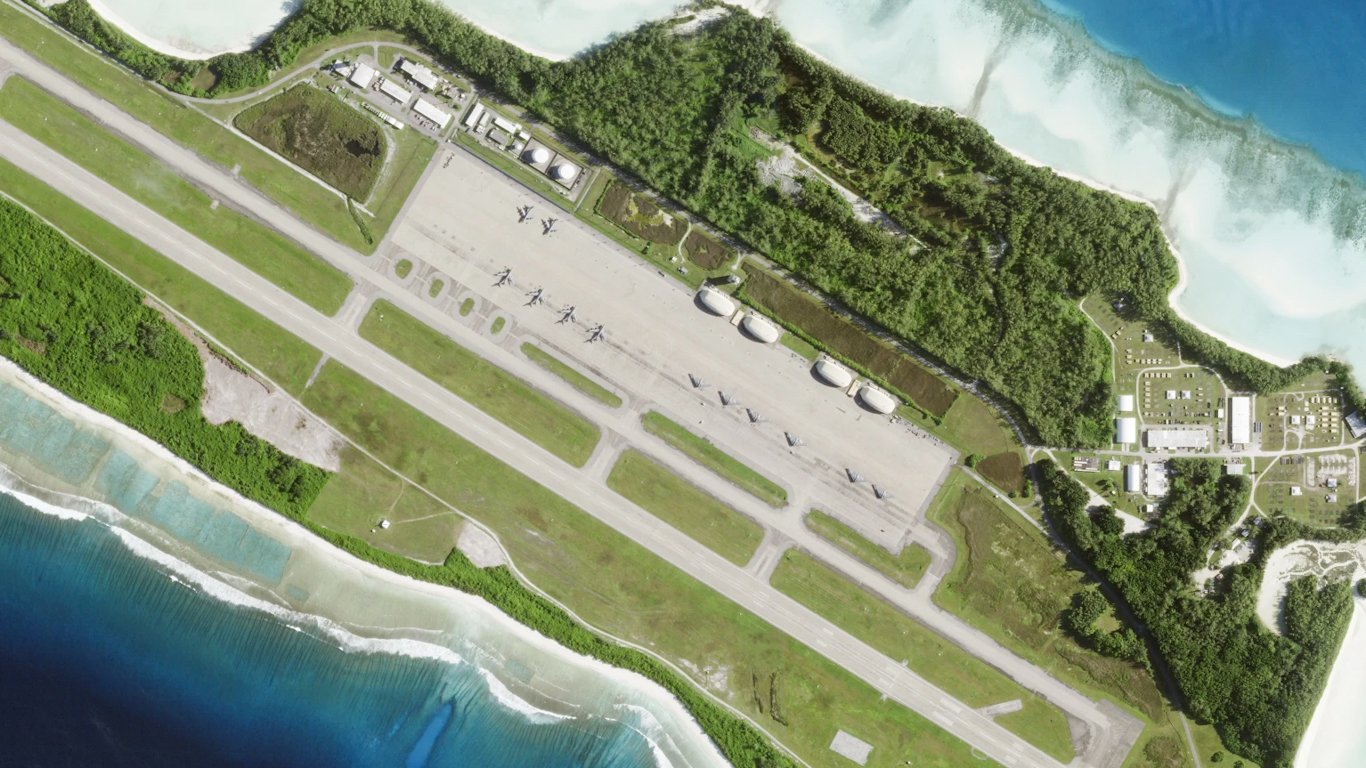
Roughly a month ago, the U.S. Air Force deployed six B-2 Spirit bombers to Diego Garcia, a third of its active fleet of nuclear-capable stealth aircraft. These bombers, capable of flying directly from the U.S. to targets across the globe, don’t require forward deployment to be effective. Which is why their presence on a remote island in the Indian Ocean is raising eyebrows.

The B-2s have reportedly been used in prior strikes against Ansar Allah targets in Yemen, though with limited strategic effect. Following the declared conclusion of U.S. operations in Yemen, at least some of the B-2s were replaced by four B-52 strategic bombers, another long-range platform associated with show-of-force missions.

But then, additional firepower arrived. An entire squadron of F-15E Strike Eagle fighter jets was flown to the base. While these jets have strike capabilities, open-source intelligence analysts suggest they were likely deployed for base defense. That assessment, if correct, underscores that the Pentagon sees Diego Garcia not just as a staging ground, but as a potential target in a broader escalation.

Meanwhile, intelligence signals point to real movement on the Israeli side. A CNN report this Tuesday cited intercepted communications and activity on the ground indicating that Israel is preparing to strike Iranian nuclear facilities. U.S. officials reportedly believe the plans are active and serious.

In April, Donald Trump remarked that Israel would “lead” any such operation. That comment was interpreted by many as a nod of support, if not a green light, from Washington. Israeli Prime Minister Benjamin Netanyahu, for his part, has repeatedly warned that his government will not allow Iran to become a nuclear weapons state.

Yet even as diplomatic channels remained open, the introduction of new U.S. “red lines” appears to have derailed progress. U.S. Middle East envoy Steve Witkoff recently declared that Iran must halt all uranium enrichment, a demand not included in the original 2015 nuclear agreement, the Joint Comprehensive Plan of Action (JCPOA).

Iranian officials rejected the move outright. Foreign Minister Abbas Araghchi reiterated that enrichment is a sovereign right and a non-negotiable issue. Ayatollah Seyyed Ali Khamenei dismissed the new U.S. conditions as “nonsense.”

And on May 22, Araghchi issued a sharper warning: Iran, he said, would take “special measures to defend its nuclear facilities” if Israeli threats continued. The statement was deliberately vague, but left little doubt that Tehran is preparing for contingencies.

In Washington, meanwhile, influential think tanks are ratcheting up pressure for a hardline approach. The Washington Institute for Near East Policy (WINEP) has called for the complete dismantling of Iran’s enrichment infrastructure. The Foundation for Defense of Democracies (FDD) has urged more sanctions. The Atlantic Council argues the U.S. must avoid “reviving Obama’s Iran deal.”

Simultaneously, Dana Stroul, a former Biden official now at WINEP, has argued that Iran’s current weakness presents an opportunity for military action. Her view echoes a growing consensus across Washington’s think tank circuit: that Tehran is vulnerable, and now is the moment to strike.

These are the same voices that helped shape past U.S. interventions in the region. Their resurgence now, alongside tactical military deployments and rhetorical escalations, suggests a familiar pattern.

What’s missing from the conversation is any real public debate about the consequences. Not just for Iran, but for U.S. interests, regional stability, and the American public. A confrontation with Iran would carry significant consequences, yet few in Washington have publicly questioned whether such a conflict serves America’s national interest, save for outliers like Rep. Thomas Massie, who has drawn fire from powerful lobbies simply for asking whether this is our fight to begin with.

The buildup at Diego Garcia may be interpreted as precaution. But it’s also a reminder of how quickly precaution becomes policy, and policy becomes war, especially when shaped by proxies, pressure groups, and allies with very different interests.

Wars don’t always begin with votes. In fact, they often begin with quiet deployments far from view, and even farther from the American people they will ultimately affect.

Feature photo | This satellite image from Planet Labs PBC shows six U.S. B-2 stealth bombers parked at Camp Thunder Cove in Diego Garcia on April 2, 2025. Though officially deployed for operations in Yemen, the presence of these nuclear-capable aircraft in striking range of Iran has raised concerns that the U.S. is quietly preparing to support a potential Israeli attack. Photo | AP

Robert Inlakesh is a political analyst, journalist and documentary filmmaker currently based in London, UK. He has reported from and lived in the occupied Palestinian territories and hosts the show ‘Palestine Files’. Director of ‘Steal of the Century: Trump’s Palestine-Israel Catastrophe’. Follow him on Twitter @falasteen47

Original article by Robert Inlakesh republished from Mint Press News under a Creative Commons Attribution-NonCommercial-ShareAlike 3.0 International License.

Neo-Fascist Climate Science Denier Donald Trump says Burn, Baby, Burn.
Elon Musk urges you to be a Fascist like him, says that you can ignore facts and reality then.

Trump’s Break with Israel: Genuine Shift or Political Theater?

Continue ReadingStaging for a Strike? US Quietly Moves Bombers as Israel Prepares to Hit Iran