61% of Americans See Trump’s Iran War as ‘Mistake’, Far Outpacing Disapproval of Vietnam and Iraq: Poll

Spread the love

Article by Stephen Prager republished from Common Dreams under Creative Commons (CC BY-NC-ND 3.0).
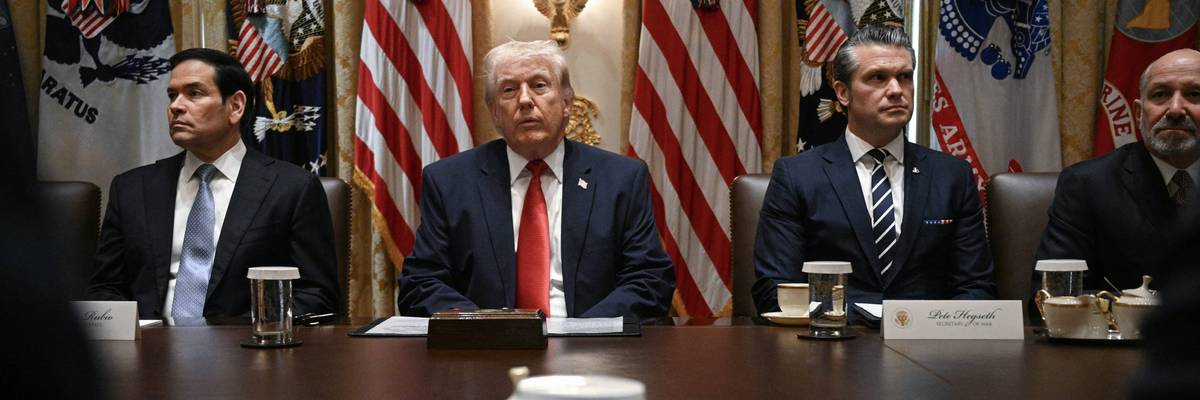
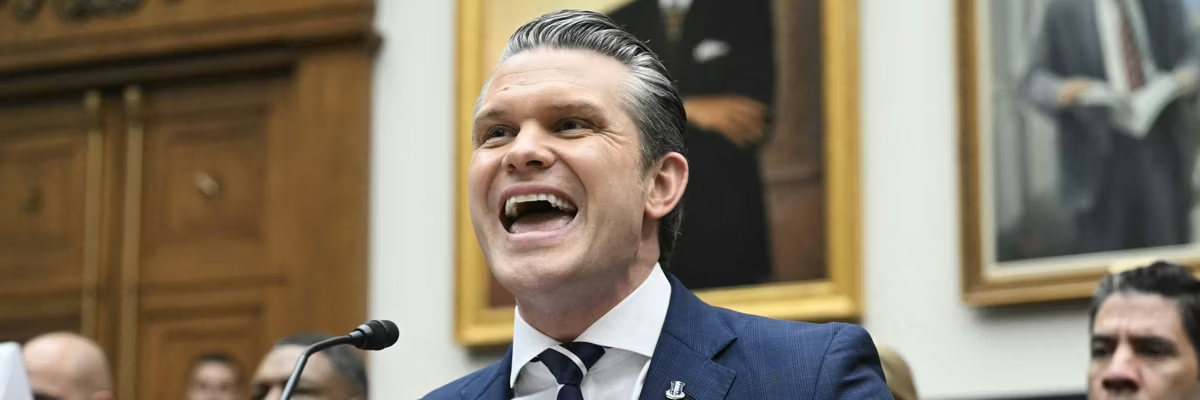
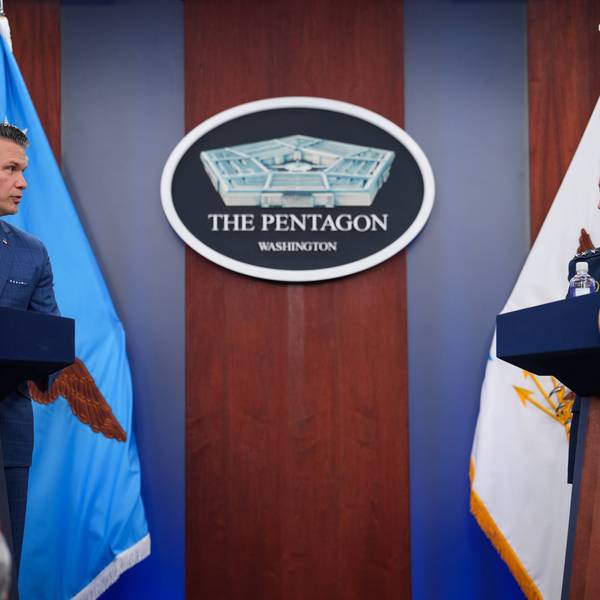
US Secretary of Defense Pete Hegseth testifies before a US House Armed Services Committee hearing on April 29, 2026. (Photo by Saul Loeb/AFP via Getty Images)

“In Iraq, it took more than three years to reach that high. In Vietnam, it took six years.”

More than 6 in 10 Americans now say President Donald Trump’s war in Iran was a “mistake,” according to a poll out Friday from the Washington Post/ABC News/Ipsos.

Within two months, the war—which has inflicted thousands of civilian deaths and caused gas prices to spike worldwide with little tangible gain—has reached levels of unpopularity that previous wars now seen as historic boondoggles took years to reach.

RECOMMENDED…

Gas Prices Rise To Highest Level In 4 Years As War With Iran Continues

New Federal Data Confirms: Trump’s War of Choice in Iran Is a ‘Disaster’ for US Economy

Pete Hegseth And Dan Caine Hold Pentagon Press Briefing On War In Iran

Hegseth Impeachment Articles Land as Thousands More US Troops Deploy for Iran War

The Post has asked the “mistake” for other major wars. But CNN senior political reporter Aaron Blake explained: “In Iraq, it took more than three years to reach that high. In Vietnam, it took six years.”

Despite a massive protest movement, voters overwhelmingly supported President George W. Bush’s decision to invade Iraq, with 81% believing it was the “right thing” in April 2003 and just 16% believing it was a mistake.

But the occupation turned into a long, deadly, and costly disaster, and the administration’s pretexts for the war were revealed to be lies. Public opinion steadily eroded to the point where 64% viewed it as a mistake by January 2007.

Vietnam never had the overwhelming support of Iraq, but 60% of Americans still supported President Lyndon Johnson’s decision to begin direct US military involvement in 1965, while just 24% said it was a mistake.

While the protest movement against the war is as present in Americans’ memories today as the conflict itself, public opinion was still split until 1968 and only reached a high of 61% in May 1971, after more than 50,000 US soldiers had been killed in battle.

Trump’s war in Iran is unique in history in that it never enjoyed even a moment of consensus support. In a Reuters/Ipsos poll just days after the opening salvo of what the Trump administration dubbed “Operation Epic Fury,” just 27% said they approved of the strikes, which killed 555 Iranians, including Supreme Leader Ayatollah Ali Khamenei and several other top Iranian officials.

At this point, 43% of Americans already said they disapproved of the strikes, far eclipsing Iraq and Vietnam. But 30% still said they had not yet made up their minds.

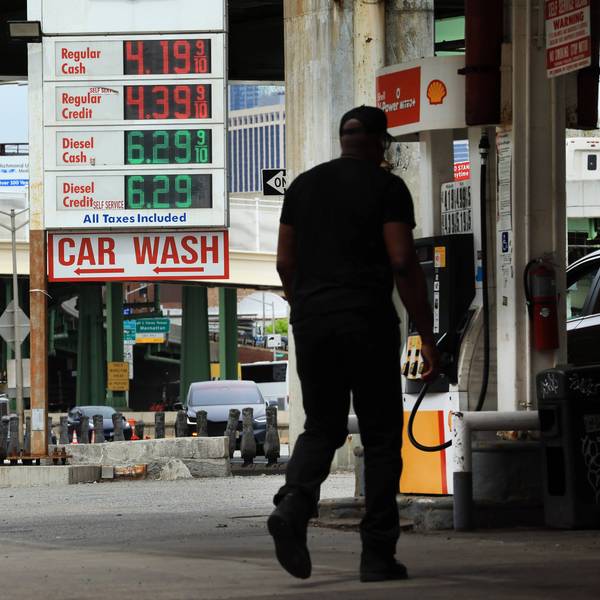
In the coming months, they would. It was revealed that an airstrike on a school, which killed at least 155 people, including 120 children, was a double-tap attack by the United States. Iran retaliated by blocking oil shipments through the Strait of Hormuz, which sent US gas prices hurtling above $4 per gallon. And Trump took on an increasingly erratic and at times outright genocidal posture toward Iran that made any peaceful resolution appear increasingly impossible, even with the current fragile ceasefire.

Friday’s poll shows that while the war still maintains a core base of support—36% of Americans who say it was the right decision, nearly all of them Republicans—it is dwarfed by the 61% who say it was a mistake.

Majorities of respondents across all demographics show that they believe the war has increased the risks of “terrorism against Americans” (61%), “the US economy going into a recession” (60%), and “weakening relationships with US allies.” (56%)

Looking beneath the surface shows an even more worrying sign for Trump: The war has almost no constituency outside of his biggest fans. Self-identified Democrats (91%) overwhelmingly say the war was a mistake. But 71% of independents—many of whom were undecided at the war’s outset—now disapprove too, with just 24% in support.

Even within the GOP, there is a decisive split: 86% of those who self-identify as “MAGA Republicans” are still baying for blood. But “non-MAGA Republicans” have grown uncertain—50% still say war was the right decision, while 49% say it was a mistake.

They were particularly rattled by Trump’s threat last month that “a whole civilization will die tonight” if Iran did not negotiate a deal to his liking. The threat of genocide was too much even for the majority of Republicans, 53% of whom said they viewed it negatively.

What remains to be seen is whether even Trump’s most faithful backers will turn against the war as it drags on. If Defense Secretary Pete Hegseth’s appearance in Congress on Thursday is any guide, the country may soon find out.

On Thursday, when Sen. Kirsten Gillibrand (D-NY) pressed Hegseth about why he has “not sought the support of the American people” and added that “3 out of 5 Americans are against this war today,” he appeared in abject denial about the war’s unpopularity.

“I believe we do have the support of the American people,” he said. “I would remind you and this group that we’re two months in to an effort, and many congressional Democrats want to declare defeat two months in.”

He specifically invoked lengthy past conflicts, repeatedly emphasizing that this one had only lasted “two months,” as if to urge patience with a war Trump had previously said was intended to last only “four to five weeks.”

“Iraq took how many years? Afghanistan took how many years? And they were nebulous missions that people went along with,” he said.

“This is different,” he said of a war that has—depending on the day—been described as one aimed at regime change in Iran, defending protesters, destroying its nuclear program, eliminating its ballistic missile supplytaking its oildefending Israel, and reopening the Strait of Hormuz, among other objectives.

Article by Stephen Prager republished from Common Dreams under Creative Commons (CC BY-NC-ND 3.0).
Keir Starmer explains that UK is actively supporting Israel's genocidal expansion and repeats his previous quotation that he supports Zionism "without qualification". Keir Starmer said “I said it loud and clear – and meant it – that I support Zionism without qualification.” here: https://www.jewishnews.co.uk/keir-starmer-interview-i-will-work-to-eradicate-antisemitism-from-day-one/
Keir Starmer explains that UK is actively supporting Israel’s genocidal expansion and repeats his previous quotation that he supports Zionism “without qualification”. Keir Starmer said “I said it loud and clear – and meant it – that I support Zionism without qualification.” here: https://www.jewishnews.co.uk/keir-starmer-interview-i-will-work-to-eradicate-antisemitism-from-day-one/
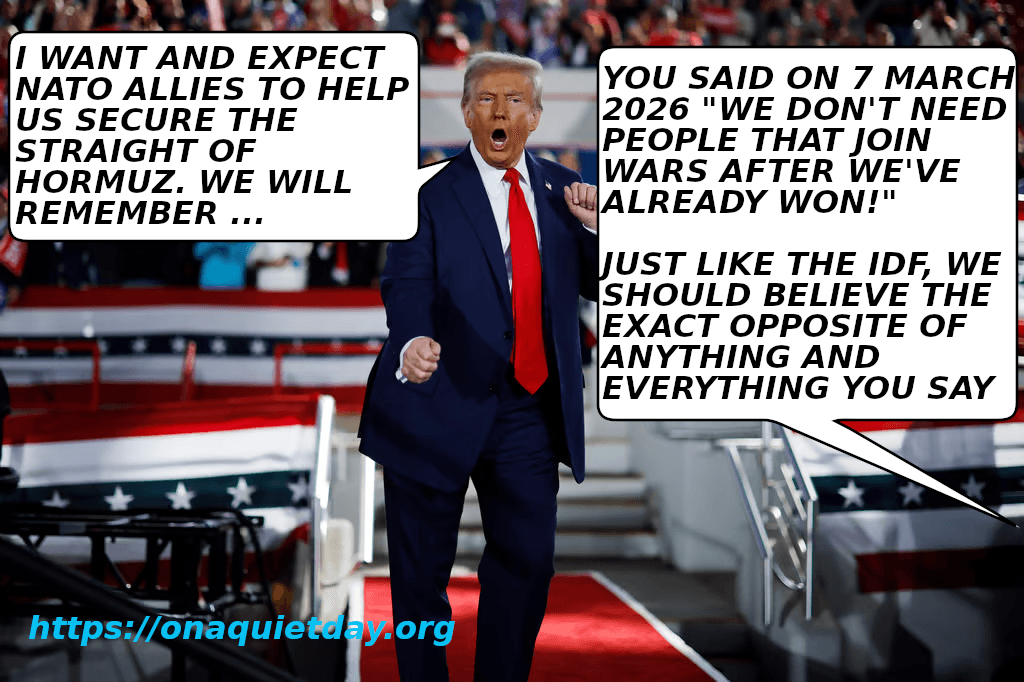
Donald Trump calls for help from NATO allies in securing the Strait of Hormuz despite saying on 7 March 2026 that they don't need people to join wars after they've already won. He's challenged with the claim that he lies as much as the IDF.
Donald Trump calls for help from NATO allies in securing the Strait of Hormuz despite saying on 7 March 2026 that they don’t need people to join wars after they’ve already won. He’s challenged with the claim that he lies as much as the IDF.
Continue Reading61% of Americans See Trump’s Iran War as ‘Mistake’, Far Outpacing Disapproval of Vietnam and Iraq: Poll

Individuals and organisations from 30 countries, including the UK-based Islamic Human Rights Commission, have put their name to a blistering open letter condemning the US/Israeli war on Iran

Spread the love

This work by Middle East Monitor is licensed under a Creative Commons Attribution-NonCommercial-ShareAlike 4.0 International License.

U.S. President Donald Trump (R) welcomes Israeli Prime Minister Benjamin Netanyahu (L) at his Mar-a-Lago residence in Florida, United States on December 29, 2025. [Amos Ben-Gershom (GPO)/Handout – Anadolu Agency]

Written in response to last month’s military attack on the country, the letter delivers a swingeing critique of US foreign policy and historical conduct, accusing Washington of pursuing a doctrine of absolute predation.

It highlights major US wars of the 20th and 21st centuries, referring to “the genocidal horror of Vietnam,” “the annihilation of Cambodia,” and the “systematic slaughter of Koreans,” as well as the destruction of Iraq, Libya, Syria, and Afghanistan.

The open letter, titled ‘A Declaration to the Conscience of Humanity,’ is signed by over 170 signatories from countries and signatories include former UN officials, retired career diplomats, former ministers, scholars, politicians and former parliamentarians, military and security professionals, artists, lawyers as well as journalists, activists, and anti-war campaigners.

READ: 26 million Iranians volunteer to defend country, including public figures

The public figures describe the current US posture as an expansionist strategy aimed at dominating global resources. The policy is driven by “the demonic creed of ‘everything for us, nothing for others’,” which seeks control of global resources ranging from “the oil of Venezuela” to “the mineral wealth of Greenland” or “the energy reserves of Canada”. US policy now “fixates on Iran” because the country possesses “over seven percent of the world’s mineral and energy wealth.”

The war on Iran is another sign of the “moral collapse” of the US-led West which finds its nadir in the genocide in Gaza and is embodied in the vulgar figure of President Trump. The letter goes on to call for a new international order centred on sovereignty and resistance to Western domination.

Beyond its criticism of US policy, the announcement also sets out several demands that the signatories say are necessary to end the current conflict. These include the immediate dismantling of all US military installations in the region and an end to war on all regional fronts.

The full text of the declaration, along with the complete list of signatories, can be read here.

READ: Israel launches ‘preemptive’ strike on Iran as explosions rock Tehran

This work by Middle East Monitor is licensed under a Creative Commons Attribution-NonCommercial-ShareAlike 4.0 International License.

Climate science denier Donald Trump confirms that he knows nothing about democracy and that more liquid gold is being secured according to his policy of global privateering.
Keir Starmer explains that UK is actively supporting Israel's genocidal expansion and repeats his previous quotation that he supports Zionism "without qualification". Keir Starmer said “I said it loud and clear – and meant it – that I support Zionism without qualification.” here: https://www.jewishnews.co.uk/keir-starmer-interview-i-will-work-to-eradicate-antisemitism-from-day-one/
Keir Starmer explains that UK is actively supporting Israel’s genocidal expansion and repeats his previous quotation that he supports Zionism “without qualification”. Keir Starmer said “I said it loud and clear – and meant it – that I support Zionism without qualification.” here: https://www.jewishnews.co.uk/keir-starmer-interview-i-will-work-to-eradicate-antisemitism-from-day-one/
Orcas discuss how Trump was re-elected and him being an obviously insane, xenophobic Fascist.
Continue ReadingIndividuals and organisations from 30 countries, including the UK-based Islamic Human Rights Commission, have put their name to a blistering open letter condemning the US/Israeli war on Iran

A ground war with Iran risks another Vietnam for America

Spread the love

This work by Middle East Monitor is licensed under a Creative Commons Attribution-NonCommercial-ShareAlike 4.0 International License.

The United States announces that the amphibious assault ship USS Tripoli, carrying 3,500 U.S. troops, has reached the area of responsibility of U.S. Central Command in the Middle East on March 2026. [US CENTCOM/Handout – Anadolu Agency]

by Jenny Williams  @Jenny9Williams

Washington has a favourite word for moments like this: options. It sounds sober. Responsible, even. It suggests prudence, flexibility, a commander-in-chief keeping every door open. But in practice, “options” is often just the polite way this town avoids saying what it is really doing. It is preparing itself, step by step, to go further than it said it would.

That is what makes the talk around Iran so unsettling. The administration keeps insisting that it does not need a ground war. Senior officials have said the United States can achieve its aims in Iran without ground troops, even as thousands more U.S. forces are being moved into the region to preserve “maximum optionality.” Read that sentence twice. If ground troops are unnecessary, why is Washington still so determined to keep the idea alive?

Americans know where this language usually leads. First, the war is limited. Then the deployment is precautionary. Then the mission expands by degrees, never quite enough at any one moment to trigger a national reckoning, but enough in aggregate to wake up one morning and realise the country is in another war it was told it would not have to fight.

That is not cynicism. It is memory.

One month into this conflict, even sympathetic observers would struggle to say with confidence what success is supposed to look like. The White House now appears to face only hard choices: escalate further, possibly even on the ground, or try to negotiate an exit from a war whose aims have become harder to define the longer it has gone on. That is often how trouble announces itself in Washington—not with one catastrophic decision, but with a series of smaller ones made in the fog of wanting not to look weak.

And whatever this war is, it is not cost-free. That much is already obvious at home. The Strait of Hormuz is one of those places Americans only hear about in a crisis, but they pay for it almost immediately. In 2024, roughly 20 million barrels of oil a day moved through the strait—about one-fifth of global petroleum liquids consumption—and there are very few practical alternatives if traffic is badly disrupted. In plain English: when that waterway is in trouble, so are gas prices, shipping costs, and household budgets.

That is no abstraction now. Public approval for this war is weak. Polling shows broad disapproval of the strikes on Iran, with a clear majority of Americans also opposed to deploying US ground troops there.

Those numbers matter not because public opinion should dictate strategy minute by minute, but because they show something important: the country is not in the mood for another war sold in the language of control and finished in the language of sacrifice.

There is also a basic military question that should be asked more often and answered more honestly. If Iranian retaliation has already shown that American forces and facilities in the region are vulnerable, what exactly is the theory behind putting more Americans within range? A ground war is not just “more pressure.” It is more funerals. More catastrophic injuries. More families being told that the mission changed after the mission had supposedly already been defined. It is one thing to posture about resolve in a briefing room. It is another thing to ask young Americans to bear the cost of that posture with their bodies.

READ: Israel says it will not join any US ground operation in Iran

Some advocates of escalation seem to think the mere possibility of a ground operation strengthens Washington’s hand. Maybe, in a narrow tactical sense, it does.

But wars are not played on whiteboards. They are lived in real time, by real people, and they have a way of refusing the tidy logic that got them started. If the United States crosses from air and naval pressure into a land war, the result will not be a cleaner version of this crisis. It will be a different crisis altogether—larger, bloodier, and much harder to contain.

America’s allies seem to understand that. European officials have made clear, in public and in diplomatic language, that they see the United States as increasingly unpredictable and insufficiently clear about where this war is headed. Calls for restraint, for protecting civilians, and for restoring safe navigation through Hormuz are not diplomatic noise. They are signals of deep unease. The war already looks wider, messier, and more economically dangerous than Washington’s original rhetoric suggested.

Trump, of all people, should understand the political trap here. He returned to power promising not to repeat the old bipartisan habit of turning the Middle East into a graveyard of American credibility, money, and lives. A ground war with Iran would do exactly that. It would not look like strength. It would look like Washington falling back into its oldest reflex: when the first use of force fails to produce clarity, answer with more force and pretend clarity is right around the corner.

It rarely is.

There is still time to avoid the worst version of this. But avoiding it requires a little more than saying “no plans at this time.” It requires shutting the door on a ground invasion, not theatrically, not temporarily, but decisively. It requires admitting that a policy can be costly even before it becomes catastrophic. And it requires remembering that the most dangerous wars are often the ones launched by leaders who insist, all the way through, that they remain in control.

America does not need another war of drift. It does not need another “limited” mission that expands because nobody in power wants to be the first to say enough. And it certainly does not need to send more Americans into a conflict whose boundaries are already harder to see than its costs.

OPINION: Trump disappointed, Iran resolute: Leadership amid war

This work by Middle East Monitor is licensed under a Creative Commons Attribution-NonCommercial-ShareAlike 4.0 International License.

Keir Starmer explains that UK is actively supporting Israel's genocidal expansion and repeats his previous quotation that he supports Zionism "without qualification". Keir Starmer said “I said it loud and clear – and meant it – that I support Zionism without qualification.” here: https://www.jewishnews.co.uk/keir-starmer-interview-i-will-work-to-eradicate-antisemitism-from-day-one/
Keir Starmer explains that UK is actively supporting Israel’s genocidal expansion and repeats his previous quotation that he supports Zionism “without qualification”. Keir Starmer said “I said it loud and clear – and meant it – that I support Zionism without qualification.” here: https://www.jewishnews.co.uk/keir-starmer-interview-i-will-work-to-eradicate-antisemitism-from-day-one/
Donald Trump calls for help from NATO allies in securing the Straight of Hormuz despite saying on 7 March 2026 that they don't need people to join wars after they've already won. He's challenged with the claim that he lies as much as the IDF.
Donald Trump calls for help from NATO allies in securing the Straight of Hormuz despite saying on 7 March 2026 that they don’t need people to join wars after they’ve already won. He’s challenged with the claim that he lies as much as the IDF.
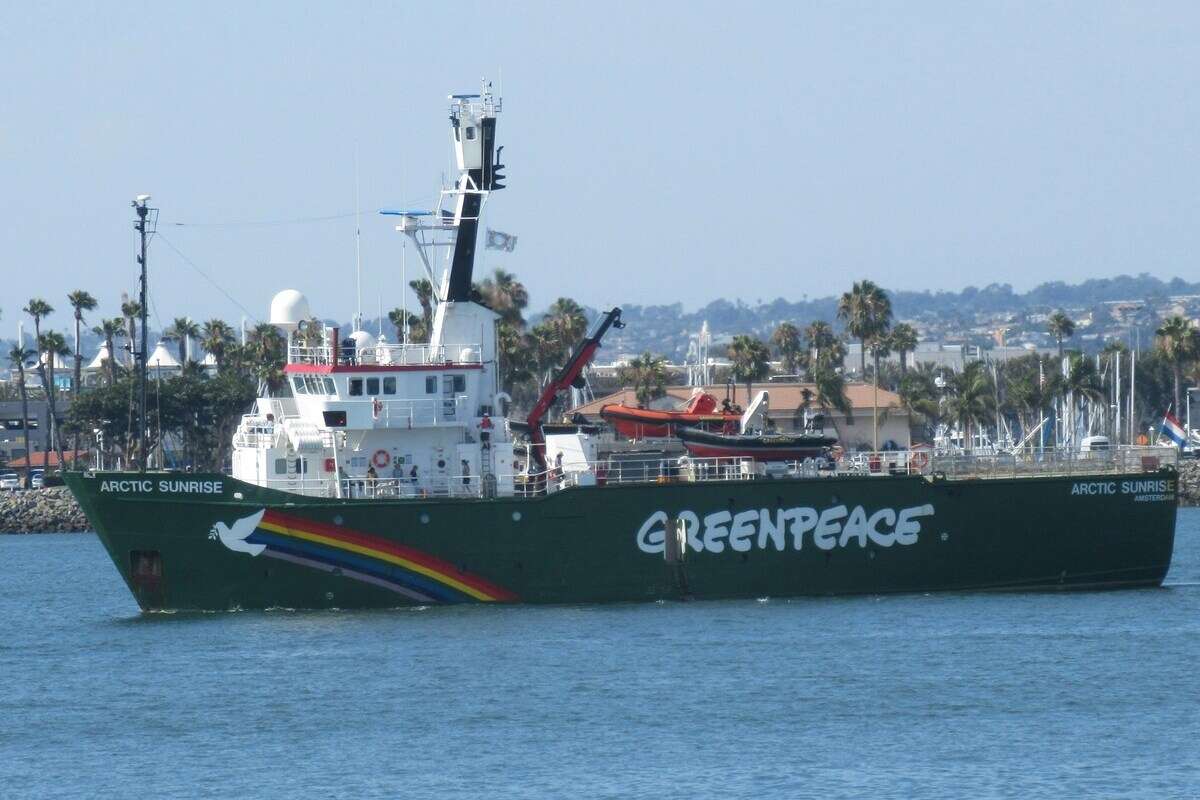
Greenpeace ship Arctic Sunrise. [Photo by Steve Sharp on Unsplash]
Orcas discuss rotting brain. Front Orca says "Wish someone would lock him up".
Orcas discuss rotting brain. Front Orca says “Wish someone would lock him up”.
Continue ReadingA ground war with Iran risks another Vietnam for America

Global South leaders join Victory Day events in Moscow as Europe stays away

Spread the love

Original article by Ana Vračar republished from peoples dispatch under a Creative Commons Attribution-ShareAlike 4.0 (CC BY-SA) license.

Marking the 80th anniversary of Nazi Germany’s defeat, Global South leaders are gathering in Moscow, while EU remains absent

Source: Ministry of Foreign Affairs of Russia/X

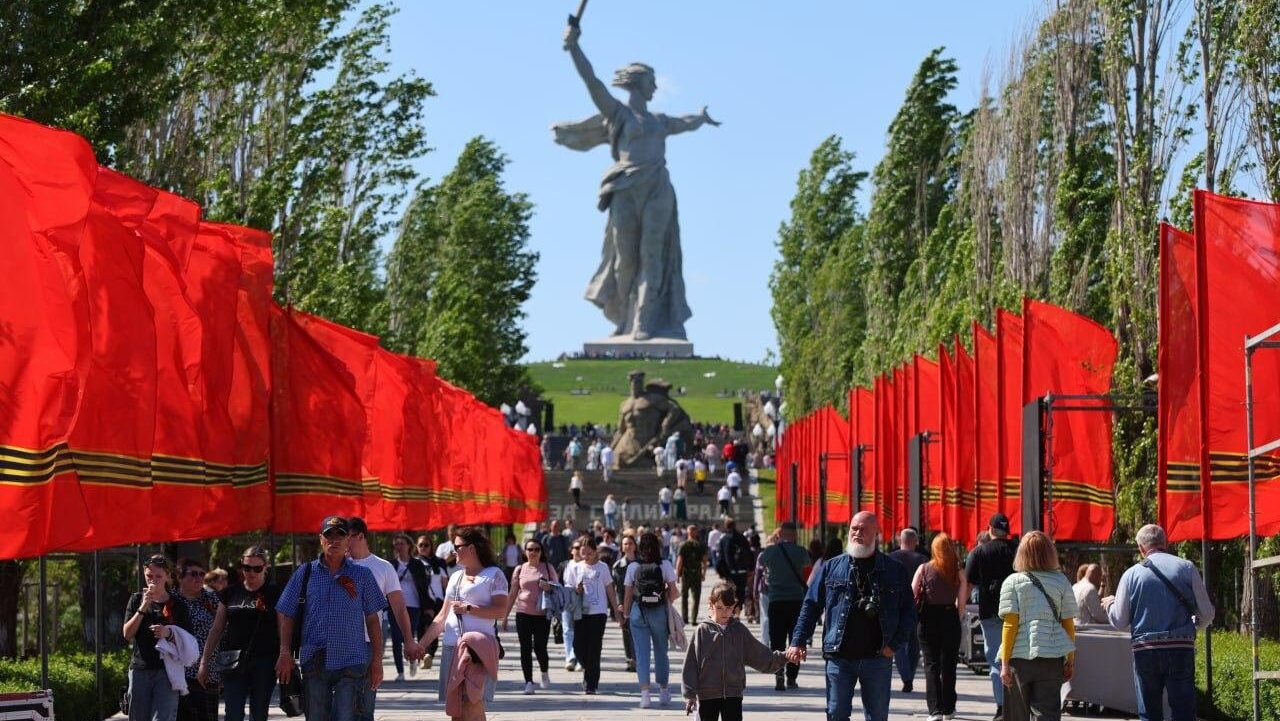
Early high-level events marking the 80th anniversary of the defeat of Nazi Germany are underway in Russia, where the traditional Victory Parade on Friday, May 9, will welcome a host of world leaders and other guests to commemorate the Red Army’s role in the liberation of Europe. According to Russian authorities, 29 countries have confirmed their leaders will attend the event, including Brazil, Burkina Faso, China, Cuba, Venezuela, and Vietnam.

Victory Day, falling on May 8 in most of Europe and on May 9 in Russia due to time zone differences, marks the official surrender of Nazi Germany in 1945. Although the date holds deep historical significance for Europe, its political leaders will be largely absent from this year’s events in Moscow. Slovakia is the only EU country to appear on the latest list of attendees, ignoring warnings from the bloc’s High Representative for Foreign Affairs, Kaja Kallas, who implied there would be ‘consequences’ for European officials participating in the event. Her threats mark the latest episode in a long-standing campaign of historical revisionism led by the EU, aimed at minimizing and obscuring the Soviet Union’s role in the liberation of Europe in World War II.

Honoring Red Army’s role in defeating Nazi Germany

In contrast to the EU, Global South leaders attending the events expressed their respect and acknowledged those who fought for liberation. At the beginning of his visit, Venezuelan President Nicolás Maduro stated simply: “It was the Red Army that liberated Europe.” Similarly, Chinese President Xi Jinping emphasized the importance of maintaining an accurate historical perspective on World War II and applying its lessons to the present, particularly when it comes to resisting Western domination.

“Eighty years ago, the forces of justice around the world, including China and the Soviet Union, united in courageous battles against their common foes and defeated the overbearing fascist powers,” Xi wrote in an article for the Russian Gazette. “Eighty years later today, however, unilateralism, hegemonism, bullying, and coercive practices are severely undermining our world.”

Despite efforts by Western governments to demonize the Red Army, many around the world still remember the USSR’s decisive role in the antifascist struggle, the immense sacrifices it made during the war, and the international solidarity it championed. “The peoples of the world have not forgotten who, in 1945, liberated them from Nazi enslavement and destruction,” stated Gennady Zyuganov, leader of the Communist Party of the Russian Federation, ahead of Victory Day.

“Celebrating the 80th anniversary of the great victory over fascism, we must remember the origins of Nazism,” he added. “Imperialism, which gave birth to that plague, is not a thing of the past. It is no coincidence that today our former allies in the anti-Hitler coalition are erasing us from the list of victorious countries.”

Left movements reclaim antifascist legacy for today’s struggles

Although communist groups across Europe circulated statements honoring the Red Army’s role in World War II, some also voiced concern about the context of this year’s central commemoration in Russia – just as much as the revisionism of core EU countries

Read more: Italy marks 80 years since liberation with calls against genocide and militarism

It is in the spirit of reclaiming the resistance, that left and progressive groups across the region are organizing their own events. In Belgium, for example, activists have rallied around long-standing demands to re-establish May 8 as a public holiday. In former Yugoslav countries, actions will affirm the relevance of antifascism today, particularly in connection with solidarity for Palestine and mobilizations against genocide. All these events are not limited to remembrance: they aim to resist efforts to rewrite history in service of the Global North’s current political agenda.

Original article by Ana Vračar republished from peoples dispatch under a Creative Commons Attribution-ShareAlike 4.0 (CC BY-SA) license.

Continue ReadingGlobal South leaders join Victory Day events in Moscow as Europe stays away