“On this one, Labour have got it right. Giving 16- and 17-year-olds the vote is a long-overdue step towards a stronger, more inclusive democracy. Young people have powerful voices and a vital stake in decisions about their future — it’s only right that they have a say at the ballot box.
But if Labour are serious about renewing our democracy, this must be just the beginning. We need to go further — that means scrapping the undemocratic House of Lords, and finally delivering proportional representation so that every vote counts.”
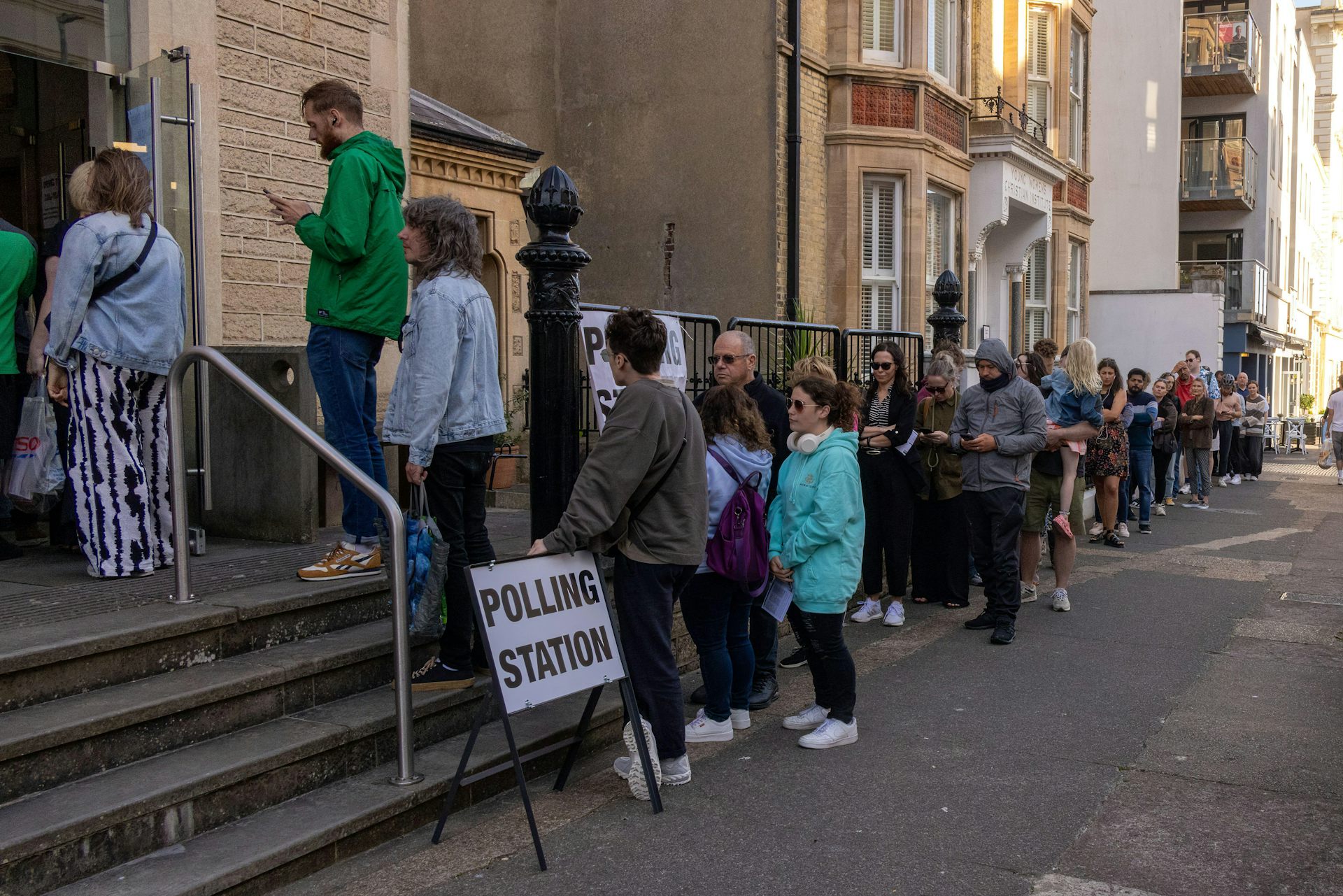
The 2024 general election was the first in the UK’s history to be run under a system of voter ID. When heading to the polling station, people could only vote if they proved their identity first. This was the result of a law brought in in 2023 and that had already applied to local elections in England that year.
Using data from the British Election Study, we tracked people eligible to vote between 2023 and 2024 and found that 5% of people eligible to vote – nearly 2 million people – didn’t own any recognised voter identification. This lack of ID was concentrated among poorer and less educated voters.
Of course, lacking photographic ID is not necessarily a permanent state. Some people will have been in the process of renewing passports and driving licences during this period. All of these people would also have been eligible for a voter authority certificate, a form of identification brought in with the new law – although we found take up of these was low.
We found that around 0.5% of all voters reported being turned away at polling stations as a result of lacking ID in the local elections of 2023. We also found that four times as many people (around 2%) reported not voting because they knew they didn’t have the right ID.
The equivalent figures were slightly lower at the general election of 2024, but a meaningful contingent still did not participate. Around 1.3% of electors – or over half a million people – were turned away or didn’t show up at all because of voter identification requirements.
While administrative records can provide accurate numbers about how many people were turned away at the polling station, they tell us little about people who were discouraged from even trying to vote because they didn’t have the right ID. So it is clear from our analysis that the impact of voter ID on turnout is likely larger than previous estimates based on polling station returns.
The general election was the first time ID was mandatory across the country. Alamy
Who benefits?
We also found that the Conservatives were more likely to benefit from the voter ID law than other parties.
This is not surprising when we consider demographic factors. As our research shows, Conservative voters are more likely to own ID, because they are more likely to be older and more affluent. Despite changes in social patterns of party support since the 2016 Brexit referendum, this pattern still holds true.
The types of identification which are allowed under the new law – and especially the decision to allow older people but not younger people to use travel passes – exacerbates these differences.
Who didn’t have ID?
Percentage of party supporters (general election vote intention) without photo ID, May 2023 (lighter column) and 2024 (darker column) British Election Study, CC BY-ND
The chart above shows the percentage lacking photo ID by general election vote intention, as measured in May 2023 (lighter bars) and May 2024 (shaded bars), shortly before the general election was called.
In 2024, only 2.4% of Conservative supporters were likely to not have photo ID, while 3.8% of Labour supporters and 4.1% of Reform supporters were lacking.
One notable difference is an increase in Liberal Democrats and non-voters with no photo identification in 2024, although this is almost entirely due to a change in the number of people supporting the Liberal Democrats or deciding not to vote rather than changes in people’s actual ownership of ID.
Liberal Democrat voters had the lowest proportion of supporters without voter ID in 2023 (1.3%), but in 2024, the Liberal Democrat rate exceeded that of the Conservatives (2.9%).
There are still opportunities to mitigate the risks posed by voter ID. Ahead of the next election the new government should extend the forms of identification allowed (especially for those younger than state pension age).
Improving public awareness around the law and the availability of voter authority certificates is another important step. There are also suggestions that a system of allowing people to vouch for others who don’t have voter ID would be an option.
In an electorate of 49 million, if almost two million aren’t able to vote because they don’t have the right ID, there is a problem. Those interested in building trust in our democracy should consider not only minimising electoral fraud but reducing this number by as much as possible.
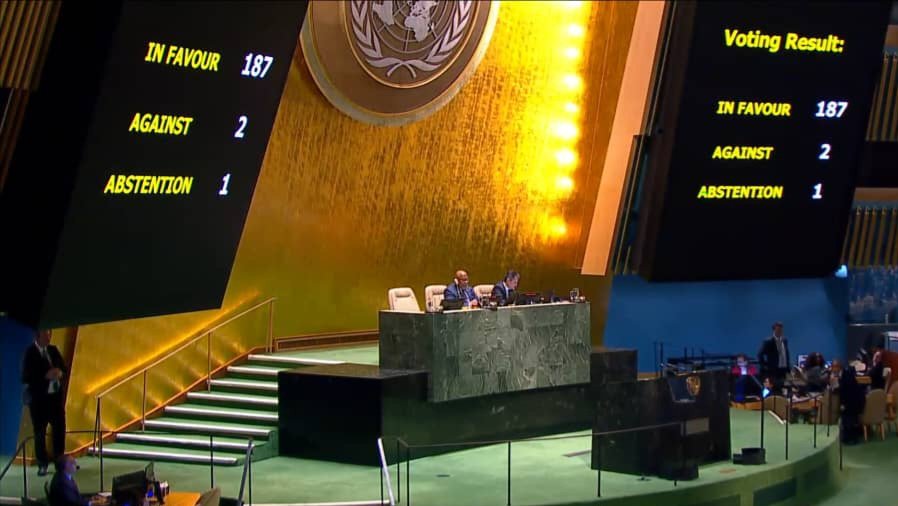
In 2023, 187 nations voted in favor of lifting the US blockade against Cuba (Photo: Bruno Rodríguez Padilla via X)
The US blockade on Cuba has been widely condemned by the majority of the world, yet in recent years, instead of lifting it, successive US administrations have made it worse.
On October 29, the United Nations General Assembly began a series of debates to discuss the resolution on the long-standing economic blockade applied by the United States against the island of Cuba. Since the 1960s, the United States has systematically punished the Cuban people through a stringent blockade on its economy for having declared and built a political and economic model different from the one advocated and directed by the United States. The vote on the resolution will take place on Wednesday, October 30.
On more than 30 occasions, the United Nations Assembly has discussed the blockade against Cuba, which costs the island 5 billion dollars annually, according to some estimates. Every year the resolution is proposed and the whole world, through the vote of the absolute majority of the member countries of the United Nations General Assembly, has condemned the imperialist attitude of the United States towards Cuba.
This year, several regional platforms including, the Community of Latin American and Caribbean States (CELAC), the Association of Southeast Asian Nations, the Organization of Islamic Cooperation (OIC), the Non-Aligned Movement (NAM), the Caribbean Community (CARICOM), among others, announced their support for Cuba at the United Nations General Assembly in the face of the criminal blockade.
In this regard, the Russian delegate Vasily Alekseyevich Nebenzya said at the UN Assembly on Tuesday, “We continue to strongly advocate for the immediate lifting of the illegal embargo that has been imposed by the United States against Cuba for more than 62 years.”
The Mexican representative to the UN, Héctor Vasconcelos, stated in the session that he categorically rejects the blockade against Cuba and that it is in direct violation of international law. “It is time to open a new chapter and allow Cuba to participate fully in the global community without the restrictions imposed by this unjust and inhumane blockade,” Vasconcelos declared.
Almost all countries, except the United States, Israel, and one or two other governments allied with Washington’s policy, vote against the blockade and request the elimination of the sanctions against the socialist country. This, for many, reflects the anti-democratic attitude of the US government, which claims to represent the highest values of human rights and global cooperation, although, in this type of case, it scandalously ignores the demands of the vast majority of countries in the world.
For his part, the Cuban Secretary of State, Bruno Rodríguez, expressed his gratitude for the support given on October 29 by more than 30 delegations that expressed their desire for the United States to lift the blockade against Cuba: “We are grateful for the statements made by the 31 delegations that took the floor at the United Nations General Assembly, demanding the end of the US blockade against Cuba. Tomorrow [October 30] we will continue the debate and the vote against this genocidal policy will take place.”
The blockade tightens
Despite this enormous show of support for Cuba, the United States insists on the economic measure. It has even gone so far as to radicalize it, as happened during the administration of Donald Trump, who applied 243 new sanctions, including the removal of certain travel categories which allowed individual US citizens to visit the island, and included Cuba in the list of state sponsors of terrorism, which further hindered the development of the Cuban economy.
Instead of reversing the measures of his predecessor and returning to the opening policy started by Barack Obama, Biden maintained the more stringent measures against Cuba. In 2023, the US Department of Homeland Security added an additional coercive measure, stating that the ESTA visa waiver program, used largely by citizens of Europe, would be denied to anyone from eligible countries if they had traveled to Cuba anytime after July 2021. In essence, a direct punishment to anyone, even beyond US borders, who dares to visit the Caribbean nation.
A history of systematic political-economic punishment
The first time the US government applied an economic embargo on Cuba was in 1958, during the dictatorship of Fulgencio Batista. Although the Cuban Revolution overthrew that military government, the US government punished the Caribbean Island again in 1960.
In the beginning, the restrictions did not include food and medicine, but from 1962, during the radicalization of the Cuban Revolution, the embargo became almost absolute. Cuba’s natural and historical trading partner, both because of its large territorial extension and its purchasing power, had been the United States.
In 1959, 73% of Cuban exports were destined for the United States, which shows the enormous impact that the decision had on the island, aimed at promoting the fall of the government led by Fidel Castro. Nevertheless, the USSR and Cuba reached several economic agreements that allowed the island to somehow withstand (never easily) the portentous US punishment.
However, after the dissolution of the USSR, the blockade began to acquire increasingly challenging characteristics. This is even more so if one takes into account that since 1992, through the Cuban Democracy Act, the US government has not only prohibited US companies from trading with Cuba but also sanctioned any third party that does business with Cuba.
This makes any attempt to overcome the economic crisis induced by outside powers even more difficult. In addition, the US government in 2021 decided, without adequate technical justification, to include Cuba among the countries sponsoring terrorism.
It is foreseeable that Cuba will again feel the backing of international solidarity in the coming days, although the US government will ignore the request of the international community and continue to punish a small country that did not accept to be dominated and undertook a socialist revolution just a couple hundred miles south of the most powerful capitalist country in history.
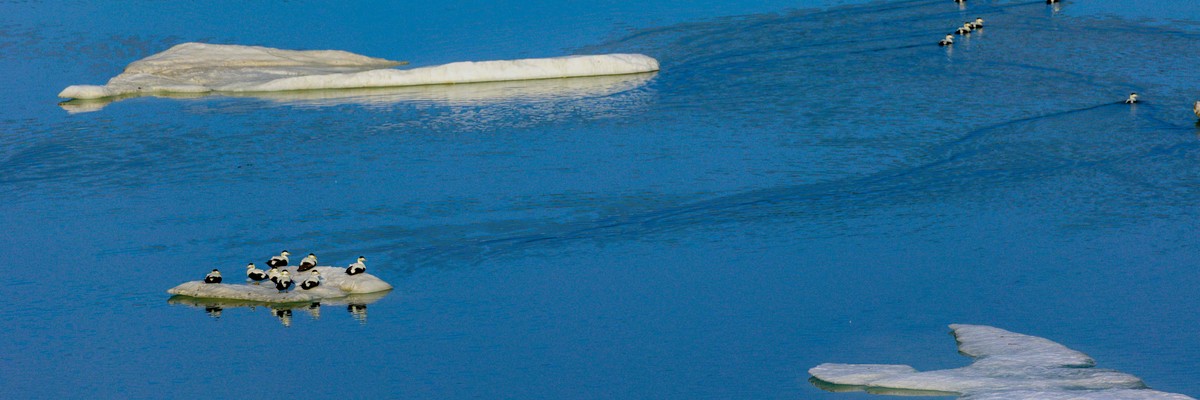
Migratory birds sit on ice floating in the Baffin Bay in the Arctic Ocean near Pituffik, Greenland on July 15, 2022. (Photo: Kerem Yücel/AFP via Getty Images)
A new study finds the island’s ice sheet is retreating 20% more than previously thought.
New research on the rate at which Greenland’s glaciers are melting shed new light on how the climate emergency is rapidly raising the chance that crucial ocean current systems could soon collapse, as scientists revealed Wednesday that the vast island has lost about 20% more ice than previously understood.
Scientists at the National Aeronautics and Space Agency (NASA) Jet Propulsion Laboratory led the study, published in Nature, which showed that Greenland’s ice cap is losing an average of 33 million tons of ice per hour, including from glaciers that are already below sea level.
The researchers analyzed satellite photos showing the end positions of Greenland’s glaciers every month from 1985 to 2022, examining a total of about 235,000 end positions.
Over the 38-year period, Greenland lost about 1,930 square miles of ice—equivalent to one trillion metric tons and roughly the size of Delaware.
An earlier study had estimated that 221 billion metric tons had been lost since 2003, but the researchers added another 43 billion metric tons to that assessment.
Previous research had not quantified the level of ice melt and breakage from the ends of glaciers around the perimeter of Greenland.
“Almost every glacier in Greenland is retreating. And that story is true no matter where you look,” Chad Greene, a glaciologist at the NASA Jet Propulsion Laboratory who led study, told The New York Times. “This retreat is happening everywhere and all at once.”
Because the glaciers examined in the study are already below sea level, their lost ice would have been replaced by sea water and would not have contributed to sea-level rise.
But as Greene told The Guardian, “It almost certainly has an indirect effect, by allowing glaciers to speed up.”
“These narrow fjords are the bottleneck, so if you start carving away at the edges of the ice, it’s like removing the plug in the drain,” he said.
The previously unaccounted-for ice melt is also an additional source of freshwater that pours into the North Atlantic Ocean, which scientists warn places the Atlantic Meridional Overturning Circulation (AMOC) at risk of collapse.
AMOC carries warm water from the tropics into the North Atlantic, allowing nutrients to rise from the bottom of the ocean and supporting phytoplankton production and the basis of the global food chain.
A collapse of the system would also disrupt weather patterns across the globe, likely leading to drier conditions and threatening food security in Asia, South America, and Africa, and increasing extreme weather events in other parts of the world.
🚨Greenland losing 30m tonnes of ice an hour, study reveals. This will have huge impact as extreme weather events increase in frequency and destructive impact. More than 85% of Australians live within 50kms of the coast‼️#auspol#climateactnow#racetozerohttps://t.co/58P8rOH1bk
One analysis found the collapse could take place as soon as 2025.
Charlie Angus, a member of the Canadian Parliament representing the New Democratic Party, noted that the study was released as Canada’s government continues to support fossil fuel production and what experts call false solutions to the planetary heating crisis—including a $12 billion carbon capture and storage project led by tar sands oil companies.
Greenland ice sheets are losing 30 million tons of ice an hour. The impacts on ocean levels and currents is frightening. Meanwhile in Canada, the feds are giving billions more in taxpayers money more to increase production from the tar sands. As the planet burns. pic.twitter.com/MirjRtXVYZ
The Environmental Voter Project in the U.S. urged Americans to consider the latest statistics on melting glaciers when choosing the candidates and political parties they will support in 2024.
“Greenland is losing 30 million tons of ice an hour,” said the group. “So vote like it.”
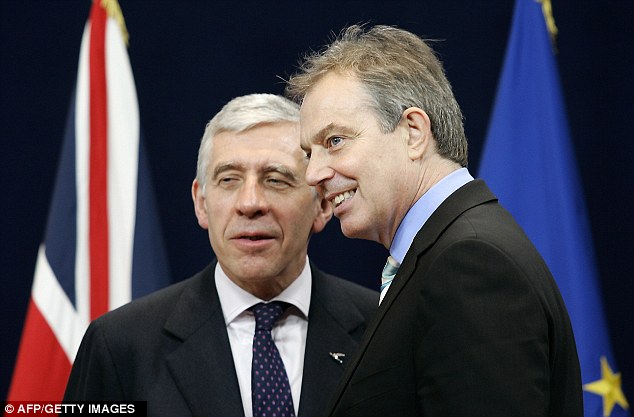
The big story today is the current UK coalition government’s attempts to hide the UK’s part in torture and rendition under the Tony Blair government. Despite repeated denials by liar Jack Straw at the time, evidence has surfaced that Tony Bliar’s government conducted illegal renditions. It is widely accepted that Blair’s government had little regard for the law, truth or justice.
The stalled official inquiry into the UK’s involvement in rendition and torture in the years after 9/11 is to be handed to the controversial intelligence and security committee (ISC), the government will announce on Thursday.
The decision follows years of assurances by ministers that the inquiry would be headed by a senior judge.
It is a move that will dismay human rights groups. The ISC is the oversight body that failed to report publicly on the bulk surveillance operations being conducted by the UK’s signals intelligence agency, GCHQ, and it has already conducted one inquiry into rendition, after which it cleared MI5 and MI6 of blame.
The extent to which the agencies were involved in the abuse of terrorism suspects may be outlined on Thursday with the publication of a redacted version of an interim report of the stalled inquiry that was led by Sir Peter Gibson, a retired appeal court judge.
Gibson is said to be calling for further investigation into the UK’s involvement in the rendition of two Libyan opposition leaders and their families to Tripoli in 2004, and the role played by Jack Straw, who was foreign secretary at the time. Straw was not available for comment but has previously denied any wrongdoing. MI6 is reported to have confronted him with documentary evidence that he personally authorised the agency’s involvement in the rendition operations.
The poorest parts of England are to receive extra money to tackle ill health after NHS bosses rejected plans to divert resources from there to wealthy areas.
NHS England’s decision means that scores of GP-led clinical commissioning groups (CCGs) in deprived areas will no longer see their budgets cut from April. Its board has defied the Department of Health by throwing out its plans to make the age of the local population, not the level of deprivation, a key factor in the allocation of NHS funding.
Instead NHS England has opted to give all 211 CCGs rises of at least the rate of inflation both next year and in 2015-16, and give those serving the most deprived places extra money to help cope with the demand caused by ingrained health problems. It was obliged to do that to help meet its legal duty to reduce health inequalities and differences in life expectancy between rich and poor areas, said chief financial officer Paul Baumann….
The campaign of hate being waged by this government of rich, privileged, and privately educated sociopaths against the poor, the unemployed, and those who dare try to claim the benefits to which they are entitled is unparalleled in modern history. Even Thatcher in her pomp was not as malicious in her treatment of the aforementioned demographic. This was not because she didn’t wish to be more malicious than she was, it was because when she came to power we still had trade unions capable and willing to resist such an onslaught, meaning that the cost involved in even attempting to rip up the foundations of the welfare state and the collective ethos which lies at its heart would have been too damaging to her government and party to make worthwhile.
Three decades on and the fruits of Thatcherism – with the corresponding neutering of the unions and other forms of working class solidarity – have culminated in a new normal of demonisation and the near criminalisation of poverty in Britain. Austerity has been sold to the country as a policy of necessity in response to years of Labour profligacy and a bloated public sector. It is a lie so bold and barefaced that even Joseph Goebbels would blush while repeating it.
Prisoners serving sentences of 12 months or less should be given the vote, the Government is today told by an all-party parliamentary committee.
It also called for all inmates who are within six months of release to be entitled to take part in elections.
The recommendations will not be welcome in Downing Street as David Cameron has said he would feel “physically sick” if prisoners were allowed to vote.
Britain is locked in an eight-year battle with the European Court of Human Rights (ECHR) which has ruled that the blanket ban on prisoner voting is incompatible with European law.
The vast disruption that could be caused across the country by fracking has been laid bare, with the Government announcing it would make 40 per cent of Britain available to companies to explore for oil and gas next year.
Local communities could be subjected to thousands of wells being dug every year in the search for fossil fuels – requiring billions of litres of water, with dozens of lorries passing by every day – after the Coalition said it would put oil and gas licences covering 100,000 square kilometres up for auction next summer.
The auction, which would give the licence-winners exclusive rights to explore an area for oil and gas, but would require additional permits for fracking, would add to the 19,000 square kilometres of licences that have already been sold to hydrocarbon producers.
Investigations are under way to find out if three police forces should have done more to pursue allegations of sex abuse, dating back to 2008, against Ian Watkins.
Watkins, the 36-year-old former Lostprophets lead singer, is to be sentenced on Wednesday for a string of offences including the attempted rape of a baby.
Before his sentencing, the Independent Police Complaints Commission (IPCC) said it was investigating police forces in South Wales, where Watkins lived, but also South Yorkshire and Bedfordshire. One line of inquiry is whether officers failed to look properly into Watkins’s activities because of his celebrity status.
The IPCC’s commissioner Jan Williams said: “No one can fail to be shocked by the vile details of Ian Watkins’s offending that emerged in court last month.
“Questions are now rightly being asked as to whether Ian Watkins could have been brought to justice sooner, what steps were taken by police in response to allegations made against him as far back as 2008 and whether his celebrity status had any impact on the investigation.” He added, however, that the investigation was complex and would take time.