Luiz Inácio Lula da Silva: With the world in crisis, many say end globalisation. I say that would be a mistake

Spread the love

This article is recommended https://www.theguardian.com/commentisfree/2025/jul/10/world-crisis-end-globalisation-mistake-lula-da-silva
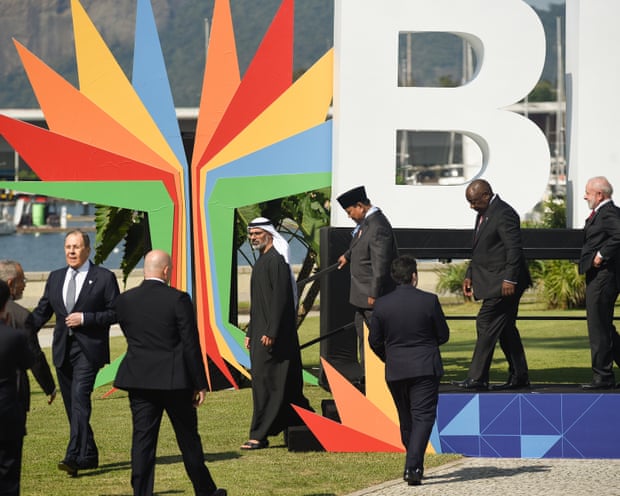
Leaders from the five nations gather for the Brics Summit 2025 in Rio de Janeiro, 6 July. Photograph: Anadolu/Getty Images

The year 2025 should be a time of celebration, marking eight decades of the United Nations’ existence. But it risks going down in history as the year when the international order built since 1945 collapsed.

The cracks had long been visible. Since the invasions of Iraq and Afghanistan, the intervention in Libya and the war in Ukraine, some permanent members of the security council have trivialised the illegal use of force. The failure to act vis-a-vis the genocide in Gaza represents a denial of the most basic values of humanity. The inability to overcome differences is fuelling a new escalation of violence in the Middle East, the latest chapter of which includes the attack on Iran.

The law of the strongest also threatens the multilateral trading system. Sweeping tariffs disrupt value chains and push the global economy into a spiral of high prices and stagnation. The World Trade Organization has been hollowed out, and no one remembers the Doha development round.

The 2008 financial collapse exposed the failure of neoliberal globalisation, but the world remained locked into the austerity playbook. The choice to bail out the ultra-wealthy and major corporations at the expense of ordinary citizens and small businesses has deepened inequality. In the past 10 years, the $33.9tn (£25tn) accumulated by the world’s richest 1% is equivalent to 22 times the resources needed to eradicate global poverty, according to a report by Oxfam.

The stranglehold on the state’s capacity for action has led to public distrust in institutions. Discontent has become fertile ground for extremist narratives that threaten democracy and promote hate as a political project.

There is an urgent need to recommit to diplomacy and rebuild the foundations of true multilateralism – one capable of answering the outcry of a humanity fearful for its future. Only then can we stop passively watching the rise of inequality, the senselessness of war and the destruction of our own planet.

  • Luiz Inácio Lula da Silva is the president of Brazil

This article is recommended https://www.theguardian.com/commentisfree/2025/jul/10/world-crisis-end-globalisation-mistake-lula-da-silva
Continue ReadingLuiz Inácio Lula da Silva: With the world in crisis, many say end globalisation. I say that would be a mistake

Global food prices surge amid Trump’s tariff war

Spread the love

Original article by Abdul Rahman republished from peoples dispatch under a Creative Commons Attribution-ShareAlike 4.0 (CC BY-SA) license.

Photo: UN Food and Agriculture

The United Nations Food and Agriculture Organization’s (FAO) food price index registered a 1% rise in April in comparison to March and a 22% rise compared to the same month last year.

Global food prices recorded an increase in April largely due to the tariff war waged by Donald Trump’s administration in the US, the UN agency Food and Agricultural Organization (FAO) said in a report last week. 

Major food products such as cereals, dairy products, and meat registered a rise in their prices across the globe in April in comparison to March.

Grains and cereals such as wheat, rice, and maize make the largest component of FAO’s food price index. Their prices increased the most, raising its index by 1% month over month. 

The price of dairy products increased by 2.4% month over month while the price of meat soared by 3.2%, making life significantly more difficult for people. Compared to the same month last year, dairy prices rose by 22.9%.

Year over year, the global food prices were higher by 7.6% in comparison to April last year.

The rise in food prices is attributed to several factors, including the seasonal rise in demands. However, the FAO notes that the main driver of the increase is the tariff policies announced by the Trump administration in the US in early April.

“Adjustments to the US’ import tariff policies-including the exemption to Mexico, the leading importer of US maize, and a 90 day pause on import tariffs above 10% for several other trading partners-further contributed to the upward price pressure,” the FAO said.

Fulfilling his threats to impose high tariffs on most of its trade partners Trump announced its “reciprocal tariff” policy in early April. Imports from most of the countries faced tariffs ranging between a minimum 10% to a whopping 145% against China. 

Trump later suspended the imposition of reciprocal tariffs for three months, seeking bilateral agreements with several countries. However, the announcement of the high tariffs has already created uncertainty in the global economy. 

Rise in food prices impacts the poor the most

Though the FAO acknowledged there were several factors impacting the rise in global food prices, such as the reduction in wheat exports from Russia due to sanctions, the war in Ukraine, and a weaker US dollar, the tariff war made the “strongest impact.”

Several economists and experts have already warned of a rise in local food prices, due to the Trump administration’s tariff policies creating a similar or worse impact than the war in Ukraine did in its initial months. 

The global food markets are closely interconnected so major global events may affect prices at the local level – just as they did in the initial days of the war in Ukraine, after European and US sanctions led to a reduction in Russian wheat. 

According to the FAO, its food price index recorded its highest jump in March 2022, immediately after the war in Ukraine started. The rise in prices at the time intensified a cost of living crisis even in relatively richer countries in Europe and intensified food insecurity in the developing and poorest countries.

Increases in food prices affect the poor the most as their share of expenditure on food is higher. It is expected to intensify the existing food crisis situation in most of the developing and poorer countries in Asia and Africa.

If Trump’s tariff war drags on, the prices of fertilizers will also see a jump, affecting agricultural production in the developing world and affecting the prices of food products further, claims Lotanna Emediegwu, who teaches economics at Manchester Metropolitan University. 

US and European sanctions have already negatively affected the global supply of fertilizers from Russia.

Original article by Abdul Rahman republished from peoples dispatch under a Creative Commons Attribution-ShareAlike 4.0 (CC BY-SA) license.

Neo-Fascist Climate Science Denier Donald Trump says Burn, Baby, Burn.
Elon Musk urges you to be a Fascist like him, says that you can ignore facts and reality then.
Continue ReadingGlobal food prices surge amid Trump’s tariff war