The violence in Sudan has pushed North Darfur’s Zamzam camp, home to over 500,000 people, into famine. Photo: WHO
“The world has completely forgotten the crisis in Sudan” where “a slow death” has become the plight of millions, decried Adam Rojal, spokesperson of the General Coordination of Darfur Displaced People and Refugees.
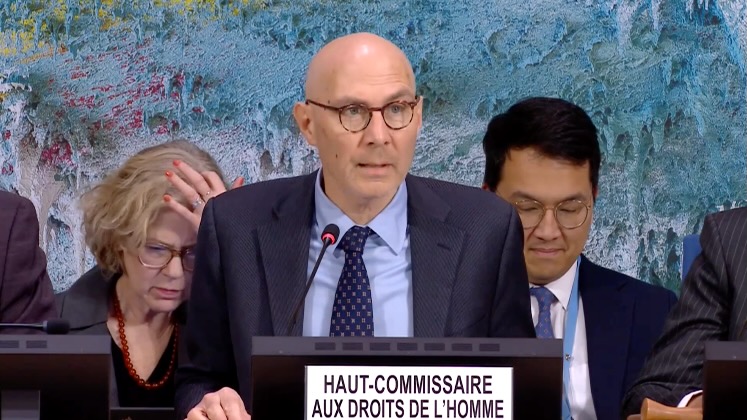
As the fighting between the Sudanese Armed Forces (SAF) and the paramilitary Rapid Support Forces (RSF) intensifies in North Darfur state and the Kordofan region, UN Human Rights Chief Volker Türk warned on Friday, June 20 of a “further aggravation in an already brutal and deadly conflict.”
The war, which began in April 2023, has created the world’s worst humanitarian disaster, displacing nearly 13 million, leaving Sudan with the highest number of displaced people globally. 30 million, almost two-thirds of the population, need humanitarian aid, including food assistance.
The worst affected are children, amounting to half of the hungry and displaced population, the UN said last week, decrying a severe fund shortage, leaving it unable to assist over 80% of the children in need.
Children under the age of five are the largest group of victims of the measles outbreak, amounting to over 60% of the 2,200 suspected cases since the start of this year. Another 230 children have been killed and 7,300 suspected to have been infected by cholera, which broke out last July, killing over 2,000 and suspectedly infecting over 80,000 people.
The number of cholera cases sharply spiked earlier this year in Sudan’s capital region of Khartoum where over 34,000 displaced people returned mainly since March after the SAF retook control from the RSF.
Damaged in the fighting, most of the homes to which they returned lacked water or sanitation. In May, the RSF launched a series of drone strikes on water purification units and power plants, further curtailing water supply, and forcing residents to resort to unsafe sources, which caused over a nine-fold rise in cholera cases in the second half of that month.
Last week, Doctors Without Borders (MSF) raised the alarm that the cholera wave had now reached the western semi-arid region of Darfur for the first time since the war began.
In a press statement on Sunday, June 22, the General Coordination of Darfur Displaced People and Refugees warned that diseases may spread rapidly as monsoon season has begun in Darfur, with rains lashing over the displaced sheltering only under plastic sheets with no sanitation facilities.
Particularly vulnerable to the deadly diseases are the children and the pregnant and breast-feeding women who are already suffering from malnutrition, its spokesperson Adam Rojal told Peoples Dispatch, “The world has completely forgotten the crisis in Sudan” where “a slow death” has become the plight of millions, he decried.
The Darfur region consists of five states, of which North Darfur remains the only state where the SAF has retained a foothold in its capital El Fasher. The RSF, which controls the rest of the region, has laid a siege on the city for over a year now, cutting off its supply of food and other essentials, and frequently bombarding the famine-stricken displaced peoples camp on its outskirts. Activists have warned that El Fasher itself is on the verge of famine.
Now in its third year, the war that has caused a humanitarian catastrophe on such a scale “is far from over”, a UN fact-finding mission warned last week.
The RSF – which the SAF claims to have killed 28,613 and wounded 43,575 since the start of the war – is also making advances in the Kordofan region in the center and southern region of Sudan. Civilians in South Kordofan’s city of El-Dibeibat – a crucial crossroad linking the state with North Kordofan and West Darfur – have been caught up in the crossfire for over two years.
Fleeing this city, thousands sought refuge in North Kordofan’s capital El-Obeid, under SAF’s control. However, the RSF has surrounded El-Obeid, “and may attack it in the coming days, as announced by the RSF commander,” the UN Human Rights Office of the High Commissioner said on June 20.
“We cannot allow ourselves to be dragged into another Middle East war based on lies.”
While a number of statements by members of Congress in the wake of U.S. President Donald Trump’s bombing of Iranian nuclear facilities focused largely on the fact that the White House acted without congressional authorization—a constitutional violation—U.S. Sen. Bernie Sanders expressed anger over another aspect of the unilateral military action: the “lies” that the Trump administration is telling the public to justify the bombing.
The White House’s act of war against Iran, said the Vermont independent senator, was just the latest in a long line of military boondoggles that followed lies powerful politicians told about the threats posed by foreign countries—before taking action that ultimately killed millions of people while doing nothing to protect U.S. security.
“In the 1960s the United States government lied to the American people and took us into a terrible war in Vietnam,” said Sanders. “The result of that war was that over 58,000 young Americans died and many more came back wounded both in mind and in spirit. Millions of Vietnamese were also killed.”
Decades later, Americans were told by then-President George W. Bush that the U.S. must act quickly to stop Iraq from building “weapons of mass destruction”—with U.S. officials following the guidance of Israeli Prime Minister Benjamin Netanyahu.
“The United States invaded Iraq and became embroiled in a long civil war there. No weapons of mass destruction were ever found. That war was based on a lie—a lie which cost us 4,492 young Americans, 32,000 wounded, over half a million Iraqis and trillions of dollars,” said Sanders.
“The American people are being lied to again today,” he added. “We cannot allow history to repeat itself.”
U.S. intelligence agencies have assessed that Iran is not attempting to build a nuclear weapon with its enriched uranium stockpile, backing up repeated statements from Iranian officials who have said the country’s nuclear program is used only for peaceful civilian purposes.
Sanders’ statement came several hours after he learned while speaking at a rally in Tulsa, Oklahoma that Trump had bombed Iran, authorizing strikes on three nuclear facilities, which Iranian officials condemned as a violation of international law.
At the rally, supporters erupted in a chant of “No more war!” after Sanders read Trump’s statement on the attack.
I learned about Trump’s unconstitutional attack on Iran at a large rally in Tulsa, Oklahoma. Here is the response: pic.twitter.com/eziVpp3Y54
The spontaneous display of outrage over the latest U.S. attack on the Middle East underscored the reality of the moment, said The Nation writer Jeet Heer, as one poll released Thursday showed that just 8% of Americans favored the U.S. becoming directly involved in Israel’s attacks on Iran that began earlier this month.
“There is only one off-ramp from Trump’s mad rush to war: the quick mobilization of an anti-war opposition,” said Heer. “The people are ready.”
3. In 2003, Bush/Cheney actually had a very sophisticated public relations campaign that won over large segments of the establishment (NY Times, New Yorker published WMD lies) and Dem party (half of congressional Dems, including Biden & Clinton, voted for war). Trump hasn't…
As the Trump administration boasted about the “severe damage” the strikes had done to Iran’s nuclear program, progressive strategist Waleed Shahid called on Democratic lawmakers to tap into voters’ palpable outrage—not about Trump’s failure to seek congressional authorization for the strikes, but about the fact that the U.S. is pursuing a war in Iran at all while repeating Netanyahu’s unsubstantiated claims about the Iranians’ ability to produce a nuclear bomb.
“No one ever won a fight yelling, ‘Congressional authorization.’ Voters need clarity amid the chaos,” said Shahid. “Lead with this: No more blank checks for corrupt and endless foreign wars, we’re here to focus on fighting for working Americans.”
“The U.S. faces enormous problems here at home, which we must address,” said Sanders. “We cannot allow ourselves to be dragged into another Middle East war based on lies.”
When Israel launched a surprise military strike on Iran last week, it did more than risk igniting a catastrophic regional war. It also exposed long-simmering tensions in Washington—between entrenched bipartisan, pro-Israel hawks and a growing current of lawmakers (and voters) unwilling to be dragged into another Middle East disaster.
“This is not our war,” declared Rep. Thomas Massie (R-KY), one of the House’s most consistent antiwar voices. “Israel doesn’t need U.S. taxpayers’ money for defense if it already has enough to start offensive wars. I vote not to fund this war of aggression.” On social media, he polled followers on whether the U.S. should give Israel weapons to attack Iran. After 126,000 votes (and 2.5 million views), the answer was unequivocal: 85% said no.
For decades, questioning U.S. support for Israel has been a third rail in Congress. But Israel’s unprovoked attack on Iran—coming just as the sixth round of sensitive U.S.-Iran nuclear talks were set to take place in Oman—sparked rare and unusually direct criticism from across the political spectrum. Progressive members, already furious over Israel’s war on Gaza, were quick to condemn the new offensive. But they weren’t alone.
Rep. Pramila Jayapal (D-WA) called Israel’s strike “reckless” and “escalatory,” and warned that Prime Minister Netanyahu is trying to drag the U.S. into a broader war. Rep. Chuy García (D-IL) called Israel’s actions “diplomatic sabotage” and said, “the U.S. must stop supplying offensive weapons to Israel, which also continue to be used against Gaza, & urgently recommit to negotiations.”
Rep. Summer Lee (D-PA) was even more blunt. “The war criminal Netanyahu wants to ignite an endless regional war & drag the U.S. into it. Any politician who tries to help him betrays us all.”
Netanyahu’s strikes on Iran are acts of diplomatic sabotage that risk escalation, endangering civilians in both countries & across the region.
The US must stop supplying offensive weapons to Israel, which also continue to be used against Gaza, & urgently recommit to…
— Congressman Chuy García (@RepChuyGarcia) June 13, 2025
More striking, however, were the critiques from moderate Democrats and some Republicans.
Sen. Tim Kaine (D-VA), a longtime advocate for requiring congressional approval before the U.S. gets involved in new wars, blasted Israel for jeopardizing planned U.S.-Iran diplomacy. “The American people have no interest in another forever war,” he wrote. Sen. Jack Reed (D-RI), Ranking Member of the Senate Armed Services Committee, warned that strikes “threaten not only the lives of innocent civilians but the stability of the entire Middle East and the safety of American citizens and forces.”
Some pro-Israel Democrats are feeling comfortable speaking out on this conflict because it fits their anti-Trump critique. Sen. Maria Cantwell (D-WA) said:
We are at this crisis today because President Trump foolishly walked away from President Obama’s Iran nuclear agreement under which Iran had agreed to dismantle much of its nuclear program and to open its facilities to international inspections, putting more eyes on the ground. The United States should now lead the international community towards a diplomatic solution to avoid a wider war.”
Adding to this diverse chorus of opposition are some Republicans from the party’s non-interventionist wing. Sen. Rand Paul (R-KY) declared, “War with Iran is not in America’s interest. It would destabilize the region, cost countless lives, and drain our resources for generations.” Rep. Warren Davidson (R-OH) lamented that “some members of Congress and U.S. Senators seem giddy about the prospects of a bigger war.”
War with Iran is not in America’s interest. It would destabilize the region, cost countless lives, and drain our resources for generations.
We should pursue diplomacy, not destruction. Engaging in dialogue with adversaries is not weakness; it’s the strength of a confident nation…
And in a rare show of agreement with progressive critics, Rep. Marjorie Taylor Greene (R-GA) blasted the hawks in both parties. “We’ve been told for the past 20 years that Iran is on the verge of developing a nuclear bomb any day now. The same story. Everyone I know is tired of U.S. intervention and regime change in foreign countries. Everyone I know wants us to fix our own problems here at home, not bomb other countries.”
Of course, many in Congress rushed to support Israel. Senate Republican leader John Thune said, “Israel has determined that it must take decisive action to defend the Israeli people.” Democratic Sen. John Fetterman (D-PA) voiced full support for the strike and urged the U.S. to provide Israel “whatever is necessary—military, intelligence, weaponry.”
Our commitment to Israel must be absolute and I fully support this attack.
Keep wiping out Iranian leadership and the nuclear personnel.
We must provide whatever is necessary—military, intelligence, weaponry—to fully back Israel in striking Iran. https://t.co/3lm1YD6dVr
— U.S. Senator John Fetterman (@SenFettermanPA) June 13, 2025
The most crass was Senator Lindsey Graham, who posted:
Game on. Pray for Israel.”
But these crude pro-war responses, once guaranteed to go unchallenged, are now being met with resistance–and not just from activists. With public opinion shifting sharply–especially among younger voters, progressives, and “America First-ers” – the political calculus on unconditional support for Israel is changing. In the wake of Israel’s disastrous war in Gaza and its widening regional provocations, members of Congress are being forced to choose: follow the AIPAC money and the old playbook–or listen to their constituents.
If the American people continue to raise their voices, the tide in Washington could turn away from support for a war with Iran that could plunge the region into deeper chaos while offering no relief for the suffering people of Gaza. We could finally see an end to decades of disastrous unconditional support for Israel and knee-jerk support for catastrophic wars.
Feature photo | Israelis gather next to a direct hit site following an Iranian missile strike against Israel, June 16th 2025. Matan Golan | AP
Medea Benjamin is co-founder of Global Exchange and CODEPINK: Women for Peace. She is the co-author, with Nicolas J.S. Davies, of War in Ukraine: Making Sense of a Senseless Conflict, available from OR Books in November 2022. Other books include, “Inside Iran: The Real History and Politics of the Islamic Republic of Iran” (2018); “Kingdom of the Unjust: Behind the U.S.-Saudi Connection” (2016); “Drone Warfare: Killing by Remote Control” (2013); “Don’t Be Afraid Gringo: A Honduran Woman Speaks from the Heart” (1989), and (with Jodie Evans) “Stop the Next War Now” (2005).
The views expressed in this article are the author’s own and do not necessarily reflect MintPress News editorial policy.
Mr. Benn playing soldiers Keir Starmer and John Healey on Salisbury Plain, August 2022 (PA Images/Alamy)
Labour is persisting with a “nukes plus NATO” defence policy that is likely to lead to further wars. A new independent report counters this disastrous narrative.
…
[T]he Alternative Defence Review (ADR), brought together by the Campaign for Nuclear Disarmament and the RMT union, and written by academics, trade unionists and experts – all committed to a new way of doing defence and foreign policy.
The ongoing genocide in Gaza and the catastrophic war in Ukraine – and wars across the globe – serve as stark reminders of the devastating consequences of militarisation, and how vital a new approach is.
The policies pursued by the British government entrench violence, prolong conflict, and undermine any remaining moral and diplomatic credibility that it may still have.
We argue that we need a truly ethical defence strategy centred on the principle of “common security”—that no nation can achieve genuine safety at the expense of another.
This is inseparable from a broader vision of “human security”, which prioritises the needs, rights, and dignity of individuals over military dominance. Together, these principles offer a foundation for a peaceful international order based on cooperation, justice, and mutual well-being.
…
In line with this, the ADR calls for a foreign policy that addresses global and national poverty, inequality, health and environmental crises — and invests in the jobs that would accompany this agenda.
…
It’s time to shift from an outdated militaristic model to a cooperative, multilateral approach rooted in the principles of international law and human rights.
The alternative we advocate is one rooted in building a sustainable and just economy — one that offers an abundance of decent and socially useful work; funds high-quality public services; rebuilds public infrastructure; invests in socially useful technologies and education; and works actively for international peace and security.
The prioritisation of peace over war can no longer be framed as naive or idealistic — it is, in fact, the only rational and sustainable choice for achieving a just and secure future for all.
UK Labour Party government ministers Keir Starmer, Angela Rayner and Rachel Reeves explain that they are partners complicit in Israel’s Gaza genocide. The UK has provided Israel with arms, military and air force support. They explain that they don’t do gas chambers but do do forced marches, starvation, destroy hospitals, mass-murders of journalists and healthcare workers.
This work by Middle East Monitor is licensed under a Creative Commons Attribution-NonCommercial-ShareAlike 4.0 International License.
Palestinians, including children gather around a water tanker to collect clean water amid ongoing Israeli attacks on Gaza and the continued closure of border crossings, which have severely limited access to basic necessities in Khan Yunis, Gaza on March 29, 2025. [Abed Rahim Khatib – Anadolu Agency]
Under the weight of war and a suffocating blockade, more than two million people in the Gaza Strip are facing an unprecedented water crisis that threatens their daily survival. What was already a dire situation before the escalation has now turned catastrophic due to the ongoing bombardment and the widespread destruction of water infrastructure. The UN report from 2022 unveils a grim reality: over 97 per cent of Gaza’s drinking water is unfit for drinking or human consumption as a result of contaminants infiltrating groundwater reserves, whether it was caused by the excessive pumping of polluted water by the Israeli Occupation into Wadi Gaza, leakage from deteriorating sewage networks into the aquifer or the intrusion of the polluted saltwater into the aquifer by 75 per cent to meet the water deficit of the increased demand caused by the increased population. Compared to that, natural rain that does not exceed 30 per cent of natural replenishment. The situation is further exacerbated by the leakage of residues from Israeli munitions into groundwater sources.
Gaza’s water crisis: Numbers dripping with pain
Gaza’s water reality reveals a prolonged and profound deficit. While the Israeli Occupation enjoys a near-universal coverage of clean water (more than 99 per cent), as well as a substantial control over the aquifer, Gaza languishes among the world’s lowest water access rates, with a coverage below 10 per cent, placing it in a state of constant water emergency.
Over the past years, Israel, through its national water company, Mekorot, supplied Gaza with around 18 million cubic meters of water annually through three pipelines, amounting to only 9 per cent of Gaza’s needs. Yet, the water sector in Gaza suffers from a severe deficit exceeding 120 million cubic meters per year (approximately 60 per cent of total demand). With the outbreak of the latest war, these limited supplies have been repeatedly disrupted and, today, they are completely cut off following the destruction of transmission networks. During the war, these pipelines provided up to 70 per cent of Gaza City’s water supply, after most local water sources were destroyed. More than 85 per cent of Gaza’s water and sewage networks have been bombarded, causing destruction and damage to 2,263 kilometres of pipelines and 47 pumping stations, as well as the cessation of all operations of wastewater treatment plants. Currently, only 30 per cent of Gaza’s wells remain operational. The capacity of desalination plants has plummeted to their lowest levels due to continuous bombardment and the shortages of electricity and fuel. Consequently, water supplies available to Gaza’s people have dropped by 95 per cent, with the average daily water consumption per capita reduced to just 3–5 litres, far below the 15-liter minimum emergency threshold set by the United Nations.
Gaza’s displaced: Long queues and arduous journeys for a few drops of water
Since the beginning of the escalation, thousands of Gaza’s residents have endured the tragedy of displacement, which has only deepened their daily suffering. Hundreds of families, forced to flee their homes under heavy bombardment, now face the exhausting challenge of searching for water in distant areas or in overcrowded shelters lacking even the most basic necessities of life. Long queues at water distribution points and wells have become a daily reality, fraught with the constant risks of air strikes, fear and loss of life.
“We wait for long hours just to access unsafe and contaminated water, and sometimes we only manage to get our share after complete exhaustion,” says Fatima, a 35-year-old mother of four, who was displaced with her children to a shelter in western Gaza. “The distance we have to walk every day just to collect water can stretch for several kilometres and, with each passing day, the journey becomes even more difficult.”
Contaminated water: An immediate and long-term health threatThe health situation in Gaza has become catastrophic due to the acute shortage of clean water and the forced reliance on contaminated sources for drinking and hygiene, if available, which has led tothe widespread outbreak of acute diseases such as diarrhoea, kidney infections, urinary tract infections and waterborne diseases, as well as skin infections due to poor hygiene conditions or the use of polluted water for personal care.
These health risks are even more severe for children under the age of five, who are particularly vulnerable to malnutrition, intestinal infections, and severe diarrhoea, which can lead to dehydration or death. Pregnant women also face higher risks of early miscarriage, premature delivery and reduced breast milk production due to dehydration and exposure to contaminated water. The elderly are not spared, either, as they face an increased risk of kidney diseases, kidney failure and challenges in managing chronic conditions in the absence of safe and sufficient water supplies.
Impact of the water crisis on food security and forced displacement
The water crisis in Gaza is not only a health emergency but also a growing threat to food security. The destruction of agricultural irrigation networks has further worsened the already fragile economic situation, increasing poverty and hunger across the Gaza Strip due to a sharp decline in agricultural and livestock production. Agricultural productivity in the limited available farmland has dropped by 60 per cent as a result of using contaminated water, not to mention that farmlands have become either unsuitable for cultivation or located in unsafe areas due to the ongoing conflict. Moreover, the scarcity of clean and safe water has intensified forced displacement, with many residents compelled to leave their homes in search of areas where drinking water is available.
A grave breach of International Law: Denying people their right to life
The targeting and destruction of water sources and infrastructure in Gaza constitute a grave breach of international humanitarian law.
According to the 1977 Additional Protocol I to the Geneva Conventions, it is prohibited to attack resources indispensable to the survival of civilians, such as water supplies. Denying water to civilians amounts to a war crime under the Fourth Geneva Convention and represents a blatant violation of Article 25 of the Universal Declaration of Human Rights.Such acts may also qualify as crimes against humanity under the Rome Statute of the International Criminal Court.
In the face of tragedy: An urgent call for action
In light of this tragic reality, there is an urgent need for immediate and coordinated action. Internationally, the United Nations must activate emergency protection mechanisms, while international organisations, including the Organisation of Islamic Cooperation and the Arab League, should play a key role in intensifying political pressure on the United States to compel Israel to stop the war, halt the supply of weapons to the Occupying forces and ensure the immediate entry of humanitarian aid into Gaza. The Human Rights Council is also expected to issue investigative reports on these violations, and the International Criminal Court should open immediate investigations into the crimes committed.
On the humanitarian level, aid organisations must intensify efforts to find emergency solutions for providing clean water to the population in Gaza by repairing damaged water networks, maintaining wells and desalination plants using locally available resources, operating mobile desalination units powered by solar energy, expanding water distribution through water trucks to shelters and displacement camps and providing households with simple tools for water purification and desalination.
On the relief level, it is essential to pre-position water-related equipment, including well supplies, fixed and mobile desalination units, generators, solar energy systems, spare parts for water networks and fuel in both Egypt and Jordan. These should be ready for immediate delivery as soon as border crossings are opened for humanitarian aid. It would be a grave mistake to wait until Crossings re-open before starting to procure these critical supplies, given the time required for sourcing and delivery.
For the recovery and development of Gaza’s water system, it is equally critical not to wait until the war ends to begin planning and preparation. Delaying the restoration and development of the water sector will only prolong the suffering of a population that has already endured unimaginable hardship for over 17 months. Efforts must begin now by developing a comprehensive recovery plan, securing supply chains, mobilising funding and preparing technical teams to respond without delay, ensuring the most vital resource for life, water, is restored for Gaza’s population.
Between a suffocating siege and relentless bombardment, the people of Gaza struggle for every drop of water, much like a drowning person gasping for their final breath. They call for water but receive none; they cry out for help but are left unheard. Has humanity truly turned its back on them? Is water not a right for every living soul, including those trapped and besieged in Gaza?