Sellafield cleanup cost rises to £136bn amid tensions with Treasury

Spread the love

https://www.theguardian.com/business/2024/oct/23/sellafield-cleanup-cost-136bn-national-audit-office

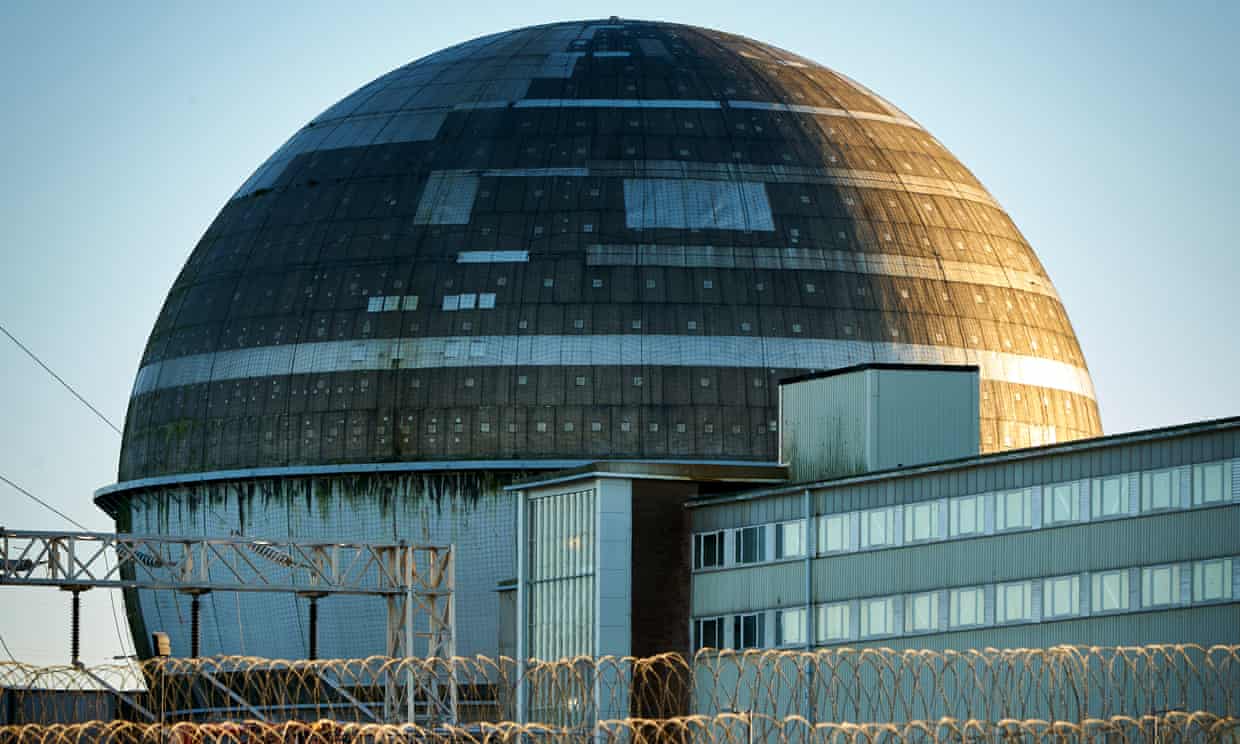
Sellafield has ‘retrieved much less waste than it had planned’ since 2020, the NAO said. Photograph: David Levene/The Guardian

National Audit Office questions value for money as predicted bill for decommissioning increases by £21bn

The cost of cleaning up Sellafield is expected to spiral to £136bn and Europe’s biggest nuclear waste dump cannot show how it offers taxpayers value for money, the public spending watchdog has said.

Projects to fix buildings containing hazardous and radioactive material at the state-owned site on the Cumbrian coast are running years late and over budget. Sellafield’s spending is so vast – with costs of more than £2.7bn a year – that it is causing tension with the Treasury, the report from the National Audit Office (NAO) suggests.

Officials from finance ministry told the NAO it was “not always clear” how Sellafield made decisions, the report reveals. Criticisms of its costs and processes come as the chancellor, Rachel Reeves, prepares to plug a hole of about £40bn in her maiden budget.

Europe’s most hazardous industrial site has previously been described by a former UK secretary of state as a “bottomless pit of hell, money and despair”. The Guardian’s Nuclear Leaks investigation in late 2023 revealed a string of cybersecurity problems at the site, as well as issues with its safety and workplace culture.

The NAO found that Sellafield was making slower-than-hoped progress on making the site safe and that three of its most hazardous storage sites pose an “intolerable risk”.

The site is a sprawling collection of buildings, many never designed to hold nuclear waste long-term, now in various states of disrepair. It stores and treats decades of nuclear waste from atomic power generation and weapons programmes, has taken waste from countries including Italy and Sweden, and is the world’s largest store of plutonium.

https://www.theguardian.com/business/2024/oct/23/sellafield-cleanup-cost-136bn-national-audit-office

The shocking state of the Sellafield nuclear shitehole

Continue ReadingSellafield cleanup cost rises to £136bn amid tensions with Treasury

The Nonsense of Nuclear Fuel Reprocessing

Spread the love

Dr. Ian Fairlie

The Nonsense of Nuclear Fuel Reprocessing

Many readers will have seen the interesting Panorama programme on the poor safety
record at Sellafield broadcast on BBC 1 on September 5
The BBC press release stated this was a special investigation into the shocking state of
Britain’s most hazardous nuclear plant…” and it certainly was. Perhaps the most important
of several whistleblower revelations was that the previous US managers had been shocked
at the state of the plant when they took over its running in 2008.
Although the programme producers are to be congratulated for tackling the subject, it was
only 30 minutes long and tells only a small part of the whole sorry story.
This article tries to give more background information, and importantly, more analysis and
explanation. The full story would require several books and would be painful reading.

What is reprocessing?

Reprocessing is the name given to the physico-chemical treatment of spent nuclear fuel
carried on at Sellafield in Cumbria since the 1950s. This involves the stripping of metal
cladding from spent nuclear fuel assemblies, dissolving the inner uranium fuel in boiling
concentrated nitric acid, chemically separating out the uranium and plutonium isotopes and
storing the remaining dissolved fission products in large storage tanks.
It is a dirty, dangerous, unhealthy, polluting, expensive process which results high radiation
doses to the ~9,000 workers employed at Sellafield.

Environmental consequences

The Sellafield plant is host to several hundred radioactive waste streams and processes
which result in large discharges of radioactive liquids to sea and emissions of radioactive
gases and aerosols to the atmosphere. Raised levels of childhood leukemias in some villages
nearby are considered to be linked to the inhalation and ingestion of these radionuclides.
Sellafield, and a similar plant in La Hague France, continue to be, by some margin, the
largest sources of radioactive pollution in the world. For example, the Irish Sea is the most
radioactively polluted sea in the world with about half a tonne of plutonium sitting on its
seabed from reprocessing.
The collective doses to the world’s population from the long-lived gaseous nuclides C-14,
and I-129, and from medium-lived Kr-85 and H-3 (tritium) emitted at Sellafield are huge and
are estimated by radiation biologists to cause tens of thousands of early deaths throughout
the world.
Another result is the 140 tonnes of unneeded, highly radiotoxic, plutonium (Pu) stored on
site at a cost of £50 million a year. Pu is fissile and, in the wrong hands, this amount could
be made into ~20,000 warheads, ie it is a serious nuclear proliferation danger.

The Liquid Waste Tanks

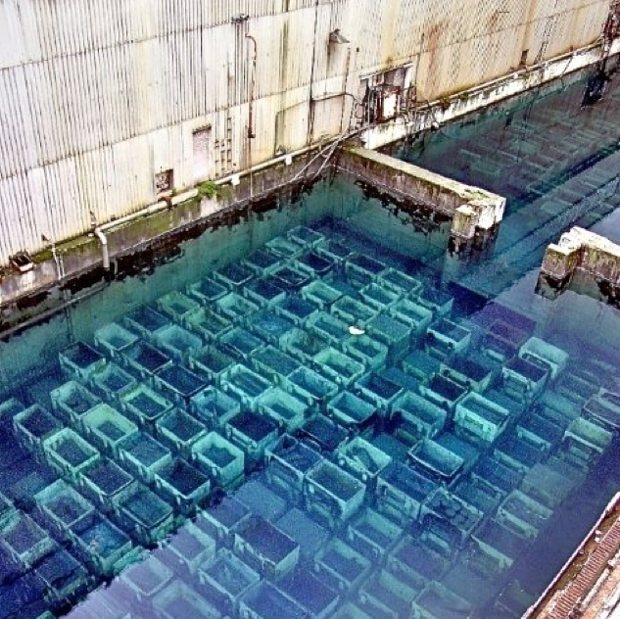
Shitty open-air pond at Sellafield nuclear waste dump containing spent nuclear fuel rods.

Not discussed in the BBC programme, but perhaps most serious of all, are the ~20 large
holding tanks at Sellafield containing thousands of litres of extremely radiotoxic fission
products, including long-lived Cs-137and Sr-90. Discussing these tanks, the previous
management consortium Nuclear Management Partners stated in 2012 “there is a mass of
very hazardous (nuclear) waste onsite in storage conditions that are extraordinarily
vulnerable, and in facilities that are well past their designated life”.
The National Audit Office (NAO) stated these tanks pose “significant risks to people and the
environment”. One official review concluded that, at worst, an explosive release from the
tanks could kill two million Britons and require the evacuation of an area reaching from
Glasgow to Liverpool. These dangerous tanks have also been the subject of complaints from
Ireland and Norway who fear their countries could be contaminated if explosions or fires
were to occur.


Lets not mince words, the practice of reprocessing at Sellafield has been and remains a
monumental national disgrace.

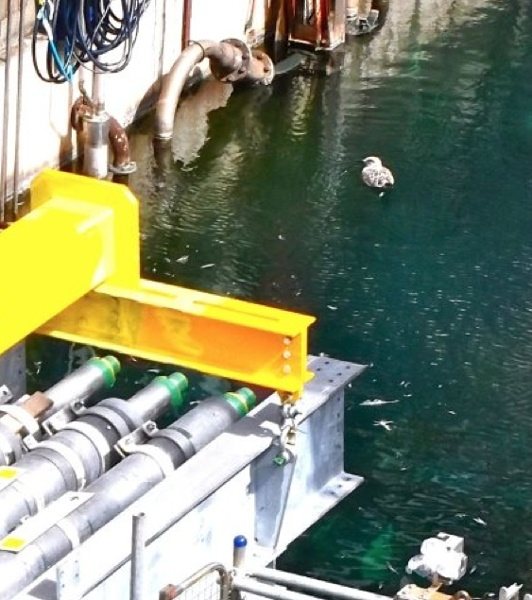
Another seabird in one of Sellafield nuclear dump's open-air ponds.
Another seabird in one of Sellafield nuclear dump’s open-air ponds.

The shocking state of the Sellafield nuclear shitehole

Continue ReadingThe Nonsense of Nuclear Fuel Reprocessing

Coming soon: filthy nuclear

Spread the love

I intend to bring a series about filthy nuclear soon.

It seems that the real issue is and always has been nuclear waste.

I am very disappointed by so-called pro-nuclear environmentalists e.g. Monbiot. I sincerely hope that they reconsider their positions/perspectives. I find it very strange that such people are so concerned by farmyard shit pollution of streams while being indifferent to plutonium shit pollution of the Irish Sea.

I’ve been researching this lately. It is clear the Windscale / Sellafield is a total nuclear shithhole. They have vast open-air radioactive ponds there. Pigeons and seagulls have landed in these serious radioactive ponds to spread radioactivity far and wide.

The Windscale Fire in 1957 was hugely covered up. Radioactivity spread to South-East England and to Europe while Windscale workers were told to work as normal and not tell anyone. UK children have plutonium in their teeth, more according to how close to Sellafield they are. UK authorities have succeeded in conspiring that their childhood leukaemias are not caused by Windscale/Sellafield.
Continue ReadingComing soon: filthy nuclear