Welfare reform bill: what changes did the government make to get it over the line?
Spread the love
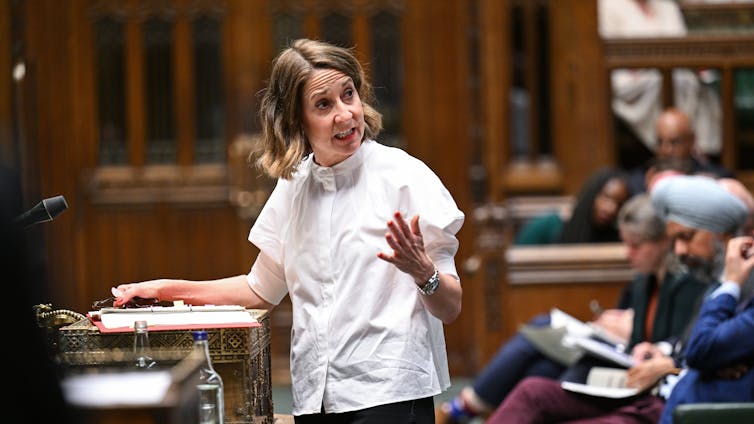
Liz Kendall, the work and pensions secretary, speaks to the Commons ahead of the crucial vote on welfare reform. House of Commons/Flickr, CC BY-NC-ND

Richard Machin, Nottingham Trent University

The government’s landmark bill on welfare reform passed by 335 to 260 votes on Tuesday evening, after staving off a major rebellion from Labour MPs. To win over backbench MPs who had opposed the bill, the government made a series of concessions, including a last-minute compromise agreeing that any changes to personal independence payment (Pip) will not be introduced until the outcome of a review.

In March, the government introduced the universal credit and personal independence bill. The aim was to create a sustainable welfare system in response to changing demographics and population health.

In recent years, the UK has seen an increase in people claiming benefits for long-term health conditions, with one in ten people of working age claiming a sickness or disability benefit. Welfare expenditure has increased, and is projected to be £70 billion a year by the end of the parliament.

Recalibrating the welfare system is not an easy task. The government has said reform is needed to support those with highest needs and assist more people into work. However, critics of the bill, raised concerns that it would result in an overly restrictive disability benefits system and push more people into poverty.

Here’s what’s the bill initially proposed and what was changed ahead of the vote.


Get your news from actual experts, straight to your inbox. Sign up to our daily newsletter to receive all The Conversation UK’s latest coverage of news and research, from politics and business to the arts and sciences.


Personal independence payment

The bill initially proposed significant changes to personal independence payments (Pip) from November 2026. Pip is a working-age benefit to help people with the costs associated with a long-term health condition or disability. It has two elements, a daily living component and a mobility component.

A points-based system is used to assess eligibility for Pip. Currently, to qualify for the daily living component a claimant must have limited ability in relation to a range of ten activities. These include washing and bathing, dressing and undressing, eating and drinking and managing medication or therapy.

Eight to 11 points leads to qualification for the standard rate and over 12 points for the enhanced rate. On the current system, a claimant can score one or two points across a range of activities, it doesn’t matter how the points are made up.

In March, the government announced that from November 2026, claimants will need to score at least four points on at least one of the ten activities to qualify. The amount of points available ranges from zero to 12, depending on the activity.

Critics argued that this places the bar at too high a level, making it more difficult for people whose health problems are spread across a range of activities, rather than meeting the criteria in one.

Close up of hands of a nurse helping a woman count out medication tablets
Needing assistance managing medication is one area where Pip points are measured. Yuri A/Shutterstock

Concerns were raised that this change could disproportionately affect people with mental health problems. Research shows that previous changes to Pip have caused uncertainty and anxiety for many people with mental health problems.

Typically if the help required relates to being reminded or encouraged to compete a task, only two points are awarded. This can be a common way for people with mental health problems to qualify for Pip, including those with severe conditions such as bipolar disorder. It is estimated that between 800,000 and 1.2 million people would have lost entitlement to Pip under the four-point proposal.

After it became clear that dozens of Labour MPs planned to vote against the bill, the work and pensions secretary, Liz Kendall, announced a concession on the Pip proposals. First, that four-point rule should only apply to new claimants, with people already in receipt of Pip remaining within the current rules. Second, there will be a review of the Pip assessment led by Stephen Timms, the minister for social security and disability, alongside people with disabilities and representative organisations.

But for some MPs and campaigners, this raised the spectre of a two-tier system which protects existing claimants but not future ones. Two hours before the Commons vote, Timms announced that no changes would be made to Pip eligibility before the review. The bill passed without any changes to Pip.

Universal credit

What remains in the bill are changes to universal credit, the UK’s main means-tested benefit, primarily for claimants who are unfit for work.

Over 3 million claimants (out of a total of over 7 million) are not required to look for work as a result of a health condition. They receive an additional health-related payment of more than £400 per month. The bill reduces the health element for new claims from £97 to £50 per week from April 2026 and restricts payment to claimants over the age of 22.

Under original proposals, the higher health-related rate was to be frozen for existing claimants. This will now be increased every year for the rest of the parliament, at least in line with inflation.

A £1 billion back-to-work support package, originally scheduled to be introduced in 2029, will be accelerated.

The Department for Work and Pensions estimates that 730,000 future universal credit claimants will lose an average of £3000 per year compared to current claimants.

What happens next?

The government’s original plans were estimated to save £5 billion a year by 2030. Last weeks’ concessions would cost £3 billion. The last-minute compromises mean that there will be virtually no medium-term savings.

Labour minister Pat McFadden has ruled out raising income tax, VAT or national insurance, but questions remain on how these concessions will be paid for.

The government technically won the vote on welfare reform, but was unable to push through its most significant reforms. The debate over the future of the welfare system will continue (and probably intensify) as the Timms review begins.

Richard Machin, Associate professor (Social Policy), Nottingham Trent University

This article is republished from The Conversation under a Creative Commons license. Read the original article.

Keir Starmer says that the Labour Party under his leadership all feel a small part of Scunthorpe.
Keir Starmer confirms that he's proud to be a red Tory continuing austerity and targeting poor and disabled scum.
Keir Starmer confirms that he’s proud to be a red Tory continuing austerity and targeting poor and disabled scum.
Continue ReadingWelfare reform bill: what changes did the government make to get it over the line?

Charities warn welfare cuts will push more people into homelessness

Spread the love

https://morningstaronline.co.uk/article/charities-warn-welfare-cuts-will-push-more-people-homelessness

 A homeless man in a tent in the centre of Liverpool, April 1, 2025
INFLICTING welfare cuts will push more people into homelessness, charities warned today.

Disability groups also accused the government, which aims to cut £5 billion a year from welfare spending by 2030, of “playing with fire by risking the lives of disabled people to meet arbitrary fiscal goals.”

Central to Labour’s welfare cuts is the tightening of eligibility criteria for personal independence payments (PIP) — a key disability benefit for working-age adults both in and out of work.

Those under 22 with long-term illnesses or disabilities will also no longer be able to claim the health top-up to universal credit under the plans.

Westminster’s own analysis shows the cuts risk pushing 250,000 people into poverty, including 50,000 children. 

A letter co-ordinated by St Mungo’s, co-signed by 13 other homelessness organisations, is urging Work and Pensions Secretary Liz Kendall to rethink the changes.

Cuts designed to get people back into work will actually “push people further away from the labour market, increase homelessness and put excessive pressure on statutory services,” the charities warn.

Article continues at https://morningstaronline.co.uk/article/charities-warn-welfare-cuts-will-push-more-people-homelessness

Keir Starmer says that the Labour Party under his leadership all feel a small part of Scunthorpe.
Continue ReadingCharities warn welfare cuts will push more people into homelessness

Disabled people on PIP ‘will not cope’ if support is cut, charity warns

Spread the love

https://morningstaronline.co.uk/article/disabled-people-on-pip-will-not-cope-if-support-cut-charity-warns

Work and Pensions Secretary Liz Kendall arrives in Downing Street, London, for a Cabinet meeting, March 11, 2025

ALMOST two-thirds of disabled people on Personal Independence Payments (PIP) “will not cope” without it, a charity has warned, amid reports that the government will reduce the benefit.

Work and Pensions Secretary Liz Kendall is expected to unveil reforms aimed at reducing welfare costs that ministers have described as “unsustainable.”

Reports suggest that PIP, the main benefit for working-age adults both in and out of work, could be frozen rather than increased in line with inflation, delivering a real-terms cut for 3.6 million claimants.

A new analysis from Sense has found that 38 per cent of PIP recipients with complex needs are already behind on energy bills.
Almost half — 46 per cent — are struggling to afford essential costs such as council tax and water, while 41 per cent are living in debt due to benefits failing to cover the cost of essentials like food.

Fifty-eight per cent of those polled reported significant ongoing extra costs due to disability and 53 per cent said their PIP payments were insufficient to cover those expenses.

Sense chief executive James Watson-O’Neill said PIP “exists because living with a disability means facing higher costs, from increased energy bills to specialised equipment and specific diets.”

“These additional expenses won’t disappear if eligibility is tightened. It will only plunge more disabled people into poverty.

“Making it harder to access benefits won’t help disabled people find jobs either. It will only deepen the struggle.”

Article continues at https://morningstaronline.co.uk/article/disabled-people-on-pip-will-not-cope-if-support-cut-charity-warns

Keir Starmer confirms that he's proud to be a red Tory continuing austerity and targeting poor and disabled scum.
Keir Starmer confirms that he’s proud to be a red Tory continuing austerity and targeting poor and disabled scum.
Keir Starmer, Angela Rayner and Rachel Reeves wear the uniform of the rich and powerful. They have all had clothes bought for them by multi-millionaire Labour donor Lord Alli. CORRECTION: It appears that Rachel Reeves clothing was provided by Juliet Rosenfeld.

These cuts betray Labour’s basic principles

Continue ReadingDisabled people on PIP ‘will not cope’ if support is cut, charity warns

Starmer says benefit system unfair and indefensible

Spread the love

https://www.bbc.com/news/articles/c0kgpyz3mmpo

Sir Keir Starmer has called the current benefits system unsustainable, indefensible and unfair, and said the government could not “shrug its shoulders and look away”.

Addressing Labour MPs on Monday evening, the prime minister said the current welfare system was “the worst of all worlds”, discouraging people from working while producing a “spiralling bill”.

The comments come as Work and Pensions Secretary Liz Kendall prepares to set out changes to the welfare system and cut the benefits bill in the coming weeks.

Chancellor Rachel Reeves has earmarked several billion pounds in draft spending cuts to welfare and other government departments ahead of the Spring Statement.

There is unease over the plans within the party, with Labour MP Rachael Maskell warning against “draconian cuts” that risk “pushing disabled people into poverty”.

Maskell told the BBC she had picked up “deep, deep concern” among Labour MPs.

Original article continues at https://www.bbc.com/news/articles/c0kgpyz3mmpo

Keir Starmer confirms that he's proud to be a red Tory continuing austerity and targeting poor and disabled scum.
Keir Starmer confirms that he’s proud to be a red Tory continuing austerity and targeting poor and disabled scum.
Keir Starmer, Angela Rayner and Rachel Reeves wear the uniform of the rich and powerful. They have all had clothes bought for them by multi-millionaire Labour donor Lord Alli. CORRECTION: It appears that Rachel Reeves clothing was provided by Juliet Rosenfeld.
Continue ReadingStarmer says benefit system unfair and indefensible

Activists ask why a Labour government is ‘gleefully’ backing Tory plans to tighten work capability assessment

Spread the love

https://www.disabilitynewsservice.com/activists-ask-why-a-labour-government-is-gleefully-backing-tory-plans-to-tighten-work-capability-assessment/

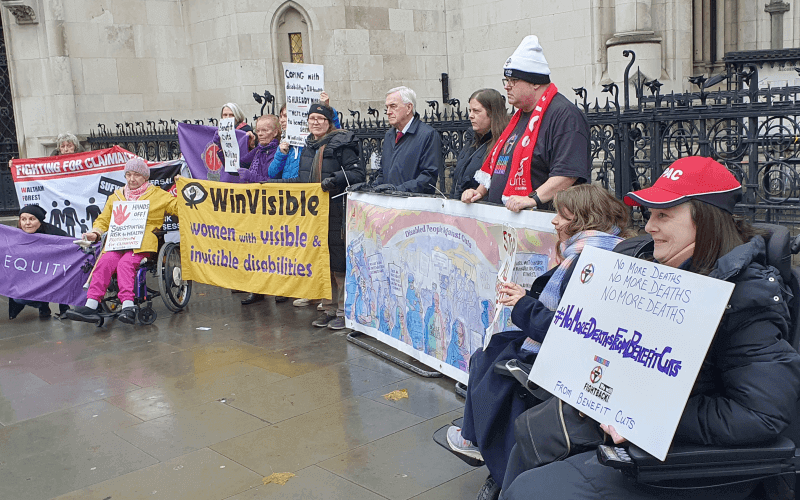
[dizzy: That’s Labour Socialist MP John McDonnell wearing the red tie.]

Disabled activists have questioned why a Labour-run department was in the high court this week defending cuts proposed by the last government which would cause “human suffering” among hundreds of thousands of claimants of out-of-work disability benefits.

They spoke during a vigil outside the Royal Courts of Justice on Tuesday (pictured) as disabled activist Ellen Clifford and her lawyers from Public Law Project were preparing to challenge the Department for Work and Pensions (DWP) over a “rushed and disingenuous” consultation on plans to tighten the work capability assessment (WCA).

The plans were announced in the 2023 autumn budget, and would see more than 400,000 disabled people losing out on £416 a month by 2028-29, with many also facing strict new conditions and the risk of benefit sanctions that could see them lose even more money.

Clifford says the changes would be “cataclysmic for Deaf and disabled people in the UK and would push many into destitution”.

Labour’s work and pensions secretary, Liz Kendall, has promised to make the savings promised by the Conservatives, who pledged to cut spending by £2.8 billion in the four years to 2028-29 by tightening the WCA.

Kendall said the government would make these savings by “bringing forward our own proposals”, but she has yet to rule out the WCA changes.

Tracey Lazard, chief executive of Inclusion London, told Tuesday’s vigil that it was “incomprehensible that the new Labour government is picking up these plans and seemingly running ahead with them in glee”.

https://www.disabilitynewsservice.com/activists-ask-why-a-labour-government-is-gleefully-backing-tory-plans-to-tighten-work-capability-assessment/

Keir Starmer confirms that he's proud to be a red Tory continuing austerity and targeting poor and disabled scum.
Keir Starmer confirms that he’s proud to be a red Tory continuing austerity and targeting poor and disabled scum.
Continue ReadingActivists ask why a Labour government is ‘gleefully’ backing Tory plans to tighten work capability assessment