Caroline Lucas, Former Green Party MP for Brighton Pavilion. Official image by David Woolfall Creative Commons Attribution 3.0 Unported license.
Former Green Party MP, Caroline Lucas, has given her reaction to suggestions that plans for a Natural History GCSE have been shelved because it is “seen as a Conservative party initiative.” Caroline was one of the key drivers of the GCSE in the last parliament. She said:
“I very much hope that Labour will look at this again, and appreciate both the popularity of the proposed Natural History GCSE, and the urgency of its introduction. The GCSE enjoys huge support, including from WWF and the Wildlife Trusts through to the Natural History Museum, the Association of School and College Leaders, 17 universities and thousands of young people themselves.
“It was a privilege to work with author and former BBC producer Mary Colwell, who has spearheaded the campaign, to persuade the last Government to agree to it. The curriculum has been prepared over several years by the OCR exam board, and it’s close to being ready to roll out. Stalling at this point would be a disaster, doing a massive disservice to students who desperately want to learn more about the natural world; failing to equip them with the skills of the naturalist which have increasingly been lost, and making it harder for all of us to restore and protect nature.
“Over the last half century, the world has lost 60% of the mass of mammals, birds, fish and reptiles – our education system urgently needs to rise to the challenge of reversing this shocking scale of loss.”
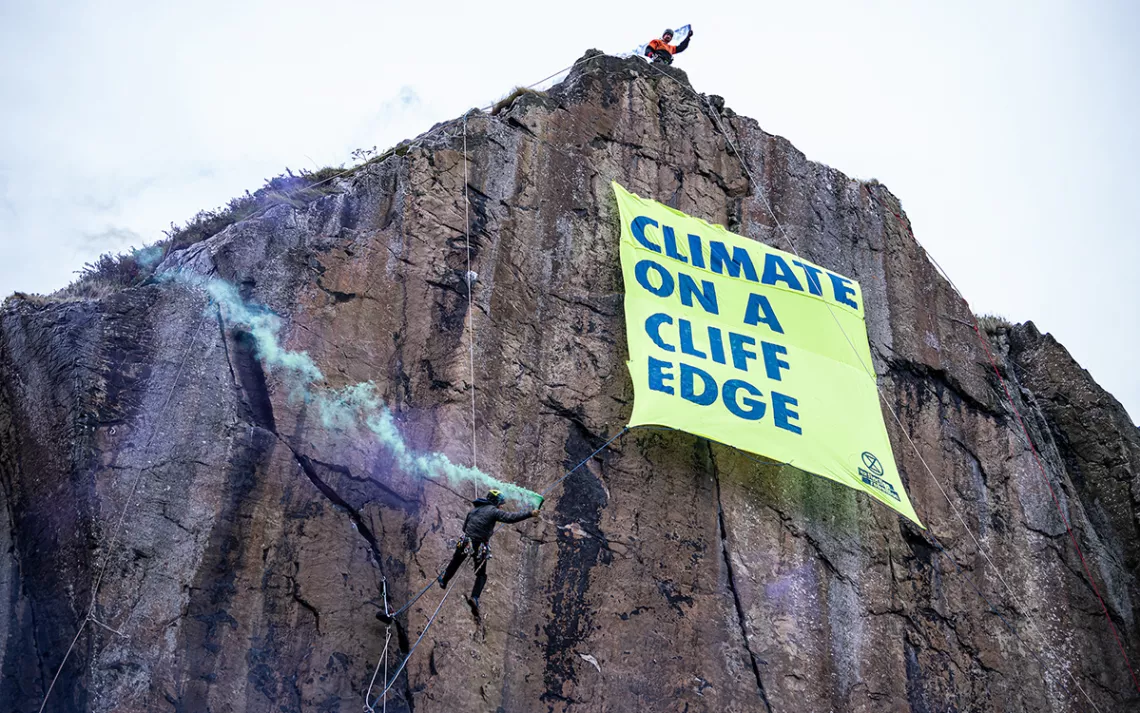
Experienced climbers scale a rock face near the historic Dumbarton castle in Glasgow, releasing a banner that reads “Climate on a Cliff Edge.” One activist, dressed as a globe, symbolically looms near the edge, while another plays the bagpipes on the shores below. | Photo courtesy of Extinction Rebellion and Mark Richards
POLITICIANS have gone “awol” on the environment despite four in five voters expressing concern about the climate and the natural world, conservationists warned today.
New polling for conservation charity WWF shows that while 80 per cent say they care about issues relating to climate, nature and the environment, only 45 per cent believe that politicians share their level of concern.
They face increasing pressure to do more on the environment after tens of thousands of people marched through London at the weekend.
WWF warned today that the next five years will be “absolutely vital” for conservation efforts in Britain and abroad, with native wildlife from puffins to bluebells and mountain hares at risk from climate change, pollution and habitat loss.
Chief executive Tanya Steele said: “Our polling shows the environment is clearly a key issue for the public and they deserve to hear what the next government plans to do to restore nature and meet our climate targets.
“Unfortunately, politicians have largely gone awol on the environment during this campaign, but the next five years will be absolutely vital in bringing nature back from the brink, both at home and around the world.
“As the campaign enters the final straight, we’re calling on all parties to commit to action on nature and climate that’s hugely popular with the public.”
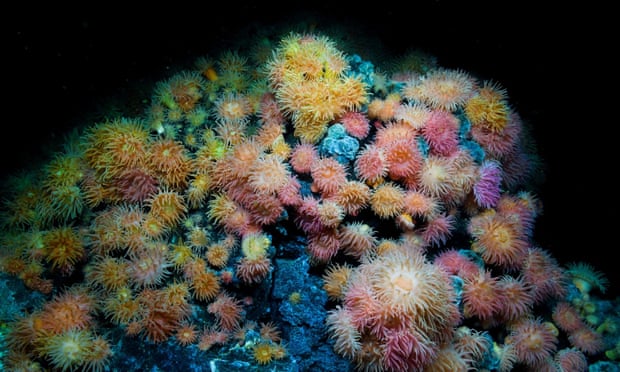
Scientists have warned of ‘catastrophic consequences for marine life’ if deep sea mining goes ahead. Photograph: University of Bergen, Centre for Deep Sea Research/Reuters
WWF says the government has breached the law ‘without adequately assessing the consequences’
One of the world’s biggest environmental groups is suing the Norwegian government for opening up its seabed for deep-sea mining, claiming that Norway has failed to properly investigate the consequences of this move.
WWF-Norway says the government’s decision has breached Norwegian law, goes against the counsel of its own advisers, and sets a “dangerous precedent”.
“We believe the government is violating Norwegian law by now opening up for a new and potentially destructive industry without adequately assessing the consequences,” said Karoline Andaur, the CEO of WWF-Norway. “It will set a dangerous precedent if we allow the government to ignore its own rules, override all environmental advice, and manage our common natural resources blindly.”
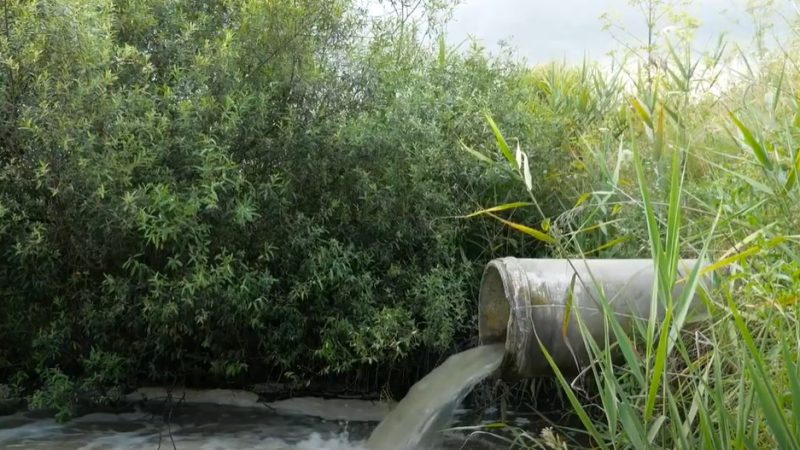
The Office for Environmental Protection (OEP), the government’s own environmental watchdog, has confirmed that the government may have broken environmental law by the watering down of critical regulations on the pollution of rivers in England.
The disclosure was made in response to a legal complaint made by ClientEarth and the Worldwide Fund for Nature (WWF) in November 2022 against the Environmental Agency for its failure to monitor and enforce environmental protections on nitrogen pollution.
The complaint was based on Freedom of Information (FOI) requests submitted by WWF and ClientEarth. The FOIs revealed that between January 2020 to December 2021 the Environment Agency conducted 2,213 inspections of three key agricultural regulations, identifying breaches in almost half of farms. However, only one case was issued with a civil sanction.
According to ClientEarth and WWF, these inspections represented just 2 percent of farms each year, suggesting that the Environment Agency has “little idea of the scale of law breaking taking place and of the damage being currently done to the environment.”
Given the high levels of nitrogen pollution in England, WWF and ClientEarth accused the Environment Agency of “an unlawful abdication of its statutory responsibilities.”
In response to the WWF and ClientEarth’s complaint, the OEP agreed that the Environment Agency had potentially breached environmental law by failing to adequately assess environmental impacts on protected conservation sites before allowing farmers to exceed manure spreading limits. English rivers are particularly at risk of nitrogen-related pollution, with over half the country classified as vulnerable to nitrogen run-off.
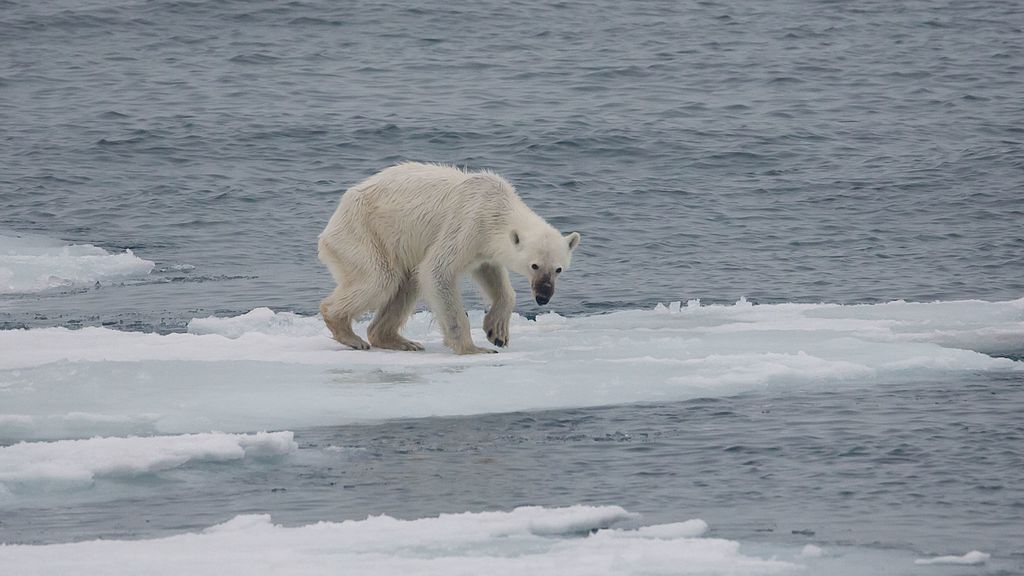
In summer, some polar bears do not make the transition from their winter residence on the Svalbard islands to the dense drift ice and pack ice of the high arctic where they would find a plethora of prey. This is due to global climate change which causes the ice around the islands to melt much earlier than previously. The bears need to adapt from their proper food to a diet of detritus, small animals, bird eggs and carcasses of marine animals. Very often they suffer starvation and are doomed to die. The number of these starving animals is sadly increasing.AWeith This file is licensed under the Creative CommonsAttribution-Share Alike 4.0 International license. https://en.wikipedia.org/wiki/File:Endangered_arctic_-_starving_polar_bear.jpg
Increasingly dire ecological damage and severe impacts of the climate crisis are pushing the natural world towards a mass extinction event unparalleled since the age of the dinosaurs, conservationists in Germany warned this week, with humanity possibly facing self-annihilation if behaviors do not change.
Releasing its annual “Winners and Losers” list on Wednesday, the World Wildlife Fund’s German branch said 40,000 of the 142,500 species listed on the Red List of Threatened Species by the International Union for Conservation of Nature (IUCN) are “threatened with extinction.”
“If the earth is sick, so will the people [be], because we depend on vital ecosystems and biodiversity for our own safe and healthy life.”
The Red List is now longer than it has ever been since the IUCN began cataloging threatened species in 1964.
More than 40% of amphibians, 27% of shark and ray species, a third of reef building corals, and more than a quarter of all mammals on the Red List are threatened with extinction.
At the current rate of species loss, “around one million species could go extinct within the next decade—which would be the largest mass extinction event since the end of the dinosaur age,” WWF Germany said in a statement.
With planet-heating atmospheric carbon dioxide emissions reaching a record high this year—contributing to drought, habitat loss, extreme weather, and health problems in humans as well as other species—the organization noted that humans should view the extinction crisis as one that could affect them directly.
“Species conservation is no longer just about defeating an environmental problem, but is rather about the question of whether or not humanity will eventually end up on the Red List in an endangered category—and thereby become a victim of its own lifestyle,” WWF Germany director Eberhard Brandes said.
“If the earth is sick, so will the people [be],” he added, “because we depend on vital ecosystems and biodiversity for our own safe and healthy life.”
The “losers” on the WWF’s list include the polar bear, which is already suffering from the erosion of its Arctic habitat as the northern region becomes warmer. The Arctic Ocean could be completely free of ice by 2035 at the current rate of loss, making it increasingly difficult for the bears to find food.
Sharks and rays also made the list, the result of overfishing, habitat loss, and the climate crisis. A third of all sharks and rays in the oceans were classified as threatened in 2021, the WWF said.
African forest elephants have been considered “critically endangered” for the first time this year, as their population in Central and West Africa has plummeted by 86% in the past three decades.
The inclusion of 40,000 species on the IUCN’s list of threatened species represents a major acceleration of biodiversity loss. In 2010, 17,300 species were considered to be under threat, according toThe Guardian.
The WWF’s list of “winners” this year includes bearded vultures, which have benefited from a resettlement program in the last 30 years that’s resulted in more than 300 of the birds now living in the Alpine region; the Iberian lynx, whose population has increased more than tenfold in the past 18 years; and Siamese crocodiles in Cambodia. Eight young crocodiles were found by researchers this year, marking the first time in more than a decade that the species has reproduced in nature.
“The winners of the list show that there are still opportunities for species protection,” said Brandes. “If we implement effective nature conservation measures, we can protect plants, animals and, ultimately, the climate.”