Activists imprison Westminster statues to highlight crackdown on protest

Spread the love

https://morningstaronline.co.uk/article/activists-imprison-westminster-statues-highlight-crackdown-protest

Greenpeace activists install prison bars around three iconic statues – Nelson Mandela, Mahatma Gandhi and the Suffragist Millicent Fawcett – in Parliament Square, October 29, 2025 [Pic: © Kristian Buus / Greenpeace]

CAMPAIGNERS encased statues of prominent social justice figures in prison bars today to challenge laws that criminalise protest.

Greenpeace activists imprisoned statues of Nelson Mandela, Mahatma Gandhi and Millicent Fawcett outside Westminster, to highlight how they would fall foul of the government’s anti-protest laws if they were protesting today.

A new analysis by the group found that out of all the arrests made under the Terrorism Act since it came into force 24 years ago, almost half (2,100 out of 4,322) occurred in the last four months, predominately targeting people protesting the ban on Palestine Action.

Since the group was proscribed on July 5, police have carried out mass arrests of activists silently holding signs against the ban.

Green Party leader Zack Polanski said: Calling peaceful protesters ‘terrorists’ is one of the most blatantly ridiculous and dangerous things this government has done. 

“Nelson Mandela was jailed for fighting apartheid, this lot would’ve called him a national security threat. When we criminalise protest, we don’t just attack activists. We attack democracy itself.”

https://morningstaronline.co.uk/article/activists-imprison-westminster-statues-highlight-crackdown-protest

Palestine Action joke that appeared in the UK satirical magazine 'Private Eye'.
Palestine Action joke that appeared in the UK satirical magazine ‘Private Eye’.

Continue ReadingActivists imprison Westminster statues to highlight crackdown on protest

Green Party leader criticises nuclear reactor plan

Spread the love

https://www.bbc.com/news/articles/c98np768g92o

Green Party leader Zack Polanski said money would be better spent on renewable energy

Green Party leader Zack Polanski has criticised government plans to build a new generation of nuclear reactors, calling it old technology that is like “creating a fax machine”.

Centrica and US firm X-energy aim to create up to 2,500 jobs in Hartlepool by building 12 new advanced modular nuclear reactors.

Polanski said it was technology “from a long time ago” and that money would be better spent on wind and solar power, which could deliver thousands of jobs.

Labour MP for Hartlepool Jonathan Brash said the technology was being pioneered in the United States and that the companies were also working with schools and colleges to recruit a local workforce.

The nuclear site will be developed next to the town’s existing nuclear power station, which is set to be decommissioned in 2028.

The government previously said that the deal could secure the next 50 years of clean, homegrown energy and that it “marks the dawn of a new golden age for British nuclear”.

Continue ReadingGreen Party leader criticises nuclear reactor plan

Keir Starmer’s Labour is a lost cause. But there’s still hope for the left

Spread the love

Original article by Paul Rogers republished from openDemocracy under a Creative Commons Attribution-NonCommercial 4.0 International licence.

Zack Polanski, Zarah Sultana and Jeremy Corbyn offer hope for the British left
 | Ben Montgomery/Stringer / Leon Neal/Staff / Kristian Buus/Contributor / Getty Images / Composition by James Battershill

In choosing big business over ordinary people, the PM has sacrificed the heart of the Labour Party. So what next?

Labour’s political position is increasingly the reverse of the ‘for the many, not the few’ policy pursued under former leader Jeremy Corbyn. The party has embraced corporate capture and the main features of neoliberalism, albeit with incredibly poor timing, as the neoliberal economic model drives runaway wealth that increases dissent across much of the world.

It is no coincidence that, at the same time, when it should be coasting along on a huge parliamentary majority won less than 18 months ago, Labour has been plunged into political disarray and seen its lead disappear in the polls.

By cosying up to big business and failing to offer anything to substantially improve the lives of ordinary people up and down the country, Keir Starmer’s New-New Labour has seen a collapse in its general support and, more significantly, its membership.

The Labour Party has lost 300,000 of the 550,000 members it had in the Corbyn era. While it has been able to recoup the financial support offered by these ordinary members from a few big donors, it has in the process lost the heart of the party.

Many issues demonstrate this, but a few stand out. The government’s repeated refusal (now rumoured to be U-turned on at next month’s Budget) to lift the two-child benefit cap. Its flagship welfare bill (already U-turned on), which would have cut Universal Credit and Personal Independence Payments for millions of vulnerable people. The decision, announced in February of this year, to cut the foreign aid programme to increase military spending.

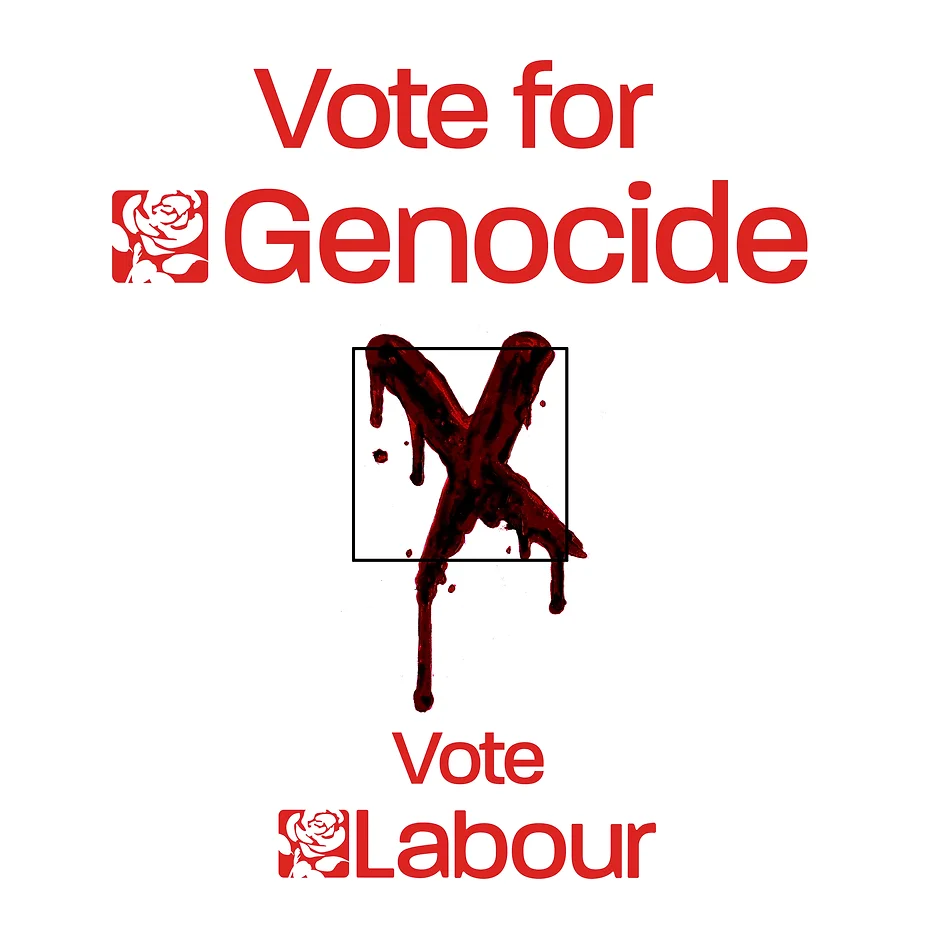
And then came perhaps the biggest problem of all for Starmer’s Labour: Gaza, where the UK government’s continuing support for Israel as it engages in genocide still beggars belief for many. There have been 32 mass demonstrations in London in the past two years, the most recent being one of the largest protests ever held in the UK. That level of political activity will continue, given Israeli prime minister Binyamin Netanyahu seems determined to avoid a peaceful outcome, and Starmer is unlikely to stand up to him or, by extension, the US.

Widespread dismay and depression on the backbenches may ebb and flow, but at this point, it feels like even a change of leadership may not be enough for a real change in fortune.

The government’s current predicament is the main reason why Westminster politics is so uncertain. Looking at the UK-wide parties, the far-right Reform UK is leading polls with vote shares that vary but are typically over 30%, having soaked up plenty of support as a substantial protest vote. If that persists through to the next general election in 2029, it will likely put Nigel Farage into Downing Street.

Labour’s support, meanwhile, is hovering at around 20%, the Tories more like 15% and the Liberal Democrats rather less.

And until three months ago, the Greens were still weak in polling terms – despite having made some progress since last year’s election – and millions on the left were still disenfranchised, having been disillusioned with Starmer’s Labour leadership.

Two things have changed; the first being Zack Polanski winning the Green Party leadership at the start of September. He has brought a more radical and left-wing perspective to the party, which has led to a jump in the polls and an 80% increase in new members. The Greens announced this week that its membership now stands at 126,000 – more than either the Conservatives or the Lib Dems.

The second change is in the fortunes of the new Your Party group, fronted by Corbyn and former Labour MP Zarah Sultana. While the party’s initial request for expressions of interest received a massive 800,000 responses – at which point it appeared likely to provide a serious challenge to Starmer’s Labour – it ran into internal disagreements six weeks ago that knocked it right back and led to a period of utter dismay and anger among supporters.

Those feelings have eased somewhat over the past two weeks, as Your Party has published draft versions of its constitution, standing orders and an organisational strategy, all of which are to be discussed and developed before being decided at a large national conference in Liverpool at the end of November. The documents, including a draft political statement, are open to all and will no doubt be subject to intense debate and plenty of disagreement, but they do appear to be a genuine attempt at accountability that is a very long way from the opacity of the Labour Party.

A typical meeting of supporters, of which there are hundreds around the country, still sees some of the anger of a few weeks ago, but now also more determination to see things through. If the new party can recapture the mood of three months ago – and particularly if it and the Greens are willing to work with one another – then there may be some hope for the disenfranchised left.

One of the most interesting aspects of these rapid political changes is the potential for the three figureheads of these two parties to have a substantial impact.

Zarah Sultana, with an often combative style, appeals particularly to younger and frustrated audiences, while Zack Polanski’s normal and measured approach is persistently disarming for Reform’s far-right politicians. Then there is Jeremy Corbyn, who is already a national figure known for a long-term commitment to a progressive agenda and a remarkable personal following.

These are very early days in a time of rapid political change. Reform is still on the up, but compared with just three months ago, there is now a lot more reason for hope on the left.

Sign up to openDemocracy’s free Daily Email

Keir Starmer explains that he feels no shame or guilt benefitting personally from gifts from the rich and powerful while insisting on policies of severe austerity causing suffering and death.
Keir Starmer says that the Labour Party under his leadership all feel a small part of Scunthorpe.
Keir Starmer objects to criticism of the IDF. He asks how could anyone object to them starving people to death, forced marches like the Nazis did, bombing Gaza's hospitals and universities, mass-murdering journalists, healthworkers and starving people queuing for food, killing and raping prisoners and murdering children. He calls for people to stop obstructing his genocide for Israel.
Keir Starmer objects to criticism of the IDF. He asks how could anyone object to them starving people to death, forced marches like the Nazis did, bombing Gaza’s hospitals and universities, mass-murdering journalists, healthworkers and starving people queuing for food, killing and raping prisoners and murdering children. He calls for people to stop obstructing his genocide for Israel.
Continue ReadingKeir Starmer’s Labour is a lost cause. But there’s still hope for the left

Welsh by-election shows far right isn’t the only alternative to establishment parties

Spread the love

Original article by Ana Vračar republished from peoples dispatch under a Creative Commons Attribution-ShareAlike 4.0 (CC BY-SA) license.

Plaid Cymru celebrates by-election results. Source: Rhun ap Iorwerth/X

Plaid Cymru’s by-election win in Wales shows that space still exists for progressive politics despite Nigel Farage’s claims.

Welsh party Plaid Cymru, an advocate for independence from the United Kingdom, delivered a major blow to both the Labour Party and Reform UK in a by-election for the devolved parliament, the Senedd. Plaid candidate Lindsay Whittle won 47% of the vote in Caerphilly, leaving Reform behind at 36% and Labour at just 11% – an astonishing 35-point drop compared to the previous election. The result marks Labour’s first loss of the seat in more than a century.

“This result shows that Plaid is no longer just an alternative, we are now the real choice for Wales, the only party able to stop billionaire-backed Reform,” party leader Rhun ap Iorwerth said after the result was announced. Ahead of the election, Reform had invested substantial resources into the campaign, with Nigel Farage apparently confident a win in Wales would prove his claim that the far right has become the only true alternative to Britain’s two establishment parties.

In reality, while the by-election confirmed that both Labour and the Conservatives remain in crisis after years of backing austerity, it actually showed that the far right can still be stopped by more progressive alternatives. “In every corner of Britain, people are calling out for an alternative to the misery faced by millions and candidates who will stand up against the hate and division sold by Reform and the shameful parroting of Farage’s rhetoric by Keir Starmer and his weakling Labour government,” the Peace and Justice Project wrote on social media.

Read more: 140,000 march in Brussels against austerity

Since the 2024 general election, Prime Minister Starmer’s shift to the right on everything from austerity to migration and Palestine solidarity has alienated much of Labour’s base and beyond. Many polls now predict the party could be shattered in upcoming elections. Although Reform UK has so far benefited the most from the widespread frustration and anger, positioning itself as the main alternative, progressive political forces have also gained significant ground.

The early announcement of a new left party by independent MPs Jeremy Corbyn and Zarah Sultana drew more than 600,000 expressions of support, while the Green Party has seen thousands of new members join in recent months. Following the election of a new leadership team headed by Zack Polanski, the Greens announced their membership had doubled to 140,000. Both the groups have rejected Reform’s hate-driven narrative and scapegoating of migrants, while also condemning Labour for failing to address people’s real concerns since taking office.

“This Senedd by-election result shows that people are sick of the Westminster establishment and its persistent scapegoating of marginalized communities instead of effectively dealing with the issues we all face,” the Peace and Justice Project stated. While Reform’s failed bid in Caerphilly suggests that not everyone has accepted the idea that the far right is the only alternative to business as usual in British politics, progressives still face the enormous challenge of mobilizing on a larger scale ahead of future elections – including the 2026 run for the Senedd – to counter far-right narratives and build a vision of hope for working-class communities across Britain.

Original article by Ana Vračar republished from peoples dispatch under a Creative Commons Attribution-ShareAlike 4.0 (CC BY-SA) license.

Nigel Farage explains the politics of Reform UK: Racism, Fake anti-establishmentism, Deregulation, Corporatism, Climate Change Denial, Mysogyny and Transphobia.
Keir Starmer justifies why he has to travel abroad so much
UK Conservative Party leader Kemi Badenoch explains her reality that the Earth is flat, the Moon is made of cheese and that she was born from Unicorn horn dust
UK Conservative Party leader Kemi ‘not a genocide’ Badenoch explains her reality that the Earth is flat, the Moon is made of cheese and that she was born from Unicorn horn dust
Continue ReadingWelsh by-election shows far right isn’t the only alternative to establishment parties

Green Party membership surges past Conservatives, making the Greens third-largest political party in the UK

Spread the love
Green party leader Zack Polanski (Green Party of England and Wales). Image: Bristol Green Party Creative Commons CC0 1.0 Universal Public Domain Dedication.

The Green Party of England and Wales’ membership has surged past the Conservative Party, making the Greens the third largest party in the UK. From this position, and with Labour’s clear shift to the right, it’s clear that the Greens are now the Party of choice to counter Reform and their brand of divisive politics.

In just over two hours, the Green Party saw 1,000 new members join on Sunday morning after Zack Polanski announced the news on BBC One’s Laura Kuenssberg show. The Green Party membership now stands at over 126,000. This latest milestone marks an 80% increase since Zack Polanski was elected Leader of the party last month. The Greens now have more than double the reported members of the Liberal Democrats.

Green Party Leader Zack Polanski said:

“More than 126,000 people have now joined the Green movement, showing that British politics is changing and support for old-style parties built on privilege and power is shrinking. Increasing numbers of people are walking away from the politics of austerity,  inequality and division and choosing a new kind of politics that offers a bold, hopeful vision of prosperity, equality and unity”.

“Our membership boom reflects growing public frustration with the political status quo and a hunger for genuine alternatives”.

Since Polanski was elected leader, the Greens have become a clear voice on the cost-of-living crisis, climate breakdown, and the collapse in political trust.

Polanski added, “This milestone shows that people are ready for something new. The old two-party system is broken. The Green Party is growing because we speak to the real challenges of this moment, and it’s clear that with our message, people can see that politics can be a force for good”.

The Green Party is now preparing to launch a series of autumn campaigns on fair taxation and tackling the cost-of-living crisis, as the Labour Party prepares what is likely to be another austerity-driven budget.  

Orcas comment on killer apes destroying the planet by continuing to burn fossil fuels.
Nigel Farage urges you to ignore facts and reality and be a climate science denier like him and his Deputy Richard Tice. He says that Reform UK has received £Millions and £Millions from the fossil fuel industry to promote climate denial and destroy the planet.
UK Conservative Party leader Kemi Badenoch explains her reality that the Earth is flat, the Moon is made of cheese and that she was born from Unicorn horn dust
UK Conservative Party leader Kemi ‘not a genocide’ Badenoch explains her reality that the Earth is flat, the Moon is made of cheese and that she was born from Unicorn horn dust

Continue ReadingGreen Party membership surges past Conservatives, making the Greens third-largest political party in the UK