The Al Jazeera ‘Labour Files’ documentary series exposed afresh the rampant racism and war on democracy of the Labour right, both to sabotage the leadership of Jeremy Corbyn and to purge the left from the party under Keir Starmer.
Now a new episode sees Martin Forde – the barrister Starmer reluctantly commissioned to investigate the report’s allegations and whose findings have been ignored by the Labour right and their media allies ever since – respond to the programme’s evidence and conclusions:
Watch and share widely.
The Labour Files – The Forde Response I Al Jazeera Investigations
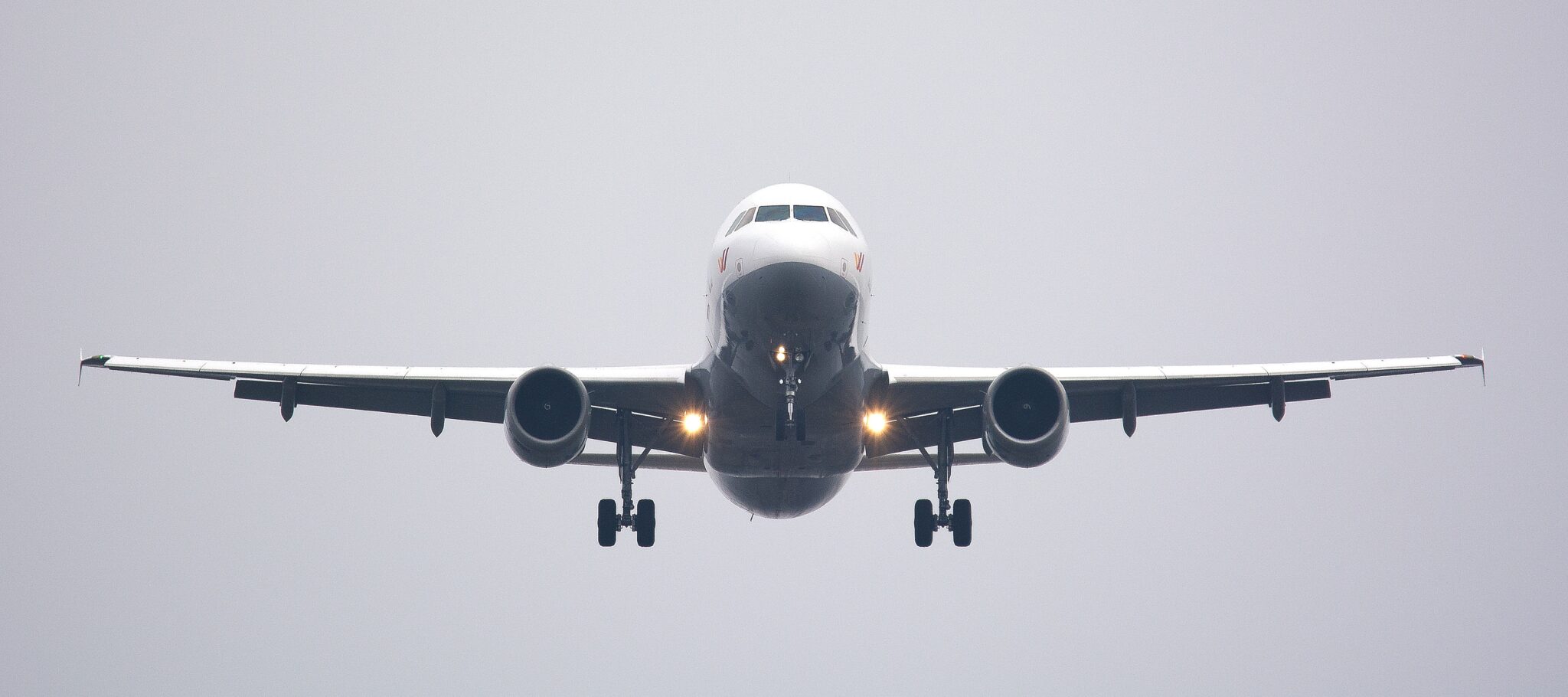
The government wrote off emissions equivalent to 400,000 passengers flying from London to Sydney and back in one year
Photo by Pixabay from Pexels: https://www.pexels.com/photo/air-air-travel-airbus-aircraft-358319/
The government gave more than £300m worth of free ‘pollution permits’ to airline companies including British Airways, RyanAir and EasyJet under a scheme designed to tackle climate change.
The UK’s Emissions Trading Scheme is meant to reduce carbon emissions by forcing big polluters to buy a permit for each tonne of carbon they emit, with the money going into the public purse.
But data obtained by openDemocracy reveals the UK’s aviation sector was handed more than four million “pollution permits” last year, free of charge.
The 4.1 million tonnes of CO2 they represent are equivalent to the emissions of more than 400,000 passengers flying economy-class from London to Sydney and back. The free permits saved airlines the equivalent of £336m based on the annual average carbon price – 39% more than the previous year, 2021.
EasyJet, RyanAir and British Airways were the big winners of the handouts, bagging permits worth £84m, £73m and £58m respectively. The companies all made heavy losses during the pandemic but have since become profitable again: British Airways owner International Airlines Group (IAG) announced profits of £1.3bn last month, while RyanAir just enjoyed its “most profitable December quarter on record” and easyJet is reporting “record-breaking sales”.
openDemocracy has previously revealed how oil and gas companies including Shell and BP were similarly handed more than £1bn worth of free pollution permits during 2022.
Caroline Lucas, the Green MP for Brighton Pavilion, told openDemocracy the government was “letting aviation companies get away with it” and “forcing the public to pick up the tab”.
“Ministers must bring an end to these free pollution permits immediately, and make high-carbon companies pay for the climate-wrecking damage they’re causing,” she added.
The Department for Net Zero and Energy Security is now analysing the results of a consultation on phasing out free permits for the aviation sector – but policy changes will not take effect until at least 2026.
The government has already allocated 12.2 million free permits for the next three years, which at last year’s carbon price will be worth a further £965m.
A government spokesperson told openDemocracy the UK was giving away free permits because it was “committed to tackling climate change” but also to “protecting our industry from carbon leakage”.
But the risk of carbon leakage – when companies relocate to countries that do not have carbon pricing – is “minimal”, according to research commissioned by the government itself.
The study by Frontier Economics on behalf of the Department for Business, Energy and Industrial Strategy (BEIS) also found that ending permit giveaways would lead to a decrease in airline profits and improve market competition.
Daniele de Rao, an aviation expert at Carbon Market Watch, told openDemocracy: “Despite several studies showing that the risk of carbon leakage in the aviation sector is insignificant, airlines are still receiving an enormous amount of free allocation.
“The United Kingdom should apply the ‘polluters pay’ principle in its own ETS and, following the European Union’s example, should end the handout of free pollution permits to airlines as soon as possible.”
Matt Finch, UK policy manager of campaign group Transport & Environment, added: “The nation is up in arms about sewage pollution, but at the same time our government is paying airlines millions of pounds a year to pollute. Are these the actions of a climate leader? No. Free allowances should be phased out of the ETS as quickly as possible.”
The remaining £120m in free permits was carved up among the rest of the UK airline industry – with even the owners of private jets getting handouts.
Ineos Aviation, the company owned by oil and gas billionaire Jim Ratcliffe, was given free permits worth around £2,000.
The government has claimed that “our UK ETS is more ambitious than the EU system it replaces”.
But the EU has voted to phase out free permit allocations from 2026. It also redistributes the revenues raised by permit sales to environmental projects – whereas in the UK the proceeds are retained by the Treasury.
A government spokesperson told openDemocracy: “The UK is committed to tackling climate change while protecting our industry from carbon leakage. That is why a proportion of allowances are allocated for free to businesses under the UK Emissions Trading Scheme.”
They claimed handing free permits to airline giants would “support industry in the transition to net zero in the context of high global energy prices while incentivising long term decarbonisation”.
Whatever you’re interested in, there’s a free openDemocracy newsletter for you. HAVE A LOOK
A state-owned electricity generation company could save Britons £21bn ($24.8bn) a year (or £252 per household) while accelerating the transition to green energy, according to new analysis published by the think tank Common Wealth on 6 March.
In the report, Common Wealth analyses a range of proposals recently set out by other stakeholders including government agencies, industry commentators and think tanks to reform the wholesale electricity market, whose fragmented design and over-exposure to natural gas has led to Britain experiencing disproportionately high energy bills since Russia invaded Ukraine, while renewable generators have reaped windfall profits.
Analysing the pros and cons of a publicly owned generator compared with five other proposals recently tabled by various stakeholders – a wholesale price cap for low-carbon generators; a windfall tax on low-carbon generators; a voluntary shift to contracts for difference; splitting the electricity market; and establishing a single buyer of electricity – Common Wealth finds that the option of a state-owned electricity company comes out on top, both in terms of cost-savings potential and also which is most likely to incentivise greater investment in renewables.
The generator would purchase the portfolio of existing UK low-carbon generation assets, including biomass and nuclear but not natural gas, in order to generate and sell electricity to households and businesses through an integrated public company using a power purchase agreement between the public generator and supplier, and would therefore, unlike many of the other options, “provide a long-term solution” to the wholesale pricing system while passing the savings directly back to households and businesses.
Labour’s former leader spoke to the Morning Star’s CEREN SAGIR this weekend on the party’s current trajectory on the NHS, during a huge demonstration against further privatisation of the health service
WHEN Peace and Justice Project founder and Islington North MP Jeremy Corbyn warned the public by revealing evidence of the Tory government’s secret dealings with US companies selling off the NHS, the media labelled it “a Russian conspiracy.”
…
But it seems that Labour’s current leadership is determined to follow in the Tories’ footsteps, with Keir Starmer declaring that nothing is “off limits” when it comes to the NHS.
When asked if the NHS would be safe in the hands of the opposition if it were to win the next general election, Corbyn said: “I’d like to think so, but I’m very worried — because our NHS is a very precious institution: healthcare, universal and free at the point of need.
“If we go into an election pledged to continue the private operation within the NHS and farming services out to the private sector, then that is a form of privatisation.
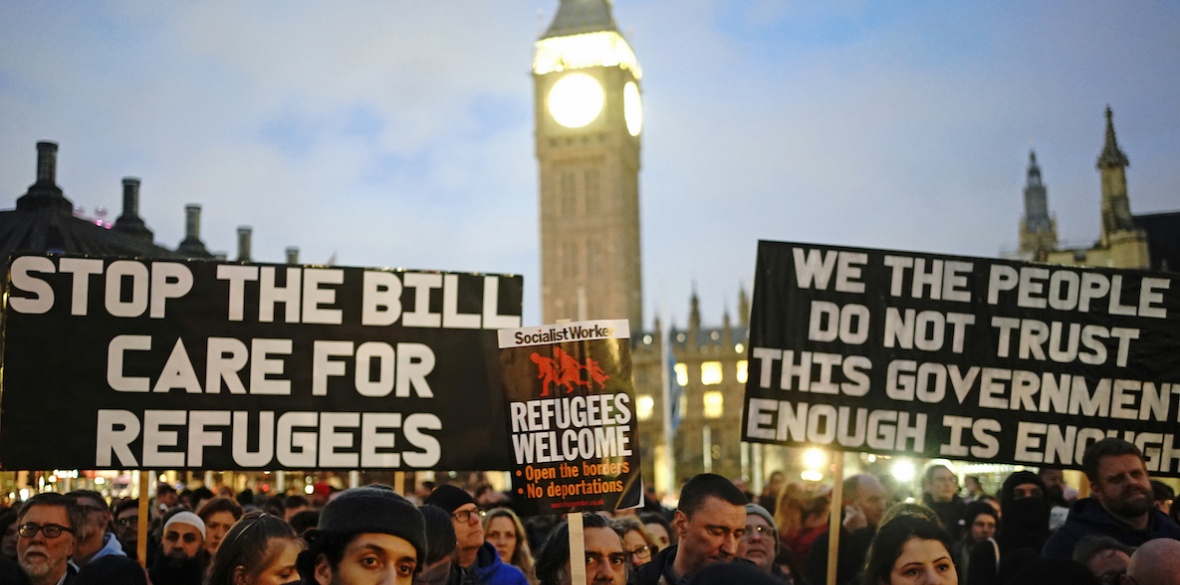
Demonstrators protesting against the Illegal Migration Bill in Parliament Square, London, during the second reading of the the bill in the House of Commons this evening. Picture date: Monday March 13, 2023.
HUNDREDS of academic experts signed a joint letter today, condemning the Tory government’s anti-asylum seeker Bill as “not evidence based, workable or legal under human rights law.”
More than 300 scholars from mostly British universities warned that the Illegal Migration Bill will not stop small boats crossing the Channel but would increase “the chance of death” as people are funnelled into more dangerous journeys.
The letter – published online and in The Times newspaper – called the legislation, which cleared its first Commons hurdle on Monday, a “deterrence approach” by ministers in response to increasing numbers fleeing war and persecution.
But the experts warned that there is “no evidence that we are aware of to suggest that deterrence-based approaches are effective.”