Hundreds of Thousands March in London Demanding ‘End to War on Gaza’

Spread the love

Original article by Jon Queally republished from Common Dreams under Creative Commons (CC BY-NC-ND 3.0).
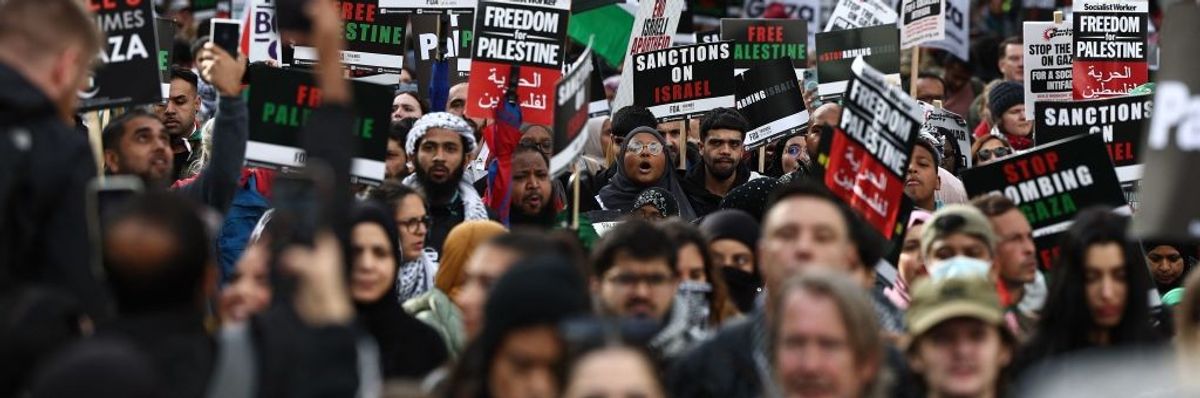
People take part in a ‘March For Palestine,’ in London on October 21, 2023, to “demand an end to the war on Gaza.” (Photo by Henry Nicholls / AFP via Getty Images)

The large-scale demonstration in the U.K. occurred as paltry levels of humanitarian aide were finally allowed through the southern border of Gaza, but nowhere near enough given the scale of death and destruction.

Organizers and participants said hundreds of thousands of people were in the streets of central London on Saturday to demand an immediate cease-fire in Gaza as the Israeli military continued its bombardment of the besieged enclave a full two weeks after Hamas’ Oct. 7 attack.

Organized by a coalition that includes the Solidarity Campaign, Friends of Al-Aqsa, Stop the War Coalition, Muslim Association of Britain, Palestinian Forum in Britain, and the Campaign for Nuclear Disarmament, the march also called for Israel to “end its occupation of Palestinian land and apartheid rule over the Palestinian people.”

The demonstration began at Marble Arch, weaving its way through central parts of the city before ending at Downing Street, where a mass rally was held.

While many in the streets put the number of demonstrators in the hundreds of thousands, other outlets put the number closer to 100,000.

“As a Palestinian who’d like to return home one day, as a Palestinian who has brothers and sisters in Gaza, and family, I wish we can do more but protest is what we can do at the minute,” one marcher toldReuters.

At a smaller protest in Cardiff, Maggie Morgan, from the local affiliate of the Palestinian Solidarity Campaign, explained to the BBC that demonstrators in the UK were “taking to the streets as a show of solidarity to the people of Gaza, to show our support for them, but also to make the government listen, and say ‘not in our name,’ we’re not having this.”

On Friday, protests against the assault on Gaza—which has already claimed over 4,000 lives and thousands more injured—were seen across the Middle East, from Cairo in Egypt, with specific demands to open the Rafah Border to allow refugees out and humanitarian supplies, to Iraq, Yemen, Jordan, Indonesia, and beyond.

“We want the border to be opened immediately so aid can reach people in Gaza,” one protester in Cairo’s Tahrir Square told a correspondent with the Middle East Eye.

The Rafah crossing was finally opened on Saturday, but only 20 trucks of supplies were allowed to enter Gaza, an amount described by the Associated Press as “a trickle” compared to what aid experts say is necessary.

Cindy McCain, the executive director of the World Food Programme, toldAl Jazeera in an interview that 20 trucks were simply inadequate given the scale of the humanitarian disaster Palestinians and others trapped in Gaza now face.

“The situation inside Gaza is dire. Not only is there no food, there is no water, electricity, or fuel. And that combination is not only catastrophic but can lead to more starvation and disease as well,” McCain explained. “We’ve got to get more trucks in.”

Medical agencies and other relief workers on the ground have said that the absence of fuel in Saturday’s convoy means that hospitals remain on the verge of collapse.

“Without fuel entering the Gaza Strip to support generating electricity, thousands of Palestinian lives are at risk of death in hospitals, ” said the Palestine Red Crescent Society in a statement. “Ambulance will no long be able to save lives. Bakeries will no longer be able to provide bread. It shall leave the population without potable water, and risk outbreak of diseases.”

In a dispatch on Saturday, UNRWA Commissioner-General Philippe Lazzarini, who heads the UN agency mandated with administering humanitarian assistance and protection in Gaza, said the ongoing assault by Israel has put the lives of everyone inside the territory at great risk.

“For the past two weeks, the war has continued unabated,” said Lazzarini. “In the Gaza Strip, relentless air strikes and bombardments, coupled with evacuation orders issued by the Israeli Forces, have displaced nearly 1 million people and caused the death and injuries of far too many civilians.”

He continued: “Civilians—wherever they are—must be protected. The life of all civilians, the integrity of all UN facilities and premises, as well as civilian infrastructures, including hospitals, must be shielded from harm and protected at all times under international humanitarian law.”

With global condemnation directed at Israel for what international legal scholars have warned may be overt acts of genocide and collective punishment in response to Hamas’ attack, U.N. Secretary-General António Guterres on Saturday, speaking from Cairo, said, “The people of Gaza need a commitment for much, much more—a continuous delivery of aid to Gaza at the scale that is needed.”

Guterres further demanded a humanitarian cease-fire to rescue Gaza from what he called “a godawful nightmare.”

And Lazzarini added, “Let me be clear: protecting civilians in times of conflict is not an aspiration or an ideal; it is an obligation and a commitment to our shared humanity. I echo the calls from the UN Secretary-General on all parties to reach an urgent humanitarian ceasefire. This is the only way out of this mayhem; any other way will plunge Gaza—and the world—deeper into fathomless, dark depths.”

Original article by Jon Queally republished from Common Dreams under Creative Commons (CC BY-NC-ND 3.0).

Continue ReadingHundreds of Thousands March in London Demanding ‘End to War on Gaza’

Children at ‘existential risk’ from climate crisis, UK’s top paediatrician says

Spread the love

https://www.theguardian.com/society/2023/oct/21/children-at-existential-risk-from-climate-crisis-uks-top-paediatrician-says

The climate crisis poses an “existential risk” to the health and wellbeing of all children and action to tackle it is needed immediately, Britain’s most senior paediatrician has said.

In a major intervention, Dr Camilla Kingdon, the president of the Royal College of Paediatrics and Child Health (RCPCH), said every adolescent was at grave risk from the physical and mental effects of the climate crisis. Healthcare professionals were already seeing its impact first-hand, she added.

Kingdon attacked what she described as the rolling back of net zero policies by Rishi Sunak and said the country’s most vulnerable children would be left bearing the greatest burden as a result.

Rising temperatures around the world as a result of the climate crisis are having a devastating effect on foetuses, babies and children, multiple studies have found.

Scientists have determined the climate emergency is causing – among other adverse outcomes – an increased risk of premature birth and hospitalisation of young children as well as weight gain in babies. Research shows pollution can stunt children’s lung growth, cause asthma and affect blood pressure, cognitive abilities and mental health.

“Climate change is no longer tomorrow’s problem, it’s today’s,” Kingdon said. “Healthcare professionals across the UK are already seeing its impact first-hand.”

https://www.theguardian.com/society/2023/oct/21/children-at-existential-risk-from-climate-crisis-uks-top-paediatrician-says

Continue ReadingChildren at ‘existential risk’ from climate crisis, UK’s top paediatrician says

Boris Johnson ignored warnings from Covid scientists about public messaging

Spread the love

Original article by Finlay Johnston republished from Open Democracy under a Creative Commons Attribution-NonCommercial 4.0 International licence.

Image of Elmo and former Prime Minister Tory idiot Boris Johnson
Image of Elmo (left) and former Prime Minister Tory idiot Boris Johnson (right)

A Cabinet Office scientist who raised concerns over ‘stay alert’ was told it was ‘too late’. SAGE was not even asked

The government’s scientific advisers said they were cut out of decisions on pandemic messaging and compared Boris Johnson to Donald Trump after he tweeted out new guidance before they could flag concerns.

The Covid inquiry today heard the Scientific Advisory Group for Emergencies (SAGE) was not given the chance to advise on the ‘stay alert’ slogan before it was announced by the PM on social media in May 2020. The new messaging, which replaced the ‘stay home’ slogan as the first wave of the virus began to ease off, was heavily criticised at the time for being confusing.

An email was shown from Theresa Marteau, a member of the Scientific Advisory Group for Emergencies (SAGE), in which she told fellow members that the ‘stay alert’ messaging had “the potential to do much damage” and said “our advice has not been sought”.

Marteau said the proposed new guidance could increase the R number – the average number of secondary infections produced by a single infected person – bringing “all the expected negative health and economic consequences”.

She told colleagues that government officials should be urgently made aware of their “concerns” and they needed to “intervene” before the message went out to the public that evening.

But further emails showed the scientists’ responding to Johnson tweeting out the message before they were able to advise on it. They expressed concern about his decision and one wrote: “We have learnt so much from Donald Trump…”

Another email shown to the inquiry revealed that a behavioural scientist in the Cabinet Office who worked on government communications did raise concerns about the guidance after finding out about it, “only to be told it was too late”.

The official said, in another email shown to the inquiry, that their team had not been consulted. In the email to SAGE members, they wrote: “The messages are kept so elusive by a small group of mainly number 10 advisers”.

They added: “I am so sorry that despite being the behavioural scientists inside the government communications service we don’t have a handle on this either. It’s so often partially political and in this case I was also told they wanted to keep it deliberately small so that there’s not too many cooks, which is also a cultural issue.”

In another email, the head of the SPI-B group of behavioural scientists said chief scientific adviser Sir Patrick Vallance had issued a warning that members of SAGE and SPI-B should avoid “getting drawn into a govt operational move and losing reputation as a response”.

The email also suggested those inside No.10 were “concerned about our correspondence”.

Lucy Yardley, co-chair of the SPI-B group and a behavioural science expert, said following this incident: “Things didn’t improve in terms of being consulted…on the whole the communications tended to go ahead with very little input from SPI-B.”

Days after the new messaging was announced, Johnson was accused of misleading Parliament by suggesting Vallance and chief medical officer Chris Whitty had signed off on it.

James Rubin, who chaired the group alongside Yardley, earlier told the inquiry that their advice was not heeded and that it “seemed to disappear into a black hole”.

Rubin gave the example of explicitly advising the government against using fear in their messaging when a new variant of Covid arose in December 2020.

“We argued against [using fear] on multiple occasions,” he said.

The inquiry was then shown WhatsApp messages from Matt Hancock, then health secretary, and Simon Case, cabinet secretary.

In the exchanges, Hancock and Case said they intended to “frighten the pants off everyone with the new strain” and that “ramping up..the fear/guilt factor [is] vital”.

Yardley also expressed her concern about the government’s Eat Out to Help Out campaign.

“The ‘Eat Out to Help Out’ slogan… that came at a really crucially problematic time, because it was during the summer and that was when there was a really missed opportunity. That was when the infections were low and we could have all hopefully kept them low”, she said.

The inquiry continues.

Original article by Finlay Johnston republished from Open Democracy under a Creative Commons Attribution-NonCommercial 4.0 International licence.

Continue ReadingBoris Johnson ignored warnings from Covid scientists about public messaging

95 UK Universities That Have Pledged to Divest from Oil and Gas Use Banks Funding Climate Crisis

Spread the love

Original article by Max Colbert republished from DeSmog

Students have accused the institutions of ‘hypocritical and performative’ green commitments.

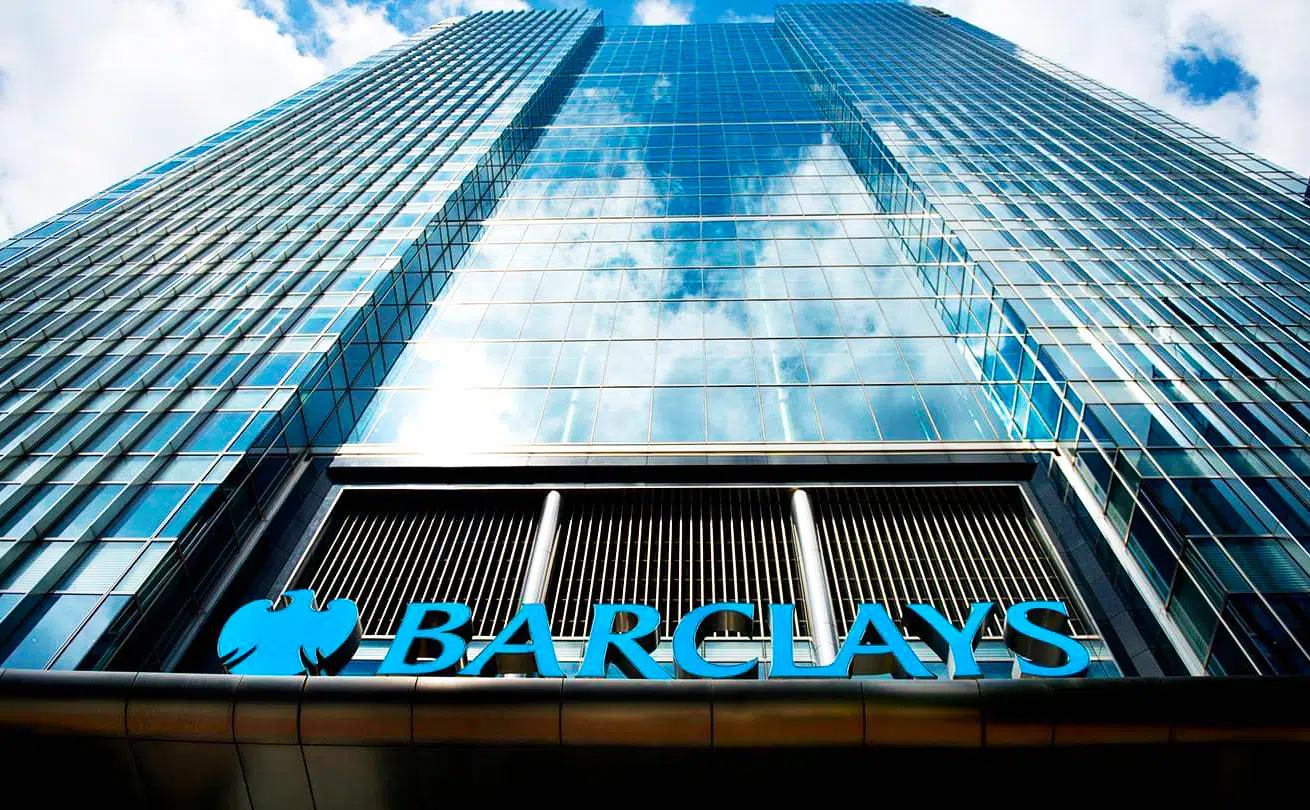
The Barclays UK headquarters. Credit: Gary Group Editor / Wikimedia CommonsCC-BY- SA-4.0

Almost 100 universities that have pledged to shed ties to the fossil fuel industry still bank with financial institutions that have collectively provided $419 billion (£345 billion) to polluting interests between 2016 and 2022. 

The new research, conducted by campaign group Make My Money Matter and obtained using Freedom of Information requests, shows that 95 universities still hold a bank account with one of five leading global fossil fuel funders: Barclays, HSBC, Santander, NatWest, and Lloyds.

These banks have supplied billions in financing to Shell and BP, which this year scaled back their climate targets, as well as to other oil and gas firms such as ExxonMobil and TotalEnergies. Barclays was the bank of choice, used by nearly three quarters (73 percent) of the universities.

Barclays was the largest European financier of fossil fuels between the signing of the Paris Agreement in 2016, which set a goal of limiting global warming to 1.5C, and 2022. The British bank propped up the oil and industry with $190.5 billion (£157 billion) in funding during this time, according to the annual Banking on Climate Chaos report from the climate campaign group Rainforest Action Network (RAN).

This story comes after DeSmog revealed earlier this month that UK universities have accepted £40.4 million in funding from fossil fuel companies since 2022. Students across Europe have protested at schools and universities since returning for the new academic year. In the UK, activists from Just Stop Oil have renewed their campaigning on campuses, targeting University College London, Birmingham, Sussex, Falmouth, and Exeter.

Over 100 universities across the UK, representing 65 percent of the higher education sector, have pledged to divest from the fossil fuel industry since 2014. Over 50 are yet to make any public commitments. 

Make My Money Matter says that it will be writing to universities and calling on them to ensure that their divestment commitments are not being undone by their banking choices. 

“Divesting from fossil fuels while banking with Barclays is hypocritical and performative,” said Jo Campling, welfare and sustainability officer at Sheffield University Students’ Union. “Universities claim they are striving for a better future by educating their students yet they continue to provide legitimacy to the financial institutions ignoring universities’ own scientists and driving us ever closer to irreversible climate breakdown.”

‘More Needs to be Done’

The universities that have held accounts with Barclays include Bristol, one of the “greenest universities in the UK”, University College London (UCL), the UK’s largest higher education institution by student population, and the University of Glasgow, the first UK university to commit to fossil fuel divestment.

Researchers analysed the period between April 2021 and April 2023. The threshold for a ‘banking relationship’ includes a current or deposit account held within the period, but excludes other services such as loans, credit facilities, or currency exchanges.

In 2022, Barclays was a major backer of unconventional oil projects, such as Arctic extraction and extraction from tar sands. The latter emits up to three times more global warming pollution than producing the same quantity of crude oil.

As of late 2022, following pressure from investors, Barclays has agreed to scale down its financing of oil sands operations. However, the new research shows both Barclays and HSBC remained among the top 10 (seven and eight respectively) global financiers of new fossil fuel expansion projects.

Barclays is facing heavy criticism for its ongoing role in facilitating climate breakdown, and its annual general meeting in May was disrupted by climate activists from Extinction Rebellion.

A spokesperson for Barclays told DeSmog: “Aligned to our ambition to be a net zero bank by 2050, we believe we can make the greatest difference by working with our clients as they transition to a low-carbon business model, reducing their carbon-intensive activity whilst scaling low-carbon technologies, infrastructure and capacity. 

“We have set 2030 targets to reduce the emissions we finance in five high-emitting sectors, including the energy sector, where we have achieved a 32 percent reduction since 2020. In addition, to scale the needed technologies and infrastructure, we have provided £99 billion of green finance since 2018, and have a target to facilitate $1 trillion in sustainable and transition financing between 2023 and 2030.”

Peter Vermeulen, chief financial officer at the University of Bristol told DeSmog that the university takes its “climate commitments seriously” and engages with major suppliers, including banks, “to see where positive improvements and changes can be made”.

Vermeulen added that, “I, like many others, am disappointed in Barclays’s climate performance, and that they only put a serious climate plan in place in 2020. In my previous role I actively engaged with Barclays on their lack of progress in this area and witnessed improvement. More needs to be done and for that reason, since joining the University of Bristol this summer, I will step that up even further, with university, staff, and student representatives involved in this.”

Rainforest Action Network has calculated that the world’s biggest banks poured $673 billion (£554 million) into fossil fuels in 2022, while DeSmog revealed in May that four in five bank directors at the six largest banks in the U.S. have ties to polluting companies and organisations, including major fossil fuel firms.

Commenting on the findings of the Make My Money Matter report, Nat Gorodnitski from Students Organising for Sustainability said: “If we want to stop the worst effects of climate change, we need to end fossil fuel funding. Banks are the biggest funders by a long way and rely heavily on the higher education sector for recruitment, reputation, and business, while their fossil fuel financing contradicts academic research, university policies, and students’ needs. 

“This gives students and universities the unique power to pressure banks to end their fossil fuel financing in a meaningful way, and call for a shift to funding sustainable energy.”

A spokesperson for HSBC said: “Supporting the transition to net zero and engaging with clients to help them diversify and decarbonise is critically important to us. We are committed to aligning our financed emissions to net zero by 2050.”

A University of Glasgow spokesperson that the university “is committed to doing our part to tackle the climate emergency. In 2014, we pledged to divest our holdings in companies involved in the oil and gas sectors over a 10 year period, and have already achieved this. We have also set an ambitious target to achieve net zero greenhouse gas emissions by 2030. Our socially responsible investment policy is regularly reviewed.”

Original article by Max Colbert republished from DeSmog

Continue Reading95 UK Universities That Have Pledged to Divest from Oil and Gas Use Banks Funding Climate Crisis

University of Surrey: Students engage in mass disruption of careers fair over fossil fuel recruitment and arms industry influence

Spread the love

https://bright-green.org/2023/10/21/university-of-surrey-students-engage-in-mass-disruption-of-careers-fair-over-fossil-fuel-recruitment-and-arms-industry-influence/

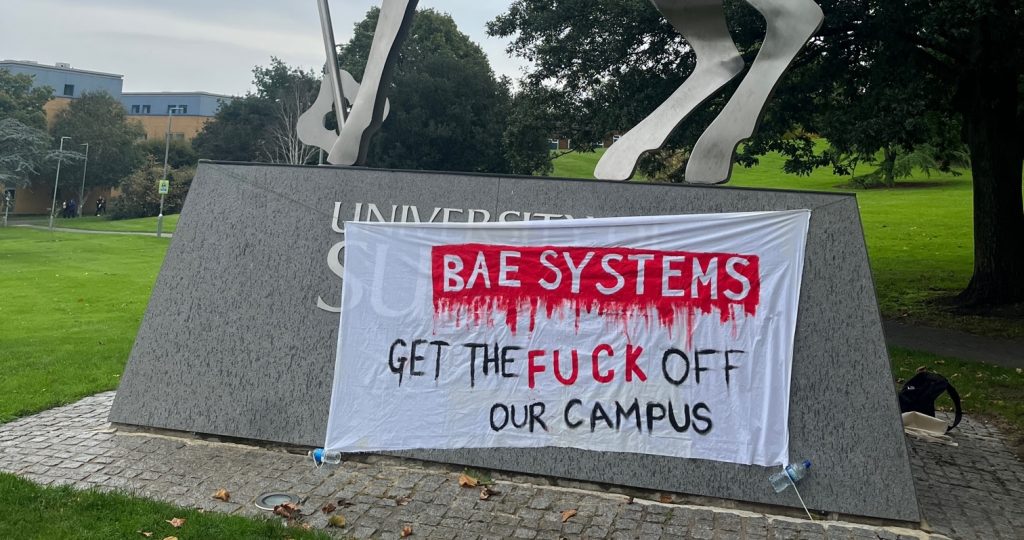
Students at the University of Surrey organised a day of mass disruption on their campus on 18 October. Activists from Surrey People & Planet coordinated a series of stunts in protest at the fossil fuel industry engaging in recruitment activities at the university, and over what the group calls the “influence of the arms industry” at the institution. Students dropped multiple banners, put up posters and threw glitter over recruitment stands.

Before the start of the careers fair, a group of students dropped banners on the entrance to the university’s Stag Hill campus, reading ‘BAE systems get the f*ck off our campus’ and ‘warning, killers on our campus’. Several posters were also put up along the access road highlighting what the student group deems the “unethical practices” of firms advertising careers on the campus that day.

The disruption of the careers fair follows a series of demonstrations organised by students calling for the university to exclude fossil fuel firms from student recruitment activity. In 2022, University of Surrey students’ union agreed to boycott fossil fuel company recruitment.

https://bright-green.org/2023/10/21/university-of-surrey-students-engage-in-mass-disruption-of-careers-fair-over-fossil-fuel-recruitment-and-arms-industry-influence/

Continue ReadingUniversity of Surrey: Students engage in mass disruption of careers fair over fossil fuel recruitment and arms industry influence