Intense downpours in the UK will increase due to climate change – new study

Spread the love

A flash flood in London in October 2019.
D MacDonald/Shutterstock

Elizabeth Kendon, University of Bristol

In July 2021, Kew in London experienced a month’s rain in just three hours. Across the city, tube lines were suspended and stations closed as London experienced its wettest day in decades and flash floods broke out. Just under two weeks later, it happened again: intense downpours led to widespread disruption, including the flooding of two London hospitals.

Colleagues and I have created a new set of 100-year climate projections to more accurately assess the likelihood of heavy rain downpours like these over the coming years and decades. The short answer is climate change means these extreme downpours will happen more often in the UK – and be even more intense.

To generate these projections, we used the Met Office operational weather forecast model, but run on long climate timescales. This provided very detailed climate projections – for every 2.2km grid box over the UK, for every hour, for 100 years from 1981 to 2080. These are much more detailed than traditional climate projections and needed to be run as a series of 20-year simulations that were then stitched together. Even on the Met Office supercomputer, these still took about six months to run.

We ran 12 such 100-year projections. We are not interested in the weather on a given day but rather how the occurrence of local weather extremes varies year by year. By starting the model runs in the past, it is also possible to verify the output against observations to assess the model’s performance.

At this level of detail – the “k-scale” – it is possible to more accurately assess how the most extreme downpours will change. This is because k-scale simulations better represent the small-scale atmospheric processes, such as convection, that can lead to destructive flash flooding.

The fire service attending to a vehicle stuck in floodwater.
Flash flooding can be destructive.
Ceri Breeze/Shutterstock

More emissions, more rain

Our results are now published in Nature Communications. We found that under a high emissions scenario downpours in the UK exceeding 20mm per hour could be four times as frequent by the year 2080 compared with the 1980s. This level of rainfall can potentially produce serious damage through flash flooding, with thresholds like 20mm/hr used by planners to estimate the risk of flooding when water overwhelms the usual drainage channels. Previous less detailed climate models project a much lower increase of around two and a half times over the same period.

We note that these changes are assuming that greenhouse gas emissions continue to rise at current rates. This is therefore a plausible but upper estimate. If global carbon emissions follow a lower emissions scenario, extreme rain will still increase in the UK – though at a slower rate. However, the changes are not inevitable, and if we emit less carbon in the coming decades, extreme downpours will be less frequent.

The increases are significantly greater in certain regions. For example, extreme rainfall in north-west Scotland could be almost ten times more common, while it’s closer to three times more frequent in the south of the UK. The greater future increases in the number of extreme rainfall events in the higher resolution model compared with more traditional lower resolution climate models shows the importance of having k-scale projections to enable society to adapt to climate change.

As the atmosphere warms, it can hold more moisture, at a rate of 7% more moisture for every degree of warming. On a simple level, this explains why in many regions of the world projections show an increase in precipitation as a consequence of human-induced climate change. This new study has shown that, in the UK, the intensity of downpours could increase by about 5% in the south and up to about 15% in the north for every degree of regional warming.

Group of girls with an umbrella walking through a city.
The projected increase in the intensity of rainfall is significantly greater in certain regions.
NotarYES/Shutterstock

However, it is far from a simple picture of more extreme events, decade by decade, as a steadily increasing trend. Instead, we expect periods of rapid change – with records being broken, some by a considerable margin – and periods when there is a pause, with no new records set.

This is simply a reflection of the complex interplay between natural variability and the underlying climate change signal. An analogy for this is waves coming up a beach on an incoming tide. The tide is the long-term rising trend, but there are periods when there are larger waves, followed by lulls.

Despite the underlying trend, the time between record-breaking events at the local scale can be surprisingly long – even several decades.

Our research marks the first time that such a high-resolution data set has spanned over a century. As well as being a valuable asset for planners and policymakers to prepare for the future, it can also be used by climate attribution scientists to examine current extreme rainfall events to see how much more likely they will have been because of human greenhouse gas emissions. The research highlights the importance of meeting carbon emissions targets and also planning for increasingly prevalent extreme rainfall events, which to varying degrees of intensity, look highly likely in all greenhouse gas emissions scenarios.

The tendency for extreme years to cluster poses challenges for communities trying to adapt to intense downpours and risks infrastructure being unprepared, since climate information based on several decades of past observations may not be representative of the following decades.


Imagine weekly climate newsletter

Don’t have time to read about climate change as much as you’d like?

Get a weekly roundup in your inbox instead. Every Wednesday, The Conversation’s environment editor writes Imagine, a short email that goes a little deeper into just one climate issue. Join the 10,000+ readers who’ve subscribed so far.The Conversation


Elizabeth Kendon, Professor of Climate Science, University of Bristol

This article is republished from The Conversation under a Creative Commons license. Read the original article.

Continue ReadingIntense downpours in the UK will increase due to climate change – new study

Amid Record Heat, Florida Meteorologist Rips GOP ‘Don’t Say Climate Change’ Law

Spread the love

Original article by BRETT WILKINS republished from Common Dreams under Creative Commons (CC BY-NC-ND 3.0).

WTVJ meteorologist Steve McLaughlin stands before a graphic showing record average global temperatures during a May 19, 2024 broadcast.
 (Photo: WTVJ screen grab)

“We implore you to please do your research and know that there are candidates that believe in climate change and that there are solutions, and there are candidates that don’t.”

Amid what’s shaping up to be the hottest May on record in Miami, one local South Florida TV meteorologist recently slammed new Republican legislation prohibiting the mention of climate change in state law and implored Floridians to vote for candidates who “believe in climate change” and solutions to the planetary emergency.

The new law, signed last week by Republican Gov. DeSantis, also deprioritizes climate considerations in policy decisions, promotes fossil fuel infrastructure development, and bans the installation of wind turbines in state waters. While signing the bill, the failed 2024 GOP presidential contender said Florida was “restoring sanity in our approach to energy and rejecting the agenda of the radical green zealots.”

As South Floridians suffered record-breaking temperatures and a heat index that made it feel as hot as 110°F on Saturday, WTVJ meteorologist Steve MacLaughlin stood before a graphic showing that April was the 11th straight hottest month on record globally and said that Florida’s government is “starting to roll back really important climate change legislation and really important climate change language.”

This, despite the “record heat, record flooding, record rain, record insurance rates, and the corals are dying all around the state” in recent years, MacLaughlin continued. “The entire world is looking to Florida to lead in climate change and our government is saying that climate change is no longer the priority it once was.”

While not mentioning DeSantis by name, MacLaughlin said: “Please keep in mind the most powerful climate change solution is the one you already have in the palm of your hand: the right to vote… We implore you to please do your research and know that there are candidates that believe in climate change and that there are solutions, and there are candidates that don’t.”

The so-called “Don’t Say Climate Change” law signed by DeSantis is but the latest salvo in the right-wing governor’s “war on woke” that includes rolling back LGBTQ+studentmigrantreproductiveprotestFirst Amendment, and other rights and protections.

As the planetary emergency fuels hotter, more dangerous weather in Florida, DeSantis has also attacked the state’s workers by signing a law prohibiting local governments from requiring employers to provide water breaks and other cooling measures.

“Workers in Florida will die in the Florida heat as a result of Gov. DeSantis’ signing this bill,” Public Citizen worker health and safety advocate Juley Fulcher said after the governor signed the law last month. “Denying any worker access to water or shade in the heat of summer is inhumane and cruel, yet Florida just allowed employers to do exactly that.”

Original article by BRETT WILKINS republished from Common Dreams under Creative Commons (CC BY-NC-ND 3.0).

Continue ReadingAmid Record Heat, Florida Meteorologist Rips GOP ‘Don’t Say Climate Change’ Law

ISRAEL LOBBY FUNDED A THIRD OF CONSERVATIVE MPS

Spread the love

https://www.declassifieduk.org/israel-lobby-funded-a-third-of-conservative-mps/

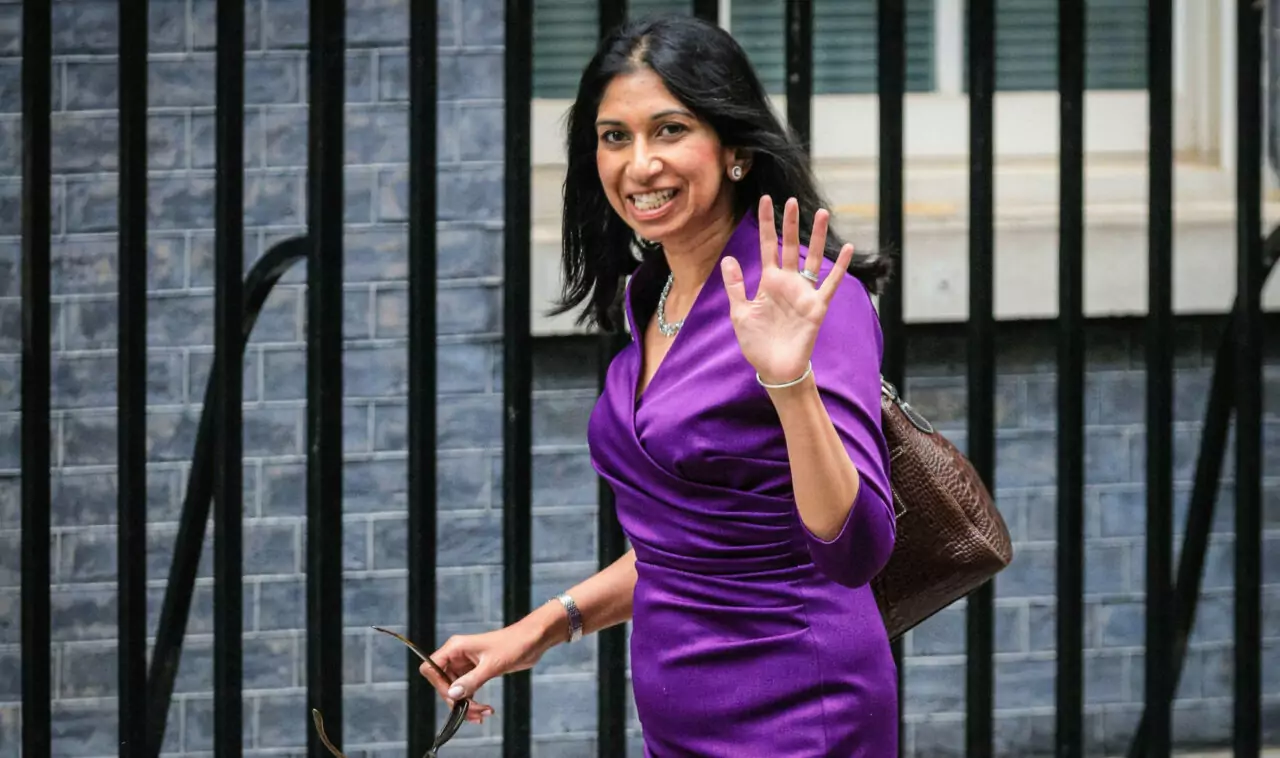
Lobby groups funded trips to Israel for Sue-Ellen ‘Suella’ Braverman. (Photo: Imageplotter / Alamy)

Exclusive: Tory politicians have accepted over £430,000 from Israel lobby groups and made 187 trips to the country.

  • Suella Braverman received largest contribution for her visit to Israel this year

Some 126 of the Tory party’s 344 MPs have accepted funding from pro-Israel lobby groups, Declassified has found. 

The revelation comes as Rishi Sunak calls a general election in which his unequivocal backing of Israel could cost the party votes.

The value of the donations or hospitality amounts to over £430,000, with the organisations paying for sitting Conservative MPs to visit Israel on 187 occasions.

Some of those trips also involved visits to the Occupied Palestinian Territories, and a small number were co-sponsored by groups which do not form part of the Israel lobby.

The main funder is Conservative Friends of Israel, a parliamentary group which does not disclose its own sources of funding. 

Other notable donors include the American Israel Public Affairs Committee (AIPAC), Australia-Israel Cultural Exchange, and the European Leadership Network.

Thirteen Tory politicians have accepted over £50,000 in total to travel to Israel since 7 October, including for “solidarity” missions.

Friends of Israel

Conservative Friends of Israel (CFI) is a pro-Israel lobby group set up in 1974 by Michael Fidler, a Tory politician described in one biography as having political views “reminiscent of the philosophy of Enoch Powell”.

The organisation has long standing links with the Israeli state, and is “beginning to resemble the Westminster outpost for Benjamin Netanyahu’s right-wing Likud coalition”, according to veteran journalist Peter Oborne.

Around 80 percent of Tory MPs are members of CFI. Over the past decade, it has taken more MPs on overseas trips than any other political donor in Britain.

Publicly available data reviewed by Declassified shows that CFI has funded 118 sitting Tory MPs to travel to Israel on 160 occasions, providing over £330,000 towards the visits.

Those MPs include deputy prime minister Oliver Dowden, home secretary James Cleverly, and justice secretary Alex Chalk, prior to their appointment to the cabinet.

Some 22 of those CFI-led visits have been subsidised by the Israeli foreign ministry to the tune of over £8,000 in total.

Article continues at https://www.declassifieduk.org/israel-lobby-funded-a-third-of-conservative-mps/

Continue ReadingISRAEL LOBBY FUNDED A THIRD OF CONSERVATIVE MPS

DWP under investigation by equalities regulator over treatment of disabled people

Spread the love

https://leftfootforward.org/2024/05/dwp-under-investigation-by-equalities-regulator-over-treatment-of-disabled-people/

EHRC ‘extremely worried’ about the treatment of disabled benefits claimants by the government department

An investigation has been launched into whether the Department for Work and Pensions (DWP) broke equality law over its treatment of disabled benefits claimants. 

The Equalities and Human Rights Commission (EHRC) is investigating a suspicion that the department failed to make reasonable adjustments for people with learning disabilities or long-term mental health conditions when carrying out benefit health assessments. 

A further probe will be carried out into whether the Secretary of State for Work and Pensions’ was compliant with equality commitments when developing, implementing and monitoring policy guidance into health assessments. 

The regulator first started looking into the department after a group of MPs recommended in 2021 an investigation into the deaths of vulnerable claimants, including by suicide, between 2008 and 2020. 

Following this, the EHRC found further action was required and has now decided to pursue a formal investigation, the first of its kind into a government department. 

Article continues at https://leftfootforward.org/2024/05/dwp-under-investigation-by-equalities-regulator-over-treatment-of-disabled-people/

Continue ReadingDWP under investigation by equalities regulator over treatment of disabled people

Could the global cost of climate change really be six times worse than thought?

Spread the love

https://www.energymonitor.ai/features/could-the-global-cost-of-climate-change-really-be-six-times-worse-than-thought/?cf-view

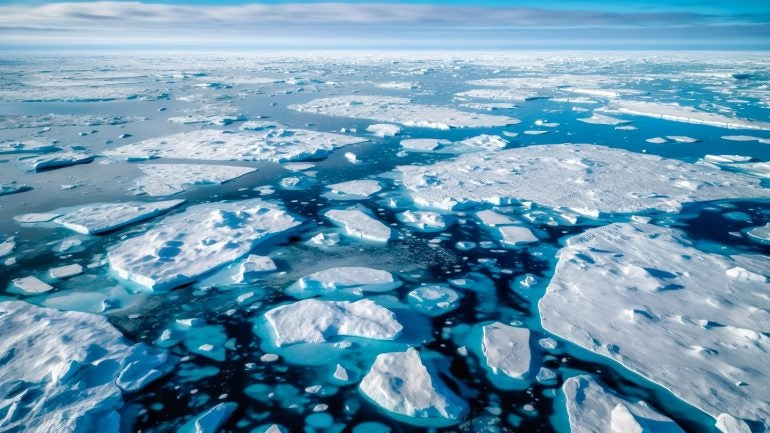
Landscape of the North Pole where climate change has caused melting ice caps. Photo: Mongkolchon Akesin/Shutterstock.

A paper by the National Bureau of Economic Research suggests that each degree of global heating could reduce global GDP by 12%.

A new paper written for the National Bureau of Economic Research (NBER) suggests that the global economic cost of climate change could be around six times higher than previous estimations.

The paper, written by Northwestern economics professor Diego Känzig and Harvard economics professor Adrien Bilal, suggests that every one degree of atmospheric warming reduces global GDP by 12%.

It uses global heating data cross-referenced against aggregated national GDPs to come to a higher figure. The authors believe that this model provides a more complete picture, as many of the shocks, including extreme wind and precipitation, are affected by global conditions rather than localised heating.

It also places the social cost of carbon (SCC) at over $1,000/tCO2. This global measure estimates the economic damage caused by every tonne of carbon emitted and has historically been set far lower. According to the authors, their own calculations would only place the SCC at $151/tCO2 if evaluating local rather than global temperature shocks.

What does this mean for global economies?

The findings of this paper are clearly worrying as they suggest the threat to markets posed by climate change is significantly higher than previously quantifiable. The authors of the paper describe the impacts of a 1°C as “of the same magnitude as the growth impacts that typically occur after severe banking or financial crises,” and the long-term impacts of climate change as “comparable to the economic damage caused by fighting a war domestically and permanently [italics theirs].”

Article continues at https://www.energymonitor.ai/features/could-the-global-cost-of-climate-change-really-be-six-times-worse-than-thought/?cf-view

Continue ReadingCould the global cost of climate change really be six times worse than thought?