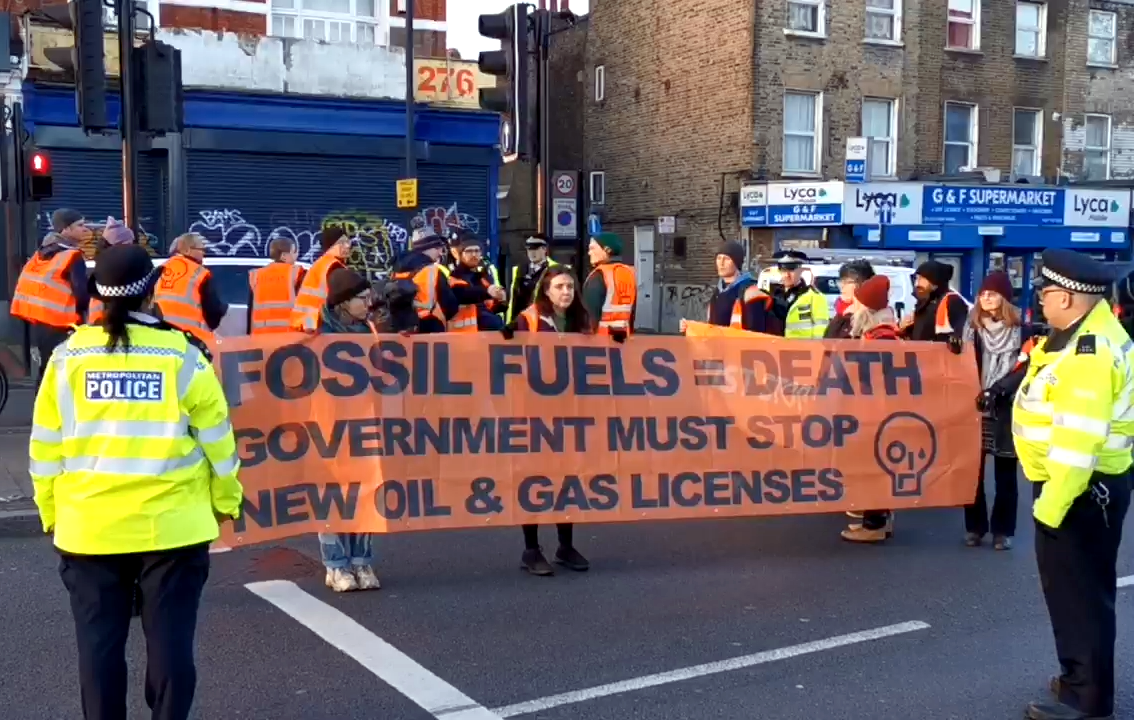

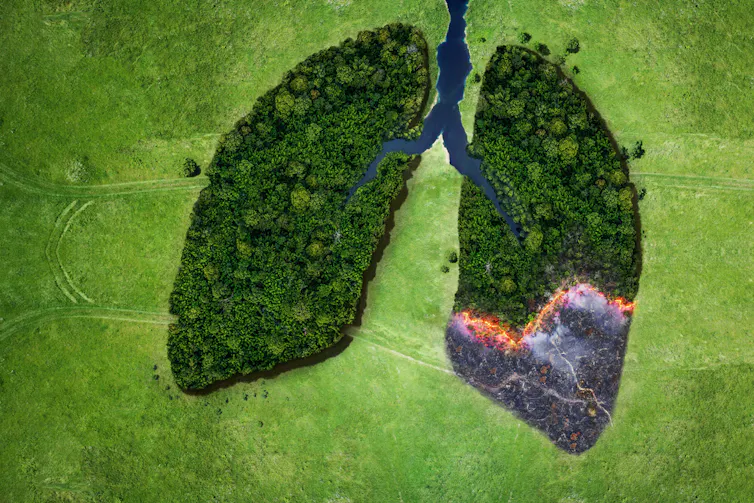
A hotter world is likely to be a sicker world.
Earth’s growing fever has obvious repercussions for human health, like heatwaves that are hotter than our physiology can tolerate. Humanity’s departure from the stable climate it inherited will yield surprises, too, though. Some of those may be existing diseases appearing in new places or spreading with greater ferocity. And some, experts fear, may be new diseases entirely.
This roundup of The Conversation’s climate coverage comes from our weekly climate action newsletter. Every Wednesday, The Conversation’s environment editor writes Imagine, a short email that goes a little deeper into just one climate issue. Join the 30,000+ readers who’ve subscribed.
The mosquito-borne infection malaria killed more than half a million people each year during the last decade. Most of these victims were children and almost all (95% in 2022) were in Africa.
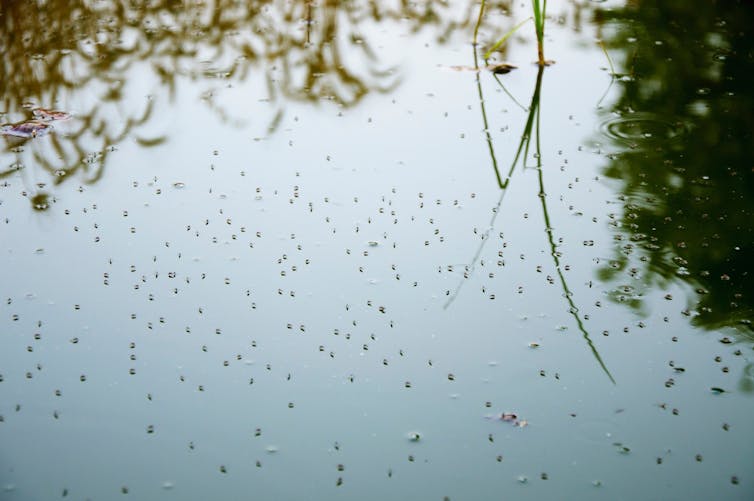
As a source of disease, infectious mosquitoes are at least predictable in their need for three things: warm temperatures, humid air and puddles to breed in. So what difference will global heating make?
Parasites are on the march
“The relationship between climate and malaria transmission is complex and has been the subject of intense study for some three decades,” say water and health experts Mark Smith (University of Leeds) and Chris Thomas (University of Lincoln).
Much of this research has focused on sub-Saharan Africa, the global epicentre of malaria cases and deaths. Smith and Thomas combined temperature and water movement projections to produce a continent-wide analysis of malaria risk.
Their results showed that the conditions for malaria transmission will become less suitable overall, especially in west Africa. But where temperature and humidity are likely to suit infectious mosquitoes in future also happens to be where lots more people are expected to live, near rivers like the Nile in Egypt.
Hussain Warraich/Shutterstock
“This means the number of people living in potentially malaria endemic areas (suitable for transmission more than nine months a year) will increase by 2100 to over a billion,” they say.
Elsewhere, tropical diseases will slip their bonds as the insects carrying them survive further from the equator. This is already happening in France, where dengue fever cases spiked during the hot summer of 2022.
“It seems that the lowlands of Veneto [in Italy] are emerging as an ideal habitat for the Culex mosquitoes, which can host and transmit West Nile virus,” adds Michael Head, a senior research fellow in global health at the University of Southampton.
Research suggests that the global transmission of mosquito-borne diseases like malaria and dengue will change, says Mark Booth, a senior lecturer in parasite epidemiology at Newcastle University. That’s as clear a picture as Booth could conjure from modelling more than 20 tropical diseases in a warming world.
“For most other parasites, there was little or no evidence. We simply don’t know what to expect,” he says.
Some diseases will bring fresh torment for the species humans farm. Bluetongue, a virus transmitted by midges, is expected to infect sheep further afield – in central Africa, western Russia and the US – than subtropical Asia and Africa where it evolved, Booth says.
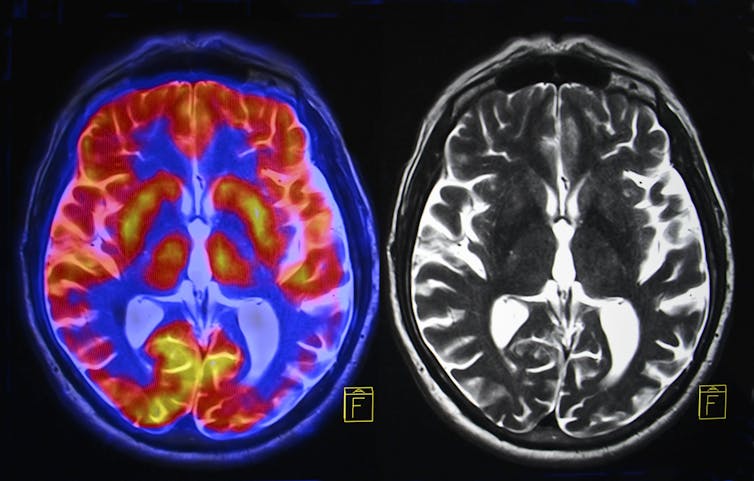
And the prognoses for some diseases afflicting humans will worsen. UCL academics Sanjay Sisodiya, a neuroscientist and Mark Maslin, an earth system scientist, found that climate change is exacerbating the symptoms of certain brain conditions.
“Each of the billions of neurons in our brain is like a learning, adapting computer, with many electrically active components,” they say. “Many of these components work at a different rate depending on the ambient temperature, and are designed to work together within a narrow range of temperatures.”
A species that evolved in Africa, humans are comfortable between 20˚C and 26˚C and within 20% and 80% humidity, Sisodiya and Maslin say. Our brain is already working close to the limit of its preferred temperature range in most cases, so even small increases matter.
“When those environmental conditions move rapidly into unaccustomed ranges, as is happening with extreme temperatures and humidity related to climate change, our brain struggles to regulate our temperature and begins to malfunction.”
Semnic/Shutterstock
One planet, one health
Clearly, staying healthy isn’t as simple as regulating what you eat or how often you exercise. There is a lot that is beyond your immediate control.
“Within less than three years, the World Health Organization (WHO) has declared two public health emergencies of international concern: COVID-19 in February 2020 and monkeypox in July 2022,” says Arindam Basu, an associate professor of epidemiology and environmental health at the University of Canterbury.
“At the same time, extreme weather events are being reported continuously across the world and are expected to become more frequent and intense. These are not separate issues.”
Basu highlights the danger of new diseases emerging, particularly from pathogens that could jump between humans and animals as habitats change amid global heating.
“Close contact between humans and wild animals is increasing as forests are destroyed to make way for agriculture and trade in exotic animals continues,” he says. “At the same time, the thawing of permafrost is releasing microbes hidden beneath the ice.”
Since pathogens share the same ecosystems as the humans and animals they infect, a new conception of health is urgently needed. This should aim to optimise the health of people, wildlife and the environment, Basu says.
Diseases. Again, the climate crisis exposes our countless connections to everything else – and our shared frailty on the only planet known to harbour life.
Jack Marley, Environment + Energy Editor, The Conversation
This article is republished from The Conversation under a Creative Commons license. Read the original article.