Milei’s unfinished promises: Argentina has the highest inflation in the world

Spread the love

Original article by Pablo Meriguet republished from peoples dispatch under a Creative Commons Attribution-ShareAlike 4.0 (CC BY-SA) license.

Photo: World Economic Forum

Javier Milei’s right-wing government promised to stop inflation in Argentina, and has thus far failed

The neoliberal economic measures of Javier Milei’s government are not improving the economic situation they promised to eradicate. During the election campaign, Milei made several promises that thus far he has been unable to keep. For example, he stated that the price of gas would not increase under his government, but from April to May rates rose by 450%. He also promised that public transportation fares would not increase, but the price of the subway went from 125 to 757 pesos.

The government has not been able to stimulate the growth of the Argentine economy either. According to the IMF itself, which bases a good part of its analysis and recommendations on neoliberal economic theory, the GDP of the Argentine economy will fall by 3.5% in 2024. In this sense, the recession the country is enduring does not seem to have a clear way out. Initially, the IMF thought that the economic contraction would be 2.8% of the GDP, but given the incontestable evidence, it had to adjust its forecast.

However, the IMF maintains that there will be a rebound effect, and that, therefore, in 2025 Argentina will grow by 5%. In addition, the agency praised the economic measures of the Milei government to curb the inflationary process, fiscal adjustment, and liberalization of the economy. Petya Koeva Brooks, deputy director of the Research Department, said that “looking ahead, even in the coming quarters, we expect growth to rebound because we see the effects of fiscal adjustment, the return of confidence and rising wages.”

However, several Argentine economists have stated that such expectations are not based on the reality of the national economy, as the problems caused by high inflation have worsened, as well as the evident decrease in employment in the country. According to data for the first half of 2024, Argentina has the highest cumulative inflation worldwide, 79.8%, and a peak year-on-year inflation of 271.5%.

Another unfulfilled promise of Milei was the increase of employment in the country thanks, according to the libertarian government, to the radical liberalization of the economy. However, despite the set of neoliberal economic measures, there has been a 7.7% increase in unemployment during the first quarter of 2024.

Milei’s administration celebrates the fact that the inflationary process decreased a little compared to previous years, claiming that this is thanks to certain public policies of his administration. This is even though Milei’s brutal fiscal adjustment, the contraction of the State, and the loss of thousands of jobs, which Milei stated would have a very positive impact on inflation, have not had the expected results. For example, food prices in Argentina have risen 260% (40 times more than Mexico), one of many figures which confirms that the neoliberal “shock” measures of Milei are not likely to benefit workers in the long run.

Original article by Pablo Meriguet republished from peoples dispatch under a Creative Commons Attribution-ShareAlike 4.0 (CC BY-SA) license.
Continue ReadingMilei’s unfinished promises: Argentina has the highest inflation in the world

CCC: Labour must ‘make up lost ground’ to hit UK climate goals

Spread the love
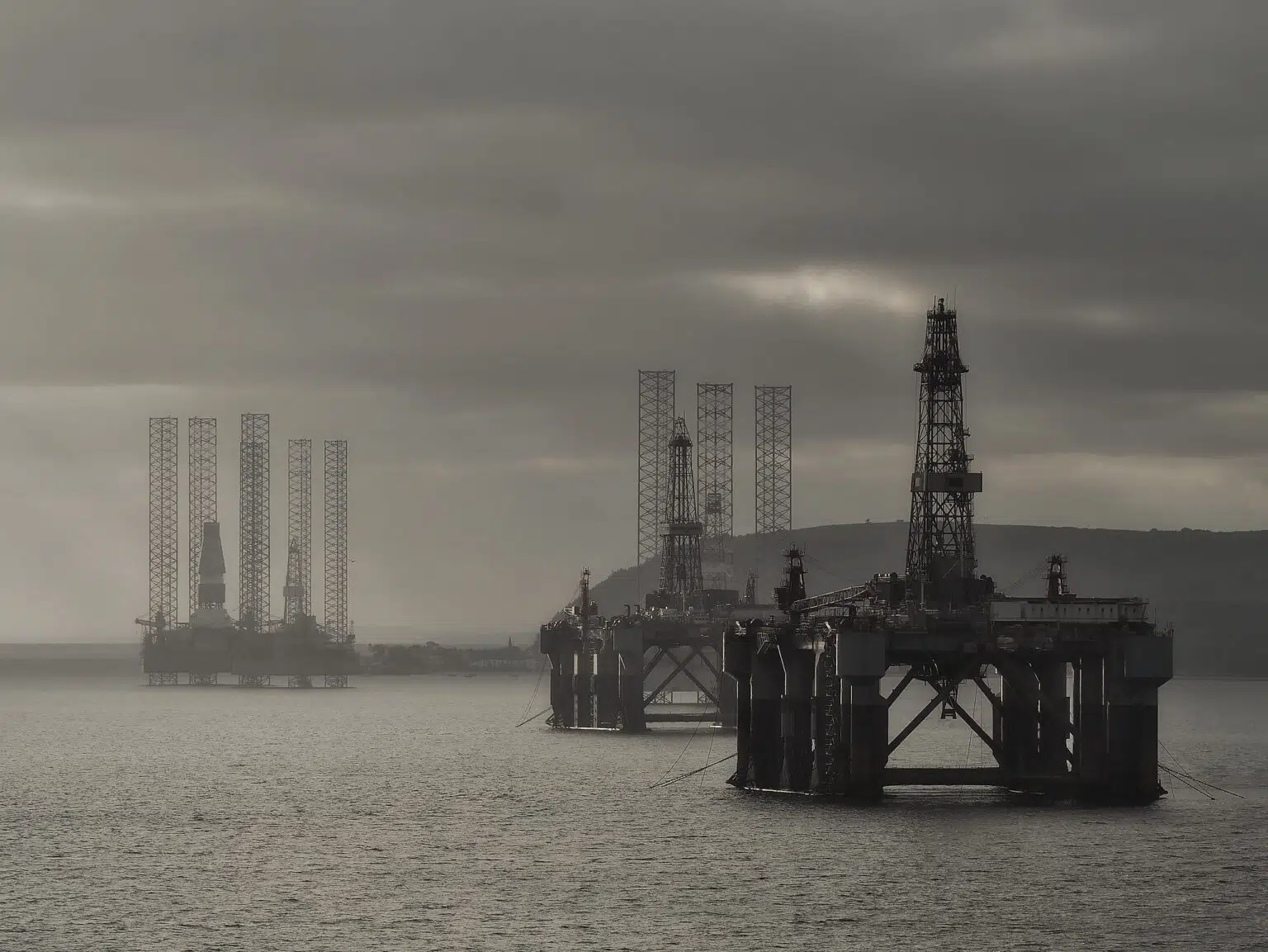
North Sea oil rigs in Cromarty Firth, Scotland. Credit: joiseyshowaa (CC BY-SA 2.0)

Original article by Josh Gabbatiss and Molly Lempriere from Carbon Brief

The UK’s new Labour government must urgently reinstate the net-zero plans shelved by its predecessor in order to “limit the damage” caused by Conservative policy rollbacks, according to official advisers at the Climate Change Committee (CCC).

In its latest annual progress report, the CCC issues some frank words about the “confusing and inconsistent” behaviour of the previous government.

The Conservatives only brought in “credible” policies to cover one-third of the emissions cuts required to hit the UK’s 2030 climate target, the committee finds.

Despite being “insufficient”, the CCC notes that this is a slight improvement on last year. Since then, a requirement for carmakers to sell electric models and a deal to help decarbonise heavy industry both boosted the credibility of the UK’s climate strategy, it says.

Nevertheless, the committee criticises former prime minister Rishi Sunak’s decision to roll back key net-zero policies, notably delaying bans on the sale of new gas boilers and non-electric cars. It says that, contrary to his claims, there was “no evidence” the delays would save people money.

The committee points to a general need to scale up emissions cuts across the economy. It says almost none of the UK government efforts to scale up low-carbon technologies or invest in nature-based solutions are on track.

With this in mind, the progress report lays out a selection of “priority” actions that the new Labour government should take to “make up lost ground” so the UK can achieve its climate goals.

In the new report, the committee says a priority for the Labour government should be pausing any new airport expansions until there is a UK-wide “capacity management framework” in place. 

This would assess aviation emissions and ensure there is no overall expansion “unless the carbon intensity of aviation is outperforming the government’s emissions reduction pathway”.

Long and detailed original article at Carbon Brief

Continue ReadingCCC: Labour must ‘make up lost ground’ to hit UK climate goals

US oil company ran 1977 article predicting climate crisis could cause starvation

Spread the love

https://www.theguardian.com/us-news/article/2024/jul/18/us-oil-marathon-petroleum-climate-change

A Guardian collage of images from industry 1970s industry periodical Marathon World published by a corporate predecessor of Marathon Petroleum Composite: The Guardian/Getty Images/Marathon Oil Company

Marathon Petroleum predecessor warned of potential for ‘social and economic calamities’ in decades-old publication

The corporate predecessor to America’s largest refiner of oil, Marathon Petroleum, explained in a company periodical nearly 50 years ago that global temperature rise potentially linked to “industrial expansion” could one day cause “widespread starvation and other social and economic calamities”.

This decades-old description of climate breakdown is from a 1977 issue of the magazine Marathon World and is attributed in the article by an unnamed author to several experts including a scientist working for a top US agency.

“Although climatologists disagree on the underlying reasons, many see a future climate of greater variability, bringing with it areas of extreme drought,” said the magazine, previously published by Marathon Oil Company, which later split into Marathon Petroleum as well as the exploration and production company Marathon Oil.

Marathon Petroleum is among several oil and gas companies – including Exxon, Shell and BP – currently being sued by the city of Honolulu for allegedly engaging in a coordinated communications effort “to conceal and deny their own knowledge” of catastrophic climate impacts caused by burning their products.

That lawsuit alleges that Marathon knew of the dangers of global temperature rise long before the general public due to its membership in the American Petroleum Institute, which began studying the link between fossil fuels and global heating decades ago.

This newly surfaced article shows the company was undertaking efforts on its own to stay up to date on the latest climate science and the threats a more volatile climate could pose to humankind.

The current Honolulu lawsuit alleges that Marathon contributed to climate obstruction by belonging to industry associations that spent decades trying to convince the public that science linking coal, oil and gas to climate change was shaky and unreliable.

“Pestilence, starvation, drought. To know one’s product may bring that about, and bury the evidence, is unspeakable,” Timmons Roberts, a professor of environment and sociology at Brown University, who’s an expert in climate disinformation, wrote in an email to the Guardian after viewing the 1977 article.

Marathon and other companies named in the litigation are currently petitioning the US supreme court to throw out the case.

https://www.theguardian.com/us-news/article/2024/jul/18/us-oil-marathon-petroleum-climate-change

Continue ReadingUS oil company ran 1977 article predicting climate crisis could cause starvation

New Zealand will fail to meet 2050 net zero targets, data shows, after climate policies scrapped

Spread the love

https://www.theguardian.com/world/article/2024/jul/18/new-zealand-will-fail-to-meet-2050-net-zero-targets-data-shows-after-climate-policies-scrapped

New figures show New Zealand is on track to miss its 2050 net zero target, with scientists saying the government is too reliant on underdeveloped technologies. Photograph: Geoff Marshall/Alamy

Scientists say government’s approach to emissions cutting is ‘high risk’ and reliant on ‘immature technologies’

New Zealand’s ambitious plan to reach net zero emissions by 2050 is at risk of being derailed, as the government backslides on climate policies, new figures show.

In 2019, the Labour government passed landmark climate legislation, committing the nation to reducing its carbon emissions to net zero by 2050 and meeting its commitments under the Paris climate accords. It requires future governments to detail how New Zealand will meet its greenhouse gas targets on the way to a carbon-neutral future.

The coalition government – made up of the centre-right National party and two minor partners, the libertarian Act party and populist New Zealand First party – released its first draft emissions reduction plan on Wednesday.

Figures published alongside it show the country is on track to reach its first and second emissions budgets, covering the years 2022-2030, but will overshoot its third budget and will fail to meet its long-term 2050 goal.

https://www.theguardian.com/world/article/2024/jul/18/new-zealand-will-fail-to-meet-2050-net-zero-targets-data-shows-after-climate-policies-scrapped

Rightwing NZ government accused of ‘war on nature’ as it takes axe to climate policies

Continue ReadingNew Zealand will fail to meet 2050 net zero targets, data shows, after climate policies scrapped

Israel using water as weapon of war as Gaza supply plummets by 94%, creating deadly health catastrophe: Oxfam 

Spread the love

Israel damaged or destroyed five water and sanitation sites every three days since the start of this war

A new Oxfam report reveals how Israel has been systematically weaponizing water against Palestinians in Gaza, showing disregard for human life and international law.  

The report, Water War Crimes, finds that Israel’s cutting of external water supply, systematic destruction of water facilities and deliberate aid obstruction have reduced the amount of water available in Gaza by 94% to 4.74 litres a day per person – just under a third of the recommended minimum in emergencies and less than a single toilet flush.   

Oxfam analysis also found:  

  • Israeli military attacks have damaged or destroyed five water and sanitation infrastructure sites every three days since the start of the war.  
  • The destruction of water and electricity infrastructure and restrictions on entry of spare parts and fuel (on average a fifth of the required amount is allowed in) saw water production drop by 84% in Gaza. External supply from Israel’s national water company Mekorot fell by 78%.  
  • Israel has destroyed 70% of all sewage pumps and 100% of all wastewater treatment plants, as well as the main water quality testing laboratories in Gaza, and restricted the entry of Oxfam water testing equipment.  
  • Gaza City has lost nearly all its water production capacity, with 88% of its water wells and 100% of its desalination plants damaged or destroyed.  

The report also highlighted the dire impact of this extreme lack of clean water and sanitation on Palestinians’ health, with more than a quarter (26%) of Gaza’s population falling severely ill from easily preventable diseases.  

In January, the International Court of Justice demanded that Israel immediately improve humanitarian access in light of a plausible genocide in Gaza. Since then, Oxfam has witnessed firsthand Israel’s obstruction of a meaningful humanitarian response, which is killing Palestinian civilians.  

“We’ve already seen Israel’s use of collective punishment and its use of starvation as a weapon of war. Now we are witnessing its weaponizing of water, which is already having deadly consequences.”  

Oxfam Water and Sanitation Specialist Lama Abdul Samad said it was clear that Israel had created a devastating humanitarian emergency resulting in Palestinian civilian deaths.  

“We’ve already seen Israel’s use of collective punishment and its use of starvation as a weapon of war. Now we are witnessing its weaponizing of water, which is already having deadly consequences.  

“But the deliberate restriction of access to water is not a new tactic. The Israeli Government has been depriving Palestinians across the West Bank and Gaza of safe and sufficient water for many years,” she said.   

“The widespread destruction and significant restrictions on aid delivery in Gaza impacting access to water and other essentials for survival, underscores the urgent need for the international community to take decisive action to prevent further suffering by upholding justice and human rights, including those enshrined in the Geneva and Genocide Conventions.”  

 Monther Shoblak, General Manager of the Gaza Strip’s water utility CMWU, said:   

“My colleagues and I have been living through a nightmare these past nine months, but we still feel it’s our responsibility and duty to ensure everybody in Gaza is getting their minimum right of clean drinking water. It’s been very difficult, but we are determined to keep trying – even when we witness our colleagues being targeted and killed by Israel while undertaking their work.”   

Oxfam is calling for urgent action including an immediate and permanent ceasefire; for Israel to allow a full and unfettered humanitarian response; and for Israel to foot the reconstruction bill for water and sanitation infrastructure.  

Read Oxfam’s “Water War Crimes” full report.

Continue ReadingIsrael using water as weapon of war as Gaza supply plummets by 94%, creating deadly health catastrophe: Oxfam