As Venezuela Court Probes Election Results, US Declares Victory for Right-Wing Opposition
Original article by JAKE JOHNSON republished form Common Dreams under Creative Commons (CC BY-NC-ND 3.0).
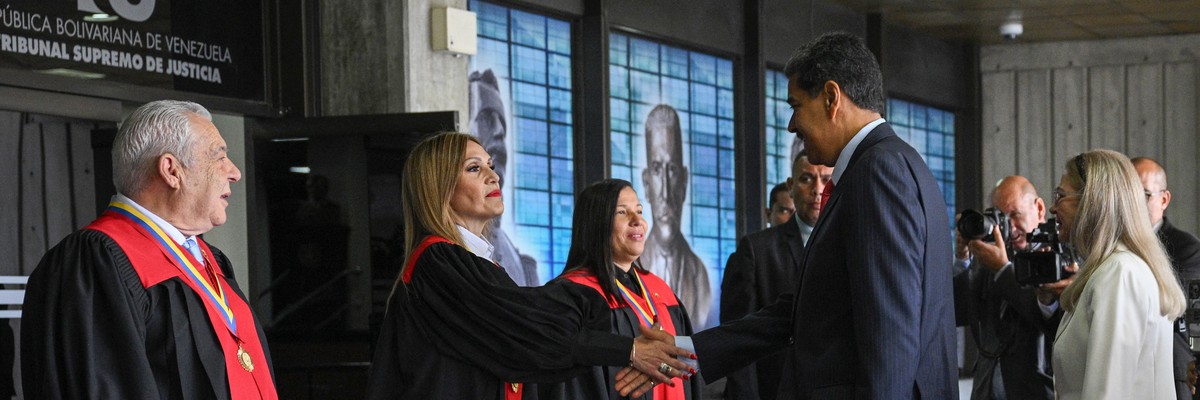
Venezuela’s foreign ministry hit back at the U.S. State Department, accusing it of spearheading a “coup attempt.”
The U.S. State Department has formally recognized opposition candidate Edmundo González as the winner of Venezuela’s election as the nation’s highest legal body began an investigation of the vote at the request of President Nicolás Maduro, who says he prevailed in the contest that is now under intense global scrutiny.
In a statement released days after Venezuela’s election authority, Consejo Nacional Electoral (CNE), declared Maduro the winner with just over 51% of the vote, U.S. Secretary of State Antony Blinken claimed late Thursday that “it is clear to the United States and, most importantly, to the Venezuelan people that Edmundo González Urrutia won the most votes in Venezuela’s July 28 presidential election.”
“Now is the time for the Venezuelan parties to begin discussions on a respectful, peaceful transition in accordance with Venezuelan electoral law and the wishes of the Venezuelan people,” said Blinken, the top diplomat of a country that has repeatedly attempted to overthrow the Maduro government and hammered the country’s economy with sanctions. “We fully support the process of reestablishing democratic norms in Venezuela and stand ready to consider ways to bolster it jointly with our international partners.”
Venezuela’s Foreign Affairs Ministry quickly hit back, saying Friday that it “rejects the serious and ridiculous statements attributed to United States Secretary of State Antony Blinken, in which he pretends to assume the role of the Venezuelan electoral authorities, demonstrating that the U.S. government is leading the coup attempt against Venezuela, promoting a violent agenda against the Venezuelan people and their institutions.”
Blinken’s statement accepting the right-wing opposition’s claim of a decisive victory came a day after Maduro asked Venezuela’s Supreme Tribunal of Justice on Wednesday to audit the presidential contest in the face of vocal concerns from regional leaders, election observers, and leading human rights organizations.
In a joint statement issued Thursday, the presidents of Brazil, Colombia, and Mexico said they are “closely following” the vote-counting process and called on the CNE to “move forward expeditiously and publicly release the data broken down by voting station”—something the Maduro government indicated it will do but has yet to provide.
Meanwhile, the Carter Center—an organization whose founder, former U.S. President Jimmy Carter, once praised Venezuela’s election system as “the best in the world”—argued that the 2024 contest “did not meet international standards of electoral integrity and cannot be considered democratic.”
“In the limited number of polling centers they visited, Carter Center observer teams noted the desire of the Venezuelan people to participate in a democratic election process, as demonstrated through their active participation as polling staff, party witnesses, and citizen observers,” the group said in a statement earlier this week. “However, their efforts were undermined by the CNE’s complete lack of transparency in announcing the results.”
The Carter Center also preemptively raised doubts about the legitimacy of the Venezuelan high court’s assessment of the election.
“You have another government institution, which is appointed by the government, to verify the government numbers for the election results, which are in question,” Jennie Lincoln, who led the Carter Center’s election delegation to Venezuela, told The Associated Press. “This is not an independent assessment.”
The tense and high-stakes dispute over the rightful winner of Venezuela’s election has set off violence in the streets of the nation’s capital and sparked fierce debate over the path forward for the Latin American nation’s government.
Some on the progressive left, both in Venezuela and internationally, view the right-wing opposition’s claims to victory as yet another in a long line of attacks on Venezuelan democracy by pro-corporate and fascist forces, while others—including left-wing regional leaders such as Chilean President Gabriel Boric—have expressed deep suspicions about the legitimacy of the contest, particularly given the CNE’s lack of transparency surrounding the vote count. CNE has attributed the delayed rollout of full results to a cyberattack.
“The international community, and especially the Venezuelan people, including the millions of Venezuelans in exile, demand total transparency of the election records and the process, and that international observers not affiliated with the government report on the accuracy of the results,” Boric wrote on social media. “From Chile, we will not recognize any result that is not verifiable.”
Others in Latin America have stood by Maduro, including Bolivia’s government, which is led by a left-wing president who recently faced an attempted coup.
Venezuela’s opposition, led by María Corina Machado, continues to insist it won Sunday’s election, producing its own website purporting to demonstrate that González defeated Maduro with 67% of the vote.
On Thursday, Machado—who was barred from participating in the presidential contest—took to the pages of the U.S. business press to proclaim that she can “prove Maduro got trounced.”
“Maduro didn’t win the Venezuelan presidential election on Sunday. He lost in a landslide to Edmundo González, 67% to 30%,” Machado wrote in an op-ed for The Wall Street Journal. “I know this to be true because I can prove it. I have receipts obtained directly from more than 80% of the nation’s polling stations.”
Maduro has pledged to release the full election results in the coming days and blamed Machado and the U.S. for stoking unrest and violence.
“If the U.S. government is willing to respect sovereignty and stop threatening Venezuela, we can return to dialogue,” Maduro wrote in a social media post on Thursday.
“Venezuela is not your colony,” Maduro said.
Original article by JAKE JOHNSON republished form Common Dreams under Creative Commons (CC BY-NC-ND 3.0).
US Urged to Condemn Israel’s ‘Summary Execution’ of Two Journalists
Original article by EDWARD CARVER republished from Common Dreams under Creative Commons (CC BY-NC-ND 3.0).
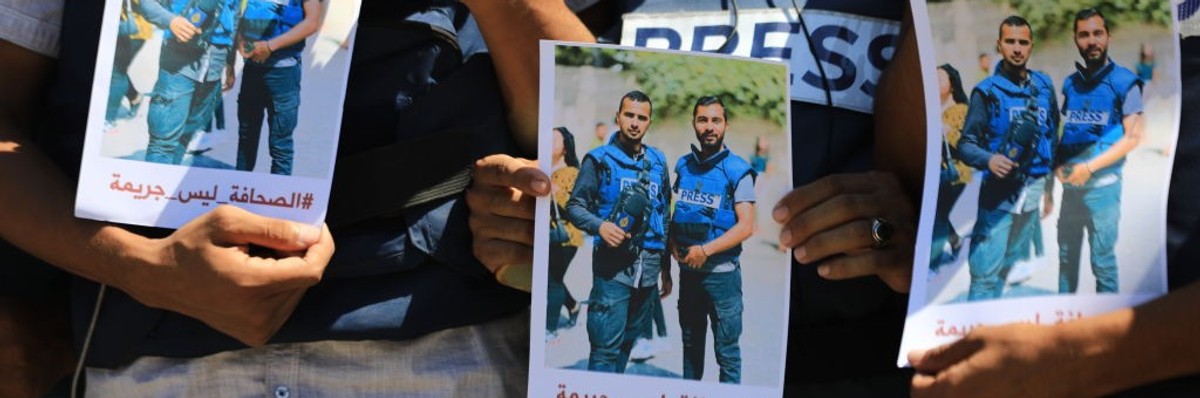
International outcry and a reporter’s pointed questions weren’t enough to get the State Department to denounce the killings of Al Jazeera journalists.
A Palestinian journalist on Thursday pressed a U.S. State Department spokesperson to characterize the killings of two Al Jazeera journalists by Israeli forces as summary execution.
The heated press briefing followed an airstrike on Wednesday that killed Al Jazeera reporter Ismail al-Ghoul and cameraman Rami al-Rifee, and sparked global outrage. Israel’s military acknowledged targeting al-Ghoul, saying he was “eliminated” because he was a Hamas “terrorist,” an allegation the Qatar-based network said was “baseless.”
The death toll of Palestinian journalists and media workers now stands at least 108, including several intentionally targeted by Israel forces, according to the Committee to Protect Journalists (CPJ).
Said Arikat, the Washington bureau chief of Al-Quds, an Arabic-language newspaper based in Jerusalem, called the strike a “premeditated crime to kill a journalist for doing their job” and a “summary execution” in the press briefing, but State Department spokesperson Vedant Patel declined to affirm the characterizations or condemn the airstrike.
Al-Ghoul and al-Rifee were killed in northern Gaza after reporting from near the home of Ismail Haniyeh, the Hamas political leader who was assassinated in Tehran earlier on Wednesday. They wore press vests and had signs on their vehicle identifying them as journalists; they had last contacted their news desk just 15 minutes before the strike, Al Jazeera reported.
The Israel Defense Forces (IDF) presented no evidence in a social media post claiming that al-Ghoul was a terrorist and Hamas operative. In March, al-Ghoul reported being stripped, handcuffed, and blindfolded during the course of a 12-hour detainment by Israeli forces; he had been covering an Israeli attack on al-Shifa hospital in Gaza City. Witnesses said Israeli forces severely beat al-Ghoul at the hospital before arresting him.
Anas al-Sharif, another Al Jazeera reporter in Gaza, was on site at a different hospital on Wednesday when his colleagues’ bodies were brought in, and he spoke about the role al-Ghoul had played in the outlet’s war coverage.
“Ismail was conveying the suffering of the displaced Palestinians and the suffering of the wounded and the massacres committed by the [Israeli] occupation against the innocent people in Gaza,” he told his own news outlet.
“The feeling—no words can describe what happened,” he added.
In protest of the killings, Palestinian journalists gathered to throw off their press vests and vowed to continue showing the suffering of Gazans through their work, despite the dangers they faced.
Condemnation of the killings of the two Al Jazeera journalists came not just from Gaza but all over the world.
CPJ CEO Jodie Ginsberg said in a statement that she was “dismayed” by the killings and that journalists are civilians who should never be targeted.
Defending Rights & Dissent, a U.S.-based civil liberties nonprofit, also condemned the killing of al-Ghoul and said the reasons for it were clear.
“When you ‘eliminate’ journalists, it’s much easier to hide war crimes, it’s easier to spread lies, it’s easier to commit genocide,” Sue Udry, the group’s executive director, said in a statement.
In response to the killing, the International Committee of the Red Cross (ICRC) said that journalists “must be protected, and we decry attacks against them.”
William Schomburg, head of the ICRC’s sub-delegation in Gaza, said in a statement that his team had just met with al-Ghoul the previous week to get an update on the humanitarian situation in Gaza. “Journalists in all wars play a central role in highlighting the plight of civilians and in speaking for the voiceless,” Schomburg said.
Reporters Without Borders (RSF, in French), a Paris-based nonprofit, wrote in unequivocal terms about the need for Israel to stop killing journalists.
“RSF is deeply disturbed to see the Israel Defense Forces using social media to justify their targeted killing of Al Jazeera journalist Ismail al-Ghoul,” the organization wrote on social media. “Journalists are not terrorists. This campaign of violence against media in Gaza must stop now.”
The Freedom of the Press Foundation also responded forcefully to the IDF’s claim about al-Ghoul.
“Documenting a war isn’t terrorism, it’s journalism,” the group wrote on social media. “If the IDF can prove al-Ghoul was working for Hamas’ military, it should do so immediately. If not, this looks like a flimsy excuse for intentionally murdering a journalist from an outlet Israel dislikes.”
Israeli forces have killed at seven journalists or media workers affiliated with Al Jazeera during the war, and Israel shut down the network’s local operations in May, citing a security threat, though critics said it was a case of censorship—an attempt to hide the brutality of the assault on Gaza.
In total, 113 journalists and media workers have died since the war began, including two Israelis and three Lebanese, according to CPJ, which says this has been the deadliest period for journalists anywhere in the world since it began collecting data in 1992.
The international outcry over all of the killings has ramped up pressure on the U.S.—which has backed the Israeli assault with weapons and diplomatic support— to condemn them, and Wednesday’s strike on al-Ghoul and al-Rifee has only increased that pressure. Still, Patel, the spokesperson, wouldn’t issue any such condemnation on Thursday.
Arikat also pressed Patel to call for the release of Palestinian journalists being held in Israeli detention centers without charges, but Patel didn’t do so.
Original article by EDWARD CARVER republished from Common Dreams under Creative Commons (CC BY-NC-ND 3.0).
- 30 Bound And ‘Executed’ Palestinians Found At Gaza School After IDF Exit ›
- IDF Soldier Confesses That In Gaza, ‘It’s Permissible To Shoot Everyone’ ›
- Shireen Abu Akleh: Al Jazeera Reporter Killed By Israeli Forces | Israel … ›
- Arundhati Roy: India Must Stop Arming Israel or ‘Forever Be Linked to Genocide’
Allies Vow to Fight Off Big Oil Lawsuit Aimed at Ending ‘Existence’ of Greenpeace
Original article by OLIVIA ROSANE republished from Common Dreams under Creative Commons (CC BY-NC-ND 3.0).
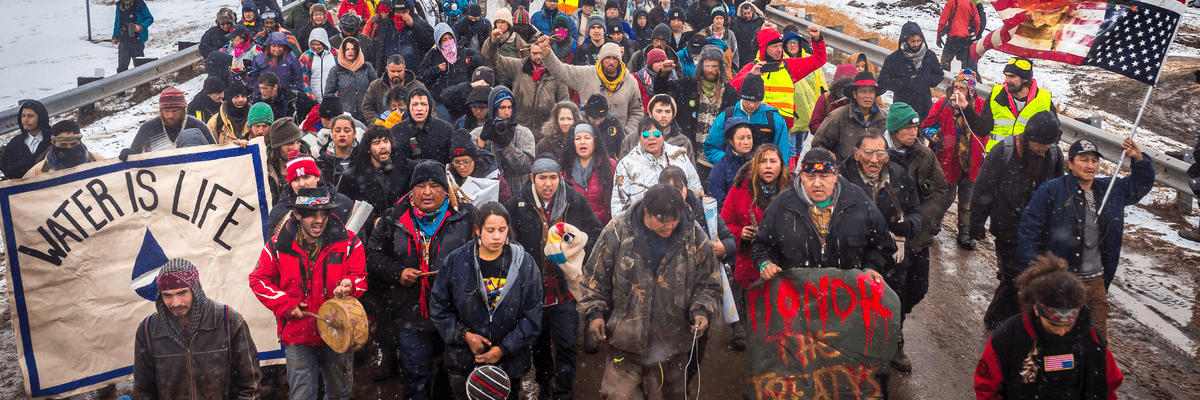
“No matter who you are, no matter what your politics are, this is one of the most important issues in America right now,” one Greenpeace spokesperson said.
Nearly 300 organizations and tens of thousands of individuals have signed an open letter supporting Greenpeace USA against a $300 million lawsuit brought against the environmental group by Energy Transfer—a company with a majority stake in the Dakota Access pipeline.
The corporation is falsely accusing Greenpeace of being the driving force behind Indigenous-led protests against the Dakota Access pipeline (DAPL) in 2016 and 2017.
Greenpeace USA announced its supporters on Thursday as it launched a campaign to raise awareness about the lawsuit—which it said could “functionally bankrupt” the organization, threatening its “existence.” However, Greenpeace said that the dangers posed by strategic lawsuits against public participation (SLAPPs), like the one it faces, extend far beyond one organization.
“No matter who you are, no matter what your politics are, this is one of the most important issues in America right now,” Greenpeace USA spokesperson Rolf Skar said in a statement. “Energy Transfer built the Dakota Access pipeline. But they’re suing anyway in order to send a message: If you dare to oppose us, we will financially ruin you.”
The Dakota Access pipeline drew massive protests from the Standing Rock Sioux Tribe, more than 300 other tribal nations, and non-Indigenous allies. While former U.S. President Donald Trump forced the pipeline through shortly after taking office in early 2017, the protests rattled the fossil fuel industry and their allies in government. After 2016, 18 states passed anti-protest laws that shielded around 60% of U.S. oil and gas production and related infrastructure from peaceful protests. The industry also turned to “judicial harassment.”
Energy Transfer (ET) initially brought suits against Standing Rock Tribal Chairman Dave Archambault and other Water Protectors, as well as a federal suit against Greenpeace in 2017.
At the time, ET CEO Kelcy Warren told a reporter: “Could we get some monetary damages out of this thing, and probably will we? Yeah, sure. Is that my primary objective? Absolutely not. It’s to send a message—you can’t do this, this is unlawful, and it’s not going to be tolerated in the United States.”
“Everyone who says they care about freedom—of whatever political stripe—should join together to support the Greenpeace campaign to protect people’s right to speak out against corporate abuses.”
While the 2017 cases were all dismissed, ET immediately filed a similar case against Greenpeace in North Dakota state court in 2019. The new case, which is scheduled to go to trial in February 2025, makes what Greenpeace called a “deeply racist” case that Greenpeace, and not Indigenous leaders, coordinated the Dakota Access protests.
“The lawsuit against Greenpeace is also an attack on the Indigenous movement in our fight for self-determination to protect Mother Earth, our waters, sacred and cultural sites, and our youth and future generations,” Morgan Brings Plenty of the Standing Rock Youth Council said in a statement. “These colonialist lawsuits are trying to send a warning to anyone who might consider speaking out and to be quiet—any of you could be next.”
ET also makes several claims that would set a dangerous precedent if upheld, including denouncing legitimate speech as defamatory and making anyone who is present at a protest liable for things that occurred at the same protest.
“The whole point of this type of lawsuit is to limit freedom of expression, so even if you don’t care about climate change, or you don’t care about Greenpeace, you should pay attention,” Skar said. “What’s at stake isn’t just Greenpeace or environmentalism, but the fundamental American rights to freedom of peaceful expression and advocacy for all of us.”
Greenpeace has circulated a letter to ET that has so far been signed by more than 290 organizations—including 350.org, Public Citizen, ACLU North Dakota, SEIU, Indigenous Environmental Network, and Amnesty International USA—and tens of thousands of individuals, including prominent celebrities and activists like Jane Fonda, Susan Sarandon, Billie Eilish, and Adam McKay.
“This is corporate overreach that is part of a disturbing trend of attacks on advocacy and speech around the world,” the letter reads. “We will not allow lawsuits like this one to stop us from advocating for a just, green, and peaceful future. On the contrary, we will ensure they have the opposite effect, increasing the support for organizations like Greenpeace and strengthening the broader movement for justice.”
“This legal attack on Greenpeace is an attack on us all,” the letter continues. “We will not stand idly by. We will not be bullied. We will not be divided and we will not be silenced.”
Organizations also issued individual statements of support.
“Everyone who says they care about freedom—of whatever political stripe—should join together to support the Greenpeace campaign to protect people’s right to speak out against corporate abuses,” said Robert Weissman, co-president of Public Citizen. “As Greenpeace knows from its own experience, too often corporations use their political, economic, and legal power not just to run PR campaigns justifying their wrongdoing, but to threaten public interest advocates with bad-faith lawsuits (SLAPPs) and other intimidation tactics.”
Brian Hauss, a senior staff attorney for the ACLU, said: “Protesters and advocacy groups should never have to fear the weight of groups like ETP as a condition for expressing their First Amendment rights. The court should see this lawsuit for what it is and toss it.”
Progressives are also calling for a national legislative solution to the problem of SLAPP suits. While most states do have laws on the books against them, North Dakota is one of the 18 that do not.
Rep. Jamie Raskin (D-Md.) introduced the Strategic Lawsuits Against Public Participation (SLAPP) Protection Act during Congress’ last session, and plans to reintroduce it in September of this year.
“The case against Greenpeace illustrates how mega-corporations can use lawsuits to silence, intimidate, and ruin their critics,” Raskin said. “America must demand, and Congress must pass, bipartisan legislation to protect First Amendment rights against ruinous litigation practices.”
Original article by OLIVIA ROSANE republished from Common Dreams under Creative Commons (CC BY-NC-ND 3.0).