Pacific Islands Summit Highlights Disproportionate Climate Impacts

Spread the love

Original article by Brett Wilkins republished from Common Dreams under a CC licence.

Leaders of Pacific island nations gather in Nuku’alofa, Tonga on August 26, 2024 for the 53rd Pacific Islands Forum Leaders Meeting (PIFLM53).
 (Photo: Pacific Islands Climate Action Network/X)

U.N. Secretary-General António Guterres stressed that “the region urgently needs substantial finance, capacities, and technology to speed up the transition and to invest in adaptation and resilience.”

As more than 1,500 delegates from over 40 nations gathered in Tonga for the 53rd Pacific Islands Forum Leaders Meeting, climate defenders on Monday urged the world’s biggest polluters to do much more to phase out the fossil fuels that are driving a planetary emergency disproportionately affecting low-lying island countries, which are among the world’s lowest greenhouse gas emitters.

“Tonga’s vision for the 53rd Pacific Islands Forum Leaders Meeting (PIFLM53) is for the Pacific to move beyond policy deliberation to implementation—to achieve transformation by building better now,” summit organizers said in a statement affirming the event’s mission to “develop collective responses to regional issues and deliver on their vision for a resilient Pacific region of peace, harmony, security, social inclusion, and prosperity.”

“We may be small island countries but we are a force to be reckoned with.”

Addressing attendees at the summit’s opening ceremony in the Tongan capital of Nuku’alofa, Pacific Islands Forum (PIF) Secretary-General Baron Waqa of Nauru called for regional unity to tackle common challenges.

“We may be small island countries but we are a force to be reckoned with,” he said. “We are at the center of geostrategic interest, we are at the forefront of a battle against climate change and its impacts.”

Speaking at Monday’s opening session, United Nations Secretary-General António Guterres lamented that “humanity is treating the sea like a sewer. Plastic pollution is choking sea life. Greenhouse gases are causing ocean heating, acidification, and a dramatic and accelerating rise in sea levels.”

Guterres—who warned in Samoa last week that low-lying island nations face the threat of climate “annihilation”—said that “Pacific islands are showing the way to protect our climate, our planet, and our ocean: By declaring a climate emergency and pushing for action, and with your declarations on sea-level rise, and aspirations for a just transition to a fossil fuel-free Pacific. But, the region urgently needs substantial finance, capacities, and technology to speed up the transition and to invest in adaptation and resilience.”

“The young people of the Pacific have taken the climate crisis all the way to the International Court of Justice,” Guterres added. “You have also rightly recognized that this is a security crisis—and taken steps to manage those risks together.”

Mahoney Mori, who chairs the Pacific Youth Council and is the PIFLM53 youth representative from the Federated States of Micronesia, called out the international community’s failure to adequately fund climate mitigation initiatives like the loss and damage fund—which developing nations say will require an annual investment of at least $400 billion, or nearly 10 times the amount pledged at last year’s United Nations Climate Change Conference in Dubai.

“Despite the commendable pledges from the United Nations and world leaders such as the Paris agreement, the existing global finance mechanisms still hindered community-based and youth organizations from accessing critical support,” Mori said. “The Pacific’s grassroots organizations struggle to meet global standards amidst this crisis and time is running out.”

As leaders met for PIFLM53 amid torrential rains, a 6.9-magnitude earthquake rocked Tonga’s main island of Tongatapu. While there was no damage reported and no tsunami warning issued, summit attendees said the temblor underscored vulnerabilities faced by low-lying island nations.

Leaders and activists from Pacific island nations took aim at regional giant Australia—which has been perennially ranked as one of the world’s worst climate-wreckers in U.N.-backed Sustainable Development reports—for insufficient climate action.

“We recognize Australia’s desire to present itself as a climate leader and co-host the COP alongside the Pacific,” Pacific Islands Climate Action Network regional director Rufino Varea said in a statement, referring to Australia’s bid to help lead the 2026 United Nations Climate Change Conference, or COP31.

“However, true leadership must not merely be aspirational; it must be actionable,” Varea continued. “To date, Australia has expanded gas production instead of aligning its practices with the urgent needs of the Pacific. This does not reflect the leadership we need.”

“If Australia is to demonstrate genuine commitment, it must align its domestic and international climate policies with our goals and advocate earnestly for a fossil fuel-free Pacific,” he stressed. “It must also commit to ambitious climate actions, ensure effective climate finance is delivered to Pacific island countries, and contribute substantially to the loss and damage fund.”

“If these steps are not taken, we risk witnessing a COP that concedes failure—declaring that critical targets were missed, and that Pacific communities continue to be exploited as mere labor resources for the enrichment of others,” Varea added.

Original article by Brett Wilkins republished from Common Dreams under a CC licence.

Continue ReadingPacific Islands Summit Highlights Disproportionate Climate Impacts

Amid Soaring Temps, Heat-Related Deaths Have More Than Doubled Since 1999

Spread the love

Original article by Jessica Corbett republished from Common Dreams under a CC licence.

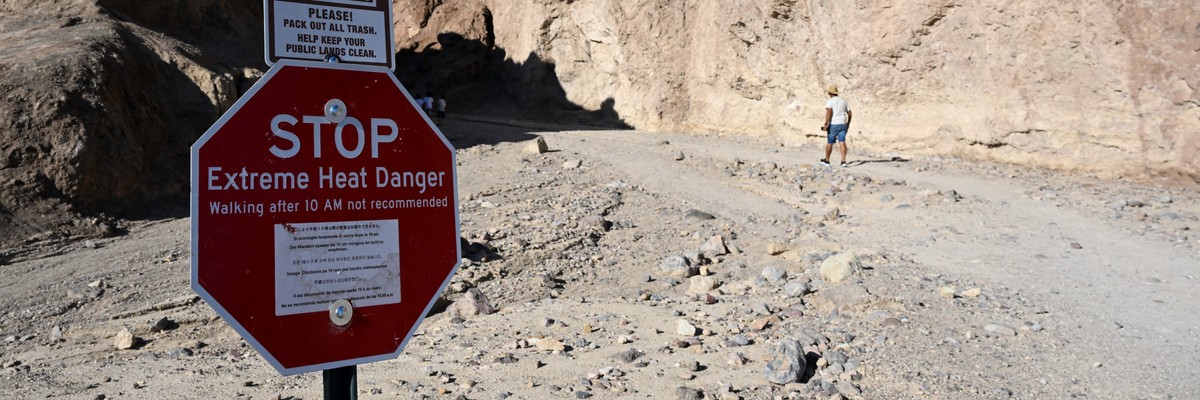
A sign says, “Stop: Extreme Heat Danger,” at the Golden Canyon Trailhead in Death Valley, California on July 9, 2023.
 (Photo: Tayfun Coskun/Anadolu Agency via Getty Images)

“It is likely that continued increases in average temperatures, the number of ‘hot days,’ and the frequency and intensity of heatwaves could be playing a role,” said one researcher.

As 55 million people in the U.S. Midwest faced heat alerts on Monday, research published in the peer-reviewed Journal of the American Medical Association showed that heat-related deaths in the country rose 117% between 1999 and 2023.

“The current trajectory that we’re on, in terms of warming and the change in the climate, is starting to actually show up in increased deaths,” lead author Jeffrey Howard, an associate professor of public health at the University of Texas at San Antonio, told USA Today. “That’s something that we hadn’t had measured before.”

Using a U.S. Centers for Disease Control and Prevention platform, Howard and co-authors from Pennsylvania State University and the Uniformed Services University of the Health Sciences analyzed all deaths from those 25 years coded for “hyperthermia of newborn,” “effects of heat and light,” or “exposure to excessive natural heat” as either a contributing or underlying cause of death.

They found 21,518 deaths for the full period, with 1,069 in 1999. The lowest annual figure was in 2004 (311) and the highest was in 2023 (2,325). Last year was the hottest on record globally and scientists are already warning that this year is expected to continue that trend.

“As temperatures continue to rise because of climate change, the recent increasing trend is likely to continue.”

Last year broke the record that was set in 2016—a year that’s also significant in the new study: “The number of heat-related deaths… showed year-to-year variability, with spikes in 2006 and 2011, before showing steady increases after 2016.”

Howard told CBS News that “it is likely that continued increases in average temperatures, the number of ‘hot days,’ and the frequency and intensity of heatwaves could be playing a role” in the rise since 2016.

“There is also a social and behavioral component as well,” he added, “including differences in access to air conditioning, outdoor work, the number of unhoused individuals, and things like that.”

The researcher noted that Arizona, California, Nevada, and Texas had the highest heat-related deaths—which he said is “not terribly surprising because we know that these are some of the hottest regions in the country, but it does reinforce that the risk varies regionally.”

The paper warns that “as temperatures continue to rise because of climate change, the recent increasing trend is likely to continue. Local authorities in high-risk areas should consider investing in the expansion of access to hydration centers and public cooling centers or other buildings with air conditioning.”

The authors also acknowledged limitations of their research—including “the potential for misclassification of causes of death, leading to possible underestimation of heat-related mortality rates; potential bias from increasing awareness over time; and lack of data for vulnerable subgroups”—meaning the true death toll could be higher.

A legal memo published in June by the watchdog Public Citizen detailed how local or state prosecutors could bring criminal charges against oil and gas companies for deaths from extreme heat made more likely by the fossil fuel-driven climate emergency.

“These victims deserve justice no less than the victims of street-level homicides,” said Aaron Regunberg, senior policy counsel for the group. “And this memo shows that prosecutors have a path to secure that justice, if they choose to pursue it.”

Original article by Jessica Corbett republished from Common Dreams under a CC licence.

Continue ReadingAmid Soaring Temps, Heat-Related Deaths Have More Than Doubled Since 1999

Amnesty Urges War Crimes Probe of ‘Indiscriminate’ Israeli Attacks on Gaza Camps

Spread the love

Original article by Brett Wilkins republished from Common Dreams under a CC licence.

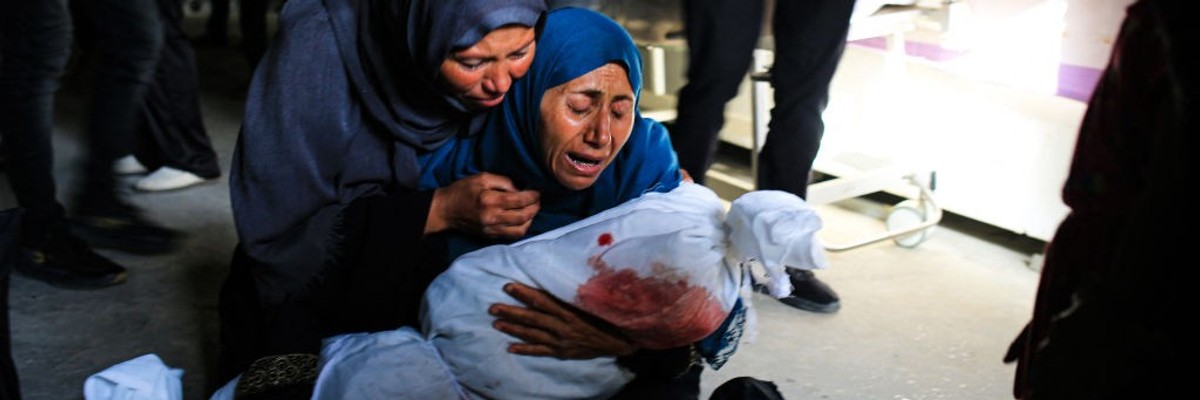
A Palestinian woman holds the shrouded body of a child killed by Israeli bombardment of the Tel al-Sultan neighborhood in Rafah in the southern Gaza Strip on May 26, 2024. (Photo: Eyad Baba/AFP via Getty Images)

The human rights group said Israeli forces “failed to distinguish between civilians and military objectives by using unguided munitions in an area full of civilians sheltering in tents.”

In an investigation focusing on a pair of Israeli massacres of forcibly displaced Palestinians in GazaAmnesty International on Monday urged the International Criminal Court—whose chief prosecutor has already applied for warrants to arrest Israeli and Hamas leaders—to open a war crimes probe of the attacks, which it said were likely “indiscriminate” and “disproportionate.”

“On May 26, 2024, two Israeli airstrikes on the Kuwaiti Peace Camp, a makeshift camp for internally displaced people in Tal al-Sultan in west Rafah, killed at least 36 people—including six children—and injured more than 100,” noted Amnesty, which early in the assault on Gaza found “damning evidence” of Israeli war crimes including indiscriminate killing of civilians.

The Tal al-Sultan attack, which hit an Israeli-designated “safe zone,” ignited an inferno that burned people alive inside the tents in which they were sheltering. One survivor told Amnesty that “there were so many dead people all around us,” many of them “in pieces and in pools of blood.”

“The military could and should have taken all feasible precautions to avoid, or at least minimize, harm to civilians.”

The Amnesty report states that the airstrikes, “which targeted two Hamas commanders staying amid displaced civilians, consisted of two U.S.-made GBU-39 guided bombs” and that “the use of these munitions, which project deadly fragments over a wide area, in a camp housing civilians in overcrowded temporary shelters likely constituted a disproportionate and indiscriminate attack, and should be investigated as a war crime.”

Israeli Prime Minister Benjamin Netanyahu called the Tal al-Sultan massacre a “tragic mistake.”

“On May 28, in the second incident investigated, the Israeli military fired at least three tank shells at a location in the al-Mawasi area of Rafah, which was designated by the Israeli military as a ‘humanitarian zone,'” Amnesty continued. “The strikes killed 23 civilians—including 12 children, seven women, and four men—and injured many more.”

“Amnesty International’s research found that the apparent targets of the attack were one Hamas and one Islamic Jihad fighter,” the publication notes. “This strike, which failed to distinguish between civilians and military objectives by using unguided munitions in an area full of civilians sheltering in tents, likely was indiscriminate and should be investigated as a war crime.”

Erika Guevara-Rosas, Amnesty International’s senior director for research, advocacy, policy, and campaigns, said in a statement that “while these strikes may have targeted Hamas and Islamic Jihad commanders and fighters, once again displaced Palestinian civilians seeking shelter and safety have paid with their lives.”

“The Israeli military would have been fully aware that the use of bombs that project deadly shrapnel across hundreds of meters and unguided tank shells would kill and injure a large number of civilians sheltering in overcrowded settings lacking protection,” she added. “The military could and should have taken all feasible precautions to avoid, or at least minimize, harm to civilians.”

Israel—whose 325-day bombardment, invasion, and siege of Gaza has left more than 144,000 Palestinians dead, maimed, or missing and millions more suffering forced displacement, starvation, and disease—is currently on trial for genocide at the International Court of Justice (ICJ) in The Hague, Netherlands.

In January, the ICJ ordered Israel to “take all measures within its power” to uphold its obligations under Article II of the Genocide Convention. Israel’s far-right government and military have been accused by human rights groups of ignoring the order.

As Israeli forces launched a major ground invasion of Rafah four months later, the ICJ issued another order for Israel to “immediately halt its military offensive” in the city, where around 1.5 million forcibly displaced and local Palestinian residents were sheltering. Instead of heeding the order, Israel ramped up its assault on Rafah.

At the International Criminal Court, Prosecutor Karim Khan is urging the tribunal to promptly act upon his May application for warrants to arrest Netanyahu, Israeli Defense Minister Yoav Gallant, and three Hamas leaders—at least one of whom, political chief Ismail Haniyeh, was subsequently assassinated by Israel.

Guevara-Rosas on Monday reminded Israel of its legal responsibility to protect noncombatants.

“The avoidable deaths and injuries of civilians is a stark and tragic reminder that, under international humanitarian law, the presence of fighters in the targeted area does not absolve the Israeli military of its obligations to protect civilians,” she said.

“All parties to the conflict must take all feasible precautions to protect civilians,” Guevara-Rosas added. “This also includes the obligation of Hamas and other armed groups to avoid, to the extent feasible, locating military objectives and fighters in or near densely populated areas.”

The new Amnesty report was published on the same day that Human Rights Watch called upon the ICC to investigate alleged and documented incidents of Israeli forces torturing imprisoned Palestinian medical workers, including at the notorious Sde Teiman prison, where guards are accused of war crimes including murder, rape, and torture.

Original article by Brett Wilkins republished from Common Dreams under a CC licence.

Continue ReadingAmnesty Urges War Crimes Probe of ‘Indiscriminate’ Israeli Attacks on Gaza Camps

Israeli has received 50,000 tons of weapons from the US since October 7

Spread the love

Original article republished form peoples dispatch under a Creative Commons Attribution-ShareAlike 4.0 (CC BY-SA) license.

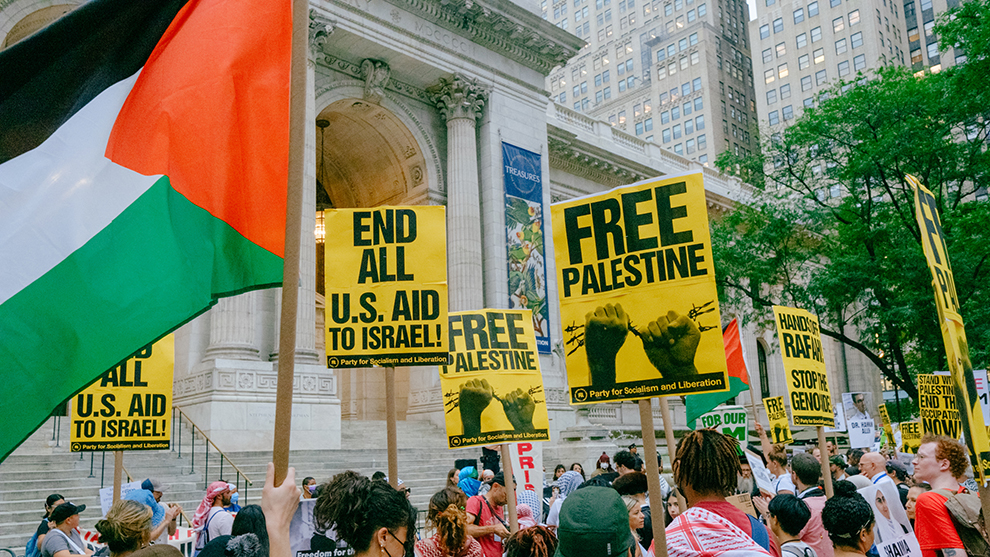
Palestine solidarity protesters on August 2 in New York City (Photo: Wyatt Souers)

The US shows no signs of implementing an arms embargo or even conditioning aid as Palestinian death toll continues to mount

On August 26, the Israeli Defense Ministry announced that it had received over 50,000 tons in shipments of arms and military equipment from the US since October 7. Israel has used these shipments in carrying out a war that has been labeled by international bodies and nations as a genocide against the people of Gaza, with over 40,000 Palestinians killed by Israeli forces thus far. The weapons deliveries are “crucial for sustaining the IDF’s operational capabilities during the ongoing war,” claim Israeli forces.

It appears that the US is no closer to an arms embargo against Israel or even to conditioning aid, despite pressure from within the country itself to do so. Only weeks ago, the Pentagon announced an arms sale of USD 20 billion to Israel. 

Last month, shortly before the US Congress gave visiting Israeli Prime Minister Benjamin Netanyahu a standing ovation in a special joint session of Congress, seven major labor unions, representing almost half of the combined unionized workforce, penned a letter demanding that the US end US aid to Israel. 

This demand was reiterated by “uncommitted” delegates at the Democratic National Convention last week, as well as the thousands of protesters outside of the Convention in Chicago. Vice President Kamala Harris, formally chosen as the Democratic Party nominee in the 2024 presidential election, only firmly doubled down on her Party’s support for Israel in her acceptance speech

“I will always stand up for Israel’s right to defend itself, and I will always ensure Israel has the ability to defend itself, because the people of Israel must never again face the horror that a terrorist organization called Hamas caused on Oct. 7, including unspeakable sexual violence and the massacre of young people at a music festival,” Harris stated. 

The conditions of genocide are only becoming more dire in Gaza. On August 16, the Palestinian Ministry of Health confirmed that a 10-month-old baby in Gaza had been infected with polio, Gaza’s first case of polio in 25 years. This announcement raised alarms about the effects of war on conditions of disease and starvation, which could lead to upwards of 186,000 deaths, as estimated by a letter published in The Lancet last month. Organizations such as the WHO have emphasized that a humanitarian pause in the war are essential to carrying out an effective polio vaccination campaign. 

Original article republished form peoples dispatch under a Creative Commons Attribution-ShareAlike 4.0 (CC BY-SA) license.

Continue ReadingIsraeli has received 50,000 tons of weapons from the US since October 7

Tories ask who authorised Labour donor’s No 10 pass

Spread the love

https://www.bbc.com/news/articles/c4gxk0gz3zdo

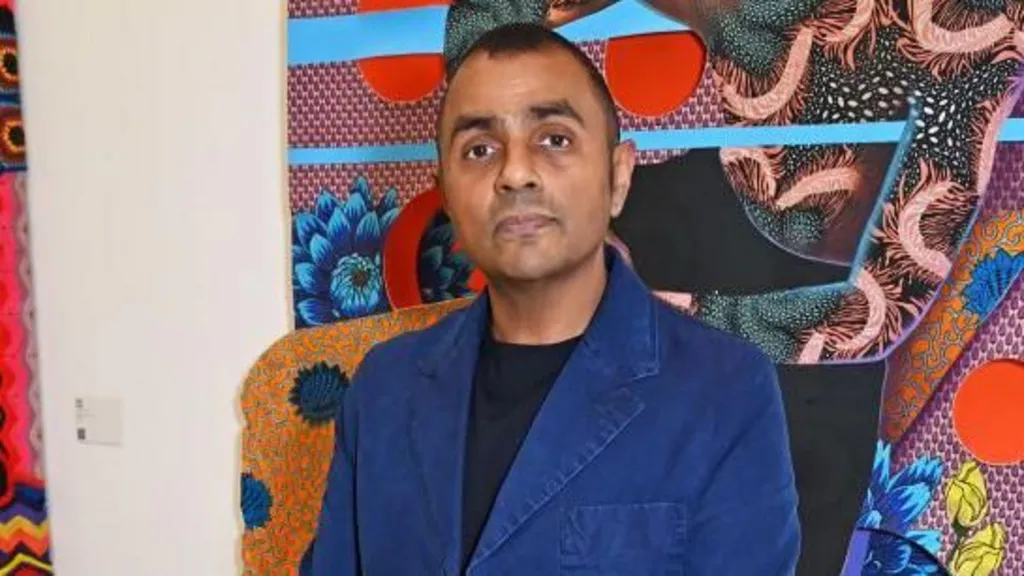
Lord Alli was made a Labour peer by Sir Tony Blair and is a significant Labour fundraiser

The Conservatives are demanding to know who authorised a Downing Street pass for Labour’s biggest donor, despite him having no formal job at the premises.

The Sunday Times revealed that Lord Waheed Alli had been issued with a temporary pass for Number 10.

Downing Street confirmed that he did have a pass but that it was “temporary” and “given back several weeks ago”.

In a letter to Cabinet Secretary Simon Case, the Tories said it was “deeply concerning” the pass had been issued at all.

The letter from shadow paymaster general John Glen asks whether the PM or his chief of staff, the former civil servant Sue Gray, had requested the pass for Lord Alli.

He has also asked for details on whether any other donors have received security passes for Number 10 and if other temporary passes have been issued.

“A Downing Street pass should be a privilege reserved for those that require access for work, including civil servants and special advisers, not those requiring occasional access,” he wrote in his letter.

“It is therefore deeply concerning that a pass was granted to a Labour donor providing unfettered access to the heart of government after significant cash and non-cash donations were made to the Labour Party.”

https://www.bbc.com/news/articles/c4gxk0gz3zdo

Continue ReadingTories ask who authorised Labour donor’s No 10 pass