Tech billionaire Elon Musk is on track to become the world’s first trillionaire. It’s a sign markets aren’t working
Spread the love
FredericLegrand/Shutterstock

Richard Denniss, Crawford School of Public Policy, Australian National University

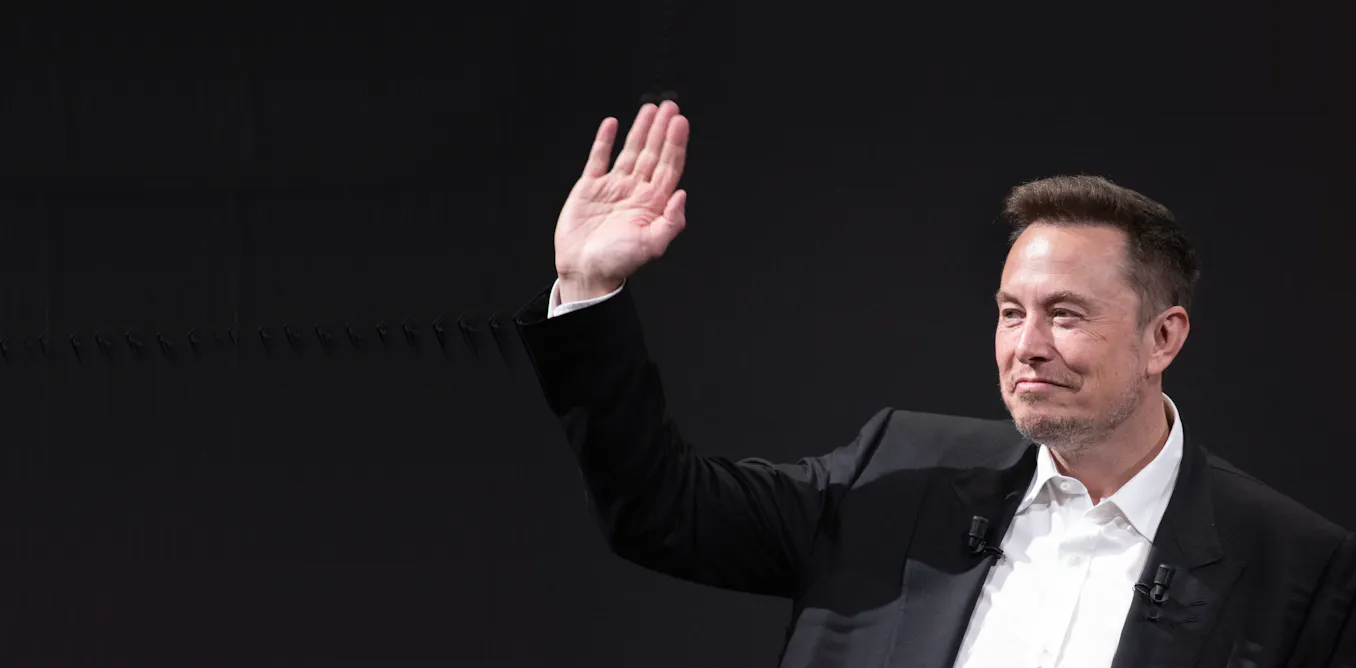
Apparently, the world is about to get its first trillionaire.

A report from the business intelligence agency Informa Connect says, at his present rate of wealth accumulation, tech billionaire Elon Musk is on track to be the world’s first trillionaire, three years from now.

At the moment Musk is said to be worth US$195 billion (A$293 billion), but if his wealth continues growing at the recent rate of 110% per year, he will hit US$1.195 trillion in 2027.

The next trillionaire after Musk should be Indian mining magnate Gautam Adani, followed by Nvidia chief Jensen Huang and Indonesian mining mogul Prajogo Pangestu, all of whom are on track to hit the milestone in 2028.

The nearly 1 billion human beings who don’t yet have electricity connected to their homes will doubtless be looking on with interest as the tech bros and mining bosses vie to crack 13 digits.

Before examining how it is that someone could ever make a trillion-dollar fortune, and what it might mean for the world for so much of the world’s wealth to be held in the hands of one person, it is important to first try to comprehend how big a trillion actually is.

One trillion seconds last 31,000 years

A million is a big number: it is 1,000 thousands. If you managed to retire with that many dollars in superannuation, you would have saved up more than 90% of your fellow retirees.

One billion is 1,000 millions. It takes 12 days for a million seconds to pass, but 31 years for a billion seconds to tick over.

That means a trillion seconds would equal 31,000 years.

If you had $1 trillion and did no more than stick it in the bank where it earned 4% interest per year you would get $40 billion per year in interest.

No one needs $1 trillion, and it is hard to see how anyone could spend it as fast as it grew, which raises important questions about how societies, economies and democracies will be able to function if and when governments allow trillionaires to emerge.

For mortals, a trillion is hard to justify

The palace at Versaille could have cost $300 billion in today’s dollars. WikimediaCommons, CC BY-NC-SA

France’s King Louis XIV spent today’s equivalent of US$200 billion-300 billion building his palace at Versailles, and it was by no means his only palace.

Pyramids and sphinxes didn’t come cheap either, but these sorts of expenditures were seen as needed for beings selected by gods and not entirely mortal.

For mortals, some believe that the entire population benefits when a small minority controls most of the resources on the basis that it builds incentives.

Just as peasants spent millennia awaiting their reward in the afterlife while their rulers enjoyed heaven on earth, in modern economies we are told wealth and prosperity will trickle down to us eventually if we keep working hard.

Unfortunately for most of us, despite the wealth of the richest 200 Australians growing from A$40.6 billion to $625 billion over the past 20 years, neither the Australian economy nor the wages of ordinary Australians are soaring.

High profits are meant to be temporary

Incentives can and do play an important role in our economy.

In the so-called “free market” envisaged by 18th-century economist Adam Smith, if my new farming technique or silicon chip is so good that everyone wants one, it is considered only fair that I get an initial reward.

But after a while, everyone else will be free to compete with me by selling similar goods and in turn stopping me from getting an extraordinary ongoing reward.

The problem is that some markets aren’t free and don’t work properly. It is no accident that the world’s biggest fortunes are held by those who have monopoly rights to sell natural resources or technologies that are protected by patents or systems that lock in users.

That’s bad news for those still waiting patiently for wealth to trickle down or to be spread more evenly.

Technofeudalism keeps profits growing

In his latest book former Greek finance minister Yannis Varoufakis describes the world we now live in as one of technofeudalism in which online platforms have the ongoing opportunity to exploit workers, consumers and producers in ways Smith could not have imagined.

Having created digital platforms where the price of entry is handing over your personal details and preferences, modern tech titans use a new form of alchemy to convert data into knowledge that allows them to keep you on their platform and exploit you or advertisers or suppliers in the belief that you won’t leave.

And while there are physical limits to how big a car factory or fast-food chain can grow, there are almost no physical limits on how much money tech platforms can make by selling ads they didn’t make for products they didn’t make to consumers they know nearly everything about.

Restraining profits is pro-market

It isn’t anti-capitalist to want those profits competed away, it’s pro-market.

When the United States broke up J.D. Rockerfeller’s oil monopoly in the early 20th century, the oil industry prospered rather than vanished. consumers and the businesses that had dealt with Rockerfeller were better off, and so was the economy as a whole.

Democracies have, for now, the power to use taxes and regulations to redistribute the enormous benefits flowing to the new class of billionaires (and soon trillionaires) from the sale of scarce resources and the creation of platforms that keep us trapped.

Whether and how we use that power is up to us, but we mightn’t have it for long. The more the new class of billionaires and trillionaires becomes entrenched, the more it will be able to use the political system to protect their interests rather than those of mere mortals.

Richard Denniss, Adjunct Professor, Crawford School of Public Policy, Australian National University

This article is republished from The Conversation under a Creative Commons license. Read the original article.
Continue ReadingTech billionaire Elon Musk is on track to become the world’s first trillionaire. It’s a sign markets aren’t working

Morning Star Editorial: Change or die: Starmer must abandon Treasury orthodoxy or face oblivion

Spread the love

https://morningstaronline.co.uk/article/change-or-die-starmer-must-abandon-treasury-orthodoxy-or-face-oblivion

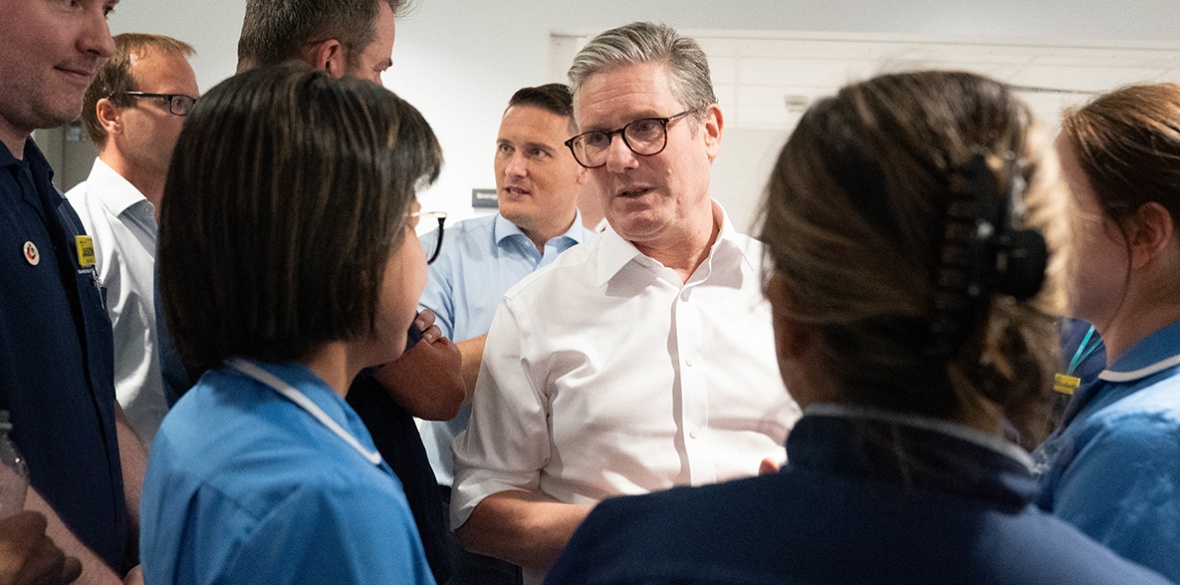
Prime Minister Sir Keir Starmer (left) and Health Secretary, Wes Streeting during a visit to the University College London Hospital (UCLH), September 11, 2024

“CHANGE or die” was Keir Starmer’s message to the National Health Service.

But it could as well apply to his own government, which already appears locked in a downward spiral.

Labour secured the election with the smallest share of the vote for a new government in history and on a low turnout to boot. Barely one eligible voter in five chose Labour on July 4.

Starmer himself, moreover, saw half of his 2019 vote — and that was not a good year for Labour — disappear in his north London constituency.

But the only conclusion he has apparently drawn is that more misery must be piled on the public.

First, he maintained the cruel two-child benefit cap, and suspended from the Parliamentary Labour Party those MPs who had the temerity to vote to lift children out of poverty.

Then he appeared in the Downing Street garden to announce that things were only going to get worse for the foreseeable future, preparing the way for that new round of austerity he had pledged to avoid during the election campaign.

His pretence is that “tough choices” are needed because of an unexpected “black hole” left behind in the public finances by the Tories.

But the choices made by Chancellor Rachel Reeves and Starmer are always “tough” at the expense of the poorest.

In 2017 Labour estimated that means-testing the winter fuel allowance would lead to nearly 4,000 extra fatalities. Today, following exactly that policy, the government conceals the possible consequences, having either not commissioned an assessment of the policy’s impact, or determined to hide it.

It is said that you only get one chance to make a first impression. The first impression of this government is now set in stone — it is of callous cost-consciousness compounded by concealment.

This is not “fixing the foundations” as Starmer claims. It is fracturing them, and many Labour MPs know it.

https://morningstaronline.co.uk/article/change-or-die-starmer-must-abandon-treasury-orthodoxy-or-face-oblivion

Keir Starmer says pensioners can freeze to death and poor children can starve and be condemned to failure and misery all their lives.
Continue ReadingMorning Star Editorial: Change or die: Starmer must abandon Treasury orthodoxy or face oblivion

Jeremy Corbyn: Austerity Is Labour’s Choice

Spread the love

https://tribunemag.co.uk/2024/09/jeremy-corbyn-austerity-is-labours-choice

After 14 years of billionaires doubling their wealth, the political elite’s choice of starving pensioners and children shows austerity as a complete con job.

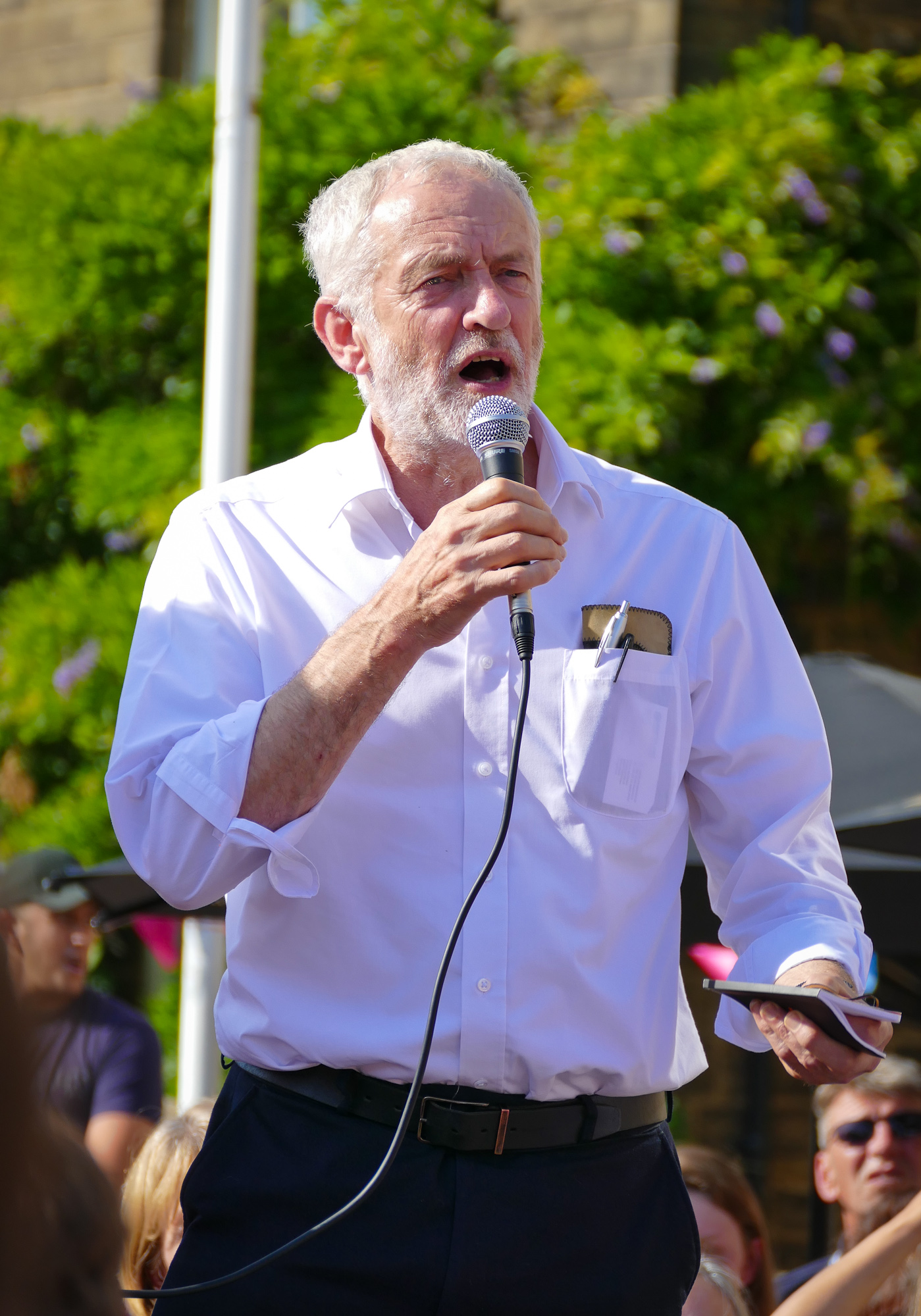
Image of Jeremy Corbyn MP, former leader of the Labour Party
Jeremy Corbyn MP, former leader of the Labour Party

Every day, my constituents make tough choices. Tough choices like deciding whether to heat their homes or put food on the table. Tough choices like taking out a loan to pay for this month’s rent. Tough choices like selling their home to pay for their family’s social care.

People are making tough choices because governments have made the wrong choices. We warned that Tory austerity would weaken our economy and decimate our public services. We were ignored, and the poorest in society paid the price. Austerity is not just a buzzword. It is the ongoing, brutal reality for millions of people who have been pushed into destitution. It is the face of desperation and anxiety of those forced into a spiral of debt. It is a freezing cold night for the record numbers of people sleeping rough on the streets. It is the graveyard for those left without vital support: more than 300,000 excess deaths have been attributed to austerity policies.

We often talk about austerity in terms of cuts to public spending, but that is just one side of the coin. By starving public services of resources, the government manufactured a convenient excuse for their privatisation. We saw this most acutely with the NHS: an underfunded public service does not just cause satisfaction to plummet, but the belief in the principle of public healthcare itself. Austerity was never about saving money (the UK’s debt pile increased every single year under the Tories). It was about transferring money from the poorest to the richest. Between 2010 and 2018, aggregate wealth in the UK grew by £5.68 trillion. 94% went to the richest 50% of households. 6% went to the poorest 50%. As child poverty was heading towards its highest levels since 2007, Britain’s billionaires more than doubled their wealth.

It was a political decision to defund, dismantle and auction off our public services. And it will be a political decision to repeat this failed economic experiment. ‘It’s going to be painful’, the Prime Minister told the nation last week, prepping the public for ‘difficult choices’ ahead. Did he get permission from the Tories to reuse their trademark slogans? Other ministers have gone one step further, indicating that they do not have any choice at all but to impoverish children and pensioners. Keeping children in poverty is unavoidable, apparently, if we want to restore the public finances. Scrapping the winter fuel allowance is a necessity, we were risibly told, if we want to stop a run on the pound.

It is astonishing to hear government ministers try to pull the wool over the public’s eyes. The government knows that there is a range of choices available to them. They could introduce wealth taxes to raise upwards of £10 billion. They could stop wasting public money on private contracts. They could launch a fundamental redistribution of power by bringing water and energy into full public ownership. Instead, they have opted to take resources away from people who were promised things would change. There is plenty of money, it’s just in the wrong hands — and we will not be fooled by ministers’ attempts to feign regret over cruel decisions they know they don’t have to take.

..

Article continues at https://tribunemag.co.uk/2024/09/jeremy-corbyn-austerity-is-labours-choice

Continue ReadingJeremy Corbyn: Austerity Is Labour’s Choice

Chancellor’s ‘black hole’ claim ‘unnecessary and unhelpful’, says ex Bank of England economist

Spread the love

https://news.sky.com/story/chancellors-black-hole-claim-unnecessary-and-unhelpful-says-ex-bank-of-england-economist-13213523

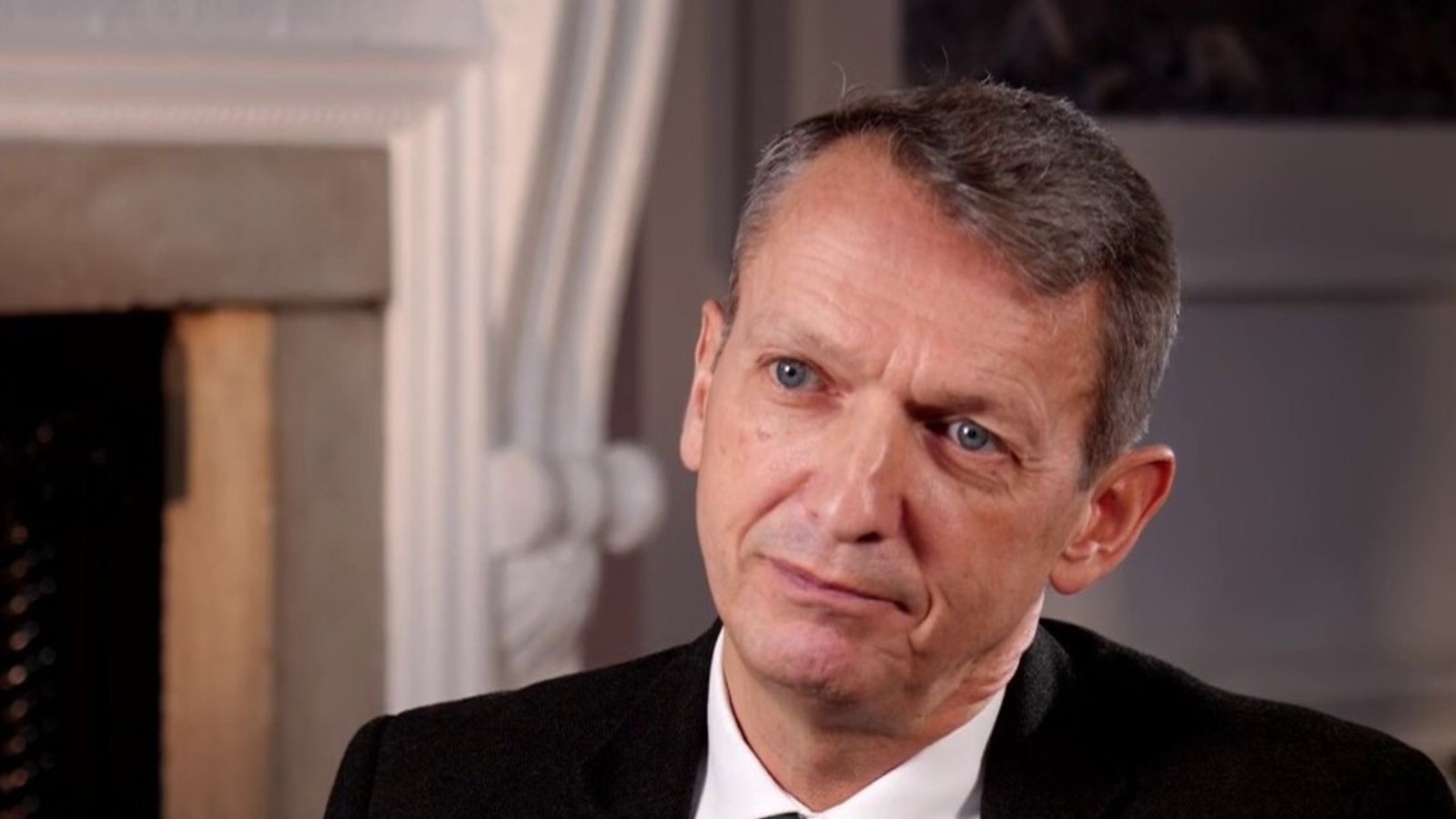
Andy Haldane

Former senior economist Andy Haldane told Sky News that Rachel Reeves’s comments earlier this summer had spooked consumers, businesses and investors.

The chancellor’s claim of a £22bn “black hole” in government finances was “unnecessary and probably unhelpful economically”, a former Bank of England chief economist has said.

Andy Haldane told Sky News’ Politics Hub with Sophy Ridge that Rachel Reeves’s statement in July was a “bad idea” because it generated a sense of “fear and foreboding” just when there was a new-found confidence in the UK.

Ms Reeves made the claim within weeks of taking office in what was widely seen as a warning that her first budget in October would be a painful mix of spending cuts and tax rises.

He said: “The black hole event was unnecessary and probably unhelpful economically.

“It’s one thing to reveal a black hole, if that indeed is what it is. But just leaving that to sit for three months I think was a bad idea.”

Asked what the government should have done, he said it was “much better to say nothing until you provide solutions”.

https://news.sky.com/story/chancellors-black-hole-claim-unnecessary-and-unhelpful-says-ex-bank-of-england-economist-13213523

Continue ReadingChancellor’s ‘black hole’ claim ‘unnecessary and unhelpful’, says ex Bank of England economist