‘Mr. Lammy, you are a genocide denier’, says UN special rapporteur Fransesca Albanese


Original article by Brett Wilkins republished from Common Dreams under Creative Commons (CC BY-NC-ND 3.0).

More than two dozen international relief groups operating in Gaza warned Thursday that humanitarian assistance entering the embattled Palestinian enclave “has fallen to an all-time low” as Israel continues to block lifesaving aid, fueling nascent famine in the north.
“An average of only 37 humanitarian trucks per day entered Gaza in October, and an average of 69 per day during the first week of November. This is still well below the average of 500 per day which entered Gaza… before October 7, 2023, and was insufficient to meet the needs of the population,” the seventh Gaza Humanitarian Aid Snapshot notes.
“For almost a month, Israel has blocked attempts by aid organizations to deliver aid in areas of northern Gaza, effectively severing the population from access to vital lifelines, including food, medical supplies, and all other humanitarian aid,” the report continues, adding that “there is a strong likelihood that famine is already occurring in northern Gaza, and that immediate action is required within days, not weeks, to address the crisis.”
Sorry, this content could not be embedded.
X
“Tragically, Israeli airstrikes killed at least 20 aid workers from both Palestinian and international organizations,” the analysis laments. “Staff were killed in their homes, in displacement camps, and while delivering lifesaving aid. Many aid workers lost close family members and relatives.”
One forcibly displaced resident of northern Gaza told the report’s authors:
Everyone has received this call before: One of your friends or colleagues or relatives or cousins is under the siege or bombs. And they ask for help. And you can’t do anything. You can’t do anything for them. And they die. They die while they are asking us to help them. This is the worst thing.
The report also notes widespread looting by desperate Gaza residents—a consequence not only of the bombing, invasion, and siege but also of Israel’s targeted killing of Palestinian police officers—and criminal gangs extorting aid groups for “protection” money.
The new analysis came on the same day that a United Nations committee published a report concluding that Israel’s policies and practices in Gaza “are consistent with the characteristics of genocide” and two days after the Biden administration—which backs Israel with arms and diplomatic support—sparked worldwide anger by asserting that Israel is not violating humanitarian law during the war.
A scorecard published earlier this week by some of the same groups that compiled the Humanitarian Aid Snapshot detailed how Israel has failed to fully comply with any of the Biden administration’s 19 demands indicating compliance with humanitarian law.
As children in Gaza began starving to death earlier this year, the International Court of Justice—which is weighing a genocide case against Israel—ordered the Israeli government to stop blocking aid from entering the enclave. Israel has been accused of ignoring the order.
As the Humanitarian Aid Snapshot notes, Israeli forces have killed more than 43,000 Palestinians in Gaza and wounded over 103,000 others as of November 12. Approximately 80% of Gazans are under forced displacement orders—a policy denounced by many as ethnic cleansing—and around 90% of Gaza residents have been forcibly displaced, most of them multiple times.
“The population in northern Gaza faces starvation, severe shortages of clean water, critical supply scarcity, and ever-increasing desperation,” Mercy Corps, one of the groups that contributed to the analysis, said in a statement. “We call on all those with influence and power to take urgent action to de-escalate and halt the unrelenting violence in Gaza, to protect civilians and aid workers, and to do everything possible to achieve an immediate and lasting cease-fire.”
Original article by Brett Wilkins republished from Common Dreams under Creative Commons (CC BY-NC-ND 3.0).
https://morningstaronline.co.uk/article/reeves-plots-mega-raid-on-pensions-union-warns

MORE than six million workers’ pension pots are at risk under Treasury plans to create so-called “megafunds” to siphon off into national infrastructure projects, GMB warned today.
Chancellor Rachel Reeves has said she wants to pool assets from the 86 separate local government pension schemes (LGPS) into eight funds, worth about £50 billion, by 2030.
She is due to announce her plans, which the government claims will be part of the “biggest pension reforms in decades,” in her inaugural Mansion House speech as Chancellor before City leaders tonight.
Alongside these are plans to combine smaller defined-contribution schemes across the country into pools of £25bn to £50bn.
GMB union has raised “strong reservations” over the annoucements, warning megafunds should not be used as “slush funds” for the Treasury.
The LGPS represents one of the world’s largest defined-benefit schemes, with 6.5 million members and some £360bn in assets.
GMB national pensions organiser George Gergiou told the Morning Star: “Our view is the Treasury have seen that and said we want a bit of that to fund some of our great infrastructure projects.
“This is not spare money, this is not a slush fund for people to dip into.”
…
Read the full article at https://morningstaronline.co.uk/article/reeves-plots-mega-raid-on-pensions-union-warns
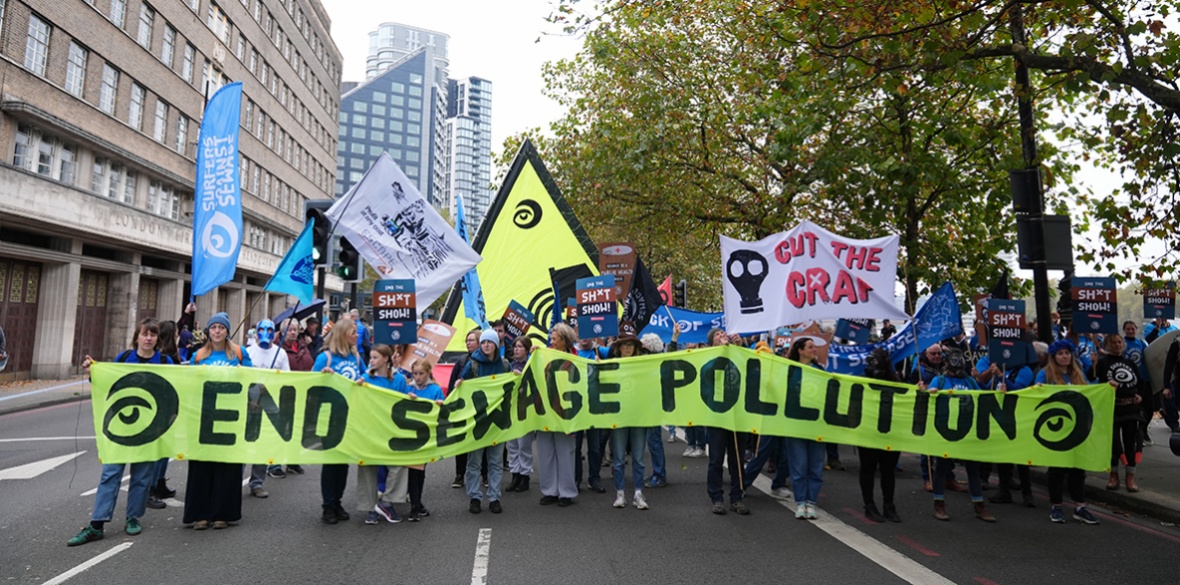
THE River Action campaign has hired a top litigator as it intensifies efforts to hold polluters account and restore Britain’s waterways.
Emma Dearnaley, previously legal director at the Good Law Project, will join the group as its new head of legal in January.
She fought several cases in her former job, including a successful challenge against the Department for Environment Food and Rural Affairs that led to the government expanding the scope of its Storm Overflows Discharge Reduction Plan to include coastal waters.
River Action chief executive James Wallace said: “This is a shot across the bow for polluters and the government alike.
“The law is one of our strongest tools, not only to compel polluters to repair and update their infrastructure but also to compel the government to adequately fund environmental regulators.
“After 14 years of budget cuts, it’s time for the Environment Agency to have the resources to enforce the law against agricultural, sewage and chemical polluters and for Ofwat to stop water companies polluting for profit.”

…
A series of Guardian articles have highlighted the often cruel punishments and harsh financial penalties imposed by the Department for Work and Pensions (DWP) on carers who do part-time paid jobs, causing public outrage and leading to comparisons to the Post Office scandal.
As many as one in five carer’s allowance claimants have been hit by “cliff-edge” punishments for breaching earnings limits, where going just £1 over the weekly limit means having to repay the entire benefit. A carer who earned £1 more than the £151 threshold for 52 weeks would pay back not £52 but £4,258.80.
The latest figures suggest as many as 259 carers have come into scope for legal proceedings since April after unwittingly building up large overpayments. A key criterion for referring claimants to the Crown Prosecution Service for fraud is that the overpayment sum is more than £5,000.
In two cases since April, carers have been forced to repay more than £20,000, which suggests the DWP failed to spot the allowance earnings breaches for nearly five years, even though in theory it would have been alerted electronically to the infringements early on by HMRC.
Separate figures, obtained under freedom of information laws, show thousands more carers are unknowingly building up large debts because there is an administrative backlog of 29,000 carer’s allowance cases awaiting investigation for possible breaches of earning limits.
The Carers Trust estimates a further 10,000 carers could be caught by the system over the next few months and it has urged ministers to write off any carer’s allowance overpayment charges while the review is under way.
“The review is very welcome but these alarming figures show that the root cause of the problem hasn’t gone away,” said the charity’s director of policy, Dominic Carter. “The flaws with these overpayment demands are well known by now so it is staggering that many carers are still suffering the consequences.”
…
Read the original article at https://www.theguardian.com/society/2024/nov/14/unpaid-carers-risk-prosecution-unwittingly-breaching-benefit-rules-dwp