I’ve had a couple of emails initiated from the Scotsman claiming copyright infringement. They’re wrong and look to be produced by a simple automated routine without human supervision or intervention i.e. a stupid bot. My website host has taken a few pages down as a result and there are threats of further restrictions.
Scotsmen poncing about. Sporran, haggis, gear …
I don’t agree with the Scotsman.
One of them is this
…
Speaking to the Mail on Sunday, Swinney said: “I want the Scottish Government to work closely and carefully with the oil and gas sector to ensure its sustainability.
“We need the oil and gas sector to contribute to the transition to net zero, so it has to be strong enough and robust enough to do that.
“In addition to that, I want to make sure that the sector is able to contribute to the objectives of energy security that we’ve set out in our policy programme.
That’s it, a very small section clearly attributed to it’s source. That’s acceptable use under copyright laws. Stick that in your sporran Scotsman.
Dear Sir/ Madam,
Notice of Copyright Violation (DMCA Takedown Notice) – Formal Notification Pursuant to Section 512(c)(3)(A) of the Digital Millennium Copyright Act
We are writing on behalf of the attached listed publishers (“Publishers”). We understand that you are the host provider for onaquietday.org (“Infringing Website”). A number of articles which belong our Publishers (“Infringing Material”) are being hosted on the Infringing Website. This email is an official notification, pursuant to Section 512(c)(3)(A) of the Digital Millennium Copyright Act (“DMCA”), in which we seek the immediate removal of the Infringing Material your servers.
The Infringing Material is located at the URLs listed below. If there are other URLs that distribute our Publishers’ content, we ask that you apply this notice to those URLs also.
https://onaquietday.org/2024/06/03/swinney-considers-u-turn-on-new-oil-and-gas-licences/
Details of where the original material was hosted is also set out below.
https://www.heraldscotland.com/news/24360504.swinney-considers-u-turn-new-oil-gas-licences/
https://www.scotsman.com/news/opinion/columnists/rishi-sunaks-claim-that-boosting-uk-oil-and-gas-production-will-help-fight-climate-change-does-not-stand-up-to-scrutiny-scotsman-comment-4238637
https://www.scotsman.com/news/opinion/why-labours-ban-on-puberty-blockers-shows-party-abandoning-progressive-principles-4709353
https://www.scotsman.com/news/opinion/columnists/climate-change-rishi-sunak-must-reject-rosebank-oil-field-and-join-the-countries-calling-for-fossil-fuels-to-be-urgently-phased-out-cross-party-group-of-politicians-4231467
NLA Media Access Limited (“NLA”) is a licensing body under section 116(2) of the Copyright Designs and Patents Act 1988, and a Collective Management Organisation (“CMO”) under the Collective Management of Copyright (EU Directive) Regulations 2016.NLA “is authorised by law or by way of assignment, licence or any other contractual arrangement to manage copyright or rights related to copyright on behalf of more than one right holder, for the collective benefit of those right holders, as its sole or main purpose” (see Regulation 2 of Collective Management of Copyright (EU Directive) Regulations 2016/221). For more information about who we are, what we do and who we represent, please visit our website at: https://www.nlamediaaccess.com/. NLA licenses the content of our mandating publishers through copyright licences (which can be found on our website).
We are providing this notice in good faith and with reasonable belief that our Publishers’ rights are being infringed and the hosting of the Content is not authorised by the copyright owner, its agent, or by operation of law. Under the penalty of perjury, we hereby confirm that the information contained in this notification is true and accurate, and that NLA is authorised to act on behalf of the Publishers.
Please be reminded that the law requires you, as a service provider, to “expeditiously remove or disable access to” the Content upon receiving this notice. We would be grateful if you would confirm by return email that you have actioned this takedown request. Alternatively, you may contact us using the contact information set out below.
Our contact information is as follows:
Name: NLA Media Access Limited
Address: M- section omitted -
Contact: - section omitted -, Copyright Infringement Manager
Email address: - section omitted -
Telephone number: - section omitted -
Yours faithfully,
- section omitted -
Copyright Infringement Manager
For and on behalf of NLA Media Access Limited
Copyright Infringement Team
NLA media access | - section omitted -
Registered in England and Wales | Company number 3003569
Switchboard: - section omitted -
www.nlamediaaccess.com
Activists demand an end to U.S. arms transfers to Israel during a May 2, 2024 protest outside the White House in Washington, D.C. (Photo: Amnesty International USA)
“U.S. arms transfers to Israel have fueled unimaginable suffering in Gaza, including staggering levels of civilian harm,” said one embargo advocate.
As the Palestinian death toll from Israel’s 314-day assault on Gaza passed 40,000—a figure experts say is likely a vast undercount—human rights groups this week decried the Biden administration’s approval of $20 billion worth of new weapons for Israel and renewed pleas for Congress to block further arms transfers to the nation on trial for genocide at the World Court.
On Tuesday—just days after Israeli forces used at least one U.S.-supplied bomb in an airstrike on a Gaza City school that killed scores of forcibly displaced Palestinian civilians sheltering there—the Biden administration notified Congress of the pending sale of a new weapons package that includes dozens of F-15 fighter jets, tens of thousands of 120mm mortar shells, over 32,700 tank shells, and 30 Advanced Medium Range Air-to-Air Missiles.
Since October, Congress and the Biden administration have approved more than $14 billion in unconditional military aid to Israel. President Joe Biden has signed off on more than 100 arms transfers to Israel during that period. This, atop the $3.8 billion in annual armed aid the U.S. already gives to the key Middle Eastern ally.
“Israel used U.S.-made weapons in May when it slaughtered Palestinian families sheltering in tent camps in Rafah,” Jewish Voice for Peace (JVP) said Wednesday. “Israel used U.S.-made weapons when it bombed the al-Mutanabbi school in Khan Younis in early July, killing over two dozen displaced Palestinians seeking refuge there. And it used U.S.-made weapons on Saturday to murder over 100 Palestinians while they prayed.”
President Biden's new $20B arms sale to Israel is unthinkable as Palestinians in Gaza remain at risk of genocide. We urge Congress to block the sale and uphold US and international law. The US must immediately suspend all weapons sales and transfers to the Israeli government. pic.twitter.com/vfOghDAE9e
“Biden continues to send weapons to Israel, and both political parties—Republicans and Democrats—have cheered on the Israeli government’s slaughter and genocide of Palestinians in Gaza,” JVP continued. “This is a U.S.-perpetrated genocide as much as it is an Israeli one.”
“But the Democratic voting base is calling for something different, and we have seen the progressive and increasingly mainstream wing of the party begin to echo this need,” the group said. “We are playing a critical role in driving the Democratic Party to finally catch up to the demands of its own base.”
“Right now, we have an opportunity to re-center Gaza in the national conversation and continue building pressure on the Biden administration, on [Vice President] Kamala Harris, and on Democratic members of Congress to support an immediate arms embargo,” JVP added.
While Harris has expressed sympathy for Palestinians suffering what she called a “humanitarian catastrophe” in Gaza, the vice president and Democratic presidential nominee, like Biden, has proclaimed her “unwavering” support for Israel. One aide said last week that Harris does not support an arms embargo.
“The decision to approve yet another massive sale of arms to Israel is appalling and a blatant violation of U.S. and international law and policy,” Annie Shiel, the U.S. advocacy director at the Center for Civilians in Conflict, said on Thursday.
“U.S. arms transfers to Israel have fueled unimaginable suffering in Gaza, including staggering levels of civilian harm, the destruction of civilian infrastructure, and an ever-growing humanitarian catastrophe,” Shiel continued. “The U.S. is complicit in this devastation.”
“Congress must block these sales, including through the introduction of joint resolutions of disapproval,” she added, “and the Biden-Harris administration must finally end U.S. arms transfers and use its leverage to bring about an immediate cease-fire.”
The Biden administration just approved $20 billion in arms sales to Israel – these weapons will kill children in Gaza. US Congress can block these sales – but they’re on recess, and for 10 months have failed to take action to stop arming Israel. #NoRecessForGaza#NotAnotherBombpic.twitter.com/URd7srhJMV
The international anti-poverty NGO ActionAid said Thursday: “We are outraged and heartbroken by the staggering loss of 40,000 lives in Gaza. It is a number that is incomprehensible—every life lost is an individual tragedy.”
“But this is not an inevitable one, it is an ongoing atrocity, and it could have been prevented,” the group continued. “Most governments across the world have refused to do the bare minimum to protect civilian life and it is to our collective shame. We are losing confidence each day in the concept of justice.”
“We reiterate our calls for an immediate cessation of hostilities and urge all governments to meet their obligations under international law and use all available means to take immediate and decisive action to ensure the safety and security of all civilians,” ActionAid said.
“We call for the imposition of sanctions, including travel bans and asset freezes, on Israeli officials linked to alleged violations of international humanitarian law,” the NGO added. “Every day that you choose to avoid this as a reality, this death toll will keep rising until there is nobody left in Gaza alive.”
In addition to the South Africa-led genocide case against Israel at the International Court of Justice, International Criminal Court (ICC) Prosecutor Karim Khan has applied for warrants to arrest Israeli Prime Minister Benjamin Netanyahu and Defense Minister Yoav Gallant, and for three Hamas leaders, at least one of whom has been assassinated by Israeli forces.
The Biden administration and numerous members of Congress have condemned the courts’ pursuit of justice for Israel and its leaders. In June, 42 Democrats joined nearly every Republican in the House of Representatives in passing a bill that would sanction ICC officials over Khan’s application for arrest warrants for Netanyahu and Gallant.
In addition to rights groups, a coalition of journalists, news outlets, and press freedom organizations on Thursday implored the Biden administration to immediately halt arms transfers to Israel.
As the tight 2024 presidential race between Harris and former President Donald Trump, the Republican nominee, heads toward the home stretch, a survey commissioned by the Institute for Middle Eastern Understanding Policy Project and conducted by YouGov revealed this week that Democratic and Independent voters in the key swing states of Arizona, Georgia, and Pennsylvania would be more willing to vote for Harris if she backed an arms embargo on Israel.
Original artticle republished from MIMO under a Creative Commons Attribution-NonCommercial-ShareAlike 4.0 International License.
Ireland’s Prime Minister Simon Harris attends a press conference at Government Buildings in Dublin on April 12, 2024 [PAUL FAITH/AFP via Getty Images]
Ireland’s Prime Minister, on Thursday, said that 40,000 dead in Gaza is a “milestone the world must be ashamed of”, Anadolu Agency reports.
“International diplomacy has failed to protect innocent children, some only days old,” Simon Harris said on X.
He called on Israel to stop the bombings in Gaza and asked Hamas to release the hostages.
In addition to his call for a ceasefire in Gaza, Harris urged the EU to reassess its association agreement with Israel.
Flouting a UN Security Council resolution demanding an immediate ceasefire, Israel has faced international condemnation amid its continued brutal offensive on Gaza since a 7 October, 2023 attack by Hamas.
The Israeli onslaught has since killed over 40,000 people, mostly women and children, and injured over 92,400 others, according to local health authorities.
Over 10 months into the Israeli onslaught, vast tracts of Gaza lie in ruins amid a crippling blockade of food, clean water and medicine.
Israel is accused of genocide at the International Court of Justice, whose latest ruling ordered it to immediately halt its military operation in the southern city of Rafah, where more than 1 million Palestinians had sought refuge from the war before it was invaded on 6 May.
By Amy Westervelt, Drilled, and Geoff Dembicki, DeSmog, with additional reporting by Julianna Merullo and Lyndal Rowlands
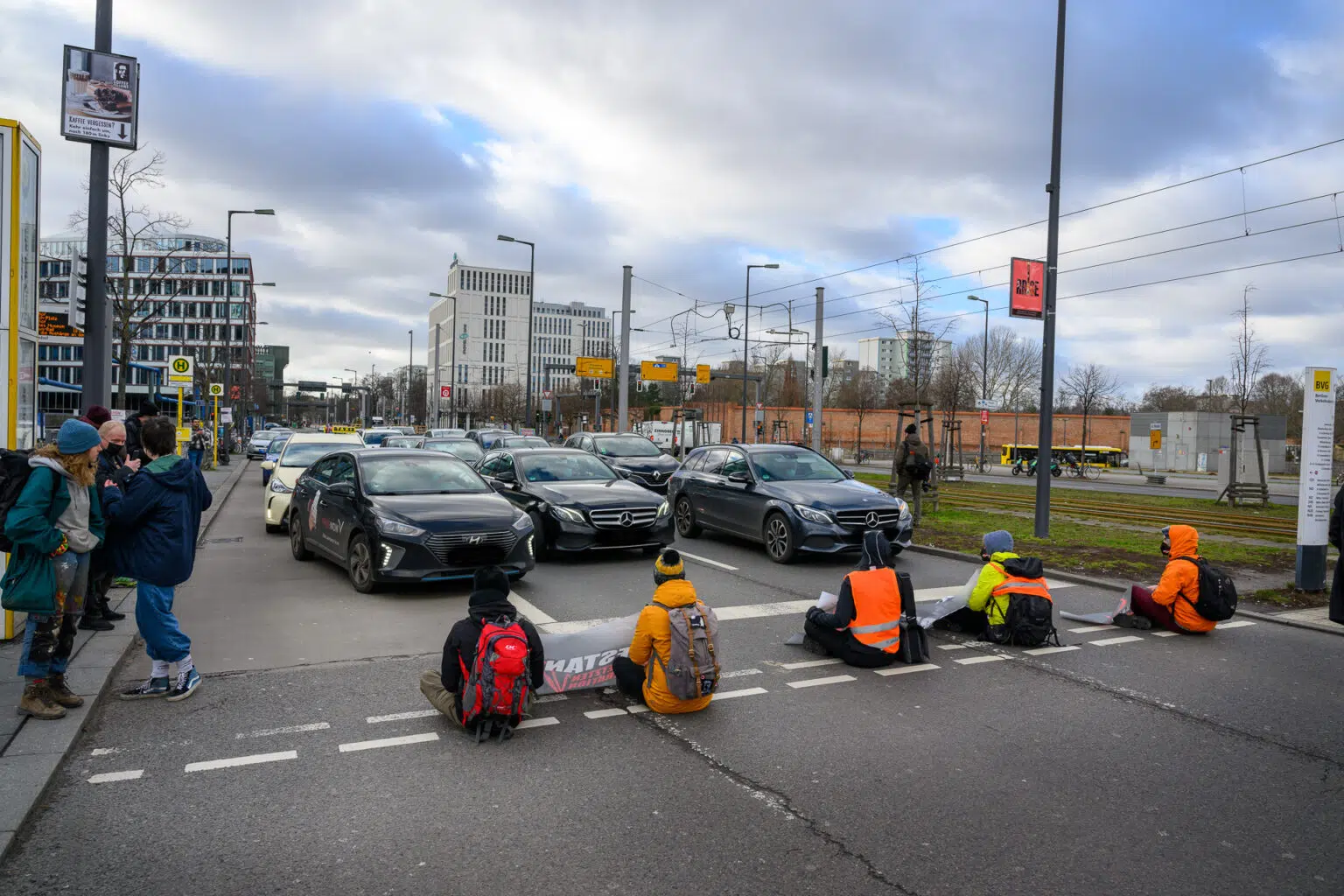
Earlier this year, news footage began making the rounds on social media of young activists from the German climate organization Letzte Generation (Last Generation) being assaulted by their fellow citizens as they obstructed streets in an effort to draw attention to the German government’s inaction on climate. A young woman, with her hand glued to a road was ripped off the road by her hair; a young man was run over by a truck driver; a passerby punched the protestors and was cheered on. A few months later, German police raided the homes of Last Generation activists and seized their bank accounts. It all seemed like a gross overreaction to a pretty tame form of protest. Although Last Generation stands out for its willingness to inconvenience everyday people’s lives to draw awareness to the severity of the climate crisis, the tactic of road blockades is not a new one — it was commonly used by suffragettes, civil rights activists, and anti-war activists in the pasts, and has been used by cycling advocates for decades as well. During the same year that Last Generation was blocking roads in Germany, farmers used the exact same tactic, blocking roads with their tractors to protest a renewable energy policy that they don’t feel provides enough incentives for biogas. Not a single farmer was punched in the face or dragged off the road by their hair. What was making everyone so irate about Last Generation?
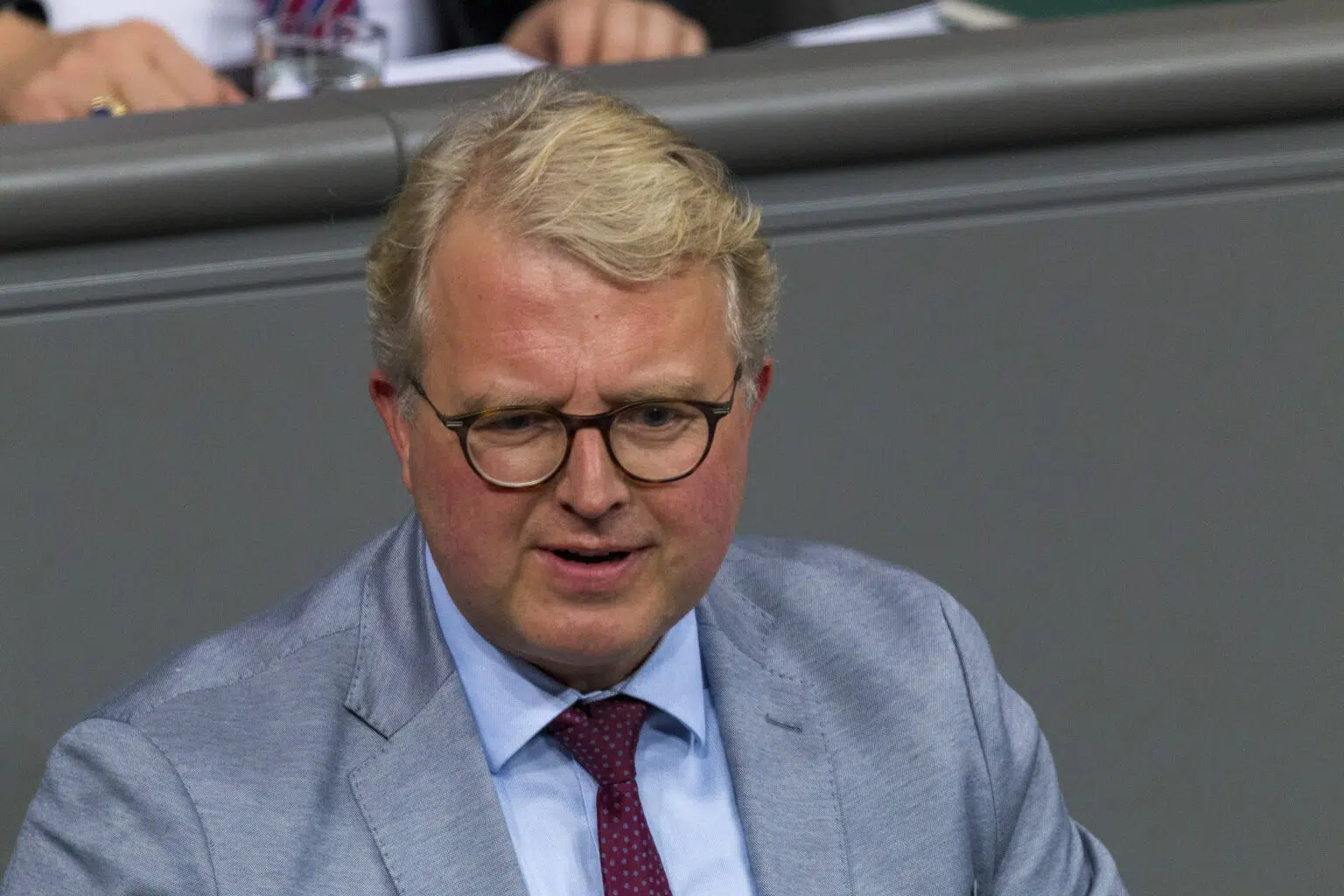
It makes slightly more sense if we go back in time a couple of years and follow how one right-wing politician has been talking about The Last Generation. Frank Schäffler, of the Free Democratic Party, or FDP, is a member of the German parliament, or Bundestag, and is well known for hard-right positions. He came to some prominence several years ago as the leader of a small but loud contingent of German politicians who did not want Germany to bail out other EU countries like Greece during the 2011 debt crisis. More recently he’s been the primary block to a national green building policy that would shift the country away from gas heating in new buildings, using a lot of the same tactics the fossil fuel industry has used to fight against gas bans in the United States: accusing the government of taking away citizens’ freedom of choice, spreading fear that the bill amounts to a “heating ban,” and general anti-regulatory rhetoric. Schäffler has described himself as a “climate skeptic,” and says things like “Climate protection is only possible with [economic] growth.”
Almost as soon as Last Generation began staging protests, in early 2022, Schläffler began describing them as extremists. When they threw mashed potatoes on a Monet in Potsdam, Schäffler took to Twitter to describe the act as “terrorism.” He made a similar statement just a few weeks later, comparing Last Generation to the Red Army Faction (RAF), also known as the Baader-Meinhoff Gang—a leftist group categorized as terrorists by the West German government in the 1970s after they committed multiple kidnappings, bank robberies, bombings, and assassinations, killing more than 30 people. Last Generation, by contrast, are unarmed activists who have committed no acts of violence. Yet Schläffler has continued to call Last Generation terrorists in one way or another; Schläffler also began describing the group as a “criminal organization,” and publicly calling for it to be investigated for organized crime. It’s a lot easier to justify ripping an activist off the road by their hair, or punching them in the face, when a prominent politician is comparing them to violent terrorists, and a major media outlet is repeating that frame, as both conservative publisher Welt and the more mainstream Der Spiegel have done with Schläffler.
Just six months later, in May 2023, German police conducted nationwide raids on Last Generation activists. Police said the raids were the result of an investigation into Last Generation activists for forming “a criminal organization that was fundraising for the purpose of committing further criminal action.” It was almost exactly the response to Last Generation that Schäffler had recommended.
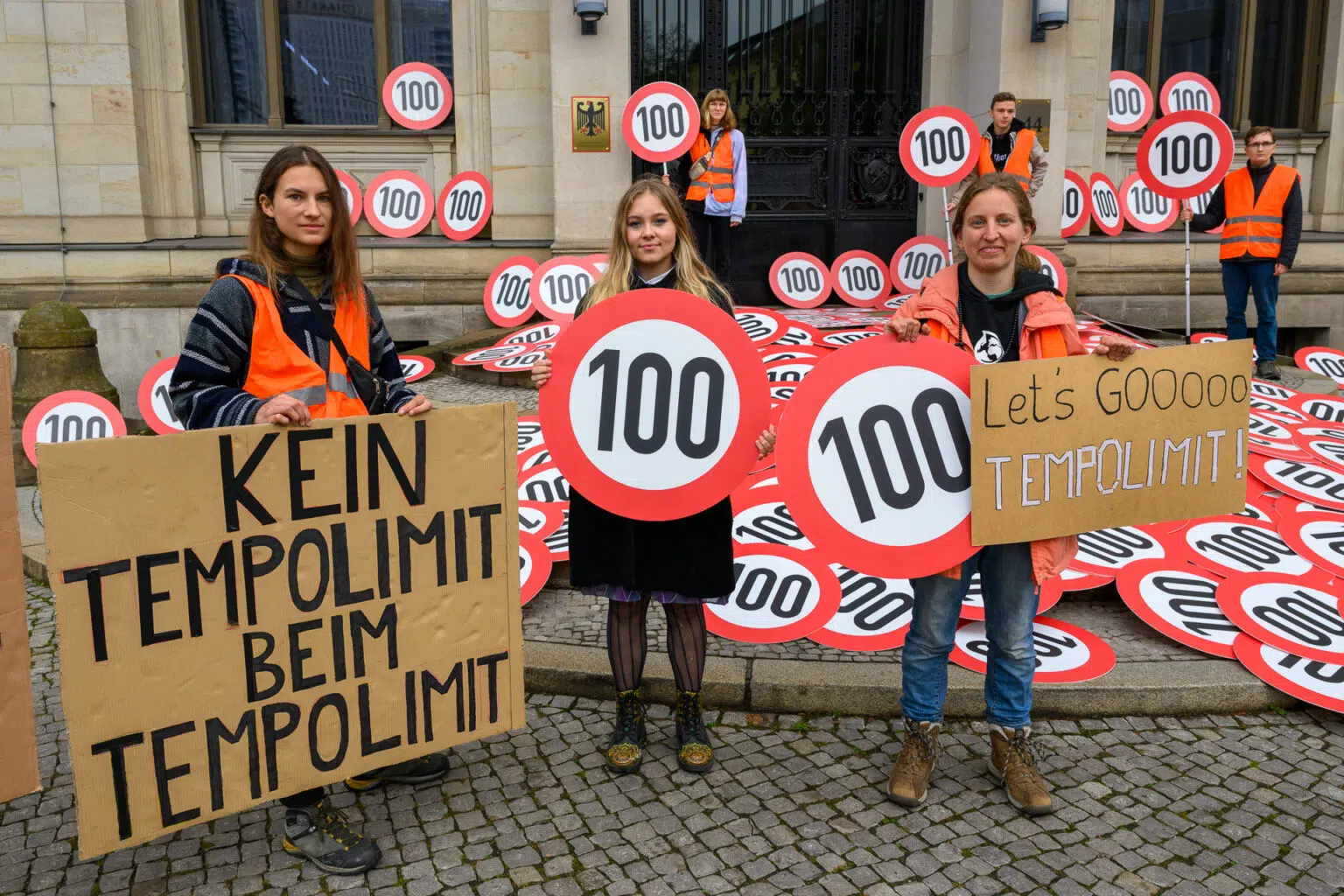
Last Generation Activists at the Ministry of Transport advocate for one of their primary asks: the institution of a 100km speed limit on the Autobahn. Credit: Stefan Müller (CC BY 2.0)
It’s hard to believe that a relatively young politician known primarily for a crusade against Greece that no one really took seriously has had such an outsized role in blocking climate policy and locking up climate activists. And of course, Schäffler is not acting alone. But something important happened between his debt and climate crusades that helps to explain his sudden influence: Schäffler started a think tank — The Prometheus Institute — and he plugged that think tank into a little-known but enormously powerful network called the Atlas Network.
Atlas is a global network of more than 500 member think tanks, advocating for “free market” policies in the majority of democratic countries. Its members are in regular contact with each other, sharing ideas, tips, and strategies. Back in the 1990s, the Atlas Network even bragged about being early adopters of the internet, for the sole purpose of staying regularly connected and sharing ideas. Representatives from member think tanks also meet at events like the annual regional Liberty Forums or the two-day Liberty Forum and Freedom Dinner. Ideas are shared between member think tanks via various publications as well, including the quarterly Freedom’s Champion magazine, a Latin America podcast “Hablemos Libertad,” and various books in both English and Spanish (even a cookbook!).
What’s happened in Germany — public rhetoric vilifying activists, which the media then picks up and amplifies and, ultimately, the criminalization of those activists — is a pattern we’ve seen play out in multiple countries. New research from Drilled and DeSmog reveals that strategy is spreading easily across borders thanks in no small part to the Atlas Network.
The Long Shadow of Thatcherism
To understand the role Atlas Network think tanks are playing today to help frame climate activists as the biggest threat facing society, it helps to understand the network’s history, its long-standing relationship to extractive industry, and its ideological foundation. The Atlas Network describes itself as “a nonprofit that aims to secure the right to economic and personal freedom for all individuals through its global network of think tanks.” But before it was a network it was just one think tank: the Institute of Economic Affairs, or IEA, in the UK, founded by a man named Antony Fisher.
Fisher was born into a wealthy mining family. He went to elite schools — first Eton, then Cambridge — then enlisted in the Royal Air Force during World War II. Legend has it that the experience of watching his brother plummet to his death after his plane was shot down was the impetus for Fisher to fight for a freer and more prosperous world, the idea being that if everyone was better off there would be no need for war. It was a noble idea. In practice, Fisher’s take on freedom was unorthodox, starting with the fact that the primary way he made his own fortune, separate from the family mining money, was by bringing caged chicken farming to the U.K.
Shocked that the British public elected the Labor Party in their first post-war election, Fisher decided he must make sure people voted the right way next time around. He read the Reader’s Digest version of the book Road to Serfdom, by the Austrian economist Friedrich Hayek, which blamed socialism for all of society’s ills, and went to visit Hayek, who was teaching at the time at the London School of Economics. “And Hayek tells him all we need to do is change what the intellectuals think—the teachers, the journalists, these are the people who paved the way for public acceptance of the welfare state, so these are the people we need to target,” says Jeremy Walker, a senior lecturer at the University of Technology Sydney, longtime Atlas Network researcher, and author of the book More Heat Than Life: The Tangled Roots of Ecology, Energy and Economics. Hayek told Fisher to forget about getting into politics and to engage instead in a “war of ideas.”
In 1954, Hayek invited Fisher to join the Mont Pelerin Society, a global group of academics, writers, and thought leaders who met to discuss, debate, and promote neoliberal ideas. The next year, Fisher started the IEA. For the first few years, it didn’t have much success, but then in the early 1960s Fisher landed the think tank’s first big corporate donor: Royal Dutch Shell. Shortly after Shell started to back Fisher, BP came onboard as well, and suddenly the IEA started to have some real impact.
“They would get these professors to write short, digestible articles, often around things like currency conversion or sort of things that were fairly technical to the non-economists,” says Walker. “But then they would have these wealthy donors to the IEA who would buy copies and send them to all the schools and the universities.”
Not disclosing their corporate donors was a key to IEA’s success, too.
“The think tank method allowed corporations to say things that they couldn’t say themselves without appearing to be merely speaking to their own profit motives,” Walker said.
In this way the IEA was able to rapidly spread the sort of free-market ideology that helped elect Margaret Thatcher, and spread her particular form of conservatism.
Meanwhile Fisher took his caged-chicken fortune and used it to start a turtle farming (yes, turtle farming) venture in the Cayman Islands. As the IEA puts it in their history of Fisher, “The turtle farm was poised to be a real winner but the environmentalists persuaded politicians to ban its products.”
Suddenly Fisher had a lot of time on his hands and a lot of people wanted to know how the IEA had managed to push UK politics so far to the right and so quickly. So, he took the show on the road. In 1970, he did a speaking tour in the United States with the Institute for Humane Studies — an organization funded by Charles and David Koch, early on in what would be a decades-long career in massively reshaping American politics for industry’s benefit. In those U.S. talks, Fisher encouraged American businessmen to fight back against the social movements of the 1960s. In 1974, Fisher traveled to Canada, co-founding his first think tank outside of Britain: the Fraser Institute. The same year, the IEA loaned one of its leaders, Nigel Vinson, to rising conservative politician Margaret Thatcher to start a sister think tank, the Centre for Policy Studies in the U.K. Then Fisher was on the road again to Australia, where Rupert Murdoch helped him found the Centre for Independent Studies in 1976. Back in the UK, Fisher co-founded the Adam Smith Institute, another IEA copycat, in 1977. In 1978 he returned to the United States, where he co-founded The Manhattan Institute, and The Pacific Research Institute in 1979, again with help from the Koch Brothers and the extractive industry. By this point, his work with the IEA and the Centre for Policy Studies had succeeded in getting Margaret Thatcher elected. Famed “free market” economist Milton Friedman would later say that “the U-turn in British policy executed by Margaret Thatcher owes more to Fisher than any other individual.”
In 1979, Fisher had the idea of connecting all of these IEA clone organizations he’d started into a network so that they could more easily work with each other and cross-pollinate ideas. He asked Hayek for introductions to his “friends in Houston” — oil executives — for funding. The Atlas Network, which launched in 1981, initially only included the first dozen or so think tanks Fisher had helped to found himself, but quickly expanded to include hundreds of like-minded member organizations, including all of the Koch-affiliated think tanks in the United States (the Cato Institute, the Heartland Institute, the Heritage Foundation, and the American Legislative Exchange Council — some of the most influential forces shaping U.S. conservative politics — are all members).
With access to powerful people came funding from powerful sources. A review of Atlas’s publicly available financials, data from the Conservative Transparency database, and 990 tax forms filed by various foundations reveals that Atlas has received millions of dollars in funding from a number of Koch-funded foundations, the ExxonMobil Foundation, and the Sarah Scaife Foundation, which has a long history of funding climate denial, since its founding. As with the Fraser Institute in Canada, the various Koch-backed think tanks in the United States, and the Centre for Independent Studies in Australia, many of the individual member think tanks that form the Atlas Network are separately funded by foundations affiliated with extractive industries — and, in some cases, supported by donations directly from industry — as well.
At first, Atlas included only the initial dozen or so think tanks Fisher had helped to found himself, but it quickly expanded to include hundreds of like-minded member organizations, including all of the Koch-affiliated think tanks (the Cato Institute, the Heartland Institute, the Heritage Foundation, and the American Legislative Exchange Council are all members). Fisher focused in the early years of the Atlas Network on expanding internationally, particularly in Latin America where oil executives around the world were very concerned about leftist movements. One of the first investments Atlas made was in Venezuela, where it funded the launch of the Center for the Dissemination of Economic Information (CEDICE) in 1984. Decades later, CEDICE was instrumental in ousting Hugo Chavez. Similarly, Atlas set up shop in Brazil in the 1980s, working with various agribusiness groups to push back against the environmental regulations and Indigenous rights proposals being proposed by the Workers Party. Atlas helped to spur the “Free Brazil” movement that ultimately propelled Jair Bolsonaro to the presidency. More recently, at the Atlas Network’s annual regional event, Liberty Forum Latin America, agribusiness influencers and think tank heads spoke about finding a path back to power and stopping the current president, Luiz “Lula” Da Silva, from what they described as a “land invasion”: his campaign promise to protect Indigenous land rights from agribusiness and to transfer private farmland to worker ownership.
In a 1982 memo, Fisher also outlined plans for think tanks in Argentina, India, South Africa and Sri Lanka, noting in each place a local businessman or politician that wanted to start an institute. He went on to co-found many from this list that are still operating today.
Alejandro Chafuen, an Argentinean-American businessman who took over the Atlas Network presidency in 1991 and remained in charge until 2018, once described the Atlas Network’s audience in one word: elites.
“To answer the question ‘Who is the real customer of a think tank?’” he said, ”I will refer to the often ignored passage of Ludwig Von Mises, in his book Bureaucracy. In it he describes a type of person – elite – who I believe is not only the real customer of Atlas and many think tanks, but also our ideal customer, who benefits us and is served by us.”
Activists as Terrorists
From Fisher in the 1970s to Frank Schäffler in 2022, Atlas Network executives and member think tanks have always painted environmentalists and the regulations they seek to place on polluting industries as a cancerous growth on society. According to Chafuen’s online biography of the Atlas Network, The Pacific Research Institute was started in California in 1979 specifically to focus on environmental issues. “Fisher and Jim North were ready to launch a research center that would have an important focus on environmental topics,” he writes. “They recruited David Theroux who had an outstanding career developing academic programs in the early years of Cato.” Chafuen goes on to describe the dinner parties that Fisher and early PRI staff would have with Fisher’s neighbor and friend, famed “free market” economist, Milton Friedman.
This kind of rhetoric is exactly what we see today in countries moving swiftly to criminalize environmental and climate protest. While of course industries and governments around the world had plenty of their own reasons for categorizing environmentalists and animal rights activists as extremists and terrorists, Atlas Network think tanks have capitalized on that framing for decades. In recent years, they’ve packaged it in ways that could be turned into anti-protest legislation.
Schäffler in Germany is only the most recent example. In Guatemala, Fundación para el Desarrollo de Guatemala (FUNDESA) has spent many years decrying the impact that environmentalists and Indigenous rights activists have on “investment” in the country. In response to massive protests against the RENACE and OXEC dams in 2015 and 2016, FUNDESA director Salvador Paiz wrote various pieces about extremist environmentalists, describing environmentalists across Latin America as a “terrorist network”and calling out the leader of the dam protests, Bernardo Caal Xol, in particular as an outside agitator. Xol was sentenced to seven years in prison for his role organizing protests against the dams.
Policy Exchange, a U.K.-based former partner of the Atlas Network, put out a report in 2019 called “Extremist Rebellion,” describing Extinction Rebellion, an organization famous for shutting down parts of London to call for aggressive climate action, as “an extremist organization seeking the breakdown of liberal democracy and the rule of law.” As in Germany, several politicians and conservative media outlets repeated that framing as well (one columnist even echoed Schläffler’s complaint, comparing Just Stop Oil to the Baader-Meinhoff gang) and it wasn’t long before people began cold-cocking Extinction Rebellion and Just Stop Oil activists as they blocked roads or staging other forms of non-violent, disruptive protest.
Four years later, during a speech at Policy Exchange’s annual summer garden party in 2023, UK Prime Minister Rishi Sunak thanked the think tank’s members for “helping us draft” the UK Police, Crime, Sentencing and Courts Act of 2022, according to Politico. The legislation criminalized protest within a newly created ‘buffer zone’ around Parliament, gave police the power to impose noise-based restrictions on protest and to impose restrictions on public assemblies, criminalized one-person protests, criminalized trespass (which affects not only protestors but also the UK’s large Gypsy and Traveller communities), and created the criminal offense of “willful obstruction of the highway,” to curb protests that block roads. In the wake of the law’s passage and several arrests and court cases, Extinction Rebellion announced it would no longer engage in disruptive protest.
This pattern also took place in Canada as a reaction to the Idle No More protests in 2012, a national protest movement led by First Nations activists calling for greater recognition of rights and sovereignty for Indigenous peoples and rejecting tar sands expansion on their traditional territories, and in the United States in the wake of the 2016 and 2017 protests of the Dakota Access Pipeline at the Standing Rock Indian Reservation. A series of papers put out by Atlas member think tank the MacDonald Laurier Institute in 2013 and 2014 paint First Nations activists as potentially violent, cautioning of the havoc these “warrior societies” could wreak on Canada. During a 2017 meeting of the American Legislative Exchange Council (ALEC), which is an Atlas member that connects conservative politicians and corporations, Derrick Morgan, then the VP of Public Affairs for the American Fuel and Petrochemical Manufacturers, described protestors at Standing Rock as “dangerous and destructive.” He claimed that a large number of the activists at Standing Rock had criminal records, and warned that these sorts of protests were becoming more violent.
By the end of 2017, AFPM had drafted legislation criminalizing protest near “critical infrastructure,” the state of Oklahoma had passed it, and ALEC was pushing it to other state lawmakers. Canada took a similar approach, with various provinces passing anti-protest legislation, and the Royal Canadian Mounted Police forming a new police unit — the Community Industry Response Group — to shut down protest camps and arrest protestors.
“The Macdonald-Laurier Institute is an independent and non-partisan think tank,” a spokesperson wrote in response to detailed questions from Drilled. (Neither the Atlas Network nor any of the other member think tanks mentioned in this piece replied to requests for comment.)
“Redwashing”
But MacDonald Laurier also recommended a parallel strategy, urging companies and governments to make First Nations “equity partners” in natural resources projects on their territories, in the hopes that a higher share of revenues would convince some First Nations groups to become vocal supporters of oil and gas projects, a tactic known as “redwashing.”
Now, pipeline companies in Canada loudly declare their support of Indigenous sovereignty while First Nations that protest fossil fuel expansion are arrested by militarized police. Similarly, in Australia, the Centre for Independent Studies — an Atlas member that was founded with grants from Rupert Murdoch, Shell, BHP, and Rio Tinto — has placed various op-eds trying to stoke fear of “Aboriginal Terrorism” related to land defenders and Indigenous land rights more broadly. At the same time CIS has sought out and hired Aboriginal spokespeople that can argue in favor of controversial projects like the Beetaloo Basin fracking project (that old Murdoch connection helps get their stuff onto Sky News all the time, too). The CIS has a whole project geared towards saying that any rights given to Indigenous people are actually welfare that is harming them (this is a longtime talking point amongst Atlas think tanks in the United States as well, especially the Heritage Foundation, the Cato Institute, and Heartland).
Peru’s Instituto Libertad y Democracia, another early Atlas Network member in Latin America, puts its own free market, private property spin on this with a theory pioneered by the think tank’s president, economist Hernando de Soto. De Soto came up with his theory in the wake of a bloody 2009 standoff between police and Indigenous activists, protesting oil and gas drilling in the Amazon as well as other infringements on their land rights. Outlining an approach he eventually branded as the “Avatar Myths Strategy” De Soto argues that Indigenous people aren’t being exploited like in the movie Avatar, that actually the solution is to bring them into the “rule of law” via property rights. Private property will enable Indigenous people to realize value from their land and resources, De Soto argues, which will make them less likely to protest extraction from that land because they will also benefit from it. On its website, the ILD argues that this strategy will help Indigenous people “work within the market and defend their interests — without losing their customs or identity.”
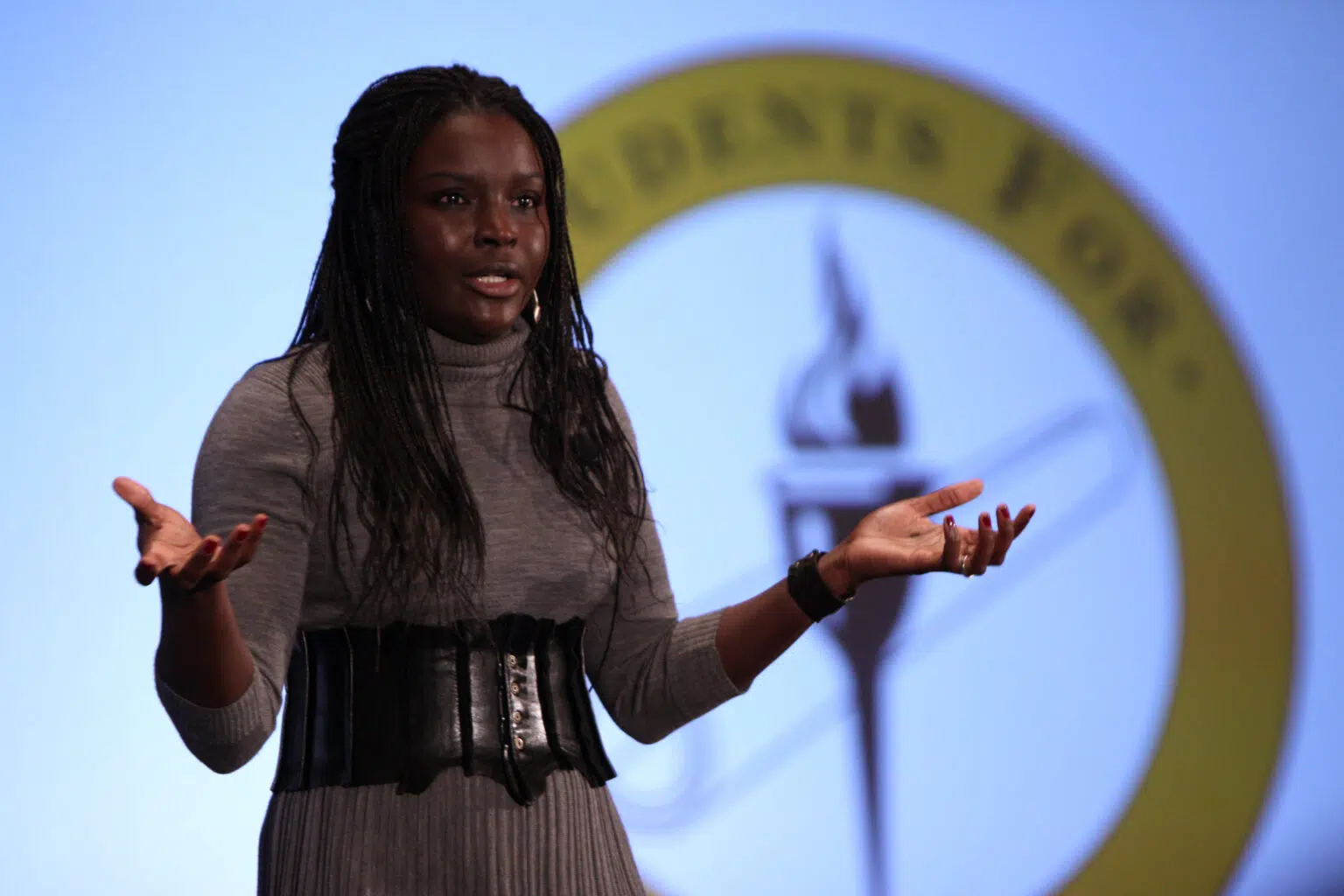
Magatte Wade, head of an internal Atlas project focused on Africa, called the Center for African Prosperity, frequently cites De Soto as an inspiration for her take on Africa and climate change. In multiple op-eds over the past few years, and an interview with Canadian professor Jordan Peterson, Wade, who was born in Senegal but moved to Germany when she was seven, and has lived for several years in Texas, describes climate activists as the new colonialists, arguing that climate action will keep Africans poor and deprive them of access to energy. Wade often depicts those who would deny the continent its current fossil fuel boom as out-of-touch elitists. She likes to tag her thoughts on this subject #BlackLivesMatter, arguing that climate action — which she distills to “turning off all the fossil fuels immediately” — will kill a billion Africans, all while refusing to engage with the fact that African climate activists are being arrested at an alarming rate.
Magatte Wade speaking at the (Atlas member) Students for Liberty conference in 2013. Photo credit: Gage Skidmore (CC BY-SA 2.0)
Wade promotes free market capitalism as the only way out of poverty for Africa, and parrots decades worth of Atlas talking points about the dangers of regulation on business. As the head of the Center for African Prosperity, she brings leaders from other Africa-based Atlas think tanks together to further amplify these talking points on webinars and in their own op-eds. These arguments, of course, fly in the face of what economists have been saying for at least the past decade about the impact fossil fuel development has on developing economies and how to address energy access without exacerbating the climate impacts that are also felt first and worst by Global South communities. “Eradicating persistent poverty and mitigating climate are both extremely important, pressing priorities for the Global South,” says Narasimha Rao, Ph.D., who leads the Decent Living Energy project at Yale. “And it’s well understood that climate change is a threat multiplier for people. It exacerbates poverty.”
The key, according to Rao and a growing number of economists, is to find ways to eradicate poverty without significantly increasing emissions — which could include fossil fuels (gas in particular) in the short term, but shouldn’t lock them in. As for oil majors undertaking massive new projects in Africa? They’re certainly good for oil company profits, but “it’s questionable to what extent those are going to eradicate poverty,” Rao says. It’s questionable whether they’ll address energy access either. Nigeria, for example, which has been partnering with oil majors for longer than most countries on the continent, has the lowest energy access rate in the world, with nearly one in two people lacking access to power.
Those Damn Kids
The youth climate movement that kicked off with school strikes in the wake of the 2018 report from the Intergovernmental Panel on Climate Change, warning that governments had about 12 years to implement aggressive decarbonization policies if they wanted to avoid the worst impacts of climate change, sparked a whole new wave of anti-climate-protest campaigns from Atlas Network think tanks. Internal BP marketing documents leaked to Drilled in 2020 revealed just how caught off guard the industry was by the youth climate movement. The biggest threat? The movement’s authenticity. And so, an army of think tanks, many of them funded by the industry, turned to the media, social media, and any other platform they could access to mock, criticize, or fearmonger about the activists.
In Sweden, where Greta Thunberg founded Fridays for Future, a youth climate group that went on strike each Friday to demand climate action, the Atlas think tank Timbro and its research arm Ratio began branding climate activists as “climate populists,” comparing youth climate activists to Nazis, and warning that their doom and alarmism will make them likely to turn to extreme tactics.
In Australia, Atlas members took to the media en masse to protest the young protesters. The Australian Taxpayers Alliance — which usually sticks to, unsurprisingly, issues around taxes — got a young intern to go on Sky News and sneer about how climate strikers should stay in school. The Centre for Independent Studies worried in a blog post that literacy was taking a backseat to activism in Australian schools. The Institute for Progress suggested teachers take the opportunity to inform the students who weren’t striking that “our world would collapse without fossil fuels.”
Yet another Atlas think tank, the Institute of Public Affairs, regularly sends its researchers on Australian Sky News to talk about how climate extremism is ruining the country’s children. “Everything from the minute they get up in the morning to the minute they go to bed is all about worrying about the fact that we’re going to have an apocalypse,” IPA researcher Bella D’Abrera said in one segment. In another, she mockingly called Greta Thunberg a “saint” before going on to describe climate activism as child abuse. “Very surprising that Saint Greta is appearing on the front of the legal studies textbook,” she said. “…you know, the climate change marches, the, sort of the terror there. That they’re filling children with, which is, um, which is akin to sort of child abuse.”
Multiple high-level Australian politicians also have various ties to Atlas Network think tanks, both in Australia and throughout the world. In 2020, at the height of the Australian bushfires, former prime minister Tony Abbott, made an appearance at the Heritage Foundation to complain about climate activists. “If you think climate change is the most important thing, everything can be turned to proof,” he said. “I think that to many, it has almost a religious aspect to it.”
In 2019, as a response to protests against the expansion of coal in Australia, the Queensland government passed the first anti-protest law in the country explicitly citing environmental protestors as the target, the “Dangerous Attachment Devices” law. It described the various types of chains, glue, and locks activists had been using to attach themselves to mining equipment, roads and bridges as dangerous to both first responders and the activists themselves, although the government never provided any evidence that was actually the case. In its public comment in support of the law the Queensland Resources Council, a local industry group, argued that the law — which not only establishes fines and jail time for activists caught with these devices, but also enables police to stop and search anyone suspected of carrying one of these devices without a warrant — didn’t go far enough. They suggested adding a penalty long suggested by another Atlas think tank, the Institute for Progress: stripping the charity status of any organization involved in the protests.
In the three years since that first law was passed, nearly all of the country’s states have passed legislation criminalizing protest.
Winning the Rhetorical War
The neat trick of Atlas members’ rhetorical warfare against environmentalists for so many years is that it’s not just about preaching to the choir. On the contrary, it has convinced even those who agree with the protestors that they are being too “radical,” too disruptive.
The media has mostly gone along with this framing as well. According to a new study from Media Matters, MSNBC was the only major news network in the United States to mention the criminalization of climate protests, airing a single segment since the trend began in the wake of the Standing Rock protests in 2017. When they do cover climate protest, mainstream outlets have tended toward stories that discuss whether or not it’s “appropriate” to throw tomato soup at the display case of a famous painting or glue oneself to a road, and whether these tactics endear climate activists to the public or not, than on what the protestors are actually trying to accomplish. Media Matters’ analysis found that less than half of U.S. media stories on climate protest included anything about the scientific basis for climate change or the political stalemate driving the surge in protests. Meanwhile, the study found that Fox News has run four times the combined coverage of its competitors CNN (27 segments) and MSNBC (9 segments), and all of the network’s 144 segments on the topic have painted climate protestors as dangerous radicals. “The lack of coverage from mainstream outlets has created a vacuum that Fox News has rushed to fill with biased coverage that vilifies the climate activists,” Evlondo Cooper, the study’s author, said.
Social scientists who study movements and social change have largely been confused by how much questions over the “civility” of climate protestors’ tactics have dominated the discourse around climate protest. “There really hasn’t been much destruction of property, the climate movement’s tactics have been very tame so far,” says Dana Fisher, who heads up the Center for Environment, Community, & Equity, and has been researching protest in general and climate protest in particular for years.
The fixation on whether or not climate activists are “radical” makes a lot more sense in the context of the Atlas Network’s history. “It’s this method that you see over and over again over the years,” Walker, the Atlas researcher, says. “They’ll throw something out into the public sphere, which will get a little bit of press, and then before you know it, a new law has been written, possibly by one of them. And now you have the criminalization of what was previously seen as legitimate civil protest.”
CORRECTION (06/18/24): The original version of this article stated that Policy Exchange was a partner organization of Atlas Network. It has not been a partner since 2016.
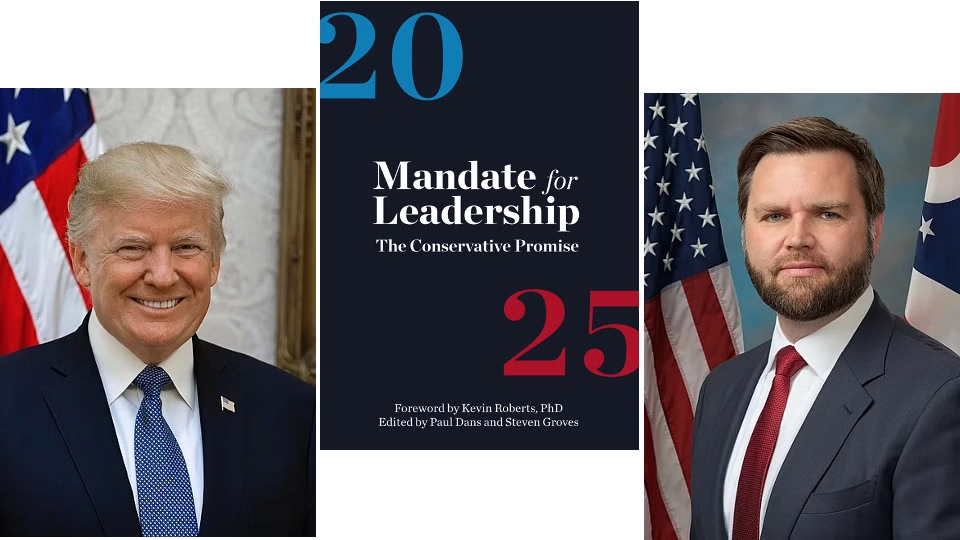
More than 100 nonprofits led by the Heritage Foundation, which have close ties to Donald Trump and JD Vance, have signed on as advisors to the Project 2025 “Mandate for Leadership” document. Design: DeSmog
More than $120 million from a few ultra-wealthy families has powered the Heritage Foundation and other groups that created the plan to remake American government.
Since 2020, donor networks linked to just six family fortunes have funneled more than $120 million into Project 2025 advisory groups, a DeSmog analysis has found.
More than 100 nonprofits led by the Heritage Foundation, a right-wing think tank that has engaged in climate change denial and obstruction for decades, have signed on as advisors to the Project 2025’s 900-page “Mandate for Leadership” document — a plan to rapidly “reform,” or radically alter, the U.S. government by shuttering bureaus and offices, overturning regulations, and replacing thousands of public sector employees with hand-picked political allies.
In its official Project 2025 materials, Heritage Foundation leadership repeatedly draws attention to the size and diversity of its advisory board, suggesting that its numerous “coalition partners” are part of a broad, “movement-wide effort” representing a variety of independent viewpoints.
“Project 2025 is unparalleled in the history of the conservative movement—both in its size and scope but also for organizing [so many] different groups under a single banner,” the organization wrote in an October 2023 press release.
But an analysis of financial disclosure forms shows the same small group of donors supporting Project 2025’s advisors again and again — hardly a sign of ideological diversity. Of the 110 nonprofits formally supporting Project 2025, almost 50 received major donations from the same six sources of wealth since 2020.
Many of the organizations the six families funded also have close ties to Donald Trump and his running mate, Ohio Senator JD Vance, DeSmog found. Trump has repeatedly denied involvement in or knowledge of Project 2025, though that position conflicts with a growing number of news reports — a disavowal made more awkward by the fact that Vance wrote the forward to Dawn’s Early Light, a forthcoming book by Heritage Foundation president Kevin D. Roberts that describes his Project 2025 vision. DeSmog’s review of Project 2025’s financial backers found additional links to Trump, Vance, and key figures in their orbit that had not been previously known.
These six donor networks, linked to the family fortunes of a handful of wealthy industrialists, have spent years working to loosen environmental regulations and promote climate change denial. Though Heritage describes Project 2025 as a mainstream effort to “return government to the people,” its funding sources suggest something far less populist: a vehicle for the obsessions of ultra-rich donors on the far-right fringe, pushing an agenda to reshape American democracy and overturn regulations needed to maintain a livable climate.
Representatives from the six donor networks did not respond to DeSmog’s outreach on this story. The Heritage Foundation did not reply to a request for comment.
The Coors Family At least $2.7 million to Project 2025 groups since 2020
In 1972, Joseph Coors, grandson of Coors Brewing Company founder Adolph Coors, kick-started the Heritage Foundation with an initial gift of $250,000. For years, he supported the conservative think tank’s growth, ultimately funneling his funds through the Adolph Coors Foundation, the nonprofit he started with his brother Bill in 1976.
“There wouldn’t be a Heritage Foundation without Joe Coors,” former Heritage president Edwin J. Feulner wrote in a 2003 tribute.
Joseph Coors meets with Ronald Reagan in 1981. Credit: Wikipedia
The tradition continues today, with billionaire Peter H. Coors — retired beer magnate and Adolph’s great-grandson — at the helm. The Adolph Coors Foundation funded 22 Project 2025 advisory groups between 2020 and 2023, including $300,000 to the Heritage Foundation. Vance has been connected to Heritage since at least 2017, when he wrote the forward to that organization’s “Index of Culture and Opportunity” and gave a keynote address at a Heritage event promoting the report.
Of the Project 2025 groups, Coors funded Hillsdale College, which The New Yorker called “the Christian liberal-arts college at the heart of the culture wars,” most heavily, with nearly $900,000 in donations since 2020. Former Heritage staffer James Braid, today Vance’s deputy chief of staff and legislative director, spent 10 months as a James Madison fellow at Hillsdale College in 2021. Braid appeared on camera in a Project 2025 training video recently obtained by ProPublica and Documented. Braid was also an advisor at American Moment, another Project 2025 group.
The Coors Foundation gave an additional $5.9 million to DonorsTrust, a not-for-profit that describes itself as a philanthropic partner for conservative and libertarian donors — and that gives hundreds of millions of dollars to conservative causes annually, including to numerous Project 2025 advisors, as well as other organizations that downplay or deny the science and urgency of climate change.
Charles G. Koch At least $9.6 million to Project 2025 groups since 2020
In terms of raw numbers, Charles Koch — the CEO and chairman of Koch Industries, a sprawling conglomerate with an oil refinery focus — isn’t the biggest donor to Project 2025 groups in the past few years. But his support for the vast fundraising apparatus that powers conservative charities, including dozens of the initiative’s coalition partners, goes back decades, and his influence can’t be underestimated. A review of public financial disclosures by Greenpeace found that the network of charitable foundations linked to Koch and his late brother, David Koch, donated more than $165 million to climate-change-denying groups between 1986 and 2018. That includes more than $23 million to 16 nonprofits that Project 2025 lists among its advisors.
Throughout the 1990s, Koch Industries was also a “vital supporter” of the American Legislative Exchange Council (ALEC), a Project 2025 advisor. A membership group that connects more than 2,000 state legislators to over 300 corporations and private foundations, ALEC calls itself “a forum for stakeholders to exchange ideas”; New Yorker investigative journalist Jane Mayer, in her book Dark Money, describes it as an enormously successful effort “aimed at waging conservative fights in every state legislature in the country.” Foundations linked to Charles G. Koch donated more than $1.2 million to ALEC since 2020, Desmog’s review found, mostly through his Stand Together Trust.
Koch’s largest donations to Project 2025 groups since 2020 included $3.8 million to the Texas Public Policy Foundation (TPPF), a climate-change-denying nonprofit with close links to both the Heritage Foundation and the Trump administration. In 2018, Trump tapped Brooke Rollins, TPPF’s CEO since 2003, for a post at the Office of American Innovation; in 2020, he named her to lead his administration’s domestic policy strategy. By 2019, there were so many connection points between TPPF and the Trump administration that Politico’s E & E News wrote a story about it.
Rollins was succeeded at TPPF by Kevin Roberts, who had been promoted to CEO by 2021, when he left to become president of The Heritage Foundation. Koch-linked nonprofits also donated $845,000 to Heritage since 2020.
Richard and Elizabeth Uihlein At least $13 million to Project 2025 groups since 2020
The Uihleins are co-founders of Uline, a company that sells shipping and packing supplies — including its ubiquitous brand of cardboard boxes — and other bulk business goods. They donate heavily to conservative causes through the Ed Uihlein Foundation, named after Richard’s father, a packaging company entrepreneur whose grandfather was an original founder of the Schlitz beer company.
Among its donations to 13 different Project 2025 groups since 2020, Uihlein’s largest grants went to the Foundation for Government Accountability ($6.6 million), a limited-government think tank that has railed against “the Biden administration’s radical climate agenda,” and the American Cornerstone Institute ($2.5 million), founded by neurosurgeon and former Trump cabinet member Dr. Ben Carson. Carson has called climate change “irrelevant” as recently as 2015.
Outside the nonprofit sphere, the Uihleins are major donors to the Trump campaign. An analysis of Federal Election Commission data showed that the couple donated $10 million to Make America Great Again, Inc., a pro-Trump super PAC, in May 2024.
The Scaife Family At least $21.5 million to Project 2025 groups since 2020
Richard Mellon Scaife died in 2014, but his contribution to conservative causes is still felt today. A billionaire heir to the vast Mellon fortune, which was created thanks to his progenitors’ exploits in oil and aluminum production, banking, and other industries, Scaife provided years of critical financial support to the Heritage Foundation, starting in 1973. A 1999 article in the Washington Post called him the “funding father of the Right.”
Today, two foundations Scaife once controlled — the Sarah Scaife Foundation and the Allegheny Foundation — continue to give heavily to conservative causes, including to numerous organizations involved in climate change denial. DeSmog’s review found that Scaife family foundations gave $4.1 million to the Heritage Foundation since 2022, while also contributing to 22 other Project 2025 advisory groups.
Scaife foundations also donated an additional $1.2 million to the State Policy Network, an ALEC-linked group that supports conservative nonprofits that oppose government regulation, including 25 members of Project 2025’s coalition.
Barre Seid At least $22.4 million to Project 2025 groups since 2020
The enigmatic industrialist Barre Seid primarily built his fortune through his company Tripp Lite, an electronics manufacturer specializing in surge protectors. He is reportedly a major benefactor supporting the Heartland Institute, a Project 2025 advisor organization that The Economist called “the world’s most prominent think tank supporting skepticism about man-made climate change” — a description Heartland approvingly quotes on its website.
In late 2020, Barre donated 100 percent of Tripp Lite’s shares to Marble Freedom Trust, a nonprofit controlled by Federalist Society co-chairman Leonard A. Leo. In early 2021, Leo sold the shares, netting $1.65 billion. The amount is said to be “among the largest — if not the largest — single contributions ever made to a politically focused nonprofit,” according to The New York Times.
Since May 2020, Marble Freedom Trust has donated $100 million to Concord Fund, also known as the Judicial Crisis Network, a Leo-linked nonprofit. In that time, Concord has donated $22.4 million to eight Project 2025 groups, giving most heavily ($11.9 million) to Susan B. Anthony Pro-Life America.
Seid also gave $2 million to Independent Women’s Voice, the sister organization of Independent Women’s Forum, a Project 2025 advisor. During her time as director for the Independent Women’s Forum’s Center for Energy and Conservation, Mandy Gunasekara, a former Trump administration Environmental Protection Agency official, authored Project 2025’s chapter on restructuring the EPA — with recommendations that include “cutting its size and scope” dramatically.
The Bradley Family At least $52.9 million to Project 2025 groups since 2020
The Lynde and Harry Bradley Foundation was originally established in 1942 by brothers Lynde and Harry Bradley, founders of the Allen-Bradley company, which made its fortune manufacturing a wide range of electronic products. Their descendants have continued to financially support the foundation for years to come, including with a reported $200 million gift in 2015.
But it was c, who served as CEO of the foundation between 2002 and 2016, who cemented its reputation as a conservative powerhouse, steering donations to a network of activist organizations like The Heritage Foundation, the Mackinac Center for Public Policy, and the Heartland Institute (all Project 2025 coalition partners). The current chairman is James Arthur “Art” Pope, CEO of the North Carolina grocery chain Variety Wholesalers, a longtime Koch ally.
The Bradley Foundation and a second philanthropic vehicle it supports, the Bradley Impact Fund, donated over $50 million to 29 different Project 2025 advisors since 2020. That’s not including an additional $56 million to DonorsTrust, which a 2013 Mother Jones investigation dubbed, along with its affiliate group Donors Capital Fund, the “dark money ATM” of the U.S. conservative movement. The Bradley Foundation’s Project 2025-linked donations include more than $7.7 million to Turning Point USA, a “powerful ally” of the Trump presidential campaign, which promotes conservative causes on university campuses and is funded in part by the fossil fuel industry. Its single largest donation was $27.1 million in 2022 to Project 2025 advisor Turning Point Legal, founded by former Trump advisor and past president of a coal lobby group Stephen Miller.