Over 1,500 Israeli settlers led by Minister Ben-Gvir, storm Al-Aqsa Mosque

Spread the love

Original article by Aseel Saleh republished from peoples dispatch under a Creative Commons Attribution-ShareAlike 4.0 (CC BY-SA) license.
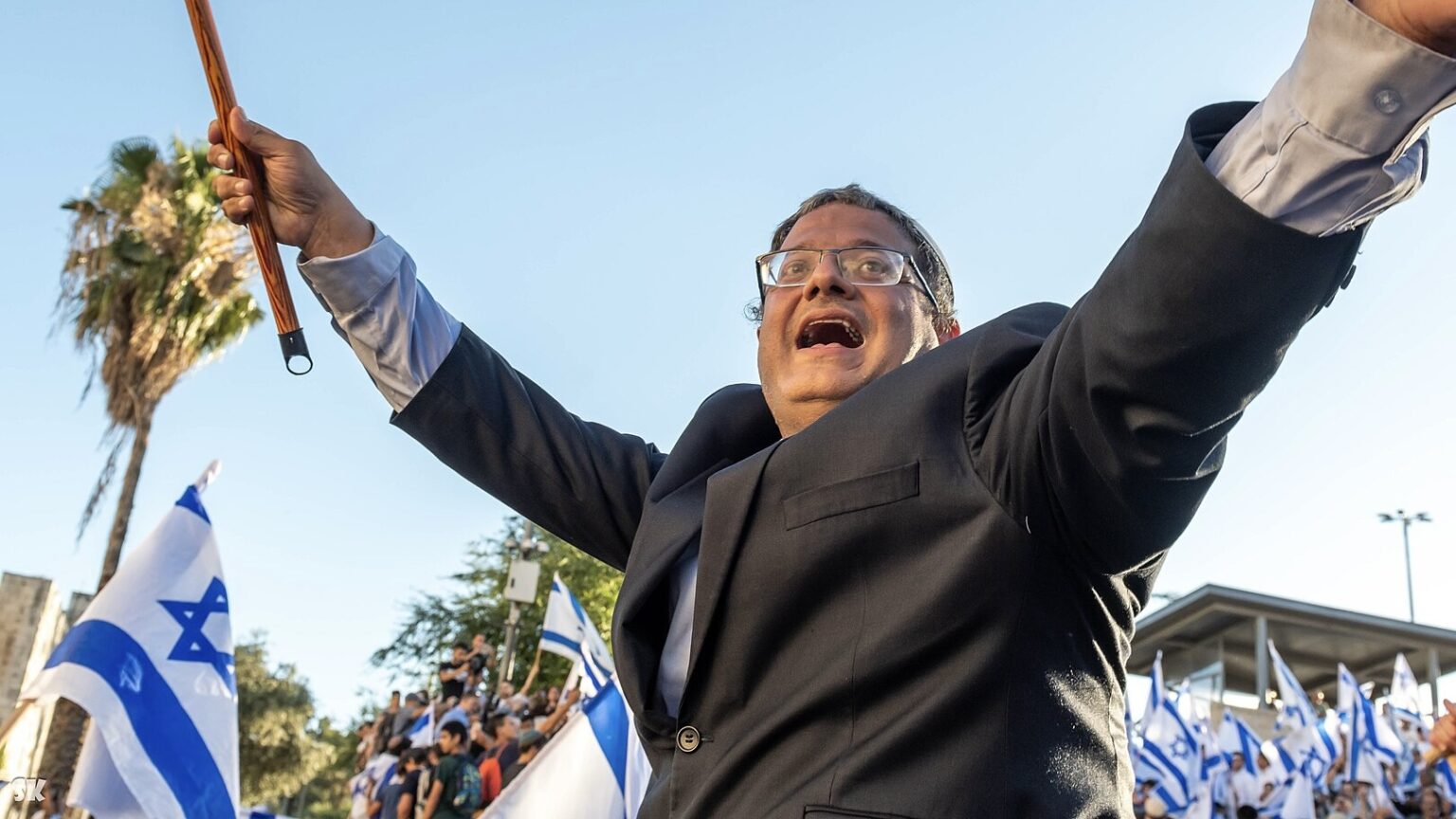
Israeli Minister of National Security Itamar Ben-Gvir. Photo: Wikimedia Commons/ שי קנדלר

Storming the Al-Aqsa Mosque has been one of the Israeli occupation’s provocative policies towards the Palestinian people, exemplifying the fact that the end goal of the Zionist project is incompatible with any semblance of Palestinian sovereignty

In a new assault on sacred places within the occupied Palestinian capital of Al-Quds (Jerusalem), around 1,500 illegal Israeli settlers stormed the Al-Aqsa mosque compound on Tuesday, August 13. The settlers were led by Israeli Minister of National Security Itamar Ben-Gvir , and Minister for the Development of the Periphery, the Negev and the Galilee Yitzhak Wasserlauf. The attack comes as Israel’s genocidal war on Gaza completes 10 months, and Israel’s continuous provocations have put the ceasefire talks in jeopardy.

The assault was not limited to storming the holy site as Jewish rituals were also performed there in commemoration of the Jews’ fast of Tisha B’Av. According to media reports, Palestinian worshipers were prevented from accessing Al-Aqsa compound during the incursion.

As per international conventions and agreements, including the Jordan-Israel Peace Treaty, only Muslims are allowed to pray within Al-Aqsa compound, also known as Al-Haram al-Sharif (the Arabic term for the Noble Sanctuary).

On July 24, Ben-Gvir declared the permission of Jewish prayers in the so-called “Temple Mount”, the Israeli alleged name for Al-Aqsa Mosque compound. Speaking at a  Knesset conference, Ben Gavir stated then: “I was at the Temple Mount last week. I prayed at the Temple Mount and we are praying at the Temple Mount. I am in the political echelon, and the political echelon allows Jewish prayer at the Temple Mount.”

Jordan’s custodianship over Al-Aqsa mosque

In 1924, the Supreme Muslim Council, which was the highest Muslim body in charge of Muslims’ affairs in Mandatory Palestine, decided to assign Al-Hussein Bin Ali, the  grandfather of Jordan’s King Abdullah II, to be the custodian of Al-Aqsa Mosque. The custodianship over Al-Aqsa became a legacy of consecutive Hashemite Jordanian monarchs ever since even after Palestine was occupied by  Zionists in 1948, who then established their colonial state known today as Israel.

In 1994, the Israeli occupation signed a peace treaty with Jordan, which stipulated Israel’s recognition of Jordan’s role as custodian of Christian and Muslim holy sites in Jerusalem. However, Israeli officials, illegal settlers, and armed forces have recurrently committed flagrant violations in Al-Aqsa Mosque compound, despite the treaty.

Jordanian authorities generally issue condemnations against Israeli violations against Al-Aqsa and Muslim worshipers, who perform religious rituals there. Jordan’s last statement was published after the latest episode on Tuesday, August 13.

“The incursion, carried out under the protection of Israeli occupation forces, coincides with provocative actions by Israeli extremists and restrictions on worshippers’ access to the mosque. This act is a blatant violation of international law and the historical and legal status of Jerusalem and its sanctities, reflecting the Israeli government’s disregard for international laws and its obligations as the occupying power,” Jordan’s Ministry of Foreign Affairs and Expatriates said on Tuesday.

The Ministry also reaffirmed that the Jordanian Ministry of Awqaf ( Endowments) and Islamic Affairs is the legal authority responsible for managing all affairs of Al-Haram al-Sharif compound and regulating access to it. Whereas the right of the State of Palestine to sovereignty over occupied Jerusalem was stressed by the Jordanian Ministry, which at the same time assured that Israel, as the occupying power, has no right or sovereignty over the city and its Islamic and Christian sanctities.

Al-Aqsa: a constant trigger point in the struggle against occupation

Al-Aqsa Mosque, in particular, and Al-Quds city in general are national constants that Palestinian have categorically refused to concede along with maintaining Palestinian refugees’ right of return, freeing Palestinian prisoners from Israeli jails, liberating Palestine, and ending the Israeli occupation. Therefore, any violations against Al-Aqsa or attempts to change the status quo have always fueled milestone events within the lengthy struggle of the Palestinian people against the Israeli occupation.

A report issued by the Palestinian Islamic Resistance Movement Hamas in January 2024, clarified that the Israeli assaults against Al-Aqsa were among the major factors that triggered Operation Al-Aqsa Flood in October 2023.

The report which is titled “Our Narrative…Operation Al-Aqsa Flood” explained that the operation was a necessary step, and that it was a natural reaction against Israel’s plans to eliminate the Palestinian cause, seize and/or Judaize Palestinian lands, and impose complete control over Al-Aqsa Mosque and other holy sites.

The year 2000 marked another milestone, when the second Intifada, also named Al-Aqsa Intifada, broke out after then-Israeli opposition leader Ariel Sharon,stormed Al-Aqsa Mosque compound escorted by more than 1,000 heavily armed Israeli police and army personnel.

Sharon’s assault on Al-Aqsa was preceded by other Israeli massacres in the holy site that left scores of Palestinians killed. In 1996, protests erupted across different parts of occupied Palestine after the Israeli occupation authorities opened a tunnel under Al-Aqsa western wall. The Israeli Occupation Forces clashed with protesters leaving 63 Palestinians killed and over 1,600 wounded.

Another bloody massacre took place in 1990, when an Israeli individual attempted to place the cornerstone for a temple inside Al-Aqsa mosque compound. The incident sparked demonstrations by Palestinians within the compound, which were suppressed by Israeli occupation forces’ gunfire, killing 21 Palestinians and wounding over one hundred others.

In 1982, Israeli soldier Harry Goldman stormed Al-Aqsa Mosque, and opened fire at worshipers and guards. Two Palestinians were killed in the incident and 60 others were wounded.

Christians in occupied Palestine, particularly in Jerusalem have also suffered from Israeli oppression and discriminatory acts. The year 2023 witnessed a “notable increase” in attacks against Christians and their property, according to Israeli media reports. Assaults committed by religious Jews on Christian symbols, churches, clergy, nuns, and pilgrims, were documented in videos, circulated widely and condemned by Palestinian Christian clergy and laypersons.

The Zionist entity has adopted an apartheid approach aiming at uprooting Palestinians, dispossessing their land, property, sacred sites, and even their culture and cuisine. However, even after 10 months of Israel’s genocide in Gaza, it is apparent that resistance and resilience have been deeply entrenched in the Palestinian collective perception, and inherently rooted in their conscience.

Original article by Aseel Saleh republished from peoples dispatch under a Creative Commons Attribution-ShareAlike 4.0 (CC BY-SA) license.
Continue ReadingOver 1,500 Israeli settlers led by Minister Ben-Gvir, storm Al-Aqsa Mosque

Palestinians Describe ‘Hell’ in Gaza’s So-Called ‘Humanitarian Zone’

Spread the love

Original article by JULIA CONLEY republished from Common Dreams under Creative Commons (CC BY-NC-ND 3.0). 

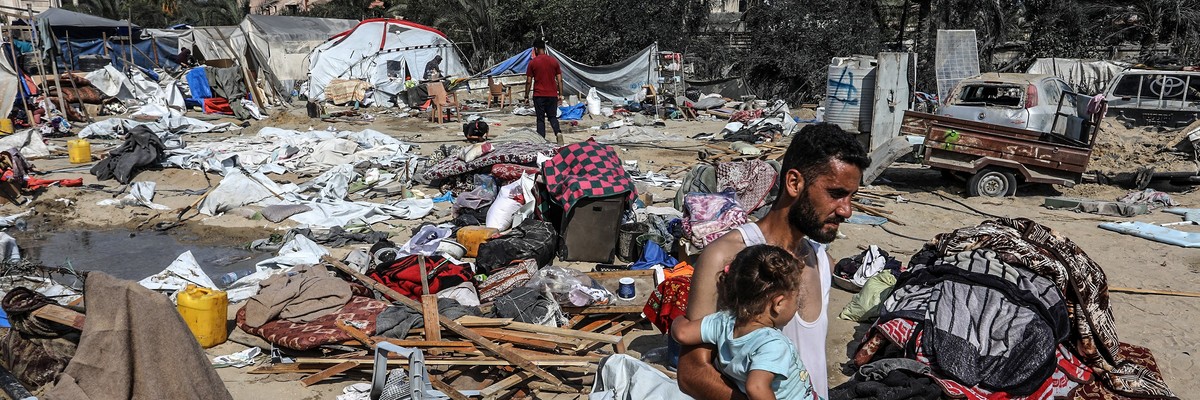
A view of destruction in the al-Mawasi area after an Israeli attack in Khan Younis in the southern Gaza Strip on July 14, 2024. (Photo: Abed Rahim Khatib/Anadolu via Getty Images

“We live in an area that is considered humanitarian and is supposed to be safe, but it is not,” one woman said. “There is no safe place for us or our children.”

Palestinians living in the so-called “humanitarian zone” designated by Israel described extreme and worsening overcrowding on Tuesday, saying that as the Israel Defense Forces has repeatedly struck the area in recent months, displaced people living there have been left feeling they “could die any minute.”

A 37-year-old mother of four, Nisreen Joudeh, told The New York Times that al-Mawasi, a stretch of coastal land to which hundreds of thousands of people from other parts of Gaza have evacuated under Israeli orders, “is no longer a safe area.”

With materials for tents now costing hundreds of dollars instead of an average of $50 as they did before Israel began bombarding Gaza and blocking humanitarian aid last October, families now commonly share the tents that have been erected along the sandy shore area.

“A tent that used to accommodate four to seven people now houses 15 to 17 people from two or more families,” a man named Karel Mohammed told the Times, and overcrowding has intensified in recent weeks as Israel forcibly displaced tens of thousands more Palestinians and ordered them to al-Mawasi.

People face “scorching heat” with very few trees to provide shade, and have access to only “primitive bathrooms,” according to Mohammed.

With Israel continuing to block large amounts of humanitarian aid—actions that United Nations experts last month said have pushed Gaza into famine—Mohammed said there is “no drinkable water, no healthy food” in al-Mawasi.

“The truth is that this area is anything but humanitarian,” said Mohammed. “Our life in these camps is like hell.”

The Times‘ dispatch from al-Mawasi came a day after the United Nations Children’s Fund (UNICEF) reported that the “lack of clean water” and the destruction of Gaza’s sanitation and sewage treatment systems” have caused a surge in diseases including diarrhea and skin disorders across Gaza.

Mona al-Farra, another Palestinian who is sheltering in al-Mawasi in a tent crowded with nine other family members, said skin rashes among children have particularly become rampant due to a lack of clean water and medicine.

“We live in an area that is considered humanitarian and is supposed to be safe, but it is not,” she told the Times, adding that her family frequently hears airstrikes nearby. “There is no safe place for us or our children.”

Last month, at least 90 Palestinians were killed in a bombing within al-Mawasi, which the IDF said had targeted Hamas commander Muhammed Deif.

The so-called humanitarian zone covers 18 square miles, according to the U.N., or nearly 13% of the Gaza Strip. The IDF adjusted the area’s borders last month, shrinking it by about one-fifth.

Doctors Without Borders, also known as Medecins Sans Frontieres (MSF), shared on social media on Monday drawings that had been made by children in a mental health clinic in al-Mawasi, with the artwork exemplifying the “complete psychological destruction” among Gaza’s youngest residents that a report warned of earlier this year.

“Even though the wounds are invisible, the drawings provide a glimpse into what these children have witnessed. It is beyond words,” said Samuel Johann, an emergency coordinator for MSF. “I cannot express what I feel, seeing what these children have experienced, through their eyes and the reality they are facing.”

“Today,” he said, “I heard a Palestinian colleague describe the human suffering of the war as such: ‘Only the dead have been spared this suffering.'”

Original article by JULIA CONLEY republished from Common Dreams under Creative Commons (CC BY-NC-ND 3.0). 

Continue ReadingPalestinians Describe ‘Hell’ in Gaza’s So-Called ‘Humanitarian Zone’

SNP slammed for ‘shameless’ meeting with Israeli diplomat as slaughter of Palestinians continues

Spread the love

https://morningstaronline.co.uk/article/snp-slammed-for-shameless-meeting-with-israeli-diplomat-as-slaughter-of-palestinians-continues

A Palestinian displaced woman by the Israeli air and ground offensive on the Gaza Strip flees from Hamad City, following an evacuation order by the Israeli army to leave parts of the southern area of Khan Younis, August 11, 2024

SCOTTISH Greens slammed the SNP government today for “shameless” and “two-faced” meetings with Israeli diplomats as the slaughter of Palestinians continues.

SNP Cabinet Secretary for Constitution, External Affairs and Culture Angus Robertson reportedly met deputy Israeli ambassador Daniela Grudsky Ekstein last week to discuss “mutual interests.”

Scottish Green MSP Ross Greer hit out at his party’s erstwhile coalition colleagues.

He said: “The Israeli regime is committing genocide in Gaza.

“They cut off water and electricity, restricted the supply of everything from medicines to period products and have slaughtered tens of thousands of innocent people in a 10-month campaign of relentless bombing.

“This is a shameless two-faced approach from the SNP.

“They publicly condemn Israel’s war crimes whilst holding secret meetings with its representatives to discuss so-called ‘mutual interests.’

https://morningstaronline.co.uk/article/snp-slammed-for-shameless-meeting-with-israeli-diplomat-as-slaughter-of-palestinians-continues

Continue ReadingSNP slammed for ‘shameless’ meeting with Israeli diplomat as slaughter of Palestinians continues

Seven charged with terror-linked offences after Palestine Action protest

Spread the love

https://morningstaronline.co.uk/article/seven-charged-terror-linked-offences-after-palestine-action-protest

SEVEN people have been charged with offences linked to terrorism following a Palestine Action protest at an Elbit Systems UK site.

The Israeli-based defence firm’s site near Patchway, south Gloucestershire, was ram-raided on August 6.

Avon and Somerset Police said a group of people forced their way into the building, using a vehicle to smash through the doors, before employees were “seriously assaulted.”

The force said two of its officers who attended the disruption were also “seriously assaulted in the course of their duties.”

The Crown Prosecution Service said it would be submitting to the court that the alleged offences have a “terrorist connection.”

The seven defendants were remanded in custody today, Palestine Action said, adding: “Despite arrests under the Terrorism Act, giving the police the ability to detain without charge for up to 14 days, none of the activists have been charged with terrorism offences.

https://morningstaronline.co.uk/article/seven-charged-terror-linked-offences-after-palestine-action-protest

Continue ReadingSeven charged with terror-linked offences after Palestine Action protest

Fidel Castro: a life of revolution

Spread the love

Original article by Pablo Meriguet republished from peoples dispatch under a Creative Commons Attribution-ShareAlike 4.0 (CC BY-SA) license.

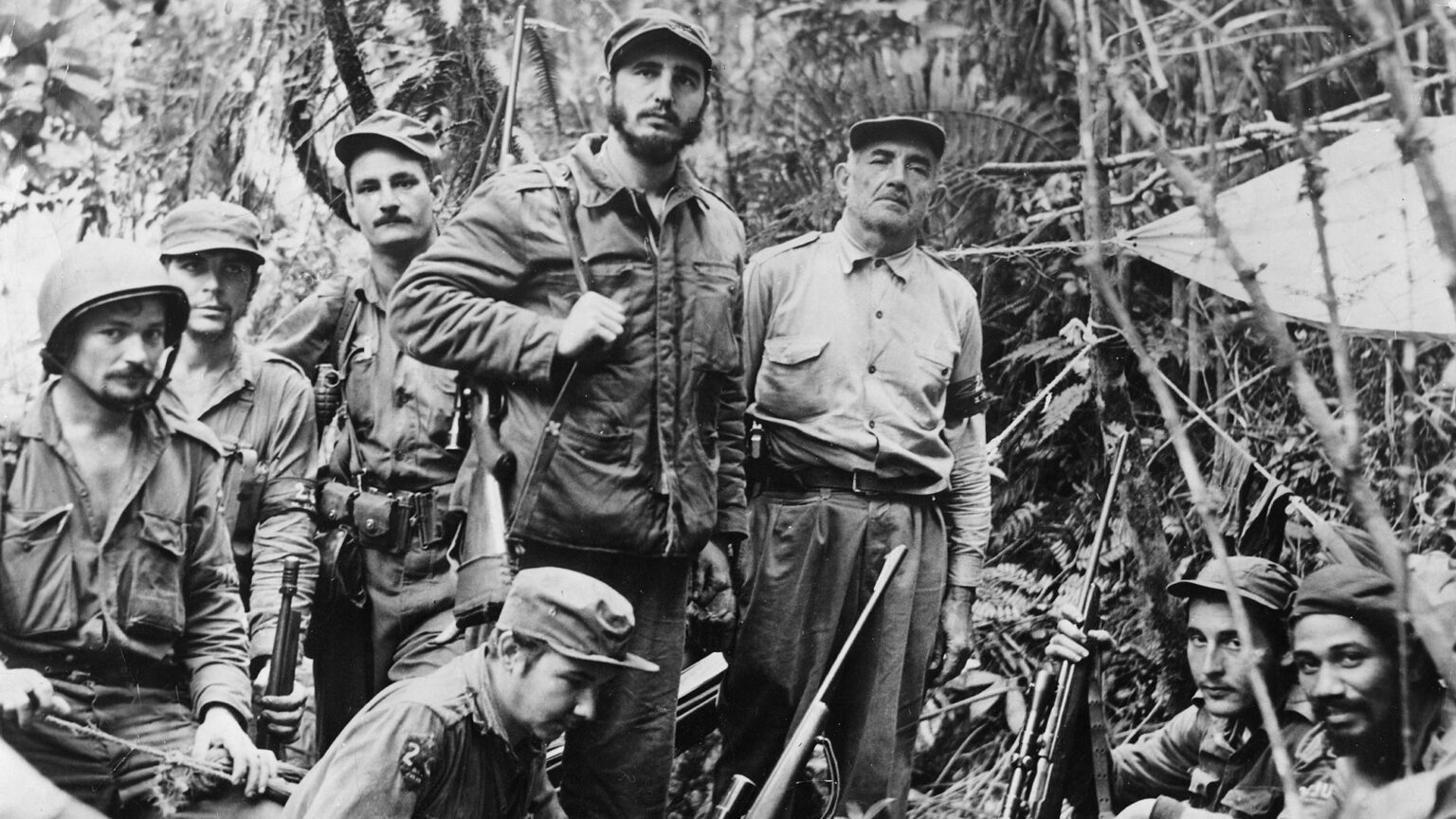
Fidel Castro in the Sierra Maestra with Guillermo García, Ernesto “Che” Guevara, Universo Sánchez, Raúl Castro, Crescentio Pérez, Jorge Sotus, and Juan Almeida. Photo: Wikimedia Commons

August 13 marks the anniversary of the birth of Marxist and communist revolutionary Fidel Castro, one of the most influential political leaders of the 20th century. Read our series of articles about the political life of the revolutionary leader.

Fidel Castro was born in Biran, in the east of the island of Cuba, in 1926, and died in Havana on November 25, 2016. His historical figure however, transcends the time in which he lived. Even when historians study the period in the region before the Cuban Revolution, they always keep in mind that, during the 1950s, on a Caribbean island, social, economic, and political changes would take place that would transform the entire history of the continent.

In this case, Fidel’s name cannot be detached from a process that shook the foundations of the entire Latin American and Caribbean society. Although the “Comandante” himself disavowed the simplification of revolutionary and historical processes to a few names, it seems that human memory prefers to engrave in its memory certain individuals rather than economic forces, cultural disputes, or political ideas. At least this has been the case with Fidel, whose figure is tied to the destiny of a country, just as Bolívar is tied to Venezuela, Juarez to Mexico, and Martí to Cuba.

The young student

Fidel studied at a Jesuit school, and perhaps because of this he always maintained an unyielding intellectual discipline, as well as an almost stoic confidence in the unity of any political group that has clear general objectives. At university, he studied law and social sciences. There he began to read several books on politics while presiding over the Federation of University Students (FEU), a space which he was active in during the struggle against the government of Ramón Grau San Martín, and in which he began to denounce the bloody dictatorship of the infamous Rafael Trujillo in the Dominican Republic.

As president of the FEU, he traveled to Colombia to attend the Inter-American Student Conference and meet personally with Jorge Eliecer Gaitan, the Colombian politician, whose assassination, a few hours before his meeting with the young Fidel, would set off a historical process in Colombian society that began with the famous “Bogotazo”.

Once he finished his university studies, he tried to enter national politics by running for the House of Representatives in 1952, but the disastrous coup d’état of Fulgencio Batista overthrew the government of Carlos Prío Socarrás and prohibited future elections. Fidel tried to denounce Batista before the courts for violating the constitution, but the denunciation was denied. Faced with this adversity, the young Fidel understood that elections and legal denunciations were not an adequate way to engage in political struggle at that time in Cuba.

The beginning of the revolutionary struggle

That is how several young revolutionaries decided to follow the path of armed struggle. On July 26, 1953, they attacked two military bases (the “Moncada” in Santiago de Cuba and the “Carlos Manuel de Céspedes” in Bayamo) which stored thousands of weapons and were located in areas where the people were mostly opposed to the Batista dictatorship. They had hoped that the attack would provoke sympathy among the population and the young military who doubted the dictatorship. But all plans, including the escape plans, failed. More than 80 young revolutionaries were tortured and killed by the repressive forces.

Fidel quickly understood that not every military failure necessarily implies a political failure. In the trial against him, he gave a famous and brilliant self-defense in which he defended two fundamental theses. In the first place, he said that the intellectual author of the attack was named José Martí, implying that the Cuban independence hero, who had died more than 50 years ago, inspired the sovereign ideals of the young revolutionaries. This implied that the revolutionary struggle in Cuba had not ended with Independence from Spain, but continued, thus establishing a political thesis to be followed by the various revolutionary movements in Latin America and the Caribbean during the sixties and seventies of the 20th century: the struggle for independence has not ended because there is still imperialist subjugation. Secondly, he concluded that, although they had been defeated and imprisoned, they were right to act in that way, and that historical time would know how to judge better what at that time seemed a risky adventure of a few young people: “History will absolve me,” Castro said before the judge.

He was imprisoned for almost two years on the Isla de Pinos before being acquitted and banished from Cuba on May 15, 1955. Batista thus hoped to get rid of an uncomfortable political prisoner, although in reality, by doing so, he sentenced himself (in the not-too-distant future) to be defeated militarily and to die in exile in the Spain of fellow dictator Francisco Franco.

After prison, Fidel Castro traveled to the United States and Mexico. In Mexico, he trained (under an ex-combatant of the Spanish Civil War named Alberto Bayo) and organized an expedition of fighters, among them Ernesto “Che” Guevara. The emerging political-military group was called the “26th of July Movement”, in honor of the attack on the military bases. The purpose was clear: to defeat the Batista dictatorship and create a more equitable country. Several months earlier Fidel said in the Palm Garden Hotel in New York City that “In the year 1956 we will be free or we will be martyrs. This struggle began for us on March 10, has lasted almost four years and will end on the last day of the dictatorship or on our last day.”

The Cuban Revolution

Aboard the now revered yacht Granma, a group of 82 expedition members left the coast of Veracruz for Cuba on November 25, 1956. They arrived in Cuba on December 2. Fidel imitated Martí’s military strategy, which consisted of disembarking in the eastern part of the country and approaching the capital from the extreme east of Cuba, passing through the Sierra Maestra, a slight mountain range on the island.

At first, it seemed that the new revolutionary struggle would fail…again. Batista’s army had discovered Castro’s plans and attacked the revolutionary troops with all its might. In Santiago de Cuba, the dictatorship managed to suppress the urban uprising commanded by Frank País, also a member of the Movement 26 of July, in support of the landing of the Granma (which, however, was several days late in arriving). They also quickly discovered the place of arrival of Castro and the rest of the combatants, attacking the guerrillas by air and sea.

After several combats, dispersions, persecutions, and regroupings, only 17 of the 82 original expedition members survived. Despite the obvious adversity, Fidel exclaimed upon meeting with the few survivors: “Now we will win the war!”, which shows a position of historical certainty that Che Guevara would explain years later: “Fidel was certain that, if we left Mexico, we would reach Cuba. If we arrived in Cuba, we would disembark. If we disembarked, we would fight. And if we fight, we will win.

During the coming months, hundreds of new fighters joined Castro’s troops, which were eventually divided into five columns commanded by him, his brother Raul, Camilo Cienfuegos, Che Guevara, and Juan Almeida. However, Batista’s army had more than 70,000 soldiers, so the Movement 26 of July launched a guerrilla war in various parts of the country. Batista launched a military offensive called “Operation Summer”, in which he sent 17 battalions to destroy the Rebel Army, but they were surprised with a series of victories by the revolutionary forces.

Fidel’s popularity began to increase. The Revolutionary Directory, another anti-Batista armed group, attacked the Presidential Palace in Havana to assassinate Batista but were defeated. Despite this, Batista’s invincible image began to be demystified. In addition, the dictatorship increased extrajudicial assassinations and torture against political opponents (the most famous case is the death of Frank País), which eroded the government’s public image. On September 5, the Cienfuegos naval base revolted along with several members of the Movement 26 of July. The government responded to the uprising with a bombing in which more than 400 people died. The majority of the Cuban people repudiated the cruelty with which Batista’s troops acted. The government’s repression only made the revolutionaries more popular.

In addition, after several interviews with international media, Fidel and his followers began to gain support outside Cuba, while denouncing the horrendous crimes of the Batista dictatorship.

During several months of armed struggle, Fidel proved to be the only leader capable of uniting the different factions opposing the dictatorship. The most important political movements recognized that he was the only figure capable of commanding the overthrow of Batista. In addition, Fidel proved to be a very astute military strategist, withdrawing his troops in difficult moments and counter attacking fearlessly when he found the slightest opportunity to gain territory. In this way, he managed to conquer most of the East and Center of the country by the end of 1958. Guevara and his troops managed to take the city of Santa Clara, the last strategic defense of Havana.

Despite the attempt of several military men to carry out an orderly withdrawal of Batista and his troops, Fidel ordered a final attack against the forces of the dictatorship. In this way, Castro sought to curtail the installation of a puppet government and assure the establishment of a truly revolutionary government. “Revolution yes, military coup no!” was Fidel’s phrase repeated by radio throughout the Caribbean island. Batista managed to flee Cuba with the support of US Ambassador Earl T. Smith.

Despite the apparent impossibility of the geopolitical situation, the Cuban Revolution triumphed on January 1, 1959 just to the south of the United States.

Fidel was right: victory was possible in Cuba despite all possible disadvantages. It was a matter of finding the right strategy. The Cuban Revolution inspired dozens of political groups to fight to seize power throughout Latin America and across the Global South, often with Cuban support. Thus began a new era in the history of the Caribbean island, which will never forget the name of Fidel Castro.

Original article by Pablo Meriguet republished from peoples dispatch under a Creative Commons Attribution-ShareAlike 4.0 (CC BY-SA) license.
Continue ReadingFidel Castro: a life of revolution