Black US soldiers fought Nazis and liberated concentration camps—only to be treated like second class citizens back home

Spread the love

Original article by Natalia Marques republished from peoples dispatch under a Creative Commons Attribution-ShareAlike 4.0 (CC BY-SA) license.
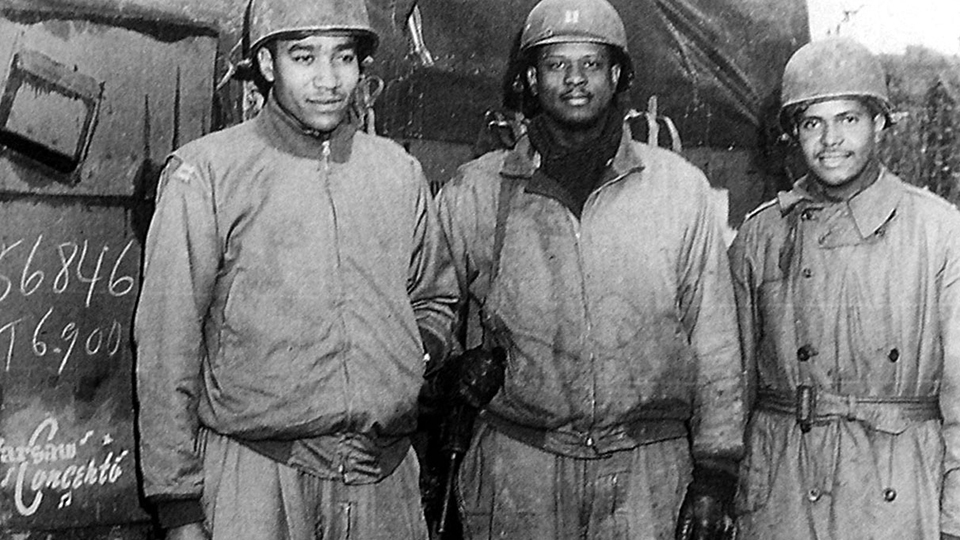
Captain Ivan Harrison, Captain Irvin McHenry, and 2nd Lieutenant James Lightfoot of the 761st Tank Battalion (Photo: US Army)

The US Army’s all-Black unit has gone down in history for heroism and are referred to by some as the “original Black Panthers”

The US Army’s 761st Tank Battalion, the first all-Black tank unit to see combat during World War II, has gone down in history as “one of the most effective tank battalions” during the war, leaving a legacy of fighting Nazis and liberating concentration camps. Yet due to the realities of racism and segregation in the United States, back home, these Black soldiers were treated like second class citizens. With a bold logo of a snarling black Panther emblazoned with the motto “Come Out Fighting,” this all-Black unit is occasionally referred to as the “original Black Panthers.”
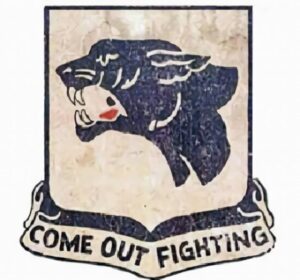
Shoulder sleeve patch of the United States 761st Tank Battalion (Photo: US Military)

Heroism abroad, oppression at home

The US Army did not officially desegregate until President Harry Truman signed an executive order after World War II. The Black soldiers of the 761st Tank Battalion were not allowed to serve in the same units as white soldiers. The Battalion’s soldiers also had to train in installations located throughout the highly segregated US South, in states such as Kentucky, Louisiana, and Texas, still under the shadow of Jim Crow. 

Institutional racism characterized much of the training experience of the 761st Tank Battalion. Training for the men of the 761st lasted for almost two years, yet white units were sent overseas after far less training. As a result, the 761st Tank Battalion, which had been originally created for the purpose of maintaining support within the Black community for the WWII war effort, developed into one of the better trained units in the army and was later celebrated for its heroism. 
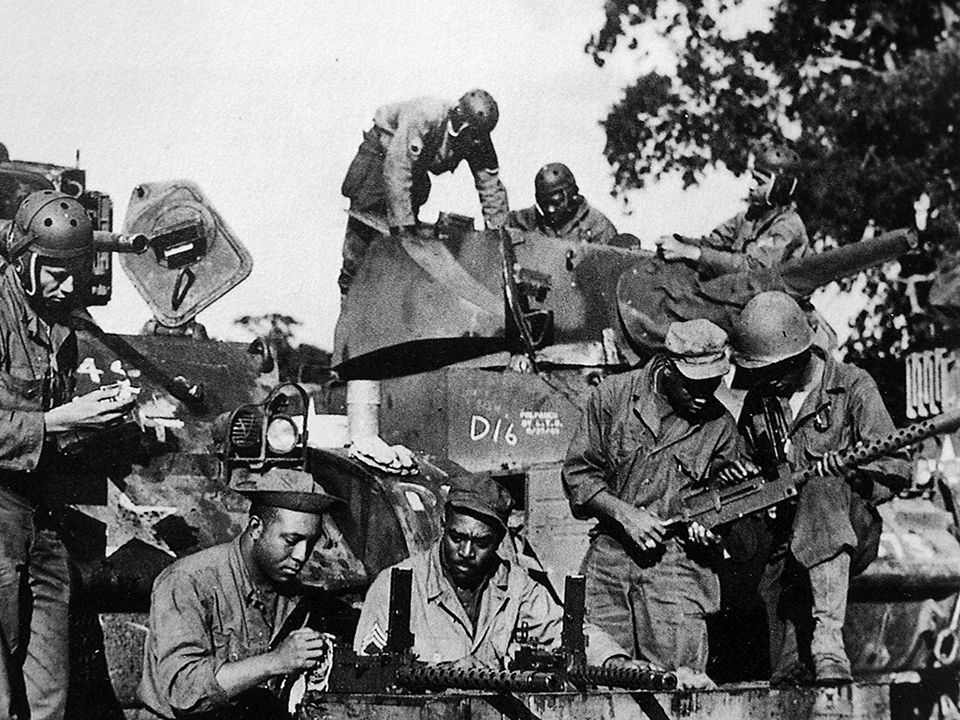
61st Tank Battalion preparing for combat (Photo: US Army)

“This was [US Army General George] Patton’s best tank unit and they didn’t get any recognition because whites did not look upon blacks as having any competence as fighting men,” writes athlete and author Kareem Abdul-Jabbar in his book about the unit, “Brothers in Arms.”

The soldiers of the 761st Battalion were subject to racist violence from their white fellow soldiers. A bloody “race riot” broke out while 761st soldiers were in training in Alexandria, Louisiana, after Black soldiers from Northern states, unused to the violence of the Jim Crow South, reacted to the brutal arrest of a fellow Black soldier by white military police. Soldiers in the 761st were incensed at the racist violence, and went as far as to commandeer six tanks and a half-track, but were eventually persuaded to stand down by their commanding officer, Lieutenant Colonel Paul Bates. 

The most famous member of the 761st Battalion was Jackie Robinson, who would go on to become the first Black player in Major League Baseball, heralding the end of racial segregation in professional baseball in the US. During 761st’s training in Texas, a White bus driver told Robinson to move to sit at the back of the bus, which Robinson refused—a move that resulted in his arrest. Lieutenant Colonel Bates refused to consider the court martial charges against Robinson. Robinson was subsequently transferred to the 758th Tank Battalion, also an all-Black unit.
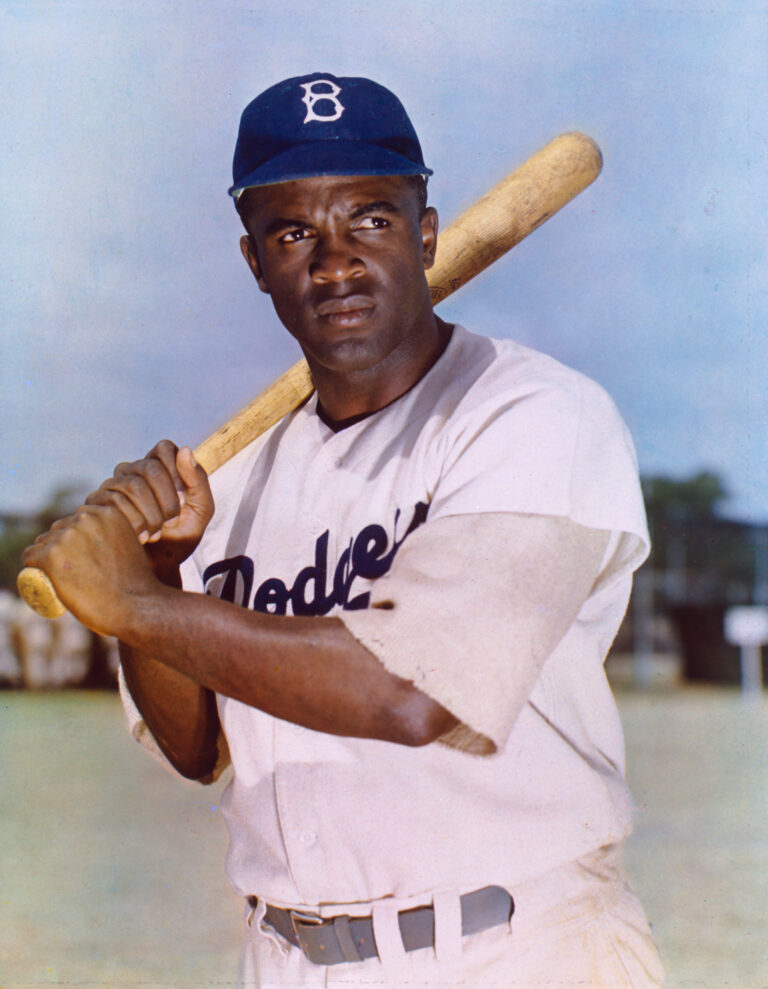
761st Battalion member Jackie Robinson would go on to become the first Black player in Major League Baseball (Photo: National Portrait Gallery, Smithsonian Institution)

761st breaches Nazi defenses

After training for two years in Texas, 761st was finally deemed ready for deployment overseas in 1944. The unit was assigned to General George Patton‘s Third Army. As the unit was about to enter into combat, Patton, himself white, made a speech to bolster their confidence, claiming that “Everyone has their eyes on you and is expecting great things from you. Most of all your race is looking forward to your success.” However, Patton expressed doubts about their abilities to his fellow officers, remarking that “They gave a good first impression, but I have no faith in the inherent fighting ability of the race.”

The 761st would go on to serve in the infamous Battle of the Bulge, the last major German offensive on the Western Front, in which it opened the way for the US 4th Armored Division into Germany, during an action which breached the Nazi German defensive Siegfried Line, rapidly advancing into the Reich. The 761st became one of the first US units to reach Steyr, Austria, which became a meeting point between the Black tank battalion and the Soviet Red Army on May 9, 1945.

Seeing Black soldiers rise out of their tank hatches reportedly put a unique terror into the hearts of the ultra-racist German Nazi soldiers. 

Liberation of Gunskirchen camp

The 761st Tank Battalion, alongside the 71st Infantry Division, liberated the Gunskirchen concentration camp in Austria on May 4, 1945, which Nazi guards had fled days before. Captain J. D. Pletcher, a member of the 71st Infantry, recounted his experience at Gunskirchen, “When the German SS troops guarding the concentration camp at Gunskirchen heard the Americans were coming, they suddenly got busy burying the bodies of their victims—or rather, having them buried by inmates,” Pletcher recounted

“Skin and bone… skin and bone and filthy rags and bodies crawling with vermin… row on row, endless… filling the square. And not a sound. Not one human sound came from those thousands of throats. Perhaps they hadn’t the strength to speak, even in gratitude. Perhaps words of thanks were long forgotten… forgotten under the lash and the pistol-butt, the abysmal degradation.”
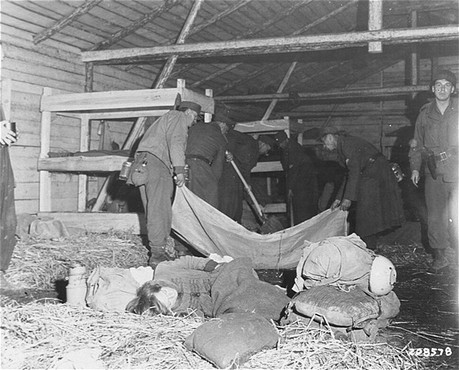
Medical corpsmen of the US 71st Infantry Division look on as captured German soldiers remove bodies from inside a barracks in the liberated Gunskirchen concentration camp (Photo: National Archives and Records Administration, College Park, MD)

It was only on January 24 1978 that the 761st Tank Battalion was awarded the Presidential Unit Citation by then-President Jimmy Carter for their service during World War II. Many individual members of the battalion also received individual accolades, including one Medal of Honor, eleven Silver Stars and around 300 Purple Hearts. 
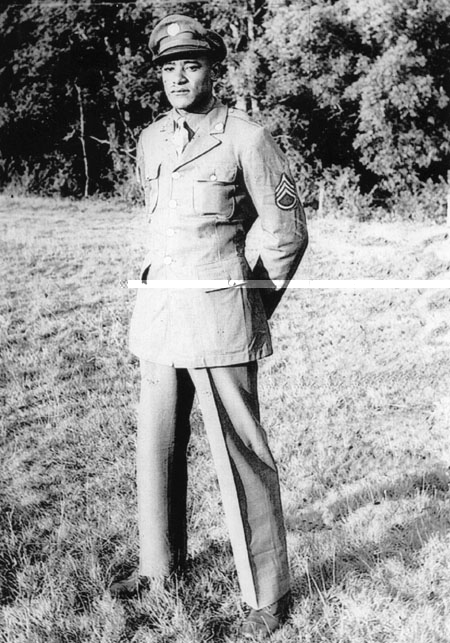
761st Tank Battalion staff sergeant Ruben Rivers was posthumously awarded the Medal of Honor, the nation’s highest military decoration for valor, his actions on November 16–19, 1944 in France, during which he was killed in combat.

The 761st Tank Battalion was historic, as a Black unit striking fear into the hearts of Nazis and liberating victims of the most extreme forms of fascist violence. And yet, the stories of the soldiers’ training period and their challenges of being recognized for their bravery after the war are yet another example of the deep legacy of racism in the United States itself. Recounting the unique story of the 761st becomes even more crucial when marking Black History Month this February, and recognizing the long legacy of Black struggle against racism and white supremacy, at home and abroad.

Original article by Natalia Marques republished from peoples dispatch under a Creative Commons Attribution-ShareAlike 4.0 (CC BY-SA) license.
Continue ReadingBlack US soldiers fought Nazis and liberated concentration camps—only to be treated like second class citizens back home

Europe humiliated, but still subservient, after remarks from US officials

Spread the love

Original article by Ana Vračar republished from peoples dispatch under a Creative Commons Attribution-ShareAlike 4.0 (CC BY-SA) license.

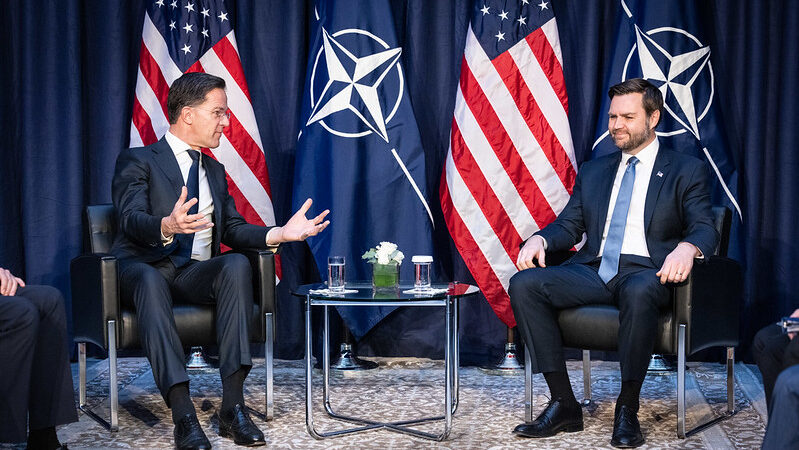
NATO Secretary General Mark Rutte meets with US Vice President JD Vance. Source: NATO/Flickr

Statements by US Vice President Vance and Defense Secretary Hegseth on the Ukraine war and transatlantic relations have left European leaders in shock

“If American democracy can survive ten years of Greta Thunberg’s scolding, you guys can survive a few months of Elon Musk,” US Vice President JD Vance told European leaders at last week’s Munich Security Conference. His remarks came during a draining week for those leaders, as Trump officials announced peace talks with Russian authorities—without European or Ukrainian involvement—while signaling they expect Europe to handle peacekeeping and being paid for their support in minerals from Ukraine.

Speeches by Vance and Defense Secretary Pete Hegseth threw European leaders into disarray, seen as not-so-subtle indications of a cooling in transatlantic relations. These interventions attacked everything from the EU’s efforts to regulate social media platforms to its approach to far-right parties in parliamentary life. In response, French President Emmanuel Macron called for an emergency summit of select regional powers on Monday, February 17 – just a day before US and Russian representatives are expected to meet in Saudi Arabia.

While Ukrainian officials and some European leaders have insisted they will not accept any deal that excludes Ukraine’s direct involvement, their stance appears to carry little weight.

Read more: Far-right surge or status quo? Understanding the 2024 European elections

At the same time, the new US administration has increased pressure on its European allies, demanding a ramping up of their defense budgets and taking on the responsibility of a potential peacekeeping mission in Ukraine. This comes as no surprise: a number of US officials, including Donald Trump himself, have said Europe does not contribute enough to NATO and essentially freeloads off the US. Vance’s speech in Munich only reaffirmed this stance, ultimately reducing high-ranking figures to tears over the apparent breakup between allies.

While the focus of European reactions to recent US statements has been on Ukraine, many leaders have admitted that more is at stake. “Yes, it is about Ukraine – but it is also about us,” European Commission President Ursula von der Leyen wrote on X. Unfortunately, the conclusion she drew going further is upsetting: “We need an urgency mindset. We need a surge in defense. And we need both of them now.”

Unlike healthcare, education, or social programs—sectors where European governments are consistently told their budgets must remain limited—military spending is expected to face no such barriers. Many European countries have already embraced the shift, with Polish officials, for example, boasting about spending close to 5% of their GDP on defense and warning of looming “wider wars” to convince other states in the region to do the same.

Read more: Elon Musk and AfD’s Alice Weidel’s align ahead of elections in Germany

Despite the apparent fracture in US-Europe relations, European leaders have shown no inclination to rethink their dependence on Washington. Instead, most have done exactly what the Trump presidency wants them to do and swiftly pledged to increase military spending. Some have even already expressed willingness to deploy troops for peacekeeping in Ukraine. What remains absent from their reactions is any consideration of a future less dictated by US interests and more aligned with the needs of the people living in Europe.

Since the beginning of the war three years ago, activists have urged Europe to reject NATO’s warmongering and prioritize peace in Ukraine alongside social justice at home. Instead, the coming surge in military budgets will almost certainly coincide with cuts to public services, further fueling the rise of the far-right—a political force that Trump officials, including Vance and Elon Musk, have (more or less) openly backed during interventions in Europe. From this perspective, unlike the conservative circles who “survived ten years of ’s scolding,” Europe’s liberal elite is unlikely to emerge from its current crisis unscathed. Whether their refusal to acknowledge the failure of their anti-people policies will push the entire region into the hands of parties like Brothers of Italy and Alternative for Germany remains to be seen.

Original article by Ana Vračar republished from peoples dispatch under a Creative Commons Attribution-ShareAlike 4.0 (CC BY-SA) license.

Elon Musk urges you to be a Fascist like him, says that you can ignore facts and reality then.
Power-mad orange gasbag Donald Trump says Burn, Baby, Burn.

Hi GT ;)

Continue ReadingEurope humiliated, but still subservient, after remarks from US officials

Miliband urges energy watchdog to act as typical bill could rise by more than £100 a year

Spread the love

https://www.theguardian.com/money/2025/feb/18/miliband-urges-energy-watchdog-to-act-as-typical-bill-could-rise-by-more-than-100-a-year

Ed Miliband, the energy secretary, has asked Ofgem to crack down on inaccurate and large bills. Photograph: Ina Fassbender/AFP/Getty Images

Exclusive: Whitehall source expects bills in England, Scotland and Wales to rise by about £9 a month over the next three months

Ed Miliband has urged the energy watchdog to take swift action as it emerged that the typical energy bill could soar by more than £100 a year amid a rise in global gas prices.

A Whitehall source said they expected bills in England, Scotland and Wales to increase by about £9 a month over the next three months in another challenge to government plans to tackle the cost of living.

They blamed volatile global gas prices linked to the end of the transit deal that enabled gas to flow to Europe, through Ukraine, from Russia.

Miliband, the energy secretary, has written an urgent letter to Ofgem, saying the price rise means the energy regulator must move faster to protect consumers.

This month, gas prices hit a two-year high, exacerbated by the lack of gas storage in Britain and Europe, combined with colder weather though prices have begun to stabilise. Cornwall Insight, a consultancy which produces closely watched forecasts for the energy price cap, is set to release its latest forecast on Tuesday.

Article continues at https://www.theguardian.com/money/2025/feb/18/miliband-urges-energy-watchdog-to-act-as-typical-bill-could-rise-by-more-than-100-a-

Continue ReadingMiliband urges energy watchdog to act as typical bill could rise by more than £100 a year

Government cash ‘nowhere enough’ to deliver fair transition to green energy, unions warn

Spread the love

https://morningstaronline.co.uk/article/government-cash-nowhere-enough-deliver-fair-transition-green-energy-warn-unions

Gwynt y Mor, the world’s 2nd largest offshore wind farm located eight miles offshore in Liverpool Bay, off the coast of North Wales

NEW public cash for green energy may be a “step in the right direction” but is “nowhere near enough” to meet the government’s own jobs and manufacturing targets, unions warned today.

The rebuke came as Energy Secretary Ed Miliband invited applications to the £200 million Clean Energy Bonus scheme, offering financial support for green developers on condition they funnel investments and jobs into into areas suffering from deprivation or reliant on the fossil fuel sector.

The government had set targets to boost domestic production in the green supply chain by 60 per cent by 2030, hoping to create 35,000 jobs in areas essential to a transition from fossil fuels, which are often reliant on imports such as wind blades and transmission cables.

TUC general secretary Paul Nowak said: “We should be making the towers, foundation and cables for zero carbon energy here – instead of paying other countries and importing them.

“The Clean Industry Bonus is an essential step in this direction. It will help the North Sea workforce find good quality, secure jobs and boost UK industry.”

https://morningstaronline.co.uk/article/government-cash-nowhere-enough-deliver-fair-transition-green-energy-warn-unions

Orcas comment on killer apes destroying the planet by continuing to burn fossil fuels.
Continue ReadingGovernment cash ‘nowhere enough’ to deliver fair transition to green energy, unions warn

Government and NHS boss ‘rewriting history’ on disastrous PFI

Spread the love

https://morningstaronline.co.uk/article/government-and-nhs-boss-rewriting-history-on-disastrous-pfi

Health Secretary Wes Streeting with Prime Minister Keir Starmer (not seen) during a visit to Elective Orthopaedic Centre in Epsom, Surrey, January 6, 2025

BACKING private finance in the NHS should be a red line for any health secretary, campaigners charged today.

NHS England chief Amanda Pritchard told BBC Radio 4’s Today programme last week that the government should “consider” using private capital to fix the NHS’s crumbling infrastructure.

Today, Health Secretary Wes Streeting faced questions on the same programme about a potential return to failed private-finance initiative (PFI) schemes, in which private firms built hospitals and high-interest repayments were made over the long term.

Mr Streeting said that he does not pretend there are not “enormous challenges” because of NHS capital shortfall, and is “very sympathetic to the argument that we should try and leverage in private finance.”

But he admitted that many of the PFI deals “did lumber the NHS with an enormous cost that it continues to bear.”

Johnbosco Nwogbo, of campaign group We Own It, said: “Support for more private finance in our NHS should disqualify you from being health secretary.

“Many NHS trusts are still spending more on PFI debts than on medicines for patients.

https://morningstaronline.co.uk/article/government-and-nhs-boss-rewriting-history-on-disastrous-pfi

Continue ReadingGovernment and NHS boss ‘rewriting history’ on disastrous PFI