Police officers watch as people take part in a national march for Palestine on Whitehall in central London, January 18, 2025
22 general secretaries sign joint statement demanding charges be dropped against Alex Kenny, Sophie Bolt, Ben Jamal and Chris Nineham over peaceful Palestine demo in January
TWENTY-TWO union general secretaries raised “deep concern about the erosion of the right to peaceful protest” in an open letter today, urging the Metropolitan Police to drop charges against four Palestine march leaders.
Paul Nowak of the TUC, Christina McAnea of Unison, Sharon Graham of Unite and the National Education Union (NEU’s) Daniel Kebede were among those who said that the charges against former union members who took part in peaceful protest on January 18 mark “an attack on our right to protest.”
The signatories together represent the vast majority of British trade union members.
The former NEU executive member Alex Kenny and the Campaign for Nuclear Disarmament general secretary Sophie Bolt were arrested alongside more than 70 other people including director of Palestine Solidarity Campaign Ben Jamal and Chris Nineham, the vice-chair of the Stop the War coalition.
Former Labour leader Jeremy Corbyn and ex-shadow chancellor John McDonnell were also voluntarily interviewed under caution in relation to the march.
A tanker pumps out excess sewage from the Lightlands Lane sewage pumping station in Cookham, Berskhire, January 10, 2024
THAMES WATER’s debts have ballooned to £16.8 billion and it made a loss of £1.65bn in the year to March, the company revealed today, sparking fresh calls for renationalisation.
Appearing before the Commons environment committee, chief executive Chris Weston admitted that the company was “extremely stressed” and would take “at least a decade to turn around.”
Britain’s largest water supplier also revealed a sharp increase in pollution incidents over the past year.
Gary Carter, a national officer at water industry union GMB, said: “Thames Water is drowning under a mountain of debt.
“Hiking customer bills has led to a rise in operating profit, money that should go on investment but is being swallowed up by monstrous loans needed to keep the company afloat.
“While Thames lurches from crisis to crisis, the solution is clear: it must be taken back into public ownership, with workers’ terms, conditions and pensions protected.”
Green Party Co-leader Adrian Ramsay. Wikipedia CC.
Responding to the Met Office’s State of the Climate Report, published today, co-leader of the Green Party, Adrian Ramsay MP, has called on the Prime Minister to put climate resilience on a statutory footing. He said:
“England is facing its driest start to a year in my lifetime. Extreme weather is becoming the norm, and we are nowhere near prepared to protect our citizens. Our climate is fuelling extreme weather, and that is having direct and urgent consequences in the here and now.
He continued: ”We had the warmest spring on record, and we are in the middle of this summer’s third heatwave. The last three years have been among the top five warmest on record. The Government has not adequately prepared our infrastructure to protect our citizens.”
”The Government must outline the steps they are taking to prepare for the increasing threat of extreme temperatures. This is not just about this summer, it’s about how we adapt as the climate crisis continues to escalate.”
“We need to safeguard the public from this rising climate threat. That is why the Prime Minister must put climate resilience on a statutory footing, requiring local councils and major infrastructure providers to carry out climate risk assessments for all projects.”
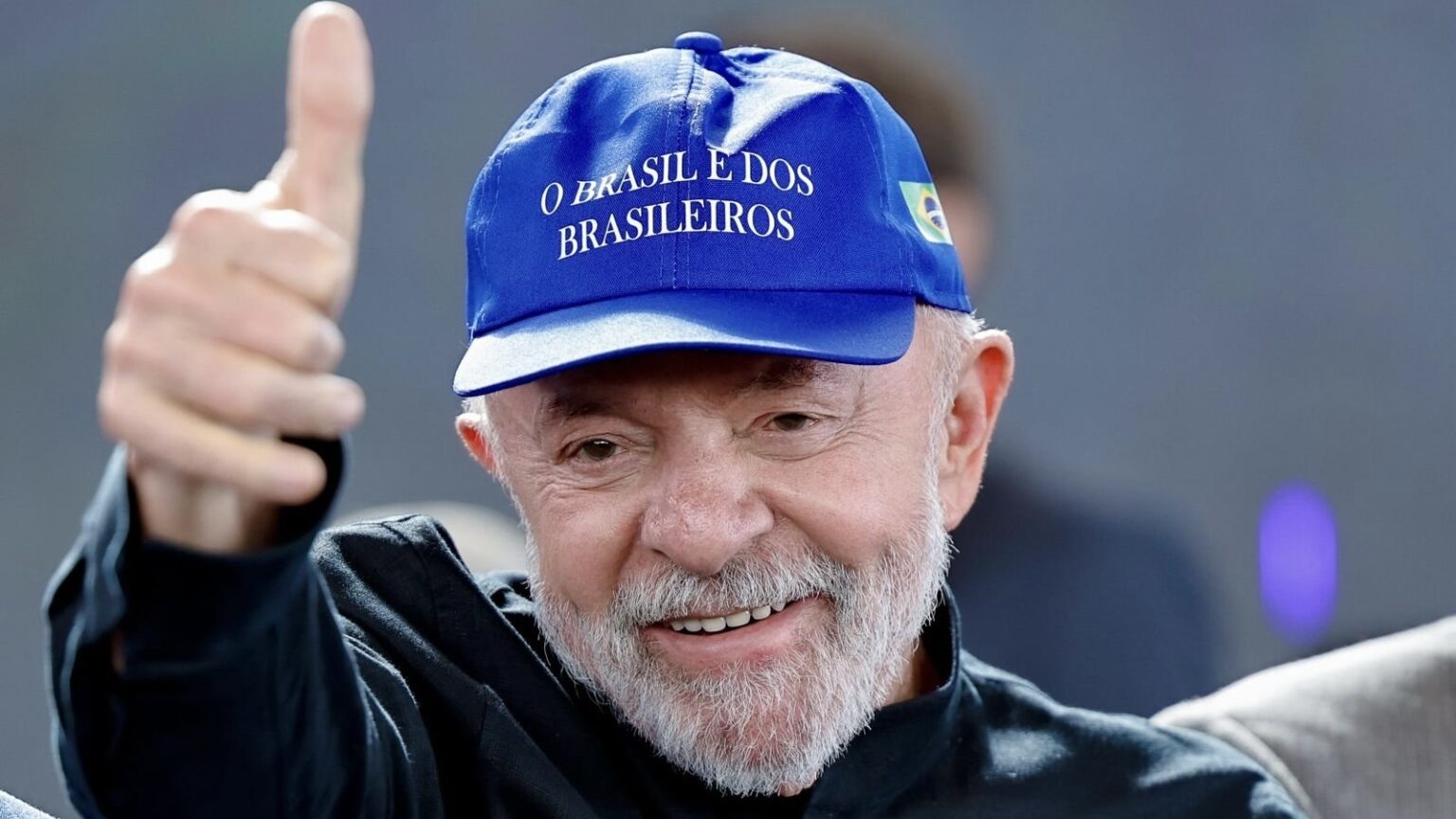
Brazilian President Lula da Silva wearing hat “Brazil is for the Brazilians”. Photo: Lula / X
The diplomatic row devolved into a potential trade crisis when Trump threatened Brazil with higher tariffs on Brazilian products if it did not cease the alleged persecution of the ultra-right former president Jair Bolsonaro.
Tensions between Washington and Brasília persist. On July 7, Trump sent a letter to the Brazilian government urging an end to the alleged persecution of former Brazilian president Jair Bolsonaro and threatening a 50% tariff on Brazilian goods.
Lula responds
Brazilian President Lula da Silva swiftly responded to Bolsonaro’s close friend and ally, asserting that Brazil’s decisions and its judiciary are sovereign and that they reject any interference whatsoever. He announced reciprocity in the measures taken by Trump: “If he charges us 50%, we will charge him 50% … Brazil is respected!”
In a post on X, Lula wrote: “Brazil is a sovereign country with independent institutions that will not accept being tutored by anyone. The judicial process against those who planned the coup d’état is the sole responsibility of the Brazilian justice system and is therefore not subject to any interference or threat that would harm the independence of national institutions.”
Lula stated that the information about the “alleged US deficit is false”, pointing out the fact that the US is not currently the main country to which Brazilian products are sold. In other words, the United States sells more to Brazil than it buys from it, meaning the US may stand to lose more from a trade war.
The Brazilian president noted: “The US government’s statistics show a surplus in trade in goods and services with Brazil of around 410 billion dollars over the last 15 years. In this sense, any measure to raise tariffs unilaterally will be responded to in light of the Brazilian Law of Economic Reciprocity. Sovereignty, respect, and the uncompromising defense of the interests of the Brazilian people are the values that guide our relationship with the world.”
However, it is important to emphasize that Lula is not closed to talks with the Trump administration: “We have several options. We can go to the WTO [World Trade Organization], initiate international investigations, and demand explanations [from the White House]. But the main thing is to show that Brazil is respected.”
The crisis has also involved other institutions of both countries. On July 9, the US Embassy released a public statement defending Bolsonaro: “Jair Bolsonaro and his family have been strong partners of the United States … The political persecution against him, his family, and his supporters is shameful and disrespectful of Brazil’s democratic traditions.”
In response, the Brazilian Secretariat of State, which called the statement “undue meddling” in Brazil’s internal affairs, summoned the US chargé d’affaires, Gabriel Escobar, in an expression of diplomatic displeasure.
Lula’s progressive government has now taken further concrete measures to respond to Trump’s threats. On Monday, July 14, Lula signed a decree regulating the country’s Reciprocity Law. According to the announcement by the President’s office, the decree, “establishes criteria for suspending trade concessions, investments, and obligations related to intellectual property rights in response to unilateral measures adopted by countries or economic blocs that negatively impact Brazil’s international competitiveness.”
The decree also calls for the creation of a committee which will be responsible for “deciding on the application of provisional countermeasures and monitoring negotiations to overcome the unilaterally imposed measures.”
Bolsonaro, together with several generals and civilians aligned with his ultra-right program, is accused of participating in a plot to overturn the election that he lost to Lula at the end of 2022. According to the prosecutor’s office, part of this plot was the coup attempt on January 8 in Brasília, when thousands of Bolsonaro supporters stormed the Three Powers Square and other Brazilian government buildings, and vandalized and destroyed them.
The episode on January 8, 2023 somewhat resembled January 6, 2021, when hundreds of Trump supporters stormed the US Capitol building to protest the allegedly “stolen elections” in November 2020. Though hundreds were prosecuted for their participation in the January 6 riots, Trump pardoned 1,500 of those convicted, in one of his first actions in office.
People’s movements in Brazil and left groups have demanded that the Lula government hold those responsible for the January 8 coup attempt responsible to ensure it does not happen again .
The protest soon incorporated the tension between Washington and Brasília, with demonstrators rejecting Trump’s threats: “The demonstration had been born as a response to the Congress veto against Lula’s government projects that sought to charge more taxes on large companies and banking transactions, but given the situation it became a march to repudiate the tariffs imposed by Trump against Brazil,” said journalist Nacho Lemus on X.
In this way, it is entirely possible that Washington’s measures could backfire: not only could they deepen the unity around a sovereigntist sentiment and behind Lula as a defender of the nation’s interests, but many businessmen may even distance themselves from a crisis that carries risks for them as well.
Geopolitical implications
Brazil is South America’s leading economy and is currently part of the BRICS. Its main trading partner is China, far ahead of the United States. Some analysts have seen in Trump’s statements more than a simple gesture of generosity to Jair Bolsonaro, but rather a tactic to enter negotiations from a stronger position with one of the largest economies in the Global South and one of the fundamental nations involved in building a multipolar world not subordinated to US financial hegemony.
It is a surprise to no one that Lula, for the moment, has not approached the second Trump administration for negotiations, so there has been a kind of tense calm for the last six months between the countries. The calm, however, was abruptly ended with the back and forth messages from the top officials in the public and on social media.
For now, it seems that Brasilia has extended its hand to negotiate a “ceasefire” on social media. Fernando Hadad, secretary of finance, has reiterated his government’s willingness to engage in dialogue with the US government. For now, it is unclear if Washington has responded to this gesture, although it is likely that the economic advisors of the White House would caution the president against ignoring the clear geo-economic reality.

 Police officers watch as people take part in a national march for Palestine on Whitehall in central London, January 18, 2025