‘Pesticides buzz off’: More than 1.6 million people call for a ban on bee-killing pesticides

Spread the love

petition signed by more than 1.6 million people urging the government to enforce a total ban on bee-killing neonicotinoid pesticides has been handed in to the Department of Environment, Farming and Rural Affairs (Defra) by environmental campaigners [1].

The petition, which was coordinated by Greenpeace UK, has amassed a staggering 1,645,000 signatures from the British public and was delivered directly to Defra for the environment minister, Emma Hardy. It was delivered in the form of a bee hotel by campaigners dressed in ‘worker’ bee outfits carrying placards reading, ‘Pesticides Buzz Off’, ‘Protect Our Bees’ and ‘Bee Safe’. They were joined by Siân Berry, Green Party MP for Brighton Pavilion, who is a supporter of the campaign.

Separately, 15 leading climate and nature charities – including Pesticide Action Network, RSPB, Wildlife Trusts and Greenpeace – have written to the environment minister, calling for an end to the emergency authorisation of neonicotinoids on sugar beet crops [2].

In the letter they state: “By not allowing another emergency use of neonicotinoids, there will be more incentive for British Sugar and the government to fund research into alternatives, and to adopt nature-friendly farming approaches including Integrated Pest Management (IPM).”

Greenpeace UK’s campaigner, Anthony Lewis, said: “Using neonicotinoids to ‘protect’ crops is like setting fire to your house to protect it from burglars. Yes, it will destroy pests, but it will also kill bees and other vital pollinators we depend on for the food we’re trying to grow. It’s absurd.

“Bee populations have been decimated over recent years, with the use of neonicotinoids one of the drivers of this decline. As leading environmental charities and experts on nature protection, along with 1.6 million members of the public, we implore the government to implement a full and final ban on the use of all bee-killing pesticides once and for all.”

Bees are essential for our survival – pollinating much of our food and playing a critical role in sustaining ecosystems around the world. However, wild bee populations have fallen by a third, with the use of pesticides on farms a key contributor to their rapid decline. 

The use of neonicotinoids, which are particularly lethal to bees and other vital pollinators, was outlawed across Europe in 2018. However, despite the ban, the previous UK government approved the ‘emergency’ authorisation of these deadly chemicals for four years in a row, against the scientific advice of the government’s own Expert Committee on Pesticides.
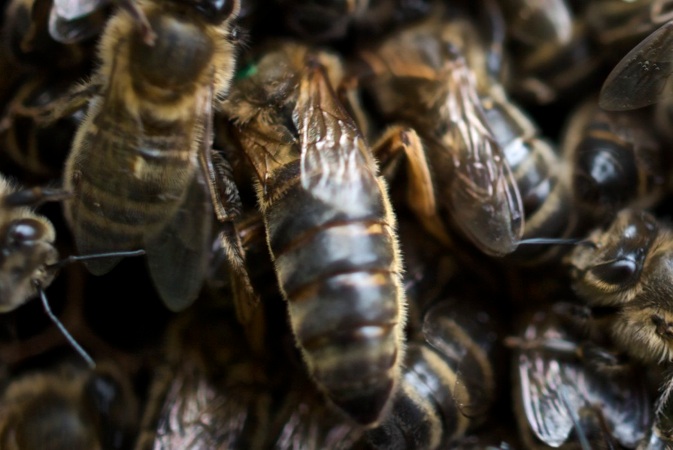
image of black bees
Black bees

During its election campaign, the Labour Party made a commitment to end these exemptions for bee-killing pesticides and the government announced last month that it was drawing up plans to outlaw the use of some neonicotinoids. However, whatever the proposals being brought forward in future, another ‘emergency’ derogation could be allowed. A decision on whether to grant this emergency authorisation again this year is expected imminently.  

Continue Reading‘Pesticides buzz off’: More than 1.6 million people call for a ban on bee-killing pesticides

Charges dropped for dozens of Greenpeace activists in plastic pollution protest outside Unilever HQ

Spread the love
Greenpeace activists Shut Down Unilever HQ in Plastic Pollution Protest in London. Climbers secure a huge 13 x 8 metre canvas to the front of the building. The artwork displays a powerful advertising subversion featuring a young girl peeling back Dove’s iconic ‘Real Beauty’ branding to reveal real examples of the toxic plastic waste churned out by the brand.
Greenpeace activists Shut Down Unilever HQ in Plastic Pollution Protest in London. © Kristian Buus / Greenpeace.

The Crown Prosecution Service (CPS) has dropped all charges against 34 Greenpeace activists who blockaded Unilever’s London headquarters last September. The decision was made just days before the start of what would have been the largest ‘locking on’ trials ever seen in the UK.

Eight protesters had been facing charges of Aggravated Trespass and a further 26 protesters were charged with the new offence of ‘locking-on’ introduced in the Public Order Act 2023. The letter from the CPS said the charges were dropped because “there is not enough evidence to provide a realistic prospect of conviction”. The first trials were due to begin on 15 January at City of London Magistrates’ Court. 

The charges related to 5 September 2024 when Greenpeace activists blockaded the entrances to Unilever House in protest at the firm’s ongoing failure to tackle plastic pollution. Climbers scaled the building and attached a huge artwork to the outside wall. Activists also blocked the entrances to the building, locking themselves onto large models of the company’s flagship Dove products and a ‘Dead Dove’ parody of the company logo.

Will McCallum, Co-Executive Director of Greenpeace UK said: “This is a bolt of good news in an otherwise bleak landscape for protest rights. Our activists were facing a combined total of up to 15 years in prison for standing up to one of the world’s largest plastic polluters. The invented crime of ‘locking-on’ is just one new tool in a well-stocked legal arsenal that is being used to stifle dissent and send peaceful protesters to jail. Previous governments brought in these laws and powers, but the responsibility lies with Keir Starmer to end their chilling effect on democracy and repeal them.”

The crime of ‘locking-on’ was one of a number of offences and powers created by recent Conservative governments to crack down on peaceful protest. It has resulted in hundreds of protesters being arrested, often for as little as walking down a street. Last year saw five climate activists sentenced to a total of 21 years in prison for taking part in a Zoom call to discuss a planned protest.

Greenpeace’s protest was part of an ongoing campaign against Unilever after the corporate giant announced a major rollback of plastic reduction targets last year. A Greenpeace International report showed that it was the largest corporate seller of single-use plastic sachets, selling the equivalent of 1,700 a second. 

Daniel Jones, interim head of Greenpeace’s plastics campaign, said: “This is an important milestone in our campaign against Dove’s toxic brand of beauty. We reluctantly staged our protest last September after months of failed talks with Unilever and multiple attempts to raise our concerns in other ways. Since then, Unilever has come back to the table and has begun playing a more constructive role in negotiations for a Global Plastics Treaty. We won’t stop until the company commits to reducing plastic production – particularly of its super-polluting plastic sachets.”

‘Locking-on’ involves protesters attaching themselves to another person, building or object to make it harder for police to remove them. It has long been used as a tactic by protesters, including by the Suffragettes. The Public Order Act 2023 contained the new offences of locking-on and being ‘equipped for locking on’.

Continue ReadingCharges dropped for dozens of Greenpeace activists in plastic pollution protest outside Unilever HQ

Keir Starmer needs reminding that the NHS is not for sale

Spread the love
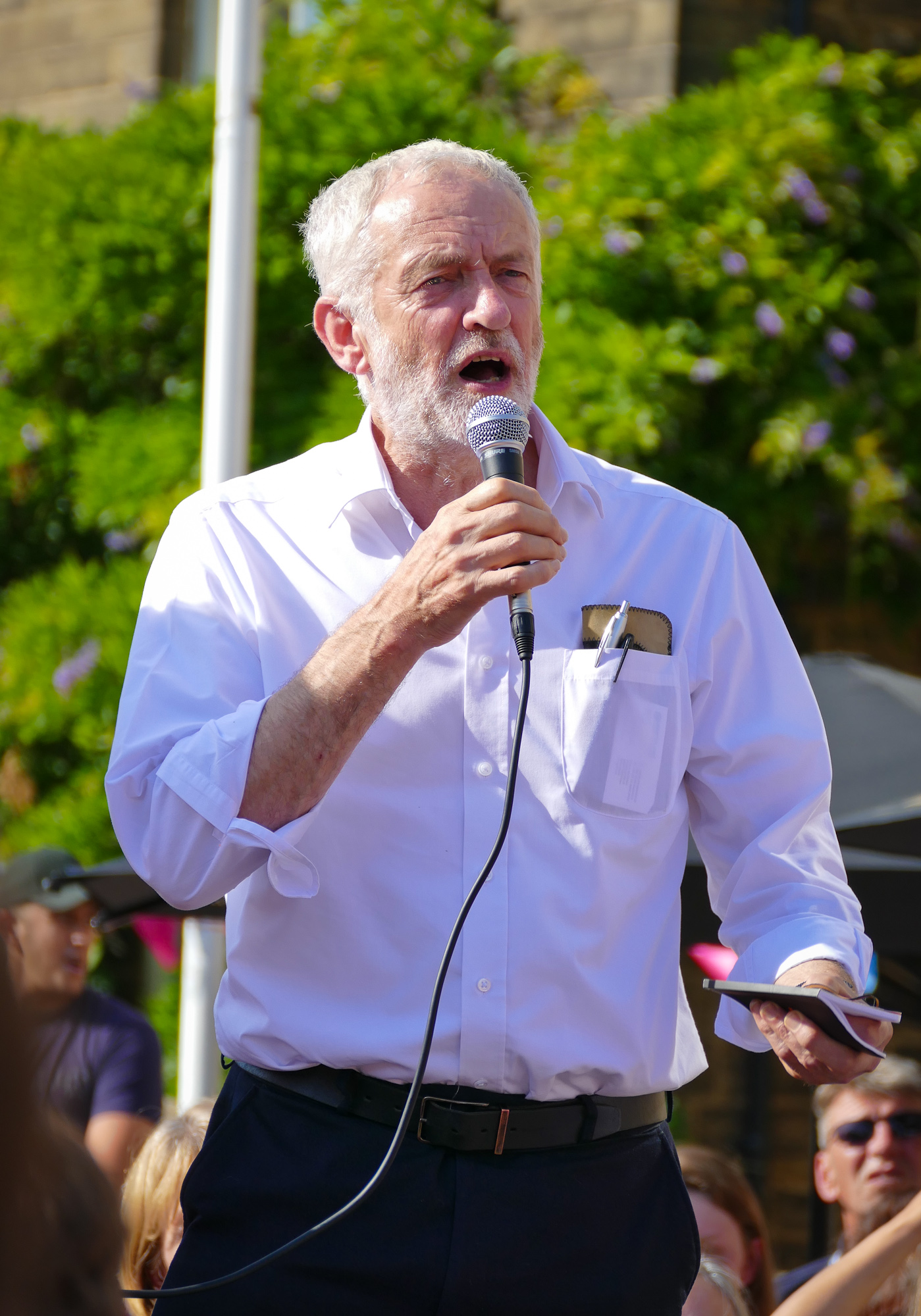
Image of Jeremy Corbyn MP, former leader of the Labour Party
Jeremy Corbyn MP, former leader of the Labour Party

https://www.independent.co.uk/voices/keir-starmer-pfi-nhs-privatisation-wes-streeting-jeremy-corbyn-b2675678.html

As the government unveils its plans for NHS patients to be treated privately in a bid to cut the waiting list backlog, former Labour MP Jeremy Corbyn says this administration is repeating the mistakes of the last

During the general election, I stood on a platform that pledged to defend a fully public, fully funded healthcare system. We knew Labour’s decision to drop its previously held manifesto promise that “the NHS is not for sale” was no accident. We said the future of our NHS was on the line – and we were right.

This week, the government announced that private operators will receive an extra £2.5bn a year in government funding. Under their plans, the role of the private sector in providing outpatient appointments will rise by 20 per cent. Meanwhile, the secretary of state for health, Wes Streeting, refuses to rule out the involvement of the private sector in a reformed care service – a refusal he will no doubt maintain for the next four years until elderly and disabled people are finally allowed to hear his plans.

To the prime minister and health secretary, welcoming privatisation is proof of their commitment to pragmatism. “We will not let ideology… stand in the way.” To anyone who knows the reality of privatisation, their dogmatic refusal to look at the evidence is the very definition of ideology itself.

A privatised health service leads to worse quality care, higher mortality rates and a reduction in staffing. Privatisation has even been linked to higher rates of patient infections, in part because cleaning staff are typically the first to be cut in the name of efficiency. There is only one beneficiary of privatisation: investors and shareholders making money out of people’s ill health.

https://www.independent.co.uk/voices/keir-starmer-pfi-nhs-privatisation-wes-streeting-jeremy-corbyn-b2675678.html

NHS emblem
NHS emblem

Continue ReadingKeir Starmer needs reminding that the NHS is not for sale

The politics of Reform UK—despair wrapped in racism

Spread the love
Nigel Farage explains the politics of Reform UK: Racism, Fake anti-establishmentism, Deregulation, Corporatism, Climate Change Denial, Mysogyny and Transphobia.

https://socialistworker.co.uk/anti-racism/the-politics-of-reform-uk-despair-wrapped-in-racism/

Racism is central to Reform UK, but the party is also entangled with anti‑establishment fakery, climate change denial, transphobia, ­misogyny and ­pro‑­corporate policies.

The anti-establishment fakery was on display last November, when Farage posted on social media, “Big business and big government work together. There is nothing about Sir Keir Starmer that represents change.”Adding to this already vile ­concoction of politics is misogyny and ­transphobia. This was on display at Reform UK’s recent regional conference in Leicester, where Tice opened his speech with a transphobic joke about pronouns. The result is an over-arching package of the politics of division. This is hardly a surprise from a party whose senior members say they look to Marine Le Pen’s fascist National Rally (RN) and the far right Alternative for Germany (AfD) as inspiration.

Farage likes to paint Reform UK as the insurgent force in British politics. He claims that Reform UK is “very much on the side of the little guy or woman”. Its MPs often denounce the two-party system and ­multinational corporations in favour of “real entrepreneurship”. This language is an attempt to mobilise the historic base of the far right, which has typically built among small ­producers and independent professionals.

But Reform UK is as establishment as it gets. Four out of the five Reform UK MPs—Nigel Farage, Richard Tice, Rupert Lowe and Lee Anderson—are millionaires.

Its policies are a mish-mash of ­pro-corporate proposals. Tax cuts for business, austerity measures totalling £50 billion a year, a massive programme of deregulation, tax relief for private healthcare, abolishing inheritance tax for property under £2 million and      scrapping net zero climate targets.

It’s clear the party stands for putting more money in the pockets of the bosses and the rich.

And it uses climate denial to drive further division. Deputy leader Richard Tice is one of the worst for this. At one point he stated “there is no climate crisis” and claimed “CO2 isn’t a poison. It’s plant food”.

Adding to this already vile ­concoction of politics is misogyny and ­transphobia. This was on display at Reform UK’s recent regional conference in Leicester, where Tice opened his speech with a transphobic joke about pronouns. The result is an over-arching package of the politics of division. This is hardly a surprise from a party whose senior members say they look to Marine Le Pen’s fascist National Rally (RN) and the far right Alternative for Germany (AfD) as inspiration.

https://socialistworker.co.uk/anti-racism/the-politics-of-reform-uk-despair-wrapped-in-racism/

Continue ReadingThe politics of Reform UK—despair wrapped in racism