Five questions over Nigel Farage’s £5 million donation

Sam Power, University of Bristol
Questions about a £5 million gift to the leader of Reform UK Nigel Farage from a crypto billionaire simply won’t go away. As someone who spends their life thinking, writing and talking about money in politics, I’ve been left with at least five questions that remain unanswered. These centre not just on the donation and Reform’s financial arrangements, but also on what it says about the system of political finance in the UK.
1. Should he have declared it?
It appears so. It was reported in late April that Farage had received the cash from Christopher Harborne. This was shortly before deciding to stand in the seat of Clacton in the 2024 general election, which he subsequently won.
Farage claims that because it was a personal gift it did not need to be registered. However, the House of Commons code of conduct states that the possible motive of the gifter and what the donation is to be used for should be considered. If there is doubt, the code is clear that it should be registered.
Harborne has said he expected nothing in return, but only wanted to ensure Farage’s security. But given the timing of the gift, in 2024, questions might be asked about his motive. At this time, according to the Electoral Commission, Harborne had given about £1.5 million to the Conservatives (and £1 million to Boris Johnson’s private office). He had also given millions to Reform ahead of its 2019 general election campaign.
As such, Harborne was not some unknown benefactor. This information, at the very least, creates doubt about whether the donation ought to be declared. And there have also been questions over a house Farage bought weeks after receiving the £5 million.
But the question of whether the money should have been declared is now one for the parliamentary standards commissioner, which is investigating whether Farage broke the rules.
2. What does it tell us about how Reform is funded?
One thing that we know about Reform is that its funding base is remarkably shallow. In fact, investigative journalist Peter Geoghegan has found that 75% of all the reportable donations Reform has received came from just three men. They are Christopher Harborne, millionaire businessman Jeremy Hosking and Reform’s own deputy leader, Richard Tice.
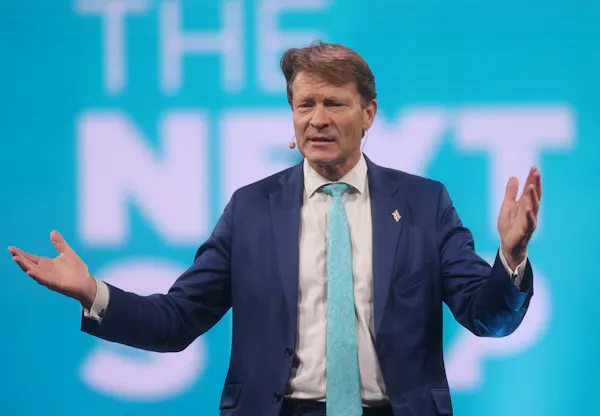
I have shown in my research that the UK is very much a donor-led democracy where the few get more of a say than the many. So concerns about the wealthy having a larger influence on the way politics is run are certainly not a Reform-shaped novelty.
3. Should the public be worried?
Yes. It has been argued that for elections to have integrity, four things need to be on show: participation, contestation, deliberation and adjudication. Importantly, perception is as important as reality here.
Public opinion fluctuates, but one of the more robust polling findings is that the public has always been and remains concerned that donors have an outsized influence on British politics. So whether they do or not (and it’s notoriously hard to prove), the damage is done.
4. Should Reform be worried?
When he was questioned about Farage’s £5 million, Tice maintained that voters knew about it and “they said, we want more Nigel”. It is true that if you ask the UK public to rank issues that matter to them, then (unless you happen to knock on my door) party funding wouldn’t come close to the top ten.
And yet standards never seem to matter to politicians – until they really do. Just ask Boris Johnson, Keir Starmer or Peter Mandelson, all of whom have faced questions of their own. There are many populists who build personas as mavericks who refuse to play by the rules. While voters might not always agree with their methods, they get results. (And some voters might even think: gosh, you can’t help but love them a little bit for it.)
Nigel Farage might not think the public cares about this. But it appears that they do. And maybe Farage knows this too. If not, he’d probably have been happy to mention the £5 million in the first place.
5. Why don’t Labour care?
It remains astonishing that Labour seems to be so uninterested in addressing a financial pattern of behaviour that could risk undermining democracy – which the party is professing to protect.
It seems even more astonishing that the party seems so casual about addressing the issue of mega-donors while a bill is going through parliament that is quite literally designed to restore faith in politics.
But it may be that the government doesn’t want to cap donations (as many other countries do) because it thinks it would mean introducing more state funding. But the problem has now become too stark to ignore, and a compromise position is imperative.
This could be a “democracy backstop” donation cap of £1 million. This is far higher than any other cap I know of around the world. But it would reflect the voluntarist tradition of the UK – and could start a conversation. Get a backstop in place, and then conduct research on how much it can be lowered without a) risking the financial ruin of parties or b) the need for further state support.
After the May elections, Labour said it was listening to voters and that as a government it needed to be bold. It’s time for the party to put its money where its mouth is. That is, before a mega-donor does it for them.
Sam Power, Lecturer in Politics, University of Bristol
This article is republished from The Conversation under a Creative Commons license. Read the original article.


Tuna has overtaken cod as the UK’s top‑selling seafood – here’s why

Angus Atkinson, Plymouth Marine Laboratory and Simon Thomas, University of Plymouth
Awesome, unexpected and unforgettable: a sudden bolt of silver as a tuna jumped clear of the sea. Nobody else saw it, and I (Angus Atkinson) almost thought I was hallucinating. But since I first saw one from a boat just off the south Devon coast ten years ago, Atlantic bluefin tuna have steadily increased in the southwest UK. Last year I even saw them from the shore, and tuna now supports a local fishery.
Tuna is not the only species to make a rapid change in the southwest UK about a decade ago. Blue, thresher and porbeagle sharks suddenly increased dramatically. Spiny lobsters suddenly increased. Meanwhile basking sharks and many important fish species like cod and pollack declined. What is going on?
Fortunately, in the southwest UK, help is at hand. Not only does this peninsula host some of the most complete long-term recordings of observations in the UK, we also have a burgeoning network of marine observers.
This was the brainchild of marine consultant Bob Earll, who 15 years ago set up a network called South West Marine Ecosystems. This links scientists, marine charities, fishermen, conservation trusts, managers and citizen scientists many of whom have natural history skills to match the best. This network enables members to more easily share observations and recordings about marine life.
Alongside established high-tech and long-term monitoring such as at the Western Channel Observatory (a set of sampling sites at sea within a 30-mile-radius from Plymouth), many pairs of eyes are looking at the sea along the entire coast of this peninsula. Each year we meet and put data together to report on the status of everything in the marine ecosystem, whether it swims, crawls or flies, and from nutrients right up to the numbers of stranded whales.
South West Marine Ecosystems’ annual reports and annual conferences put the previous year’s observations into the context of all that has gone before. That includes strange new events such as the 2025 octopus outburst. This near-real time reporting, with everyone comparing notes, provided a lightbulb moment: these species shifts were not continuous but seemed to be concentrated into a short intense period of massive change around 2014 to 2016.
In the southwest UK, tuna have increased to the extent that they support a tightly regulated fishery, with a UK catch quota of 230 tonnes for 2026-28. Fishing is always an emotive subject, and some people say we should be leaving these beautiful animals alone.
A recent announcement by the Marine Stewardship Council (MSC) offers some hope that tuna fisheries worldwide are moving in the right direction.
The MSC endorses those seafood sources that have been harvested sustainably, meaning that they abide by the rules of well-managed fisheries based on scientific advice, with minimal collateral ecological damage. This most recent announcement shows an important positive result: the proportion of tuna products available with an MSC endorsement has just risen to nearly 50%, compared to less than 20% only five years ago.
Remarkably, tuna has just overtaken cod as the main seafood bought in the UK. This probably reflects the increasing availability of more sustainably-sourced tuna and sharply declining cod stocks.
A state of flux
Managing these fisheries involves treading that tightrope between allowing livelihoods for the fishing industry, but allowing the whole ecosystem to flourish. The challenges of climate change, shifting distributions and fishing pressure combine into a real headache to manage fisheries responsibly.
Abrupt shifts in ecosystems, as we have witnessed in the southwest of the UK, are critical for fisheries management. In just a few years an ecosystem can lurch into a different operating space with different species and links.
Computer simulation models of ecosystems can broadly project how food webs might respond to the average pace of climate change. Importantly, these models are notoriously poor for predicting abrupt shifts, often known as regime shifts, that punctuate the steadier pace of change.
With these challenges, fisheries managers need all the help they can get to understand abrupt ecosystem shifts. The tuna increase was well documented by South West Marine Ecosystems. The success of this network means that similar programmes are spinning up around the other coasts of the UK.
Similar initiatives are underway elsewhere. The Norwegian Institute of Marine Research provides a data network from public reporting of jellyfish increases, which are important for the management of Norwegian aquaculture.
Joined-up science efforts like South West Marine Ecosystems, alongside long-term scientific monitoring studies and, of course, traditional fish stock assessments, will help us know better whether tuna should stay on the menu.
Angus Atkinson, Professor of Marine Ecology, Plymouth Marine Laboratory and Simon Thomas, Visiting Fellow, Marine Ecology, University of Plymouth
This article is republished from The Conversation under a Creative Commons license. Read the original article.