Why heating your home this winter may be even harder than last year

Spread the love
Daisy Daisy/Shutterstock

Aimee Ambrose, Sheffield Hallam University; Lucie Middlemiss, University of Leeds, and Neil Simcock, Liverpool John Moores University

Domestic energy prices more than doubled during 2022 compared with the year before. This meant that the number of UK households in fuel poverty who could not afford to heat their homes to a safe level rose from 4.5 million to 7.3 million.

The UK government attempted to alleviate the impact of rocketing bills with a package of support measures. This included capping the unit cost of electricity and gas, a £400 rebate to all households using mains gas for heating and £200 for those using alternative fuels, and a further £650 “cost of living payment” to claimants of means-tested benefits.

Many of these schemes ended in spring 2023. And with wholesale gas costs and the government’s energy price cap having come down somewhat, you could be forgiven for thinking that the worst of the energy crisis has passed.

But that’s not the case for many billpayers – in fact, this winter is likely to be worse than the last for many households.

The energy price cap, introduced in 2019 by market regulator Ofgem, limits how much people pay for each unit of gas and electricity. The latest price cap, set on October 1 2023, means that a typical household will pay £1,834 a year for energy – less than £2,000 for the first time in 18 months.

This might sound like good news, but it’s still a substantial increase on the pre-crisis cap. In August 2021, the most a typical household could expect to pay in a year for energy was £1,277.

Although the unit prices of electricity and gas have fallen, there has been a steep increase in standing charges. These are a levy on all energy bills which cover the costs associated with supplying energy to homes.

Standing charges have gone up from around £186 a year pre-crisis to just over £300 now – effectively adding £110 to bills.
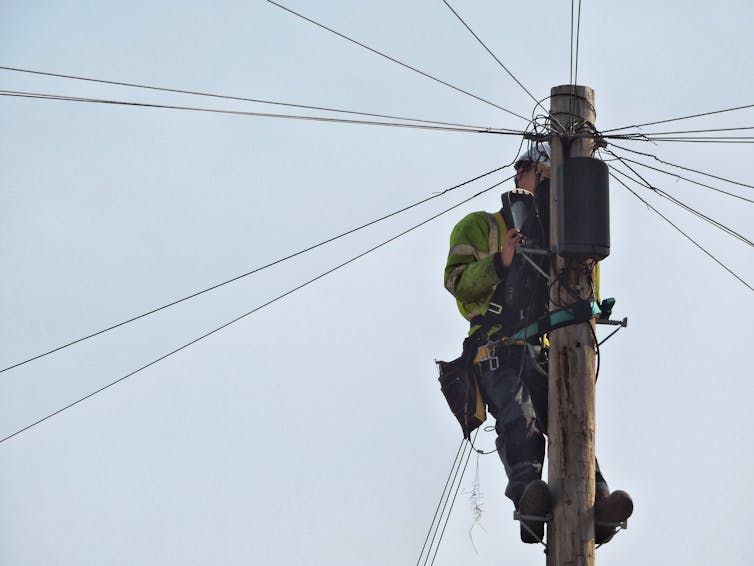
An engineer atop of wooden electricity transmission pole.
Standing charges pay for the upkeep of the UK’s energy supply network.
KingTa/Shutterstock

Standing charges are regressive because they are the same for everyone, regardless of how much energy you consume. Poorer households often use much less energy than wealthier ones, so standing charges make up a larger proportion of their energy costs.

In fact, some low-income households use such small amounts of energy that they are paying little more than their standing charges.

Energy bill rebates ended

The £400 energy bill rebate paid to all households last winter has now ended. Meanwhile, cost of living payments to claimants of means-tested benefits have increased from £650 to £900 a year. This will be helpful to those who qualify, but one third of households eligible for means-tested welfare payments do not claim them due to stigma, lack of awareness or bad experiences with the assessment process, and so will receive no assistance.

Many households who do receive these cost of living payments will spend it on other expenses, such as food, rather than heating their home. This reflects the fact that energy is often seen by struggling households as something that can be rationed.

If you’re in a household that does not qualify for the cost of living payment then the savings of around £150 that resulted from the lowering of the cap will soon be more than cancelled out by the lack of a rebate.

Cold homes can kill

Despite the financial support offered last winter, average levels of energy debt for people contacting Citizens Advice in England and Wales have risen sharply over the last year, from around £1,400 per household on average in March 2022 to £1,711 in July 2023. One-third of UK energy customers are now in arrears.

So although energy bills have fallen slightly, many households are less resilient to financial shocks than they were in early 2022. Volatile energy prices are predicted to last until the end of the decade.

Research last winter found that households in fuel poverty were underheating their homes, causing damp and mould that can create serious health problems and exacerbating anguish and stress. The health risks of a cold home increase with repeated exposure.
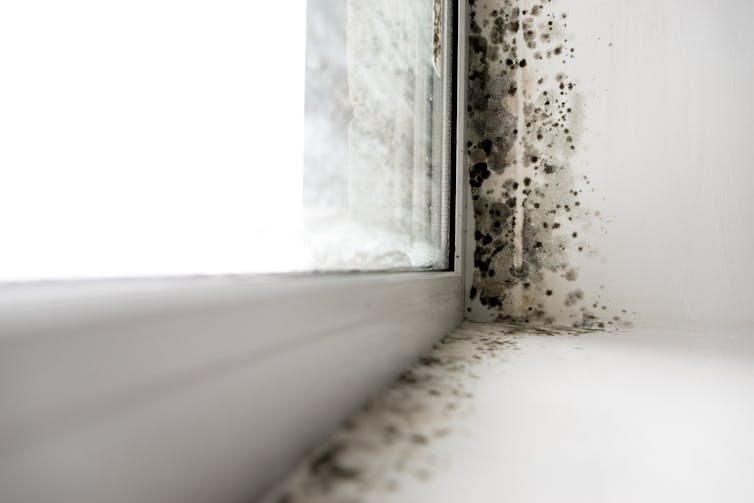
A PVC window frame with black mould growing on it.
Poorly heated homes are at risk of damp.
Burdun Iliya/Shutterstock

As temperatures begin to fall again, a range of measures are urgently needed to prevent a crisis worse than that of last winter.

What can be done to help?

Since energy prices are expected to remain high for years, long-term solutions are vital. There must be increased investment in efforts to insulate the UK’s leaky housing stock. But with winter just weeks away, what can the government do right now?

To start, it could offer greater energy bill rebates. Given the scale of the fuel poverty problem, eligibility for these rebates must be wide enough for anyone on a below average income to receive help.

Alternatively, the government could make the rebates universal again, and potentially recoup the costs by increasing taxes on the most wealthy or energy company profits. At the very least, unclaimed energy bill support from last winter should be used to support those likely to struggle in the coming winter, rather than being returned to the treasury.

Cut funding for government-backed advice services could also be restored. And there are reforms to the retail energy market that could be implemented fairly quickly, such as bringing standing charges in line with levels of usage.

More fundamentally, there are a number of proposals that would be fairer than the current system and could be implemented together for maximum impact. These include a “green power pool”, which would ensure that the cheap power generated by renewables such as wind and solar benefits those most in need first and foremost, social tariffs (discounted energy bills for low-income households), or a national energy guarantee that would secure access to enough free energy to meet everyone’s basic needs.

The government’s forthcoming autumn statement must not sidestep these issues if people in fuel poverty are to stay safe and warm this winter.


Imagine weekly climate newsletter

Don’t have time to read about climate change as much as you’d like?

Get a weekly roundup in your inbox instead. Every Wednesday, The Conversation’s environment editor writes Imagine, a short email that goes a little deeper into just one climate issue. Join the 20,000+ readers who’ve subscribed so far.The Conversation


Aimee Ambrose, Professor of Energy Policy, Member of Fuel Poverty Evidence and Trustee of the Fuel Poverty Research Network, Sheffield Hallam University; Lucie Middlemiss, Professor in Environment and Society, University of Leeds, and Neil Simcock, Senior Lecturer in Geography, Liverpool John Moores University

This article is republished from The Conversation under a Creative Commons license. Read the original article.

Continue ReadingWhy heating your home this winter may be even harder than last year

Britain’s energy crisis ‘growing by the week,’ campaigners warn

Spread the love
Image of cash and pre-payment meter key

https://morningstaronline.co.uk/article/britain-energy-crisis-growing-by-the-week-campaigners-warn

New research shows household debt has hit five-year high

BRITAIN’S energy crisis is “growing by the week,” campaigners warned today after research found that household debt has hit a five-year high of £216 as winter approaches.

The number of homes already owing money to their energy provider is up 11 per cent on last year, according to a survey by comparison website Uswitch.

Of those in arrears on their gas and electricity bills, 40 per cent say their debt is higher than last year and 28 per cent believe their position is about the same as 12 months ago.

Almost one in seven say they have gone from being in credit a year ago to owing money now.

More than half of households are worried about how they will pay their energy bills this winter and 49 per cent say they will wear extra layers of clothing at home so that they can manage with less heating.

And 25 per cent say they will not turning their heating at all, even when it is cold.

https://morningstaronline.co.uk/article/britain-energy-crisis-growing-by-the-week-campaigners-warn

Continue ReadingBritain’s energy crisis ‘growing by the week,’ campaigners warn

Rishi Sunak wants you to forget the last 13 years

Spread the love

Original article by Ruby Lott-Lavigna republished from Open Democracy under a Creative Commons Attribution-NonCommercial 4.0 International licence.

Image of UK Prime Minister Rishi Sunak
Rishi Sunak used the word change 30 times in his conference speech. His party has been in power for 13 years

Listening to the PM in Manchester, you’d be forgiven for thinking a different party has been running the country

Moments before Rishi Sunak took to the stage at the Conservative Party Conference, a video flashed on a screen. Images of fields, children, roads and vaccines appeared above the heads of the hundreds waiting for the PM’s speech. “Change is…” the words read. “Change is…the Conservatives.”

In his address in Manchester, the prime minister told his party: “It is time for a change.” He confirmed his intention to scrap HS2, Europe’s largest infrastructure project, claiming “the right thing to do when the facts change, is to have the courage to change.” And speaking about his decision to U-turn on manifesto net zero pledges, he added: “Change is difficult, particularly for those who disagree.”

Altogether, Sunak used the word change 30 times. You would be forgiven for thinking another party has been in power for the last 13 years.

The PM, who also served as chancellor for two and a half years, and before that was a senior minister in the Treasury, seems to be running a re-election strategy on the potential amnesia of the country.

This is someone who governs a party focused on conserving, asking voters to believe that another term of Conservative rule will change what has been a reality for the last 13: rising homelessness, a cost of living crisis, crippling rents, spiralling mortgage rates, attacks on minority communities, months of waiting for essential NHS treatment, and a system that puts corporate interest over workers.

While hoping you’ll forget his impact, the speech also hit some key Tory attack lines. Sunak demonised trans people, in an attempt to curry favour through division, and to outsource blame from those in power to those with none. He attempted to rewrite his own history, painting himself as someone with humble beginnings, rather than as someone who attended a £60,000 a year private school. He also bashed striking workers, pretending to care about a National Health Service he’s admitted to not using.

And then there’s everything that was left out. Housing, arguably one of the most important long-term strategies any government needs to form, was mostly absent from the speech. Sunak briefly mentioned housebuilding, which would have been helpful if he hadn’t ditched housebuilding targets in April. Otherwise, the biggest issue facing most young voters was ignored. Rents are rising at their fastest rate since records began, and no-fault evictions, which were meant to be banned under the delayed Renters Reform Bill, are still a leading cause of homelessness. The absence was deafening.

Ultimately, these contradictory threads of Sunak’s speech could cause his downfall. He offers no solution, just buzzwords. It speaks to an underestimation of the British people, to think that you can tell them you care about long-term decisions while scrapping long-term projects. He even deployed his wife, Akshata Murthy, to introduce him with a gushing speech, but refuses to speak about his family when challenged on things like their non-dom status.

Without a coherent pledge, voters may well feel unsure. Sitting in the hall and listening to him deliver his speech, there was a quiet sense of confusion.

It’s easy for Sunak to forget that we’re in a cost of living crisis. He is, after all, the richest Prime Minister we’ve ever had and is wealthy enough to buy himself out of problems. He sends his children to private schools, uses private healthcare to avoid waiting lists, and flies in a helicopter to avoid train cancellations.

Unfortunately for him, most of the country can’t forget.

Original article by Ruby Lott-Lavigna republished from Open Democracy under a Creative Commons Attribution-NonCommercial 4.0 International licence.

Continue ReadingRishi Sunak wants you to forget the last 13 years

Calls for Spanish-style ‘solidarity tax’ to come to UK, as majority of public want higher wealth tax

Spread the love

https://leftfootforward.org/2023/09/calls-for-spanish-style-solidarity-tax-to-come-to-uk-as-majority-of-public-want-higher-wealth-tax/

Potential options for taxing wealth – based on Spain’s model – could raise significant funds for the public purse.

Image of loads of money

new poll has revealed there is widespread support for ensuring the richest in society pay more in taxes in Britain. The survey was commissioned by the Trade Union Congress (TUC), ahead of its annual Congress, which starts in Liverpool this weekend.

The research found that over six in 10 people are calling for the wealthy to pay higher taxes, including over half (53 percent) of Tory voters in 2019. Three in four are also in favour of capital gains to be taxed at either the same rate or higher than income tax. This included 73 percent of Tory 2019 voters. Only 4% of the public think wealthy people should pay less tax, the survey found.

Paul Nowak, general secretary of the TUC, said it is time to “end the grotesque inequality of the Tories,” and that a national conversation about wealth tax needs to be had. The union body added that the Tories have allowed the wealthiest in Britain to “feather their nests” while working people have suffered the worst pay crisis for two centuries.

https://leftfootforward.org/2023/09/calls-for-spanish-style-solidarity-tax-to-come-to-uk-as-majority-of-public-want-higher-wealth-tax/

Continue ReadingCalls for Spanish-style ‘solidarity tax’ to come to UK, as majority of public want higher wealth tax

These damning stats tell you everything you need to know about Tory Britain

Spread the love
UK Prime Minister Rishi Sunak and Energy Security and Net Zero Secretary Grant Shapps.
Prime Minister Rishi Sunak and Energy Security and Net Zero Secretary Grant Shapps. Credit: Simon Dawson / 10 Downing Street, CC BY-NC-ND 2.0

https://leftfootforward.org/2023/09/these-damning-stats-tell-you-everything-you-need-to-know-about-tory-britain/

A new report from the National Federation for Education Research (NFER) has exposed the shocking scale of child poverty in England. The NFER surveyed senior leaders and teachers at state funded primary and secondary schools, and the results were staggering:

  • 90 per cent of all schools were found to be providing uniforms and clothing to pupils
  • 70 per cent of schools were found to be providing food through parcels, food banks, food vouchers or subsidised breakfasts.
  • 84 per cent of senior school leaders report that the cost of living crisis has increased the numbers of pupils requiring additional support and the level of need they have.
  • More than a quarter of pupils in mainstream school require additional support for mental health and wellbeing.
  • 80 per cent of school leaders agree that cost of living pressures have increased safeguarding concerns and/or incidents in their schools.
  • More than three fifths of mainstream school leaders report that 50 per cent or more of pupils receiving additional support are not eligible for pupil premium (a scheme that provides additional funding for disadvantaged pupils).

https://leftfootforward.org/2023/09/these-damning-stats-tell-you-everything-you-need-to-know-about-tory-britain/

Continue ReadingThese damning stats tell you everything you need to know about Tory Britain