New research shows household debt has hit five-year high
BRITAIN’S energy crisis is “growing by the week,” campaigners warned today after research found that household debt has hit a five-year high of £216 as winter approaches.
The number of homes already owing money to their energy provider is up 11 per cent on last year, according to a survey by comparison website Uswitch.
Of those in arrears on their gas and electricity bills, 40 per cent say their debt is higher than last year and 28 per cent believe their position is about the same as 12 months ago.
Almost one in seven say they have gone from being in credit a year ago to owing money now.
More than half of households are worried about how they will pay their energy bills this winter and 49 per cent say they will wear extra layers of clothing at home so that they can manage with less heating.
And 25 per cent say they will not turning their heating at all, even when it is cold.
Rishi Sunak used the word change 30 times in his conference speech. His party has been in power for 13 years
Listening to the PM in Manchester, you’d be forgiven for thinking a different party has been running the country
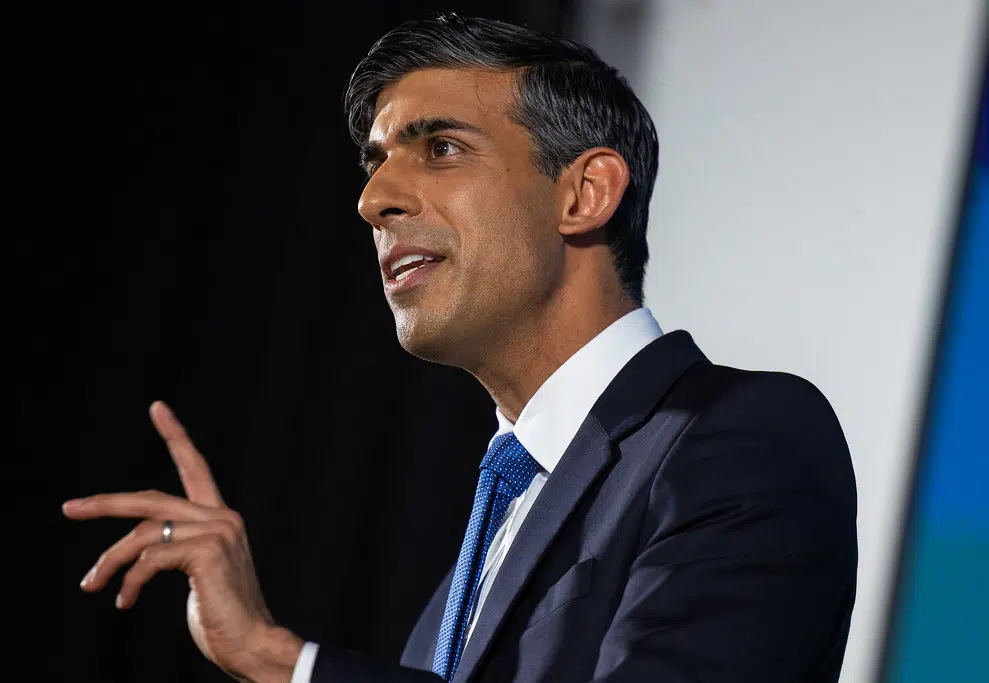
Moments before Rishi Sunak took to the stage at the Conservative Party Conference, a video flashed on a screen. Images of fields, children, roads and vaccines appeared above the heads of the hundreds waiting for the PM’s speech. “Change is…” the words read. “Change is…the Conservatives.”
In his address in Manchester, the prime minister told his party: “It is time for a change.” He confirmed his intention to scrap HS2, Europe’s largest infrastructure project, claiming “the right thing to do when the facts change, is to have the courage to change.” And speaking about his decision to U-turn on manifesto net zero pledges, he added: “Change is difficult, particularly for those who disagree.”
Altogether, Sunak used the word change 30 times. You would be forgiven for thinking another party has been in power for the last 13 years.
The PM, who also served as chancellor for two and a half years, and before that was a senior minister in the Treasury, seems to be running a re-election strategy on the potential amnesia of the country.
This is someone who governs a party focused on conserving, asking voters to believe that another term of Conservative rule will change what has been a reality for the last 13: rising homelessness, a cost of living crisis, crippling rents, spiralling mortgage rates, attacks on minority communities, months of waiting for essential NHS treatment, and a system that puts corporate interest over workers.
While hoping you’ll forget his impact, the speech also hit some key Tory attack lines. Sunak demonised trans people, in an attempt to curry favour through division, and to outsource blame from those in power to those with none. He attempted to rewrite his own history, painting himself as someone with humble beginnings, rather than as someone who attended a £60,000 a year private school. He also bashed striking workers, pretending to care about a National Health Service he’s admitted to not using.
And then there’s everything that was left out. Housing, arguably one of the most important long-term strategies any government needs to form, was mostly absent from the speech. Sunak briefly mentioned housebuilding, which would have been helpful if he hadn’t ditched housebuilding targets in April. Otherwise, the biggest issue facing most young voters was ignored. Rents are rising at their fastest rate since records began, and no-fault evictions, which were meant to be banned under the delayed Renters Reform Bill, are still a leading cause of homelessness. The absence was deafening.
Ultimately, these contradictory threads of Sunak’s speech could cause his downfall. He offers no solution, just buzzwords. It speaks to an underestimation of the British people, to think that you can tell them you care about long-term decisions while scrapping long-term projects. He even deployed his wife, Akshata Murthy, to introduce him with a gushing speech, but refuses to speak about his family when challenged on things like their non-dom status.
Without a coherent pledge, voters may well feel unsure. Sitting in the hall and listening to him deliver his speech, there was a quiet sense of confusion.
It’s easy for Sunak to forget that we’re in a cost of living crisis. He is, after all, the richest Prime Minister we’ve ever had and is wealthy enough to buy himself out of problems. He sends his children to private schools, uses private healthcare to avoid waiting lists, and flies in a helicopter to avoid train cancellations.
Unfortunately for him, most of the country can’t forget.
Potential options for taxing wealth – based on Spain’s model – could raise significant funds for the public purse.
Image of loads of money
A new poll has revealed there is widespread support for ensuring the richest in society pay more in taxes in Britain. The survey was commissioned by the Trade Union Congress (TUC), ahead of its annual Congress, which starts in Liverpool this weekend.
The research found that over six in 10 people are calling for the wealthy to pay higher taxes, including over half (53 percent) of Tory voters in 2019. Three in four are also in favour of capital gains to be taxed at either the same rate or higher than income tax. This included 73 percent of Tory 2019 voters. Only 4% of the public think wealthy people should pay less tax, the survey found.
Paul Nowak, general secretary of the TUC, said it is time to “end the grotesque inequality of the Tories,” and that a national conversation about wealth tax needs to be had. The union body added that the Tories have allowed the wealthiest in Britain to “feather their nests” while working people have suffered the worst pay crisis for two centuries.
A new report from the National Federation for Education Research (NFER) has exposed the shocking scale of child poverty in England. The NFER surveyed senior leaders and teachers at state funded primary and secondary schools, and the results were staggering:
90 per cent of all schools were found to be providing uniforms and clothing to pupils
70 per cent of schools were found to be providing food through parcels, food banks, food vouchers or subsidised breakfasts.
84 per cent of senior school leaders report that the cost of living crisis has increased the numbers of pupils requiring additional support and the level of need they have.
More than a quarter of pupils in mainstream school require additional support for mental health and wellbeing.
80 per cent of school leaders agree that cost of living pressures have increased safeguarding concerns and/or incidents in their schools.
More than three fifths of mainstream school leaders report that 50 per cent or more of pupils receiving additional support are not eligible for pupil premium (a scheme that provides additional funding for disadvantaged pupils).
Average income for UK workers will be worse in 2024 than 2019, think tank predicts
This parliament is the worst on record for income growth, a think tank has concluded after research into UK living standards revealed the average income for a UK worker is projected to be 4% lower in 2024 than in 2019.
A report published today by Resolution Foundation laid out the likely backdrop of living standards for a 2024 election, and, unsurprisingly, it does not look good for the Tory Government.
Although Rishi Sunak may meet his target of halving inflation by the end of 2023, the report lays out little sign of relief from cost of living pressures into the future, predicting three-years of income stagnation for UK workers, into 2025-26.
With a looming general election, this does not bode well for the Tories, with no example of a government ever managing to retain power with such a weak median income growth since comparable records began in the 1960s.