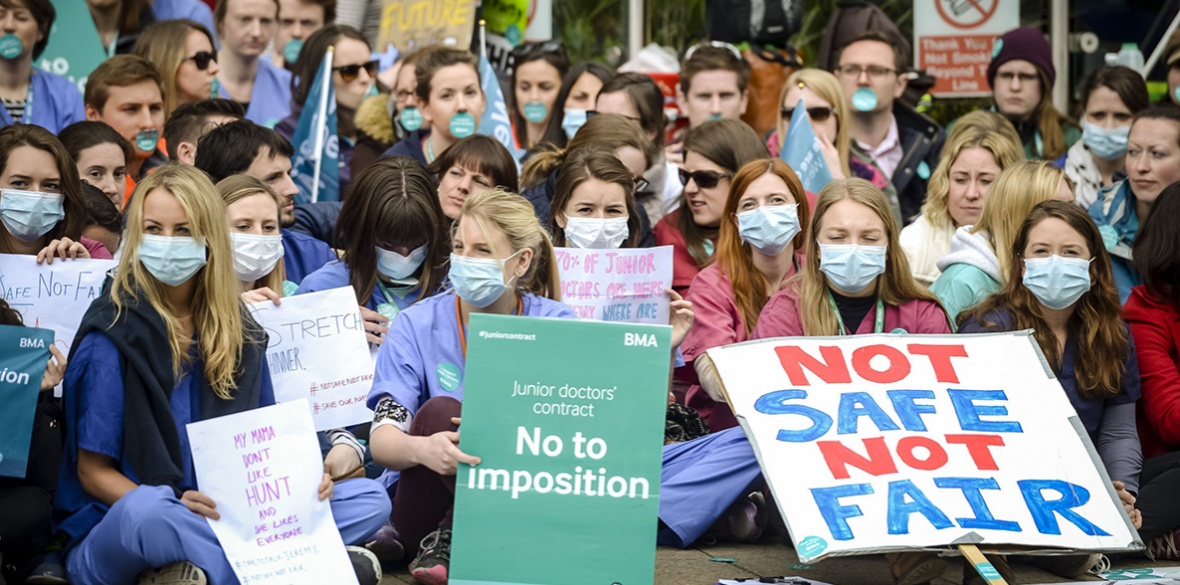
Junior doctors wear scrubs and masks as they sit down in a silent protest outside Bristol Royal Infirmary on the second day of all-out strike action in April 2016
JUNIOR doctors in England have voted overwhelmingly to take strike action over pay, their union the British Medical Association (BMA) announced today.
Almost 37,000 members of the union took part in the ballots with 98 per cent saying they were in favour of striking, which the BMA said will be a three-day action.
The vote is the largest turnout for a ballot of doctors by the BMA, and a record number of junior doctors voted for strike action.
BMA junior doctors committee co-chairs Dr Robert Laurenson and Dr Vivek Trivedi said: “The government has only itself to blame, standing by in silent indifference as our members are forced to take this difficult decision.”
THE Mayor of London unveiled an emergency scheme today to extend free school meals to every primary school pupil in the capital for one year.
Sadiq Khan said the one-off £130m programme, which comes into effect from September, is an effort to help struggling households amid the cost-of-living crisis.
Funded by extra business rates income, it is estimated the move will help about 270,000 primary school pupils and save families in London about £440 per child over the year.
Currently, households in England receiving universal credit must earn less than £7,400 a year before benefits and after tax to qualify for free school meals.
Exclusive: Energy regulator did nothing about mountain of complaints until British Gas prepayment scandal was revealed
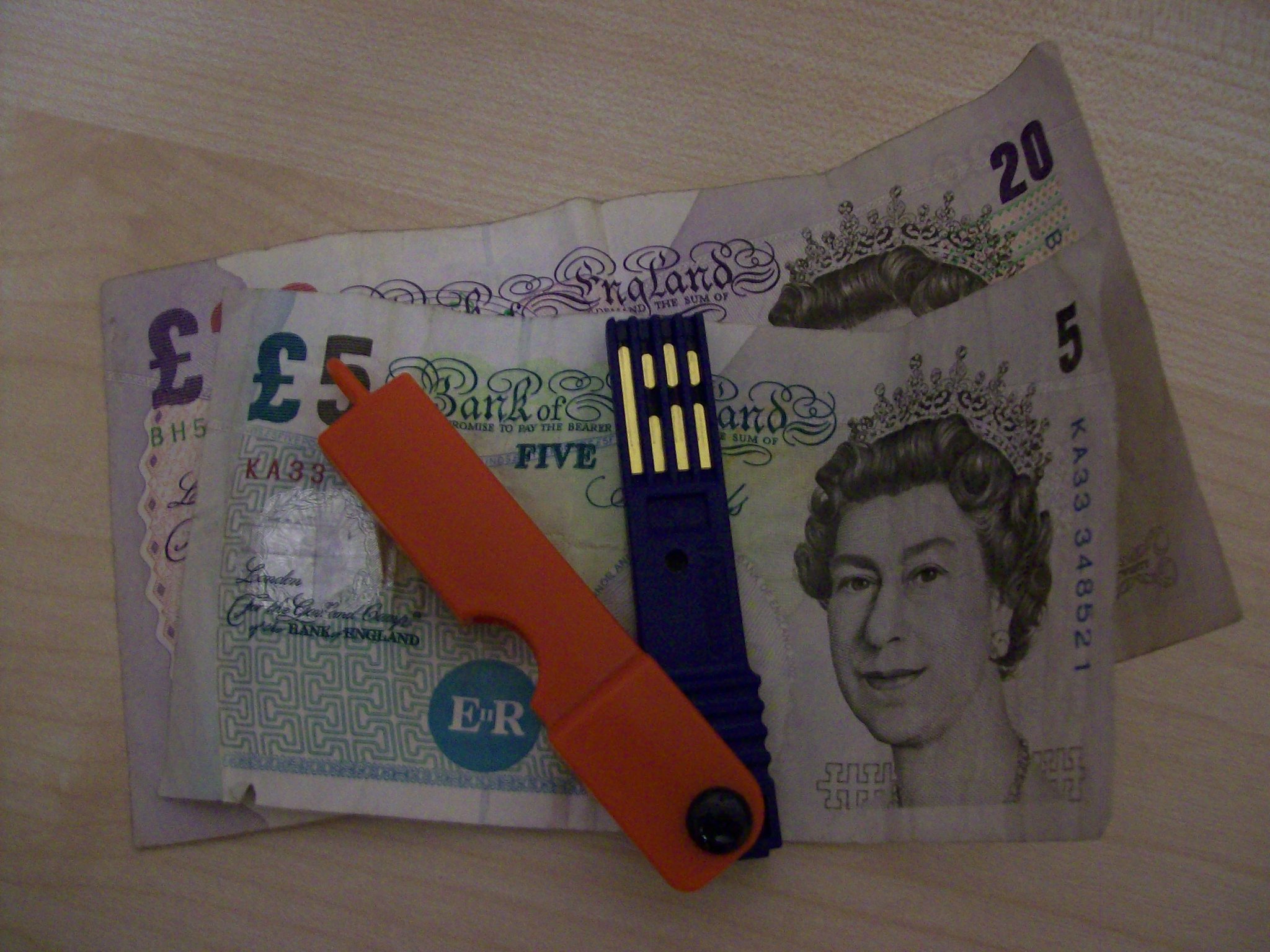
More than 30,000 complaints were about the disconnection and forced installation of prepayment meters. Image of banknotes and a prepayment meter key
Energy companies received more than 700,000 complaints about their treatment of debt-ridden customers over the last five years, openDemocracy can reveal.
In the last year alone, the energy regulator Ofgem was made aware of 40,000 complaints relating to the controversial forced fitting or disconnecting of pre-payment meters.
Yet the watchdog was only forced into action earlier this month when an undercover Times investigation found British Gas had sent bailiffs to break into vulnerable people’s homes and fit the meters by force. Following the expose, it suspended the practice until the end of March.
Centrica, the owner of British Gas, announced today that its profit had hit £3.3bn for 2022 – more than triple the £948m it made in 2021 – just weeks after the regulator launched an investigation into its use of bailiffs against at-risk customers.
Now, data obtained by openDemocracy through a Freedom of Information request has revealed for the first time the scale of alleged mistreatment of vulnerable customers since the energy price cap was first hiked in April.
“Ofgem has known about this crisis for years, and so have the companies themselves. Suppliers are not being honest when they act like they’ve just discovered it and they’re shocked, like the CEO of Centrica did,” Ruth London, co-founder of the Fuel Poverty Action campaign group, told openDemocracy.
Energy companies are required to report the number of complaints they receive from customers every month to Ofgem. Last year, they received 161,103 complaints related to disconnection and debt issues – of which 40,458 were about pre-payment meters – though Ofgem has consistently refused to tell us which suppliers received the most.
The category includes complaints from customers about their energy supply being disconnected or having a prepayment meter installed forcibly without a warrant or despite them being vulnerable.
Other examples of complaints include customers being disconnected by error or without due process and being put on debt repayment plans that are unsuitable or unaffordable.
The true number of people being ill-treated is likely to be much higher. Ofgem revealed at the beginning of February that customers were being left on hold for hours by energy companies, leading to more than half hanging up before they could report an issue.
Ofgem said revealing how many complaints different companies had received would breach Section 105 of the 2000 Utilities Act, which states that the public disclosure of information companies supply to the regulator is prohibited in order to protect national security. The law has previously been criticised for preventing whistleblowers from raising issues about the energy sector that are in the public interest.
The regulator said after the British Gas scandal broke that it was “unacceptable” to forcibly install prepayment meters before all other options had been exhausted.
But charities have criticised it for ignoring calls to end the practice for months.
“Lives have been and are being lost because of their silence and refusal to act on the truth they have long known,” said London.
Clare Moriarty, the chief executive of Citizens Advice, said it “should not have taken this long” for Ofgem to act.
The charity said it saw more people unable to afford to top up their pre-payment metre last year than for the entirety of the previous decade combined.
The Times reported that British Gas customers who had prepayment meters forcibly installed had included a woman in her 50s who the company’s bailiffs were told had severe mental health problems and a mother whose “daughter is disabled and has a hoist and electric wheelchair”.
The paper’s undercover investigation also alleged that the Arvato Financial Solutions employees were incentivised with bonuses to fit prepayment meters. The boss of British Gas owner Centrica apologised and said he was “disappointed, livid and gutted”.
Peter Smith, policy director at the charity National Energy Action, said: “The recent announcement by major suppliers that they would temporarily pause forced installations of pre-payment meters is welcome, but this was prompted by public shaming of suppliers and there is still no market-wide ban.
“We also desperately need a coherent plan to help millions of people already trapped on prepayment meters. This means rewiring the energy market to provide more affordable tariffs and finding new ways to address the underlying debt issues which are rife due to soaring energy costs.”
Richard Lane, Director of External Affairs at StepChange Debt Charity, said: “We welcome Ofgem’s move to suspend the forced installation of prepayment meters (PPMs), but it’s clear that thousands of households have been struggling with energy bills for some time now, which is evident in our own client data.
“For the people that have already been moved onto PPMs, there must be better protection to prevent self-disconnection and extreme energy rationing.”
Updated, 16 February 2023:This story has been amended to include fresh data obtained through freedom of information law on the number of complaints notified to Ofgem between 2018 and 2022. Previously, it just contained data for 10 months of 2022.
RMT announced further strike action today, as well as an overtime ban in the ongoing battle with bosses over pay, job security and working conditions.
Rail union RMT will take nationwide strike action across the railways on March 16 after employers refused to put any new offers on the table.
The union, which represents 40,000 workers across Network Rail and 14 train operators, rejected offers from employers last week, as they did not meet the needs of members on pay, job security or working conditions.
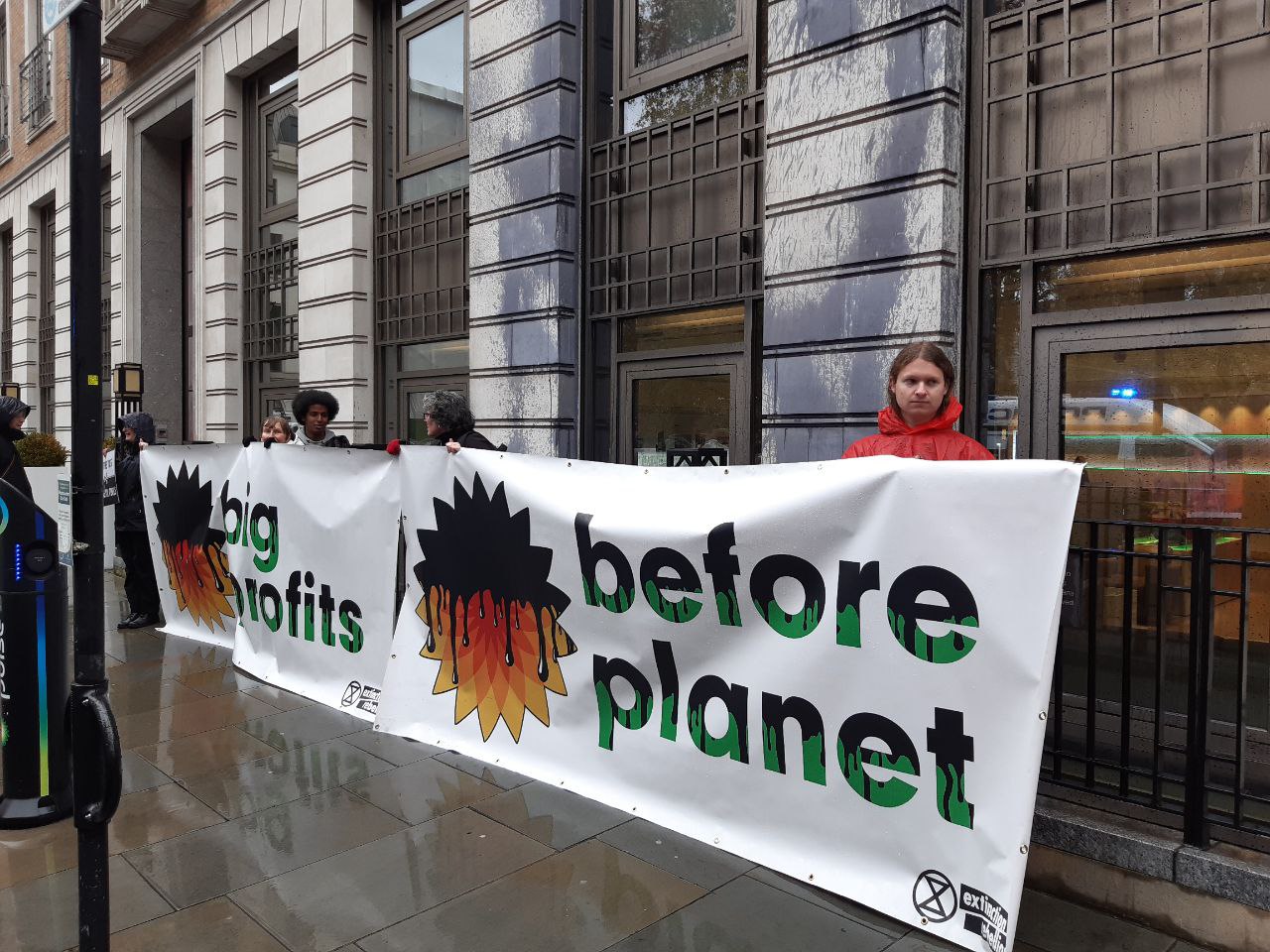
Campaigners call for polluters’ tax as oil firms make record gains
UNION leaders have attacked Tory weakness on taxing big oil companies after BP announced record-high profits off the back of the energy crisis.
As millions struggle to heat their homes across the UK, the energy giant revealed it raked in $27.7bn (£23bn) in profit in 2022 — more than double the previous year.
The firm also admitted that it will miss its carbon emissions pledge, saying it was now aiming to reduce emissions by 20-30 per cent by 2030, down from 35-45 per cent, and will continue to invest in oil and gas.
It comes after oil firm Shell also reported bumper profits last week, totalling an eye-watering $40bn (£33bn) — the highest in the company’s 115-year history — with both firms benefiting from the sharp rise in energy prices linked to the war in Ukraine.
The obscene profits have sparked renewed calls for PM Rishi Sunak to toughen the government’s “inadequate windfall tax on energy firms.”