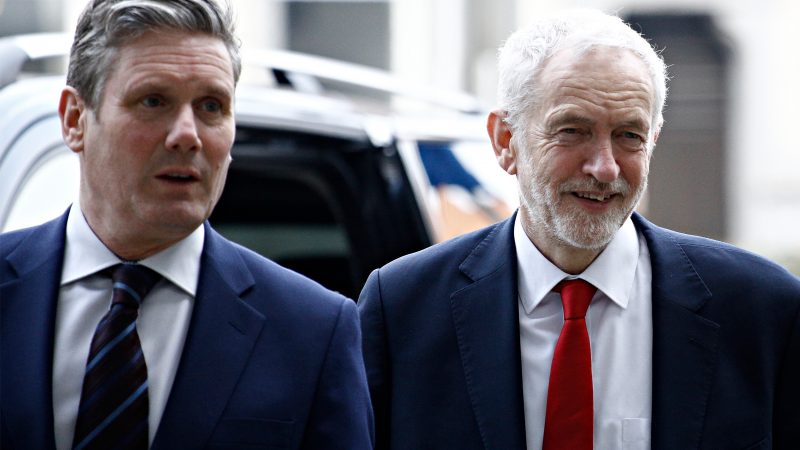
Majority describe the UK Labour government as sleazy

Spread the love
Majority describe UK's Labour government as sleazy. Source: YouGov.
Majority describe UK’s Labour government as sleazy. Source: YouGov.
Keir Starmer justifies why he has to travel abroad so much
Keir Starmer, Angela Rayner and Rachel Reeves wear the uniform of the rich and powerful. They have all had clothes bought for them by multi-millionaire Labour donor Lord Alli. CORRECTION: It appears that Rachel Reeves clothing was provided by Juliet Rosenfeld.
Keir Starmer explains that he feels no shame or guilt benefiting personally from gifts from the rich and powerful while insisting on policies of severe austerity.
Deputy Labour Party Leader Angela Rayner calls for police to kill and harass innocent people.
Continue ReadingMajority describe the UK Labour government as sleazy

Green Party welcomes Gaza ceasefire and calls for root causes of the conflict to be addressed

Spread the love
Ellie Chowns, Green Party MP for North Herefordshire. CC image Wikipedia.

Ellie Chowns, MP for North Herefordshire and Green Party Foreign Affairs spokesperson, said: “I welcome the news of a ceasefire agreement between the Israeli government and Hamas. This is a vital step to halt the devastating violence that has claimed tens of thousands of lives and caused unimaginable suffering, particularly for the people of Gaza. I also welcome reports that hostages are being released, bringing relief to many families.

“The Green Party has been calling for a ceasefire since October 2023, and while this agreement offers hope, it must mark the beginning of addressing the root causes of the conflict. The ongoing occupation, the siege of Gaza, and systemic violations of Palestinian rights cannot continue.

“The UK government must formally recognise the State of Palestine. Recognising Palestine is a vital step toward justice, equality, and a sustainable peace. It demonstrates a commitment to international law and a balanced approach to the region.

“Suspending some arms sales to Israel is not enough. The Green Party has consistently called for a full suspension of all arms exports to the Israeli military. This includes UK-supplied weapons parts, such as components of the F-35 Joint Strike Fighter, which evidence suggests have been used in ways that violate international law and exacerbate the humanitarian crisis.

“The UK must support efforts to hold all those responsible for violations of international law accountable. We must ensure that humanitarian aid flows freely into Gaza to address the urgent needs of those who have endured this catastrophic violence.

“True peace requires justice, dignity, and equality for all people in the region. This is a moment for global leaders to act with courage and commitment, working towards a future where Palestinians and Israelis can live in peace, free from fear, violence, and oppression. Let us ensure that this ceasefire marks not just the end of the bombs, but the beginning of a pathway to lasting peace and justice.”

Experiencing issues with this image not appearing. I suspect because it's so critical of Zionist Keir Starmer's support of and complicity in Israel's genocides.
Genocide denier and Current UK Prime Minister Keir Starmer is quoted that he supports Zionism without qualification. He also confirms that UK air force support has been essential in Israel’s mass-murdering genocide. Includes URLs https://www.declassifieduk.org/keir-starmers-100-spy-flights-over-gaza-in-support-of-israel/ and https://youtu.be/O74hZCKKdpA
UK Foreign Minister David Lammy confirms that UK government and military are active participants in Israel’s genocides and that the F-35 parts that they suspended from supplying to Israel are instead simply diverted via the United States. He says see https://youtu.be/QILgUHrdWRE
Continue ReadingGreen Party welcomes Gaza ceasefire and calls for root causes of the conflict to be addressed

How the UK’s plans for AI could derail net zero – the numbers explained

Spread the love
Data centres use an enormous amount of electricity for cooling and to power servers. Andia/Alamy Stock Photo

Tom Jackson, Loughborough University and Ian R. Hodgkinson, Loughborough University

The UK government’s goal to increase public-controlled artificial intelligence computing power twentyfold by 2030 would significantly raise electricity demand. Can renewable energy supply meet it – and still have enough left over to electrify sectors like heating and transport, which must be fully decarbonised by 2050?

First, let’s discuss why AI is so energy intensive. AI systems demand a huge amount of computing power. The creation and use of AI involves training the programmes on models and algorithms that must be invented and calibrated, all of which demands computing power. Then, that AI model must draw conclusions from the new data it is fed, which is another energy-intensive process in itself.

The need for more and more computing power has risen sharply as AI has become more sophisticated. Computing power is becoming scarce as a result and is a major bottleneck for the further development and use of AI. Indeed, the UK’s national AI strategy published in 2021, recognised that computing power capacity must be increased if the potential of AI is to be realised.

The more sophisticated the AI, typically, the more energy intensive it is. This has significant implications for the UK.

How much energy does the AI rollout need?

Data centres (facilities that store, process and distribute data) are a significant and growing consumer of electricity. From training complex AI models, which requires immense computational power and data storage, to running data through trained AI models to make predictions or solve tasks, data centres are central to every stage of AI’s use and development.

According to estimates by the International Energy Agency, data centres globally account for approximately 1%-1.3% of total electricity consumption. One recent observation suggests that developing the most sophisticated AI systems currently requires a fourfold increase in the amount of computing power annually. The total amount of data required for AI training has also risen by 2.5 times a year, increasing reliance on data centres.

Pylons at sunset.
Britain’s electricity grid will strain to meet rising demand even without AI. SuxxesPhoto/Shutterstock

In the UK, AI and related infrastructure consumed around 3.6 terawatt-hours (TWh) of electricity in 2020. If this consumption increases twentyfold, as per the government’s target, it could reach 72 TWh by 2030. This would represent over one-quarter of the UK’s total electricity consumption in 2021, which was approximately 261 TWh.

The rapid growth in AI computing requires careful planning. However, data centres are only part of the equation. The devices that use AI, such as sensors in smart homes, gas and electricity meters, routers, wifi hubs, streaming devices and social media platforms, could add significant energy demand that is difficult to estimate.

These additional components of AI’s total energy consumption are often overlooked.

Renewable energy growth is insufficient

The UK has made significant strides in renewable energy production, with wind and solar power contributing over 40% of electricity in recent years.

However, our projections, reported in the journal Energy Policy, indicate that global renewable electricity supply will not meet surging demand from global digital data growth.

Our research considered different scenarios for AI’s energy use. The UK’s target of a twentyfold increase in AI computing power by 2030 is certainly a high-consumption scenario, in which energy demand from digital infrastructure alone could outpace the growth of renewable energy capacity.

At the same time, the UK’s decarbonisation hinges on electrifying transport and heating, sectors traditionally reliant on fossil fuels: replacing natural gas boilers with electric heat pumps and combustion engine cars with electric vehicles. These will require substantial increases in electricity supply.

A row of electric cars plugged into public chargers.
Britain’s electric vehicle charging network will need to expand to decarbonise transport. Shutterstock

However, solving this problem will not just require expanding renewable energy production. The energy efficiency of AI systems and related technologies must improve too. Ensuring that the energy needed for AI and other digital advancements is sustainably sourced, without compromising broader net zero goals, will require a combination of government policy, technological innovation and public awareness.

AI’s growing electricity needs could exacerbate competition for limited renewable energy resources. This competition risks increasing reliance on fossil fuels, especially during periods of peak energy demand. If additional renewable capacity cannot be deployed quickly enough, the UK might face a scenario where AI-driven electricity demand increases overall emissions rather than reducing them.

The UK’s commitment to a twentyfold increase in public AI computing power by 2030 presents an immense challenge for the country’s electricity system. Meeting this goal sustainably will require balancing AI’s energy needs with broader electrification goals and renewable energy limitations.

Without immediate and concerted efforts to expand renewable energy and improve efficiency, AI’s electricity demands could hinder the transition to a net zero future.


Don’t have time to read about climate change as much as you’d like?
Get a weekly roundup in your inbox instead. Every Wednesday, The Conversation’s environment editor writes Imagine, a short email that goes a little deeper into just one climate issue. Join the 40,000+ readers who’ve subscribed so far.


Tom Jackson, Professor of Information and Knowledge Management, Loughborough University and Ian R. Hodgkinson, Professor of Strategy, Loughborough University

This article is republished from The Conversation under a Creative Commons license. Read the original article.

Continue ReadingHow the UK’s plans for AI could derail net zero – the numbers explained

Labour doubles down on slashing billions from DWP’s disability benefits bill

Spread the love

https://www.bigissue.com/news/social-justice/dwp-disability-benefits-bill-high-court-ruling/

Work and pensions secretary Liz Kendall speaking in parliament. Image: House of Commons/ Flickr

The Labour government has indicated that it will stick with Tory plans to cut disability benefits after a High Court judge ruled the previous government’s consultation into the plans was unlawful.

The proposals would cut around £400 a month from the disability benefits of hundreds of thousands of new applicants by 2029, compared to what they would receive under the current system.

Earlier today (16 January) Mr Justice Calver ruled in favour of disability activist Ellen Clifford, who had brought a judicial review of the public consultation that was held by the Department for Work and Pensions (DWP) in autumn 2023. 

The proposals would change the way the work capability assessment (WCA) functions, by reducing the weight attached to difficulties with mobility and getting around in considering applicants’ level of disability

Responding to today’s verdict, a government spokesperson said: “The judge has found the previous government failed to adequately explain their proposals. As part of wider reforms that help people into work and ensure fiscal sustainability, the government will re-consult on the WCA descriptor changes, addressing the shortcomings in the previous consultation, in light of the judgment.

“The government intends to deliver the full level of savings in the public finances forecasts.”

It is not clear if Labour will consult on all the proposals in the original consultation, some of which were subsequently dropped, or whether it will only consult on the proposals that the last government chose to take forward.

The High Court ruling doesn’t force the government to ditch the proposals, although it would make it very difficult to proceed with them without holding a new consultation first. 

Article continues at https://www.bigissue.com/news/social-justice/dwp-disability-benefits-bill-high-court-ruling/

Continue ReadingLabour doubles down on slashing billions from DWP’s disability benefits bill