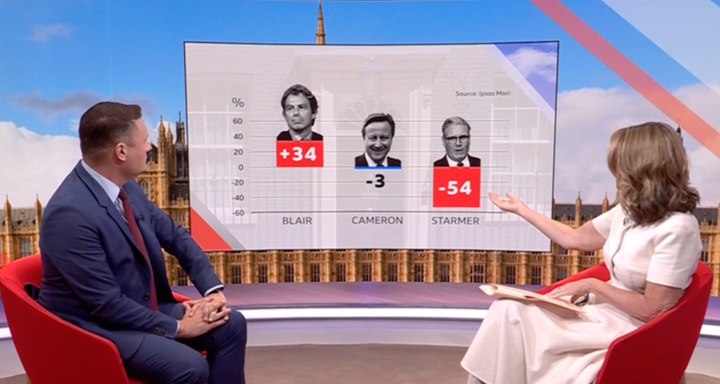
Keir Starmer’s Deep Unpopularity With Voters Laid Bare In 1 Stunning Graphic
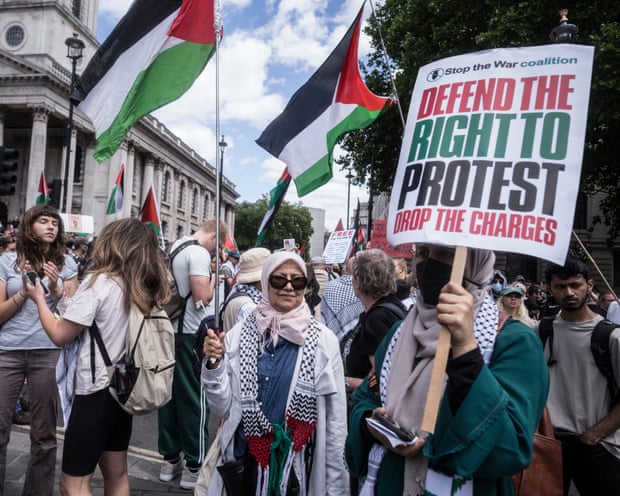
Home Office staff are concerned about the “absurd” decision to ban Palestine Action under UK anti-terrorism laws, a senior civil servant has said.
On Monday the home secretary, Yvette Cooper, announced plans to ban the group, which would make membership of it, or inviting support for it, a criminal offence under the Terrorism Act, carrying a maximum sentence of 14 years in prison.
It would be the first time a direct action protest group has been classified as a terrorist organisation, joining the likes of Islamic State, al-Qaida and National Action. The move has been condemned as draconian by many other protest groups, civil society organisations and politicians of different stripes.
A senior Home Office official, who requested anonymity as they are not allowed to speak to the press, said concerns about proscribing Palestine Action extended into the home secretary’s own department.
“My colleagues and I were shocked by the announcement,” they said. “All week, the office has been a very tense atmosphere, charged with concern about treating a non-violent protest group the same as actual terrorist organisations like Isis, and the dangerous precedent this sets.
…
Article continues at https://www.theguardian.com/politics/2025/jun/28/home-office-staff-concerned-about-absurd-palestine-action-ban-says-senior-civil-servant


Original article by Ana Vračar republished from peoples dispatch under a Creative Commons Attribution-ShareAlike 4.0 (CC BY-SA) license.
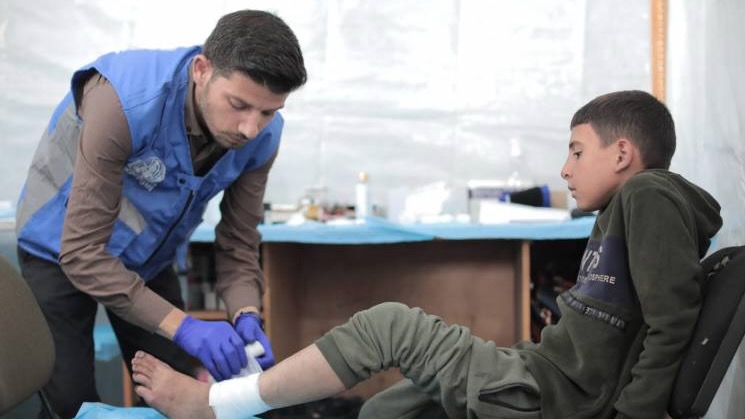
Less than half of all health facilities in the Gaza Strip remain partially operational and capable of providing basic primary care and surgery, the Al Mezan Center for Human Rights warned in a press release. Israeli attacks have rendered nearly all hospitals in northern Gaza non-functional, destroying dialysis units, oncology departments, and rehabilitation centers. The threat of total shutdown is now advancing into the southern governorates: the European Hospital has already been forced to close due to the attacks, and the Nasser Medical Center could be next in line.
This major institution has been operating far beyond capacity for weeks and is under imminent threat of closure, according to both international and non-governmental organizations. “Its closure would deprive thousands of access to critical healthcare and effectively amounts to a death sentence for the wounded and sick in the southern district,” Al Mezan reported.
According to the Jewish Voice for Peace (JVP) Health Advisory Council, most patients at Nasser Medical Center are victims of direct sniper shots to the head or chest, illustrating the deliberate targeting of Palestinians by Israeli forces.
The crisis at Nasser, as with other medical facilities, is worsened by widespread shortages of essential supplies. Over 50% of medications for chronic conditions are unavailable, 64% of cancer and hematology drugs are missing, and the shortage of orthopedic equipment has reached nearly 90%, according to health organizations. Both the JVP Health Advisory Council and United Nations agencies have highlighted that the lack of basic items such as gauze, medicines, and surgical equipment is forcing medical staff into extreme triage decisions. “Medical teams have been forced to reuse equipment – sterilizing and repurposing implants from recovered patients – due to the acute shortage of these items,” Al Mezan stated.
Fuel shortages are of particular concern, as they endanger the functioning of critical medical devices such as ventilators in neonatal intensive care units (NICUs). “Newborns in NICUs are often too small to breathe on their own – they need ventilators and oxygen to survive,” staff from Doctors Without Borders (MSF) pointed out. “The charade of only allowing medical and fuel supplies at the very last minute before a looming disaster is nothing but a band-aid on a gushing wound.”
At the same time, hunger is sweeping through Gaza. Following Israel’s months-long blockade of aid and the weaponization of humanitarian deliveries, most of the population is experiencing rising degrees of malnutrition. This is impacting public health in multiple ways, including reducing the pool of eligible blood donors, even as blood banks face dire shortages.
“We are missing everything: medical consumables like gauze, medications, and food for our patients,” said MSF nursing manager Katja Storck. “This also includes therapeutic food for people with malnutrition, especially children.”
By June 15, nearly 19,000 children under five had received treatment for malnutrition, though this likely underrepresents the full extent of the crisis. As the JVP Health Advisory Council noted, these cases emerged “within a population where wasting was non-existent 20 months ago.” Malnutrition is not only increasing susceptibility to infectious disease, but is also causing serious long-term effects such as stunted growth and mental health problems. Prenatal health is also affected: one in five newborns is now being born preterm or underweight.
While many adults are trying to shield children from hunger by reducing their own intake, most coping strategies are ineffective under the conditions imposed by the occupation. “Most families reported surviving on one meager meal a day – thin broths, lentils or rice with salt, macaroni, cans of beans or peas, and boiled legumes,” UN sources reported. “One third said they go entire days without eating or rely on a single piece of bread and duqqa.”
Read more: Palestinian labor in settlements: Wasting life and accumulating waste
Beyond hunger caused by Israel’s blockade, Palestinians in Gaza are also facing an escalating water crisis. With much of the water infrastructure destroyed and fuel to power desalination plants missing, access to safe drinking water has plummeted. In Deir al-Balah, 97% of residents reported being unable to obtain adequate water. “This is Gaza’s most critical moment since this war on children began – a woeful bar to sink below,” UNICEF spokesperson James Elder stated on June 20. “A virtual blockade is in place; humanitarian aid is being sidelined; the daily killing of girls and boys in Gaza does not register; and now a deliberate fuel crisis is severing Palestinians’ most essential element for survival: water.
Original article by Ana Vračar republished from peoples dispatch under a Creative Commons Attribution-ShareAlike 4.0 (CC BY-SA) license.


Channel 4 will air a documentary about the plight of medics in Gaza after the BBC last week announced that it would not show the film after concerns it may create “a perception of partiality that would not meet the high standards that the public rightly expect”.
The BBC had commissioned Gaza: Doctors Under Attack more than a year ago from an independent production company called Basement Films but had delayed airing it until an ongoing review into a different programme on the region was completed.
The one-off documentary, which includes witness accounts from frontline Palestinian health workers in Gaza and documents attacks on hospitals and clinics, will now air on Channel 4 on 2 July at 10pm.
…
Louisa Compton, Channel 4’s head of news and current affairs and specialist factual and sport, said in a statement: “This is a meticulously reported and important film examining evidence which supports allegations of grave breaches of international law by Israeli forces that deserves to be widely seen and exemplifies Channel 4’s commitment to brave and fearless journalism.”
In an op-ed, Compton further explained: “We are showing this programme because we believe that, following thorough factchecking and verification, we are presenting a duly impartial view of a subject that both divides opinion and frequently provokes dispute about what constitutes a fact.
…
Original article at https://www.theguardian.com/media/2025/jun/28/channel-4-to-show-bbc-commissioned-documentary-gaza-doctors-under-attack