Starmer’s war on the Labour left is class war

Spread the love
Starmer, image stolen from da web

dizzy: An article discussing how Starmer is the other cheek on the Capitalist arse ;) I have no idea how such actions would be received, I hope that Corbyn seriously considers defecting to the Green Party.

Starmer’s war on the Labour left is class war

LABOUR’S national executive (NEC) is due to consider a motion in Keir Starmer’s name on Tuesday confirming that Jeremy Corbyn will not be endorsed as a candidate for the party at the next election.

Nobody will be surprised at this long-trailed development.

From Corbyn’s first, unjustifiable, suspension from the party in autumn 2020 and Starmer’s subsequent refusal to restore the whip once his membership status was reaffirmed by the NEC, the left has responded hesitantly and incoherently.

It is impossible — as union leaders frequently point out — to address the the crisis in the NHS, the rigged energy market or the causes of disputes from mail to rail without looking at the longer-term causes in privatisation, marketisation and outsourcing.

Corbyn is being exorcised for having demonstrated how popular these solutions are.

If our movement is serious about changing this country and the rotten deal it forces on workers, Starmer’s attacks on Corbyn are not an unfortunate aside. They are part of the class war being waged against us.

Starmer’s war on the Labour left is class war

Continue ReadingStarmer’s war on the Labour left is class war

Invading Iraq is what we did instead of tackling climate change

Spread the love

Original article well said by Adam Ramsay republished from openDemocracy under a Creative Commons Attribution-NonCommercial 4.0 International licence.
OPINION: Instead of launching a war, the US and UK could have weaned us off the fossil fuels that pay for the brutal regimes of dictators

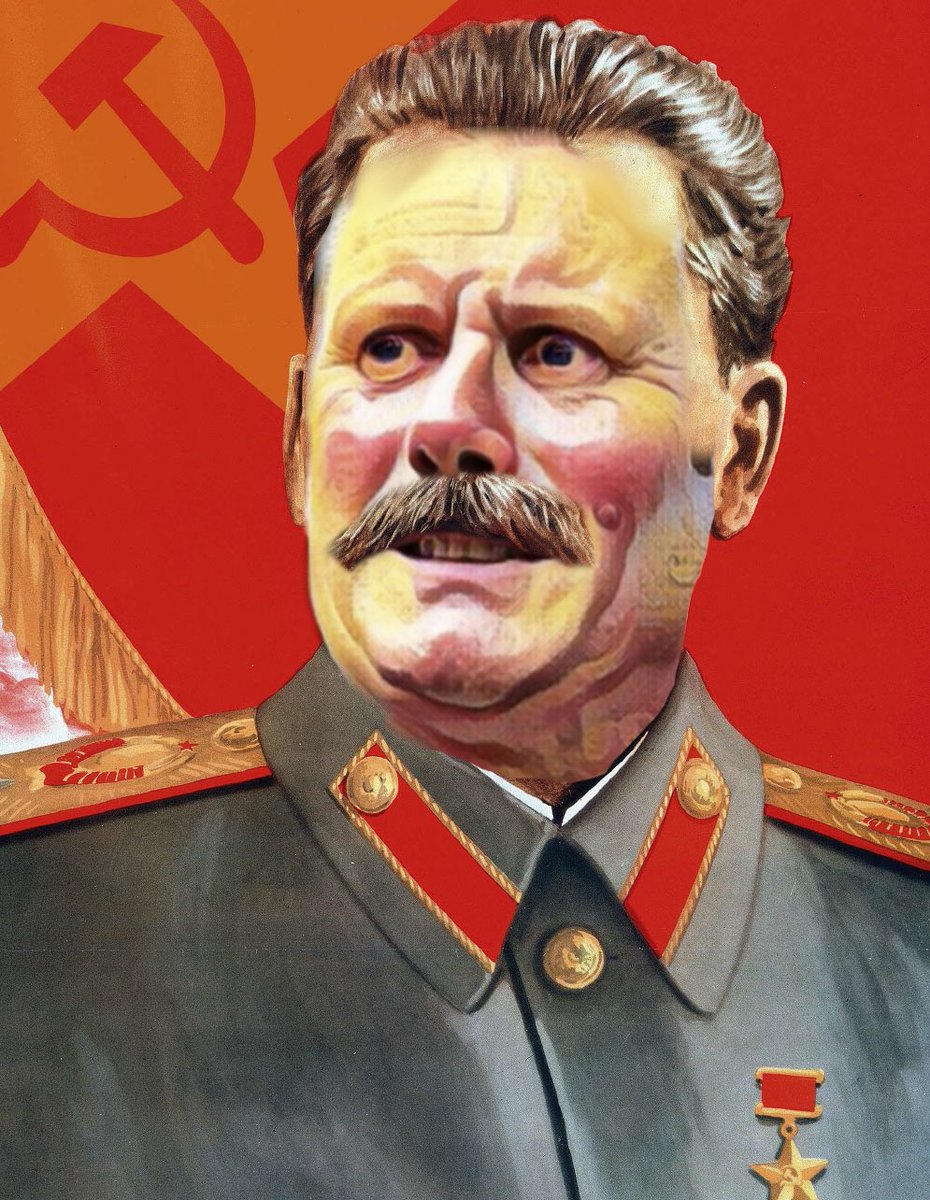
Traitor Tony Blair receives the Congressional Gold Medal of Honour from George 'Dubya' Bush
Traitor Tony Blair receives the Congressional Gold Medal of Honour from George ‘Dubya’ Bush

Twenty years ago today, [20 March] war was once again unleashed on Baghdad. In the UK – and much of the rest of the world – people sat in front of their TVs watching the skies above the ancient city flash with flame as buildings were rendered to rubble, the limbs and lives inside crushed.

The real victims of George Bush and Tony Blair’s shock and awe were, of course, the people of Iraq. Estimates of violent deaths range from a hundred thousand to a million. That doesn’t include the arms and legs that were lost, the families devastated, the melted minds and broken souls, trauma that will shatter down generations. It doesn’t include anyone killed in the conflict since then: there are still British and US troops in the country. It doesn’t include the poverty resulting from crushed infrastructure, the hopes abandoned and the potential immolated.

And that’s just the 2003 war: Britain has bombed Iraq in seven of the last 11 decades.

But in far gentler ways, the war was to shape the lives of those watching through their TVs, too. The invasion of Iraq – along with the other post-9/11 wars – was a road our governments chose irrevocably to drive us down. And we, too, have been changed by the journey.

The financial cost of the Iraq war to the US government, up to 2020, is estimated at $2trn. The post-9/11 wars together cost the US around $8trn, a quarter of its debt of $31trn. Much of the money was borrowed from foreign governments, in a debt boom which, some economists have argued, played a key role in the 2008 crash.

It was in this period, in particular, that China bought up billions of dollars of US government debt. Just before Barack Obama was elected in 2008, Beijing had overtaken Tokyo as the world’s largest holder of US Treasury bonds. Today, America’s neoconservatives are obsessed with China’s power over the US. What they rarely mention is that this was delivered by their wars in Iraq, Afghanistan and Pakistan.

Britain’s financial contribution was more meagre – in 2015 the UK government estimated it had spent £8.1bn on the invasion of Iraq, and around £21bn on Afghanistan. But these are hardly figures to be sniffed at.

Also significant, in both cases, is where this money went: the Iraq war saw a revolution in the outsourcing of violence. In 2003, when the war began, the UK foreign office spent £12.6m on private security firms. By 2015, just one contract – paying G4S to guard Britain’s embassy in Afghanistan – was worth £100m.

Over the course of the wars, the UK became the world centre for private military contractors – or, to use the old fashioned word, mercenaries. While many of these are private army units, others offer more specialist skills: retired senior British spooks now offer intelligence advice to central-Asian dictators and, as we found out with Cambridge Analytica during the Brexit vote, psychological operations teams who honed their skills in Iraq soon realised how much money they could make trialling their wares on the domestic population.

This vast expansion of the military industrial complex in both the US and UK hasn’t just done direct damage to our politics and economy – affecting the living standards of hundreds of millions of people across the world. It has also distorted our society, steered investment into militarised technology when research is desperately needed to address the climate and biodiversity crises.

Similarly, the war changed British politics. First, and perhaps most profoundly, because it was waged on a lie, perhaps the most notorious lie in modern Britain, that Saddam Hussein had weapons of mass destruction.

Acres of text have been written about the rapid decline in public trust in politicians in the UK in recent years. Very few grapple with the basic point – that, within the memory of most voters, a prime minister looked us in the eye, and told us that he had to lead us into war, based on a threat that turned out to be fictional. There are lots of reasons people increasingly don’t trust politicians – and therefore trust democracy less and less. But the Iraq war is a long way up the list.

Obama – who had opposed the war – managed to rally some of that breakdown of trust into a positive movement (whatever you think of his presidency, the movement behind it was positive). So did the SNP in Scotland.

But often, it went the other way. If the war hadn’t happened, would Cleggmania have swung the 2010 election from Gordon Brown to David Cameron? Probably not. And this, of course, led to the second great lie of modern British politics, the one about tuition fees and austerity.

Without the invasion, would Donald Trump have won in 2016? Would Brexit have happened?

There is a generation of us – now approaching our 40s – who were coming into political consciousness as Iraq was bombed. Many of us marched against the war, many more were horrified by it. The generation before us – Gen X – were amazingly unpolitical. Coming of age in the 1990s, at the end of history, very few got involved in social movements or joined political parties.

When I was involved in student politics in the years following Bush and Blair’s invasion, student unions across the UK were smashing turnout records. Soon, those enraged by the war found Make Poverty History, the climate crisis, the financial crisis and austerity. A generation of political organisers grew up through climate camps and Occupy and became a leading force behind Bernie Sanders and Jeremy Corbyn, helping organise a magnificent younger cohort of Gen-Zers which arrived after us.

But I shouldn’t end on a positive note. The disaster predicted by the millions across the world who marched against the war has played out. Hundreds of thousands have died. The Middle East continues to be dominated by dictators.

This war was justified on the grounds that Saddam was a threat to the world. But while his weapons of mass destruction were invented, scientists were already warning us about a very real risk; already telling us that we had a few short decades to address the climate crisis.

Rather than launching a war that would give the West access to some of the world’s largest oil reserves, the US and UK could have channelled their vast resources into weaning us off the fossil fuels that pay for the brutal regimes of dictators. Instead, we incinerated that money, and the world, with it.

Original article well said by Adam Ramsay republished from openDemocracy under a Creative Commons Attribution-NonCommercial 4.0 International licence.
Continue ReadingInvading Iraq is what we did instead of tackling climate change

Corbyn: We need to stand up for the future of our NHS

Spread the love

https://morningstaronline.co.uk/article/b/corbyn-we-need-to-stand-up-for-the-future-of-our-nhs

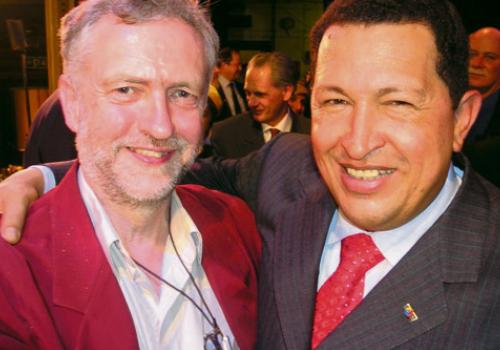
Image of Jeremy Corbyn and Hugo Chavez

Labour’s former leader spoke to the Morning Star’s CEREN SAGIR this weekend on the party’s current trajectory on the NHS, during a huge demonstration against further privatisation of the health service

WHEN Peace and Justice Project founder and Islington North MP Jeremy Corbyn warned the public by revealing evidence of the Tory government’s secret dealings with US companies selling off the NHS, the media labelled it “a Russian conspiracy.”

But it seems that Labour’s current leadership is determined to follow in the Tories’ footsteps, with Keir Starmer declaring that nothing is “off limits” when it comes to the NHS.

When asked if the NHS would be safe in the hands of the opposition if it were to win the next general election, Corbyn said: “I’d like to think so, but I’m very worried — because our NHS is a very precious institution: healthcare, universal and free at the point of need.

“If we go into an election pledged to continue the private operation within the NHS and farming services out to the private sector, then that is a form of privatisation.

https://morningstaronline.co.uk/article/b/corbyn-we-need-to-stand-up-for-the-future-of-our-nhs

Continue ReadingCorbyn: We need to stand up for the future of our NHS

Starmer’s Labour abstains on vote to protect journalists from state persecution, allowing Tory win

Spread the love

Original article republished from the Skwawkbox for non-Commercial use.

Yet another shameful episode from ‘long-time servant of the security state’ Starmer

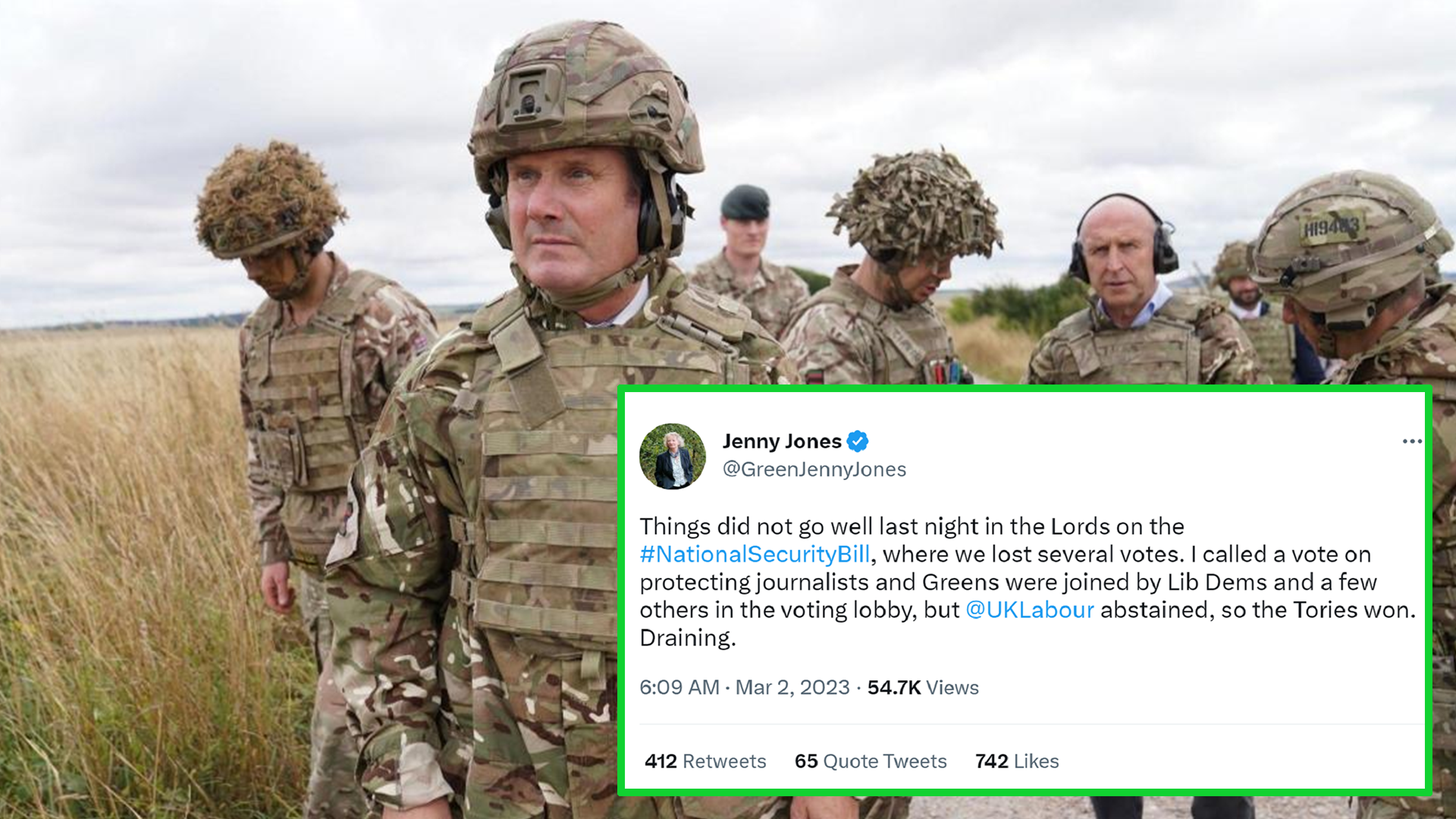
Image of Keir Starmer, thanks to The Skwawkbox

The UK’s lurch toward fascism continued last night with yet another shameful – and shamefully unsurprising – episode of cowardice and betrayal by Keir Starmer and the shell of the Labour party under his control.

With the Tories’ repressive ‘National Security Bill’ in the Lords last night, the Green party tried to rally support to protect journalists – and investigative journalism and therefore the interests of the UK people – from persecution under a bill widely recognised to be a measure to give the government freedom to act without scrutiny or accountability, turning the UK into a mini-US in its treatment of journalists for doing their job.

Even a handful of Tories in Parliament have pointed out that such vital revelations as the ‘Panama papers’ would not have been possible under the new bill and that the rights of women, minority groups and the wellbeing of citizens are under severe threat from the proposed new law.

So the Greens in the Lords called a vote to protect journalists – for the sake of all this country’s people. It was defeated, because Keir Starmer whipped Labour peers to abstain.

Keir Starmer has been called a ‘long-time servant of the British security state’ and his affiliations have been expressed in votes to protect state agents from even such crimes as rape and murder, his attacks on environmental and human rights protesters, his support for immunity for soldiers who murdered civilians in Northern Ireland and more. So his action in the Lords vote last night should surprise no one, but his decision to whip for abstention and engineer the defeat of the motion rather vote against it directly is another manifestation of his fundamental spinelessness.

He is avidly helping push this country along the road to fascism, but doesn’t have the moral courage even to nail his colours to the mast, instead hoping that telling Labour representatives not to vote at all will lessen the backlash against his betrayal.

Original article republished from the Skwawkbox for non-Commercial use.

Continue ReadingStarmer’s Labour abstains on vote to protect journalists from state persecution, allowing Tory win

Selection AND executive committees of Broxtowe Labour resign over candidate stitch-up (yet another one)

Spread the love

Original article republished from the Skwawkbox for non-Commercial use.

Starmeroids block another popular local candidate – in favour of parachuted Blairites

Original article republished from the Skwawkbox for non-Commercial use.

Two entire Labour committees have resigned after yet another candidate selection stitch-up by Keir Starmer and his drones in the Labour party.

Local favourite Greg Marshall – backed by figures from a wide spectrum of the party – tweeted news that the party had blocked him from the shortlist:

In response to the shameless rigging, the local party (CLP) selection committee resigned and issued a withering statement about London officials overriding local democracy:

Shortly afterward, the entire CLP executive resigned too over the ‘undemocratic’ behaviour of the party and its national executive (NEC):

Meanwhile, Anna Joy Rickard – a literal Blairite – was tweeting her joy at being shortlisted and was admonished by a local figure for her claim, when no shortlist had even been announced:

Broxtowe is just the latest in a series of shamelessly-rigged selections as the Labour right tries to eradicate the left, both in seats that Labour does not hold and in those it does – and a repeat of Labour’s routine tactic of fixing selections by making sure members can only choose from a shortlist of approved Blairites.

SKWAWKBOX needs your help. The site is provided free of charge but depends on the support of its readers to be viable. If you’d like to help it keep revealing the news as it is and not what the Establishment wants you to hear – and can afford to without hardship – please click here to arrange a one-off or modest monthly donation via PayPal or here to set up a monthly donation via GoCardless (SKWAWKBOX will contact you to confirm the GoCardless amount). Thanks for your solidarity so SKWAWKBOX can keep doing its job.

Continue ReadingSelection AND executive committees of Broxtowe Labour resign over candidate stitch-up (yet another one)