Big Tech’s ‘AI Climate Hoax’: Study Shows 74% of Industry’s Claims Unproven

Spread the love

Original article by Brad Reed republished from Common Dreams under Creative Commons (CC BY-NC-ND 3.0). 
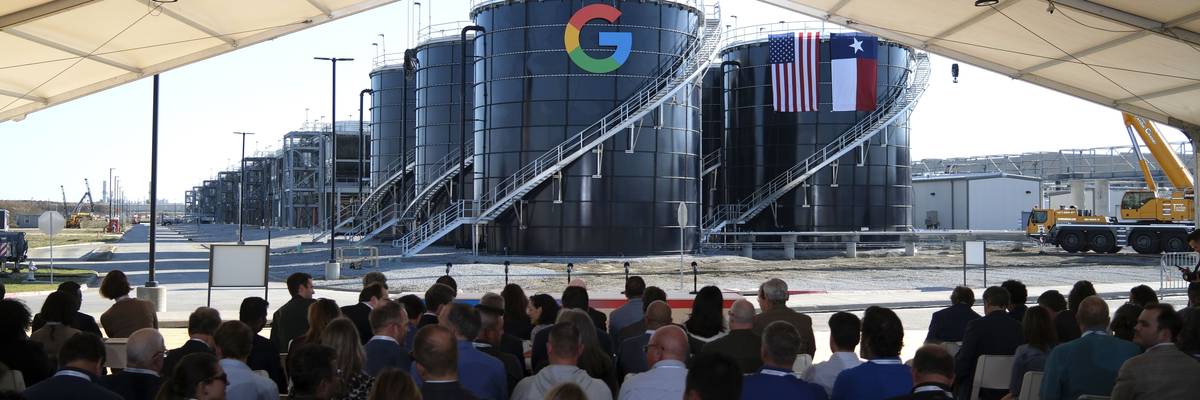
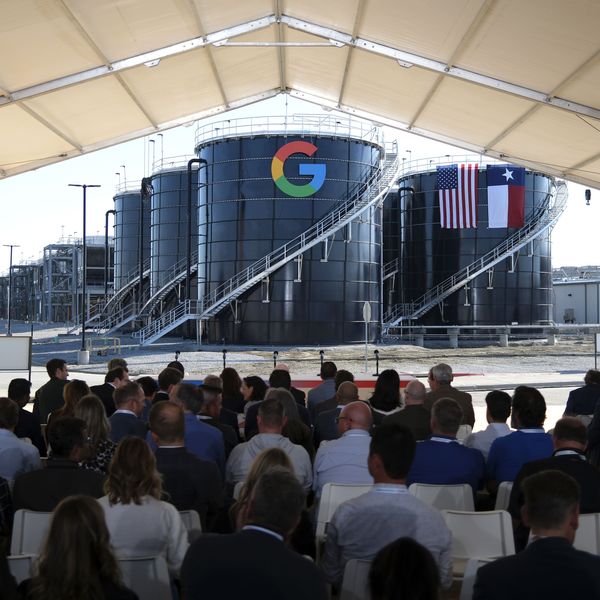
Attendees await the arrival of Texas Gov. Greg Abbott and Alphabet and Google CEO Sundar Pichai at the Google Midlothian Data Center on November 14, 2025 in Midlothian, Texas. (Photo by Ron Jenkins/Getty Images)

“Tech companies are using vagueness about what happens within energy-hogging data centers to greenwash a planet-wrecking expansion.”

A report released on Tuesday says that the tech industry is blowing hot air with its claims that generative artificial intelligence will be beneficial for the climate.

The report, titled “The AI Climate Hoax,” was commissioned by a broad consortium of environmental advocacy organizations and authored by climate and energy analyst Ketan Joshi.

RECOMMENDED…

Bernie Sanders 2/4/26

‘What a Surprise’: Sanders Undeterred by Bezos-Owned Washington Post’s Dismissal of AI Data Center Pause

Big Tech Faces More Probes Over AI-Generated Child Sexual Abuse Material

Big Tech Faces More Probes Over AI-Generated Child Sexual Abuse Material

In total, it analyzes more than 150 statements made by both big tech companies and organizations such as the International Energy Agency about the supposed benefits of generative AI.

The report finds that 74% of such claims made by these institutions are unproven, with 36% not bothering to cite any evidence whatsoever.

One key finding in the report is that many claims about the purported benefits of the technology conflate traditional AI systems with more recent generative AI systems, which require massive amounts of energy and are spurring demand for the construction of power-and-water-devouring data centers across the US.

“Even if these benefits are real,” the report writes of traditional AI systems, “they are unrelated to—and dwarfed by—the massive expansion of energy use from the generative AI industry,” which is projected to to consume 13 times as much energy as traditional AI by the year 2030.

Even the more supportable claims about the benefits of traditional AI deserve serious scrutiny, the report notes, since “they tend to rely on weaker forms of evidence, such as corporate websites, rather than published academic research,” which was only cited in 26% of claims made about AI benefits.

The report also knocks big tech companies for using assorted strategies to conceal the true extent of their energy use, including buying renewable energy certificates even while relying on fossil fuels to power their operations, and vowing to implement highly implausible solutions to mitigate the climate impact of data centers, including carbon capture technologies and even building orbital data centers in space.

Commenting on the report, study author Joshi said its findings seem to show “tech companies are using vagueness about what happens within energy-hogging data centers to greenwash a planet-wrecking expansion.”

“The promises of planet-saving tech remain hollow, while AI data centers breathe life into coal and gas every day,” Joshi added. “These claims of climate benefit are unjustified and overhyped, and could cover up irreversible damage being done to communities and society.”

Jill McArdle, international corporate campaigner at study sponsor Beyond Fossil Fuels, said the study shows “there is simply no evidence that AI will help the climate more than it will harm it,” and accused Big Tech companies of “writing themselves a blank cheque to pollute on the empty promise of future salvation.”

AI data centers have become a major controversy throughout the US in recent months, as their massive energy needs have pushed up utility bills and put a strain on communities’ water supplies.

A study published in the journal Nature Sustainability last year found that data centers could soon consume as much water as 10 million Americans and emit as much carbon dioxide as 10 million cars, or roughly the same amount of consumption as the entire state of New York.

Original article by Brad Reed republished from Common Dreams under Creative Commons (CC BY-NC-ND 3.0). 

Elon Musk urges you to be a Fascist like him, says that you can ignore facts and reality then.

Continue ReadingBig Tech’s ‘AI Climate Hoax’: Study Shows 74% of Industry’s Claims Unproven

Big Tech Faces More Probes Over AI-Generated Child Sexual Abuse Material

Spread the love

Original article by Brad Reed republished from Common Dreams under Creative Commons (CC BY-NC-ND 3.0). 

Guests including Mark Zuckerberg, Lauren Sanchez, Jeff Bezos, Sundar Pichai, and Elon Musk attend the Inauguration of Donald J. Trump in the US Capitol Rotunda on January 20, 2025 in Washington, DC. (Photo by Julia Demaree Nikhinson – Pool/Getty Images)

“These platforms are attacking the mental health, dignity, and rights of our sons and daughters,” said the Spanish president. “The state cannot allow it. The impunity of the giants must end.”

Big Tech firms are coming under greater scrutiny for the proliferation of child sexual abuse material generated by artificial intelligence-powered chatbots on their social media platforms.

Ireland’s Data Protection Commission (DPC) announced on Tuesday that it was invoking the European Union’s data privacy regulations to open an investigation into Grok, the AI chatbot featured on Elon Musk’s X platform, after it was used to generate nonconsensual deepfake images, including sexualized images of children.

RECOMMENDED…

Texas Governor Abbott And Google Make Economic Development Announcement In Midlothian

Big Tech’s ‘AI Climate Hoax’: Study Shows 74% of Industry’s Claims Unproven

Bernie Sanders 2/4/26

‘What a Surprise’: Sanders Undeterred by Bezos-Owned Washington Post’s Dismissal of AI Data Center Pause

In announcing the investigation, DPC Deputy Commissioner Graham Doyle said that the commission has been in contact with X for weeks after reports first emerged of Grok being used to generate child sexual abuse material (CSAM).

Doyle said DPC has since decided to launch “a large-scale inquiry which will examine [X’s] compliance with some of their fundamental obligations” under European privacy laws.

Spanish President Pedro Sánchez said on Tuesday that his government would ask Spain’s Public Prosecution Service to “investigate the crimes that X, Meta, and TikTok may be committing through the creation and dissemination of child pornography by means of their AI.”

“These platforms are attacking the mental health, dignity, and rights of our sons and daughters,” Sánchez emphasized. “The state cannot allow it. The impunity of the giants must end.”

The probes announced by Ireland and Spain mark just the latest actions by European governments against US-based tech giants. Earlier in February, law enforcement authorities in France raided the office of X in Paris, which the Paris prosecutor’s office said was part of an investigation aimed at “ensuring that the X platform complies with French laws, insofar as it operates on national territory.”

The UK government’s Information Commissioner’s Office has also announced an investigation into X that the agency said encompasses “their processing of personal data in relation to the Grok artificial intelligence system and its potential to produce harmful sexualized image and video content.”

Original article by Brad Reed republished from Common Dreams under Creative Commons (CC BY-NC-ND 3.0). 
Elon Musk urges you to be a Fascist like him, says that you can ignore facts and reality then.

Continue ReadingBig Tech Faces More Probes Over AI-Generated Child Sexual Abuse Material

A UK climate security report backed by the intelligence services was quietly buried – a pattern we’ve seen many times before

Spread the love
[dizzy; That’s the MI6 Building at Vauxhall, London and a goose.]

Marc Hudson, University of Sussex

Last autumn, a UK government report warned that climate-driven ecosystem collapse could lead to food shortages, mass migration, political extremism and even nuclear conflict. The report was never officially launched.

Commissioned by Defra – the Department for Environment Food and Rural Affairs – and informed by intelligence agencies including MI5 and MI6, the briefing assessed how environmental degradation could affect UK national security.

At the last minute the launch was cancelled, reportedly blocked by Number 10. Thanks to pressure from campaigners and a freedom of information request, a 14-page version of the report was snuck out (no launch, not even a press release) on January 22.

That report says: “Critical ecosystems that support major food production areas and impact global climate, water and weather cycles” are already under stress and represent a national security risk. If they failed, the consequences would be severe: water insecurity, severely reduced crop yields, loss of arable land, fisheries collapse, changes to global weather patterns, release of trapped carbon exacerbating climate change, novel zoonotic disease and loss of pharmaceutical resources.

In plainer terms: the UK would face hunger, thirst, disease and increasingly violent weather.

An unredacted version of the report, seen by the Times, goes further. It warns that the degradation of the Congo rainforest and the drying up of rivers fed by the Himalayas could drive people to flee to Europe (Britain’s large south Asian diaspora would make it “an attractive destination”), leading to “more polarised and populist politics” and putting more pressure on national infrastructure.

The Times describes a “reasonable worst case scenario” in the report, where many ecosystems were “so stressed that they could soon pass the point where they could be protected”. Declining Himalayan water supplies would “almost certainly escalate tensions” between China, India and Pakistan, potentially leading to nuclear conflict. Britain, which imports 40% of its food, would struggle to feed itself, the unredacted report says.

The report isn’t an outlier, and these concerns are not confined to classified briefings. A 2024 report by the University of Exeter and think-tank IPPR warned that cascading climate impacts and tipping points threaten national security – exactly the risk outlined in the Defra report.

River flows through jagged mountains
Melting glaciers in remote mountains ultimately pose a security threat for the UK, say intelligence services. Hussain Warraich / shutterstock

The government has not publicly explained why the launch was cancelled. In response to the Times article, a Department for Environment, Food and Rural Affairs spokesperson said: “Nature underpins our security, prosperity and resilience, and understanding the threats we face from biodiversity loss is crucial to meeting them head on. The findings of this report will inform the action we take to prepare for the future.”

Perhaps there are mundane reasons to be cautious about a report linked to the intelligence services that warns of global instability. But the absence of any formal briefing or ministerial comment is itself revealing – climate risks appear to be treated differently from other risks to national security. It’s hard to imagine a report warning of national security risks from AI, China or ocean piracy getting the same treatment.

This episode is not even especially unusual, historically. Governments have been receiving warnings about climate change – and downplaying or delaying responses – for decades.

Decades of warnings

In January 1957, the Otago Daily Times reported a speech by New Zealand scientist Athol Rafter under the headline “Polar Ice Caps May Melt With Industrialisation”. And Rafter was merely repeating concerns already circulating internationally, including by a Canadian physicist whose similar warning went around the world in May 1953. Climate change first went viral more than seven decades ago.

By the early 1960s, scientists were holding meetings explicitly focused on the implications of carbon dioxide build-up. In 1965, a report to the US president’s Science Advisory Council warned that “marked changes in climate, not controllable though local or even national efforts, could occur”.

Senior figures in the UK government were aware of these discussions by the late 1960s, while the very first environment white paper, in May 1970, mentions carbon dioxide build-up as a possible problem.

But the story we see today was the same. Reports are commissioned, urgent warnings are issued – and action is deferred. When climate change gained renewed momentum in the mid-1980s, following the discovery of the ozone hole and the effects of greenhouse gases besides carbon dioxide, the message sharpened: global warming will come quicker and hit harder than expected.

Margaret Thatcher finally acknowledged the threat in a landmark 1988 speech to the Royal Society. But when green groups tried to get her to make specific commitments, they had little success.

Since about 1990, the briefings have barely changed. Act now, or suffer severe consequences later. Those consequences, however, are no longer theoretical.

Why does nothing happen?

Partly, it’s down to inertia. We have built societies in which carbon-intensive systems are locked in. Once you’ve built infrastructure around, say, the private petrol-powered automobile, it’s hard for competitors to offer an alternative. There’s also a mental intertia: it’s hard to let go of assumptions you grew up with in a more stable era.

Secrecy plays a role too. As the Defra report illustrates, uncomfortable assessments are often softened, delayed or buried. Then, if you do accept the need for action, you are then up against the problem of responsibility being fragmented across sectors and institutions, making it hard to know where to aim your efforts. Meanwhile, social movements fighting for climate action find it hard to sustain momentum for more than three years.

Here’s the final irony. Conspiracy theorists and climate deniers insist governments are exaggerating the threat. In reality, the evidence increasingly suggests the opposite. Official assessments tend to lag behind scientific warnings, and the most pessimistic scenarios are often confined to technical or classified documents.

The situation is not better than we are told. It’s actually far worse.


Don’t have time to read about climate change as much as you’d like?
Get a weekly roundup in your inbox instead. Every Wednesday, The Conversation’s environment editor writes Imagine, a short email that goes a little deeper into just one climate issue. Join the 47,000+ readers who’ve subscribed so far.


Marc Hudson, Visiting Fellow, SPRU, University of Sussex Business School, University of Sussex

This article is republished from The Conversation under a Creative Commons license. Read the original article.

Nigel Farage urges you to ignore facts and reality and be a climate science denier like him and his Deputy Richard Tice. He says that Reform UK has received £Millions and £Millions from the fossil fuel industry to promote climate denial and destroy the planet.
Donald Trump urges you to be a Climate Science denier like him. He says that he makes millions and millions for destroying the planet, Burn, Baby, Burn and Flood, Baby, Flood.
Orcas discuss Donald Trump and the killer apes' concept of democracy. Front Orca warns that Trump is crashing his country's economy and that everything he does he does for the fantastically wealthy.
Orcas discuss Donald Trump and the killer apes’ concept of democracy. Front Orca warns that Trump is crashing his country’s economy and that everything he does he does for the fantastically wealthy.
Continue ReadingA UK climate security report backed by the intelligence services was quietly buried – a pattern we’ve seen many times before

Comment by dizzy deep on the end of the World

Spread the love

There is an article in today’s Guardian ‘Daunting but doable’: Europe urged to prepare for 3C of global heating proposing that Europe should prepare for 3C of global heating by 2300.

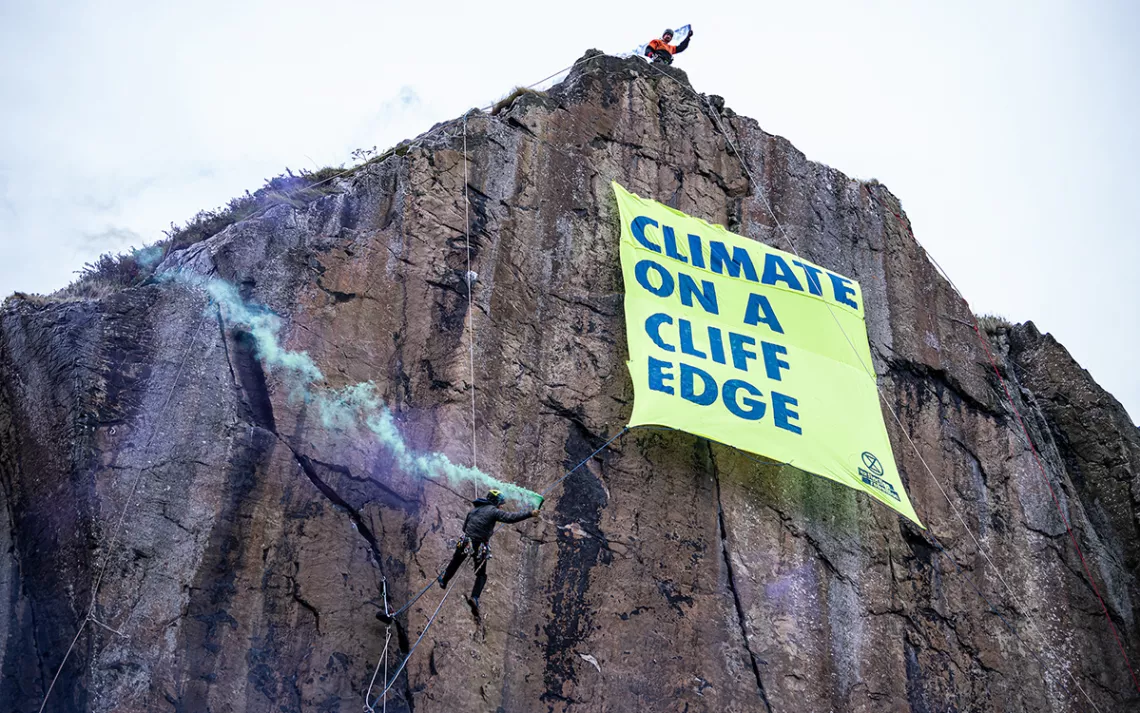
Experienced climbers scale a rock face near the historic Dumbarton castle in Glasgow, releasing a banner that reads “Climate on a Cliff Edge.” One activist, dressed as a globe, symbolically looms near the edge, while another plays the bagpipes on the shores below. | Photo courtesy of Extinction Rebellion and Mark Richards

I doubt that the Earth will be habitable or that humans can survive that increase – these 2 issues are essentially the same phrased in different ways. I suggest that 2300 should instead be regarded as the best estimate we have of our end date. It’s unfortunately a very rough and unreliable estimate and it might be better to rely on 30 or 40 years earlier.

12.45p.m. Researching this further, probably for a later article. There are projections for 2.6 to 3C rise by 2100.

10.50 p.m.GMT Apologies, did this post shock or startle some of you? Doesn’t it stand to reason? Global temperatures continue to rise due to the rich and powerful unopposed by any governments continuing use of fossil fuels, the climate is damaged and it will continue unless meaningful action is taken. I don’t intend to mislead you, my job is to inform my audience.

Neo-Fascist Climate Science Denier Donald Trump says Burn, Baby, Burn.
Nigel Farage urges you to ignore facts and reality and be a climate science denier like him and his Deputy Richard Tice. He says that Reform UK has received £Millions and £Millions from the fossil fuel industry to promote climate denial and destroy the planet.

Continue ReadingComment by dizzy deep on the end of the World

Trump’s EPA decides climate change doesn’t endanger public health – the evidence says otherwise

Spread the love

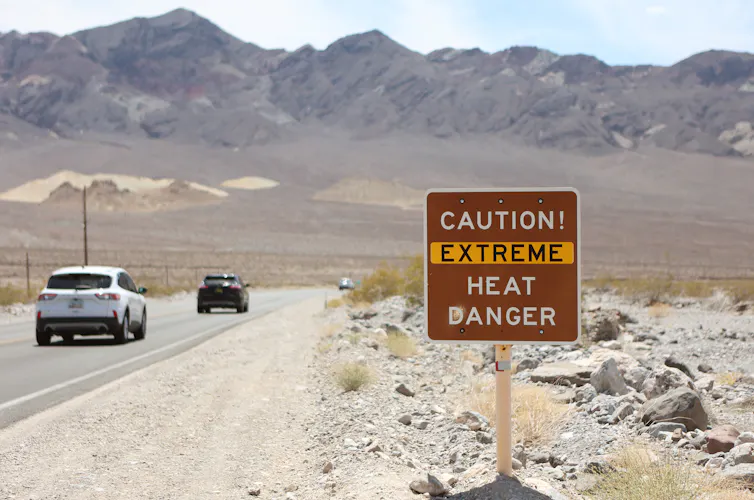
Rising global temperatures are increasing the risk of heat stroke on hot days, among many other human harms. Ronda Churchill/AFP via Getty Images

Jonathan Levy, Boston University; Howard Frumkin, University of Washington; Jonathan Patz, University of Wisconsin-Madison, and Vijay Limaye, University of Wisconsin-Madison

The Trump administration took a major step in its efforts to unravel America’s climate policies on Feb. 12, 2026, when it moved to rescind the 2009 endangerment finding – a formal determination that six greenhouse gases that drive climate change, including carbon dioxide and methane from burning fossil fuels, endanger public health and welfare.

But the administration’s arguments in dismissing the health risks of climate change are not only factually wrong, they’re deeply dangerous to Americans’ health and safety.

As physicians, epidemiologists and environmental health scientists, we’ve seen growing evidence of the connections between climate change and harm to people’s health. Here’s a look at the health risks everyone face from climate change.

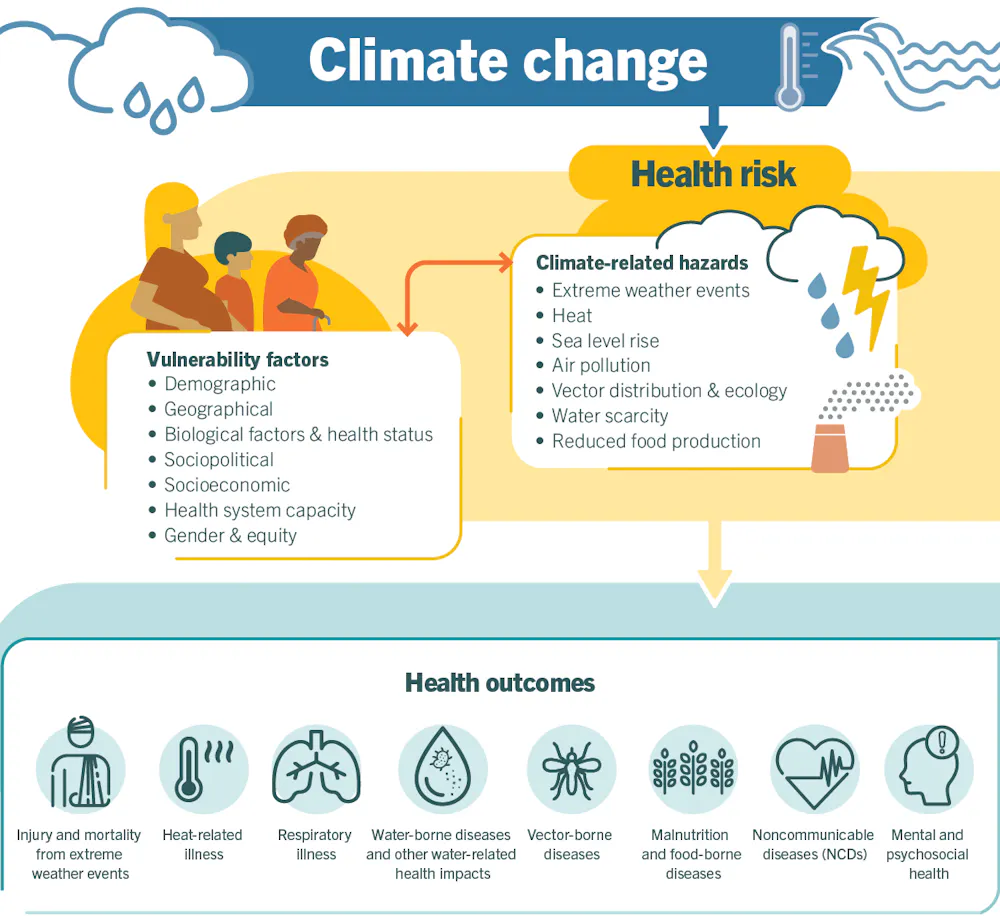
Health risks and outcomes related to climate change.
Health risks and outcomes related to climate change. World Health Organization

Extreme heat

Greenhouse gases from vehicles, power plants and other sources accumulate in the atmosphere, trapping heat and holding it close to Earth’s surface like a blanket. Too much of it causes global temperatures to rise, leaving more people exposed to dangerous heat more often.

Most people who get minor heat illnesses will recover, but more extreme exposure, especially without enough hydration and a way to cool off, can be fatal. People who work outside, are elderly or have underlying illnesses such as heart, lung or kidney diseases are often at the greatest risk.

Heat deaths have been rising globally, up 23% from the 1990s to the 2010s, when the average year saw more than half a million heat-related deaths. Here in the U.S., the 2021 Pacific Northwest heat dome killed hundreds of people.

Climate scientists predict that with advancing climate change, many areas of the world, including U.S. cities such as Miami, Houston, Phoenix and Las Vegas, will confront many more days each year hot enough to threaten human survival.

Extreme weather

Warmer air holds more moisture, so climate change brings increasing rainfall and storm intensity and worsening flooding, as many U.S. communities have experienced in recent years. Warmer ocean water also fuels more powerful hurricanes.

Increased flooding carries health risks, including drownings, injuries and water contamination from human pathogens and toxic chemicals. People cleaning out flooded homes also face risks from mold exposure, injuries and mental distress.

A man carries boxes out of a house that flooded up to its second story.
Flooding from hurricanes and other extreme storms can put people at risk of injuries during the cleanup while also triggering dangerous mold growth on wet wallboard, carpets and fabric. This home flooded up to its second flood during Hurricane Irma in 2017. Sean Rayford/Getty Images

Climate change also worsens droughts, disrupting food supplies and causing respiratory illness from dust. Rising temperatures and aridity dry out forests and grasslands, making them a setup for wildfires.

Air pollution

Wildfires, along with other climate effects, are worsening air quality around the country.

Wildfire smoke is a toxic soup of microscopic particles (known as fine particulate matter, or PM2.5) that can penetrate deep in the lungs and hazardous compounds such as lead, formaldehyde and dioxins generated when homes, cars and other materials burn at high temperatures. Smoke plumes can travel thousands of miles downwind and trigger heart attacks and elevate lung cancer risks, among other harms.

Meanwhile, warmer conditions favor the formation of ground-level ozone, a heart and lung irritant. Burning of fossil fuels also generates dangerous air pollutants that cause a long list of health problems, including heart attacks, strokes, asthma flare-ups and lung cancer.

Infectious diseases

Because they are cold-blooded organisms, insects are directly influenced by temperature. So with rising temperatures, mosquito biting rates rise as well. Warming also accelerates the development of disease agents that mosquitoes transmit.

Mosquito-borne dengue fever has turned up in Florida, Texas, Hawaii, Arizona and California. New York state just saw its first locally acquired case of chikungunya virus, also transmitted by mosquitoes.

A world map shows where mosquitos are most likely to transmit the dengue virus
As global temperatures rise, regions are becoming more suitable for mosquitoes to transmit dengue virus. The map shows a suitability scale, with red areas already suitable for dengue transmissions and yellow areas becoming more suitable. Taishi Nakase, et al., 2022, CC BY

And it’s not just insect-borne infections. Warmer temperatures increase diarrhea and foodborne illness from Vibrio cholerae and other bacteria and heavy rainfall increases sewage-contaminated stormwater overflows into lakes and streams. At the other water extreme, drought in the desert Southwest increases the risk of coccidioidomycosis, a fungal infection known as valley fever.

Other impacts

Climate change threatens health in numerous other ways. Longer pollen seasons increase allergen exposures. Lower crop yields reduce access to nutritious foods.

Mental health also suffers, with anxiety, depression and post-traumatic stress following disasters, and increased rates of violent crime and suicide tied to high-temperature days.

A older man holds a door for a woman at a cooling center.
New York and many other cities now open cooling centers during heat waves to help residents, particularly older adults who might not have air conditioning at home, stay safe during the hottest parts of the day. Angela Weiss/AFP via Getty Images

Young children, older adults, pregnant women and people with preexisting medical conditions are among the highest-risk groups. Lower-income people also face greater risk because of higher rates of chronic disease, higher exposures to climate hazards and fewer resources for protection, medical care and recovery from disasters.

Policy-based evidence-making

The evidence linking climate change with health has grown considerably since 2009. Today, it is incontrovertible.

Studies show that heat, air pollution, disease spread and food insecurity linked to climate change are worsening and costing millions of lives around the world each year. This evidence also aligns with Americans’ lived experiences. Anybody who has fallen ill during a heat wave, struggled while breathing wildfire smoke or been injured cleaning up from a hurricane knows that climate change can threaten human health.

Yet the Trump administration is willfully ignoring this evidence in proclaiming that climate change does not endanger health.

Its move to rescind the 2009 endangerment finding, which underpins many climate regulations, fits with a broader set of policy measures, including cutting support for renewable energy and subsidizing fossil fuel industries that endanger public health. In addition to rescinding the endangerment finding, the Trump administration also moved to roll back emissions limits on vehicles – the leading source of U.S. carbon emissions and a major contributor to air pollutants such as PM2.5 and ozone.

It’s not just about endangerment

The evidence is clear: Climate change endangers human health. But there’s a flip side to the story.

When governments work to reduce the causes of climate change, they help tackle some of the world’s biggest health challenges. Cleaner vehicles and cleaner electricity mean cleaner air – and less heart and lung disease. More walking and cycling on safe sidewalks and bike paths mean more physical activity and lower chronic disease risks. The list goes on. By confronting climate change, we promote good health.

To really make America healthy, in our view, the nation should acknowledge the facts behind the endangerment finding and double down on our transition from fossil fuels to a healthy, clean energy future.

This article includes material from a story originally published Nov. 12, 2025.

Jonathan Levy, Professor and Chair, Department of Environmental Health, Boston University; Howard Frumkin, Professor Emeritus of Environmental and Occupational Health Sciences, University of Washington; Jonathan Patz, Professor of Environmental Medicine, University of Wisconsin-Madison, and Vijay Limaye, Adjunct Associate Professor of Population Health Sciences, University of Wisconsin-Madison

This article is republished from The Conversation under a Creative Commons license. Read the original article.

Experienced climbers scale a rock face near the historic Dumbarton castle in Glasgow, releasing a banner that reads “Climate on a Cliff Edge.” One activist, dressed as a globe, symbolically looms near the edge, while another plays the bagpipes on the shores below. | Photo courtesy of Extinction Rebellion and Mark Richards
Neo-Fascist Climate Science Denier Donald Trump says Burn, Baby, Burn.
Nigel Farage urges you to ignore facts and reality and be a climate science denier like him and his Deputy Richard Tice. He says that Reform UK has received £Millions and £Millions from the fossil fuel industry to promote climate denial and destroy the planet.
Continue ReadingTrump’s EPA decides climate change doesn’t endanger public health – the evidence says otherwise