- Post author:dizzy
- Post published:5 February 2025
- Post category:crap pretend Labour/Labour Party/Neo-liberalism/NHS/politics/Wes Streeting
- Post comments:0 Comments
Peter Mandelson’s Consultancy Lobbied New Government on Behalf of Shell
Original article by Adam Barnett republished from DeSmog.

Labour’s new ambassador to the U.S. founded Global Counsel, a firm with major fossil fuel clients.
Labour’s top diplomat to Donald Trump’s United States leads a public affairs firm that has attempted to influence the new UK government on behalf of the oil and gas giant Shell, and the coal mining company Anglo American.
Peter Mandelson – who was a Cabinet minister under former Labour prime ministers Tony Blair and Gordon Brown – has been accepted as the UK’s ambassador to the U.S. by Trump’s new administration.
In addition to his new diplomatic role, which he will formally begin in February, Mandelson is president and chair of Global Counsel, a London-based political consultancy and lobbying organisation. He will retain shares in the company even after taking up his new position in Washington DC, the Financial Times has reported.
According to official records, after July’s general election Global Counsel lobbied the new Labour government on behalf of Shell, one of the world’s most polluting companies.
Shell is still committed to exploring for new sources of oil and gas and does not have any plans to reduce the overall amount it produces by 2030, in contravention of climate science. In 2021, the District Court of the Hague found that the total CO2 emissions of the Shell group exceeded the emissions of many states, including the Netherlands.
Lobbyists must declare if they have attempted to arrange meetings or influence ministers or senior civil servants on behalf of their clients. However, the contents of these discussions are not publicly available.
Global Counsel seemingly has close ties to the Labour Party. Prior to the 4 July election, the company supplied a staff member to Tulip Siddiq, who served as financial secretary to the Treasury until 14 January, a donation in kind worth £35,835, according to the register of MPs’ financial interests.
Global Counsel is one of seven consultancies with a history of donating to Labour that have lobbied on behalf of fossil fuel clients since July’s election.
The client list at Mandelson’s lobbying firm also includes Anglo American, a British mining multinational which is a major producer of coal, and U.S. multinational bank JP Morgan, which has financed $430 billion in fossil fuel projects since the 2015 Paris Agreement, including $40 billion in 2023, according to the NGO Banktrack.
Another client, UK bank Standard Chartered, has financed $71 billion in fossil fuel projects in the same period, including $7 billion in 2023.
Other Global Counsel clients include food and beverage giant Nestle, which has emissions three times the size of its home country Switzerland, and the controversial tech firm Palantir, founded by Trump ally Peter Thiel.
Mandelson, who called Trump “reckless and dangerous to the world” in 2019, this week told Fox News his previous remarks were “ill-judged and wrong”, and that he has a “fresh respect” for the new U.S. president.
Global Counsel, and the Cabinet Office were approached for comment.
Transatlantic Ties
Mandelson’s appointment comes at a crucial time for climate policy, with a transatlantic network of political actors working increasingly closely to derail global action to achieve net zero emissions.
Since his inauguration last week, President Trump has removed the U.S. from the flagship 2015 Paris climate accord, banned offshore wind farms, and declared a “national energy emergency” in order to open new oil and gas projects.
His plans could add an extra four billion tonnes of carbon dioxide equivalent to U.S. emissions by 2030, according to the climate publication Carbon Brief.
Trump received more than $32 million from the oil and gas sector for his 2024 campaign. The fossil fuel industry spent $445 million on political donations, lobbying and advertising between January 2023 and November 2024 to influence Trump and Congress, according to the green advocacy group Climate Power.
As DeSmog revealed last month, Mandelson’s counterpart, Trump’s ambassador to the UK Warren Stephens, runs a firm with investments in several oil and gas companies, including one wholly owned by his family business.
The UK government is committed to removing fossil fuels from the UK’s power system by 2030, but this week approved a third runway at Heathrow Airport – the second most polluting airport in the world, according to a 2021 study – and pledged to remove environmental regulations on new building projects.
According to the UN’s Intergovernmental Panel on Climate Change (IPCC), the world’s foremost climate science body, the next few years are crucial if we want to limit the worst effects of global warming, including drought, flooding, and heat waves.
To keep within the 1.5C warming limit set by the Paris Agreement, the IPCC says that emissions need to be reduced by at least 43 percent by 2030 compared to 2019 levels, and at least 60 percent by 2035.
Original article by Adam Barnett republished from DeSmog.
Treasury minister: Lobbyists are ‘huge and important part’ of government plans
Original article by Ethan Shone republished from OpenDemocracy under a Creative Commons Attribution-NonCommercial 4.0 International licence.
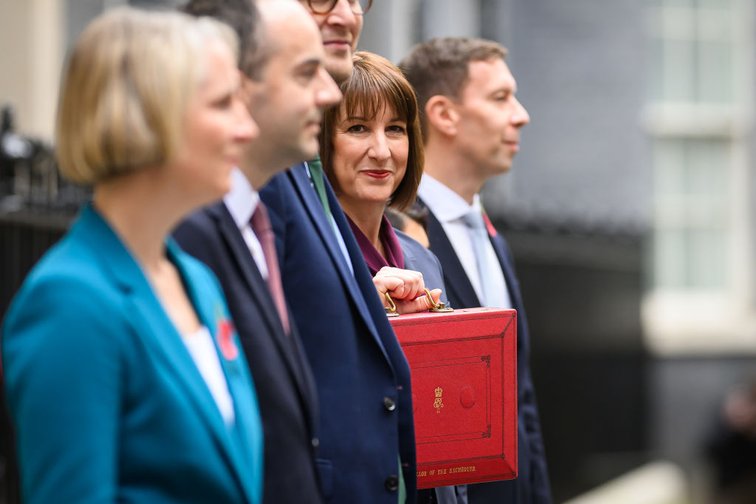
| Leon Neal/Getty Images
Exclusive: Government is inviting lobbyists and their clients to play a major role in the deregulatory agenda
“Growth comes from business, not the government.”
That was the message a government minister delivered to hundreds of corporate lobbyists, including those representing banks, arms companies and pharmaceuticals, during a webinar this morning.
Lord Livermore, the financial secretary to the Treasury, made the comments at the online event, which was the first in a series aimed at encouraging lobbyists to play a major role in the government’s ‘growth at all costs’ agenda.
In the call, which openDemocracy attended, Livermore made clear that Number 10 sees this agenda as being driven by corporations, while the government is a secondary actor that “work[s] in partnership with business”.
Also present among the 700 attendees were lobbyists representing tech firms, energy giants and consultancies, and those working for agencies including Hanbury, Headland, Lexington, Brunswick, Cavendish and Grayling.
These people and their clients are a “huge and important part” of the government’s plans, Livermore said, stressing that ministers are “really keen to draw on… the expertise that exists within your organisations and your clients”.
He added that the government’s focus is on getting rid of “stifling regulation that has for too long held business back” and “removing barriers to growth that we, in partnership with business, identify”.
The treasury minister also discussed Great British Energy’s role in “derisking investment” and providing capital for public-private partnerships, to make renewable infrastructure investment more attractive to the market.
While the government has been unapologetic about its outreach to business as a means to drive growth, Labour’s critics say an ever-closer relationship with lobbyists only heightens the impression of a government that does not have an agenda of its own.
Speaking to openDemocracy after the call, Green Party deputy leader Zack Polanski said: “With inequality rife, the government should be listening to the people who keep our country running and those suffering, not hosting desperate mass Zoom calls with arms dealers and oil giants.”
Cutting red tape
Setting out the government’s priorities, Livermore put a particular focus on achieving major reform to the planning system to encourage more commercial and infrastructure projects, and getting rid of regulations that “stand in the way of businesses investing”.
Livermore talked up the recent ousting of the head of the competitions regulator and his replacement with a former Amazon executive as evidence that the government is taking seriously its deregulatory agenda.
He also mentioned the recent push for regulators to submit proposals for growth and said Labour’s National Wealth Fund will “help catalyse private investment into sectors where at the moment, perhaps there’s a too high degree of risk”.
“We can use the National Wealth Fund to help derisk some of those investments,” said the minister. Economists describe this process as the state stepping in to improve the private returns on infrastructure assets.
Livermore continued that the fund could be used to “guide investments, particularly into the kind of clean energy investments of the future that we want to see”.
The government-lobbyist calls are being led by a new partnerships team in No 10 fronted by James Carroll, who has previously worked for the party on external relations and business engagement.
Also on the call was a senior executive at Anacta UK, described by The Times as the “first Starmerite lobbying firm”, and a banking lobbyist who is also involved in the running of Labour in the City, a group which convenes Labour supporters who work in financial services.
Lobbyists were able to submit questions during the call. One criticised “some parts of the business community” which have been “vocally critical about the government’s handling of the economy so far,” describing it as “unhelpful”.
They then asked: “How can firms who don’t want to talk down the UK but would rather promote a more positive narrative about the many opportunities open to British businesses best work with the government to do so?”
This prompted Carroll to quip: “I promise I haven’t planted that question.”
Carroll then rounded out the call by reiterating the importance the government places on developing this relationship with lobbyists.
“Just to emphasise,” he said, “your clients [and] your expertise is critical to delivering these ambitious national missions the prime minister has set out and the chancellor reiterated this week.”
Polanski, the Green’s deputy leader, said the plans to derisk investment “amounts to privatising the rewards and socialising the risks”.
He added: “Regulation exists for a reason, Grenfell stands as a towering reminder of lives lost and the total failure of standards.
“This isn’t growth for the many, just more wealth for the super-rich while the rest of us are told to look up at their private jets and wait for the trickle down.”
Original article by Ethan Shone republished from OpenDemocracy under a Creative Commons Attribution-NonCommercial 4.0 International licence.
Canada and Mexico hit back after Trump signs order for punishing tariffs
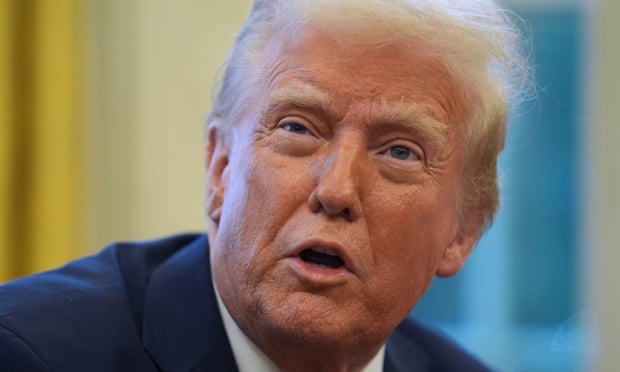
Justin Trudeau, Canada’s prime minister, announces tit-for-tat 25% tariffs and warns of impeded access to ‘vital goods critical to US security’
The leaders of Canada and Mexico have hit back after Donald Trump signed an order authorizing drastic tariffs of up to 25% on their exports to the US, while China said it would complain to the World Trade Organization after it was also targeted by the president.
Canada’s prime minister, Justin Trudeau, on Saturday night made a televised address announcing concrete measures including a tit-for-tat 25% tariff phased in across C$155bn ($107bn) worth of American products. Trudeau said Trump had put at risk US consumers’ and industries’ access to much-needed Canadian critical minerals and resources including oil, energy and timber. The prime minister promised to work with Canada’s provinces to review dealings with the United States.
Addressing Americans, Trudeau said: “Tariffs against Canada will put your jobs at risk, potentially shutting down American auto assembly plants and other manufacturing facilities. They will raise costs for you including food at the grocery store and gas at the pump. They will impede your access to an affordable supply of vital goods crucial for US security such as nickel, potash, uranium, steel and aluminum.”
Trudeau added: “They will violate the free trade agreement that the president and I along with our Mexican partner negotiated and signed a few years ago” – referring to the United States Mexico Canada agreement (USMCA) that was drawn up largely at Trump’s behest after he tore up the previous North America free trade agreement (Nafta) during his first term as US president.
…


Neoliberalism responsible for devastating Johannesburg fires, says union
Original article by Pavan Kulkarni republished from peoples’ dispatch under a Creative Commons Attribution-ShareAlike 4.0 (CC BY-SA) license.

200 working-class families in South Africa have been left homeless after their shacks were claimed by a fire that swept the Selby informal settlement in the Booysens suburb of Johannesburg on the night of January 26.
Another fire on January 21 in the Diepsloot slum in the northern part of Johannesburg killed a young woman and a toddler. A day prior, 11 shacks in an informal settlement in the Honeydew suburb were burnt down.
Reports on all these incidents state that the cause of the fire was undetermined. However, the General Industries Workers Union of South Africa (GIWUSA) maintains that the cause is clear: the housing crisis caused by neoliberal policies of the state.
“The root cause of these fires is not accidental, but rather a result of the deliberate neglect and abandonment of our working-class communities” by a State implementing neoliberal policies, said its statement on January 29.
“For the working class, these policies have made ownership of housing” next to impossible “as every cruel cycle of interest rate hikes brutally strips them of houses, cars and other assets they are forced to sell.” In the absence of an emergency public housing program, masses of the working class are crammed into slums, sheltering in shacks built of easily inflammable materials. Lacking electricity supply, candle lamps are often used for lighting in these settlements.
Slums have become “deadly traps”
Almost a quarter of the country’s population relies on wood, coal, and charcoal for cooking on open flames, according to the Statistics Department’s 2023 Household Survey. The vulnerability to fire outbreaks due to these flames is further enhanced in the slums by the tangle of wires tapping electricity in the absence of government supply.
With the worsening economic crisis, increasing sections of South Africa’s working class are being forced into such slums, which GIWUSA describes as “deadly traps”.
Fires burning down the shacks in the slums “are one of the leading causes of unnatural death in South Africa… Shack fires occur every day, killing and injuring hundreds of people each year, destroying livelihoods and deepening poverty,” states a research paper for the UN Office for Disaster Risk Reduction (UNDRR) published late last year.
“The consequences of fires can be profound…They also destroy livelihoods. Already poor
households often lose everything they own. This includes important documents such as identity… cards and birth certificates, which are needed to access state-support grants and other safety nets.”
True to this UN warning about victims losing their IDs in such fires, the government has complained about the Selby fire-affected “households’ lack of willingness to participate in the verification process.”
For many of them, who are poor migrants from neighboring countries without adequate papers, despite having made a major labor contribution to South Africa’s industries, coming forward for verification would mean deportation, explained GIWUSA’s president Mametlwe Sebei.
“About 200 households have submitted their names for verification thus far, and in some instances, the information is incomplete,” said the Department of Human Resources in a statement on January 30. Operating with “limited resources”, the South African government insists that the “victims need to have proper identification documents that can be verified” in order to receive State assistance.
“It is important that those who lost documents due to the fire approach the nearest Home Affairs for a replacement document or provide sworn affidavits to help fast-track assistance,” adds its statement.
“They are talking nonsense,” maintains Sebei. “My experience is that often they require the impossible. I mean they require IDs and other papers which people naturally keep in their homes” that were burnt down, he told Peoples Dispatch.
Along with the electrification of slums and compensation for affected families, GIWUSA also demands public housing, which, Sebei adds, is entirely feasible. With more than 40% unemployment, amounting to well over 12 million people, and most of the construction industry’s capacity un-utilized, it is possible to construct the 3.7 million public housing units needed to abolish slums in the country if the profit motive is overcome, he argues.
“We should absolutely refuse to normalize the squalor and horrific living conditions in the informal settlements,” GIWUSA insists.
Original article by Pavan Kulkarni republished from peoples’ dispatch under a Creative Commons Attribution-ShareAlike 4.0 (CC BY-SA) license.