Macron calls for ‘political pause’ amid post-election transition

Spread the love

Original article by Ana Vračar republished from peoples dispatch under Creative Commons Attribution-ShareAlike 4.0 (CC BY-SA) license.
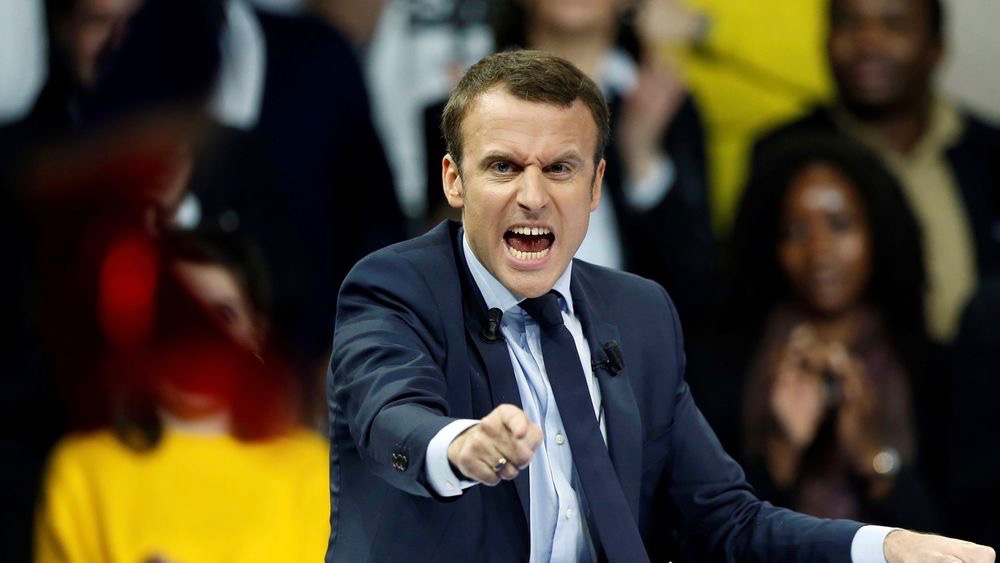
Emmanuel Macron. (Photo: via L’ Insoumission)

Emmanuel Macron continues to stall the post-election process in France, ignoring the New Popular Front’s calls to nominate their prime ministerial candidate

Nearly a month after the snap election in France, President Emmanuel Macron continues to delay recognizing the electoral victory of the left-progressive alliance New Popular Front (NFP). Following extensive consultations, the NFP recently named Lucie Castets as their prime ministerial candidate, urging Macron to formally nominate her. Instead, Macron has called for a “political pause” until mid-August, apparently to allow the nation to focus on the Olympic Games.

Castets, a 37-year-old expert in tax evasion and fraud intelligence, expressed her determination to see the nomination through. Even more than her economic expertise, her dedication to public services and opposition to privatization make her a logical choice for the NFP. Reacting to the NFP nomination, she stated that she would fully implement the coalition’s program of rupture, ending cuts imposed by Macron over the years.

As a member of the collective Our Public Services, Castets analyzed parties’ programs during the last election. Reflecting on the materials collected throughout this process, she vocally criticized the far-right National Assembly, debunking claims that their program would benefit the working class. On the contrary, the collective’s report indicated that the course would remain largely unchanged by what was set by Macron’s liberals. This would lead to further reductions in access to essential services and cuts targeting migrants in particular.

Castets also said she aims to repeal Macron’s controversial pension reform. NFP parliamentarians have already submitted a bill to reverse the rising retirement age, in line with announcements made during the election campaign.

Read more: French left calls for no-confidence vote as Macronists obstruct bill to repeal pension reforms

Despite having the largest number of representatives in the National Assembly, the NFP faces challenges to consolidate their power as President Macron continues to exercise his executive power to block them. The president has not only avoided recognizing the left’s victory and kept former PM Gabriel Attal in a caretaker role while calling for the “political pause,” but Macron’s liberals also collaborated with the right-wing Republicans to re-elect Yaël Braun-Pivet as president of the National Assembly, a move criticized by progressive circles. However, most new parliamentary functionaries are from the NFP, giving the coalition significant leverage for future discussions.

France Unbowed criticized Macron for “confiscating” democracy. “The theft of democracy we are witnessing risks putting into power a hard-right coalition aligned with the Macronists, paving the way for the National Rally and resulting in deeply antisocial policies that are hostile to workers and trade unions,” the party wrote following Macron’s refusal to nominate Castets.

Original article by Ana Vračar republished from peoples dispatch under Creative Commons Attribution-ShareAlike 4.0 (CC BY-SA) license.


Continue ReadingMacron calls for ‘political pause’ amid post-election transition

Mainstream media scales up attacks against Maduro ahead of Sunday’s elections

Spread the love

Original article republished from peoples dispatch under a Creative Commons Attribution-ShareAlike 4.0 (CC BY-SA) license.
Closing campaign rally of Nicolás Maduro in Caracas. Photo: Zoe Alexandra

Numerous international media outlets have stepped up attacks against Nicolás Maduro in a seemingly scripted manner with key messages that they seek to establish as the truth

On Sunday, the people of Venezuela will head to the polls to elect their next president. The 21 million eligible voters in Venezuela have the opportunity to pick between 10 candidates from a broad range of political parties and currents. The two projected front runners however, are from completely opposite ends of the spectrum: incumbent President Nicolás Maduro and candidate for the right-wing Unitary Democratic Platform, Edmundo González.

As election day comes closer, and international mainstream media pays more attention to what is happening in the Caribbean country, several dominant patterns have emerged in the discourse and messages of these outlets.

First of all, several media outlets have carried profiles of the leading candidates, and presented a very stark dichotomy. Maduro is authoritarian, González is democratic. Maduro is oppressive, González is free. In these profiles, when talking about Maduro, they will talk about the alleged amount of money and properties that he owns, but when profiling González, no such questions are asked.

When speaking of González, another type of framing is used, namely, that of the chosen one who was able to bring about the unity of an opposition that has historically had enormous difficulties in reaching minimum agreements. In this way, they want to present a worn out, questioned and “possibly” corrupt candidate (Maduro), while on the other hand, they want to show a peaceful, conciliatory, and ethically pristine candidate (Gónzález). This framing also erases the other eight opposition candidates who are running in these elections who also represent important political sectors. This has a very clear political intention, although not explicitly stated.

It goes without saying that there is almost no mention of the ferocious hybrid war which Venezuela has been subjected to for the last decade and how the Maduro government has endured coup attempts, assassination attempts, a near complete blockade on the country’s economy and oil production, and attempted invasions by paramilitary groups. In this situation of an almost constant political and economic siege, Maduro and his party United Socialist Party of Venezuela (PSUV) have not only been able to initiate remarkable economic recovery, but also have forged unity amongst the diverse political progressive tendencies which are under the broad umbrella of Chavismo. During the last several months, the socialist candidate has traveled to dozens of cities and towns across the country to meet with the people, listen to them, and hear their demands of the government and the Bolivarian process. These multitudinous rallies and meetings have received almost no media attention.

Another type of premise that hegemonic media outlets have tried to establish is that of an almost certain electoral fraud if the candidate of the PSUV wins. At the same time they state that if the opposition wins, Maduro will not recognize the results (even though the government has repeatedly publicly stated that it will respect the results, whatever they may be).

That is to say, the media perspective acquires the structure of an informal fallacy called “false dilemma”, in which, according to the hegemonic narrative, either the opposition wins and Maduro ignores the results, or Maduro wins but only through electoral fraud.

For almost a month, these media outlets have also sought to express that the so-called opinion polls (carried out by corporate, right-wing pollsters) give such a wide advantage to González that Maduro will be unable to subtract such difference, implicitly stating that, for almost a month, the election has already been decided. This fatalism also relies on the false premise that election results are absolute and defined several weeks before voting day – completely undermining the people’s will and sovereignty to decide their future.

Furthermore, it is intentionally not said that other polls have put Maduro ahead in terms of voting intentions, thus reinforcing their message that either González wins overwhelmingly or that Maduro carries out electoral fraud. Hence, it is justified, in a somewhat bizarre way, when far-right opposition leaders like María Corina Machado that are backing the candidacy of González, say that the only result they will accept is the victory of their candidate. These figures continue to denounce that Chavismo would only accept a victory of its own. Ironically, only the PSUV has affirmed that it would accept the result, whatever it may be.

This type of Manichean media attitude provokes an evident polarization and increases the tension in a country that already suffered right-wing political violence and tensions after electoral processes.

With all eyes on Venezuela this Sunday, these predetermined media narratives are important to identify and debunk. It will not be the mainstream media outlets like the New York Times, CNN, InfoBae, Voz de América and others that will determine Venezuela’s future, it will be the Venezuelan people.


Original article republished from peoples dispatch under a Creative Commons Attribution-ShareAlike 4.0 (CC BY-SA) license.

Continue ReadingMainstream media scales up attacks against Maduro ahead of Sunday’s elections

‘Disgusting’: Global 1% Captured $42 Trillion in New Wealth Over Past Decade

Spread the love

Original article by JAKE JOHNSON republished from Common Dreams under Creative Commons (CC BY-NC-ND 3.0).

Demonstrators demand higher taxes on the rich in Paris, France on June 23, 2024.  (Photo: Laure Boyer/Hans Lucas/AFP via Getty Images)

“The richest 1% of humanity continues to fill their pockets while the rest are left to scrap for crumbs.”

The richest sliver of the global population hauled in more than $40 trillion in new wealth over the past decade as countries around the world cut taxes for those at the very top, supercharging inequality that poses a dire threat to democracy and the planet.

An Oxfam analysis released Thursday ahead of a meeting of G20 finance ministers estimated that over the past 10 years, the global 1% has accumulated $42 trillion in new wealth. That’s “nearly 34 times more than the entire bottom 50% of the world’s population,” the group observed.

“That is disgusting,” Michael Taylor, founder of the Australian Independent Media Network, wrote in response to the new figures.

The analysis comes amid a growing push by current and former world leaders for rich countries to enact a global tax on billionaire wealth that would begin to reverse the damage done by decades of regressive policy. Oxfam found in a separate analysis released earlier this year that economic and political elites’ global “war on fair taxation” has slashed taxes for the rich by 32% since 1980.

Oxfam said Thursday that global billionaires “have been paying a tax rate equivalent to less than 0.5% of their wealth.”

“Inequality has reached obscene levels, and until now governments have failed to protect people and planet from its catastrophic effects,” Max Lawson, Oxfam’s head of inequality policy, said in a statement Thursday. “The richest 1% of humanity continues to fill their pockets while the rest are left to scrap for crumbs.”

“Momentum to increase taxes on the super-rich is undeniable, and this week is the first real litmus test for G20 governments,” Lawson added. “Do they have the political will to strike a global standard that puts the needs of the many before the greed of an elite few?”

A recent report by renowned economist Gabriel Zucman of the University of California, Berkeley outlined how nations could go about implementing a 2% minimum tax on the wealth of global billionaires—a policy change that he shows would raise up to $250 billion in annual revenue that could be used to support a range of priorities, from climate investments to education and healthcare programs.

“Thanks to recent progress in international tax cooperation, a common taxation standard for billionaires has become technically possible,” said Zucman. “Implementing it is a question of political will.”

The economist’s report was commissioned by the government of Brazilian President Luiz Inácio Lula da Silva, who has championed a global billionaire tax in the face of resistance from powerful nations, including the United States—which has more billionaires than any other country. In 2018, U.S. billionaires paid a lower effective tax rate than working-class Americans.

But reporting indicates that the leaders of G20 nations—which are home to roughly 80% of the world’s billionaires—are likely to rebuff Lula’s push for billionaire wealth tax, opting instead to pursue what Bloombergdescribed as “research on taxation and inequality that could take years to deliver results.”

Reuters similarly reported Wednesday that G20 finance ministers meeting in Brazil “are preparing a joint statement for Thursday in support of progressive taxation that will stop short of endorsing the hosts’ proposal for a global ‘billionaire tax.'”

The global billionaire wealth surge comes in the context of growing misery for large swaths of the world’s population. A report released Wednesday by the United Nations’ Food and Agriculture Organization (FAO) estimated that one out of 11 people around the world—or up to 757 million people—”may have faced hunger” last year.

“The world’s poorest people are paying the highest price of hunger,” Eric Munoz, Oxfam’s food policy expert, said in response to the FAO report. “We need deeper, structural policy and social change to address all of the drivers of hunger, including economic injustice, climate change, and conflict.”

Original article by JAKE JOHNSON republished from Common Dreams under Creative Commons (CC BY-NC-ND 3.0).

Continue Reading‘Disgusting’: Global 1% Captured $42 Trillion in New Wealth Over Past Decade

Venezuela’s electoral authority debunks “vote rigging” narrative ahead of Sunday’s presidential elections

Spread the love

Original article republished from peoples dispatch under a Creative Commons Attribution-ShareAlike 4.0 (CC BY-SA) license.

The National Electoral Council’s headquarters in Caracas, 2024. Photo: teleSUR

In the week ahead of Venezuela’s presidential elections, the National Electoral Council met with international electoral observers and representatives from all political parties

The Venezuelan National Electoral Council (CNE) announced on Monday July 22 that all the electoral machines that will be used in the elections on Sunday, July 28 have been distributed. With this, the president of the CNE, Elvis Amoroso assured that the machines that will be used in Sunday’s elections have been reviewed by representatives of the political organizations.

“Witnesses from political organizations were present at the event to verify the operation of each of the telecommunications devices involved in the process of transmitting results and ensuring the network used by the CNE,” said Amoroso, at a press conference.

Amoroso also said that the representatives of the political parties that will participate in the elections were able to verify the security codes as well as the functioning of the software to be used by the machines. The CNE thus seeks to guarantee the integrity of the elections and to safeguard the decision of the voters of the Caribbean country.

On the other hand, in its eagerness to cover the election with greater international confidence, the CNE accredited several international observers such as the Carter Center of the United States, the Council of Electoral Experts of Latin America, and the UN Panel of Experts, among others.

Even though an international media campaign tried to popularize the idea that the presidential candidate and current president would not recognize the results, Maduro said in a political rally that “nobody is going to stain the name of Venezuela or the electoral process; rain, thunder or shine, on Sunday there will be free elections in Venezuela. And we will recognize and defend the results”.

Similarly, Jorge Rodríguez, deputy of the Venezuelan National Assembly and an important leader of the United Socialist Party of Venezuela (PSUV) said in an interview with El País, that “we will recognize the results of the National Electoral Council”, and that if the ruling party were to lose the elections, there would be a “peaceful transition”.

On the other hand, the political team of the right-wing candidacy of Edmundo González Urrutia has repeatedly refused to affirm that it will accept the result of the presidential elections if its candidate were to lose in the elections of Sunday, July 28. María Corina Machado, head of the Venezuelan opposition, said a few weeks ago to the newspaper La Opinión that “The only way for Nicolás Maduro to win is with a monumental fraud”.

This political uncertainty promoted by the right-wing keeps Venezuela on high alert in the face of possible allegations of electoral fraud that, according to Jorge Rodriguez, are already being planned from abroad: “The violent people are trying to deny reality, they have a center in Miami where they will chant fraud on the afternoon of July 28…On Sunday, we will take to the streets, to celebrate the triumph of President Nicolas Maduro!”.

Original article republished from peoples dispatch under a Creative Commons Attribution-ShareAlike 4.0 (CC BY-SA) license.

Continue ReadingVenezuela’s electoral authority debunks “vote rigging” narrative ahead of Sunday’s presidential elections

Starmer suspends MPs who voted to scrap the two-child benefit cap

Spread the love
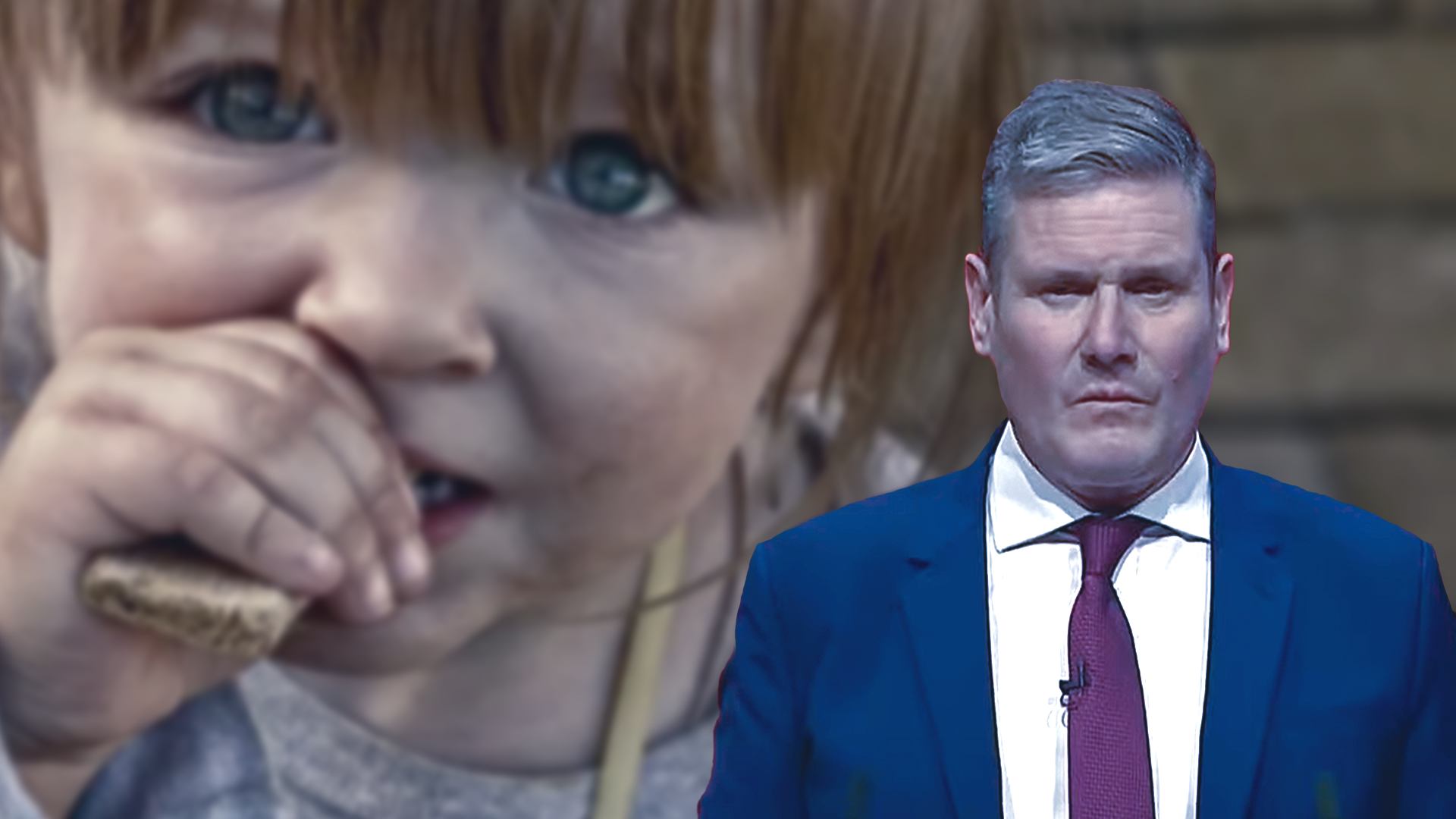
Image of Keir Starmer and a poor child.
Zionist Keir ‘Kid Starver’ Starmer. Image thanks to The Skwawkbox.

https://morningstaronline.co.uk/article/starmer-suspends-mps-who-voted-to-scrap-the-two-child-benefit-cap

Union leaders condemn the Prime Minister’s ‘disgraceful’ decision

SIR KEIR STARMER has been condemned by union leaders for suspending seven Labour MPs for voting to scrap the two-child benefit cap, as independents including Jeremy Corbyn vowed to work with them to offer a “real alternative.”

Leaders of fire, education, civil service, bakeries and mail unions hit out at the Prime Minister’s “disgraceful” and “completely wrong” decision as they joined thousands backing a grassroots petition calling for their reinstatement.

Former shadow chancellor John McDonnell, ex-shadow business secretary Rebecca Long Bailey, Apsana Begum, Richard Burgon, Ian Byrne, Zarah Sultana and Imran Hussain were kicked out of the Parliamentary Labour Party for six months for backing an SNP amendment calling for the cap to be scrapped on Tuesday night.

Ms Sultana, MP for Coventry South, suggested she was the victim of a “macho virility test” today.

“This isn’t a game … this is about people’s lives,” she added.

“I slept well knowing that I took a stand against child poverty that is affecting 4.3 million people in this country and it is the right thing to do and I am glad I did it.”

MP for Poplar and Limehouse Ms Begum said: “Labour’s own 11 affiliated unions support the scrapping of the two-child benefit cap; there’s popular support among the Labour Party membership to see the cap lifted.”

By disciplining MPs for voting to pull children out of poverty, Keir Starmer has shown us who he really is Owen Jones

Labour will say this is just a matter of party discipline, but it is a clear demonstration of the government’s priorities

The Labour leadership has told you who it is, over and over again: it is time to believe it. Keir Starmer has suspended seven Labour MPs because they voted to overturn a Tory policy which imposes poverty on children. Sure, another tale will be spun: that by voting for the Scottish National party’s amendment to abolish the two-child benefit cap, the seven undermined the unity of the parliamentary Labour party and were duly disciplined. But that is nonsense.

Such parliamentary rebellions are scattered through our democratic history, and are accepted almost as a convention of government. Boris Johnson suspended multiple Brexit rebels in 2019 and it was rightly seen as an aberration. He did not, for example, exact the same punishment when five Tory MPs backed a Labour motion extending free school meals in 2020. When it comes to Labour history, even Tony Blair never resorted to such petty authoritarianism. Forty-seven Labour MPs rebelled over a cut to the lone parent benefit in 1997 – none had the whip removed.

This episode tells us many things. Firstly, it completely undermines Starmer’s slogan of choice: “country before party”. Starmer knows a policy devised by George Osborne to prevent parents from claiming benefits for a third or fourth child is cruel and fails on its own terms. When Starmer stood for leader, he promised to scrap the limit. After all, it imposes poverty on 300,000 kids, and drives another 700,000 further into hardship. Fifty-nine per cent of families affected have at least one parent in work – like the care workers, supermarket workers and cleaners applauded by politicians on porches and balconies during the pandemic. Research has found that it does not increase employment levels, and may actually make it harder to find work, while having no impact on family size. Charities have identified it as one of the single biggest generators of poverty in Britain.

It is hard to imagine Starmer is unaware of the fact that Osborne devised the policy to stoke public hostility towards and create a Victorian caricature of the undeserving, overbreeding poor. No decent society punishes children for choices they have not made and parents should not be punished for having more children. In Britain in 2024, kids turn up to schools with bowed legs and heart murmurs because of malnourishment, but a vast cost is also imposed on society as the scarring effect of poverty produces lasting lower productivity and employment levels.

Starmer knew this when he told the BBC almost exactly a year ago that he would retain this wicked Tory policy. He made the commitment to sound tough. Contrast with how he genuflects before powerful interests such as the Murdoch empire. By endorsing the two-child benefit cap, Starmer decided to gain partisan advantage, rather than fix an injustice afflicting his country. Party first, country second. Or rather, to be specific: playing politics with the lives of our most vulnerable children.

There isn’t the money available, we are told. The price tag is £1.7bn, a pittance given annual government expenditure is £1.2tr. According to the Sunday Times rich list, the 350 wealthiest British households have a combined fortune of £795bn: is leaving their taxes at the same level more important than parents skipping hot meals to feed their little ones? When Starmer told Volodymyr Zelenskiy that the UK would give Ukraine £3bn a year “for as long as it takes”, he acknowledged there is money available for what the government considers a priority. This Labour government simply does not regard child poverty as a priority.

Continue ReadingStarmer suspends MPs who voted to scrap the two-child benefit cap