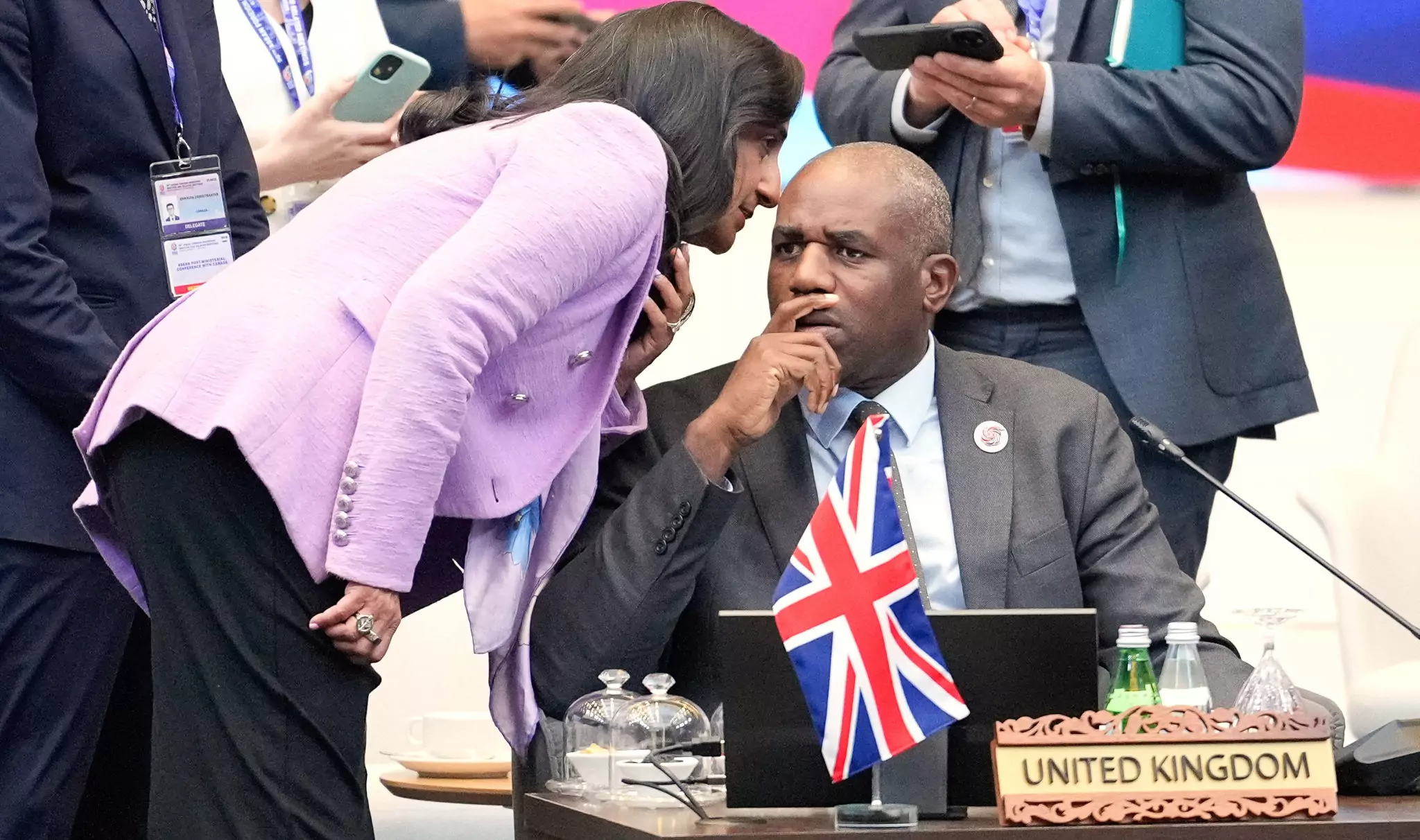
Foreign secretary David Lammy. (Photo: Vincent Thian / Alamy)
Revealed: Media agency Zinc Network has contract to recruit social media influencers across Europe.
Videos are secretly funded and signed-off by UK Foreign Office
NDAs ban influencers from disclosing government involvement
Contractor accused of election ‘interference’ in Slovakia against left-wing candidate
The UK government is secretly paying foreign YouTube stars to publish “propaganda” videos, Declassified can reveal.
A three-year investigation has found that online influencers are made to sign legal contracts banning them from disclosing the government’s involvement.
Whitehall officials give “feedback” on each video before the influencers are allowed to publish them.
The work is coordinated by a London-based media agency, Zinc Network Ltd, on behalf of the Foreign Office in a deal worth nearly £10m of public money.
Co-founded by a former Conservative Party spin doctor, the company has won lucrative contracts from the UK, US and Australian governments, becoming a major player in Western influence operations.
…
Details of Zinc Network’s projects for the government have been a highly guarded secret. In 2022, the company signed a £9,450,000 contract with the Foreign Office, which is due to end in December this year.
Usually, large contracts are published in full on the government’s website, but in this instance the contract was kept under wraps.
For almost two years, the Foreign Office tried to prevent it from being released under the Freedom of Information Act, leading to three separate reprimands from the Information Commissioner’s Office (ICO) who ruled in favour of transparency each time.
A heavily redacted version of the contract was eventually disclosed to Declassified, although the ICO is now assessing a fresh complaint over the Foreign Office’s refusal to release the document’s full annexes.
The documents show that Zinc was contracted to help counter disinformation in 22 countries across Central, Eastern and Southern Europe, and in the Baltics. This is done partly by “providing a greater variety” of reliable information, as well as by “increasing societal and general public resilience to disinformation”.
Prime Minister Keir Starmer departs 10 Downing Street, London, to attend Prime Minister’s Questions at the Houses of Parliament, July 16, 2025
… KEIR STARMER suspended four left Labour MPs from the party whip last night in a desperate attempt to restore his floundering and diminished authority.
Brian Leishman, Neil Duncan-Jordan, Rachael Maskell and Chris Hinchcliffe will now sit as independent MPs.
Left MP Zarah Sultana, commenting to the Star, told the MPs to “come and join us” in the new socialist party she has committed to launching with Jeremy Corbyn after resigning from Labour two weeks ago.
The MPs have been sanctioned by the Starmer regime because of alleged “persistent rebelliousness”. All voted against the government’s disability benefit cuts, along with a large number of other backbenchers.
More suspensions may follow as Sir Keir seeks to recover from a series of enforced U-turns as his “make the poor pay for war” political strategy unravels.
…
Keir Starmer says that the Labour Party under his leadership all feel a small part of Scunthorpe.
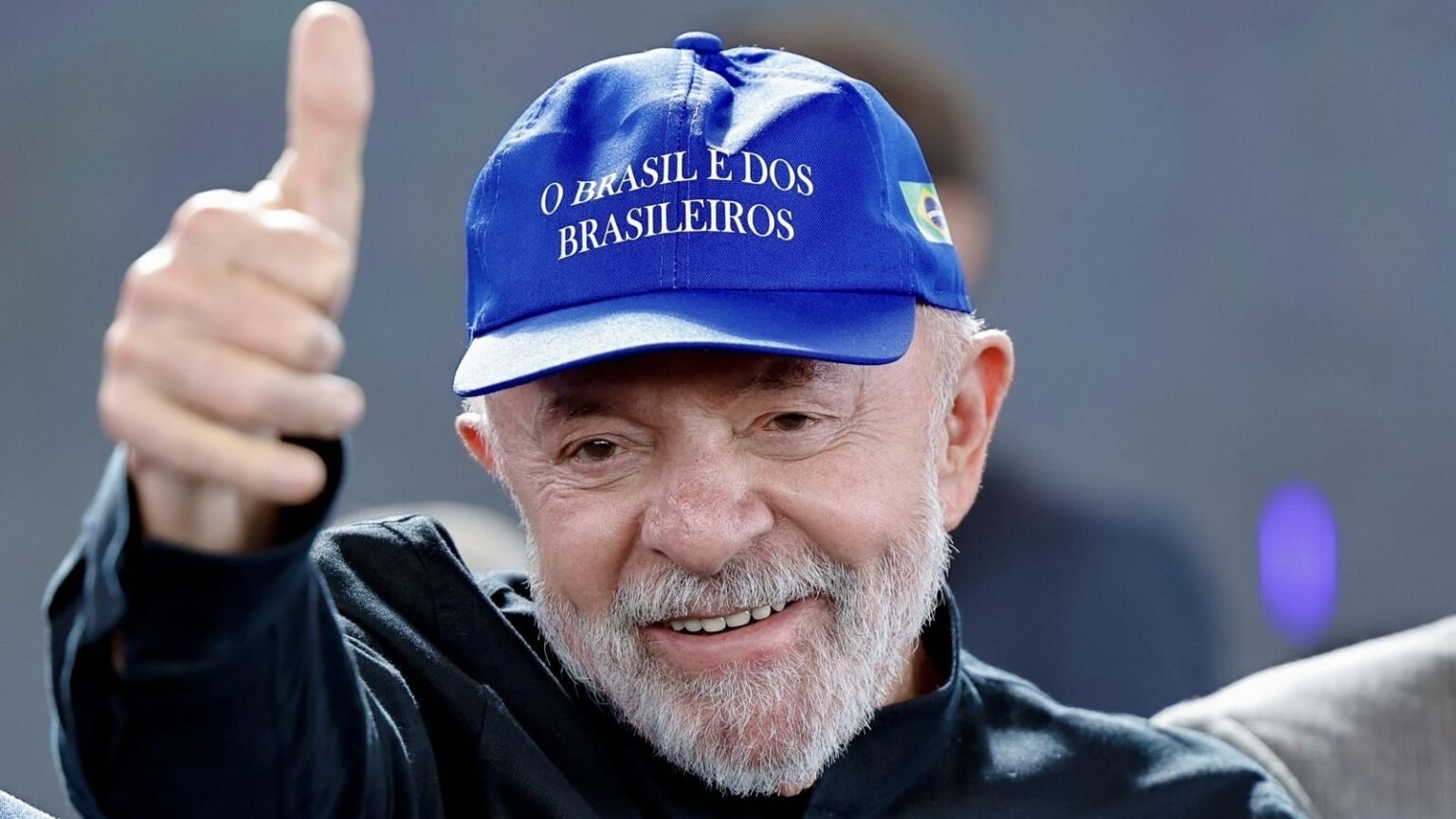
Brazilian President Lula da Silva wearing hat “Brazil is for the Brazilians”. Photo: Lula / X
The diplomatic row devolved into a potential trade crisis when Trump threatened Brazil with higher tariffs on Brazilian products if it did not cease the alleged persecution of the ultra-right former president Jair Bolsonaro.
Tensions between Washington and Brasília persist. On July 7, Trump sent a letter to the Brazilian government urging an end to the alleged persecution of former Brazilian president Jair Bolsonaro and threatening a 50% tariff on Brazilian goods.
Lula responds
Brazilian President Lula da Silva swiftly responded to Bolsonaro’s close friend and ally, asserting that Brazil’s decisions and its judiciary are sovereign and that they reject any interference whatsoever. He announced reciprocity in the measures taken by Trump: “If he charges us 50%, we will charge him 50% … Brazil is respected!”
In a post on X, Lula wrote: “Brazil is a sovereign country with independent institutions that will not accept being tutored by anyone. The judicial process against those who planned the coup d’état is the sole responsibility of the Brazilian justice system and is therefore not subject to any interference or threat that would harm the independence of national institutions.”
Lula stated that the information about the “alleged US deficit is false”, pointing out the fact that the US is not currently the main country to which Brazilian products are sold. In other words, the United States sells more to Brazil than it buys from it, meaning the US may stand to lose more from a trade war.
The Brazilian president noted: “The US government’s statistics show a surplus in trade in goods and services with Brazil of around 410 billion dollars over the last 15 years. In this sense, any measure to raise tariffs unilaterally will be responded to in light of the Brazilian Law of Economic Reciprocity. Sovereignty, respect, and the uncompromising defense of the interests of the Brazilian people are the values that guide our relationship with the world.”
However, it is important to emphasize that Lula is not closed to talks with the Trump administration: “We have several options. We can go to the WTO [World Trade Organization], initiate international investigations, and demand explanations [from the White House]. But the main thing is to show that Brazil is respected.”
The crisis has also involved other institutions of both countries. On July 9, the US Embassy released a public statement defending Bolsonaro: “Jair Bolsonaro and his family have been strong partners of the United States … The political persecution against him, his family, and his supporters is shameful and disrespectful of Brazil’s democratic traditions.”
In response, the Brazilian Secretariat of State, which called the statement “undue meddling” in Brazil’s internal affairs, summoned the US chargé d’affaires, Gabriel Escobar, in an expression of diplomatic displeasure.
Lula’s progressive government has now taken further concrete measures to respond to Trump’s threats. On Monday, July 14, Lula signed a decree regulating the country’s Reciprocity Law. According to the announcement by the President’s office, the decree, “establishes criteria for suspending trade concessions, investments, and obligations related to intellectual property rights in response to unilateral measures adopted by countries or economic blocs that negatively impact Brazil’s international competitiveness.”
The decree also calls for the creation of a committee which will be responsible for “deciding on the application of provisional countermeasures and monitoring negotiations to overcome the unilaterally imposed measures.”
Bolsonaro, together with several generals and civilians aligned with his ultra-right program, is accused of participating in a plot to overturn the election that he lost to Lula at the end of 2022. According to the prosecutor’s office, part of this plot was the coup attempt on January 8 in Brasília, when thousands of Bolsonaro supporters stormed the Three Powers Square and other Brazilian government buildings, and vandalized and destroyed them.
The episode on January 8, 2023 somewhat resembled January 6, 2021, when hundreds of Trump supporters stormed the US Capitol building to protest the allegedly “stolen elections” in November 2020. Though hundreds were prosecuted for their participation in the January 6 riots, Trump pardoned 1,500 of those convicted, in one of his first actions in office.
People’s movements in Brazil and left groups have demanded that the Lula government hold those responsible for the January 8 coup attempt responsible to ensure it does not happen again .
The protest soon incorporated the tension between Washington and Brasília, with demonstrators rejecting Trump’s threats: “The demonstration had been born as a response to the Congress veto against Lula’s government projects that sought to charge more taxes on large companies and banking transactions, but given the situation it became a march to repudiate the tariffs imposed by Trump against Brazil,” said journalist Nacho Lemus on X.
In this way, it is entirely possible that Washington’s measures could backfire: not only could they deepen the unity around a sovereigntist sentiment and behind Lula as a defender of the nation’s interests, but many businessmen may even distance themselves from a crisis that carries risks for them as well.
Geopolitical implications
Brazil is South America’s leading economy and is currently part of the BRICS. Its main trading partner is China, far ahead of the United States. Some analysts have seen in Trump’s statements more than a simple gesture of generosity to Jair Bolsonaro, but rather a tactic to enter negotiations from a stronger position with one of the largest economies in the Global South and one of the fundamental nations involved in building a multipolar world not subordinated to US financial hegemony.
It is a surprise to no one that Lula, for the moment, has not approached the second Trump administration for negotiations, so there has been a kind of tense calm for the last six months between the countries. The calm, however, was abruptly ended with the back and forth messages from the top officials in the public and on social media.
For now, it seems that Brasilia has extended its hand to negotiate a “ceasefire” on social media. Fernando Hadad, secretary of finance, has reiterated his government’s willingness to engage in dialogue with the US government. For now, it is unclear if Washington has responded to this gesture, although it is likely that the economic advisors of the White House would caution the president against ignoring the clear geo-economic reality.
“If in their desperation to achieve growth, the government is willing to set up the conditions for another disastrous financial crash, then we need to question whether growth should be the be-all and end-all of economic policy.
“For Greens the focus will always be on improving health and wellbeing, creating greater equality and building a greener economy. And designing economic policy as a means to those ends.”
Weather records clearly show the UK’s climate is different now compared with just a few decades ago. Photograph: Geoffrey Swaine/Shutterstock
Increasing frequency of heatwaves and flooding raises fears over health, infrastructure and how society functions
Record-breaking extreme weather is the new norm in the UK, scientists have said, showing that the country is firmly in the grip of the climate crisis.
The hottest days people endure have dramatically increased in frequency and severity, and periods of intense rain have also ramped up, data from hundreds of weather stations shows. Heatwaves and floods leading to deaths and costly damage are of “profound concern” for health, infrastructure and the functioning of society, the scientists said.
The weather records clearly show the UK’s climate is different now compared with just a few decades ago, the scientists said, as a result of the carbon pollution emitted by burning fossil fuels.
The analysis found that the number of days with temperatures 5C above the average for 1961-1990 had doubled in the last 10 years. For days 8C above average, the number has trebled and for 10C above average it has quadrupled. The UK has also become 8% sunnier in the last decade.
…
The assessment, called the State of the UK Climate 2024 and published in the International Journal of Climatology, found the last three years were in the UK’s top five hottest years on record. The warmest spring on record was seen in 2024 although this has already been surpassed in 2025.
The UK has particularly long meteorological records and the Central England Temperature series is the longest instrumental record in the world. It shows that recent temperatures have far exceeded any in at least 300 years. However, today’s high temperatures are likely to be average by 2050, and cool by 2100, the scientists said.
…
Donald Trump urges you to be a Climate Science denier like him. He says that he makes millions and millions for destroying the planet, Burn, Baby, Burn and Flood, Baby, Flood.Nigel Farage urges you to ignore facts and reality and be a climate science denier like him. He says that Reform UK has received millions and millions from the fossil fuel industry to promote climate denial and destroy the planet.

 Prime Minister Keir Starmer departs 10 Downing Street, London, to attend Prime Minister’s Questions at the Houses of Parliament, July 16, 2025