A week of heatwaves that were entirely predictable
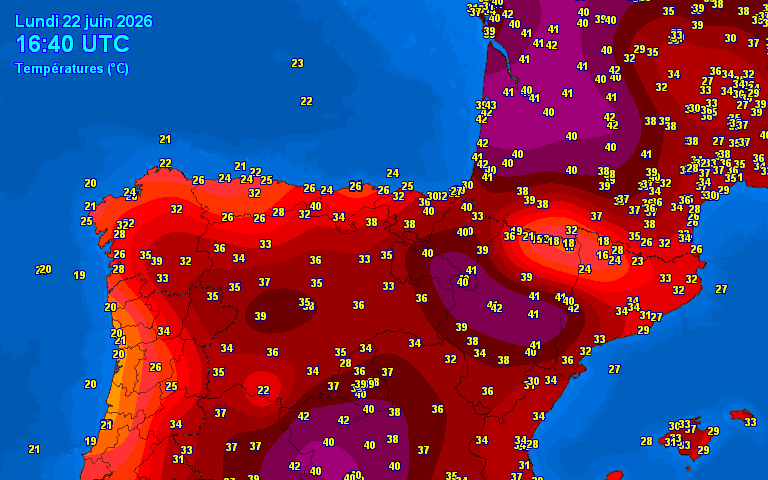
Heatwave in France June 2026
The UK is about to go over 35C for three days in a row. We are at a global warming increase of 1.5C, and temperatures are now rising by 0.4C a decade, meaning we will be hitting 2C in ten years. Meaning the UK’s wiring, roads, railway lines and housing will be melting, subsiding and heading underwater.
…
And yes, to round it off, Starmer sat back and allowed judges to give years-long sentences to the most courageous members of the younger generation — people who took proportionate peaceful action to force reality onto the agenda, and who are going to have to spend their whole lives dealing with this shit.
At the very minimum, to make any real difference, the UK has to get to zero emissions by 2035. Pretending otherwise is the purest of pure bullshit.
Entirely predictable
When the Nazis saw thousands of tanks coming over the horizon in 1944, they thought it was “nothing short of astonishing.”
Since then, everyone else has thought it was entirely predictable.
France will be at the epicenter of the most significant heat anomaly on the planet over the next few days. The sheer extent of the country that could experience temperatures above 40°C is nothing short of astonishing. Red-level extreme heat warnings are likely to be issued soon. pic.twitter.com/V4AgIUg2vA
Donald Trump urges you to be a Climate Science denier like him. He says that he makes millions and millions for destroying the planet, Burn, Baby, Burn and Flood, Baby, Flood.Nigel Farage urges you to ignore facts and reality and be a climate science denier like him and his Deputy Richard Tice. He says that Reform UK has received £Millions and £Millions from the fossil fuel industry to promote climate denial and destroy the planet.Orcas discuss Donald Trump and the killer apes’ concept of democracy. Front Orca warns that Trump is crashing his country’s economy and that everything he does he does for the fantastically wealthy.
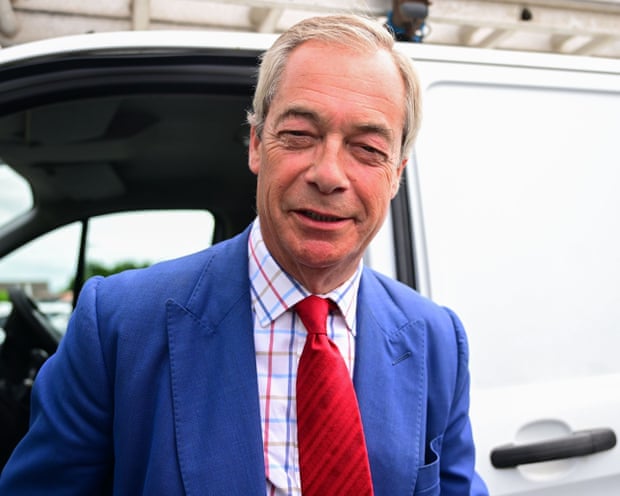
Nigel Farage has called for a general election after Keir Starmer stood down as Labour leader. Photograph: Victoria Jones/Shutterstock
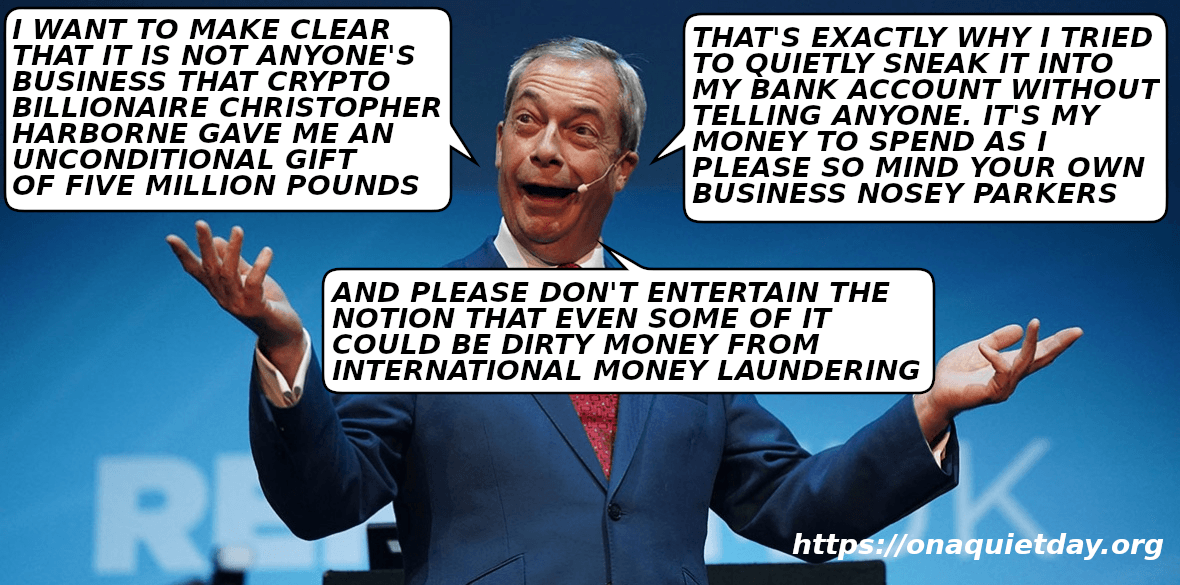
Nigel Farage has said his £5m gift from a crypto billionaire is “not any of your business” as it was given unconditionally to be spent on anything from Ferraris to gambling on horses.
…
Challenged over why he initially said it was for his personal security, and then that it was a reward for Brexit, Farage said: “Because it was given as an unconditional gift, right? The understanding is, and you know very well, you know very well I’ve been physically more attacked over many years than any other politician.”
Pressed again on whether he had been giving different accounts about the purpose of the money, he said: “Look, there are not two stories. One is I was given the money unconditionally.
…
The gift is under investigation by parliament’s standards commissioner, as it was handed over in the months before Farage returned as an MP in 2024 – leading to accusations that it should have been declared.
In an earlier interview with BBC Radio 4’s Today programme, Farage said it was not hypocritical of him to have attacked Keir Starmer for receiving donations of glasses and suits, because the Labour politician had been “the leader of the opposition and I was a presenter on GB News”.
Reform 2025 Ltd’s Director Nigel Farage discusses his five million pounds gift from Crypto billionaire Christopher Harborne. He tells nosey parkers to mind their own business and suggests that you don’t entertain the notion that even some of it could be dirty money from international money launderingKeir Starmer explains that he feels no shame or guilt benefitting personally from gifts from the rich and powerful while insisting on policies of severe austerity causing suffering and death.
Activists and campaigners protest against the ‘Alliance for Responsible Citizenship’ conference in London, June 23, 2026 [Pic: Fossil Free London / Kristian Buus]
ACTIVISTS gathered outside Kensington Olympia today as delegates arrived for the first day of the far-right Alliance for Responsible Citizenship conference.
Organised by Fossil Free London and joined by more than 10 campaign groups, including Greenpeace and Queers for Palestine, protesters dressed in frog costumes and carried signs reading “Fossil Fuels Fund Fascism” and “Oily Fascists Out of London.”
The conference is primarily backed by hedge fund manager Paul Marshall, whose portfolio includes more than £1.8 billion in fossil fuel companies.
More than 4,000 people from 96 countries were expected to attend, with speakers including Reform UK’s Nigel Farage and James Orr, anti-trans and anti-abortion campaigners, as well as about 40 MPs.
The protest came as rare red weather warnings for extreme heat were issued across Britain.
Fossil Free London director Robin Wells said: “Their oily money is fuelling the extreme heat we’re sweating through, and we’re left poorer than ever whilst they profiteer from war and crisis.
“But we refuse to tolerate their hate, and we are building our alternative: strong, connected and resilient communities, a more equal society, and climate action to protect us all.”
Nigel Farage urges you to ignore facts and reality and be a climate science denier like him and his Deputy Richard Tice. He says that Reform UK has received £Millions and £Millions from the fossil fuel industry to promote climate denial and destroy the planet.Donald Trump urges you to be a Climate Science denier like him. He says that he makes millions and millions for destroying the planet, Burn, Baby, Burn and Flood, Baby, Flood.Orcas comment on killer apes destroying the planet by continuing to burn fossil fuels.
Wes Streeting speaking about so-called ‘progressive capitalism’ at No1 Tower Place West, in central London, June 16, 2026
LABOUR leadership pretender Wes Streeting came out fighting today for carbon fuel, the bond market and “progressive capitalism.”
The former health secretary reaffirmed that he will contest any leadership election triggered by Manchester Mayor Andy Burnham’s expected victory in the Makerfield by-election this week.
Mr Streeting, the Blairite candidate in any election, backed plans to drill for oil and gas in the Rosebank and Jackdaw fields in the North Sea.
He said he aimed to “protect the workers in oil and gas, who’ve seen words like ‘just transition’ translate into jobs for someone else, somewhere else. We should be working with the unions on this – not least on making sure that we’re building our clean power future here in Britain, not simply importing it from China.”
He denied that this would forfeit Britain’s “moral leadership” on climate change.
“The best example we can set is to show the world that net zero is compatible with a pro-growth agenda. The worst example would be losing support for the net zero agenda, handing the country to Nigel Farage, and allowing Reform to destroy the renewables industry,” Mr Streeting said.
Green Party deputy leader Rachel Millward said his “call to open up new drilling in the North Sea is environmentally reckless and economically illiterate.
“Rosebank alone contains enough fossil fuel to produce over 200 million tonnes of CO2 if burned – more than the combined annual emissions of 28 low-income countries.”
Uplift director Tess Khan said: “Politicians need to learn the lesson of the last five years – the UK’s dependence on fossil fuels is making a handful of oil and gas companies obscenely rich and the rest of us poorer, while driving inflation, harming the economy and altering our climate.
“Streeting would do better to listen to the millions who are sick of the energy giants loading costs onto the rest of us, and pay less attention to this profiteering industry and its proxies, like Tony Blair and Donald Trump.”
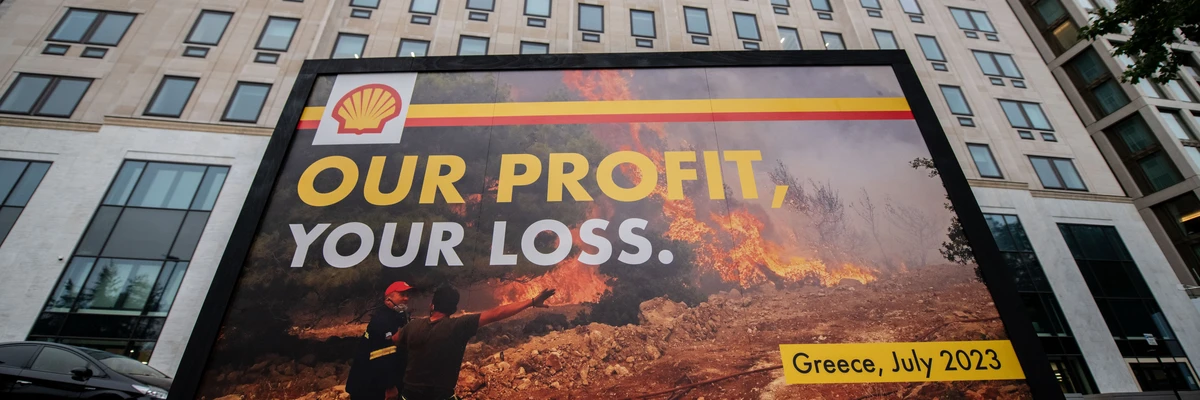
Greenpeace activists display a billboard during a protest outside Shell headquarters on July 27, 2023 in London. (Photo: Handout/Chris J. Ratcliffe for Greenpeace via Getty Images)Donald Trump urges you to be a Climate Science denier like him. He says that he makes millions and millions for destroying the planet, Burn, Baby, Burn and Flood, Baby, Flood.Nigel Farage urges you to ignore facts and reality and be a climate science denier like him and his Deputy Richard Tice. He says that Reform UK has received £Millions and £Millions from the fossil fuel industry to promote climate denial and destroy the planet.
Scientists say a crucial Atlantic system is more likely to collapse than previously thought. But the billionaire death cult that steers humanity’s destiny doesn’t do existential crises
The poor and middle pay taxes, the rich pay accountants, the very rich pay lawyers – and the ultra-rich pay politicians. It’s not an original remark, but it bears repeating until everyone has heard it. The more money billionaires accumulate, the greater their control of the political system – which means they pay less tax, which means they accumulate more, which means their control intensifies.
They reshape the world to suit their demands. One of the symptoms of the pathology known as “billionaire brain” is an inability to see beyond their own short-term gain. They would sack the planet for a few more stones on the pointless mountain of wealth. And we can see it happening. Last week delivered the biggest news of the year so far, perhaps the biggest news of the century. But partly because billionaires own most of the media, most people never heard it. We might find ourselves committed to a civilisation-ending event before we even learn that such a thing is possible.
The news is that the state of a crucial oceanic circulation system has been reassessed by scientists. Some now believe that, as a result of climate breakdown changing the temperature and salinity of seawater, it is more likely than not to collapse. This system – known as the Atlantic meridional overturning circulation (Amoc) – delivers heat from the tropics to the North Atlantic. Recent research suggests that if it shuts down, it could cause both a massive drop in average winter temperatures in northern Europe and drastic changes in the Amazon’s water cycles. This could help tip the rainforest into cascading collapse and trigger further disaster.
Amoc’s shutdown is likely also to cause an acceleration of sea level rise on the east coast of the US, threatening cities. It could also raise Antarctic temperatures by roughly 6C and release a vast pulse of carbon currently stored in the Southern Ocean, accelerating climate catastrophe.
Even when the countervailing effects of generalised global heating are taken into account, a further paper proposes, the net impact in northern Europe would be periods of extreme cold – including events in which temperatures in London fall to -19C, in Edinburgh to -30C and in Oslo to -48C. Sea ice in February would extend as far as Lincolnshire. Our climate would change drastically, with the likelihood of far greater extremes, such as massive winter storms. Rain-fed arable agriculture would become impossible almost everywhere in the UK.
Penny Holliday, Femke de Jong and Sjoerd Groeskamp
…
Several Amoc monitoring initiatives are at a risk of being defunded and could be discontinued at any moment. While we can’t go back in time to do more observations, we can improve our observation strategy for the future.
Instead, the Trump administration has proposed budget cuts to Nasa, NOAA and NSF – agencies that together provide about 50% of the total Amoc monitoring budget. Last week the US announced the descoping of the Ocean Observing Initiative which was part of a programme observing the Amoc.
The recently launched European OceanEye initiative has allocated €50m for ocean observations and is a great incentive to continue Amoc observations. However, before OceanEye is up and running, the research vessels that service the present-day observing systems will already have to be financed, planned and packed.
In short: monitoring, understanding and forecasting the Amoc is at risk. Without sustained Amoc observations, we cannot know what lies ahead. An Amoc collapse may be imminent, a century away, or, if we act boldly to limit climate change, it might be averted altogether.
For too long, understanding and monitoring the Amoc was viewed as an academic pursuit. Instead, it should now be treated as what it truly is: an urgent, global priority. There is an acute and essential need to construct an alternative international funding strategy to secure long-term Amoc monitoring that realises a robust, continuous and open-access Amoc monitoring program to provide the knowledge to build a safer and more resilient world.
The cost of all Amoc monitoring adds up to about €25m a year. Meaning that for five cents per person per year, the EU can maintain one of the world’s most important climate monitoring systems that impacts our everyday lives and improves resilience to the climate crisis.
We therefore urge the EU, the UK and other international partners to step up, make haste, get organised and collaborate to assure long-term continuation of Amoc monitoring before it is lost.
Donald Trump urges you to be a Climate Science denier like him. He says that he makes millions and millions for destroying the planet, Burn, Baby, Burn and Flood, Baby, Flood.Nigel Farage urges you to ignore facts and reality and be a climate science denier like him and his Deputy Richard Tice. He says that Reform UK has received £Millions and £Millions from the fossil fuel industry to promote climate denial and destroy the planet.Elon Musk urges you to be a Fascist like him, says that you can ignore facts and reality then.




 Activists and campaigners protest against the ‘Alliance for Responsible Citizenship’ conference in London, June 23, 2026 [Pic: Fossil Free London / Kristian Buus]
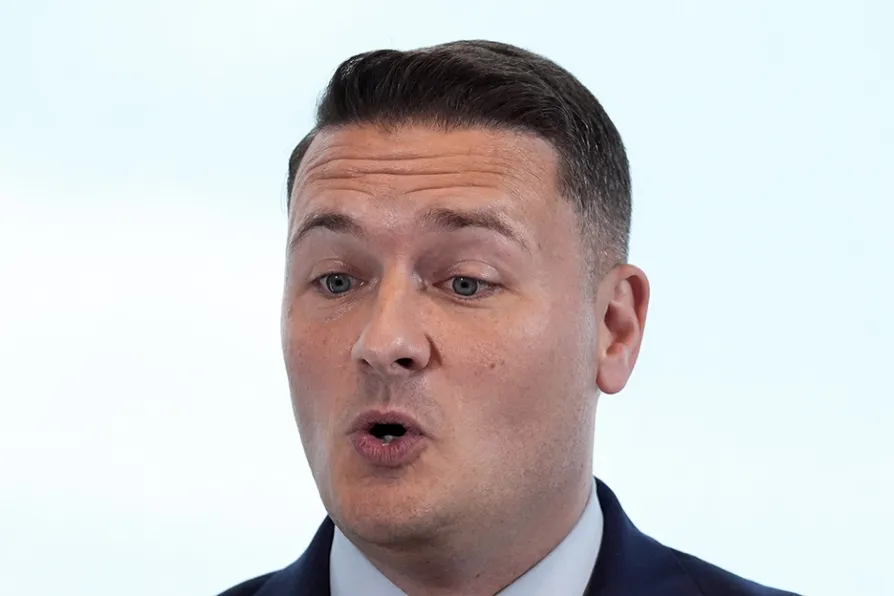
 Wes Streeting speaking about so-called ‘progressive capitalism’ at No1 Tower Place West, in central London, June 16, 2026