News review

Spread the love
  • Tony Blair a liability to the Labour Party
  • Ed Miliband calls Nick Clegg a Tory accomplice – also true of Tony Blair
  • Since we’re discussing Tory Blair, he was involved in this mass deception and contempt for democracy

Tony Blair’s return as prime minister would not get Britain’s backing

He has been reported as saying that experience could make him a better prime minister the next time around, but the voters beg to differ with Tony Blair. According to a Guardian/ICM poll, if Blair were to return as leader, a prospect he acknowledges is “not likely to happen“, the party’s standing would sink by three points, from the 39% vote share under Ed Miliband, down to just 36%.

Labour coalition government with Lib Dems would be difficult with Nick Clegg as leader – Ed Miliband

ED Milliband has revealed striking a coalition deal with the Liberal Democrats, after the next general election, would be “difficult” if Nick Clegg is still leader.

Mr Clegg has admitted that he would be “open” to a partnership with Labour in the event of a hung parliament.

• Ed Miliband has said that a coalition deal with Lib Dems would be “difficult” with Nick Clegg as leader

• Miliband calls Lib Dem leader a Tory “accomplice”

But Mr Miliband poured cold water on the idea by suggesting Mr Clegg was an an “accomplice” of the Conservatives.

“Clegg’s biggest problem is that he will say he is a brake on the Tories, but he is an accomplice,” he said.

“He chose not to kill the Health and Social Care Bill – a really bad bill doing damage to the NHS – and to pursue House of Lords reform.”

Asked if he could work with the Liberal Democrat leader, Mr Miliband replied: “I would find it difficult to work with him.”


Penta-lawn 2000

On September 11, 2001, a bunch of mean nasty Arab terrorists — who hated our freedoms — hijacked American Airlines Flight 77, a Boeing 757 fully loaded with fuel, and crashed it through the first floor of the west side wall of the Pentagon.

Continue ReadingNews review

NHS news review : ConDem scum withdraw claim that they are privatising the NHS

Spread the love

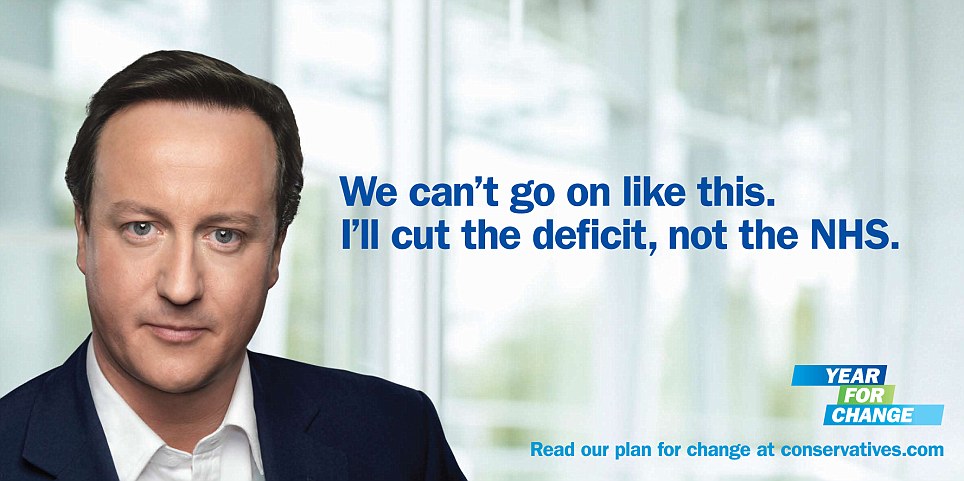
Conservative election poster 2010

The UK’s Conservative and Liberal-Democrat(Conservative) coalition government – the ConDems’ – brutal attack on the National Health Service continues.

Update: Lansley does not withdraw the 49% cap on private patients. What’s going on? Did they do a Uee? 


  • So far the New Statesman and the Financial Times have noticed that Lansley is to announce today the abolition of the cap on private work that hospitals can do. Hospitals can now exclusively treat private, paying patients.

Lansley opens the door to full-scale NHS privatisation


Update 2: Just to clarify, this piece was based on a Financial Times story, which the Department of Health has told us is incorrect. The FT has silently changed the headline, standfirst and content of its story. However, we have decided to leave this piece online, with the relevant correction.

Update: The Department of Health has been in touch to say that the cap is not being removed, rather that the planned 49% limit will be introduced from 1 October 2012.

The 49% cap on private work done by NHS trusts will be abolished.

When the government unveils a policy change on a Friday it’s a sure sign that it doesn’t want you to notice. Today, Andrew Lansley will announce that the 49% cap on private work done by NHS hospitals, which his bill introduced, will be abolished (so far, only the FT has noticed). In other words, the Health Secretary has just opened the door to the full-scale privatisation of the NHS, with hospitals able to raise 100% of their income from private healthcare.

Sue Slipman, the chief executive of the NHS Foundation Trust Network, describes the removal of the cap as “a really creative way of bringing more money into the health service”. What she doesn’t say is that foundation trusts, in pursuit of profit, will likely prioritise the treatment and care of private patients over NHS ones. Since the most profitable procedures are usually the simplest, those requiring more complex treatment will be pushed to the back of the queue. As Howard Catton, head policy at the Royal College of Nursing, has previously warned: “NHS patients may feel a subtle pressure to reach for the credit card.” Since all of the remaining 113 NHS trusts are required to become self-governing foundation trusts by April 2014, the removal of the cap will apply to all NHS services – hospitals, ambulances, mental health, community services and clinics.

http://www.google.com/search?q=nhs+%22not+privatisation%22+lansley

http://www.google.com/search?q=nhs+%22not+privatisation%22+cameron

http://www.google.com/search?q=nhs+%22not+privatisation%22+clegg


How the Orange Bookers took over the Lib Dems


What Britain now has is a blue-orange coalition, with the little-known Orange Book forming the core of current Lib Dem political thinking. To understand how this disreputable arrangement has come about, we need to examine the philosophy laid out in The Orange Book: Reclaiming Liberalism, edited by David Laws (now the Chief Secretary to the Treasury) and Paul Marshall. Particularly interesting are the contributions of the Lib Dems’ present leadership.

Published in 2004, the Orange Book marked the start of the slow decline of progressive values in the Lib Dems and the gradual abandonment of social market values. It also provided the ideological standpoint around which the party’s right wing was able to coalesce and begin their march to power in the Lib Dems. What is remarkable is the failure of former SDP and Labour elements to sound warning bells about the direction the party was taking. Former Labour ministers such as Shirley Williams and Tom McNally should be ashamed of their inaction.

Clegg and his Lib Dem supporters have much in common with David Cameron and his allies in their philosophical approach and with their social liberal solutions to society’s perceived ills. The Orange Book is predicated on an abiding belief in the free market’s ability to address issues such as public healthcare, pensions, environment, globalisation, social and agricultural policy, local government and prisons.

The Lib Dem leadership seems to sit very easily in the Tory-led coalition. This is an arranged marriage between partners of a similar background and belief. Even the Tory-Whig coalition of early 1780s, although its members were from the same class, at least had fundamental political differences. Now we see a Government made up of a single elite that has previously manifested itself as two separate political parties and which is divided more by subtle shades of opinion than any profound ideological difference.

Nick Clegg’s demand for the NHS to be broken up (2005)

Continue ReadingNHS news review : ConDem scum withdraw claim that they are privatising the NHS

NHS news review : ConDem scum privatise the NHS

Spread the love

Conservative election poster 2010

The UK’s Conservative and Liberal-Democrat(Conservative) coalition government – the ConDems’ – brutal attack on the National Health Service continues.

  • So far the New Statesman and the Financial Times have noticed that Lansley is to announce today the abolition of the cap on private work that hospitals can do. Hospitals can now exclusively treat private, paying patients.

Lansley opens the door to full-scale NHS privatisation

The 49% cap on private work done by NHS trusts will be abolished.

When the government unveils a policy change on a Friday it’s a sure sign that it doesn’t want you to notice. Today, Andrew Lansley will announce that the 49% cap on private work done by NHS hospitals, which his bill introduced, will be abolished (so far, only the FT has noticed). In other words, the Health Secretary has just opened the door to the full-scale privatisation of the NHS, with hospitals able to raise 100% of their income from private healthcare.

Sue Slipman, the chief executive of the NHS Foundation Trust Network, describes the removal of the cap as “a really creative way of bringing more money into the health service”. What she doesn’t say is that foundation trusts, in pursuit of profit, will likely prioritise the treatment and care of private patients over NHS ones. Since the most profitable procedures are usually the simplest, those requiring more complex treatment will be pushed to the back of the queue. As Howard Catton, head policy at the Royal College of Nursing, has previously warned: “NHS patients may feel a subtle pressure to reach for the credit card.” Since all of the remaining 113 NHS trusts are required to become self-governing foundation trusts by April 2014, the removal of the cap will apply to all NHS services – hospitals, ambulances, mental health, community services and clinics.

http://www.google.com/search?q=nhs+%22not+privatisation%22+lansley

http://www.google.com/search?q=nhs+%22not+privatisation%22+cameron

http://www.google.com/search?q=nhs+%22not+privatisation%22+clegg


How the Orange Bookers took over the Lib Dems


What Britain now has is a blue-orange coalition, with the little-known Orange Book forming the core of current Lib Dem political thinking. To understand how this disreputable arrangement has come about, we need to examine the philosophy laid out in The Orange Book: Reclaiming Liberalism, edited by David Laws (now the Chief Secretary to the Treasury) and Paul Marshall. Particularly interesting are the contributions of the Lib Dems’ present leadership.

Published in 2004, the Orange Book marked the start of the slow decline of progressive values in the Lib Dems and the gradual abandonment of social market values. It also provided the ideological standpoint around which the party’s right wing was able to coalesce and begin their march to power in the Lib Dems. What is remarkable is the failure of former SDP and Labour elements to sound warning bells about the direction the party was taking. Former Labour ministers such as Shirley Williams and Tom McNally should be ashamed of their inaction.

Clegg and his Lib Dem supporters have much in common with David Cameron and his allies in their philosophical approach and with their social liberal solutions to society’s perceived ills. The Orange Book is predicated on an abiding belief in the free market’s ability to address issues such as public healthcare, pensions, environment, globalisation, social and agricultural policy, local government and prisons.

The Lib Dem leadership seems to sit very easily in the Tory-led coalition. This is an arranged marriage between partners of a similar background and belief. Even the Tory-Whig coalition of early 1780s, although its members were from the same class, at least had fundamental political differences. Now we see a Government made up of a single elite that has previously manifested itself as two separate political parties and which is divided more by subtle shades of opinion than any profound ideological difference.

Nick Clegg’s demand for the NHS to be broken up (2005)

Continue ReadingNHS news review : ConDem scum privatise the NHS

NHS news review

Spread the love

Conservative election poster 2010

A few recent news articles about the UK’s Conservative and Liberal-Democrat(Conservative) coalition government – the ConDems’ – brutal attack on the National Health Service.


ConDem scum plans to destroy the NHS are coming to fruition following the passing of the Destroy the NHS / Health and Social Care Act. Hospitals can now be deemed bankrupt and shut down or given to private companies.


Administrator to cut services after takeover of ailing South London Healthcare Trust

An NHS hospital trust which is losing more than £1m a week is set to be taken over by a Government appointed administrator with the power to sack staff and cut services as part of a radical restructuring programme.

In a controversial move, the Health Secretary Andrew Lansley has written to the board of the South London Healthcare Trust warning them he intends to trigger an “unsustainable providers regime”.The move means the trust, which runs the Queen Mary Hospital in Sidcup, the Queen Elizabeth Hospital in Woolwich and the Princess Royal Hospital in Bromley will be taken over by a “special administrator” with wide ranging powers to cut costs.

It is the first time that the powers have ever been used and are likely to result in significant reductions in staff and services which the Department of Health admits will be “unsettling”.


Second health trust is put on financial danger list

An NHS trust told by inspectors that it has “some way to go” before it is delivering an acceptable level of care has been identified by the government as the next one that may be placed in a form of special measures.

As the BMA warned that financial crises in a series of trusts should serve as a “wake up call”, sources at the Department of Health said the Barking, Havering and Redbridge NHS Trust in north-east London could be placed in the regime designed to rescue failing trusts.

That follows the announcement on Monday by the health secretary, Andrew Lansley, that South London Healthcare Trust, which runs three hospitals in south-east London, is on course to become the first trust to be placed in the “unsustainable providers regime”.

Ministers blamed the decision on a £150m deficit dating back to a £2.5bn deal, signed by the last government under the private finance initiative (PFI), to rebuild the Queen Elizabeth hospital in Woolwich and the Princess Royal University hospital in Orpington.

Another 30 health trusts to be attacked by ConDem scum

More than 30 NHS trusts could be forced to merge, devolve services into the community and make job cuts as part of a radical restructuring of hospital care across England.

Yesterday, the Department of Health said it considered 21 hospitals to be “clinically and financially unsustainable” and in need of reform.

However, the list did not include another five foundation hospitals – run independently – which are also considered to be failing financially. A further five foundation hospitals also have severe financial problems.


Blair defends PFI as NHS trusts face bankruptcy

Across the public sector, taxpayers are committed to paying £229bn for hospitals, schools, roads and other projects with a capital value of £56bn.

But [insane divorced-from-reality fantasist] former Prime Minister Tony Blair told Sky News the contribution PFI had made to rebuilding the country’s infrastructure was “immense”.

“PFI has been copied around the world,” he said. “I am sure, as with any system, you will get a situation when sometimes it doesn’t work or people will get into difficulty as they do in the non PFI situations, but if you look at PFI overall and what it delivered in terms of hospitals, schools and renovations to the infrastructure of the country it has been immense.”


NHS Reforms ‘Unnecessary And Unwanted’, Says British Medical Assocation

The government’s contentious NHS reforms are an “unnecessary and unwanted” upheaval, the British Medical Association (BMA) has said.

BMA chairman of council Dr Hamish Meldrum warned ministers that the union would hold them to account “every step of the way” as the legislation rolls out across the country, the Press Association reported.

The Health and Social Care Act became law in March after a tortuous passage through Parliament.

Referring to the “monster” legislation, Dr Meldrum told the BMA’s annual conference in Bournemouth: “The NHS in England is going through its biggest – and most unnecessary and unwanted – upheaval for a generation, following the passing into law of the Health and Social Care Act.”

He added: “The BMA will be monitoring closely what is happening to the NHS, what is happening to services, what is happening in terms of privatisation, what is happening to commissioning and the big companies who want to take it over – and we will hold you to account every step of the way.

“We will never give up on our NHS.”


How the Orange Bookers took over the Lib Dems


What Britain now has is a blue-orange coalition, with the little-knownOrange Book forming the core of current Lib Dem political thinking. To understand how this disreputable arrangement has come about, we need to examine the philosophy laid out in The Orange Book: Reclaiming Liberalism, edited by David Laws (now the Chief Secretary to the Treasury) and Paul Marshall. Particularly interesting are the contributions of the Lib Dems’ present leadership.

Published in 2004, the Orange Book marked the start of the slow decline of progressive values in the Lib Dems and the gradual abandonment of social market values. It also provided the ideological standpoint around which the party’s right wing was able to coalesce and begin their march to power in the Lib Dems. What is remarkable is the failure of former SDP and Labour elements to sound warning bells about the direction the party was taking. Former Labour ministers such as Shirley Williams and Tom McNally should be ashamed of their inaction.

Clegg and his Lib Dem supporters have much in common with David Cameron and his allies in their philosophical approach and with their social liberal solutions to society’s perceived ills. The Orange Book is predicated on an abiding belief in the free market’s ability to address issues such as public healthcare, pensions, environment, globalisation, social and agricultural policy, local government and prisons.

The Lib Dem leadership seems to sit very easily in the Tory-led coalition. This is an arranged marriage between partners of a similar background and belief. Even the Tory-Whig coalition of early 1780s, although its members were from the same class, at least had fundamental political differences. Now we see a Government made up of a single elite that has previously manifested itself as two separate political parties and which is divided more by subtle shades of opinion than any profound ideological difference.

Nick Clegg’s demand for the NHS to be broken up (2005)


27/11/13 Having received a takedown notice from the Independent newspaper for a different posting, I have reviewed this article which links to an article at the Independent’s website in order to attempt to ensure conformance with copyright laws.

I consider this posting to comply with copyright laws since
a. Only a small portion of the original article has been quoted satisfying the fair use criteria, and / or
b. This posting satisfies the requirements of a derivative work.

Please be assured that this blog is a non-commercial blog (weblog) which does not feature advertising and has not ever produced any income.

dizzy
Continue ReadingNHS news review

The war of austerity is bogus

Spread the love

It needed to be said and well done to Michael Meacher MP for saying it: the war of austerity is bogus, fake, manufactured. The solution is simple says Meacher: the filthy rich are getting filthier rich, tax them. Of course – if you’re filthy rich, you will not ever even notice being slightly less filthy rich.

Meacher’s article is well presented and appears very well researched. Meacher consistently shows competence and capablity and is willing to address the big, important issues – often even against his own party’s policies. We need far more politicians like Meacher.


How to kickstart the UK economy – at zero cost to 99% of us

By imposing a capital gains tax charge at 28% on the seriously rich 0.003% we could create 1.5m jobs over the next two years

Michael Meacher

According to the annual Sunday Times Rich List, the richest 1,000 persons now sit atop of £414bn, a sum more than three times the size of the entire UK budget deficit. The richest 1% of the population, about 300,000 persons with an income of more than £3,000 a week, are estimated to possess wealth of about £1tn. The richest 10% control wealth of about £4tn. To put these figures in perspective, Britain’s total GDP is £1.45tn.

Consider first that minuscule group in the stratosphere at the top, Britain’s thousand richest. In 1997 they held assets of £99bn, but they took full advantage of New Labour’s being “intensely relaxed about people becoming filthy rich” to nearly quadruple this to £336bn by 2010. That process of gargantuan enrichment now means that in order to get access to this exclusive club, one needs personally to command assets of at least £450m to get into the top 200, £750m to get into the richest 100, and no less than £1.4bn to break into the top 50.

It’s not only that the very rich have colossal wealth, they also overwhelmingly monopolise it. The richest 1% of the population own a quarter of total UK wealth, and the richest half control no less than 94% of total wealth. Ownership of land is even more skewed: 69% of it is owned by 0.3% of the population.

What, then, should be done? In the short term, the most feasible approach is to impose a capital gains tax charge at the current rate of 28% on the topmost layers of wealth, the £155bn gains amassed by the 0.003% over the last three years. That would yield £43bn, more than enough to generate the public investment to create 1.5 million jobs over the next two years. This could then steadily be extended to the remainder of the top 1%, which would provide the funds to widen and deepen the early recovery.

A wealth tax and land value tax, the details of which would have to be carefully drafted, should then follow in the medium term, and would achieve several purposes. They would resuscitate a public sector ravaged by the Tory ideological assault, curtail the grossest excesses of inequality that have disfigured the last three decades, and lay the foundations for an industrial and technological revival without which British living standards cannot be sustained. And all this without burdening the remaining 99% of the population.

Michael Meacher’s blog

Continue ReadingThe war of austerity is bogus