Joanna Blythman: GM crop trials are needless and reckless

Spread the love


Joanna Blythman: GM crop trials are needless and reckless

This Sunday, exasperated farmers and citizens will travel to a field near Harpenden to uproot a crop of genetically modified wheat. They have been denounced in purple prose by pro-GM commentators, as science haters, “Nazi book burners” and vandals. But what else can concerned citizens do when the company conducting the GM wheat trial, Rothamsted Research, presses on recklessly with an open field experiment that has the potential to contaminate neighbouring farmers’ crops and trigger unpredictable impacts on other species?

Recent Swiss research shows that some GM wheat varieties can cross-pollinate with crops more than 2.75km away, and that in the field, they cross-pollinate six times more than conventional varieties. Yet in contamination incidents involving long-grain rice in the US and flax in Canada, GM companies refused to accept liability.

In Europe, despite the US biotech industry’s attempts to ram GM down our gullets, applications for open-field trials of the Harpenden type have been steadily falling since 2009. Why? Consumers consistently reject genetically modified food. This is why Carrefour, the world’s second largest supermarket chain, now labels its own-brand meat and dairy as GM animal feed-free, (“Nourri sans OGM”), to give its customers the field-to-fork guarantee they so clearly desire.

Joanna Blythman is the author of ‘What to Eat: Food that’s good for your health, pocket and plate’ (Fourth Estate)


27/11/13 Having received a takedown notice from the Independent newspaper for a different posting, I have reviewed this article which links to an article at the Independent’s website in order to attempt to ensure conformance with copyright laws.

I consider this posting to comply with copyright laws since
a. Only a small portion of the original article has been quoted satisfying the fair use criteria, and / or
b. This posting satisfies the requirements of a derivative work.

Please be assured that this blog is a non-commercial blog (weblog) which does not feature advertising and has not ever produced any income.

dizzy


Continue ReadingJoanna Blythman: GM crop trials are needless and reckless

NHS news review

Spread the love

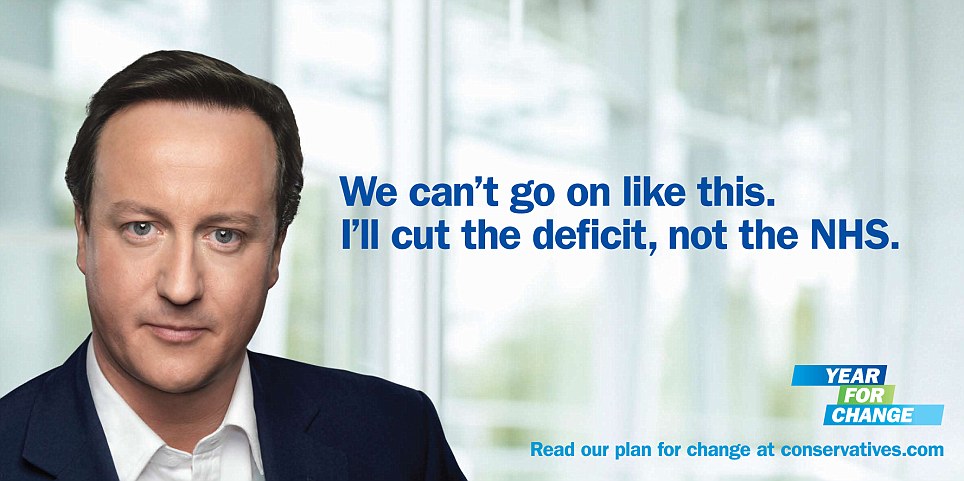
Conservative election poster 2010

A recent news article about the UK’s Conservative and Liberal-Democrat(Conservative) coalition government – the ConDem’s – brutal attack on the National Health Service.


Nurses heckle ‘liar’ Lansley over staffing level claims

NURSES heckled and laughed at Health Secretary Andrew Lansley today after he claimed clinical staffing levels in the NHS had increased.

Mr Lansley was speaking in the wake of a Royal College of Nursing (RCN) study that warned more than 60,000 frontline jobs in the NHS, including those of nurses, were at risk because of spending cuts, with almost half already gone.

He was laughed at by members of the audience at the RCN annual conference in Harrogate after saying nurses should tell superiors if staffing levels were not safe.

And some in the crowd shouted “liar” after the Health Secretary claimed clinical staffing levels had increased on his watch.

Continue ReadingNHS news review

NHS news review

Spread the love

Conservative election poster 2010

A few recent news articles about the UK’s Conservative and Liberal-Democrat(Conservative) coalition government – the ConDem’s – brutal attack on the National Health Service.


The Con-Dem government yesterday announced that the cabinet had vetoed publication of the transitional risk-register about dangers to the NHS from the Health and Social Care / Destroy the NHS Bill.

Andrew Lansley claimed to be “… a firm believer in greater transparency …” but not in this instance. A more realistic assessment is that Lansley and the Con-Dem government has evaded publication of the risk-register at every opportunity and that they are desperate that it should not be published since it illustrates that they have been reckless and consitently lied about their intentions for the NHS. “No more top-down reorganisation”, “I’ll cut the defecit, not the NHS”, “I love the NHS”, “… it is not privatisation”. All bollocks.

An earlier draft risk-register has been leaked. It clearly shows that the government has been reckless with the NHS and strongly suggests that the intention all along was to destroy it.


NHS reform risk warnings leaked

Identifying 43 separate areas of potential risk, the draft register rates each on a scale of one to five, where a rating of one means little likelihood and very low impact and five means almost certain to occur and very high impact. The likelihood and impact figures are combined to give an overall risk rating, with a maximum score of 25.

Among 13 areas given a risk rating of 16 – with likelihood and impact each assessed at four out of five – were: Parliamentary amendments creating “unforeseen consequences for the system”; costs being driven up by GP consortia using private sector organisations and staff; implementation beginning before adequate planning has been done; loss of financial control; “unhelpful conflict” between the NHS commissioning board and regulator Monitor; GP consortia going bust or having to cut services for financial reasons; GP leaders being drawn into managerial processes which end up driving clinical behaviour.

Staff concerns and union action over the reforms could lead to “deterioration in relations, lower productivity in the Department of Health/NHS and delays in programme”, the document said. And there was a warning that strategic health authorities and primary care trusts might lose “good people” who then have to be re-employed to run the new system.


Continue ReadingNHS news review

‘People Will Die’ – The End Of The NHS.

Spread the love

Conservative election poster 2010
Medialens has a couple of articles on the failure of the UK media – particularly the BBC – to cover the passage of the Health and Social Care / Destroy the NHS Bill. Medialens propose the “sham of UK ‘democracy'” since the bill passed without widespread public awareness due to corporate media’s complicity with vested interests.

    ‘People Will Die’ – The End Of The NHS. Part 1: The Corporate Assault

Few political acts have exposed the sham of British ‘democracy’ like the decision to dismantle the National Health Service. In essence, the issues are simple:

1. The longstanding obligation of the UK government to provide universal health care has now been ditched.

2. The NHS is being carved open for exploitation by private interests.

The media, notably the BBC – often ranked alongside the NHS as one of the country’s greatest institutions –  have failed to report this corporate assault on the country’s health service.

What is deeply disturbing is how little the British public has been told about what has happened, and about the likely consequences for an institution we all hold dear.

Much Profit To Be Made!

On March 20, 2012, MPs passed the Health and Social Care Bill (commonly called ‘the NHS bill’) more than 14 months after it was first put before Parliament. Virtually every major professional medical body had fought against it, and there were numerous public protests. But the opposition was given scant media coverage and the government was able to force the bill through.

Recall that the Conservatives, led by David Cameron, won just 36% of the vote in the 2010 general election. Outrageously, the Conservative manifesto said nothing about the NHS bill. The former Conservative minister and leading political pundit Michael Portillo explained the reasoning:

‘They did not believe they could win an election if they told you what they were going to do because people are so wedded to the NHS.’

Cameron had pledged that there would be: ‘No more pointless and disruptive reorganisations’. Instead, he said change would be: ‘Driven by the wishes and needs of NHS professionals and patients.’ The coalition agreement between the Tories and the Lib Dems of May 2010 had promised: ‘We will stop the top-down reorganisation of the NHS.’ That promise has been well and truly smashed.

The government tried to justify the bill by arguing that the NHS is not working and that it must be ‘reformed’. In fact, the NHS is one of the fairest, most cost-effective and efficient healthcare systems in the world. Its per capita costs are half that of the US healthcare system, a country which has lower life expectancy and higher infant mortality (OECD figures). One can only look on in horror across the Atlantic to see the way our health service is headed.

Michael Moore, writer and director of Sicko, a film about the US health system,  tweeted of Cameron’s recent visit to the United States:

‘Is British PM Cameron here in USA this week to study our health care system & bring it back to the UK? There’s much profit to be made!

‘Last nite, Brit PM watched 1st ever basketball game. Today he goes to hospital 2 watch sick ppl turned away & denied care. It’s a fun trip!’

The NHS bill was hideously complicated and virtually unreadable. Critics claimed this was intentional, serving to hide the bill’s true purpose – selling off more and more of the NHS to private companies. The British Medical Association denounced the bill as ‘complex, incoherent and not fit for purpose, and almost impossible to implement successfully, given widespread opposition across the NHS workforce’.

In a rare instance of BBC Question Time actually putting a senior politician on the spot about something that matters, Dr Phil Hammond challenged Andrew Lansley, Secretary of State for Health, on the disaster the bill would create for genuine health care, for cooperation between medical professionals and for basic human compassion. Imagine if news editors and journalists had been consistently making this kind of challenge in the 14 months before the bill became law.

‘People Will Die’ – The End Of The NHS. Part 2: Buried By The BBC

Along with the NHS, the BBC is supposed to epitomise the best of British institutions. The BBC has a duty, enshrined in its Charter, to report objectively on stories of national and international interest. The NHS affects every man, woman and child in the country. And yet we suspect very few members of the public realise what has just happened to their health care system.

The BBC mostly failed to cover the story, and otherwise offered coverage heavily biased in favour of the government’s perspective. On the very day the bill passed into law, the tag line across the bottom of BBC news broadcasts said ‘Bill which gives power to GPs passes’. The assessment could have come from a government press release, spin that has been rejected by an overwhelming majority of GPs. The BBC has also repeatedly failed to cover public protests, including one outside the Department of Health which stopped the traffic in Whitehall for an hour.

It is nigh-on impossible for Media Lens, with our meagre resources, to closely monitor the prodigious output of BBC television and radio news; even on a single topic. But one activist who has been following the NHS story closely over an extended period sent us this last month:

‘For the past two years there has been so little coverage of this bill that even as some were desperately fighting to stop it – through e-petitions, lobbying campaigns and even demonstrations – many people did not appear to be even aware of it. I have been on a demonstration in which people sat down in the road in Whitehall, outside the Department of Health and blocked the traffic, yet this was not mentioned at all on the news.

‘When the BBC have reported on the bill they have been sparse with their explanations of its implications or the reasons why so many – including most medical professionals – have objected to it. They have tended to limit their comments to those of the type “Some people say it’s privatisation” without explaining why or exploring the issue.

‘There have not been – as we might have expected for so momentous a change – debates on the Today Programme, on BBC Newsnight, or blackground analysis programmes, with politicians being challenged and questioned on the policy. Radio 4 ran a programme at 8pm [The Report, on March 22, 2012] which appeared to be very biased in favour of the bill, with opposing views not adequately represented. Contrast this programme with this article by Hackney Keep Our NHS Public (KONP)

‘Whatever one’s views on the Health and Social Care bill, surely such large scale changes which may affect the health of so many, should have been widely reported and debated, especially when you consider that the coalition government was not elected and did not put this issue in their manifestos.’ (Email, name withheld, March 23, 2012)

Why did we never see a BBC television news report like this one from RT: ‘UK govt bill opens up NHS to private profiteering’?

Continue Reading‘People Will Die’ – The End Of The NHS.

NHS news review

Spread the love

Conservative election poster 2010

A few recent news articles about the UK’s Conservative and Liberal-Democrat(Conservative) coalition government – the ConDem’s – brutal attack on the National Health Service.


Virgin has featured in health news recently. Thatcher’s pet Capitalist appears to be profiteering from the privatisation of the NHS. I’d love for him to have an (analogous) smack – maybe put Virgin businesses out of business and invade and occupy Necker Island.


Verging on the ridiculous …

Richard Branson’s Virgin gain contract to profit from those suffering from sexual diseases in West Sussex


… in the week after the meeting a casual update of the Action Log for the West Sussex CCG was emailed confidentially to members of that CCG West Sussex board. On the Action Log was the announcement of a decision that Virgin were awarded the contract to make profit from sexual diseases in West Sussex. Had concerned board members not read the Action Log they may have been none the wiser.  This is very concerning for several reasons. 3 members of that board have confided in me that 


a) They had no idea Virgin even had a bid in 
b) They have not been allowed to discuss the nature or financial robustness of Virgin’s bid.
c) They have not been able to consider other bidders 
d) The contents of the March 27 Report were hidden from board members 
e) The manner in which the decision was announced casually through email to board members is an abject failure of accountability. 
f) The board does not meet again until the first week of May and so there is no opportunity to table emergency questions on Virgin’s takeover.

To top it all off, all of this is confidential. It has been hidden from the public and no announcement has been made to let those suffering sexual diseases in the West Sussex area that they are now beholden to Richard Branson’s Virgin. …
The following article by Max Pemberton originally appeared in the Telegraph. Looks like the Telegraph has pulled the article following rumours of threats of legal action.

Real health choice under the NHS reform Bill doesn’t exist, and the so-called market is a mockery.


I have argued before that in a healthcare setting, choice is a misnomer: all hospitals should provide an excellent level of care because so many people – the old, the infirm – are unable to exercise choice because of geographical or physical limitations. But only now that we can see the shape of the NHS Bill can we truly assess what choice actually means.

What real choice did the people of Surrey have in who provided their community health services? The answer: none. The choice was made by unelected, unaccountable bureaucrats who use “public consultation” as a fig leaf for fundamentally changing the nature of how healthcare is delivered.

Increasingly, the details of these decisions and the contracts that are drawn up are deemed commercially sensitive, so we are not privy to what is happening to our NHS and our money. For example, what providers other than Virgin might be an option for Surrey residents? After all, it’s about choice, isn’t it? The answer, again, is none. The good folk of Surrey haven’t been allowed to exercise a choice between providers – it’s Virgin Care or nothing. This isn’t a market in the true capitalist sense. This is a perverse, warped and corrupt reading of market principles. If we are going to open up healthcare in this country to the market, at least let’s do it properly, rather than handing out these whopping amounts of public cash to corporations that are also handed a captive consumer base. There’s no choice here.

It reminds me of the other market that Virgin has colonised: parts of the rail network. You often hear people complain about the cost of fares, the atrocious service and cramped conditions they have to endure. I’m lucky that I don’t have to commute, so I have not paid particular attention to this in the past. Then, last year, I did a book signing at a small, independent bookshop in Bramhall, near Manchester. I arrived at London’s Euston station mid-afternoon and went to the self-service ticket desk. I keyed in the details for a ticket to return later that night – £296. I stared at the screen in disbelief: was that a ticket to Bramhall by way of the Seychelles? It transpired that leaving at 4.30pm meant I was travelling at peak time. I had no choice but to swallow hard and pay up, just as countless others have to. Of course, the train was full, so I’d paid nearly £300 for the privilege of standing for two and half hours. There were no other train operators to choose from; no competition to drive up quality and push down prices. Just a dreadful service at extortionate cost.

Rail travel, like community health services, is not a fungible good – it cannot be exchanged for something else. You can’t travel to a different destination from the one you need to get to and you can’t seek treatment for a different condition to the one you have.

In these circumstances, choice doesn’t exist and it makes a mockery of a so-called market. The people of Surrey did not vote for this change or for their NHS to be gutted and served on a silver platter to Virgin Care. But this signals the shape of the NHS to come, and with such rich pickings, I doubt there will be many delays.


The NHS carve-up has begun

Rumour has it that Richard Branson is threatening to sue the Telegraph and the journalist, Max Pemberton, for his article published recently (broken link) which covers the Virgin takeover of NHS community services. People will soon be waking up to the fact that the NHS is no longer the provider of care in many areas.

It seems that a high court injunction was served on Sunday to try to prevent the article being published and Branson is apparently demanding a half-page reply. Branson is said to also be unhappy about related tweeting and is including this as part of the case. Pemberton could face costs of up to £90,000.

It appears too that the Department of Health have engineered a major media campaign to dampen down press interest hence the under-reporting of these takeovers by the BBC and other media.

Branson’s/Virgin’s actions are a very worrying sign of things to come for those who dare question these sorts of deals. The real concern is that dissenting voices will be silenced or frightened off so it’s important to speak up and write in in support of Pemberton’s article. Anyone who faces similar intimidation should also speak out.


David Cameron faces pressure as NHS waiting times grow

PM’s election pledge in jeopardy as report reveals patients waiting 6% longer and fewer receiving planned operations

Patients are enduring increasingly long delays before having some of the most common forms of surgery, according to official data that casts serious doubt on David Cameron‘s pledge to keep NHS waiting times low.

New research by the Patients Association also shows that fewer patients are undergoing planned operations such as joint replacements, cataract removal and hernia repairs, as the NHS tries to make £20bn of efficiency savings at a time when demand for healthcare is growing.

A report from the association, based on information supplied by 93 of England’s 170 acute hospital trusts, found that waiting times for a range of elective operations rose between 2010 and 2011.

Not-for-profit GP providers cheaper and rated higher than private out-of-hours firms

GPs remain pessimistic about NHS reform success


Continue ReadingNHS news review