Reform UK leader Nigel Farage attends a farmers protest in Whitehall, London, March 4, 2025
REFORM’S pro-worker mask has slipped, the TUC said today, after all its MPs joined the Tories in opposing Labour’s employment rights law.
Nigel Farage’s Commons contingent voted against the legislation despite polling showing that its main provisions are highly popular in their own constituencies.
TUC general secretary Paul Nowak said: “Reform and the Conservatives have shown their true colours once again.
“Instead of voting for common-sense reforms, like banning exploitative zero-hours contracts and day-one access to sick pay, they have voted to deny millions basic protections at work.
“Nigel Farage is not on the side of working people. He’s a political fraud, defying his own constituents to oppose stronger workers’ rights.”
Nigel Farage explains the politics of Reform UK: Racism, Fake anti-establishmentism, Deregulation, Corporatism, Climate Change Denial, Mysogyny and Transphobia.Elon Musk urges you to be a Fascist like him, says that you can ignore facts and reality then.
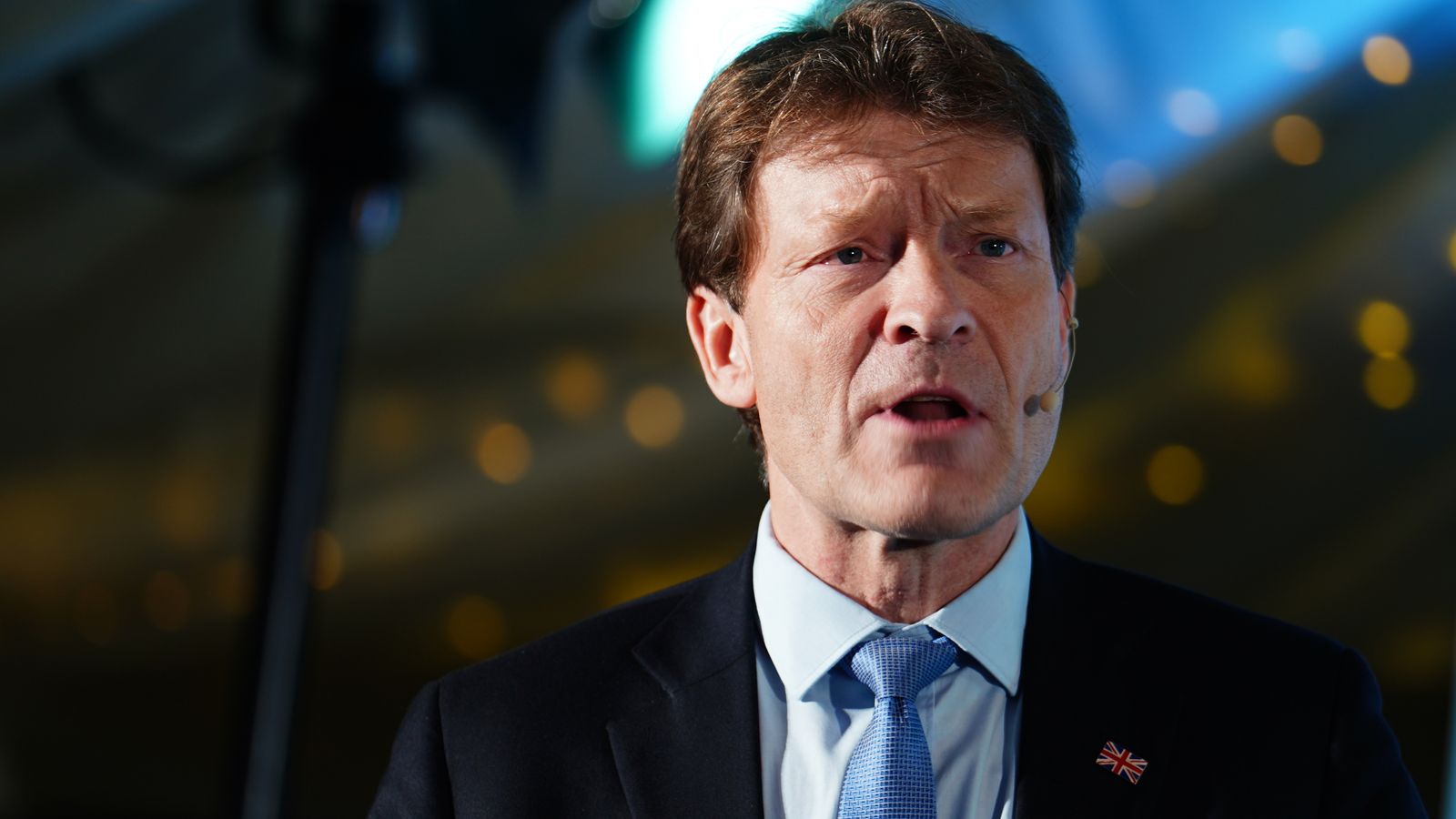
Richard Tice claimed there are “thousands” of scientists who agreed with him Pic: PA
Richard Tice also said the scientists who agreed with him were “not a minority”, though his view is contrary to major consensus.
Scientists have spoken out after Reform UK’s deputy leader dismissed scientific consensus on man-made climate as “garbage”.
Richard Tice MP told Sky’s political correspondent Ali Fortescue: “There’s no evidence that man-made CO2 is going to change climate change. Given that it’s gone on for millions of years, it will go on for millions of years.”
Fortescue challenged him with the findings of more than 200 international scientists that humans activities like burning fossil fuels are to blame for the recent hotter climate.
Human influence is “unequivocal”, said the report, which was signed off by all governments, including fossil-fuel-rich Russia, USA and Saudi Arabia.
“No, that’s absolute garbage,” Mr Tice said. “The climate changed for millions of years before man-made CO2.”
Dr George Adamson from King’s College London said the idea that Richard Tice had “discovered something that climate scientists don’t know about is of course preposterous”.
The climate did change for years before humans began burning fossil fuels at scale.
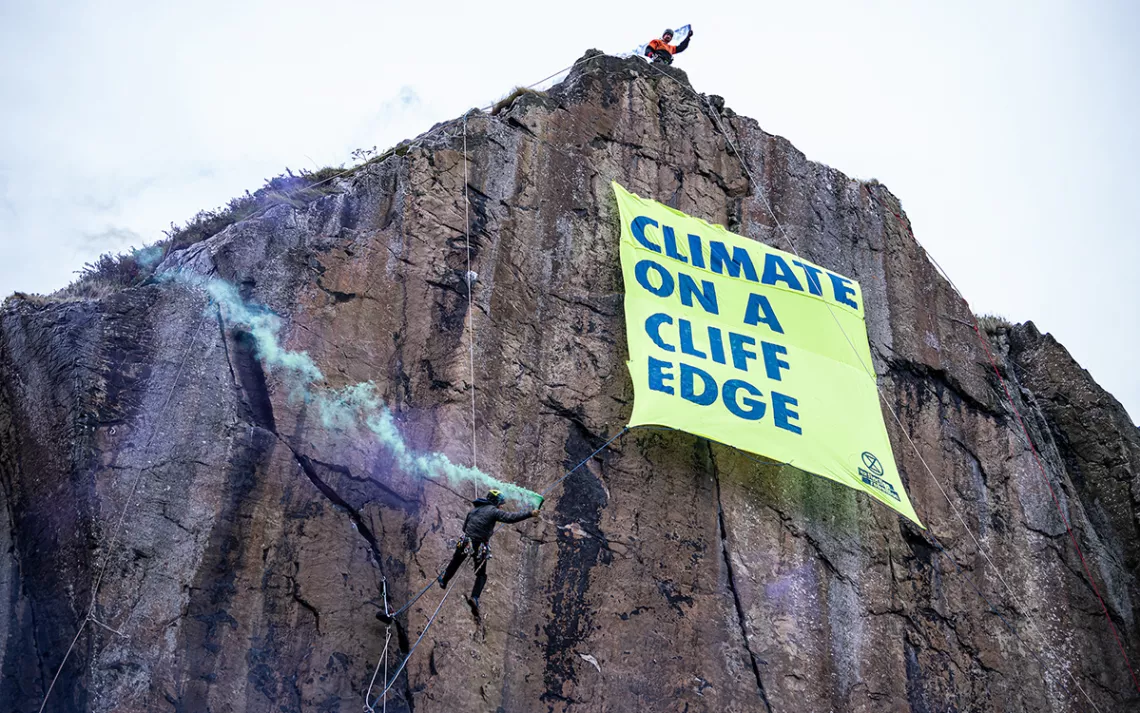
Nigel Farage explains the politics of Reform UK: Racism, Fake anti-establishmentism, Deregulation, Corporatism, Climate Change Denial, Mysogyny and Transphobia.Experienced climbers scale a rock face near the historic Dumbarton castle in Glasgow, releasing a banner that reads “Climate on a Cliff Edge.” One activist, dressed as a globe, symbolically looms near the edge, while another plays the bagpipes on the shores below. | Photo courtesy of Extinction Rebellion and Mark Richards
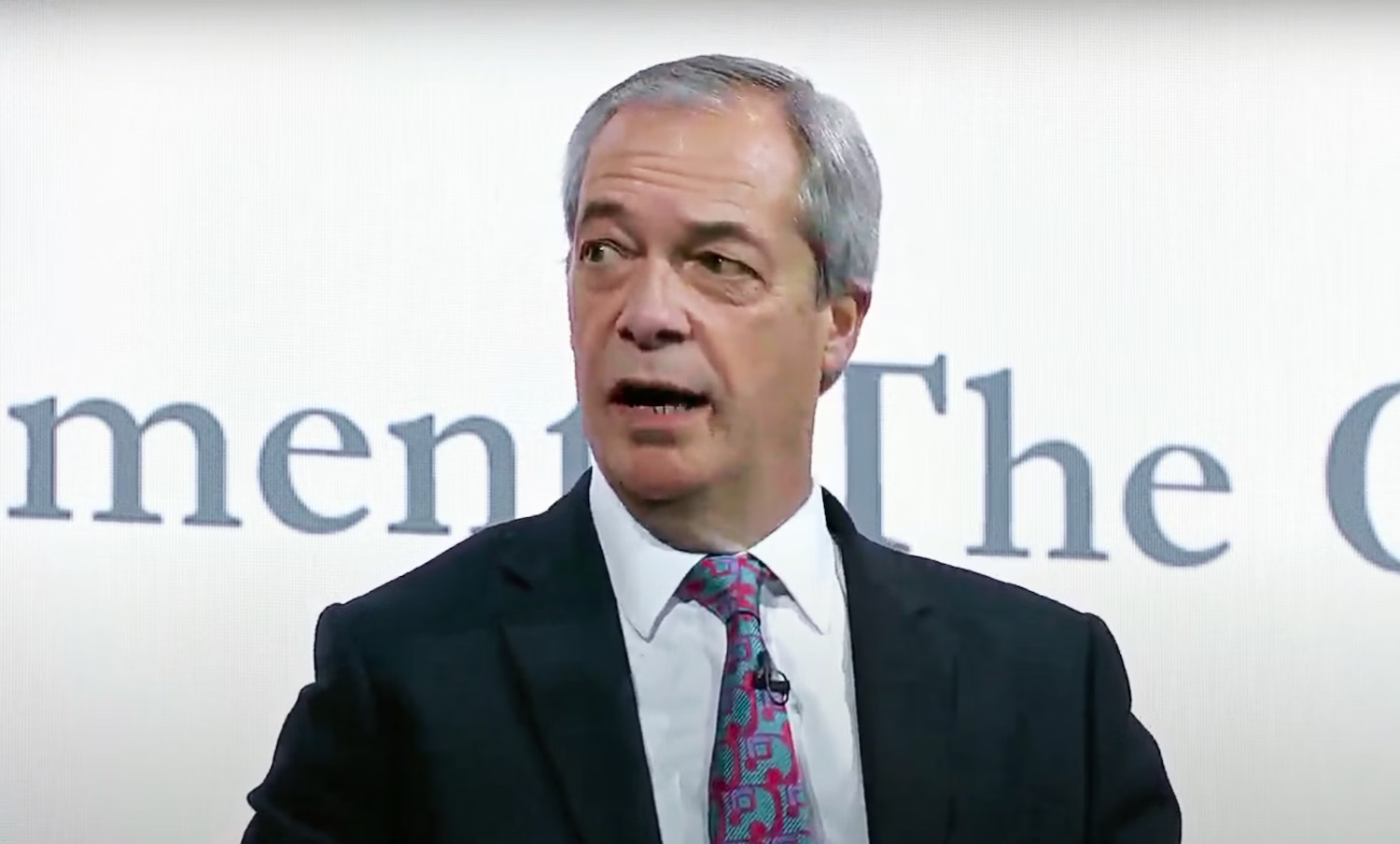
Reform UK leader Nigel Farage at the 2025 Alliance for Responsible Citizenship conference. Credit: ARC / YouTube
The Reform UK leader reiterated false climate claims at Jordan Peterson’s Alliance for Responsible Citizenship event in London.
Reform UK leader Nigel Farage has admitted that he doesn’t know about climate science, despite claiming that politicians shouldn’t worry about man-made carbon dioxide (CO2) emissions.
Farage was speaking at the Alliance for Responsible Citizenship (ARC) conference in London today. ARC claims that it wants to help “save civilisation”, yet several of the event’s speakers have spread climate science denial.
In an interview with Canadian psychologist and ARC co-founder Jordan Peterson, Farage said claimed that sunspots and volcanoes have more impact on the climate than human-caused CO2 emissions – an opinion longdebunked by climate experts.
He added: “I’m not a scientist. I can’t tell you whether CO2 is leading to warming or not, but there are so many other massive factors.”
Despite admitting that he is not a climate expert, Farage claimed it was “absolutely nuts” that CO2 is considered to be a pollutant.
Reform UK campaigns to entirely scrap the UK’s policies to achieve net zero emissions by 2050. It also proposes increased fossil fuel extraction, including the opening of new coal mines, and received at least £2.3 million (92 percent of its funding) from fossil fuel interests, polluters and climate deniers prior to the 2024 general election campaign.
As DeSmog revealed on Monday, a leaked guest list for the ARC event includes executives from oil and gas giants including BP, Koch Inc., Valero Energy, and Energy Transfer.
ARC received £1 million in 2023 from its director Paul Marshall, a hedge fund manager who owns GB News and recently bought The Spectator magazine. As revealed by DeSmog, Marshall’s hedge fund had £1.8 billion invested in fossil fuels – including in oil and gas giants Chevron, Shell, and Equinor – as of June 2023.
On 17 February, during the first day of the ARC conference, Donald Trump’s Energy Secretary Chris Wright called the UK’s 2050 net zero target “sinister”, and suggested climate action was a plot to “shrink human freedom”.
Nigel Farage and Climate Denial
Farage was a star speaker on the second day of the ARC conference at the ExCel centre in east London, during which he took part in a one-on-one interview with ARC frontman Peterson, who is a major promoter of climate science denial.
After declaring that “net zero is a complete disaster”, Farage called for dozens of “small modular nuclear reactors” across the UK. Peterson responded with a question about the science of climate change, suggesting: “Maybe it’s time to stop our obsession with carbon altogether.”
Peterson said: “I also think conceivably that the environmentalist climate scam was an offshoot of the Club of Rome Malthusian stupidity that is predicated on the presumption that resources are finite and that there’s far too many people on the planet, and there’s a terrible anti-human motivation lurking underneath all of that’s pessimistic and brutal and genocidal in its fundamental ethos.”
Farage replied: “The one thing I hear that drives me absolutely potty is that carbon dioxide is a pollutant! That’s what they tell us! That clearly is absolutely nuts. Now, there are times in our past when CO2 in the atmosphere has been much, much higher than it is today, and that’s before people drove 4×4 Chelsea tractors.”
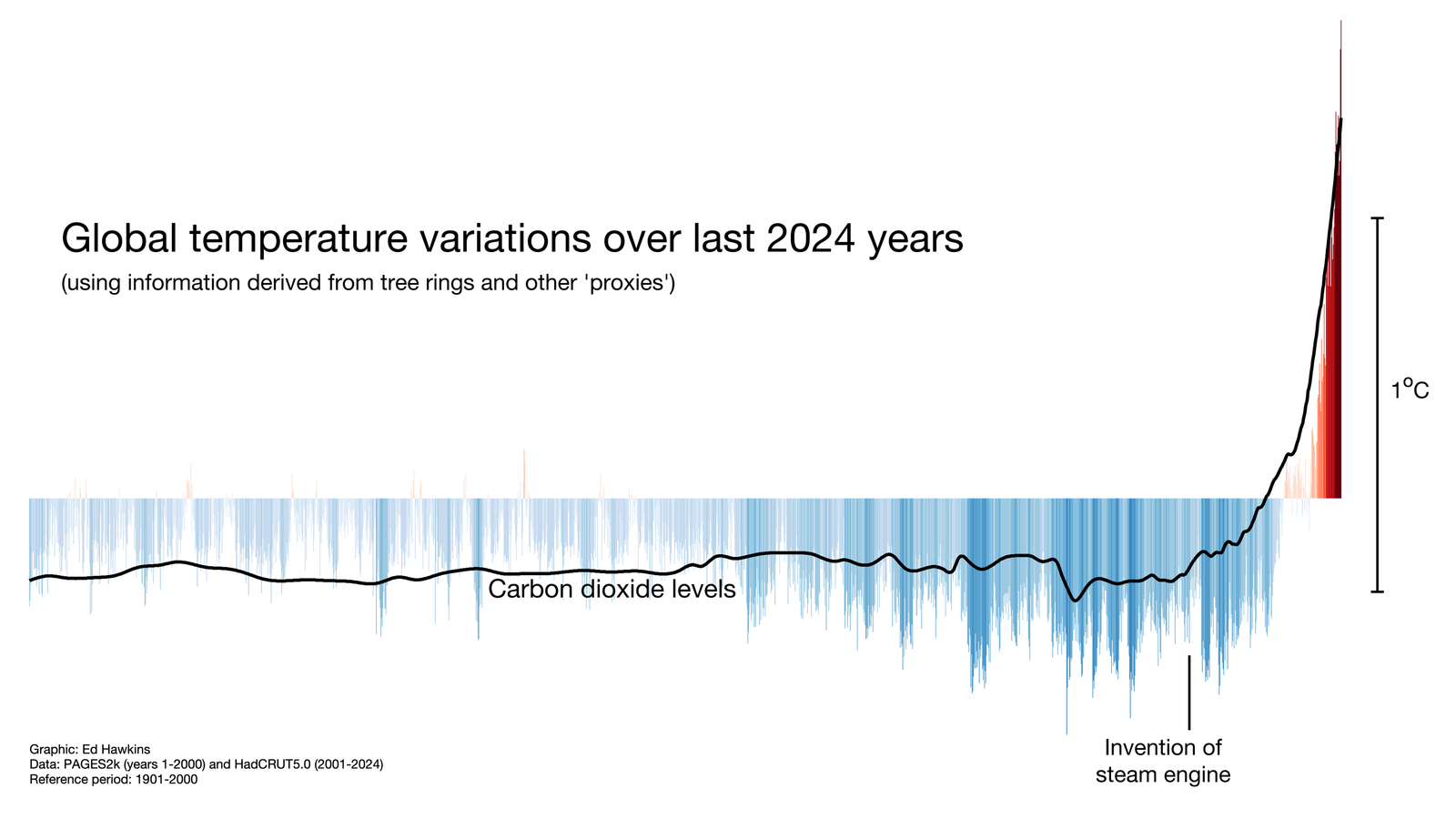
In fact, 2024 was the hottest year on record, according to experts at the World Health Organization.
As climate scientist Dr Philipp Breul from Imperial College London has stated: “We are causing the climate to change significantly faster than it has, to the best of our knowledge, in the last million years.
“This incredibly fast rate of change is the real problem, as it leaves neither society nor the ecosystem time to adapt.”
Farage went on to say that Sir Patrick Moore, a TV astronomer, told him 20 years ago that “when it comes to carbon dioxide levels, and when it comes to warming and cooling, let me assure you that sunspot activity and underwater volcanic activity will always have a bigger impact on the environment than man himself ever can”.
“I’ve very much stuck to that view,” Farage added.
Climate scientists at the UN’s Intergovernmental Panel on Climate Change (IPCC), the world’s leading climate science body, have stressed that “it is a statement of fact, we cannot be any more certain; it is unequivocal and indisputable that humans are warming the planet”.
Farage went on to repeat the misleading claim that only three percent of CO2 emissions are produced by humans. In fact, human activity has raised the atmosphere’s carbon dioxide content by 50 percent in less than 200 years, according to NASA.
The Reform UK described himself as an “environmentalist in the old school sense and definition of that term”, complaining that “climate hysteria has blinded us to other environmental disasters such as the rape of our oceans”.
Later in the interview, Farage agreed with Peterson that “family” is of central importance for a happy society. He also said he believed in “Judeo-Christen values”, and asserted that the Conservative Party is “not remotely right-wing”.
Nigel Farage explains the politics of Reform UK: Racism, Fake anti-establishmentism, Deregulation, Corporatism, Climate Change Denial, Mysogyny and Transphobia.Elon Musk urges you to be a Fascist like him, says that you can ignore facts and reality then.
Badenoch (right) will give a welcome address at the conference, with her party under increasing pressure from Farage (left) and Reform UK. Composite: PA
Event co-founded by Jordan Peterson will bring together global rightwing figures including senior US Republicans
Influential rightwingers from around the world are to gather in London from Monday at a major conference to network and build connections with senior US Republicans linked to the Trump administration.
The UK opposition leader, the Conservatives’ Kemi Badenoch, and Nigel Farage of the Reform UK party, her hard-right anti-immigration rival, will compete to present themselves as the torchbearer of British conservatism.
Conservatives from Britain, continental Europe and Australia attending the Alliance for Responsible Citizenship (ARC) conference will seize on the opportunity to meet and hear counterparts from the US, including those with links to the new Trump administration. The House speaker, the Republican Mike Johnson, had been due to attend in person but will now give a keynote address remotely on Monday.
Other Republicans due to speak include the US Energy Secretary Chris Wright and Vivek Ramaswamy – who has worked with Elon Musk on moves to radically reshape the US government – and Kevin Roberts, the president of the US Heritage Foundation, the thinktank behind the controversial “Project 2025” blueprint for Trump’s second term.
The conference, which is intended to be a gathering of influential intellectuals shaping global rightwing thinking, has a distinctly anti-environmental and socially conservative theme. It pledges to build on “our growing movement and continue the vital work of relaying the foundations of our civilisation”.
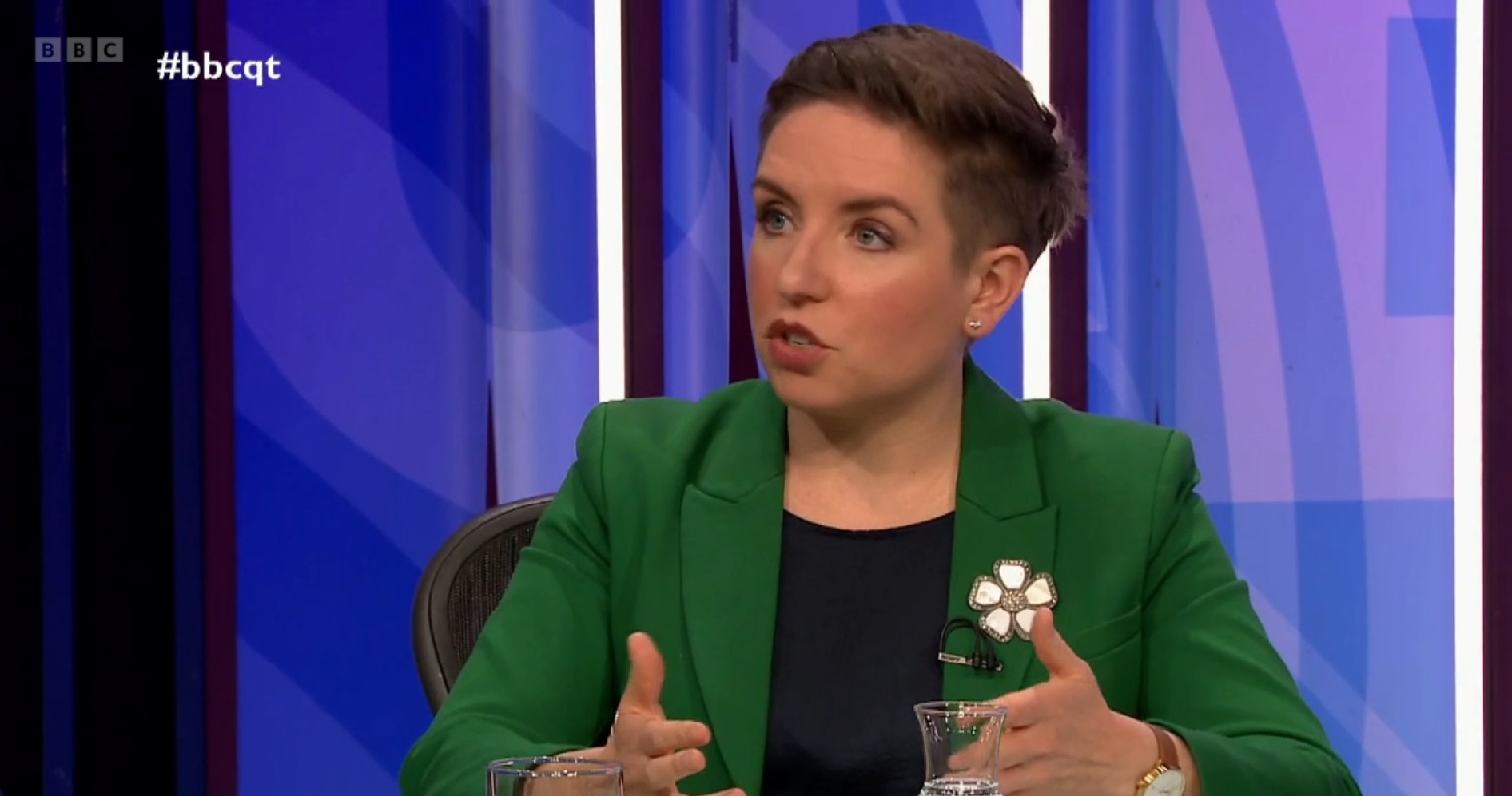
Image of the Green Party’s Carla Denyer on BBC Question Time.
Responding to the news that Labour are now publishing videos of police immigration raids, Green Party Co-Leader, Carla Denyer MP, said:
“This Labour government are plumbing new depths with their plan to broadcast footage of people being detained and deported. Those involved should be searching their consciences to ask if such breath-taking cruelty is really worth it all for the sake of aping the rhetoric of Reform. The bitter irony is that following Reform to the right on migration won’t win Labour any support – it will only lend legitimacy to Reform’s extreme views. It’s time this government showed a bit of backbone and told the truth – that migration is good for this country.”