Farage said Andrew Tate was ‘important voice’ for men in podcast interview

Spread the love
Image of Nigel Farage

https://www.theguardian.com/politics/article/2024/jun/20/nigel-farage-andrew-tate-important-voice-men-podcast-interview

Reform UK leader has also argued against diversity quotas and said people on benefits were ‘too stupid’ to work in appearances over past year

Nigel Farage has praised the misogynist influencer Andrew Tate for being an “important voice” for the “emasculated” and giving boys “perhaps a bit of confidence at school” in online interviews that appear to be aimed at young men over the past year.

The Reform UK leader spoke in favour of Tate for defending “male culture” in a Strike It Big podcast that aired in February, while acknowledging that the influencer had gone “over the top” and elsewhere that he had said some “pretty horrible” things.

Since December 2022, Tate has been facing charges in Romania of human trafficking, rape, and forming a criminal gang to sexually exploit women, which he denies.

Many politicians and teachers have spoken out against Tate’s influence on young boys in the UK, after the self-proclaimed misogynist said women belonged in the home and were a man’s property. “There’s no way you can be rooted in reality and not be sexist,” Tate said in one video.

Andrew Tate pictured with Nigel Farage in a Facebook post by Tate from March 2019. The caption read: ‘Brexit baby.’ Photograph: Emory Andrew Tate/Facebook

Farage’s interview comments

February 2023
“‘I’m too fat, I’m too stupid, I’m too lazy, I don’t get out of bed in the morning. I smoke drugs, give me money’ … That’s what we’re saying. ‘I don’t need to work, the state will provide for me’ … We cannot afford it.

“I welcomed much of [Liz Truss’s] budget. I think if there is a criticism, they tried to do too much, too quickly, without prior explanation … What happened here is the backbenches wobbled really quite quickly because a lot of Conservative backbenchers are basically globalists and listened to those big noises from the multinationals and the IMF. As soon as she sacked Kwarteng, it was all over … I would much have preferred her to hold her nerve, keep making those arguments and see if the party dared get rid of them.”

August 2023
“I think Andrew Tate is a fascinating figure. I think his speaking to men, who because of the woke agenda were told they couldn’t be male in any way at all, was an important thing. But I feel some of his comments were pretty horrible.”

April 2024
Javier Milei is “Thatcherism on steroids – this is incredible, cutting and slashing public expenditure, doing all the things he’s done … That’s leadership … He is amazing.”

https://www.theguardian.com/politics/article/2024/jun/20/nigel-farage-andrew-tate-important-voice-men-podcast-interview

Continue ReadingFarage said Andrew Tate was ‘important voice’ for men in podcast interview

Polluter Funded Reform Party Backs Oil and Gas Expansion in Manifesto

Spread the love

Original article by Adam Barnett republished from DeSmog

Nigel Farage, Reform UK’s leader. Credit: Gage Skidmore (CC BY-SA-ND 2.0)

One expert called Nigel Farage’s policies a contract to “bankrupt Britain and condemn future generations to climate catastrophe”.

Nigel Farage’s Reform UK, which is funded by climate science deniers and fossil fuel interests, has launched its manifesto with a pledge to expand oil and gas exploration and open new coal mines.

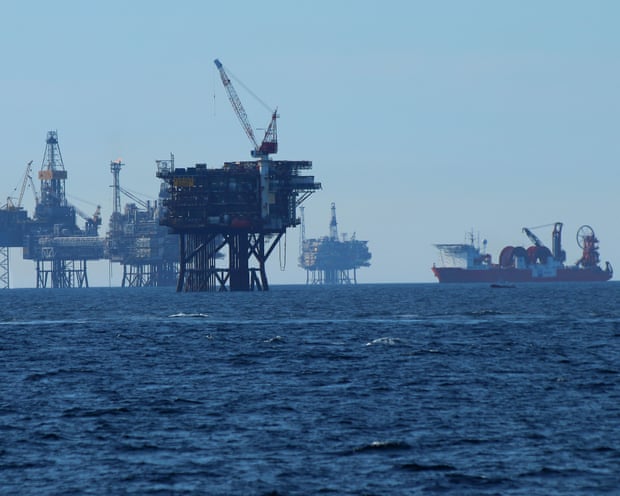
The document repeats the party’s policy to “scrap net zero”, the UK’s legally-binding target to reduce greenhouse gas emissions. It says Reform would “fast-track licences of North Sea gas and oil” and introduce two-year “test sites” for the controversial practice of fracking for shale gas, followed by “major production when safety is proven”. 

It says Reform would “increase and incentivise UK lithium mining for electric batteries, combined cycle gas turbines, clean synthetic fuel and clean coal mining”.

Coal emits the most carbon dioxide (CO2) of any fossil fuel. The world’s foremost climate science body, the UN’s Intergovernmental Panel on Climate Change (IPCC), has stated that stated that carbon dioxide “is responsible for most of global warming” since the late 19th century, which has increased the “severity and frequency of weather and climate extremes, like heat waves, heavy rains, and drought”.

The International Energy Agency (IEA) has said that any new fossil fuel projects would be incompatible with limiting warming to 1.5°C. 

Earlier this month, DeSmog revealed that Reform had received more than £2.3 million from oil and gas interests, highly polluting industries, and climate science deniers since December 2019 – amounting to 92 percent of the party’s donations during that period. 

Reform’s manifesto also says it would impose billions of pounds’ worth of taxes on renewable energy, claiming that renewables have increased energy bills. The party says that scrapping net zero would save the UK £30 billion a year – a claim that contradicts the views of scientists and economists. 

The Climate Change Committee, which advises the government on its net zero policies, has estimated that the cost of achieving net zero will be less than 1 percent of the UK’s annual economic output. The government independent spending watchdog – the Office for Budget Responsibility – has said that, “the costs of failing to get climate change under control would be much larger than those of bringing emissions down to net zero”.

Ed Matthew, campaigns director at the energy think tank E3G, said: “Nigel Farage’s pitch to obliterate net zero investment would damage the UK’s economic recovery and keep UK households hooked on high-cost gas.

“Net zero is the economic opportunity of the century. Farage is a climate change denier, in the pocket of fossil fuel vested interests, and he has presented a ‘contract’ to bankrupt Britain and condemn future generations to climate catastrophe.”

Dirty Donors

Reform has received a fortune from wealthy donors who either deny climate science or have interests in polluting industries. 

Since 2019, Reform has received more than £1.1 million in donations from Richard Tice, the party’s former leader and current chairman, plus more than 50 loans collectively worth around £1.4 million from a Tice-owned company called Tisun Investments.

Tice is one of the UK’s most prominent climate science deniers, using his presenting role on the right-wing broadcaster GB News to attack net zero policies and the science behind them. Tice has claimed that “there is no climate crisis” and expressed the view that “CO2 isn’t a poison. It’s plant food”.

Reform has received more than £500,000 since the last general election from Jeremy Hosking, whose investment firm Hosking Partners had more than $134 million (around £108 million) invested in the energy sector at the close of 2021, two thirds of which was in the oil industry, along with millions in coal and gas. 

Hosking previously told DeSmog: “I do not have millions in fossil fuels; it is the clients of Hosking Partners who are the beneficiaries of these investments.”

Farage also has a history of denying the science of climate change and attacking green policies. Speaking on GB News in August 2021, he said that he was “very much an environmentalist” and that he couldn’t “abide things like plastics in our seas, pollution in our rivers.” However, on the issue of climate change, he added: “What annoys me though, is this complete obsession with carbon dioxide almost to the exclusion of everything else, the alarmism that comes with it, based on dodgy predictions and science.”

The IPCC has stated that it is “unequivocal that human influence has warmed the atmosphere, ocean and land”.

Reform has also received £200,000 from First Corporate Consultants, a firm owned by Terence Mordaunt, a director and former chair of the Global Warming Policy Foundation (GWPF), the UK’s leading climate science denial group. 

‘Problematic’ Policies

Reform’s previous manifesto, which was on the party’s website as of last week, said the government’s windfall tax on oil and gas companies should be “scrapped”. It is not clear whether this is still Reform policy, as it does not appear in the new manifesto.

“Everyone can see that the oil and gas companies have raked in billions in profits since the start of the energy crisis and that it is the soaring price of gas – and our high dependency on it – that lies at the root of our high energy bills”, said Tessa Khan, executive director of environmental campaign group Uplift.

She added: “Our energy system is broken, but the only way to fix it is to phase out gas, not double down on new drilling, while scrapping support for insulation and renewables, as Reform is proposing.”

Analysis by the independent research group, the Institute for Fiscal Studies (IFS), today called the numbers in Reform’s manifesto “problematic”, adding: “Spending reductions would save less than stated, and the tax cuts would cost more than stated, by a margin of tens of billions of pounds per year.”

In May, a Reform spokesperson told DeSmog: “Climate change is real, Reform UK believes we must adapt, rather than foolishly think you can stop it. 

“We are proud to be the only party to understand that economic growth depends on cheap domestic energy and we are proud that we are the only party that are climate science realists, realising you can not stop the power of the sun, volcanoes or sea level oscillation.”

In May, DeSmog revealed that the Conservative Party had received £8.4 million from fossil fuel interests, highly polluting industries, and climate science deniers since the 2019 election. The party received an additional £225,000 from fossil fuel interests during the first week of the 2024 campaign – equivalent to 40 percent of its funding during this period.

An investigation last week mapped the Conservatives’ ties to a network of climate denial and fossil fuel interests, and the party last week launched its manifesto by promising to issue more oil and gas licences. 

Original article by Adam Barnett republished from DeSmog

Continue ReadingPolluter Funded Reform Party Backs Oil and Gas Expansion in Manifesto

Reform targets Labour ‘red wall’ voters

Spread the love

https://morningstaronline.co.uk/article/-reform-targets-labour-red-wall-voters

Reform UK chairman Richard Tice (left) and party leader Nigel Farage launch ‘Our Contract with You’ in Merthyr Tydfil while on the General Election campaign trail, June 17, 2024

REFORM started targeting Labour “red wall” voters today as the hard-right party launched its reactionary election manifesto in Wales.

The party’s owner and leader Nigel Farage went to Merthyr Tydfil, once represented by Labour pioneer Keir Hardie, to tell voters that “Labour is not very different to the Conservatives … it is just more incompetent.”

And he restated his aim of being the main challenger to Labour for government by 2029, likely date of the next general election following July 4.

The nationalist party’s platform is anti-migrant, opposed to climate action and supportive of NHS privatisation while cutting foreign aid and leaving the European Court of Human Rights.

It aims to take advantage of muted enthusiasm for Sir Keir Starmer’s Labour in working-class communities by rekindling the Brexit divisions it skilfully exploited in 2019.

Reform’s increasing prominence in the general election comes as the Tory Party’s campaign looks on the verge of expiring.

https://morningstaronline.co.uk/article/-reform-targets-labour-red-wall-voters

Continue ReadingReform targets Labour ‘red wall’ voters

Another election, another round of Nigel Farage hype, with no lessons learned

Spread the love
Image of Nigel Farage

Aurelien Mondon, University of Bath

Nigel Farage, a man who has never been elected to the House of Commons despite years of trying, has again been allowed to set the agenda in the UK.

Ten years after Ukip won the European parliament elections, throwing the Conservative party into turmoil and leading David Cameron to promise a referendum on the UK’s membership of the European Union, Farage is at it again. Or more precisely, he is being allowed to go at it again.

The mainstream elite in the media and in politics who claim to oppose Farage, and who pretend to stand as a bulwark against far-right politics, are again duly buying into the hype he has created for himself.

We could already feel that hype bubbling as Farage took over as leader of Reform. He’d seen the party’s fortunes rising and started to think there could be something in it for him to step into the campaign.

We could see it in the coverage of every move he made thereafter – every milkshake thrown, every inflammatory quip quoted and beer drunk, snapped and plastered all over the news as some kind of morbid excitement set in among the media. Finally, something exciting is happening in this otherwise rather dull campaign, where offers of “change” and pledges to be “bold” are hollow slogans for the sides of battle buses.

To understand how a party which only received 2% of the registered votes in the 2019 general election, failing to get even one MP elected, can get such attention, we must travel back in time.

Ukip was a party created by a eurosceptic elite, for a eurosceptic elite, to put pressure on the Conservatives via the EU elections. It all seemed a rather desperate move at the time, as the issue was marginal at best.

The party received 15.6% of the vote in the 2004 European elections and 16% in 2009. But these are second order elections, prone to low turnout and high protest vote. In these settings, Ukip really only received a mere 6% and 5.6% of the registered vote, once turnout was taken into account. Hardly the voice of the “silent majority”.

The 2005 and 2010 general elections clearly showed the limits of Ukip’s appeal. In 2005, the party received 1.4% of the vote and in 2010, it took 2%.

Ukip’s election vote share

A chart showing the performance of Ukip across general and European elections and what proportion that represented of the overall registered vote.
Ukip results in general elections (GE) and European elections (EU).
A Mondon., CC BY-ND

Still, the first “breakthrough” was in 2014 when Ukip won the EU elections with 26.6%. An “earthquake”, we were told. This was the start of the “left behind” myth which served Farage well as it diverted attention away from his elitist stance. The fantasised “white working class” would come to play a key role in shaping the narrative after the victories of both Donald Trump in the US and Brexit. Proper scrutiny of Ukip’s (and Reform’s) programmes (or Trump’s for that matter) would have also shown that beyond typical far-right measures and other gimmicks, their project was always deeply skewed in favour of the wealthy.

Yet even though Ukip really only received the support of one out of ten registered voters (9.5%) in 2014, in particularly favourable circumstances, the mainstream elite could not get enough of Farage. Finally, the UK had a “populist” contender worthy of the name. They too could feel the same voyeuristic thrills as their European counterparts, watching the “irresistible” rise of the far right (or “populism” to be politically correct, as we would not want to offend the far right, no matter how clear Farage has made his views).

What is striking is that it is this election which set in motion the 2016 referendum, even though Ukip was the only party running on a platform demanding that the UK leave the EU. For all the talk of “taking back control” and “sovereignty”, this reactionary experiment was decided based on the support of less than 10% of voters. Even in terms of votes cast, the referendum was forced onto almost three out of four voters who had decided to vote for parties who were not formally demanding the country leave the EU.

In case you missed it… Alamy/Urban images


All this is to say, Farage has simply never been that popular. This is despite him campaigning in incredibly fertile environments in which parts of the media are dedicated to propping him up, and where even those who seemingly oppose his politics cannot get enough of him – as demonstrated by his record number of appearances on the BBC or the countless articles on “populism” in the Guardian.

Just look at how much coverage a press conference given after one single poll has received, when other parties fail to get issues such as climate change, poverty or social care on the agenda.

And if you think this is because immigration is people’s key concern, think again. Indeed, as I explored with Lancaster university’s Aaron Winter in a report for the Runnymede Trust, the “immigration issue” is one that is clearly constructed in a top-down manner. Unsurprisingly, when people are asked about the key concerns in their personal lives, immigration doesn’t rate. Ironically, the exaggerated focus on immigration could be argued to be elite manipulation rather than the other way around.

So, what’s behind the rise of Farage? Well, the same processes which have been at play across much of Europe: the hyping of far-right politics as a diversion. As has become abundantly clear, there is no mainstreaming or rise of far-right politics without the active involvement of mainstream forces who normalise and platform them.


Want more election coverage from The Conversation’s academic experts? Over the coming weeks, we’ll bring you informed analysis of developments in the campaign and we’ll fact check the claims being made.

Sign up for our new, weekly election newsletter, delivered every Friday throughout the campaign and beyond.


The far right then plays a convenient role, serving to scare the electorate at a time when distrust in governing parties is sky high. The message is: “we are bad but they are worse”.

Yet this strategy is exhausted. Patience has run out and the far right is no longer as repulsive as it once was, now that most mainstream parties mimic its discourse.

The solution is simple. Stop fighting it on its turf. Instead, turn to issues which are not only core to people’s concerns, but far less amenable to far right hijacking. This takes bold actions and real change though – both being in short supply in our mainstream parties.The Conversation

Aurelien Mondon, Senior Lecturer in Politics, University of Bath

This article is republished from The Conversation under a Creative Commons license. Read the original article.

Continue ReadingAnother election, another round of Nigel Farage hype, with no lessons learned

Climate Obstructionism Runs Deep in the UK — Watch Out for It at the Election

Spread the love

Original article by Freddie Daley and Peter Newell republished from DeSmog.

Credit: Lindsay Grime.

Regardless of who wins next month, fossil fuel interests have multiple levers for influencing policy.

The UK is heading to the polls on July 4. Although it doesn’t get enough attention, the two major parties — the Conservatives and Labour — have chosen climate change and, in particular, fossil fuel production in the North Sea as a clear political dividing line for the electorate. 

As polling day draws closer, and election fervour takes hold, we will see the forces of British climate obstruction in full effect. Influential individuals, organisations and media outlets that seek to block, dilute, delay, or even reverse climate policies will attempt to widen that political dividing line with a mixture of claims to be defending individual freedoms, putting growth first, being ‘climate realists’, or by displacing concerns about the UK’s responsibility to act on climate change through ‘whataboutism’.

The Conservative government, under Prime Minister Rishi Sunak, has pushed ahead with issuing hundreds of new oil and gas licences in the North Sea. The government was due to further reform the licensing regime so permits are handed out on an annual basis, all under the auspices of ‘energy security’, but the election has halted the bill’s progress through Parliament. Future licences are expected to yield just three weeks’ worth of gas per year

Sir Keir Starmer’s Labour Party, however, announced that it will end new licensing for oil and gas in the North Sea, with the very large caveat of honouring those already approved. But even this announcement ignited fierce resistance from the media, trade unions, Labour’s political opponents and some figures it deemed allies. The plan was labelled as “Thatcher on steroids”“naive”, and risked “creating a cliff-edge” for industry and investment in and around the North Sea. In response to the vitriol, Starmer conceded that fossil fuels will continue to be used in the UK “for many, many years”.  

This episode provides a useful insight into how climate obstructionism operates in the UK. In a new publication for the Climate Social Science Network (CSSN) based at Brown University, alongside Dr Ruth McKie and Dr James Painter, we identified three major channels through which obstructionism operates in Britain and the network of organisations that sustain it. 

Financial Power

The first is the material. This speaks to the financial and structural power of the fossil fuel industry that allows it to use threats of capital flight and job losses to curry favourable policy conditions and fend off tax hikes that would dent profitability. It also speaks to party donations, where fossil fuel firms, or those that benefit from their expansion, provide funds to individual politicians or the wider party for access and a say over policy. 

Since 2019, the Conservatives have received £8.4 million in donations from big polluters and those with direct links to fossil fuel production. The current Energy Security and Net Zero Secretary, Claire Coutinho, accepted a £2,000 donation in January 2024 from Lord Michael Hintze, a funder of the UK’s leading climate science denial group, the Global Warming Policy Foundation. Labour too have taken money from big polluters, most notably Drax, whose North Yorkshire power plant is the UK’s single largest source of emissions.

Alongside the material sits the institutional. The policy making process in the UK provides a multitude of opportunities for actors to shape policy, all within the bounds of proper procedure and due process. All Party Parliamentary Groups (APPGs), informal groups of politicians organised around key themes or policy issues, have provided an effective fora for obstructionist actors to garner access and shape policy. The rules governing APPGs often inhibit public scrutiny. Trade associations, and the companies they represent, can be omitted from official parliamentary transparency logs as only benefits in kind above £1,500 a year must be declared — a threshold many industry bodies claim not to meet. 

Revolving doors between industry and government are another institutional means through which fossil fuel interests can determine policy. An investigation by The Ferret found that since 2011, 127 former oil and gas employees have gone into top government roles and been appointed to ministerial advisory boards. At least a dozen of these individuals were given roles in the North Sea Transition Authority, the organisation tasked with governing oil and gas production, as well as within departments responsible for writing energy and climate policy. Shutting this revolving door, or even just slowing it down through ‘cool-off’ periods, would go some way in curtailing obstructionism. 

Climate Delay

The final, and perhaps most pronounced, thread of climate obstructionism in the UK is discursive, primarily promoted through the media. The right-leaning media in the UK, such as the Daily Telegraph and Daily Mail, have persistently opposed climate policy and action. This opposition used to be grounded in outright denial, where the integrity of climate science was disputed and denigrated. Now, though, a more pernicious form of discursive obstructionism is prevalent; that of climate delay. 

Countless op-eds and articles have been published that acknowledge climate change but dispute the necessity of addressing it, the cost of implementing climate policy (both economically and in terms of national security), and the efficacy of green technologies such as wind turbines, electric vehicles (EVs) and heat pumps. These interventions, which are sometimes made by individuals with direct links to sceptic organisations or else use their framing, often push blatant untruths to the public, such as renewable energy pushing up household energy bills or solar panels  jeopardising British farming. The media continues to both demonise climate activists and undermine public support for key climate policies. 

In this election, watch out for climate obstructionism. While institutional channels may be curtailed due to purdah, others will pick up the slack. With all parties now firmly on an election footing, donations will become a crucial resource for knocking doors and getting out the vote in marginal seats. The sources of these donations, and the interests behind them, will bear the thumbprint of the fossil fuel industry. The media will increase its scrutiny of manifesto pledges and publish a litany of analyses. It is highly likely that Labour’s climate policy will be painted as a threat to national security, an insurmountable cost to the public purse, and reflecting the demands of both Vladimir Putin and Just Stop Oil simultaneously. The foundation of this framing has already been set. 

What is less clear, though, is what comes after July 4. With a change of government comes a reconfiguration of interests and, for the winners, concessions will be made to those actors and constituencies that helped get them past the post. For the losing party, most likely to be the Conservatives, there may be an ideological reorientation that ends the cross-party consensus on tackling climate breakdown, making them the party of climate obstructionism that challenges the necessity of net zero and fights for more oil and gas. 

This election might be the one that ends 14 years of Conservative rule, but it’s not likely to be the one to end climate obstructionism in the UK.  

Freddie Daley is a Research Associate at the Centre for Global Political Economy at the University of Sussex.

Peter Newell is a Professor of International Relations at the University of Sussex.

They are the authors of a chapter in Climate Obstructionism across Europe, a new collection of essays analysing the organisations, politicians, think tanks and media outlets seeking to delay, derail and denigrate climate policy, produced by the Climate Social Science Network.

Original article by Freddie Daley and Peter Newell republished from DeSmog.

dizzy: I don’t agree that there is “cross-party consensus on tackling climate breakdown.” I suggest that instead the Conservative and Labour parties are indistinguishable in their support of plutocracy, sucking up to the rich and powerful. The Conservatives under Sunak have made no pretence of their intention to forge ahead with exploiting North Sea fossil fuels all they can and Labour do not intend to stop the Rosebank North Sea oil and gas field. Starmer has abandoned so many pledges that he should be recognised as as much a liar as Tony Blair or Boris Johnson.

The title of “… the party of climate obstructionism that challenges the necessity of net zero and fights for more oil and gas. ” is currently shared by the Conservatives and climate denier Nigel Farage’s Reform UK.

Rishi Sunak on stopping Rosebank says that any chancellor can stop his huge 91% subsidy to build Rosebank, that Keir Starmer is as bad as him for sucking up to Murdoch and other plutocrats and that we (the plebs) need to get organised to elect MPs that will stop Rosebank.

Continue ReadingClimate Obstructionism Runs Deep in the UK — Watch Out for It at the Election