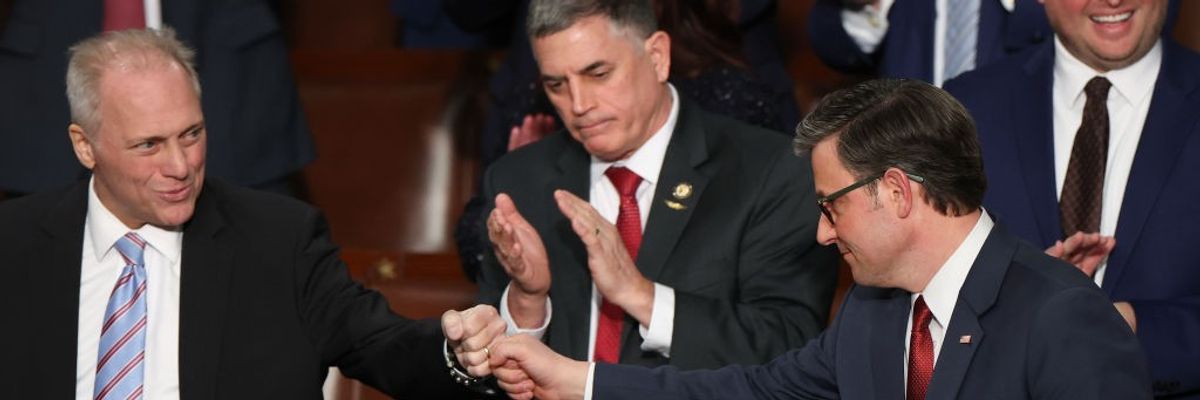
U.S. Rep. Steve Scalise (R-La.), the Republican whip, congratulates House Speaker Mike Johnson (R-La.) on his reelection to the leadership role on January 3, 2025, the first day of the 119th Congress, at the Capitol Building in Washington, D.C. (Photo: Win McNamee/Getty Images)
“Mike Johnson is committing to slashing Social Security and Medicare to get the speaker’s gavel,” said one progressive group.
As Republicans took full control of Congress this week and U.S. President-elect prepared to take office later this month, Democratic lawmakers renewed warnings about how the GOP agenda will harm working people and pledged to fight against it.
“Today, the 119th Congress officially begins. Our top priority over the next two years must be fighting for working families and standing up to corporate power and greed,” Rep. Pramila Jayapal (D-Wash.), chair emeritus of the Congressional Progressive Caucus, said on social media Friday.
“While Republicans focus their energy for the next two years on giving tax breaks to the rich and cutting vital public programs, Democrats will continue working to lower costs and raise wages for all,” Jayapal promised. “We’ll always be fighting for YOU.”
In addition to members of Congress being sworn in on Friday, nearly all Republicans in the House of Representatives reelected Rep. Mike Johnson (R-La.) as speaker and the chamber debated a rules package that Democrats have criticized since it was released by GOP leadership earlier this week.
“Their governance will be marked by consolidated power, scapegoated communities, and campaigns of punishment.”
The package fast-tracks a dozen bills on a range of issues; they include various immigration measures as well as legislation attacking transgender student athletes, sanctioning the International Criminal Court, requiring proof of United States citizenship to register to vote in federal elections, and prohibiting a moratorium on hydraulic fracturing, or fracking, for fossil fuels.
“Speaker Johnson has said that the 119th Congress will be consequential. Today, both in Speaker Johnson’s address and in the rules package the Republicans have passed, Republicans have shown us what the consequences of their leadership will be,” Rep. Delia C. Ramirez (D-Ill.) said in a statement. “In their first order of business, Republicans advanced a legislative package that abuses the power of Congress to persecute trans children athletes, take federal funding away from sanctuary cities like Chicago and Illinois, scapegoat immigrants, erode voting rights, and put new criminal penalties on reproductive care providers.”
“For the first time in history, they seek to make the speakership less accountable to the full body of legislators and to limit our ability to consider emergency bills,” Ramirez noted. “Overall, they are using the rules to make Congress less transparent, less accountable, and less responsive to the needs of the American people. Their governance will be marked by consolidated power, scapegoated communities, and campaigns of punishment.”
Speaking out against the package on the House floor, Jayapal said it “makes very clear what the Republican majority will not do in the 119th Congress,” stressing that the 12 bills “do nothing to lower costs or raise wages for the American people.”
These bills also won’t “take on the biggest corporations and wealthiest individuals who profit from the high prices and junk fees and corporate concentration that’s harming Americans across this country,” she said. “Because guess what? These corporations and wealthy individuals are the ones that are controlling the Republican Party for their own benefit.”
Jayapal highlighted the exorbitant wealth of Trump’s Cabinet picks, just a day after the president-elect announced corporate lobbyist and GOP donor Ken Kies as his choice for assistant secretary for tax policy at the Treasury Department—which is set to be led by billionaire hedge fund manager Scott Bessent, as Republicans in Congress try to pass another round of tax cuts for the rich.
GOP lawmakers are also aiming “to make meaningful spending reforms to eliminate trillions in waste, fraud, and abuse, and end the weaponization of government,” Johnson said in a lengthy social media on Friday. “Along with advancing President Trump’s America First agenda, I will lead the House Republicans to reduce the size and scope of the federal government, hold the bureaucracy accountable, and move the United States to a more sustainable fiscal trajectory.”
In other words, responded the Progressive Change Campaign Committee (PCCC), “Mike Johnson is committing to slashing Social Security and Medicare to get the speaker’s gavel.”
Republicans have a slim House majority and Trump-backed Johnson was initially set to fall short of the necessary support to remain speaker, due to opposition from not only Congressman Thomas Massie (R-Ky.) but also Reps. Ralph Norman (R-S.C.) and Keith Self (R-Texas). However, after a private conversation, Norman and Self switched their votes.
“Johnson cut a backroom deal with the members that voted against him so they’d flip their votes. So he will get gavel now. I’m sure in time we’ll find out what he sold out just so he’d win,” Rep. Maxwell Alejandro Frost (D-Fla.) said on social media.
“What did Johnson sell out to become speaker? Social Security or Medicare? Or perhaps veterans?” he asked.
Citing a document circulated ahead of the vote by Johnson’s right-wing critics that lists “failures” of the 118th Congress, the PCCC said: “Looks like all of the above. But his holdouts put Social Security in their first bullet of grievances.”
After the vote, Norman and 10 right-wing colleagues released a letter explaining that, despite sincere reservations, they elected Johnson because of their “steadfast support of President Trump and to ensure the timely certification of his electors.”
“To deliver on the historic mandate earned by President Trump for the Republican Party, we must be organized to use reconciliation—and all legislative tools—to deliver on critical border security, spending cuts, pro-growth tax policy, regulatory reform, and the reversal of the damage done by the Biden-Harris administration,” they added.
Politicoreported that “House Republicans are hoping to start work on the budget targets for critical committees on Saturday—the first step in kicking off their ambitious legislative agenda involving energy, border, and tax policy.”
According to the outlet:
“The Ways and Means Committee is just going to be able to draft tax legislation according to what the budget reconciliation instructions are,” said House Ways and Means Chair Jason Smith (R-Mo.), who will be leading the charge on extensions of… Trump’s tax cuts.
“And so when the conference figures out what they want in those instructions, we’ll be able to deliver according to those parameters,” said Smith, when asked about the primary goal of a GOP conference meeting tentatively scheduled for Saturday at Fort McNair, an Army post in southwest Washington.
That followed Thursday reporting by The Washington Post that Trump advisers and congressional Republicans “have begun floating proposals to boost federal revenue and slash spending so their plans for major tax cuts and new security spending won’t further explode the $36.2 trillion national debt.”
As the newspaper detailed, 10 policies that Republicans have considered are tariffs, repealing clean energy programs, unauthorized spending, repealing the Biden administration’s student loan forgiveness, shuttering the Education Department, cutting federal food assistance, imposing Medicaid work requirements, blocking Medicare obesity treatment, ending the child tax credit for noncitizen parents, and cutting Internal Revenue Service funding.
“The GOP promised to make life easier for working families,” Rep. Katherine Clark (D-Mass.), the Democratic whip, said on social media in response to the Post‘s article. “Now, they want to slash your school budget, raise your grocery costs, and hike your energy bills—all to pay for billionaire tax cuts.”
“We will not allow Republicans to cut Social Security, Medicare, Medicaid, and food assistance to pay for tax cuts for the wealthy,” she added Friday. “No way.”
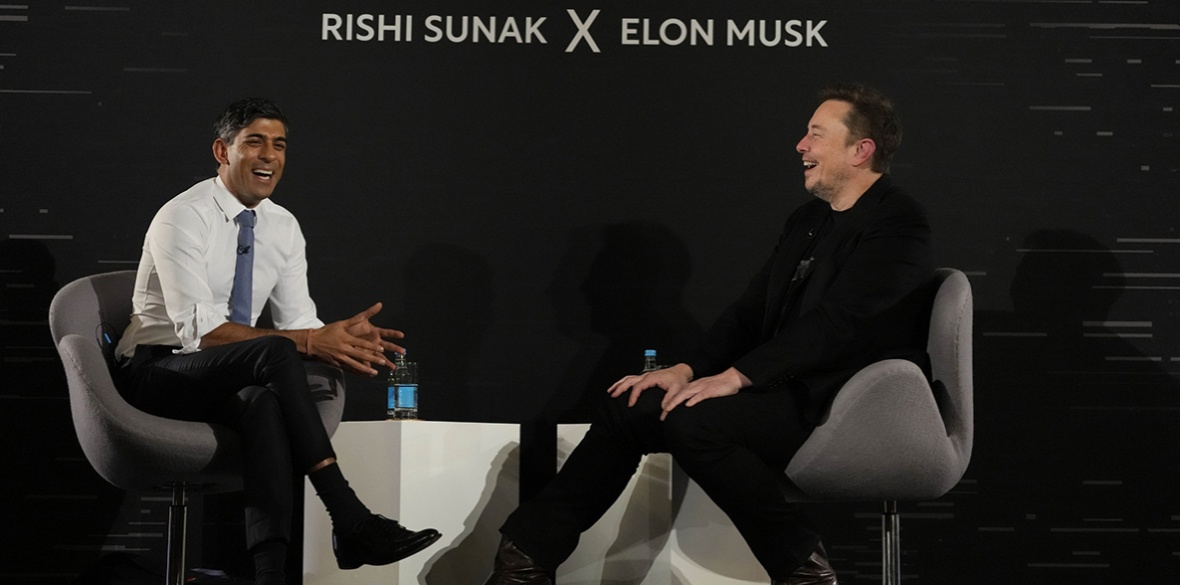
Then prime minister Rishi Sunak (left) and Elon Musk, CEO of Tesla and SpaceX in-conversation in central London, November 2, 2023
…
They [the UK Conservative Party or ‘Tories’] disregard the evidence of the inquiry they set up, which noted that child abuse was endemic in England and Wales (a separate inquiry is ongoing for Scotland); was enabled, covered up or ignored in multiple contexts from churches to schools, council-run care homes and when organised by criminal gangs; and is on the increase because of the rise in online pornography, grooming and pimping.
They instead frame the question in racist terms. Shadow home secretary Chris Philps asks for an inquiry to ask why grooming gangs are “overwhelmingly of south Asian background.” Shadow safeguarding minister Alicia Kearns calls on Phillips to release the “ethnicity data.”
They hype up a far-right trope about Asian, and specifically Muslim, grooming gangs that their own government reports disproved. Musk seizes on this too, retweeting claims Phillips is refusing to open an inquiry into “Muslim grooming gangs.”
Musk’s role is novel and dangerous. The richest man on Earth is incendiary, attacking Phillips as a “rape genocide apologist” and demanding that the King dissolve Parliament to protect children from the Labour government.
So far so Musk, but the Conservatives seem happy to take attack lines from the toxic tech tycoon and turn his transient fixations into British political weather.
Musk is soon to be a high-ranking member of the US government, which Keir Starmer is as ready to fawn on as his predecessors. Labour should stand up to this abuse or it will be humiliated, to the benefit — as Musk intends — of the British far right he openly supports.
That means rejecting the racist weaponisation of the issue.
A Palestinian medic carries an injured child from an ambulance as the wounded being transported to Al-Ahli Baptist Hospital for treatment following an Israeli attack on the Shuja’iyya neighborhood in Gaza City, Gaza on January 01, 2025. (Photo by Dawoud Abo Alkas/Anadolu via Getty Images)
Organizing together under the name Taxpayers Against Genocide, constituents served notice that no amount of rhetoric could make funding of genocide anything other than repugnant.
On the last day of 2024, the deputy general counsel for the House of Representatives formally accepted delivery of a civil summons for two congressmembers from Northern California. More than 600 constituents of Jared Huffman and Mike Thompson have signed on as plaintiffs in a class action accusing them of helping to arm the Israeli military in violation of “international and federal law that prohibits complicity in genocide.”
Whatever the outcome of the lawsuit, it conveys widespread anger and anguish about the ongoing civilian carnage in Gaza that taxpayers have continued to bankroll.
By a wide margin, most Americans favor an arms embargo on Israel while the Gaza war persists. But Huffman and Thompson voted to approve $26.38 billion in military aid for Israel last April, long after the nonstop horrors for civilians in Gaza were evident.
Back in February — two months before passage of the enormous military aid package — both Human Rights Watch and Amnesty International found that, in the words of the lawsuit, “the Israeli government was systematically starving the people of Gaza through cutting off aid, water, and electricity, by bombing and military occupation, all underwritten by the provision of U.S. military aid and weapons.”
When the known death toll passed 40,000 last summer, the UN’s high commissioner for human rights said: “Most of the dead are women and children. This unimaginable situation is overwhelmingly due to recurring failures by the Israeli Defense Forces to comply with the rules of war.” He described as “deeply shocking” the “scale of the Israeli military’s destruction of homes, hospitals, schools and places of worship.”
No one should put any trust in the court system to stop the U.S. government from using tax dollars for war. But suing congressmembers who are complicit in genocide is a good step.
On Dec. 4, Amnesty International released a 296-page report concluding that Israel has been committing genocide “brazenly, continuously and with total impunity” — with the “specific intent to destroy Palestinians,” engaging in “prohibited acts under the Genocide Convention.”
Two weeks later, on the same day the lawsuit was filed in federal district court in San Francisco, Human Rights Watch released new findings that “Israeli authorities are responsible for the crime against humanity of extermination and for acts of genocide.”
Responding to the lawsuit, a spokesperson for Thompson said that “achieving peace and securing the safety of civilians won’t be accomplished by filing a lawsuit.” But for well over a year, to no avail, the plaintiffs and many other constituents have been urging him and Huffman to help protect civilians by ending their support for the U.S. pipeline of weapons and ammunition to Israel.
Enabled by that pipeline, the slaughter has continued in Gaza while the appropriators on Capitol Hill work in a kind of bubble. Letters, emails, phone calls, office visits, protests and more have not pierced that bubble. The lawsuit is an effort to break through the routine of indifference.
Like many other congressional Democrats, Huffman and Thompson have prided themselves on standing up against the contempt for facts that Donald Trump and his cohorts flaunt. Yet refusal to acknowledge the facts of civilian decimation in Gaza, with a direct U.S. role, is an extreme form of denial.
“Over the last 14 months I have watched elected officials remain completely unresponsive despite the public’s demands to end the genocide,” said Laurel Krause, a Mendocino County resident who is one of the lawsuit plaintiffs.
Another plaintiff, Leslie Angeline, a Marin County resident who ended a 31-day hunger strike when the lawsuit was filed, said: “I wake each morning worrying about the genocide that is happening in Gaza, knowing that if it wasn’t for my government’s partnership with the Israeli government, this couldn’t continue.”
Such passionate outlooks are a far cry from the words offered by members of Congress who routinely appear to take pride in seeming calm as they discuss government policies. But if their own children’s lives were at stake rather than the lives of Palestinian children in Gaza, they would hardly be so calm. A huge empathy gap is glaring.
In the words of plaintiff Judy Talaugon, a Native American activist in Sonoma County, “Palestinian children are all our children, deserving of our advocacy and support. And their liberation is the catalyst for systemic change for the betterment of us all.”
As a plaintiff, I certainly don’t expect the courts to halt the U.S. policies that have been enabling the horrors in Gaza to go on. But our lawsuit makes a clear case for the moral revulsion that so many Americans feel about the culpability of the U.S. government.
To hardboiled political pros, the heartfelt goal of putting a stop to the arming of the Israeli military for genocide is apt to seem quixotic and dreamy. But it’s easy for politicians to underestimate feelings of moral outrage. As James Baldwin wrote, “Though we do not wholly believe it yet, the interior life is a real life, and the intangible dreams of people have a tangible effect on the world.”
Organizing together under the name Taxpayers Against Genocide, constituents served notice that no amount of rhetoric could make funding of genocide anything other than repugnant. Jared Huffman and Mike Thompson are the first members of Congress to face such a lawsuit. They won’t be the last.
In recent days, people from many parts of the United States have contacted Taxpayers Against Genocide (via classactionagainstgenocide@proton.me) to see the full lawsuit and learn about how they can file one against their own member of Congress.
No one should put any trust in the court system to stop the U.S. government from using tax dollars for war. But suing congress members who are complicit in genocide is a good step for exposing — and organizing against — the power of the warfare state.
Demonstrators march toward the Trump International Hotel & Tower demanding an end to Israeli attacks on the Gaza Strip after the presidential election in Chicago, Illinois, on November 6, 2024. (Photo: Jacek Boczarski/Anadolu via Getty Images)
“This administration will likely be coming very quickly to try to take down the Palestinian rights movement,” said a Jewish Voice for Peace Action leader.
Victims of violence by U.S.-armed Israeli forces and advocates for Palestinian rights across the United States are sounding the alarm over Republican President-elect Donald Trump’s looming return to the White House and GOP control of Congress.
President Joe Biden, Vice President Kamala Harris, and the divided 118th Congress have faced intense criticism for giving Israel diplomatic and weapons support to kill at least 45,581 Palestinians in the Gaza Strip over the past 15 months and attack Lebanon, Syria, and Yemen. The outgoing Democratic administration and lawmakers have also faced backlash for their response to anti-war protests, particularly on U.S. university campuses, some of which were met with police brutality.
However, recent reporting in the United States and Israel has highlighted fear about promises from Trump and his Republican Party that, as the Israeli newspaper Haaretz put it last week, a “quick and complete” crackdown “on pro-Palestinian sentiment in America will be a defining factor of his administration’s early days.”
“The Palestinian rights movement is very clear-eyed in understanding that it is very likely that this Trump administration will mean that things get much worse for Palestinians.”
Beth Miller, political director of the advocacy group Jewish Voice for Peace Action, told Politico on Wednesday that “the Palestinian rights movement is very clear-eyed in understanding that it is very likely that this Trump administration will mean that things get much worse for Palestinians.”
“This administration will likely be coming very quickly to try to take down the Palestinian rights movement,” Miller added.
Leaders with the Adalah Justice Project and Arab American Institute also noted concerns about efforts to silence advocates and even dismantle organizations—some of which are already underway. In November, 15 House Democrats joined all but one Republican in voting for the so-called Terror-Financing and Tax Penalties on American Hostages Act (H.R. 9495).
The legislation would enable the U.S. Treasury Department to revoke the tax-exempt status of any nonprofit it deems a “terrorist-supporting organization” without due process. Advocates for various causes have condemned what they call the “nonprofit killer bill.”
Although H.R. 9495 never made it through the Democrat-held Senate, Republicans are set to take over the chamber on Friday. The GOP will also retain control of the House, which during this session has repeatedly voted to conflate criticism of Israel with antisemitism, or discrimination against Jews.
In addition to likely facing a new wave of legislative attacks—potentially spearheaded by GOP leaders like incoming House Foreign Affairs Committee Chair Brian Mast (R-Fla.), a U.S. military veteran who has volunteered with the Israel Defense Forces and denied the existence of “innocent Palestinian civilians”—rights advocates in the United States could be targeted by key officials in the next Trump administration.
As Haaretz recently detailed, former Florida Attorney General Pam Bondi, Trump’s second choice to lead the U.S. Department of Justice (DOJ); Sen. Marco Rubio (R-Fla.), his nominee for secretary of state; and Rep. Elise Stefanik (R-N.Y.), his candidate for ambassador to the United Nations, have expressed support for deporting pro-Palestinian protesters who have student visas.
Although former federal prosecutor Kash Patel, Trump’s pick to direct the Federal Bureau of Investigation, “doesn’t have much of a record on campus protests, he is most notorious for his desire to remove any of Trump’s critics and doubters from the national security apparatus,” the newspaper noted. “Further, Patel’s experience as the National Security Council’s senior director of counterterrorism during Trump’s first term positions him to crack down on pro-Palestinian sympathizers.”
Aggressively anti-Palestinian appointees, who tend to describe all campus protesters as Hamas supporters, will soon steer both foreign and domestic policy, creating a Trump administration united in seeking a crackdown on the pro-Palestinian movement. www.haaretz.com/israel-news/…
Haaretz also highlighted comments from Harmeet Dhillon, Trump’s pick to lead the DOJ’s Civil Rights Division, and Linda McMahon, his nominee for education secretary, as well as Project Esther: A National Strategy to Combat Antisemitism—an October proposal from the Heritage Foundation, the right-wing think tank that is also behind the sweeping Project 2025 policy agenda.
“The virulently anti-Israel, anti-Zionist, and anti-American groups comprising the so-called pro-Palestinian movement inside the United States are exclusively pro-Palestine and—more so—pro-Hamas,” states the Project Esther report. “They are part of a highly organized, global Hamas Support Network (HSN) and therefore effectively a terrorist support network.”
Two co-chairs of the Heritage-backed National Task Force to Combat Antisemitism, James Carafano and Ellie Cohanim, wrote earlier this week at the Washington Examiner that “Project Esther is a blueprint to save the U.S. from those utilizing antisemitism to destroy it.”
“The objective is to dismantle the infrastructure by denying it the resources required for its antisemitic activity,” they argued. “Targeting the groups and organizations that receive the funding and deploy it to their grassroots followers who engage in antisemitic activity, the useful idiots we see on college campuses, for example, will divorce the means from the opportunity, thereby rendering these activists incapable of threatening U.S. citizens.”
Posting the piece on X—the social media platform owned by billionaire Trump ally Elon Musk—Carafano declared that “when Donald Trump starts to take on the global intifada he will need partners. We will need to be there.”
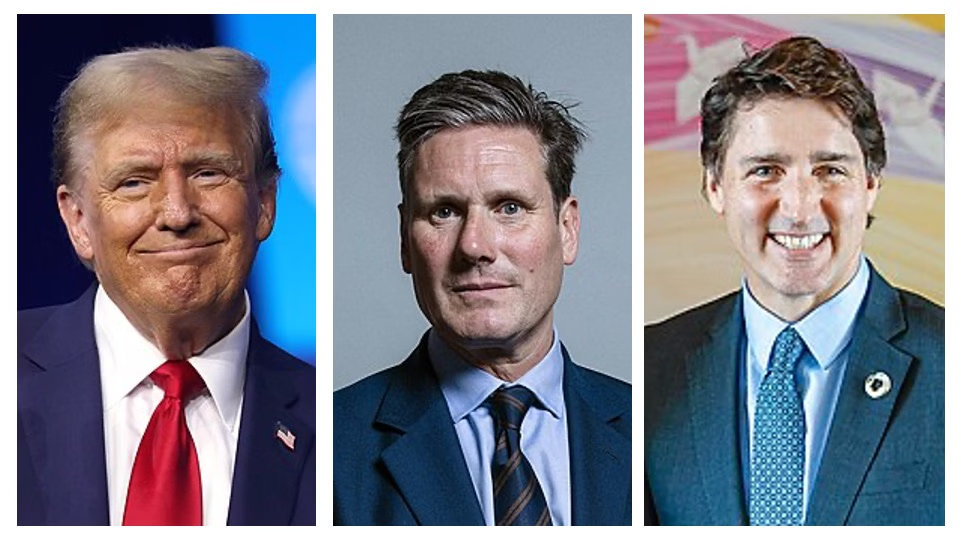
As 2024 closes, Donald Trump (left) is taking over in the U.S., Keir Starmer (center) in the UK, and Canada’s Justin Trudeau (right) ends the year on shaky ground. Credit: DeSmog/Wikimedia Commons
Our editors and reporters weigh in on a year of seismic political events, and what they’re paying close attention to in 2025.
It’s no exaggeration to say that the global political terrain fundamentally shifted this year.
Donald Trump is heading to the White House, Keir Starmer helped end 14 years of Conservative rule in the U.K. and Justin Trudeau is ending the year on shaky ground in Canada.
It was one of the most volatile and consequential years for climate action we’ve ever tracked at DeSmog. To help you make sense of it, we’ve asked our editors and contributors to weigh in on what they see as the year’s biggest takeaways – and the trends they’re paying attention to heading into 2025.
‘We discovered a lot of new documents’
Brendan DeMelle, executive director: Whenever someone on the DeSmog team finds a new document demonstrating what the fossil fuel industry knew long ago, and we reflect on the fact that humans possessed clear knowledge of climate risks and yet made decisions to deny the science and delay action, it gives us great pause to consider the power of corporate interests over basic self-preservation of our species.
In 2024, we discovered a lot of new documents and evidence demonstrating industry’s early knowledge of climate science dating to the 1950s, and a subsequent pivot to denial and delay strategies that seem unfathomable now. They knew better, they ignored responsible actions for decades, and here we are witnessing the devastating consequences which are in line with Exxon’s own models. People are suffering and dying. And what are the oil majors doing? Doubling down on production.
Publishing this evidence of denial and deception always gives me hope that we can make an impact far greater than our size. Climate justice has the wind in its sails, and every document and data point we can add only quickens the velocity of accountability.
I’m also excited that documents that we found and published years ago continue to have great impact, both in climate liability lawsuits and in civil society. We’re thrilled about the news that Geoff Dembicki’s book ‘The Petroleum Papers’ — which was based on Imperial Oil documents DeSmog found — has been optioned for a TV series.
What I’m paying attention to in 2025: With our recent appointment of Geoff Dembicki as global managing editor, our team will be increasingly connecting the dots between international themes and actors in our global work to expose false solutions and shine light on the reach of climate denial and extreme right-wing attacks on the public interest across the world.
We’ll be tracking the international spread of MAGA and the ongoing work of what we call the architecture of denial — networks like Jordan Peterson’s Alliance for Responsible Citizenship (ARC), Atlas Network, Koch Network, Tim Dunn’s America First Policy Institute (AFPI), Project 2025 and other players. We’ll expose their coordinated efforts to undermine environmental protections and criminalize dissent to crush the public interest. We will not stop fighting for the future. And the way we do that at DeSmog is through hard-hitting investigative journalism that centers accountability for climate delay and denial.
‘A resurgence of old-school climate denial’
Geoff Dembicki, global managing editor: I spent a lot of 2024 reporting on a single person – the Canadian conservative influencer Jordan Peterson, who’s evolved over the past few years into one of the world’s most consequential deniers of the climate crisis. In the spring, I went to sold-out Peterson performances in New York City and Fort Worth, where I learned that he’s using religious appeals to undermine public faith in science. My key takeaway: that anti-climate messages are becoming increasingly central to the worldview of the religious right, complicating political efforts to enlist the public in climate action with appeals to economic self-interest.
What I’m paying attention to in 2025: It’s impossible to ignore the most turbulent political event of 2024 – the reelection of Donald Trump. As we move into 2025, I’ll be paying special attention to the ways that a second Trump administration alters the global landscape of climate disinformation and fossil fuel expansion.
I fear that with Trump’s selection of Chris Wright as Energy Secretary – a fracking executive who’s been eagerly endorsed by the CO2 Coalition and other anti-science organizations – we are set to see an aggressive resurgence of old-school climate denial. And I will be closely looking at the influence Trump’s win has on Canada, where the Conservative Party leader – and fossil fuel populist – Pierre Poilievre is campaigning to unseat Prime Minister Justin Trudeau in a federal election scheduled for 2025.
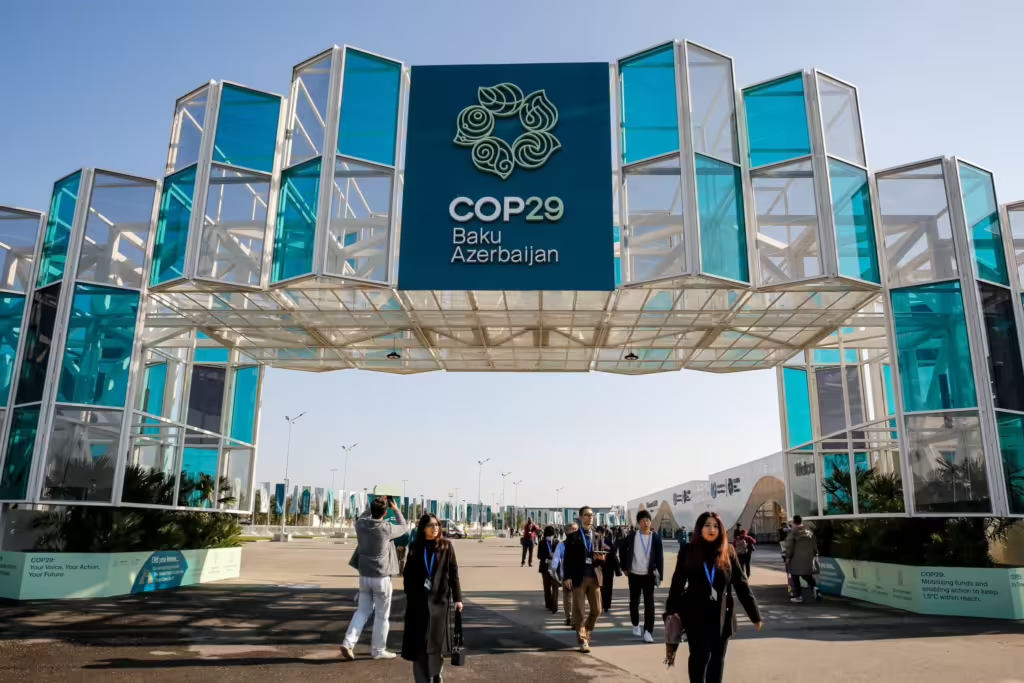
The COP29 entrance in Baku, Azerbaijan. Credit: Michal Busko / Alamy
Polluting industries’ new front against nature protection
Hazel Healy, UK editor-in-chief: In 2024 I travelled to the UN biodiversity talks in Colombia, with DeSmog reporter Rachel Sherrington. It was DeSmog’s first-ever nature-protection summit, and we’d heard mixed reports about whether there was any business lobbying going on at all. In Cali, along with tropical birds and old-school salsa, we were shocked to find oil and gas majors present, showcasing their biodiversity credentials with no hint of irony, with other usual suspects who used their participation to block regulations, such as the pesticide lobby.
We did what DeSmog did best – mapped, analysed, and counted the delegates, learning that business lobbyists had doubled since the last summit. We applied the same lens, for the third year running to shine a light on ag lobbying at the climate COP less than a month later. My takeaway? That anti-climate agribusiness lobbying is not only here to stay, it’s taking aim at both nature and climate – and both must be tackled together.
What I’m paying attention to in 2025: I will be keeping an eye on how the big ag lobby is organising ahead of the COP30 climate summit in Brazil – seen as a beacon of hope by many in the movement for sustainable food and farming, but subject to powerful meat interests. We will be listening carefully to big ag’s talking points and challenging disinformation when we hear it. It’s also going to be really interesting to see the evolution of fledgling EU laws against greenwashing by corporations, and see whether any more cities follow the lead of Dutch city the Hague in banning fossil fuel ads altogether.
‘Far-right parties gaining a new foothold’
Sam Bright, UK deputy editor: The UK general election dominated my coverage in 2024 – a six-week blitz of stories about the parties and politicians vying for our votes. We followed the money and found that, between the last election and the beginning of the 2024, the ruling Conservative Party had accepted £8.4 million from fossil fuel interests, climate science deniers, and polluting industries. We applied the same methodology to Reform UK, the radical right-wing party led by Trump fanatic Nigel Farage, and found that 92 percent of its funding during the period had come from dirty donors. This was somewhat ironic, given that Farage and his deputy Richard Tice now represent two of the constituencies most exposed to climate change.
What I’m paying attention to in 2025: I will be closely following the tentacles of the Trump administration in 2025 – tracking the ways in which his climate denial agenda is being exported to the UK and Europe. For years, DeSmog has been mapping the connections between dark money libertarian groups on both sides of the Atlantic. With Trump in the White House, Farage climbing in the polls, and far-right parties gaining a new foothold in Europe, these political connections are likely to intensify – posing a major threat to global climate action.
‘Astroturfing and disinformation campaign’
TJ Jordan, investigative reporter (PR/Advertising, False Solutions): I worked for a global PR agency for four years, so I have a headstart in knowing where to look when investigating how these companies quietly protect the fossil fuel industry. In 2024 I analysed agency board directors’ ties to polluting companies; challenged the sustainability award shows rewarding agencies that work for oil producers; and went inside the elite PR firm fostering oil-reliant Azerbaijan’s image as a climate innovator ahead of hosting COP29. But my most challenging (and rewarding) project was a six-month investigation into the dirty tactics of a British-owned PR agency called MetropolitanRepublic.
Protestors from student human rights group Justice Movement Uganda opposing the East Africa Crude Oil Pipeline. Credit: Bruce Nahabwe
The agency “squashed” (their word, not mine) the voices of Ugandan environmental land defenders on behalf of French oil giant TotalEnergies — which is building the world’s longest heated crude oil pipeline across Uganda and Tanzania — with a carefully constructed astroturfing and disinformation campaign called “Action for Sustainability.”
What I’m paying attention to in 2025: U.S.-based ad and PR holding company Omnicom is about to become the biggest provider of marketing, advertising, public relations, and lobbying services to the fossil fuel industry, after it bought fellow industry giant IPG. Outside pressure from the UN and campaign groups like Clean Creatives is increasing on big holding companies to reassess their work protecting the reputations of oil and gas producers. I’ll be keeping a close eye on how the Omnicom-IPG consolidation affects the individual agencies in these holding company networks and their ability to make decisions on who they work for.
‘The fallout of Canada’s new anti-greenwashing law’
Sarah Berman, Canada editor: Our reporters closely followed misleading fossil fuel ads and the fallout of Canada’s new anti-greenwashing law, which targets environmental claims that can’t be backed with evidence. The new legislation pushed the fossil fuel lobbyist group Pathways Alliance to immediately scrub its website of all content. The Canadian Association of Petroleum Producers followed suit, removing a section of its website devoted to carbon capture and storage.
Canada Action, a third-party advertiser that claimed Canadian liquified natural gas (LNG) would help cut global carbon emissions on transit shelter ads, cut references to the environmental benefits of LNG on its website. Canadian oil sands companies even blamed the new law for delayed sustainability reports. Now, major cities like Toronto are looking to ban misleading fossil fuel ads on transit.
What I’m paying attention to in 2025: We’ve seen fewer greenwashing claims on transit in the second half of 2024, but the fight over Canada’s anti-greenwashing legislation is not over and DeSmog will continue to follow the latest developments. Our reporters expect oil sands companies and their allies to fight any effort to hold them accountable for spreading misinformation. Will this new legislation further push emitters to distance themselves from false solutions? Or will a Canadian election bring in a new government that is more favourable to polluters?
Our series revealed links between hard-right farming groups and the Viktor Orbán-funded MCC Brussels think tank, dissected the false claims made ahead of the elections as well as the political candidates spreading them, and shone a light on the diverse stances between farming groups on protests. In Ireland, our work mapping the connections of the powerful farming lobby was cited in the parliament (Oireachtas) and became a major talking point ahead of a critical decision by the EU on whether to extend the country’s nitrates derogation.
What I’m paying attention to in 2025: This will be a crucial year for the newly elected European Commission to transform its agriculture and food sectors and to beef up its climate targets. As 720 MEPs get to work, we’ll investigate the populist politicians looking for ways to weaken key legislation, and continue to scrutinise the lobbying tactics of powerful corporations. With elections on the horizon in Germany and Poland, we’ll look to work in partnership with European journalists to enhance our cross-border coverage at this pivotal time.
‘Trump-oriented politics within Canada’
Mitchell Anderson, Canada contributor: I spent much of 2024 focusing on the evolving situation in Alberta, which produces almost 40 percent of Canada’s emissions with only 12 percent of the population. This work included itemizing unfunded environmental liabilities associated with fossil fuel extraction, particularly expanding oil sands operations. Alberta is also pushing the Pathways carbon capture scheme, a twice-rejected coal mine expansion in the foothills of the Rockies, and funded a $7 million “scrap the cap” ad campaign that would likely violate new federal competition regulations if the province was a company.
All of these issues have been fertile ground for Desmog commentary that seeks to highlight cracks and contradictions within populist Alberta politics.
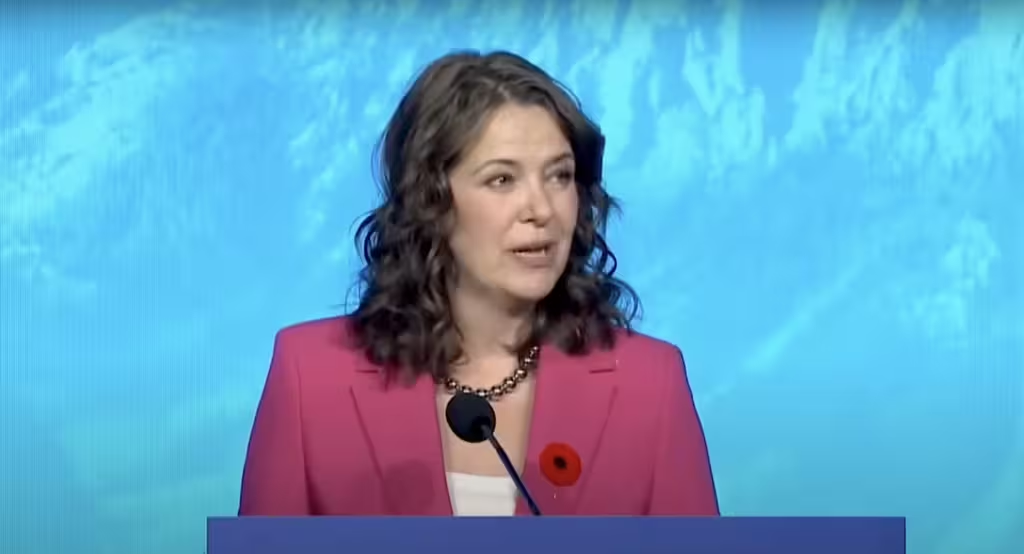
Alberta Premier Danielle Smith speaks at the UCP annual meeting, where delegates voted for an erroneous resolution claiming atmospheric CO2 is at a 1,000-year low. Credit: Danielle Smith / YouTube
What I’m paying attention to in 2025: The second Trump administration promises to upend many norms within society, politics, and the energy sector. DeSmog is well positioned to highlight how this chaotic political period will impact renewable technology, the fossil fuel industry, and our climate future. I will continue to focus on stories about the evolving situation in Alberta, which in many ways has become a cultural beachhead for Trump-oriented politics within Canada.
Neighbouring British Columbia has become a political counterweight by aggressively scaling up renewable energy, creating numerous opportunities for contrasting case studies that highlight these diverging trajectories. A Canadian election in 2025 will add additional interest to a turbulent year as Pierre Poilievre seeks to centre his campaign against carbon pricing – often in the absence of facts.
‘The DeSmog team will be very busy’
Taylor C. Noakes, Canada contributor: My focus areas in 2024 were principally industry and political reactions to new anti-greenwashing legislation; debunking industry-friendly (and often politically expedient) false solutions to the climate crisis (like LNG, hydrogen, and carbon capture); and Canada’s ongoing culture war against renewables, which has resulted in nonsensical political decisions (like instituting a solar and wind power moratorium in Canada’s sunniest and windiest province).
As in years past, I covered a number of major industry conferences in Canada and the United States (including annual carbon capture, hydrogen, LNG, and oil/gas industry conferences, mostly in Alberta). Highlights from these events include a ten minute one-on-one scrum with the Premier of Alberta on the failures of carbon capture, and reporting on Jane Fonda leading an anti-LNG protest (whose turnout was larger than the number of conference attendees).
What I’m paying attention to in 2025: I anticipate the new American president’s energy policies will have profound effects on Canada – whether it’s tariffs that sink what’s left of Canada’s oil and gas sector, American resource nationalism that prioritizes local resource exploitation over Canadian imports (or some combination thereof), or a Canadian reaction to U.S. trade war sabre rattling that emphasizes either an accelerated transition or the subsidized development of new markets for old technology.
Whatever course it takes, I suspect the DeSmog team will be very busy. I’m looking forward to how this shakes out at the series of annual conferences I typically attend. In addition, I plan on keeping a close eye on hydrogen and carbon capture projects, as well as the growing grassroots resistance to fossil fuels, pipelines, and the industry in general. Successful Indigenous resistance to fossil fuel projects offers exciting opportunities for optimistic climate-change related reporting. Similar efforts by cities to ban fossil fuel advertising, and the use of gas for cooking, as well as rural communities banning CO2 pipelines, indicate real momentum and tangible results from the ground up.
The immovable object that is the fossil fuel sector is meeting the unstoppable force that is people’s innate desire to live on a healthy planet. 2025 is going to be a thrilling year for environmental reporting.
‘Focusing on the financial’
Sharon Kelly, U.S. reporter: One of the oldest adages in investigative reporting is to follow the money. In seeking to understand what’s driving fossil fuel companies to double down on greenwashing and environmentally damaging projects, it helps to have a clear picture of what their incentives are and how those incentives are created. My work for DeSmog in 2024 focused on the financial: examining federal subsidies for carbon capture, created in the name of combatting climate change but with the effect of making it worse; reporting on evidence shale drillers attempted price-fixing to inflate oil prices, and on price-gouging by corporations when climate-fueled disasters strike; and seeking to understand oil and gas industry liabilities like abandoned wells – and what happens on the ground when companies fail to pay to clean up.
What I’m paying attention to in 2025: The risks and uncertainties surrounding fossil fuels are, if anything, amplified by the incoming administration. Despite the Trump administration’s ties to the oil and gas industry, Trump’s first term was marked by upheaval and disruptions for fossil fuel companies (and the rest of us). Autocratic impulses are often, at their core, a telling sign of fragility.
Whatever 2025 brings, we intend at DeSmog to keep the heat on the industry by examining the financial side of the climate crisis and the companies that have fueled it – whether that’s investigating the role false solutions play in oil and gas companies’ plans for the future, scrutinizing how over-hyped investments can cause outsized environmental damage while falling short for communities and investors alike, or staying watchful for fossil fuel companies seeking to benefit from the political power of the far-right (and vice versa).
‘Mapping the big money and political connections’
Adam Barnett, UK reporter
2024 was a target rich environment for anyone looking to cover climate denial, with a mountain of smog descending on the UK. So much, in fact, that I had to compile a map of the donors, media, think tanks, and fossil fuel companies pushing the Conservative government to turn against net zero. I also debunked the big climate myths peddled during the UK general election campaign, since the British media wasn’t going to.
I gave the post-election Tory leadership contest the same treatment, exposing the climate record of the candidates and the dirty money pumped into the campaign – along with the Tories’ growing ties to Donald Trump’s Project 2025.
What I’m paying attention to in 2025: With Conservative Party leader Kemi Badenoch flying to Washington to build ties with the incoming Trump team, a U.S. ambassador to the UK with oil and gas interests (both also covered in 2024), and Reform’s Nigel Farage curling up at the feet of Elon Musk, I expect to be covering the growing influence of Trumpian climate denial on the UK — along with transatlantic groups like Jordan Peterson’s Alliance for Responsible Citizenship (ARC), which is headed by a Tory peer.