Category: Uncategorized

  • With War on Iran, Trump Is ‘Flooring the Gas Pedal as He Drives US Economy Over a Cliff’

    Spread the love

    Original article by Jake Johnson republished from Common Dreams under Creative Commons (CC BY-NC-ND 3.0). 

    Gas prices over $5 a gallon are displayed at a Mobil station on March 11, 2026 in Los Angeles, California. (Photo by Justin Sullivan/Getty Images)

    “If high costs weren’t already bad enough, Donald Trump’s unnecessary war in Iran has sent gas prices through the roof,” said one House Democrat.

    Data released Friday showed that US consumer sentiment hit a new low for 2026 and the American economy expanded by just 0.7% in the fourth quarter of last year, indicators that experts said are only going to get worse due to the cascading impacts of President Donald Trump’s deadly, illegal, and expensive war on Iran.

    “President Trump is flooring the gas pedal as he drives our economy over a cliff,” Alex Jacquez, chief of policy and advocacy at the Groundwork Collaborative, said in response to the new data, some of which was collected before the US and Israel launched their assault on Iran, sparking a regional conflict, sending oil prices surging, and destabilizing the global economy.

    RECOMMENDED…

    Protests In Kashmir Following The Killing Of Iranian Supreme Leader Ayatollah Ali Khamenei

    ‘This Is Madness’: More Talk of Boots on the Ground as Trump Says ‘Today Iran Will Be Hit Very Hard’

    image shoes US military planes headed to the midde east

    ‘The Tankers Just Keep Coming’: US Military Movements Spike Fears of Imminent Attack on Iran

    “As bad as this week’s data is,” Jacquez added, “it understates reality for exhausted consumers who have been hit with even more price hikes caused by the president’s intentional turmoil in the weeks since this data was collected. Instead of working to bring down ever-increasing prices at the pump, the grocery store, and the doctor’s office, the president is betraying working families as his illegal war with Iran stokes inflation.”

    Figures released Friday by the US Commerce Department’s Bureau of Economic Analysis (BEA) showed that real gross domestic product increased at half the rate predicted by previous government estimates.

    “Real GDP was revised down 0.7 percentage points from the advance estimate [of 1.4%], reflecting downward revisions to exports, consumer spending, government spending, and investment,” the BEA said in a news release.

    NBC News noted that “economists had expected the revision to go the other way—and show stronger growth.”

    The BEA also published data showing that the personal consumption expenditures price index, a key inflation reading, rose at an annualized rate of 2.8% in January.

    “Families across the United States are struggling to make ends meet in Donald Trump’s economy,” Rep. Brendan Boyle (D-Pa.), the top Democrat on the House Budget Committee, said in a statement. “If high costs weren’t already bad enough, Donald Trump’s unnecessary war in Iran has sent gas prices through the roof.”

    A Harris Poll opinion survey conducted for The Guardian and released Friday found that more than 70% of US voters believe Trump’s tariff regime has driven up their costs.

    “In the short run, the economic impact of a sustained loss of Gulf oil could be very ugly.”

    Consumer sentiment, meanwhile, continued its steady decline in March, falling about 2% compared to last month, according to the University of Michigan’s Surveys of Consumers. Roughly half of the interviews conducted for the consumer sentiment report were completed before the US and Israel began attacking Iran on February 28.

    Joanne Hsu, director of the Surveys of Consumers, noted that “interviews completed prior to the military action in Iran showed an improvement in sentiment from last month, but lower readings seen during the nine days thereafter completely erased those initial gains.”

    “Gasoline prices have exerted the most immediate impact felt by consumers, though the magnitude of passthrough to other prices remains highly uncertain,” Hsu noted. “A broad swath of consumers across incomes, age, and political affiliation all reported declines in expectations for their personal finances, down 7.5% nationally.”

    “Interviews completed after February 28 exhibited higher inflation expectations than those completed before that date,” Hsu added.

    The first six days of Trump’s war on Iran cost US taxpayers over $11 billion, and the price tag is set to rise exponentially as the administration deploys thousands of additional troops to the Middle East and continues aggressively bombing Iran, which has retaliated in part by closing the Strait of Hormuz—choking off the flow of oil through the critical trade route and sending prices surging.

    The Trump administration has sought to downplay skyrocketing oil prices even as it takes emergency action in an attempt to bring them down. The International Energy Agency said Thursday that the US-Israeli assault on Iran sparked “the largest supply disruption in the history of the global oil market.”

    Economist Paul Krugman warned Friday that “oil prices could easily go much higher,” noting, “The US and other major economies are a lot less oil-dependent than they were in the 1970s, and even at $100 a barrel oil prices are not high enough to provoke a major crisis.”

    “In the short run, the economic impact of a sustained loss of Gulf oil could be very ugly,” Krugman wrote. “I’ve seen some alarmists warn that a long war in the Gulf could lead to oil at $150 a barrel. That looks low to me.”

    Original article by Jake Johnson republished from Common Dreams under Creative Commons (CC BY-NC-ND 3.0). 

    Donald Fuhrump says that Amerikkka doesn't bother with crimes or charges anymore, not being 100% Amerikkkan and opposing his real estate intentions is enough.
    Donald Fuhrump says that Amerikkka doesn’t bother with crimes or charges anymore, not being 100% Amerikkkan and opposing his real estate intentions is enough.
    Orcas discuss how Trump was re-elected and him being an obviously insane, xenophobic Fascist.
    Orcas discuss how Trump was re-elected and him being an obviously insane, xenophobic Fascist.
    Orcas discuss rotting brain. Front Orca says "Wish someone would lock him up".
    Orcas discuss rotting brain. Front Orca says “Wish someone would lock him up”.
  • Spread the love
  • As Another Oil-Fueled War Erupts, Study Reveals Planet Heating at Unprecedented Rate

    Spread the love

    Original article by Olivia Rosane republished from Common Dreams under Creative Commons (CC BY-NC-ND 3.0).

    People observe fire and smoke from an Israeli attack on the Shahran oil depot on June 15, 2025 in Tehran, Iran. (Photo by Stringer/Getty Images)

    The findings mean global temperatures are on track to surpass 1.5°C above preindustrial levels before 2030.

    Nearly a week into President Donald Trump’s illegal war on Iran that is likely to increase climate-warming emissions, new research has found that the pace of human-caused global heating has accelerated over the past 10 years.

    The study, published in Geophysical Research Letters on Friday, concluded that global heating had nearly doubled from a rate of less than 0.2°C a decade from 1970-2015 to 0.35°C between 2015-25. This would put global temperatures on track to surpass 1.5°C above preindustrial levels before 2030.

    RECOMMENDED…

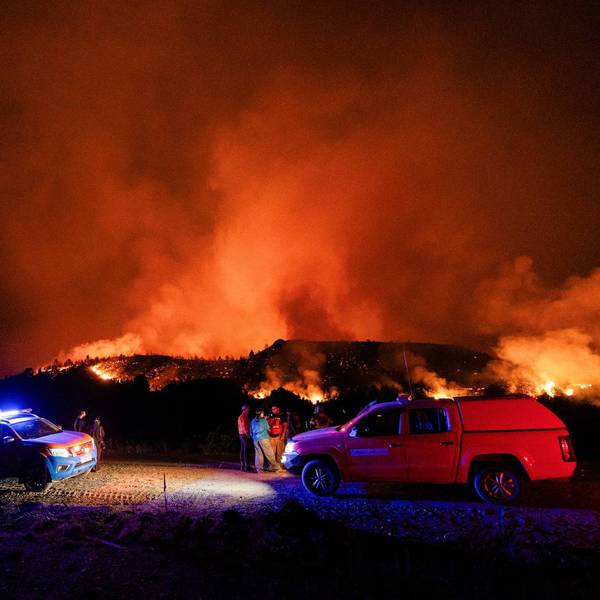
    ARGENTINA-ENVIRONMENT-CLIMATE-FIRE

    Earth Hurtling Toward ‘Hothouse Trajectory,’ Scientists Warn in Tipping Points Analysis

    U.S. Military Launches Operation Epic Fury Attacking Iran

    While Cost of Living Soars and Healthcare Taken Away, Trump Spending $1 Billion Per Day in War of Choice With Iran

    “Warming proceeding faster is not unexpected by climate models, but it is a cause of concern and shows how insufficient the efforts to slow and eventually stop global warming under the Paris Climate Accord have so far been,” study authors Stefan Rahmstorf and G. Foster wrote.

    Scientists had long suspected that global warming was speeding up, given that the past three years were the three hottest on record. Yet previous studies had not been able to find statistically significant evidence of acceleration. The new study removed the natural variability from solar variations, volcanic eruptions, and El Niño from the data, which revealed a statistically significant speedup.

    “How quickly the Earth continues to warm ultimately depends on how rapidly we reduce global CO2 emissions from fossil fuels to zero.”

    It follows a study from 2025 that found a smaller increase of 0.27°C per decade from 2015-24.

    “Either way, this represents a significant increase in the rate of warming,” Zeke Hausfather, a climate scientist at Berkeley Earth and a co-author on the earlier study, told The Guardian. “[This] should be worrying as the world hurtles toward crossing 1.5°C later this decade.”

    Whatever the rate of increase, the solution, from a scientific perspective, is clear.

    “How quickly the Earth continues to warm ultimately depends on how rapidly we reduce global CO2 emissions from fossil fuels to zero,” Rahmstorf, a Potsdam Institute for Climate Impact Research scientist, told The Guardian.

    Yet the findings come at a time when emissions look set only to increase, as the US launches an oil-fueled war on Iran that risks drawing other major military powers into a greater conflict.

    “The outbreak of any war is bad news for the climate, just as the election of politicians hostile to climate action is,” Mark Hertsgaard, Covering Climate Now executive director and co-founder, and Giles Trendle, former managing director of Al Jazeera English, wrote in a newsletter on Thursday. “The climate implications of this new war are not the center of attention at the moment, but they are essential context for understanding what’s at stake. At a time when civilization is hurtling toward irreversible climate breakdown, to overlook the climate consequences of three of the deadliest militaries on Earth going to war would be journalistic malpractice.”

    War itself increases greenhouse gas emissions. Studies have found that Russia’s invasion of Ukraine emitted as much in its first two years as the annual emissions of the Netherlands, while Israel’s genocide in Gaza emitted as much in its first four months as each of the 135 lowest-emitting nations in a year.

    The Conflict and Environment Observatory observed 120 incidents of environmental harm during the first three days of the Iran conflict, and noted that attacks on oil and gas infrastructure had global implications:

    There are also consequences for the global environment through changes in greenhouse gas emissions. Attacks on oil and gas sites will release methane, carbon dioxide, and other greenhouse gasses, but the curtailment of production—as has occurred with Qatari LNG [liquefied natural gas], oil production in Iraqi Kurdistan, and Israeli offshore gas—does not necessarily reduce emissions. Instead energy price signals can lead to short term substitution, as well as more complex downstream energy supply changes over longer timeframes.

    Fossil fuels are also required to power the machinery that makes war possible.

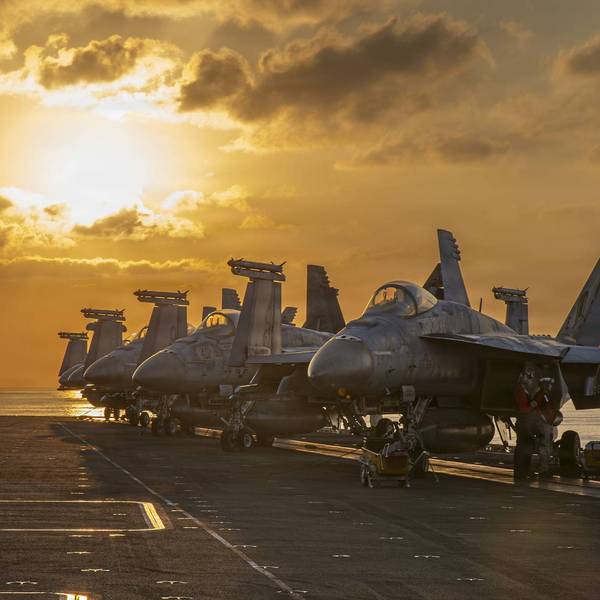
    “What’s beyond dispute is that this war could not be fought without oil,” Hertsgaard and Trendle wrote. “The aircraft carriers, jet planes, and the myriad support systems they require gobble immense quantities of fossil fuels. Which helps explain why the US Department of Defense is the largest institutional emitter of greenhouse gases globally.”

    There is also the speculation that control of fossil fuels is one motivation for the war itself, given that Iran has the world’s third-largest reserve of oil. While Trump has not included oil in his incoherent word salad of war aims, as he did when he kidnapped Venezuelan President Nicolás Maduro in January, climate advocate Bill McKibben pointed out that members of US oil industry have said that they would rather develop Iran’s oil than Venezuela’s, as its industry is more “structurally sound.”

    “Europe, Asia, and other regions whose energy costs skyrocket because of this reckless escalation by the Trump administration are reminded, yet again, that fossil fuels are volatile, insecure, and expensive.”

    “The military attacks on Iran are not about peace and democracy, but rather about sowing fear, bloodshed, and despair as the US attempts to further destabilize the region and secure access to profitable natural resources that it wants to control,” the Climate Justice Alliance said in a statement. “This is not surprising given recent foreign policy actions taken by the Trump administration in Venezuela and Cuba, and our ongoing history of engaging in coups, occupations, and endless wars to control resource-rich countries, especially for oil and gas.”

    Yet, at the same time, the war is already offering an object lesson in the dangers of relying on fossil fuels—for everyone except fossil fuel CEOs. The war could disrupt markets such that profits soar for Big Oil and liquefied natural gas companies while ordinary people suddenly find themselves struggling to pay gas or heating bills.

    “Iran is in the middle of one of the world’s most important energy corridors,” Lorne Stockman, Oil Change International research director, told Common Dreams. “Roughly 20% of global petroleum flows through the Strait of Hormuz, so when military escalation disrupts that route, global energy markets are immediately impacted.”

    Stockman continued: “That instability means higher energy bills for people around the world while communities in the region suffer the devastation of war. Europe, Asia, and other regions whose energy costs skyrocket because of this reckless escalation by the Trump administration are reminded, yet again, that fossil fuels are volatile, insecure, and expensive. The only question is whether governments will heed that signal and make a fair fossil fuel phase out a priority.”

    Chair of the Fossil Fuel Non-Proliferation Treaty Tzeporah Berman made a similar point on social media: “Drones hitting Saudi oil fields, Qatar halting LNG production, Iran putting a squeeze on the Strait of Hormuz, and US attack on Iran’s Kharg Island oil terminals—all of it should be a wake-up call that fossil fuel phaseout is a national and energy security priority.”

    Yet Berman noted that the energy landscape is different today than it has been during previous periods of war.

    “Unlike previous oil wars renewable energy is now available at scale,” Berman continued. “It’s distributed, diversified, and resilient. Most importantly, solar panels don’t blow up and once they are in place you don’t need ships to constantly feed them to make energy. The sun is looking like a pretty stable energy source right about now.”

    Original article by Olivia Rosane republished from Common Dreams under Creative Commons (CC BY-NC-ND 3.0).

    Orcas discuss Donald Trump and the killer apes' concept of democracy. Front Orca warns that Trump is crashing his country's economy and that everything he does he does for the fantastically wealthy.
    Orcas discuss Donald Trump and the killer apes’ concept of democracy. Front Orca warns that Trump is crashing his country’s economy and that everything he does he does for the fantastically wealthy.
    Donald Trump warns against following the https://onaquietday.org blog, says that it's easy atm, she only needs to report war crimes supporting Israel's genocidal expansion.
    Donald Trump warns against following the https://onaquietday.org blog, says that it’s easy atm, she only needs to report war crimes supporting Israel’s genocidal expansion.
    Orcas discuss rotting brain. Front Orca says "Wish someone would lock him up".
    Orcas discuss rotting brain. Front Orca says “Wish someone would lock him up”.

  • Spread the love
  • Ocean Warming Drives ‘Deeply Concerning Loss of Marine Life,’ Study Shows

    Spread the love

    Original article by Jessica Corbett republished from Common Dreams under Creative Commons (CC BY-NC-ND 3.0).

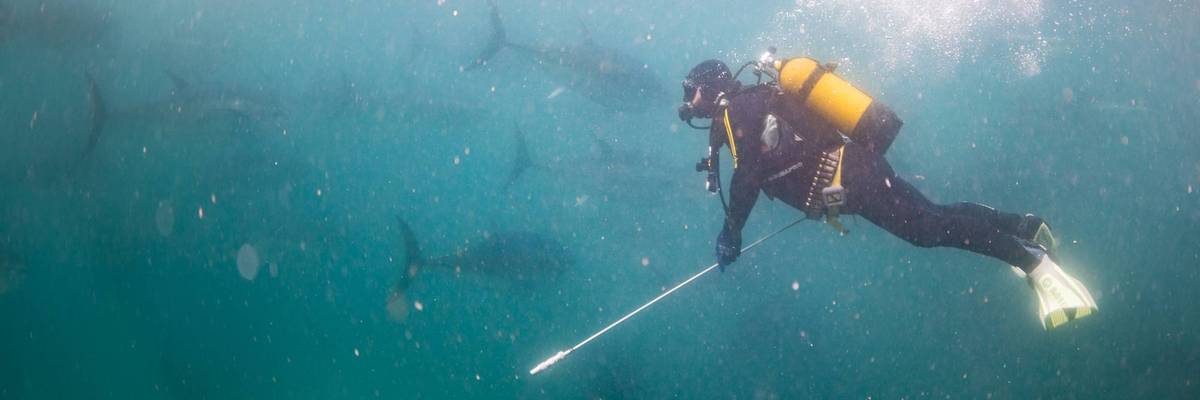
    A diver hunts thunnus in Mediterranean Sea near Izmir, Turkey on November 19, 2024. (Photo by Mahmut Serdar Alakus/Anadolu via Getty Images)

    Noting that species are at risk from not only warming waters but also overfishing, one expert argued that “any management reform must simultaneously address both drivers of change.”

    Humanity’s continued reliance on fossil fuels led to last year being among the hottest on record, and oceans store over 90% of the excess heat from greenhouse gases. A study out Wednesday details how the related long-term heating, warm years, and marine heatwaves “pose serious but poorly quantified threats” to fish species.

    “To put it simply, the faster the ocean floor warms, the faster we lose fish,” lead author Shahar Chaikin of Spain’s National Museum of Natural Sciences (MNCN) told the Guardian. “A 7.2% decline for every tenth of a degree per decade might sound small… But compounded over time, across entire ocean basins, it represents a staggering and deeply concerning loss of marine life.”

    RECOMMENDED…

    ARGENTINA-ENVIRONMENT-CLIMATE-FIRE

    Earth Hurtling Toward ‘Hothouse Trajectory,’ Scientists Warn in Tipping Points Analysis

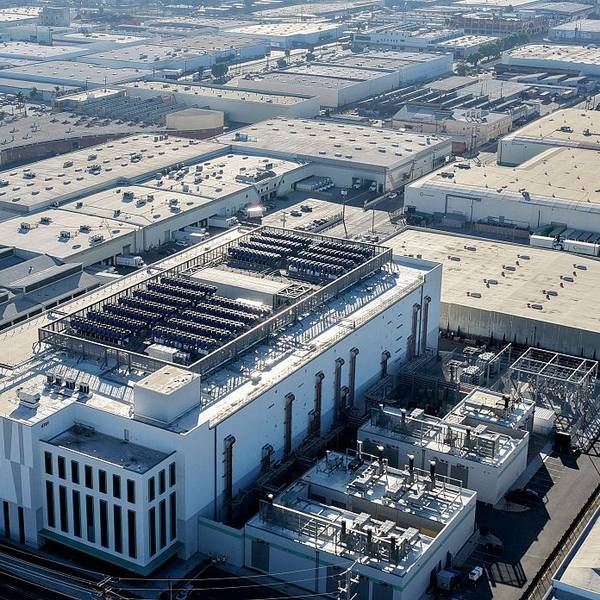
    Data Center Giant Secures $14 Million Deal to Consume 40% of Pennsylvania Town's Excess Water

    Data Center Giant Secures $14 Million Deal to Consume 40% of Pennsylvania Town’s Excess Water

    For the study, published in the journal Nature Ecology & Evolution, Chaikin, his MNCN colleague Miguel B. Araújo and the National University of Colombia’s Juan David González-Trujillo analyzed 702,037 estimates of biomass change for 33,990 populations of 1,566 fish species across the Mediterranean, north Atlantic, and northeast Pacific between 1993 and 2021.

    “On shorter timescales, warmer years and marine heatwaves were linked to sharp biomass losses of up to 43.4% in populations at the warm edge of the species’ range and biomass increases of up to 176% at the cold edge,” the study states. Chaikin warned in a statement that the temporary jumps in cooler areas could send misleading signals to managers of fisheries.

    “Although this sudden increase in biomass in cold waters may seem like good news for fisheries, these are transient increases,” he explained. “If managers raise catch quotas based on biomass increases caused by a heatwave, they risk causing the collapse of populations when temperatures return to normal or when the effect of long-term warming prevails, because these are short-lived increases.”

    González-Trujillo stressed that “unlike extreme short-term weather fluctuations, which can vary dramatically, this chronic warming exerts a constant negative pressure on fish populations in the Mediterranean Sea, the north Atlantic Ocean, and the northeastern Pacific Ocean.”

    Specifically, Chaikin said that “when we remove the noise of extreme short-term weather events, the data show that this warming is associated with a sustained annual decline in biomass of up to 19.8%.”

    Are warmer oceans good or bad for #fish? 🐟 The answer is a dangerous paradox. Our new paper in @natecoevo.nature.com shows how marine heatwaves may create “fake” fish gains that mask a large-scale crash. Read our findings here: www.nature.com/articles/s41…@mncn-csic.bsky.social #ClimateChange

    — Shahar Chaikin (@shaharchaikin.bsky.social) 2026-02-25T10:05:40.124Z

    Given the findings, Araújo emphasized that fisheries’ managers “must balance localized increases with long-term declines extremely carefully to avoid overexploitation.”

    “As ocean warming continues, the only viable strategy is to prioritize long-term resilience,” the study co-author said. “Management measures must plan for the biomass decline expected in an increasingly warm ocean.”

    Carlos García-Soto is a scientist at the Spanish National Research Council, which manages MNCN. Although not a study co-author, he also highlighted the need for policymakers to understand the “clear risk of misinterpretation” detailed in the new paper.

    “In a context of accelerated climate change, policies cannot react solely to extreme events or be based on short-term signals,” García-Soto said in a statement. “They need consistency between science, planning, and governance, especially in shared ecosystems or on the high seas.”

    Also responding to the research on Wednesday, Guillermo Ortuño Crespo of the International Union for Conservation of Nature said that “I believe this is a methodologically sound and valuable study that provides valuable evidence on how different components of ocean warming affect fish biomass.”

    While recognizing the well-documented and devastating impacts of fossil fuel-driven heating on marine species, Ortuño Crespo also warned that “there is a risk, in my opinion, that climate change will become the main explanation for changes in marine species biomass, leaving aside overfishing.”

    “Historically, overfishing has been the main determinant of biomass declines in many fisheries around the world,” he noted, citing the United Nations Food and Agriculture Organization. “The proportion of overexploited stocks globally continues to increase, indicating that fishing pressure remains a dominant risk factor. The current challenge is that this overfishing crisis is being further exacerbated by ocean warming and deoxygenation.”

    “In terms of public policy, the study is highly relevant because it emphasizes that fisheries management systems must become more climate-adaptive,” Ortuño Crespo said. “Any management reform must simultaneously address both drivers of change: climate and fisheries. Adjusting quotas solely on the basis of climate without reducing overcapacity and the impact of high-impact gear, such as bottom trawling, is likely to be insufficient to recover stocks.”

    Original article by Jessica Corbett republished from Common Dreams under Creative Commons (CC BY-NC-ND 3.0).

    Orcas discuss Donald Trump and the killer apes' concept of democracy. Front Orca warns that Trump is crashing his country's economy and that everything he does he does for the fantastically wealthy.
    Orcas discuss Donald Trump and the killer apes’ concept of democracy. Front Orca warns that Trump is crashing his country’s economy and that everything he does he does for the fantastically wealthy.
    Donald Fuhrump says that Amerikkka doesn't bother with crimes or charges anymore, not being 100% Amerikkkan and opposing his real estate intentions is enough.
    Donald Fuhrump says that Amerikkka doesn’t bother with crimes or charges anymore, not being 100% Amerikkkan and opposing his real estate intentions is enough.
    Elon Musk urges you to be a Fascist like him, says that you can ignore facts and reality then.
    Elon Musk urges you to be a Fascist like him, says that you can ignore facts and reality then.