What REALLY Happened at Glastonbury

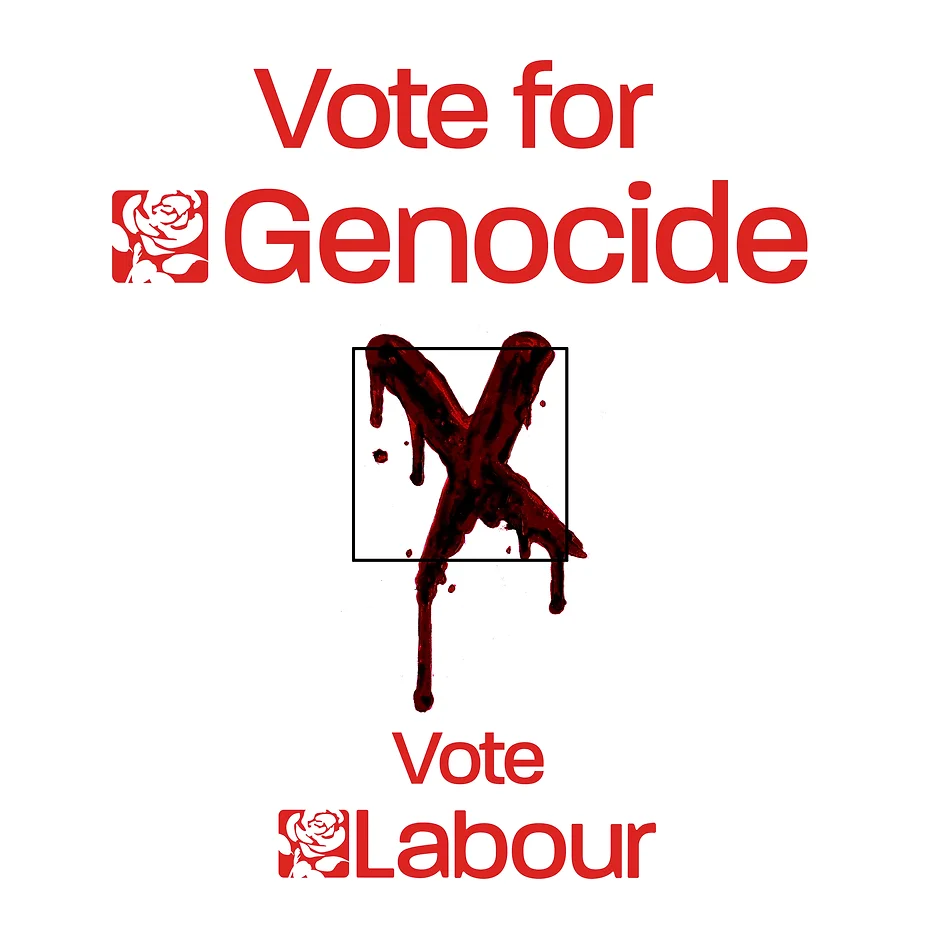

This work by Middle East Monitor is licensed under a Creative Commons Attribution-NonCommercial-ShareAlike 4.0 International License.

Tens of thousands of people rallied across Israel on Saturday, calling for the release of hostages held in the Gaza Strip, according to local media reports, Anadolu reported.
Demonstrations were held in Tel Aviv, Jerusalem and other cities, according to the Haaretz newspaper.
Protests followed a 12‑day conflict between Israel and Iran, which erupted June 13 when Tel Aviv launched airstrikes on Iranian military, nuclear and civilian sites, killing at least 606 victims and injuring 5,332, according to the Iranian Health Ministry.
Tehran launched retaliatory missile and drone strikes, killing at least 29 people and wounding more than 3,400 in Israel, according to figures released by the Hebrew University of Jerusalem.
The conflict came to a halt under a US-sponsored ceasefire that took effect June 24.
On the heels of getting Tel Aviv and Tehran to sing a deal, US President Donald Trump said Friday that a ceasefire in the Gaza Strip will be reached soon.
“I think it’s close,” Trump told reporters in the Oval Office when asked how close his administration is to a deal on a Gaza ceasefire.
READ: Trump says he thinks Gaza ceasefire to be reached ‘within the next week’
Israeli officials expressed surprise Saturday at those remarks, affirming there are no indications of any change in Prime Minister Benjamin Netanyahu’s positions, according to the Yedioth Ahronoth newspaper.
Hamas has repeatedly affirmed its readiness to release Israeli hostages “all at once” in exchange for an end to Israel’s genocidal war, the withdrawal of the Israeli army from Gaza and the release of Palestinian prisoners.
But Netanyahu, who is wanted by international justice officials, insists on partial deals and evades signing a deal by imposing new conditions, including the disarmament of Palestinian factions.
According to the Israeli opposition, Netanyahu currently insists on reoccupying Gaza to serve his political interests, particularly maintaining his hold on power.
Israeli officials estimate that Trump seeks to leverage the momentum following the end of the Israel-Iran confrontation to achieve an additional political accomplishment.
In May, the US president’s special envoy Steve Witkoff presented a proposal to Hamas that included the release of half of the living Israeli hostages and half of those killed within seven days of the start of a potential agreement, in exchange for a 60-day ceasefire.
Tel Aviv estimates that there are 50 Israeli hostages in Gaza, including 20 alive. There are more than 10,400 Palestinians being held in Israeli prisons, suffering from torture, starvation and medical neglect, which has resulted in many deaths, according to Palestinian and Israeli human rights and media reports.
Rejecting international calls for a ceasefire, the Israeli army has pursued a brutal offensive against Gaza since October 2023, killing more than 56,400 Palestinians, most of them women and children.
Last November, the International Criminal Court issued arrest warrants for Netanyahu and his former Defense Minister Yoav Gallant for war crimes and crimes against humanity in Gaza.
Israel also faces a genocide case at the International Court of Justice for its war on the enclave.
READ: Nearly 100,000 Palestinians killed in Gaza amid Israeli war: Haaretz
This work by Middle East Monitor is licensed under a Creative Commons Attribution-NonCommercial-ShareAlike 4.0 International License.
This work by Middle East Monitor is licensed under a Creative Commons Attribution-NonCommercial-ShareAlike 4.0 International License.

Members of Israel’s Knesset (parliament) have accused Prime Minister Benjamin Netanyahu of using the ongoing Gaza war to secure an end to his corruption trial, Anadolu reports.
“(Netanyahu) is conditioning the future of Israel and our children on his trial,” Knesset member for the Democrats Party, Naama Lazimi, said in statements cited by The Times of Israel news outlet on Sunday.
She said that the Israeli premier showed that he is unfit for the office by “trading his indictment in exchange for a political settlement and an end to the war.”
US President Donald Trump called again on Saturday for Netanyahu’s corruption trial to be cancelled.
Highlighting the billions of dollars the US spends annually to support Israel, Trump declared, “We are not going to stand for this,” and urged authorities to “Let Bibi go.”
“Those behind President Trump’s tweet are Netanyahu and his corrupt gang,” Democrats lawmaker Gilad Kariv said.
He denounced the Israeli premier and his circle’s “willingness to play with the national security of the State of Israel and the issue of the hostages in order to save Netanyahu from conviction in court.”
The Palestinian resistance group Hamas has repeatedly said that it is ready to release all Israeli captives in Gaza in exchange for an end to the ongoing war, Israeli withdrawal from the enclave, and the release of Palestinian prisoners.
However, Netanyahu has rejected these terms, and continued his genocidal war on the Gaza Strip, where more than 56,400 people have been killed since October 2023.
READ: Trump urges Israel to cancel Netanyahu’s trial or grant a pardon
Corruption trial
Yesh Atid Knesset member Karine Elharrar warned that Netanyahu was “acting against the Israeli public interest” by linking his legal fate with hostage negotiations and regional normalization agreements.
She also accused Trump of effectively “conditioning US aid on the prime minister’s trial.”
Opposition leader Yair Lapid urged the US president “not to interfere in a legal process in an independent country.”
He also suggested that Trump’s interference might be a form of “compensation” to Netanyahu for political concessions in Gaza.
Religious Zionism lawmaker Simcha Rothman, chairman of the Knesset Constitution, Law and Justice Committee, called Trump’s call to end Netanyahu’s trial “inappropriate even if he is correct.”
Netanyahu faces charges of bribery, fraud, and breach of trust that could lead to imprisonment if proven.
In January, Netanyahu began interrogation sessions related to Cases 1000, 2000, and 4000, which he denies. The attorney general filed an indictment related to these cases at the end of November 2019.
Case 1000 involves Netanyahu and his family receiving expensive gifts from wealthy businessmen in exchange for favors.
Case 2000 concerns alleged negotiations with Arnon Mozes, the publisher of the Israeli daily Yedioth Ahronoth, to gain positive media coverage.
Case 4000, considered the most serious, involves providing facilitation to Shaul Elovitch, the former owner of the news site Walla and a telecommunications company Bezeq, in return for favorable media coverage.
Netanyahu, whose trial began on May 24, 2020, is the first sitting Israeli leader to take the stand as a criminal defendant in the country’s history.
He also faces charges of war crimes and crimes against humanity, with the International Criminal Court issuing arrest warrants for him and former Defense Minister Yoav Gallant in November 2024 over atrocities in Gaza.
READ: Israel’s attorney general rejects Netanyahu’s request to delay corruption trial
This work by Middle East Monitor is licensed under a Creative Commons Attribution-NonCommercial-ShareAlike 4.0 International License.
This work by Middle East Monitor is licensed under a Creative Commons Attribution-NonCommercial-ShareAlike 4.0 International License.

by Adnan Hmidan
More than 77 years since the Zionist project was planted at the heart of the Arab and Islamic world, and despite enjoying unprecedented military, political and financial support from the West, particularly the United States, Israel remains a fragile entity. For all the rhetoric portraying it as a military and technological powerhouse, its survival still hinges on foreign intervention.
Since 1948, Western powers have mobilised every instrument available, politics, capital, science, and brute military force, to uphold this settler-colonial project. Thousands of Jewish experts and professionals were brought in from Europe, America and the former Soviet Union, while billions were poured into building a state on the ruins of an indigenous population, denied basic rights simply because Palestinians weren’t considered “white enough” to deserve them.
Over the decades, Israel has amassed a formidable arsenal: unregulated nuclear weapons, the Iron Dome missile defence system, and surveillance technologies exported to repressive regimes around the world. Its intelligence services have trained authoritarian states from Latin America to Africa, turning the occupation into a global model for control.
Yet the illusion is wearing thin.
Since the launch of the Al-Aqsa Flood operation in October 2023, Israel’s vulnerability has been laid bare. This is not a self-reliant regional power, it is an entirely dependent project. It cannot endure prolonged resistance without American military support, European political cover, and consistent Western economic backing.
During its latest assault on Gaza, Israel relied heavily on US ammunition, airlifts, and naval deployment. Against Iran, it proved unable to act independently, requiring Washington to step in on its behalf. Just this week, the United States bombed Iranian nuclear sites, including the Fordow facility, in what appeared to be a direct request from Tel Aviv; a dangerous escalation that threatens to ignite a wider regional war.
One is forced to question: What kind of “regional power” needs a global superpower to fight its battles? What kind of sovereignty is that?
READ: Gaza will not be defeated as long as there are people who refuse to stay silent
Meanwhile, in the occupied West Bank, Israel continues a policy of violent erasure; assassinations, home demolitions, mass arrests, and the systematic punishment of prisoners and their families. In Gaza, we are witnessing a genocide: famine, siege, and the total destruction of life and infrastructure.
Even the sanctity of Al-Aqsa Mosque has been violated. The compound has seen unprecedented closures, its prayer halls raided by night, copies of the Quran desecrated, and its guards detained, while much of the international community remains silent, if not complicit.
But what Israel fails to grasp is this: resistance is not confined to rockets. It is an idea, rooted, growing, and passed down through generations. From Gaza to the West Bank, and from Sana’a to Tehran, new alliances are taking shape. Palestine’s voice now echoes from Chicago to Cape Town.
Yes, Israel has a missile defence system, but it has no moral shield. Yes, it can carry out precision airstrikes, but it cannot destroy the idea of freedom that lives in the hearts of millions.
Seventy-seven years on, Israel still behaves like a spoilt, unruly child, forever looking to its powerful patron for protection. It lacks true independence, genuine sovereignty, and any sense of lasting security.
It is a heavily armed entity with a hollow centre. A state upheld not by legitimacy or justice, but by coercion and propaganda.
And that is why it will fall. Because ideas do not die. Because justice delayed is not justice denied. And because Palestine lives, in the ruins, in the camps, in memory, and in the future.
So the “state” that never matured will fall. And Palestine will endure, because it is the wound that never dried, and the truth that never fades.
The views expressed in this article belong to the author and do not necessarily reflect the editorial policy of Middle East Monitor.
This work by Middle East Monitor is licensed under a Creative Commons Attribution-NonCommercial-ShareAlike 4.0 International License.


 Zarah Sultana speaking after a march organised by the Palestine Solidarity Campaign, from Russell Square to Whitehall in central London, June 21, 2025
ZARAH SULTANA has warned that Labour aping right-wing slogans will only see what has happened in the US, Brazil and India happen in Britain.
The Independent MP told the “confronting the rise of the far-right” panel at Glastonbury festival’s Left Field stage on Saturday warned that the next election will be a fight between “socialism and barbarism.”
“We have to ensure that we defeat Nigel Farage or any kind of fascist incarnation we have at the time,” she said.
…
“It’s a politics that punches down and not up, a politics that scapegoats the most marginalised people.”
She added: “The answer to the politics of hate is the politics of solidarity.
“We have to fight in every possible way — electorally, in our communities, through our trade unions.”


