Greta Thunberg Detained at Brussels Climate Protest Against Fossil Fuel Subsidies

Original article by Edward Carver republished from Common Dreams under Creative Commons (CC BY-NC-ND 3.0). 

Swedish activist Greta Thunberg is detained during a climate protests against fossil fuel subsidies in Brussels on October 5, 2024. (Photo: John Thys/AFP via Getty Images)

Renowned activist Greta Thunberg was detained on Saturday at a climate protest in Brussels aimed at ending European Union fossil fuel subsidies.

The protest included hundreds of campaigners from Extinction Rebellion and other groups; they came together under the name United for Climate Justice (UCJ). One group of them marched in an area near the European Parliament, while another group that included Thunberg blocked a section of the Boulevard du Jardin Botanique.

“Our politicians have failed us,” Paolo Destilo, a UCJ spokesperson, told Politico. “European leaders’ continued support for the fossil fuel industry raises serious questions about their commitment to effective climate action.”

Another UCJ spokesperson, Angela Huston Gold, pointed to devastating floods that recently hit Europe and Africa as a warning sign for the planet.

“Increasingly frequent and extreme natural disasters are likely to claim a billion victims by the end of the century, mainly due to the use of fossil fuels,” Huston Gold said in a statement, citing a 2023 study in Energies, a journal. “To avoid ecological and social collapse, fossil fuel subsidies must end now.”

The European Commission published a report last year showing that the EU spent 123 billion euros ($135 billion) on fossil fuel subsidies in 2022, an increase on previous years that was caused by policy decisions following Russia’s invasion of Ukraine. (2022 was the last year included in the report.) The Organization for Economic Co-operation and Development listed still higher figures for 2022.

EU’s Eighth Environment Action Program, which entered into force in May 2022, calls for a phaseout of fossil fuel subsidies, but national governments haven’t taken action, so progress is “uncertain,” according to the European Environment Agency, which is part of the EU.

Thunberg on Saturday told Politico that European Commission President Ursula von der Leyen, who’s been in office since 2019, was not a green champion.

UCJ on Tuesday sent an open letter to von der Leyen and other EU institutional leaders calling for a phaseout of fossil fuel subsidies by 2025. “The EU should provide technical and financial assistance to member states facing challenges in meeting phaseout deadlines and offer incentives for achieving milestones ahead of schedule,” it says.

Staffers at the European Commission were in fact among the demonstrators in Brussels on Saturday, Politico reported.

“There’s a lot of tools the institutions have now to fight climate change, but since the [European Parliament elections in June] there’s been a lot of backtracking,” one commission staffer told Politico, given anonymity in order to speak freely.

“It’s now all about competitiveness and the ‘clean industrial deal,’ whatever that means,” the staffer added. “The urgency has been lost—the Parliament has shifted to the right, the commission in many ways has shifted to the right—and discussion of the climate has faded into the background.”

Thunberg, who’s now 21, came to fame as a 15-year-old activist in Sweden who helped form the global school strikes for climate movement. She’s been arrested numerous times, including at a pro-Palestinian demonstration in Denmark earlier this month.

Thunberg and other activists who sat with interlocked arms on the Boulevard du Jardin Botanique were arrested and taken to the police station, according to The Brussels Times.

Original article by Edward Carver republished from Common Dreams under Creative Commons (CC BY-NC-ND 3.0). 

Continue ReadingGreta Thunberg Detained at Brussels Climate Protest Against Fossil Fuel Subsidies

Greens respond to UK government carbon capture plans

Green Party Co-leader Adrian Ramsay October 2023.

Reacting to the government announcement of investment in carbon capture and storage projects, Green MP and party co-leader Adrian Ramsay said: 

“Labour has spent too long listening to the pleadings of energy companies for major public investment in unproven technological solutions like carbon capture that simply won’t deliver the immediate real change we need.  

“This announcement is no substitute for the urgent and immediate investment needed in home and business insulation to cut energy use and the increased renewables funding that is badly needed to meet future energy needs.” 

Continue ReadingGreens respond to UK government carbon capture plans

The UK’s £22 billion bet on carbon capture will lock in fossil fuels for decades

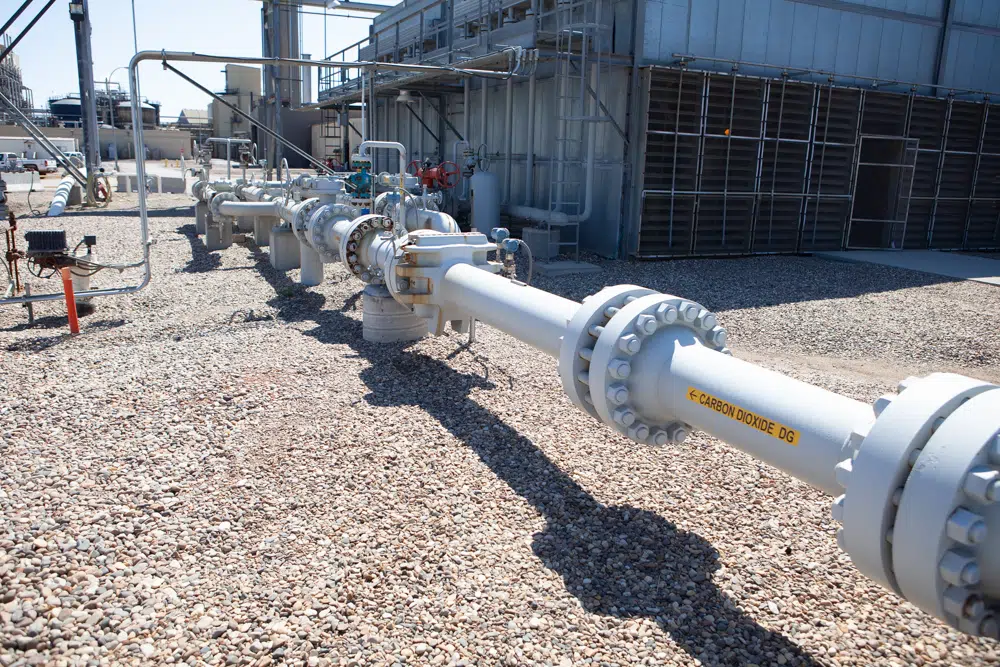
Carbon dioxide runs through pipes at a North Dakota CCS plant. Credit: Buchsbaum Media.

Mark Maslin, UCL

The UK government has announced it will invest almost £22 billion in carbon capture and storage (CCS) projects over the next 25 years. The technology works by capturing CO₂ as it is being emitted by a power plant or another polluter, then storing it underground.

This sounds great in theory. However, it seems Labour has been swayed by the fossil fuel lobby, which has pushed CCS for years. This announcement represents a massive bet on a still unproven technology, and will lock the UK into fossil fuel dependence for decades to come. The Climate Change Act mandates the UK should achieve net zero emissions by 2050, yet this will be impossible if carbon capture leads to the UK building new gas power stations instead of wind and solar farms.

I was one of several leading climate scientists who recently signed a letter to the energy security and net zero secretary, Ed Miliband, in which we pointed out the many issues with the current plans.

Even if the technology worked perfectly, it still locks the UK into a reliance on natural gas (which is basically methane, a potent greenhouse gas) for generations to come. This will result in the UK being reliant on imported natural gas past 2050, which has significant upstream emissions from methane leaks, transport and processing.

That then exposes the UK to the continued volatility of the global energy markets, which in part caused the country’s cost of living crisis. (Renewables don’t have this problem, since the wind and sun don’t need to be imported from overseas.)

Overpromising, underdelivering

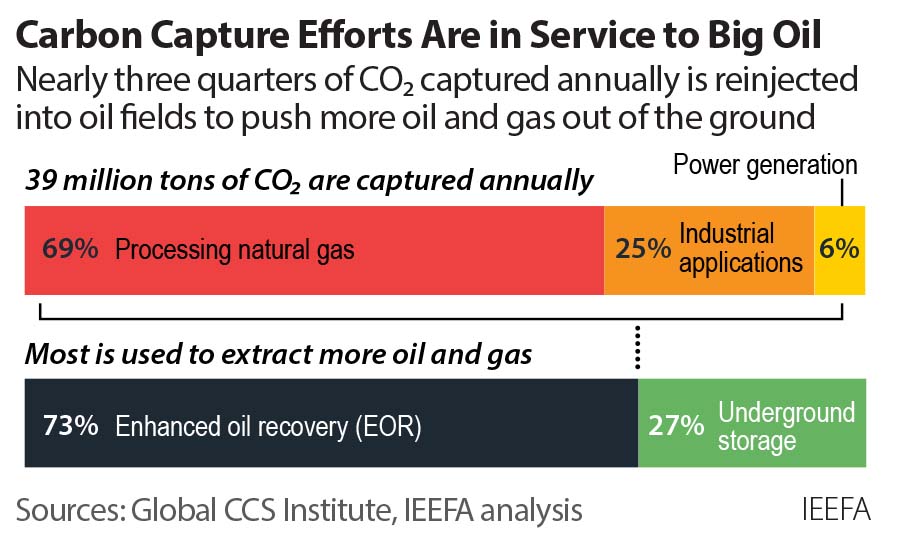
In the letter, we pointed out that carbon capture projects have a very poor track record of overpromising and underdelivering. Most current CCS capacity is within natural gas processing facilities, where CO₂ must be separated out to produce marketable products. Almost 80% of the CO₂ captured is reinjected into oil fields to facilitate oil extraction.

The track record of adding carbon capture to power plants is much worse, with the vast majority of projects abandoned. Just two commercial-scale coal-fired power plants are operating with CCS: Boundary Dam in Canada and Petra Nova in the US. Both have experienced consistent underperformance, recurring technical issues and ballooning costs.

In any case, Britain just closed down its last coal power plant. And it’s actually harder to capture CO₂ from gas power plants than from coal, since CO₂ is found in lower concentrations in the emitted gases.

Large power plant cooling towers
Britain’s last coal power station, Ratcliffe-on-Soar, has been shut down. Chris Dukes / shutterstock

One argument for CCS is that it can be used in the production of so-called “blue hydrogen”, which is derived from natural gas and can in theory be used to heat homes or power cars. Yet many projects doing this around the world have been abandoned.

A wide range of uses have been promoted for hydrogen, but not all are practical or competitive. The claim that hydrogen should have a significant role in heating buildings has been comprehensively disproved, while direct electrification is increasingly emerging as a better solution for industrial process heating.

Better ways to spend £22 billion

That £22 billion earmarked for CCS projects should instead be invested in proven technologies such as renewable energy, and on upgrading the UK national grid.

We do not deny that both carbon capture and “green” hydrogen (derived from water not methane) may be needed for specific uses in a zero-carbon economy. Carbon capture and storage should be used on existing fossil fuel infrastructure to reduce its emissions as it is phased out, while green hydrogen will be an important way of storing and transporting green energy around the world. It will also be essential to reduce the emissions from steel production.

But the science is very clear: it makes no sense to use hydrogen as a way of heating buildings or driving our transport systems.

As the world leaders agreed and declared at the most recent UN climate summit, COP28 in Dubai, we must transition away from fossil fuels in a just, orderly and equitable manner in order to achieve net zero by 2050. This will not happen if the UK and other countries lock themselves into a fossil fuel-based pathway with inevitable upstream emissions, displacing genuinely zero or low-carbon electricity generation.

Mark Maslin, Professor of Natural Sciences, UCL

This article is republished from The Conversation under a Creative Commons license. Read the original article.

Local opposition to CCS projects have delayed their construction. Credit: Matt Hrkac/Flickr (CC BY NC ND 2.0)
Continue ReadingThe UK’s £22 billion bet on carbon capture will lock in fossil fuels for decades

Carbon capture: a decarbonisation pipe dream

Relearning lessons of the past

1 September 2022 (IEEFA): Underperforming carbon capture projects considerably outnumber successful projects globally, and by large margins, with both the technology and regulatory framework found wanting, finds a new report by the Institute for Energy Economics and Financial Analysis (IEEFA).

The report, The Carbon Capture Crux – Lessons Learned, studies 13 flagship large-scale carbon capture and storage (CCS)/carbon capture utilisation and storage (CCUS) projects in the natural gas, industrial and power sectors in terms of their history, economics and performance. These projects account for around 55% of the total current operational capacity worldwide.

Author Bruce Robertson says seven of the thirteen projects underperformed, two failed, and one was mothballed

“CCS technology has been going for 50 years and many projects have failed and continued to fail, with only a handful working.

“Many international bodies and national governments are relying on carbon capture in the fossil fuel sector to get to Net Zero, and it simply won’t work.

“Although some indication it might have a role to play in hard-to-abate sectors such as cement, fertilisers and steel, overall results indicate a financial, technical and emissions-reduction framework that continues to overstate and underperform.”

IEEFA’s study found that Shute Creek in the U.S. underperformed its carbon capture capacity by around 36% over its lifetime, Boundary Dam in Canada by about 50%, and the Gorgon project off the coast of Western Australia by about 50% over its first five-year period.

“The two most successful projects are in the gas processing sector – Sleipner and Snøhvit in Norway. This is mostly due to the country’s unique regulatory environment for oil and gas companies,” says co-author Milad Mousavian.

“Governments globally are looking for quick solutions to the current energy and ongoing climate crisis, but unwittingly latching onto CCS as a fix is problematic.”

Last week the Australian government approved two new massive offshore greenhouse gas storage areas, saying CCS “has a vital role to play to help Australia meet its net zero targets. Australia is ideally placed to become a world leader in this emerging industry”.

However, Robertson says, carbon capture technology is not new and is not a climate solution.

“As our report shows, CCS has been around for decades, mostly serving the oil industry through enhanced oil recovery (EOR). Around 80–90% of all captured carbon in the gas sector is used for EOR, which itself leads to more CO2 emissions.”

About three-quarters of the CO2 captured annually by multi-billion-dollar CCUS facilities, roughly 28 million tonnes (MT) out of 39MT total capture capacity globally, is reinjected and sequestered in oil fields to push more oil out of the ground.

The International Energy Agency says annual carbon capture capacity needs to increase to 1.6 billion tonnes of CO2 by 2030 to align with a net zero by 2050 pathway.

“In addition to being wildly unrealistic as a climate solution, based on historical trajectories, much of this captured carbon will be used for enhanced oil recovery,” says Robertson.

History shows CCS projects have major financial and technological risks. Close to 90% of proposed CCS capacity in the power sector has failed at implementation stage or was suspended early — including Petra Nova and the Kemper coal gasification power plant in the U.S. Further, most projects have failed to operate at their theoretically designed capturing rates. As a result, the 90% emission reduction target generally claimed by the industry has been unreachable in practice.

Finding suitable storage sites and keeping it there is also a major challenge—the trapped CO2 underground needs monitoring for centuries to ensure it does not come back to the atmosphere.

The report identifies interim considerations for CCS projects if no alternative solutions to emissions reduction are found.

  • Safe storage locations must be identified, and a long-term monitoring plan and compensation mechanism in case of failure developed.
  • The CCS project must not promote enhanced oil recovery.
  • To avoid project liability being handed over to taxpayers, as is currently the situation with Gorgon, large oil and gas companies mainly benefiting from CCS at their gas developments must be liable for any failure/leakage and monitoring costs of CCS projects, specifically if they get subsidies, grants and tax credits for capturing the carbon.
  • It must not be used by governments to greenlight or extend the life of any type of fossil fuel asset as a climate solution.

Robertson says more research could be done on CCS applications in industries where emissions are hard to abate such as, cement, as an interim partial solution to meeting net zero targets.

“As a solution to tackling catastrophic rising emissions in its current framework however, CCS is not a climate solution.”

The reportThe Carbon Capture Crux – Lessons Learned

Continue ReadingCarbon capture: a decarbonisation pipe dream