Amnesty launches tells new Labour government ‘a lot needs fixing’

Spread the love

https://morningstaronline.co.uk/article/amnesty-launches-ads-tell-government-lot-needs-fixing. Many articles from the Morning Star today.

One of Amnesty International’s adverts in the London Underground, July 11, 2024

AMNESTY INTERNATIONAL launched an ad campaign featuring yellow and black hazard tape on the London Underground today, telling the government that “a lot needs fixing.”

The posters, set to run until the end of the month at Westminster station, also say that “human rights are the answer.”

A to-do list has been made by the group for the first 100 days of the new Labour government, which includes an immediate suspension of arms to Israel, addressing homelessness and the housing crisis, and a major overhaul of the asylum system.

https://morningstaronline.co.uk/article/amnesty-launches-ads-tell-government-lot-needs-fixing. Many articles from the Morning Star today.

Continue ReadingAmnesty launches tells new Labour government ‘a lot needs fixing’

New government urged to scrap anti-protest laws to restore freedom of expression

Spread the love

https://morningstaronline.co.uk/article/new-government-urged-scrap-anti-protest-laws-restore-freedom-expression

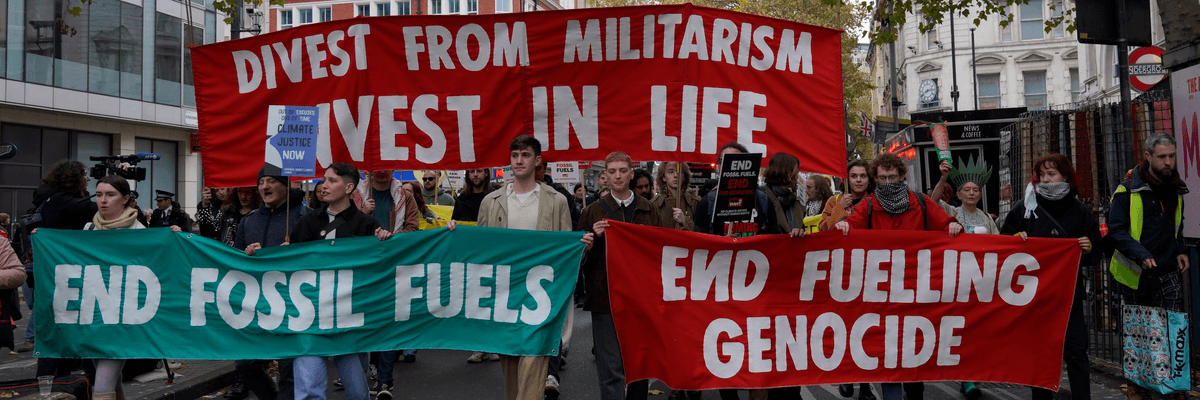
Demonstrators during a ‘Kill The Bill’ protest against The Police, Crime, Sentencing and Courts Bill in London, January 15, 2022

LABOUR was urged today to scrap Tory anti-protest laws and reject harmful rhetoric used to stigmatise peaceful demonstrations.

Peace, pro-Palestine, environmental and civil liberties groups called on ministers to champion the rights to free speech by repealing the draconian legislation aimed at silencing dissent.

Amnesty International led the calls as it published a new report warning of an increasingly wide range of means to quash peaceful demonstrations and silence free speech across Europe.

It called on Home Secretary Yvette Cooper to urgently scrap the public order elements of the Police, Crime, Sentencing and Courts Act as well as the entirety of the Public Order Act and the Serious Disruption Regulations.

Kerry Moscogiuri, of Amnesty International UK, said: “The new government must seize this moment to halt the alarming march towards repression in the UK by repealing the anti-protest laws pushed through by the previous government and ending the harmful rhetoric being used to stigmatise those who peacefully protest.

https://morningstaronline.co.uk/article/new-government-urged-scrap-anti-protest-laws-restore-freedom-expression

Continue ReadingNew government urged to scrap anti-protest laws to restore freedom of expression

Right to Asylum Must Be Protected in EU, Says Human Rights Coalition

Spread the love

Original article by Jessica Corbett republished from Common Dreams under Creative Commons (CC BY-NC-ND 3.0).
The Doctors Without Borders vessel Geo Barents intercepted two small boats full of migrants navigating toward Europe
in the Central Mediterranean on March 16, 2024. (Photo by Simone Boccaccio/SOPA Images/LightRocket via Getty Images)

“As this legislative cycle starts, the E.U. can and must do better than abandon its commitment to the global refugee protection regime,” said an Amnesty campaigner.

Nearly 100 human rights organizations came together Tuesday to emphasize that members of the European Union “must guarantee the right to seek and enjoy asylum and uphold their commitments to the international refugee protection system.”

The joint statement from groups including Amnesty International, Human Rights Watch, and Oxfam came as members of the European Parliament prepare for the July 16 plenary sitting, the first meeting scheduled since the bloc’s June elections, which resulted in the far-right “Patriots for Europe” becoming the third-largest alliance in the legislative body.

The human rights coalition underscored obligations under Article 18 of the E.U. Charter of Fundamental Rights and expressed concern about “the recent and increasing attempts by the E.U. and its member states to evade their asylum responsibilities by outsourcing asylum processing and refugee protection risk undermining the international protection system.”

As the groups detailed:

Italy, for instance, is currently seeking to process asylum applications of certain groups of asylum-seekers outside of its territory, from detention in Albania—which risks leading to prolonged, automatic detention, a denial of access to fair asylum procedures with necessary procedural guarantees, and delayed disembarkation for people rescued or intercepted at sea. Others, such as Denmark and Germany, are assessing the feasibility of this type of arrangement. Fifteen E.U. member states and some political groups have endorsed similar shortsighted measures to shift asylum processing outside E.U. territory and encouraged the European Commission to explore ways to facilitate this through further legislative reform, including through a watered-down ‘safe third country’ concept.

These attempts must be seen in the context of parallel containment efforts that seek to stem departures and prevent the arrival of asylum-seekers to E.U. territory through partnership agreements with third countries, with little to no attention to the human rights records of those authorities.

The coalition stressed that “as the extensive track record of human rights violations in partner countries such as Libya demonstrates, the E.U. and Member States have no adequate tools and competencies to effectively monitor or enforce human rights standards outside of E.U. territory.”

A report published in November by Doctors Without Borders features stories of violence that migrants endured in nations including Libya and Tunisia while trying to get to the E.U. That publication also points out that 2023 was the deadliest year for migration in the Central Mediterranean since 2017, due in part to E.U. countries failing to assist those at risk of drowning.

In addition to sounding the alarm about current E.U. policies and practices, the coalition on Tuesday cited examples including Australia’s offshore detention scheme, which “demonstrates how these models have created prolonged confinement and restricted freedom of movement, deeply harming both the mental and physical health of people seeking protection.”

The organizations also pointed to an asylum scheme attempted by the United Kingdom—which left the E.U. in 2020 following the 2016 Brexit vote—and Rwanda, which the statement notes “is not yet in effect following the U.K. Supreme Court declaring it unlawful and in any event is unlikely to be operationalized at any significant scale.”

The U.K.’s failed attempt to forcibly remove people to the African country was “projected to cost a staggering £1.8 million per asylum-seeker returned,” which is equal to €2.13 million or $2.3 million. The coalition called such schemes “not only an unjustifiable waste of public money, but also a lost opportunity to spend it in ways that would truly aid people seeking asylum by investing in fair and humane asylum systems and the communities that welcome them.”

Olivia Sundberg Diez, Amnesty’s E.U. advocate on migration and asylum, said in a statement Tuesday that “attempts by states to outsource their asylum responsibilities to other countries are not new—but have long been criticized, condemned, and rejected for good reason.”

“Just as the U.K.-Rwanda scheme is, rightly, collapsing, the E.U. and its member states should pay attention, stop making false promises, and wasting time and money on expensive, inhumane, and unworkable proposals,” she continued. “As this legislative cycle starts, the E.U. can and must do better than abandon its commitment to the global refugee protection regime.”

The meeting scheduled for next week will follow the Pact on Migration and Asylum that the European Parliament passed in April and the Council of the E.U. adopted in May. The coalition highlighted that “civil society organizations have been clear about their serious concerns” regarding the reforms while also explaining that “the transfer of asylum-seekers outside of E.U. territory for asylum processing and refugee protection is not provided for in the pact, nor within current E.U. law.”

“After the E.U. and member states have spent close to a decade attempting to reform the E.U.’s asylum system, they should now focus on implementing it with a human rights-centered approach that prioritizes the right to asylum per E.U. law and fundamental principles of international refugee law to which they remain bound,” the coalition concluded. “They should not, mere weeks after the reform has passed, waste further time and resources on proposals that are incompatible with European and international law.”

Original article by Jessica Corbett republished from Common Dreams under Creative Commons (CC BY-NC-ND 3.0).

Continue ReadingRight to Asylum Must Be Protected in EU, Says Human Rights Coalition

13 Months of Record-Smashing Heat Called ‘Another Red Alert’ for Humanity

Spread the love

Original article by BRETT WILKINS republished from Common Dreams under Creative Commons (CC BY-NC-ND 3.0).

Rescuers carry away a man, affected by the scorching heat, on a stretcher as Muslim pilgrims arrive to perform the symbolic “stoning of the devil” ritual as part of the Hajj pilgrimage in Mina, Saudi Arabia on June 16, 2024. (Photo: Fadel Senna/AFP via Getty Images)

“This alarming record underlines the need to urgently phase out fossil fuels, and to hugely increase climate finance,” said one campaigner.

Scientists on Monday underscored the urgent need to accelerate the transition from fossil fuels to renewable energy following the publication of data from the European Union’s climate change monitor showing that last month was the hottest June ever recorded and that 2024 is likely to be the planet’s hottest year on record.

Each month since June 2023 has been the hottest since records have been kept, the European Union’s Copernicus Climate Change Service (C3S) said last week in its latest monthly bulletin.

According to the agency, June “was 1.50°C above the estimated June average for 1850-1900, the designated preindustrial reference period, making it the 12th consecutive month to reach or break the 1.5°C threshold.”

“European temperatures were most above average over southeast regions and Turkey, but near or below average over western Europe, Iceland, and northwestern Russia,” C3S noted. “Outside Europe, temperatures were most above average over eastern Canada, the western United States and Mexico, Brazil, northern Siberia, the Middle East, northern Africa, and western Antarctica.”

“Temperatures were below average over the eastern equatorial Pacific, indicating a developing La Niña, but air temperatures over the ocean remained at an unusually high level over many regions,” the agency added.

C3S Director Carlo Buontempo said in a statement Monday that “even if this specific streak of extremes ends at some point, we are bound to see new records being broken as the climate continues to warm.”

“This is inevitable unless we stop adding greenhouse gases into the atmosphere and the oceans,” he stressed.

In an interview with The Associated Press published Monday, C3S climate scientist Nicolas Julien called the new data “a stark warning that we are getting closer to this very important limit set by the Paris agreement.”

“The global temperature continues to increase,” he added. “It has at a rapid pace.”

Zeke Hausfather, a researcher at the California-based nonprofit Berkeley Earth, told Reuters, “I now estimate that there is an approximately 95% chance that 2024 beats 2023 to be the warmest year since global surface temperature records began in the mid-1800s.”

As Reuters reported Monday:

The changed climate has already unleashed disastrous consequences around the world in 2024. More than 1,000 people died in fierce heat during the Hajj pilgrimage last month. Heat deaths were recorded in New Dehli, which endured an unprecedentedly long heatwave, and amongst tourists in Greece.

“This is not good news at all,” Aditi Mukherji, who co-authored the most recent Intergovernmental Panel on Climate Change (IPCC) report, told The Guardian.

“We know that extreme events increase with every increment of global warming,” she added, “and at 1.5°C, we witnessed some of the hottest extremes this year.”

The Guardian surveyed hundreds of IPCC authors earlier this year. Three-quarters of them said they expect Earth to heat by at least 2.5°C by the end of this century. Half of the surveyed scientists expect temperatures to rise above 3°C by 2100.

“It is a crisis,” said Mukherji, and one that has a clear solution, given that burning fossil fuels is the leading cause of global heating.

Antonia Juhasz, a senior researcher on fossil fuels at Human Rights Watch, told Nation of Change that “as a result of the burning of fossil fuels, heatwaves are becoming more common, and intense heatwaves are more frequent.”

“We can break the cycle, we can make oil companies stop burning fossil fuels,” she added.

Reacting to the latest C3S data, Amnesty International climate adviser Ann Harrison said on social media that “this alarming record underlines the need to urgently phase out fossil fuels, and to hugely increase climate finance.”

Original article by BRETT WILKINS republished from Common Dreams under Creative Commons (CC BY-NC-ND 3.0).

Continue Reading13 Months of Record-Smashing Heat Called ‘Another Red Alert’ for Humanity

The Gaza Project Exposes Israel’s ‘Chilling Pattern’ of Killing Journalists

Spread the love

Original article by BRETT WILKINS republished from Common Dreams under a CC licence.

Forbidden Stories and its Gaza Project partners investigated Israel’s killing of journalists in Gaza and elsewhere.
 (Illustration: Forbidden Stories/The Gaza Project)

“This is one of the most flagrant attacks on press freedom that I can remember,” said one campaigner. “The impact on press freedom in Gaza, in the region, and the rest of the world is something we cannot accept.”

With more than 100 media professionals—nearly all of them Palestinian—killed in Gaza since October, a group of 50 reporters from 13 international organizations this week shared the results of a new investigative journalism initiative aimed at exposing the deadly toll Israel’s onslaught has taken on those reporting it to the world.

The Gaza Project—led by the Paris-based nonprofit Forbidden Stories—”analyzed nearly 100 cases of journalists and media workers killed in Gaza, as well as other cases in which members of the press have been allegedly targeted, threatened, or injured since October 7,” when Hamas-led attacks on Israel left more than 1,100 people dead and over 240 others kidnapped.

“Faced with what is being reported as the record number of journalists killed, Forbidden Stories, whose mission is to pursue the work of journalists who are killed because of their work, set out to investigate the targeting of journalists,” the group said

“For four months, Forbidden Stories and its partners investigated the circumstances of their killings, as well as those who have been targeted, threatened, and injured in the West Bank and Gaza,” it added. “These investigations point to a chilling pattern and suggest some journalists may have been targeted even though they were identifiable as press.”

Gaza Project member Committee to Protect Journalists (CPJ) has condemned what it called an “apparent pattern of targeting journalists and their families,” noting cases in which media workers were killed while wearing press insignia and after being threatened by Israeli officials.

“This is one of the most flagrant attacks on press freedom that I can remember,” CPJ program director Carlos Martínez de la Serna said of the ongoing war. “The impact on press freedom in Gaza, in the region, and the rest of the world is something we cannot accept.”

Basel Khair Al-Din, a Palestinian journalist in Gaza who believes he was targeted by a drone strike while wearing a press vest, said, “Whereas this press vest was supposed to identify and protect us, according to international laws, international conventions, and the Geneva Conventions, it is now a threat to us.”

“It’s this vest that almost got us killed, as has happened to so many of our fellow journalists and media workers,” he added.

Groups like Human Rights Watch (HRW) and Amnesty International have called for official investigations into Israeli killing of journalists including an October 13 attack that killed 37-year-old Lebanese Reuters videographer Issam Abdallah and wounded half a dozen other journalists who were covering cross-border clashes between Israeli troops and Hezbollah fighters in southern Lebanon.

Dylan Collins, an American deputy editor at Al Jazeera English, was wounded while administering first aid to Christina Assi, an Italian Agence-France Presse journalist whose legs were blown off in the attack.

Reuters determined that an Israeli tank crew “fired two shells in quick succession” at the journalists, who HRW said were “clearly identifiable as members of the media, and had been stationary for at least 75 minutes.” HRW “found no evidence of a military target near the journalists’ location.”

Amnesty International, meanwhile, asserted that the Israel Defense Forces (IDF) strike was “likely a direct attack on civilians that must be investigated as a war crime.”

Asa Kasher, the lead author of the IDF’s Code of Ethics, told Forbidden Stories that “no member of the press should have been killed under normal circumstances of hostilities in Gaza.”

“It shouldn’t happen, even a single one,” he added. “It’s illegal. It’s unethical. The person who does it should be brought to court.”

Israel’s alleged deliberate targeting of journalists is part of the evidence presented in a South Africa-led genocide case against Israel being reviewed by the International Court of Justice in The Hague.

Separately, the chief prosecutor at the International Criminal Court (ICC), also located in the Dutch city, is seeking arrest warrants for Israeli Prime Minister Benjamin Netanyahu, Israeli Defense Minister Yoav Gallant, and three Hamas leaders for alleged war crimes and crimes against humanity including extermination and forced starvation in the case of the Israelis and extermination, rape, and torture in the case of Hamas.

The international press freedom group Reporters Without Borders last month filed a third ICC complaint alleging “war crimes against journalists in Gaza.”

According to Palestinian and international officials, at least 37,718 Palestinians—mostly women and children—have been killed during Israel’s 264-day assault on Gaza, which has also left more than 86,300 people wounded and 11,000 others missing and feared dead and buried beneath the rubble of hundreds of thousands of homes and other bombed-out buildings.

Around 90% of Gaza’s 2.3 million people have also been forcibly displaced, and the Israeli siege on Gaza has caused widespread—and deadly—starvation and what the head of the United Nations food agency called a “full-blown famine” in northern parts of the strip.

Original article by BRETT WILKINS republished from Common Dreams under a CC licence.

Zionist Keir Starmes is quoted "I support Zionism without qualification." He's asked whether that means that he supports Zionism under all circumstances, whatever Zionists do.
Zionist Keir Starmes is quoted “I support Zionism without qualification.” He’s asked whether that means that he supports Zionism under all circumstances, whatever Zionists do.

Continue ReadingThe Gaza Project Exposes Israel’s ‘Chilling Pattern’ of Killing Journalists