13 Months of Record-Smashing Heat Called ‘Another Red Alert’ for Humanity

Spread the love

Original article by BRETT WILKINS republished from Common Dreams under Creative Commons (CC BY-NC-ND 3.0).
Rescuers carry away a man, affected by the scorching heat, on a stretcher as Muslim pilgrims arrive to perform the symbolic “stoning of the devil” ritual as part of the Hajj pilgrimage in Mina, Saudi Arabia on June 16, 2024. (Photo: Fadel Senna/AFP via Getty Images)

“This alarming record underlines the need to urgently phase out fossil fuels, and to hugely increase climate finance,” said one campaigner.

Scientists on Monday underscored the urgent need to accelerate the transition from fossil fuels to renewable energy following the publication of data from the European Union’s climate change monitor showing that last month was the hottest June ever recorded and that 2024 is likely to be the planet’s hottest year on record.

Each month since June 2023 has been the hottest since records have been kept, the European Union’s Copernicus Climate Change Service (C3S) said last week in its latest monthly bulletin.

According to the agency, June “was 1.50°C above the estimated June average for 1850-1900, the designated preindustrial reference period, making it the 12th consecutive month to reach or break the 1.5°C threshold.”

“European temperatures were most above average over southeast regions and Turkey, but near or below average over western Europe, Iceland, and northwestern Russia,” C3S noted. “Outside Europe, temperatures were most above average over eastern Canada, the western United States and Mexico, Brazil, northern Siberia, the Middle East, northern Africa, and western Antarctica.”

“Temperatures were below average over the eastern equatorial Pacific, indicating a developing La Niña, but air temperatures over the ocean remained at an unusually high level over many regions,” the agency added.

C3S Director Carlo Buontempo said in a statement Monday that “even if this specific streak of extremes ends at some point, we are bound to see new records being broken as the climate continues to warm.”

“This is inevitable unless we stop adding greenhouse gases into the atmosphere and the oceans,” he stressed.

In an interview with The Associated Press published Monday, C3S climate scientist Nicolas Julien called the new data “a stark warning that we are getting closer to this very important limit set by the Paris agreement.”

“The global temperature continues to increase,” he added. “It has at a rapid pace.”

Zeke Hausfather, a researcher at the California-based nonprofit Berkeley Earth, told Reuters, “I now estimate that there is an approximately 95% chance that 2024 beats 2023 to be the warmest year since global surface temperature records began in the mid-1800s.”

As Reuters reported Monday:

The changed climate has already unleashed disastrous consequences around the world in 2024. More than 1,000 people died in fierce heat during the Hajj pilgrimage last month. Heat deaths were recorded in New Dehli, which endured an unprecedentedly long heatwave, and amongst tourists in Greece.

“This is not good news at all,” Aditi Mukherji, who co-authored the most recent Intergovernmental Panel on Climate Change (IPCC) report, told The Guardian.

“We know that extreme events increase with every increment of global warming,” she added, “and at 1.5°C, we witnessed some of the hottest extremes this year.”

The Guardian surveyed hundreds of IPCC authors earlier this year. Three-quarters of them said they expect Earth to heat by at least 2.5°C by the end of this century. Half of the surveyed scientists expect temperatures to rise above 3°C by 2100.

“It is a crisis,” said Mukherji, and one that has a clear solution, given that burning fossil fuels is the leading cause of global heating.

Antonia Juhasz, a senior researcher on fossil fuels at Human Rights Watch, told Nation of Change that “as a result of the burning of fossil fuels, heatwaves are becoming more common, and intense heatwaves are more frequent.”

“We can break the cycle, we can make oil companies stop burning fossil fuels,” she added.

Reacting to the latest C3S data, Amnesty International climate adviser Ann Harrison said on social media that “this alarming record underlines the need to urgently phase out fossil fuels, and to hugely increase climate finance.”

Original article by BRETT WILKINS republished from Common Dreams under Creative Commons (CC BY-NC-ND 3.0).

Continue Reading13 Months of Record-Smashing Heat Called ‘Another Red Alert’ for Humanity

The Gaza Project Exposes Israel’s ‘Chilling Pattern’ of Killing Journalists

Spread the love

Original article by BRETT WILKINS republished from Common Dreams under a CC licence.

Forbidden Stories and its Gaza Project partners investigated Israel’s killing of journalists in Gaza and elsewhere.
 (Illustration: Forbidden Stories/The Gaza Project)

“This is one of the most flagrant attacks on press freedom that I can remember,” said one campaigner. “The impact on press freedom in Gaza, in the region, and the rest of the world is something we cannot accept.”

With more than 100 media professionals—nearly all of them Palestinian—killed in Gaza since October, a group of 50 reporters from 13 international organizations this week shared the results of a new investigative journalism initiative aimed at exposing the deadly toll Israel’s onslaught has taken on those reporting it to the world.

The Gaza Project—led by the Paris-based nonprofit Forbidden Stories—”analyzed nearly 100 cases of journalists and media workers killed in Gaza, as well as other cases in which members of the press have been allegedly targeted, threatened, or injured since October 7,” when Hamas-led attacks on Israel left more than 1,100 people dead and over 240 others kidnapped.

“Faced with what is being reported as the record number of journalists killed, Forbidden Stories, whose mission is to pursue the work of journalists who are killed because of their work, set out to investigate the targeting of journalists,” the group said

“For four months, Forbidden Stories and its partners investigated the circumstances of their killings, as well as those who have been targeted, threatened, and injured in the West Bank and Gaza,” it added. “These investigations point to a chilling pattern and suggest some journalists may have been targeted even though they were identifiable as press.”

Gaza Project member Committee to Protect Journalists (CPJ) has condemned what it called an “apparent pattern of targeting journalists and their families,” noting cases in which media workers were killed while wearing press insignia and after being threatened by Israeli officials.

“This is one of the most flagrant attacks on press freedom that I can remember,” CPJ program director Carlos Martínez de la Serna said of the ongoing war. “The impact on press freedom in Gaza, in the region, and the rest of the world is something we cannot accept.”

Basel Khair Al-Din, a Palestinian journalist in Gaza who believes he was targeted by a drone strike while wearing a press vest, said, “Whereas this press vest was supposed to identify and protect us, according to international laws, international conventions, and the Geneva Conventions, it is now a threat to us.”

“It’s this vest that almost got us killed, as has happened to so many of our fellow journalists and media workers,” he added.

Groups like Human Rights Watch (HRW) and Amnesty International have called for official investigations into Israeli killing of journalists including an October 13 attack that killed 37-year-old Lebanese Reuters videographer Issam Abdallah and wounded half a dozen other journalists who were covering cross-border clashes between Israeli troops and Hezbollah fighters in southern Lebanon.

Dylan Collins, an American deputy editor at Al Jazeera English, was wounded while administering first aid to Christina Assi, an Italian Agence-France Presse journalist whose legs were blown off in the attack.

Reuters determined that an Israeli tank crew “fired two shells in quick succession” at the journalists, who HRW said were “clearly identifiable as members of the media, and had been stationary for at least 75 minutes.” HRW “found no evidence of a military target near the journalists’ location.”

Amnesty International, meanwhile, asserted that the Israel Defense Forces (IDF) strike was “likely a direct attack on civilians that must be investigated as a war crime.”

Asa Kasher, the lead author of the IDF’s Code of Ethics, told Forbidden Stories that “no member of the press should have been killed under normal circumstances of hostilities in Gaza.”

“It shouldn’t happen, even a single one,” he added. “It’s illegal. It’s unethical. The person who does it should be brought to court.”

Israel’s alleged deliberate targeting of journalists is part of the evidence presented in a South Africa-led genocide case against Israel being reviewed by the International Court of Justice in The Hague.

Separately, the chief prosecutor at the International Criminal Court (ICC), also located in the Dutch city, is seeking arrest warrants for Israeli Prime Minister Benjamin Netanyahu, Israeli Defense Minister Yoav Gallant, and three Hamas leaders for alleged war crimes and crimes against humanity including extermination and forced starvation in the case of the Israelis and extermination, rape, and torture in the case of Hamas.

The international press freedom group Reporters Without Borders last month filed a third ICC complaint alleging “war crimes against journalists in Gaza.”

According to Palestinian and international officials, at least 37,718 Palestinians—mostly women and children—have been killed during Israel’s 264-day assault on Gaza, which has also left more than 86,300 people wounded and 11,000 others missing and feared dead and buried beneath the rubble of hundreds of thousands of homes and other bombed-out buildings.

Around 90% of Gaza’s 2.3 million people have also been forcibly displaced, and the Israeli siege on Gaza has caused widespread—and deadly—starvation and what the head of the United Nations food agency called a “full-blown famine” in northern parts of the strip.

Original article by BRETT WILKINS republished from Common Dreams under a CC licence.

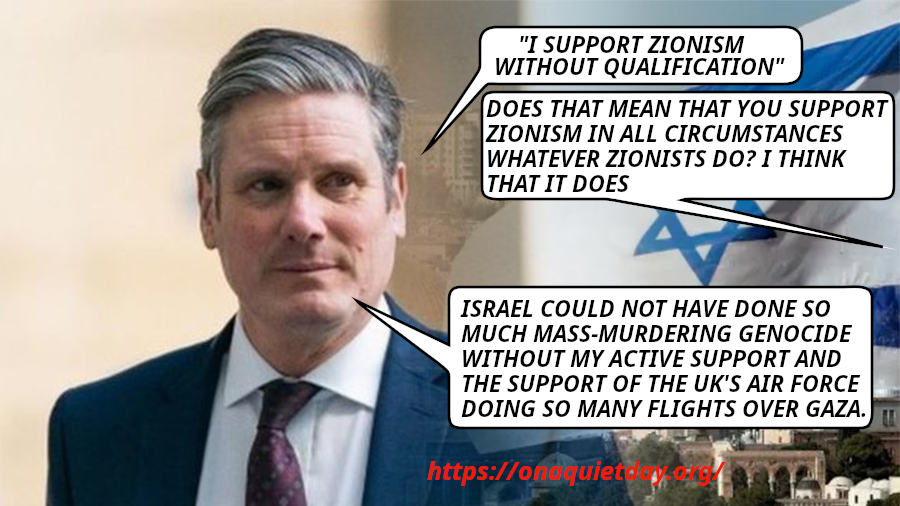
Zionist Keir Starmes is quoted "I support Zionism without qualification." He's asked whether that means that he supports Zionism under all circumstances, whatever Zionists do.
Zionist Keir Starmes is quoted “I support Zionism without qualification.” He’s asked whether that means that he supports Zionism under all circumstances, whatever Zionists do.

Continue ReadingThe Gaza Project Exposes Israel’s ‘Chilling Pattern’ of Killing Journalists

‘OUR FRIEND’: HOW THE ISRAEL LOBBY SPENT £30,000 ON WES STREETING

Spread the love

https://www.declassifieduk.org/our-friend-how-the-israel-lobby-spent-30000-on-wes-streeting/

Wes Streeting faces a backlash over his support for Israel. (Photo: Imageplotter / Alamy)

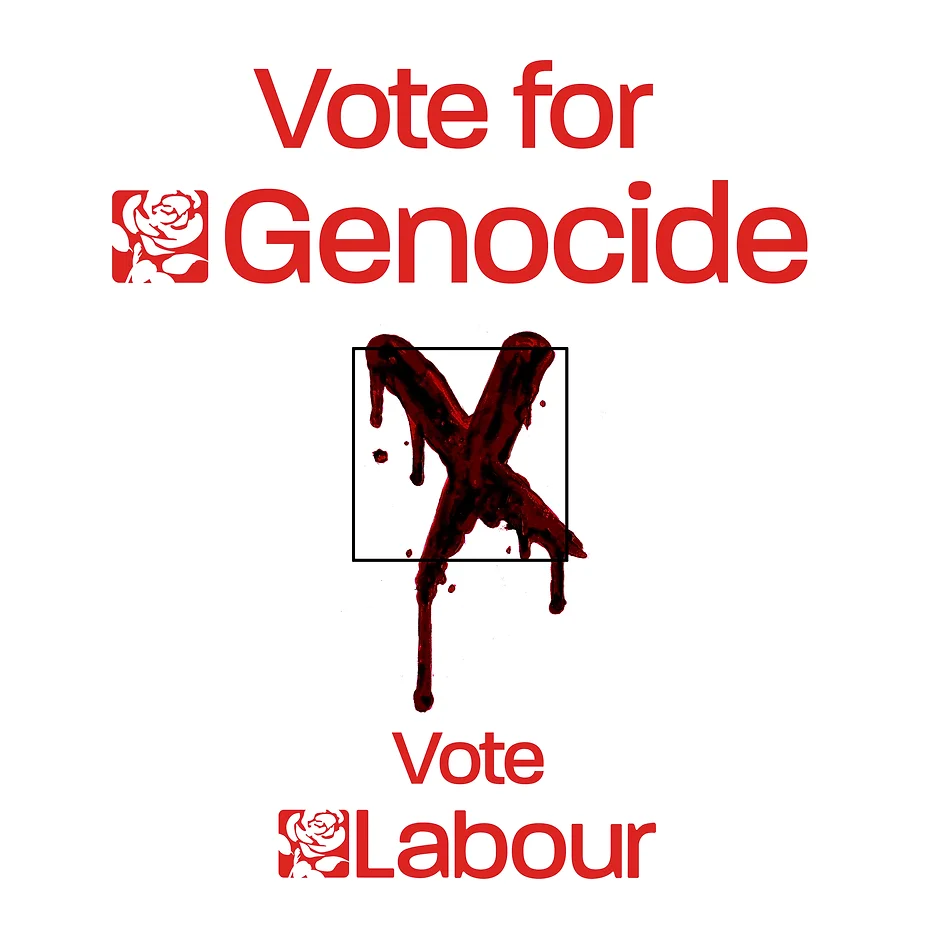
Labour’s shadow health secretary has a long history of supporting Israel going back to his days at the National Union of Students—and has been rewarded handsomely for it.

  • Streeting was Keir Starmer’s first shadow minister to visit Israel
  • His visit in 2022 was paid for by Labour Friends of Israel, which “works really closely” with Israeli embassy in London
  • He has taken over £20,000 from Israel lobbyists Sir Trevor Chinn, Lord Mendelsohn and David Menton, with donations as recently as April
  • Pro-Israel newspaper said Streeting’s “track-record on Israel is clear” and called him “our friend at the NUS”
  • Streeting is being challenged by British-Palestinian independent Leanne Mohamad

Wes Streeting has received nearly £30,000 from Britain’s powerful pro-Israel lobby, Declassified has found. 

Two years ago, Streeting became the first member of Keir Starmer’s shadow cabinet to visit Israel, in a move designed to signal a break with Jeremy Corbyn’s pro-Palestine position. 

The trip was paid for by Labour Friends of Israel (LFI) and cost £4,700. LFI also paid for Sarah Harrison, one of Streeting’s staffers, to visit Israel with him.

Another Streeting staffer, Anna Wilson, was paid an undisclosed amount to visit Israel last July. 

Her trip was funded by the European Leadership Network, a group whose UK branch is run by Joan Ryan, former chair of LFI. 

LFI is a secretive organisation that does not disclose its funders, although undercover reporting revealed Ryan, then a Labour MP, discussing a £1 million payment from Israel with Shai Masot, an Israeli diplomat, in 2016. 

In another covertly filmed conversation outside a London pub, LFI’s Michael Rubin said that he and Masot “work really closely together…but a lot of it is behind the scenes”. 

Masot was eventually forced to quit his job at the Israeli embassy and return home after he was caught on camera plotting to “take down” British MPs.

Israel is a serial violator of international law, and is judged to be practising apartheid against the Palestinians by both the US and UK’s top human rights groups, Human Rights Watch and Amnesty International. Leading Israeli group B’Tselem has also reached the same conclusion.

It is currently being investigated by the International Court of Justice (ICJ) for genocide, while the International Criminal Court’s prosecutor Karim Khan is seeking arrest warrants for prime minister Benjamin Netanyahu and defence minister Yoav Gallant for war crimes in Gaza.

Streeting described the ICJ case as a “distraction”.

https://www.declassifieduk.org/our-friend-how-the-israel-lobby-spent-30000-on-wes-streeting/

Continue Reading‘OUR FRIEND’: HOW THE ISRAEL LOBBY SPENT £30,000 ON WES STREETING

UK High Court grants Julian Assange opportunity to appeal extradition

Spread the love

Original article by Ana Vračar republished from peoples’ dispatch under Creative Commons Attribution-ShareAlike 4.0 (CC BY-SA) license.

Source: Official International Campaign to free Julian Assange

Julian Assange was granted another opportunity to appeal his extradition to the US after the UK High Court found US assurances of a fair trial inadequate

WikiLeaks founder Julian Assange has been granted another opportunity to appeal his extradition to the United States by the UK High Court on Monday, May 20. This decision allows Assange and his legal team to contest US extradition efforts in court once again, with a new date yet to be set.

Today’s decision also offers a glimmer of hope in a case that could see Assange prosecuted on espionage charges and potentially sentenced to over 170 years in prison in the US.

The ruling was met with hope from Assange’s supporters outside the court, as well as relief from family members and organizations who have been advocating for an end to his persecution since WikiLeaks published thousands of documents exposing US war crimes in Iraq and Afghanistan. The campaign for his release has intensified since his imprisonment in Belmarsh prison five years ago.

Following the ruling, Assange’s supporters reiterated calls for the US to drop the case entirely, allowing him to go free. “In trying to imprison him, the US is sending the unambiguous message that they have no respect for freedom of expression, and that they wish to send a warning to journalists and publishers everywhere: that they too could be targeted, for receiving and publishing classified material — even if doing so is in the public interest,” said Simon Crowther, legal adviser at Amnesty International.

Caitlin Vogus, deputy director of advocacy at Freedom of the Press Foundation, also urged the court to refuse to extradite Assange. “But better yet, the Biden administration can and should end this case now. If Biden continues to pursue the Assange prosecution, he risks creating a precedent that could be used against any reporter who exposes government secrets, even if they reveal official crimes. If the Biden administration cares about press freedom, it must drop the Assange case immediately,” Vogus said.

The High Court ruling follows a deferral from March this year, when the British judiciary sought assurances from the US that Assange would receive a fair trial if extradited. Specifically, Assange’s legal team demanded guarantees that he would be granted First Amendment rights to free speech, be treated equally in court despite being an Australian national, and that the prosecution would not seek the death penalty.

In response, the US legal team provided a list of assurances, but today, the UK court found them unsatisfactory. Apart from the assurance that the death penalty would not be pursued, Assange’s current and former legal representatives described the US explanations as inconclusive, raising concerns that he would face cruel treatment if deported.

Original article by Ana Vračar republished from peoples’ dispatch under Creative Commons Attribution-ShareAlike 4.0 (CC BY-SA) license.

Continue ReadingUK High Court grants Julian Assange opportunity to appeal extradition

Rights Groups Slam ‘Malicious Crackdown’ on Migrants and Civil Society in Tunisia

Spread the love

Original article by BRETT WILKINS republished from Common Dreams under Creative Commons (CC BY-NC-ND 3.0).

Lawyers shout slogans against Tunisian President Kais Saied during a May 16, 2024 protest in Tunis.
 (Photo: Fethi Belaid/AFP via Getty Images)

“The clampdown on migration-related work at the same time as the increasing arrest of government critics and journalists sends a chilling message,” said one campaigner.

Human rights defenders on Friday decried what Amnesty International called “an unprecedented repressive clampdown” by Tunisia’s increasingly authoritarian government on migrants, their civil society advocates, and journalists over the past two weeks.

Hundreds of Tunisian attorneys led a strike in the capital Tunis on Thursday to protest rising arrests of lawyers, one of whom, Mahdi Zagrouba, said he was tortured during interrogation—an allegation denied by Tunisian officials. Demonstrators chanted “No fear, no terror! Power belongs to the people!” as they marched on the Palace of Justice.

Sub-Saharan African migrants—recently described by Tunisian President Kais Saied as “hordes of illegal immigrants” who bring “violence, crime, and unacceptable practices” to Tunisia and threaten its “Arab and Islamic” character—have been particularly targeted, as have those who help them.

“On May 11, security officers stormed the Tunisian Bar Association’s headquarters during a live television broadcast, arresting a media commentator and lawyer, Sonia Dahmani, for sarcastic comments made on May 7 questioning the claim that Black African migrants were seeking to settle in Tunisia,” Human Rights Watch said Friday.

“Based on media reports, Dahmani’s arrest and subsequent detention was based on Decree-Law 54 on cybercrime, which imposes heavy prison sentences for spreading ‘fake news’ and ‘rumors’ online and in the media, after she refused to respond to a summons for questioning,” the group added.

Other recent arrestees include Saadia Mosbah, a Black Tunisian woman who heads the anti-racism group Mnemty (My Dream); and journalists Mourad Zeghidi and Borhen Bsaies

“The clampdown on migration-related work at the same time as the increasing arrest of government critics and journalists sends a chilling message that anyone who doesn’t fall in line may end up in the authorities’ crosshairs,” Lama Fakih, Middle East and North Africa director at Human Rights Watch, said in a statement. “By targeting these civil society groups, Tunisian authorities jeopardize the vital support they provide migrants, refugees, and asylum-seekers living in extremely vulnerable situations.”

According to Amnesty International:

Tunisian authorities have since May 3 arrested, summoned, and investigated the heads, former staff, or members of at least 12 organizations over unclear accusations including “financial crimes” for providing aid to migrants, including a Tunisian organization that works in partnership with the [United Nations] Refugee Agency, UNHCR, on supporting asylum-seekers through the refugee status determination process in the country. They have also arrested at least two journalists and referred them to trial for their independent reporting and comments in the media.

In parallel, security forces have escalated their collective unlawful deportations of refugees and migrants, as well as multiple forced evictions and have arrested and convicted landlords for renting apartments to migrants without permits.

“Tunisia’s authorities have stepped up their malicious crackdown against civil society organizations working on migrants and refugee rights using misleading claims about their work and harassing and prosecuting NGO workers, lawyers, and journalists,” said Heba Morayef, Amnesty’s regional director for Middle East and North Africa.

“A smear campaign online and in the media, supported by the Tunisian president himself, has put refugees and migrants in the country at risk,” she continued. “It also undermines the work of civil society groups and sends a chilling message to all critical voices.”

“Tunisia’s authorities must immediately end this vicious campaign and halt all reprisals against NGO workers providing essential support, including shelter, to migrants and refugees,” Morayef added. “The European Union should be urgently reviewing its cooperation agreements with Tunisia to ensure that it is not complicit in human rights violations against migrants and refugees nor in the clampdown on media, lawyers, migrants, and activists.”

Last July, the E.U. and Tunisia signed a memorandum of understanding that included up to €1 billion ($1.09 billion) in funding for the North African nation. Around 10% of that aid is meant to be spent on stopping migrants from reaching Europe.

“The European Union should be urgently reviewing its cooperation agreements with Tunisia to ensure that it is not complicit in human rights violations.”

Romdhane Ben Amor of the Tunisian League for the Defense of Human Rights toldAl Jazeera Friday that “the regime’s machinery is operating very efficiently, meaning it devours anyone who has a critical perspective on the situation… lawyers, journalists, bloggers, citizens, or associations.”

“So, of course, Kais Saied from now until the elections has a long list of individuals, associations, parties, and journalists whom he will gradually criminalize to always maintain the sympathy of his electoral base,” Ben Amor added, referring to this fall’s expected presidential contest.

Over the past three years, Saied—who was initially supported by both leftists and Islamists when elected on an anti-corruption platform in 2019—has dissolved Parliament and suspended most of Tunisia’s 2014 Constitution, allowing him to rule by decree. He has consolidated power by pushing through a new constitution, eroding the judiciary’s independence, repressing civil liberties, undermining workers’ rights, weakening democratic institutions, and other methods.

“Tunisian authorities must urgently reverse this significant backsliding on human rights,” Morayef asserted. “They must cease this judicial harassment and release all those detained solely for the exercise of their freedom of expression and freedom of association. People should have the freedom to express themselves without fear of reprisal.”

Original article by BRETT WILKINS republished from Common Dreams under Creative Commons (CC BY-NC-ND 3.0).

Continue ReadingRights Groups Slam ‘Malicious Crackdown’ on Migrants and Civil Society in Tunisia