NHS news review

Spread the love

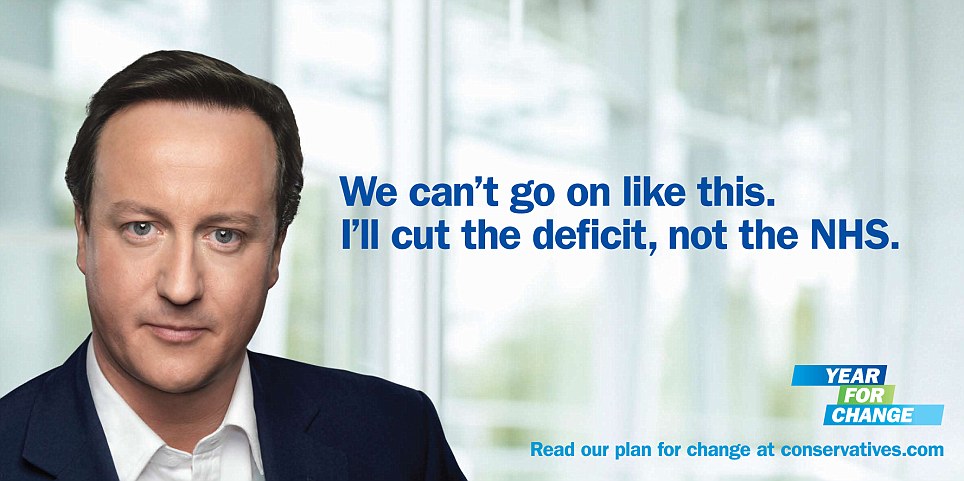
Conservative election poster 2010

A few recent news articles about the UK’s Conservative and Liberal-Democrat (Conservative) coalition government – the ConDem’s – brutal attack on the National Health Service.


The Evening Standard has secured a decision by the Information Commissioner Christopher Graham that Lansley and the ‘Department of Health’ has to publish a secret report on the risks being taken with the NHS.

“The document is expected to reveal the risks to patient safety, finances and the very workings of the NHS from the unprecedented reshaping of the health service.”

Andrew Lansley ordered to reveal secret health report | Politics

Labour’s former health spokesman John Healey, who put in a similar FOI request for the risk documents which was also upheld by the Information Commissioner’s Office, was scathing about the department’s conduct.

He said: “The year-long cover-up is a disgrace, especially when doctors, nurses, patients groups and the public are all so worried about the Tories’ NHS plans. The commissioner’s report is a demolition job of Lansley’s attempts to keep the truth from the public.”

He called on David Cameron to order the Health Secretary to “hand over the documents in full”.

In his ruling, Mr Graham said: “Disclosure would significantly aid public understanding of risks related to the proposed reforms and it would also inform participation in the debate about the reforms.”

Many commentaries on the private company Circle Healthcare running Hinchingbrooke hospital.

Andrew Lansley’s NHS is all about private sector hype | John Lister | Comment is free | guardian.co.uk

The government’s decision to sign a 10-year contract worth £1bn for an untested private company to manage the heavily indebted Hinchingbrooke hospital really is the triumph of hype over experience.

The hype has come thick and fast from Circle Healthcare’s smooth-talking boss, former Goldman Sachs banker Ali Parsadoust (known as Ali Parsa), who gives the impression that Circle is some kind of altruistic workers’ co-operative, while in fact it is controlled by private equity and hedge funds. Far from handing control to the workers, Circle takes a negative view of trade unions and will have to resort to old-fashioned cuts in the workforce if it is to generate the “efficiency savings” it needs to put the hospital into surplus.

More hype has come from the architect of the contract, NHS East of England’s director of strategy Dr Stephen Dunn, an enthusiastic advocate of private sector provision (which he denies is privatisation), whose unstinting efforts to secure this deal won him an award this year from HealthInvestor magazine.

But there is little in Circle’s record to justify Dunn’s belief that the company has the expertise to take on a project on the scale of Hinchingbrooke. The company has yet to make a success even of running its two tiny (30-bed) private hospitals, which were extravagantly expensive to build, and has run up six years of losses so far: hardly a good base to take on the bigger challenge of managing of a debt-ridden NHS general hospital 10 times the size and many more times more complex.

Even the NHS workforce that Circle will be attempting to manage at Hinchingbrooke is three times larger than the grand total of 568 people working for the whole Circle group. Only one of the company’s senior managers has any experience of managing an NHS hospital and he has left the company to rejoin the NHS. And so far they have set out no concrete proposals on how they plan to save money and turn around the finances when they take over in February.

Bungling privateer takes over Hinchingbrooke hospital / Britain / Home – Morning Star

A health privateer that posted millions in losses last year became the first company to get the green light to take over an NHS hospital today.

Circle, described as a “John Lewis-style” business because it is partly owned by clinicians, has signed a 10-year contract worth £1 billion to run Hinchingbrooke Health Care NHS Trust in Cambridgeshire.

The contract, which starts in February, marks the first time a private company delivers a full range of NHS district general hospital services.

Other firms only operate units within the NHS, such as hip replacement centres.

Unison head of health Christina McAnea warned that the takeover was “an accident waiting to happen,” put patients at risk and could lead to a second Southern Cross-style crisis.

The company has been given the task of combating Hinchingbrooke’s £39 million debt – though Circle itself recorded £27.4m losses in 2010.

Health Emergency director John Lister said the sums didn’t add up.

“It defies all logic when Circle cannot make a profit on its own tiny hospitals that it be handed over the running of an entire NHS hospital,” he said.

“Hinchingbrooke is 10 times bigger than any hospital Circle has ever run, with a vastly larger workforce as well as A&E.

“It will be totally out of its depth.”

How the Tories fake co-op friends are biting a chunk out of the NHS | openDemocracy


Today you will hear repeated mentions of ‘mutualism’ and ‘employee owned’. Indeed, journalists are being briefed that Circle is what ministers regard as a model mutual – a ‘John Lewis’ approach to public services. Circle even provides information, via the Cabinet Office’s mutual helpline, about setting up new healthcare mutuals.

Circle is not a mutual. Indeed, it stretches the term slightly to call John Lewis a mutual (rather than an employee owned partnership). Circle Healthcare is minority owned by senior clinicians – not all of the hospital staff – and majority owned by private backers, including major Conservative Party donors. It is a listed business with the primary purpose of turning a profit, rather than delivering benefit to its members (let alone patients).

To use the term “mutual” in the same breath as “Circle Healthcare” is crass misrepresentation. It is a discredit to the century and a half development of the co-operative and mutual movement, which grew from working people pooling their resources to benefit themselves and their communities, intimately entwined with the labour and trades union movements.

RCN demands transparency as firm takes over hospital | News | Nursing Times

The Royal College of Nursing today called for full “openness and transparency” over the deal signed by the government last night which hands a private company management control of an NHS trust.

The contract, signed at 11pm on Wednesday night hands Circle Health a 10-year management franchise of Cambridgeshire-based Hinchingbrooke Health Care Trust, beginning in February 2012.

Royal College of Nursing chief executive and general secretary Peter Carter said the deal was a “hugely significant development, with wider implications for the provision of health services across the UK”.

He added: “It is vital that there is full openness and transparency around the deal and that Circle continues to provide a comprehensive range of services that can be easily accessed by the local community.

“We know the NHS is under huge financial pressure to save £20 billion by 2014 and that Hinchingbrooke Hospital is carrying about £40m of debt. These financial gaps must not be plugged by cutting local services such as accident and emergency in the future.

Continue ReadingNHS news review

NHS news review

Spread the love

Bob Hudson discusses how Lansley and the ConDems are getting away with destroying the NHS.

NHS cuts in North Yorkshire.

Wendy Savage supports the campaign to prevent NHS Gloucestershire transferring community hospitals to a Community Interest Company.

Department of Health legal gag on an NHS whistleblower makes a mockery of the many recent DoH claims on whistleblowers.

UK Uncut

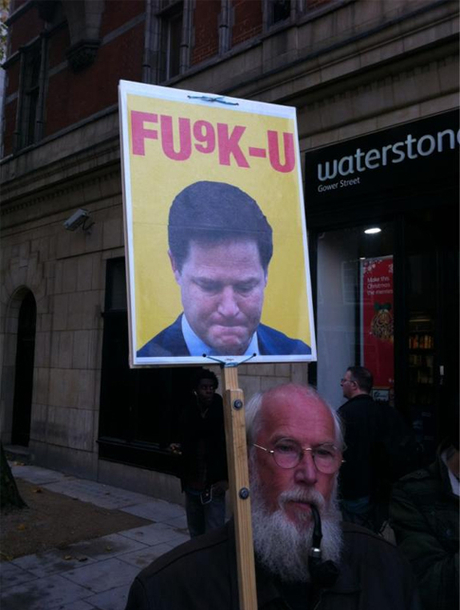
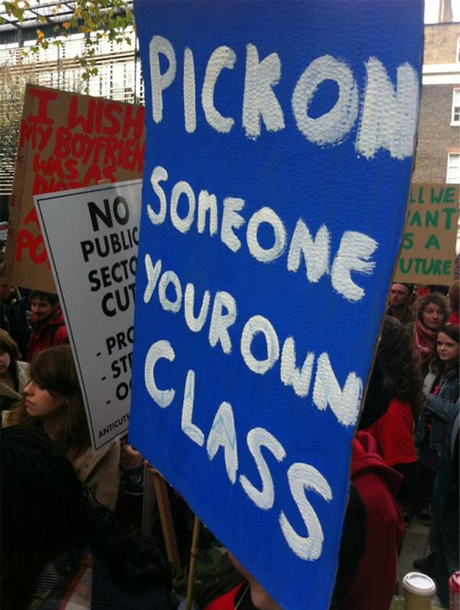
Student protest November 9, 2011

Philip Green is a multi-billionaire businessman, who runs some of the biggest names on British high streets. His retail empire includes brands such as Topshop, Topman, Dorothy Perkins, Burton, Miss Selfridge and British Home Stores.

Philip Green is not a non-dom. He lives in the UK. He works in the UK. He pays tax on his salary in the UK. All seems to be in order. Until you realise that Philip Green does not actually own any of the Arcadia group that he spends every day running. Instead, it is in the name of his wife who has not done a single day’s work for the company. Mrs Green lives in Monaco, where she pays not a penny of income tax.

In 2005 Philip Green awarded himself £1.2bn, the biggest paycheck in British corporate history. But this dividend payout was channeled through a network of offshore accounts, via tax havens in Jersey and eventually to Green’s wife’s Monaco bank account. The dodge saved Green, and cost the tax payer, close to £300m. This tax arrangement remains in place. Any time it takes his fancy, Green can pay himself huge sums of money without having to pay any tax.

Before the election, the Lib Dems liked to talk tough on tax avoiders. But as soon as they entered the coalition, this pre-election bluster became just another inconvenient promise they quietly forgot. In August David Cameron appointed the country’s most notorious serial-tax avoider to advise the government on how best to slash public spending. Not a single Lib Dem minister uttered a word of complaint. A Guardian editorial denounced this as “shameful”.

Philip Green’s £285m tax dodge could pay for:

* The full, hiked up £9,000 fees for almost 32,000 students
* Pay the salaries of 20,000 NHS nurses

And if that’s not reason enough to take action against Sir Philip, it is worth noting that he has built his £5bn fortune on the back of sweatshop labour, using Mauritius sweatshops where Sri Lankans, Indians and Bangladeshis toil 12 hours a day, six days a week, for minimal pay.

In the press

* Philip Green is an odd choice for efficiency tsar
* Philip Green’s tax affairs should be investigated, Lib Dem MPs urge
* Sir Philip Green under attack over personal tax affairs
* Vince Cable’s dig at Sir Philip Green’s tax status
* Sir Philip Green tax avoider gets job on the side

Conservative election poster 2010

A few recent news articles about the UK’s Conservative and Liberal-Democrat (Conservative) coalition government – the ConDem’s – brutal attack on the National Health Service.

Why reforms are destroying the essence of the NHS | Society | guardian.co.uk

The NHS will be unrecognisable in 10 years’ time, says Bob Hudson, if the current bill succeeds – which it looks likely to do

• Bob Hudson is a professor in the School of Applied Social Sciences, Durham University

“How is Lansley getting away with it?” I was asked recently by a senior NHS manager. Given that the NHS bill looks likely to make the statute book in the teeth of well-nigh universal opposition, it’s an interesting question. Part of the answer lies in the policy rhetoric – an attractive world of shared decision-making (“no decision about me without me”, said the white paper), with the cosy and familiar GP’s surgery said to be “the new headquarters of the NHS”. Who could possibly object?’

Opening up public services to greater patient engagement is indeed a desirable objective, but the crucial (and little debated) issue is how this is undertaken. The bill’s decentralised model of professional-patient interaction seems to offer a palace of varieties – better sources of information for patients, listening to the patients’ experience via Patient Reported Outcome Measures, recognition of the “expert patient” in the case of many long-term conditions, the roll-out of personal health budgets and – most important – the prioritisation of patient choice in the “any qualified provider” (AQP) model. It is not an agenda without virtue, but does it tell the full story?

There are other ways of increasing the stake of the public in decision-making. The most recognised route is through some form of representative democracy, and here again the government trumpets the virtue of its proposed changes – the 2010 consultation paper on democratic legitimacy, for example, boasted that “for the first time in 40 years there will be real democratic accountability and legitimacy in the NHS”.

Student protest November 9, 2011

There seems to be much on offer in this respect, too, but closer scrutiny suggests a flawed approach: health and wellbeing boards will have few formal powers and could degenerate into talking shops; clinical commissioning groups have little transparency and only vague obligations; foundation trusts in the future will be accountable only to feeble governing bodies elected by a small membership; and the new Local HealthWatch organisations will be weak and underfunded. Meanwhile the really big beasts – the NHS Commissioning Board and Monitor – will hold huge sway over local decision-making, yet be totally unaccountable to localities. Individual citizens wishing to help shape their local health services will not find it easy to gain leverage in this world.

The limitations of the “individual co-production” and “representative democracy” proposals should alert us to the real agenda for opening up the NHS – increasing diversity of supply. Although there is much rhetoric in official documents about the importance of social enterprise models and the role of the third sector, it is clear that the main alternative supply will come from the private sector. NHS staff are rightly suspicious of the denuded version of social enterprise being offered to them, consisting of guaranteed short-term contracts followed by competitive tendering against larger and better-equipped private providers. Meanwhile, the AQP agenda privileges patient choice above any other considerations (such as equity, quality and continuity) and makes the unlikely assumption that patients will readily assume the role of rational consumers. Transparency and accountability simply do not figure in this model.

NHS cuts decisions due (From York Press)

HEALTH bosses in North Yorkshire are now deciding how to deliver far-reaching savings following recommendations that bed numbers must be cut.

The loss of 200 hospital beds in York and North Yorkshire was only one of the “essential” measures needed to help the local NHS authority save £230 million by 2015, according to an independent report published in August on behalf of the region’s strategic health authority.

Professor in NHS battle | This is Gloucestershire

THE campaign to stop community hospitals leaving the NHS has been boosted by a visit from campaigner Professor Wendy Savage.

There was standing room only at public meeting in Stroud where she said they must fight to keep the NHS public.

Prof Wendy Savage, a General Medical Council Member, backed the campaign to stop NHS Gloucestershire transferring community hospitals to a Community Interest Company. The transfer is on hold following a legal challenge. Prof Savage also attacked the Government’s Health and Social Care Bill.

“What they are setting out to do is make the NHS into a market,” said Prof Savage. “If this goes through people will see the NHS being broken up into competing businesses.”

Chief executive of NHS Gloucestershire Jan Stubbings said: “If taken to its logical conclusion, the legal challenge would mean that services would be competitively tendered.”

Medicine Balls, Private Eye, Issue 1301, November 9, 2011 | drphilhammond.com

The most keenly awaited NHS employment tribunal in years has ended in secrecy, making a mockery of the government’s commitments to transparency, accountability, patient safety and the protection of whistleblowers. Gary Walker, the former chief executive of the United Lincoln Hospitals Trust (ULHT), lost his job in February 2010 after blowing the whistle on how government targets were harming patient care. The trust claims he was sacked for saying ‘fuck’ nine times over 2 years.

The tribunal was important because Walker had blown the whistle both to his SHA chief executive, Barbara Hakin – now the DoH’s Director of Commissioning – and the NHS chief executive David Nicholson. The allegation that the two most senior managers in the NHS may have played a role in the destruction of Walker’s career whilst failing to address patient harm should have been dissected under oath but the NHS legal machine ensured the claim was ‘settled’ on the eve of the tribunal.

Walker is now not able to speak about the case. Ever. Neither can any of his many witnesses who were prepared to testify about serious cases of patient harm, fiddling of figures, the bullying behaviour of the strategic health authority and a whitewash external review that only looked for bullying ‘in writing.’ Neither will any witnesses confirm or deny the existence of any gagging clause. All those who were due to testify against the trust, the SHA, the DoH, Nicholson and Hakin – and substantiate allegations of ‘third world care’ and avoidable patient harm – have been so effectively silenced at public cost that they are too scared to say how or why.

Continue ReadingNHS news review

NHS news review

Spread the love

Cameron and Lansley have been claiming that NHS cancer figures are bad while actually they are extrememly good.

38 Degrees explain their legal advice about the Health Secretary’s responsibilities: It’s about distancing the Health Secretary from responsibilty for the NHS.

http://www.ukuncut.org.uk/targets

The banks have run the global economy into the ground. Bankers, encouraged by the government, gambled recklessly with our money, and they lost. Spectacularly. Remember 2008? In the UK, the government decided it had to step in with a bail-out because these banks were ‘too big to fail’. According to the Bank of England, the cost of this bail-out now exceeds £1trillion. The result is that all high street banks- from Barclays to RBS- owe their existence to public financing.

What did we get for our billions? A banking system that serves ordinary people rather than the super-rich? No. Regretful bankers who refuse to reward themselves with massive bonuses? No. How about increased financial regulation to ensure this crisis couldn’t happen again? No. The government has done nothing to stop it being business as usual for banks.

What’s worse, the money that was given to the bankers is the money now being taken from the poorest in society, guaranteeing a rise in poverty, debt and inequality. Nearly £7 billion will be paid out in bank bonuses this year. This sum is more than the first wave of public spending cuts. We are not all in this together because it’s us who will pay if education, health, housing, libraries, woodland and much, much more, disappears from our lives.

Who’s telling us we must make these cuts? A government led by a cabinet of millionaires, in bed with the bankers, which is now pulling off an audacious con-trick in front of our eyes.

This is how their story goes. The crisis was caused by a bloated public sector. We binged away all our money on luxuries like healthcare and free education and council services, care for the elderly, for people with disabilities, school sports and free school meals for children living in poverty. Now the country is bankrupt and we must repent, detox, cut back. We have to relinquish our welfare state to appease the circling money men. Welcome to the Age of Austerity but don’t worry because we are all in this together.

We say – don’t believe their lies. This is their crisis, but there is no austerity for the bankers.


Conservative election poster 2010

A few recent news articles about the UK’s Conservative and Liberal-Democrat (Conservative) coalition government – the ConDem’s – brutal attack on the National Health Service.

NHS cancer figures contradict David Cameron and Andrew Lansley’s claims | Society | The Guardian

The prime minister and health secretary have criticised the NHS on cancer, but new figures suggest the service is a world leader

David Cameron and Andrew Lansley’s repeated criticisms of the NHS’s record on cancer have been contradicted by new research that shows the health service to be an international leader in tackling the disease.

The findings challenge the government’s claims that NHS failings on cancer contribute to 5,000-10,000 unnecessary cancer deaths a year, which ministers have used as a key reason for pushing through their radical shakeup of the service.

In fact, the NHS in England and Wales has helped achieve the biggest drop in cancer deaths and displayed the most efficient use of resources among 10 leading countries worldwide, according to the study published in the British Journal of Cancer.

“These results challenge the feeble justification of the government’s changes, which appear to be based upon overhyped media representation, rather than hard comparable evidence. This paper should be a real boost to cancer patients and their families because the NHS’s performance on cancer is much better than the media presents. It challenges the government’s assertion that the NHS is inefficient and ineffective at treating cancer – an argument for reforming the NHS,” said Prof Colin Pritchard, a health academic at Bournemouth University.

38 Degrees | Blog | NHS bill: “hands-off clause” advice

A few months ago, we asked one of the legal experts we funded for his view on the “autonomy clause”, or Clause 4 in the bill.

The full advice is here, but below are the main points on the “hands-off clause”.

Our legal advice:

30. However, what is proposed to be a new section 1C of the NHS Act 2006, does seem to me to be of importance. This would read

―1C Duty as to promoting autonomy
In exercising functions in relation to the health service, the Secretary of State must, so far as is consistent with the interests of the health service, act with a view to securing—

(a) that any other person exercising functions in relation to the health service or providing services for its purposes is free to exercise those functions or provide those services in the manner that it considers most appropriate, and

(b) that unnecessary burdens are not imposed on any such person.”

31. Therefore, so long as the Secretary of State does not think that it is inconsistent with the interests of the NHS, s/he must positively act to allow any other person exercising health service functions to do so in the way that that person thinks appropriate. This is what I described in conference as a “hands off” clause. Although the Secretary of State keeps some form of oversight, it is the other persons and bodies delivering the health service whose views are important as to how those services are to be delivered. This is further explained in the Explanatory Notes as follows

74. This clause seeks to establish an overarching principle that the Secretary of State should act with a view to promoting autonomy in the health service. It identifies two constituent elements of autonomy: freedom forbodies/persons in the health service (such as commissioning consortia or Monitor) to exercise their functions in a manner they consider most appropriate (1C(a)), and not imposing unnecessary burdens from those bodies/persons (1C(b)). The clause requires the Secretary of State to act with a view to securing these aspects of autonomy in exercising his functions in relation to the health service, so far as is consistent with the interests of the health service.

75. This duty would therefore require the Secretary of State, when considering whether to place requirements on the NHS, to make a judgement as to whether these were in the interests of the health service. If challenged, the Secretary of State would have to be able to justify why these requirements were necessary.

32. This kind of wording is often used in statutes to mean that a public body only has the power to act when steps to be taken are “really needed” or “essential”, rather than because the public body thinks something is desirable or appropriate. A court looking at this kind of wording would expect the public body (the Secretary of State in this case) to demonstrate why no other course of action could be followed, which is a high test to meet.

33. I think the reference to potential challenges at the end of this note is significant and reflects the limit of the Secretary of State’s powers. If the Secretary of State attempts to use his or her powers to impose requirements on commissioning consortia, for example, then there could well be a judicial review challenge from a consortium which opposed the requirements on the basis that they infringed the principle of autonomy in the new section 1C and could not be justified as necessary or essential. This approach replaces the, more or less, unfettered power that the Secretary of State has to make directions currently to be found in s8 NHS Act 2006 (as explained above), with a duty not to interfere unless essential to do so. It is also noteworthy that the same “autonomy” or “hands off” duty is also placed on the NHS Commissioning Board, by what would be a new s13E of the NHS Act 2006 (and it is, of course, the Board who will have closer contact with commissioning consortia than will the Secretary of State).

Continue ReadingNHS news review

NHS news review

Spread the love

The House of Lords is debating the Health and Social Care / Destroy the NHS Bill. Rebel Liberal-Democrat peer Shirley Williams has proposed an amendment that maintains the “duty to provide” NHS services. Shadow Health Secretary Andrew Burnham has asked for Liberal-Democrat support for the Williams amendment.

An analysis by the Unite Union reveals that many peers supporting the destruction of the NHS have private healthcare interests which will benefit.

Andrew ‘McDonald’ Lansley’s voluntary deal with alcohol producers and junk food companies is criticised by the Health Select Committee.

Scotland keeps its NHS public

North of England loses NHS funding

Conservative election poster 2010

A few recent news articles about the UK’s Conservative and Liberal-Democrat (Conservative) coalition government – the ConDem’s – brutal attack on the National Health Service.

House of Lords will be able to vote on key NHS clause | Society | The Guardian

Peers will be able to vote on the government’s controversial plan to hand over its “constitutional responsibility” to provide NHS services to an unelected quango on Wednesday.

The government is attempting to convince Liberal Democrats to back a measure proposed by a former Tory lord chancellor, Lord Mackay, which would allow the health secretary to take control of the health service only in the event of “emergency, failure or breach”. But an amendment by Lib Dem rebel Lady Williams, which revives the original “duty to provide” NHS services, is likely to find significant support in the upper house.

In a letter to Lib Dem leader Nick Clegg, Labour’s health secretary Andrew Burnham asks for support to “stand firm with us” behind the Williams amendment, which has been backed by Labour’s health spokesperson in the upper house, Baroness Thornton.

With peers beginning line-by-line scrutiny of the coalition’s NHS bill on Wednesday, the government has been attempting to rebut detractors of all political persuasions influenced by the powerful Lords constitutional committee. The committee warned last month about the “extent to which the chain of constitutional responsibility as regard to the NHS [will be] severed”.

‘Peers with private healthcare links vote for NHS privatisation’ says Unite

The second reading of the bill saw a record turnout for the modern House of Lords, with the largest numbers of peers voting since the 1993 Maastricht Treaty debate.

But an examination of the division lists shows that many of those who turned up to vote through the bill worked for companies that stand to directly benefit financially from the bill or work as lobbyists, and do not routinely attend House of Lords votes.

The so-called ‘backwoodsmen’ – Tory peers, often hereditary, who do not normally attend parliament but can be turned out occasionally to pass controversial legislation, such as the poll tax – were historically criticised as one of the most unacceptable features of the unelected upper chamber.

The passage of the bill suggests that the government is now resorting to Thatcher’s old tactics again – but with big business interests also playing a role.

Criticism will be fuelled by the revelation that the peers identified did not stay to vote on the Localism bill, which was debated immediately after the health bill and voted on before 6.00pm on the same day.

The following Lords were highlighted by the investigation:

* Baroness Bottomley of Nettlestone, the former Tory health secretary and now a director of BUPA, has an attendance rate of just 20 per cent since 2005 and has voted on less than half the Lords’ voting days this year. She has, however, turned up for every day of the health bill.
* Baroness Cumberlege of Newick is another former Tory health minister who runs her own lobbying firm, Cumberlege Connections, which works ‘extensively’ with major pharmaceuticals interests. She has recorded votes on just 22 days this year, but has voted in every division on the Health and Social Care bill.
* Notorious tax avoider and billionaire Tory bankroller Lord Ashcroft ‘of Belize’ has had investments in, at least, two private healthcare groups. His business interests have led to an attendance rate of just 16 per cent and he voted on less than a quarter of voting days this year, but did make a rare appearance to help ram through the privatisation of the NHS.
* Tim Bell, the founder of Saatchi & Saatchi and Tory advertising guru and now Lord Bell, is another businessman whose appearances in the Lords are rare. He has attended only a fifth of voting days this year. But as chairman of Chime Communications, which owns lobbying firms such as Bell Pottinger, he represents health companies including BT Health, pharma giant AstraZeneca, and the now-infamous Southern Cross, and he voted to pass the Tories’ health bill.
* Lord Chadlington is another Tory peer who appears to make his money in the lobbying industry, and his work as chief executive of the Huntworth communications group has kept him away from most votes in the Lords this year, but again he voted for the health bill.
* Lord Coe is a Tory grandee with one of the worst attendance records in parliament, at less than 10 per cent, and his name appears on the division list on only five days this year, but the government relied on him to get the bill through its second reading. He is a director of AMT-Sybex Group, which is the IT supplier to the NHS, and IT is one of many areas that the bill could lead to lucrative new opportunities for health contractors.

MPs deride Lansley’s ‘nudging’ deal with food and drink firms | Politics | The Guardian

Coalition deal with food and drink firms will not improve public health, the Commons health select committee has warned

The deal done by the coalition with food and drink firms in an attempt to improve public health will not solve what are huge problems of obesity and chronic drinking, MPs warn in a report on Wednesday.

The Commons health select committee also says the government’s other reforms risk widening health inequalities, and that frontline public health services are being cut because of the NHS squeeze, despite ministerial assurances to the contrary.

The cross-party group of MPs have serious doubts about the effectiveness of health secretary Andrew Lansley’s Public Health Responsibility Deal, whereby fast food firms, drinks makers and supermarket chains help shape the coalition’s approach to public health, and thus avoid being subjected to further legislation, in return for what critics say are inadequate changes, such as cutting salt in food.

The report echoes concerns expressed by the British Medical Association, campaigners, and celebrity chef Jamie Oliver at ministers’ reliance on voluntary agreements with big business. The government must be ready to use legislation if efforts to “nudge” people fail, the MPs say.

While not opposed to “nudging” per se, they are “unconvinced the deal will be effective in obesity and alcohol abuse, and expect the Department of Health to set out how progress will be monitored and regulation applied if necessary”. The committee, led by former Conservative health secretary Stephen Dorrell, believes “partnership with commercial organisations has a place” but adds: “Those with a financial interest must not be allowed to set the agenda.”

Related:

McDonald’s and PepsiCo to help write UK health policy | Politics | The Guardian

Leading doctors call for urgent crackdown on junk food | Politics | The Observer

Scotland keeps its NHS public | Healthcare Network | Guardian Professional

The Scottish Nationalist administration has deliberately minimised the role of the private sector in the NHS

During this year’s Scottish Parliament election campaign Alex Salmond, the SNP leader and first minister of Scotland, made a memorable appearance on the BBC’s Question Time staged in Liverpool. He boasted that his government had “eradicated the private sector” from the NHS in Scotland. Furthermore, Salmond implored the predominantly English audience not to allow the Conservatives, Liberal Democrats and Labour to “destroy” their English NHS.

The audience gave Salmond’s words a warm reception. “We knew health would come up,” explained one of the first minister’s aides, “and the point we wanted to make was not that we do things so much better in Scotland, but to make the contrast.” The aide added: “That was the key moment – he [Salmond] spoke to them as if they were Scottish voters.”

Indeed, for a party whose ultimate aim remains ‘independence’ for Scotland, repeatedly highlighting the differences between public service delivery north and south of the border is simply good politics. At the recent SNP conference in Inverness Nicola Sturgeon, the Scottish health secretary, echoed her boss’s theme, telling delegates it now seemed “inevitable that the Tories, aided and abetted by their Liberal [Democrat] partners, will break up the NHS in England.”

Complaint lodged in Gloucestershire NHS row | This is Gloucestershire

NHS Gloucestershire boss Jan Stubbings makes an official complaint about being questioned by a councillor.

TOUGH questioning on controversial NHS changes could land popular county councillor Brian Oosthuysen in hot water.

The Labour member for Rodborough’s exchanges with NHS Gloucestershire boss Jan Stubbings offended her so much that she has lodged an official complaint.

He had pressed her on several aspects of the handover of staff and services from NHS Gloucestershire to a community interest company.

That plan is on hold after a legal challenge from pensioner Michael Lloyd, backed by Stroud Against the Cuts.

“As far as I am concerned, I simply was asking questions of the chief executive and she got angry about one or two of the questions I asked,” said Coun Oosthuysen.

NHS funding shake-up could cost region £90m, warn MPs – Main Section – Yorkshire Post

HEALTH inequalities could widen following controversial reforms which it is claimed could see Yorkshire lose nearly £90m in NHS funding, MPs warn today.

A Health Select Committee report criticises a decision by Ministers to cut the weighting in NHS funding for health inequalities which will shift resources from the North to the South.

Public health experts in Manchester suggest Yorkshire could lose £87m once the full effects of the changes work through. Worst hit would be Barnsley, losing £14.7m, and Hull, losing £13.2m.

Only North Yorkshire and the East Riding would gain in the region under the change in the NHS funding formula which would leave Surrey as the biggest winner, picking up £61.4m extra.

The report also claims coalition reforms of public health, which will hand responsibilities to local authorities, pose a “significant risk” of widening health inequalities further.

It raises concerns about plans for a health premium – funding allocated to councils for good results – warning it will “undermine” areas struggling most to tackle problems.

Committee chairman Stephen Dorrell said: “The effect of this policy appears to be to target resources towards those areas which have made greatest progress with their public health challenges and away from areas which face the greatest outstanding problems.”

Continue ReadingNHS news review

NHS news review

Spread the love

Andrew Lansley’s choice of Commissioning Board Chairman Malcolm Grant says of NHS reforms “… this is all going to be very messy.” Camden New Journal reports on a transcript of his interview before a cross-party panel of MPs. Highlights include “… I am not a patient of the NHS.” and “Can I say that this is all going to be very messy?”.

Andy Burnham, shadow health secretary calls for the Health and Social Care / Destroy the NHS Bill to be abandoned.

Campaign group 38Degrees reports on its meeting with peers.

NHS cuts in Hull

Protest at ‘worst funded’ GP practice

Conservative election poster 2010

A few recent news articles about the UK’s Conservative and Liberal-Democrat (Conservative) coalition government – the ConDem’s – brutal attack on the National Health Service.

“I am not an NHS patient”, says new Commissioning Board Chairman Malcolm Grant | Camden New Journal

“I am not an NHS patient”, says new Commissioning Board Chairman Malcolm Grant

AS job interviews go, it was a merciless grilling.

When Professor Malcolm Grant, vying for one of the most important jobs in the health service, was asked to summon his “passion” for the NHS before a Parliamentary select committee, the Univer­sity College London provost admitted it wasn’t the easiest of tasks.

A transcript, seen by the New Journal, reveals him pleading to the committee of MPs: “Come on, what do you want me to say?” He added: “I find it difficult to demonstrate because I am not a patient of the NHS.”

The lawyer had been nominated for the role of chairman of the NHS Commissioning Board – an independent body overseeing more than £100billion of NHS funding – by Conservative health secretary Andrew Lansley.

But after a lengthy interview for the £1,300-a-day post last Tuesday, the cross-party panel of seven MPs were not so impressed.

In conclusion, they said the panel did “not endorse Professor Grant’s candidacy”, adding that he had “demonstrated a lack of experience of NHS structures and processes”; “did not demonstrate to the committee a robust understanding of the issues”; received help in preparing his application by the Department of Health; and “demonstrated an assumption that his appointment was already confirmed”.

Labour renews calls to scrap healthcare bill

Andy Burnham, shadow health secretary, today held an Opposition Day debate on the NHS, again urging Andrew Lansley to halt his controversial Health and Social Care Bill.

Introduced to the House of Commons in April 2011, the healthcare reform bill has generated significant opposition from all sides, including a unanimous vote calling for its revision by NHS nurses.

The motion in the name of Andy Burnham called on the Government to drop the Health and Social Care Bill, which is currently under consideration in the House of Lords and “accept the offer of cross-party talks on reforming NHS commissioning”.

The Bill passed to the House of Lords on 11th October, renewing calls from public sector unions to halt its passage.

“Peers must see through Lansley’s lies and vote against the Health Bill,” said Unison general secretary, Dave Prentis. “Just recently 400 health experts warned them to oppose it, joining a growing number of campaign groups, charities, patient groups, health unions and royal colleges.

Opposition to the reform proposals stems chiefly from the introduction of a competitive element from the private sector. Patient’s needs will be put before profit, argue the unions, whilst public funds will emerge as private profit.

Proponents simply argue that competition will reduce waste, and that there is no evidence that profits translate to reduced care.

38 Degrees | Blog | House of Lords meeting: how did it go?

38 Degrees came face-to-face with a couple of key players in the House of Lords debate over the NHS last Thursday. Baroness Jolly is the Lib Dem lead spokesperson on health, and Lord Marks is a senior Lib Dem lawyer. They will be negotiating with the government Minister in the Lords, a Conservative called Lord Howe. They will also be influential figures among their Lib Dem colleagues. So they are definitely people worth trying to influence.

I attended the meeting along with three lawyers – Stephen Cragg, our barrister, Alice Goodenough, our solicitor, and Peter Roderick, a public interest lawyer who runs the website dutytoprovide.net

I explained that we were there on behalf of over 480,000 38 Degrees members who had signed the Save Our NHS petition. I also explained that the legal advice we were going to be talking about was paid for by thousands of small contributions from 38 Degrees members. That clearly had an impact: it’s because hundreds of thousands of us have worked together to show how much we care about the NHS that they were meeting with us in the first place.

I explained that we were running this campaign because thousands of 38 Degrees members have voted to make it a top priority, and that the scrapping of the Secretary of State’s “duty to provide” was a top concern of ours.

Baroness Jolly set out some criticisms of our approach, which echoed comments made in the Guardian by Lord Paul Tyler, another Lib Dem Lord who voted with the government last week.Thankfully, given how badly the tone of Lord Tyler’s remarks had gone down with 38 Degrees members, Baroness Jolly was more polite and the words “crass” and “mob” did not feature! As lots of 38 Degrees members pointed out after that article appeared, it’s always woth engaging with criticisms like these and considering how we can campaign together most effectively. But it’s also true that if we’re being effective we should expect to be ruffling some feathers amongst politicians.

The legal team paid for by 38 Degrees members did a lot of the talking. They set out our position on the “duty to provide”, explaining that 38 Degrees members do not want to see the Secretary of State’s legal duties scrapped or watered down. We went into some of the issues in quite a lot of depth – the points we covered are set out in full in this legal briefing prepared for the Lords in advance of their debate next Tuesday. We explained why the options currently on the table aren’t yet adequate to address our concerns. Baroness Jolly highlighted that the Conservative minister, Lord Howe, had said in his closing speech at Second Reading that he is willing to consider any amendments on this issue. I said that that is encouraging, but that 38 Degrees members weren’t going to go away until our problems are properly addressed, in black-and-white, within the legislation.

Hull Royal Infirmary ward to shut as NHS trust looks to save £21m – Local stories – Yorkshire Post

A ward is to close and two others will merge at Hull Royal Infirmary as an NHS trust tries to save £21m this year.

Hull and East Yorkshire Hospitals NHS Trust, which has to make £95m budget savings over the next five years, says 46 beds in total will go.

A general medical ward will close and two others, neurology and stroke, will merge at the hospital.

The trust says there are no plans for redundancies, with all staff to be redeployed.

A final decision is expected at a board meeting in December.

Earlier this year it emerged that the hospital was planning to close 300 beds over five to 10 years, an announcement which caused unions serious concern, as they amount to 20 per cent of capacity.

Coffins, petitions and placards: Patients turn out to support ‘worst funded’ GP practice in the country – Pulse

Hundreds of patients turned out to demonstrate in support of a single-handed GP who claims his practice is the worst funded in the country.

Dr John Cormack has run the Greenwood practice in Chelmsford, Essex for 30 years and says that the PCT are refusing to fund the practice fairly.

Dr Cormack told Pulse: ‘We believe, on the basis of pretty good evidence, that this is the worst funded practice in the entire NHS.’

‘It goes without saying that this puts a question mark over the future of the surgery – at present, having exceeded our £25,000 overdraft we have had to ask the bank to increase it to £30,000 … and far from being able to draw a salary last month and the month before I’ve had to pay in a four figure sum in order that we stay solvent and the staff are paid.’

As a result Dr Cormack organized a demonstration of support where about 300 patients turned out.

Continue ReadingNHS news review