Spread the love

Original article by Max Colbert republished from DeSmog. Makes more sense now why Just Stop Oil and Extinction Rebellion are campaigning at UK Universities.

Revealed: Fossil Fuel Giants Have Committed £40.4 Million to UK Universities Since 2022

Major oil and gas companies including Shell, BP, and ExxonMobil have pledged huge sums in the form of research agreements, scholarships and more.

The University of Exeter, Cornwall Campus. Credit: Sic19 / Wikimedia CommonsCC -0

Major fossil fuel firms have committed tens of millions in finance to UK universities since 2022, DeSmog can reveal. 

Many of these commitments have been accepted by institutions that have actively pledged to divest from oil and gas companies. 

According to freedom of information requests submitted by DeSmog, more than £40.4 million has been pledged to 44 UK universities by 32 oil, coal and gas companies since 2022 in the form of research agreements, tuition fees, scholarships, grants, and consulting fees.

Most of the funding spans the current academic year, with a handful of projects running for a number years, up to as far as 2027.

The largest contributors were Shell, Malaysian state-owned oil company Petronas, and British Petroleum (BP). These three companies account for over 76 percent of the total figure awarded, having committed £20.98 million, £5.19 million, and £4.89 million respectively.

A further 10 companies made up nearly 20 percent of the remaining contributions during this period: Sinopec, Equinor, BHP Group, Total Energies, Eni SPA, Saudi Aramco, ExxonMobil, Kellas Midstream, Ithaca Energy, and Chevron.

Previous reporting from openDemocracy and the Guardian found that, between 2017 and December 2021, £89 million had been given to UK universities from some of the world’s biggest fossil fuel companies.

These partnerships have shown no sign of abating. DeSmog’s research shows an additional £40 million committed by fossil fuel firms since 2022, despite pledges from 102 higher education institutions to divest from the industry.

The universities in receipt of the most money were: Exeter, Imperial College London, Heriot-Watt, Manchester, Cambridge, Oxford, Royal Holloway, Queen Mary London, and Teesside.

“Young people care so deeply about protecting the planet because their futures are on the line,” said Green Party MP Caroline Lucas. “Yet fossil fuel giants are putting that future at risk with their planet-wrecking pollution, and then attempting to youthwash their reputation by handing over dirty money to universities”.

“If we’re going to tackle the climate emergency and secure a liveable future for the next generation, educational institutions should cut all ties with fossil fuel companies immediately.”

These figures do not include a total for Durham University, which declared that it had research agreements involving fossil fuel firms totalling £1.7 million but did not declare the sums that the oil and gas firms had contributed to these agreements. 

These figures also do not include the amount held in fossil fuel investments by these universities. Our research indicates that at least 18 higher education institutions held direct investments in 25 fossil fuel companies over the relevant time period, collectively worth a further £8.1 million.

Many top universities also hold stakes in high-value pooled investment funds that are pouring hundreds of millions into fossil fuel giants. Research conducted by the student campaign group People & Planet estimates that, as of July 2022, as much as £319 million was still held in these funds by universities across the UK, including some institutions that have made promises to divest.

More than 65 percent of the country’s higher education institutions have refused to make further fossil fuel investments. This would potentially remove £17.7 billion from the reach of the industry, while 51 universities have yet to divest from oil and gas

Laura Clayson, climate campaigns manager at People & Planet, told DeSmog: “we say to those 51 universities left to divest: the student movement will remain unwavering in its demands for justice until our victory list includes every single one of you.”

The Leaderboard

The University of Exeter has received the most from fossil fuel firms since 2022, having signed a £14.7 million, five-year deal with Shell in November, as revealed by Byline Times. The project is to work on “carbon storage and sequestration”, and continues a 15-year relationship between the university and the oil giant.

According to the contract award notice, the project is part of a “wider Shell-led research programme focused on sequestration which aligns with Shell’s target to be a net-zero emissions energy business by 2050”. 

Last year, Shell produced only 0.02 percent of its energy from renewable sources, analysis by Greenpeace has revealed. The company also recently abandoned plans to cut oil production by 1-2 percent each year until 2030, and will be investing £33 billion in oil and gas production between 2023 and 2035, compared to just £8-12 billion in “low-carbon” products. 

Shell claims that it has reduced oil production more quickly than expected, though the company’s planned emissions between 2018 and 2030 are estimated to account for nearly 1.6 percent of the global carbon budget

A spokesperson for the firm said: “We remain committed to becoming a net zero emissions energy business by 2050… It remains our view that global energy demand will continue to grow and be met by different types of energy – including oil and gas.”

New research from the University of Queensland shows that more than half of the world’s top fossil fuel producers will fail to meet climate targets unless they expand plans to decarbonise, while a major report from the UN has warned that the world will miss its climate targets unless it commits to “phasing out all unabated fossil fuels”.

A University of Exeter spokesperson said that its work with Shell will “contribute to the global race to net zero.”

Imperial College London has received the second most from fossil fuel firms since 2022. This follows a long association with oil and gas giants, which gave £54 million to the university between 2017 and 2021.

A spokesperson for Imperial told DeSmog that it pledged in 2020 it will only engage in research partnerships “with fossil fuel companies where the research forms part of their plans for decarbonisation, and only if the company demonstrates a credible strategic commitment to achieving net-zero by 2050”. 

The university has maintained a working relationship with 13 fossil fuel companies since 2022.

The largest beneficiaries of fossil fuel financial commitments since 2022

Exeter£14,700,000
Imperial College London£6,725,769
Heriot-Watt£6,005,844
Manchester£3,077,268
Cambridge£2,821,437
Oxford£1,209,221
Royal Holloway£740,657
Queen Mary London£587,956
Teesside£500,000

The University of Manchester houses the BP Centre for Advanced Materials (ICAM) research unit, a collaboration between BP and leading universities in the UK and US, including Manchester, Cambridge, and Imperial. The ICAM website states that the centre supports “BP’s ambitions to become a net zero company by 2050”. 

BP generated just 0.17 percent of its energy from renewable sources in 2022 and, in the first half of last year, the company spent more than 10 times more on new oil and gas projects than it did on “low carbon” energy. In 2022, 92.7 percent of all activity for both BP and Shell went into fossil fuel investment. 

As with Shell, BP posted record profits in 2022 worth some £23 billion. At the same time, it scaled back plans to cut emissions by 2050 on the grounds that it needs to keep investing in new oil and gas to meet consumer demand. BP did not respond to our request for comment.

The University of Manchester’s funding agreements with BP stretch back to 2008, when it was selected by the fossil fuel giant to run its Projects and Engineering College. 

Hundreds of people have subsequently completed BP’s courses at the university, with Manchester describing the partnership as a “strategic alliance that has a major impact on both organisations”. The university has also received money from Shell and TotalEnergies.

A spokesperson for Manchester told DeSmog: “Since 2019 all new research funded in the BP ICAM has been focused on topics in materials sciences that support the energy transition, providing research to support BP’s goal to become a net zero company by 2050.”

Since 2022, Durham University’s research projects have included contributions and commitments from BP, ExxonMobil, and the China Petroleum and Chemical Corporation (Sinopec). 

The university also previously partnered with the universities of Edinburgh and Leeds to form the Engineering and Physical Sciences Research Council’s Centre for Doctoral Training in Soft Matter and Functional Interfaces (SOFI CDT), which has been sponsored by industrial partners including Infineum, a joint venture between ExxonMobil and Shell. 

Durham University is also a sponsor of the GeoNetZero CDT, a PhD research and training programme focused on geoscience and the energy transition, which has 11 other university partners; Heriot-Watt, Aberdeen, Birmingham, Dundee, Exeter’s ‘Camborne School of Mines’, Keele, Newcastle, Nottingham, Plymouth, Royal Holloway and Strathclyde. 

From 2020 to 2022, CDT recruited 16 PhD students per year, funded in part by the oil and gas firm NEO Energy, which pledged £2.5 million alongside academic partners.

The centre is based out of the Shell Building at Heriot-Watt University’s School of Energy, Geoscience, Infrastructure and Society, and has nine core industry partners: BP, Cairn Energy, Chrysaor, China National Offshore Oil Corporation (CNOOC), Equinor, ExxonMobil, NEO Energy, Shell, and Total Energy. 

A spokesperson for Heriot-Watt told DeSmog: “Heriot-Watt University and our Centres for Doctoral Training (CDTs) are committed to a rapid and just energy transition, led by our world-class research and teaching… The GeoNetZero CDT is a new programme of PhD research and training set up to address key areas in geoscience and their role in the low carbon energy transition and challenge of net zero.

“We work in collaboration with the energy sector to develop education and research opportunities related to net zero, responsible consumption of oil and gas, and the transition to renewable energy sources.”

Studentships

Fossil fuel companies pledged to fund scholarships and tuition fees across at least 17 universities in 2022. 

The Italian multinational Eni funded a scholarship programme at the University of Oxford’s Saïd Business School in 2022 called the Africa Scholarship, as well as a scholarship programme with St Anthony’s College, Oxford. 

Oxford has previously said that it “receives funding from and donations from companies and organisations from the fossil fuel sector” typically at an average of £3 million a year in research funding and £2 million in philanthropic donations. It says that the research funding is equivalent to less than 1 percent of the university’s research turnover.

Kellas Midstream also funds a set of scholarships at Teesside University, while Cardiff receives over £870,000 from TotalEnergies for its OneTech Futures graduate programme, which began in 2018 and runs through to 2025.

Shell has given the University of Aberdeen £150,000 for new “Transition Scholarships” for the coming academic year, funding research into “key challenges around net zero and reducing emissions”.

The university, based in Europe’s “oil capital” on the coastline of the UK’s North Sea oil and gas fields, pledged to divest from fossil fuels in 2021 – saying that it planned on excluding fossil fuel extraction companies from its £52.7 million investment portfolio by 2025.

A report commissioned by the University of Cambridge and led by Nigel Topping, a former UN climate action champion, last year recommended that the institution halt all funding from fossil fuel companies, including for research or philanthropic purposes. Cambridge itself took £2.8 million from Shell, BP, and BHP Billiton in 2022, and has reportedly received around £3.3 million per year from the industry since 2017. 

A spokesperson told DeSmog: “The University of Cambridge only accepts funding from energy companies where it is sure that the resulting collaboration will help the UK and global society move to renewable or decarbonised energy. An enhanced set of criteria created in 2021 includes a written assessment from non-conflicted experts on whether the purpose of the proposed collaboration contributes meaningfully to the energy transition.”

A spokesperson for the University of Strathclyde said: “The University of Strathclyde is committed to supporting the energy transition to a sustainable, renewable energy system and the delivery of net zero targets by 2050. Much of the University’s work in the achievement of a sustainable and zero carbon economy is carried out in collaboration with industrial partners in the energy sector.”

A spokesperson for Royal Holloway, University of London, said: “At Royal Holloway, University of London, we are committed to developing and implementing activities that support environmental sustainability and a solution-based approach to net zero.”

The University of Bradford refused to reveal how much it received in partnerships with both Sinopec and the Saudi chemicals company SABIC, citing the commercial interests of the companies. 

A deal struck between the University of Surrey and BP, running from 2019-2022, was also withheld because of a non-disclosure agreement in place. 

A number of other universities refused our freedom of information requests or failed to respond to repeated requests for comment. This included the universities of East Anglia, Nottingham, Birmingham, Plymouth, Loughborough, Bishop Grosseteste, and Oxford Brookes.

Additional reporting by Joey Grostern and Sam Bright

UPDATE: 5 October 2023 – This article previously erroneously listed Scottish Power as a fossil fuel company. The firm has now been removed from the article and Strathclyde University removed from the largest recipients of fossil fuel funding.

Original article by Max Colbert republished from DeSmog. Makes more sense now why Just Stop Oil and Extinction Rebellion are campaigning at UK Universities.

Continue Reading

In Another Blow to Big Oil, US Supreme Court Rejects Effort to Kill Climate Suits

Spread the love

Original article by Jessica Corbett republished from Common Dreams under Creative Commons (CC BY-NC-ND 3.0).

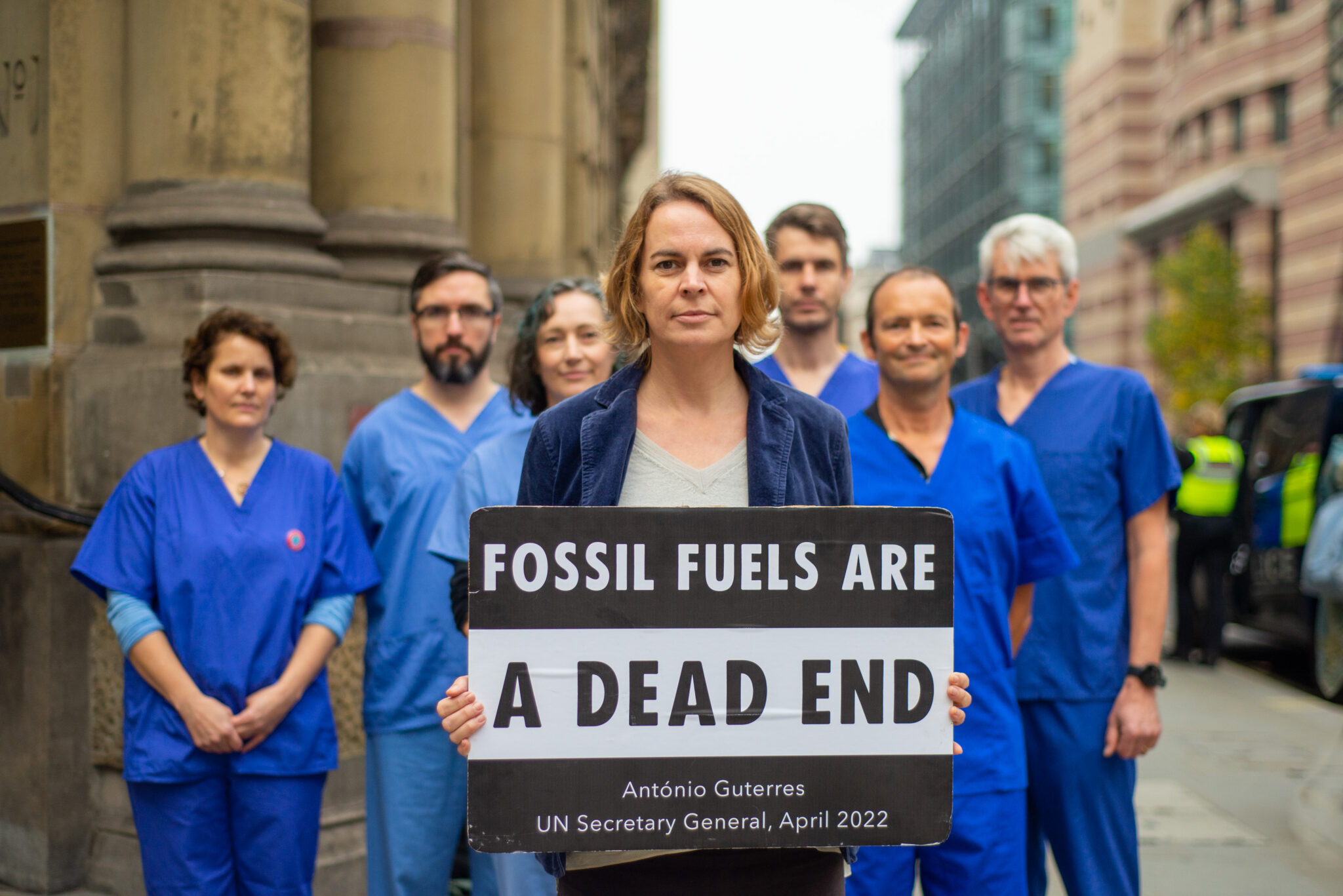
14.11.22_XR Docs_City of London Mags_Helena Smith_7224

“The Supreme Court’s decision brings the people of Delaware and Hoboken one step closer to putting these polluters on trial and making them pay for their climate deception.”

On the heels of similar decisions last month, the U.S. Supreme Court on Monday delivered “another win for climate accountability,” rejecting fossil fuel corporations’ attempt to quash lawsuits filed by the city of Hoboken, New Jersey, and the state of Delaware.

Both filed in September 2020, the suits from Hoboken and Delaware—like those filed by dozens of other municipalities and states—take aim at companies including BP, Chevron, ConocoPhillips, ExxonMobil, and Shell for fueling the climate emergency. The fossil fuel industry has repeatedly tried to evade accountability by shifting such cases from state to federal court.

“We appreciate and agree with the court’s order denying the fossil fuel companies’ petition, which aligns with dozens of decisions in federal courts here in Delaware and across the country,” said Democratic Delaware Attorney General Kathy Jennings in response to Monday’s decision.

The Supreme Court’s decision means that both of these cases will now move forward in state court.

Jennings on Monday cited an opinion piece she wrote for Delaware Online with Shawn Garvin, secretary of the Delaware Department of Natural Resources and Environmental Control, back when they launched the legal effort in 2020:

As we stated at the time of filing this case almost three years ago: “It didn’t have to be this way. The fossil fuel industry knew for decades that their products would lead to climate change with potentially ‘severe’ and even ‘catastrophic’ consequences—their words, not ours. But they didn’t clean up their practices or warn anyone to minimize the peril they were creating. Instead, they spent decades deliberately and systematically deceiving the nation about what they knew would happen if they carried on with business as usual.”

Building on revelations from the past decade that have bolstered climate liability lawsuits, peer-reviewed research published in January shows that ExxonMobil accurately predicted global heating decades ago, while documents released in early April make clear that Shell knew about the impact of fossil fuels even earlier than previously thought.

“Imagine how far along we might be in the transition to a low-carbon economy today if not for their deception,” Jennings said. “That’s why we filed our lawsuit, and today’s order moves Delawareans one step closer to the justice and economic relief that we deserve.”

For Hoboken and Delaware, the high court denied fossil fuel companies’ challenge to decision last year from a panel at the U.S. Court of Appeals for the 3rd Circuit, which wrote in part that “our federal system trusts state courts to hear most cases—even big, important ones that raise federal defenses. Plaintiffs choose which claims to file, in which court, and under which law. Defendants may prefer federal court, but they may not remove their cases to federal court unless federal laws let them. Here, they do not.”

Center for Climate Integrity president Richard Wiles noted Monday that “Big Oil companies keep fighting to avoid trials in state courts, where they will be forced to defend their record of climate lies and destruction in front of juries, but federal courts at every level keep rejecting their efforts.”

“The Supreme Court’s decision brings the people of Delaware and Hoboken one step closer to putting these polluters on trial and making them pay for their climate deception,” Wiles added. “Fossil fuel companies must be held accountable for the damages they knowingly caused.”

After the high court’s April decisions—which involved cases brought by the state of Rhode Island as well as municipalities across California, Colorado, Hawaii, and Maryland—Jamie Henn of Fossil Free Media said, “This should open the floodgates for more lawsuits that could make polluters pay!”

There were no noted dissensions on Monday. However, like last month, Justice Samuel Alito, who owns stock in some fossil fuel companies, did not participate in the decision about these two cases—but Justice Amy Coney Barrett, whose father spent nearly three decades as an attorney for Shell, did.

Original article by Jessica Corbett republished from Common Dreams under Creative Commons (CC BY-NC-ND 3.0).

Continue ReadingIn Another Blow to Big Oil, US Supreme Court Rejects Effort to Kill Climate Suits

Huge oil and gas profits should be returned to climate change victims, campaigners urge

Spread the love

https://morningstaronline.co.uk/article/b/huge-oil-and-gas-profits-should-be-returned-climate-change-victims

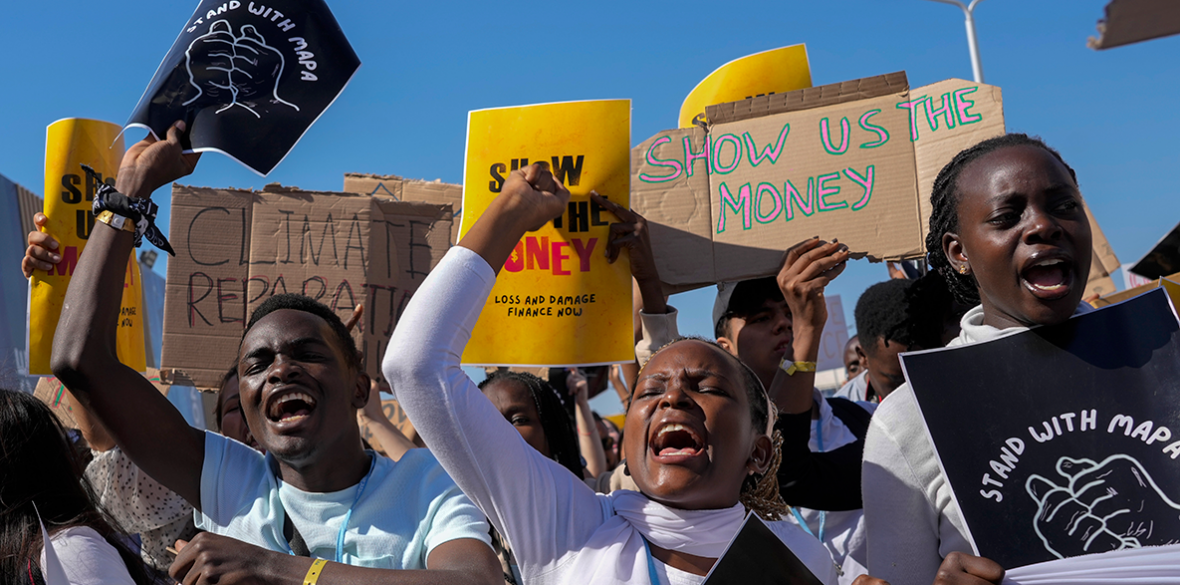
Demonstrators participate in a Fridays for Future protest calling for money for climate action at the COP27 U.N. Climate Summit, Friday, Nov. 11, 2022, in Sharm el-Sheikh, Egypt.

HUGE profits declared by oil and gas firms should be channelled towards compensating for the loss and damages suffered by victims of climate change, campaign group Greenpeace has urged.

Following Shell’s announcement last week of its record high profits of £32.2 billion last year, BP is expected to announce record profits of its own tomorrow.

The firm has already announced more than £20bn profit for the first three quarters of last year.

Collectively, energy giants Shell, BP, Chevron, Exxon, and Total are believed to have pocketed almost £166bn in profits last year, said Greenpeace.

https://morningstaronline.co.uk/article/b/huge-oil-and-gas-profits-should-be-returned-climate-change-victims

Continue ReadingHuge oil and gas profits should be returned to climate change victims, campaigners urge

Davos 2023: Big Oil in Sights of Climate Activist Protests

Spread the love

https://www.voanews.com/a/davos-2023-big-oil-in-sights-of-climate-activist-protests/6920107.html

Major energy firms including BP BP.L, Chevron CVX.N and Saudi Aramco 2222.SE are among the 1,500 business leaders gathering for the annual meeting in the Swiss resort of Davos, where global threats including climate change are on the agenda.

“We are demanding concrete and real climate action,” said Nicolas Siegrist, the 26-year-old organiser of the protest who also heads the Young Socialists party in Switzerland.

The annual meeting of global business and political leaders opens in Davos on Monday.

https://www.voanews.com/a/davos-2023-big-oil-in-sights-of-climate-activist-protests/6920107.html

Continue ReadingDavos 2023: Big Oil in Sights of Climate Activist Protests

Extinction Rebellion actions at fossil fuel enablers across London

Spread the love

From 11am on Monday November 21st, Extinction Rebellion and other aligned groups took nonviolent action at thirteen sites across central London, targeting the offices of companies and organisations which have links to the fossil fuel industry. The groups sent a universal message that it’s time to ‘cut the ties’ with fossil fuels.  

Actions took place at BP, Hill+Knowlton Strategies, BAE Systems, Church House, Ineos, Eversheds Sutherland, Schlumberger, the International Maritime Organisation, the Institute of Economic Affairs, JP Morgan, Arch Insurance, the Ontario Teachers Pension Plan and the Department for Business, Energy and Industrial Strategy. 

The actions follow the conclusion of COP27 in Egypt, which was widely criticised for the heavy presence of representatives of oil and gas companies. Hill+Knowlton Strategies, one of the companies targeted today, has worked for fossil fuel companies ExxonMobil, Shell, Chevron and Saudi Aramco and recently managed communications for Egypt’s presidency of the UN climate conference at Sharm El Sheikh.

Extinction Rebellion spokesperson, Sarah Hart, said: “Behind incomprehensible government decisions to double down on fossil fuel development, sign off new oil exploration licenses and allow the big energy companies to rake in record profits, lies a network of companies and organisations that are profiting from this destructive path. 

“While the rest of us worry about the cost of turning the heating on our government is prioritising the profits of the very companies that are jeopardising our climate and environment. But everyday people are way ahead of politicians. They want to be able to heat their homes and they want a future for their children. 

“So today, Extinction Rebellion are sending the message that it’s time to cut the ties with fossil fuels or lose the social license to operate in the UK.”

DETAILS OF THE ACTIONS: 

XR Cymru at Hill+Knowlton Strategies offices, Clerkenwell Green
XR Cymru splattered fake oil over the offices of public relations consultancy Hill+Knowlton Strategies. Hill+Knowlton has worked for fossil fuel companies ExxonMobil, Shell, Chevron and Saudi Aramco and recently managed communications for Egypt’s presidency of the UN climate conference at Sharm El Sheikh.

IEA Writers Rebel. Photo: Extinction Rebellion.

Writers Rebel at the Institute of Economic Affairs, Lord North Street
Writers Rebel poured fake oil on the front steps of free market think tank the Institute of Economic Affairs. The institute, located just meters from the Houses of Parliament, has received money from fossil fuel companies, regularly publishes materials questioning the consensus on climate science and has huge influence on politicians.

21st Nov 2022. J P Morgan offices, 60 Victoria Embankment, London, UK. Three Doctors for XR arrested after pasting posters and gluing themselves to the outside windows.Photo: Extinction Rebellion.

Doctors for XR at JP Morgan, Victoria Embankment 
Doctors for XR glued themselves to the windows at the London HQ of JP Morgan and pasted images to the front facade of the building depicting scenes of climate breakdown both here in the UK and overseas. JP Morgan are the world’s biggest fossil fuel financiers.

Christian Climate Action at BAE Systems offices, Carlton Gardens
Christian Climate Action left handprints of fake blood and oil on the offices of Britain’s leading arms manufacturer BAE Systems. BAE Systems supply weaponry to conflicts which increase the vulnerability of people living on the front lines of climate change. The arms giant also provides military and technical support to Saudia Arabia, enabling the regime’s oil production.

Christian Climate Action. Photo: Extinction Rebellion Holly

Christian Climate Action at Church House, Great Smith Street
Christian Climate Action also took action outside Church House in Westminster to highlight the Church of England’s failing strategy to stay invested in fossil fuels and influence the industry as shareholders.

A spokesperson for Christian Climate Action, said: “The Church should be showing moral leadership in rejecting profiting from investments in companies that continue to fuel climate suffering.”

Plastics Rebellion at Ineos offices, Hans Crescent
Plastics Rebellion sprayed fake oil outside the offices of Ineos, one of the world’s largest petrochemical producers and a significant player in the oil and gas market. Many of the plastics produced in the UK start their life at the INEOS Grangemouth refinery.

HS2 Rebellion at Eversheds Sutherland, Wood Street
HS2 Rebellion sprayed the offices of multinational law firm Eversheds Sutherland with fake oil. As solicitors for HS2 and Esso, Eversheds Sutherland have been forerunners in criminalising nonviolent environmental protest through the use of injunctions.

XR East of England and XR Youth at Schlumberger offices in London, Buckingham Gate
XR East of England and XR Youth poured fake oil over a globe at the offices of the world’s largest oilfields services provider Schlumberger to expose their complicity in ecocide. As the world’s largest oilfield services provider, Schlumberger enable fossil fuel extraction, operating in 120 countries around the world, with over 36,000 patents dedicated to extracting every last drop of oil and gas from the ground.

Ocean Rebellion at the International Maritime Organisation, Albert Embankment 
Ocean Rebellion held protests outside the offices of the International Maritime Organisation where performances illustrated the UN shipping body’s refusal to regulate shipping emissions. A heavy plume of smog filled the air and an oil slick appeared on the ground with dead birds caught in it.

Money Rebellion at Arch Insurance, Great Tower Street
Money Rebellion poured fake oil at the offices of Arch Insurance. Arch Insurance are understood to be in negotiations with fossil fuel giant Total regarding the insurance of the East Africa Crude Oil Pipeline (EACOP), a project that will jeopardise important ecosystems, fuel climate change and pose significant risks to millions of people. Money Rebellion is there to say ‘Arch must rule out EACOP’.

Sky Rebellion at Ontario Teacher’s Pension Plan, Portman Square
Sky Rebellion poured fake oil in front of the London offices of Ontario Teacher’s Pension Plan. The Canadian based pension fund invests in infrastructure projects including the controversial expansion of Bristol Airport which it owns.

XR South East at BP. Photo: Extinction Rebellion

XR South East at BP HQ, St James’ Square
XR South East used fire extinguishers to spray fake on oil BP headquarters in central London. 

A spokesperson for XR South East, said: “The addiction to fossil fuels must end. The huge fossil fuel corporations like BP and those who aid and abet them KNOW what we face. BP hides the dirty secrets that lie behind its latest big profit of £7,100,000,000. Enough is enough. Today we are exposing the ties between the collaborators and we will piece together the web of lies with our actions.”

XR South West at the Department for Business, Energy and Industrial Strategy, Victoria Street
XR South West sprayed fake oil on the Department for Business, Energy and Industrial Strategy to protest against its plans to issue more than 100 new licences for exploration and extraction of oil and gas in the North Sea – meaning renewed and accelerating extraction way beyond 2030 and way beyond the UK’s Paris Agreement commitments.

XR Rhythms (marching between the locations listed above)
In June, London endorsed the Fossil Fuel Non-Proliferation Treaty, so XR Rhythms is marching through London to highlight the web of fossil fuel enablers still working in our city. We want to drum out fossil fuel investments and celebrate the future transition to a more sustainable economy!

[from an Extinction Rebellion press release.]

Continue ReadingExtinction Rebellion actions at fossil fuel enablers across London